
Audio Mastering Service — Hear Your Master Before You Pay
Send your finished mix and hear a level-matched mastering preview before you decide.
Manual mastering for artists who want their track checked for balance, punch, low-end and translation before release.
- 30–60 second free mastering preview
- level-matched before / after comparison
- 24–72 hour turnaround after approval
What Is Audio Mastering?
 Mastering is the final stage between a finished mix and the released record. It focuses on overall tonal balance, dynamics, stereo image and final level, while preparing the master for the required delivery format.
- tonal balance — correcting broad frequency problems without changing the character of the mix
- dynamics — controlling peaks and density while keeping the track alive
- stereo image — maintaining a stable center and a coherent sense of width
- final level — setting an appropriate playback level without sacrificing clarity or punch
The final master is also checked for technical issues before delivery, including peaks, file format and consistency with the intended release.
Why Your Track Sounds Worse After Upload
A finished master can sound convincing in the DAW and behave differently once it is normalized, encoded and played back on another system.
One reason is playback normalization. Streaming services can turn down a loud master, removing the level advantage you heard while comparing versions in your DAW.
Loudness illusion.
A louder version often sounds more impressive at first. Once the levels are matched, the differences in balance, dynamics and punch become much easier to judge.
Playback translation.
Problems with sub energy, kick and bass balance, harshness or excessive density can become more noticeable outside the studio.
Over-limiting.
Heavy limiting can reduce transient detail and movement. Turning the resulting master down does not restore what was lost.
What Changes During Mastering?
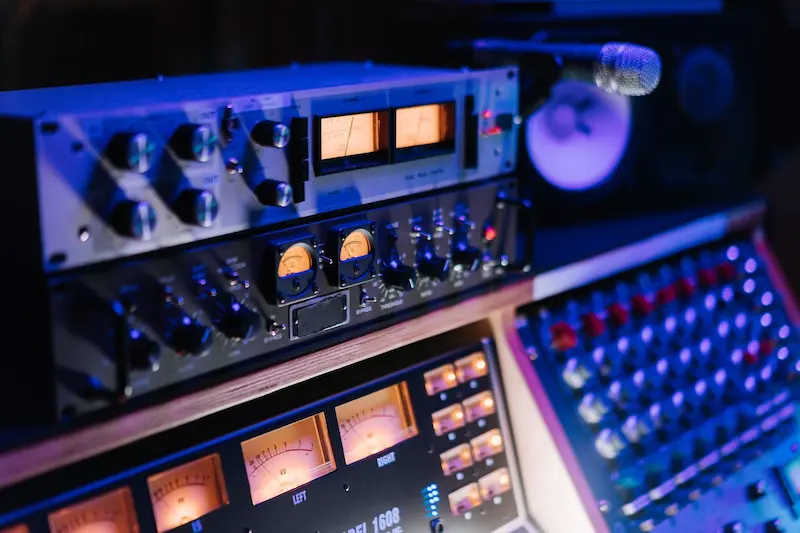 Mastering decisions depend on the mix. One track may need a small tonal correction; another may need more work on dynamics, stereo balance or final level.
- Low-end control — keeping kick, bass and sub frequencies defined without taking weight out of the record
- Transient control — preserving impact while controlling peaks that make the master feel aggressive or unstable
- Midrange and vocal clarity — keeping important elements audible without making the mix harsh or crowded
- Stereo image — refining width while keeping the vocal, kick, bass and other central elements stable
- Final level — bringing the master to an appropriate competitive level without forcing unnecessary processing
Our Mastering Process
I listen to the mix before processing and check its balance, dynamics, stereo image and overall condition. This determines what needs to be changed — and what should be left alone.
1. Listen and assess.
The mix is checked for tonal balance, dynamics, stereo image, unwanted distortion and any issues that could limit the final result.
2. Set the direction.
Your references and release goals establish the target for level, tone and overall character.
If you are preparing a mix for mastering, the condition of the source material matters just as much as the processing itself — here is what to check before sending your mix.
3. Make targeted corrections.
EQ, compression, limiting and stereo processing are used only where the mix needs them.
4. Set the final level.
The final level is set after the important tonal and dynamic decisions are made, with the limiter used as part of the final stage rather than as a substitute for balance.
5. Check the final master.
The master is checked at matched levels and reviewed on different playback systems before delivery.
Before / After — Hear What Actually Changes
Match the volume before comparing. If one version sounds louder, turn it down — then listen for what actually changed.
- Punch — does the kick still hit, or does it flatten when levels are matched?
- Low-end — does the bass stay controlled and consistent across playback?
- Clarity — do the elements remain separated, or does the mix become crowded?
The point is not to make the master louder. The point is to hear whether it actually sounds better.
Stereo vs Stem Mastering — What to Choose
The choice depends on whether the finished stereo mix can be corrected globally or whether individual elements need separate control.
Stereo mastering
The finished stereo mix is processed as one file, with attention to tonal balance, dynamics, stereo image and final level.
Stem mastering
Separate groups such as drums, bass, vocals and music can be processed independently when a problem cannot be corrected cleanly in the stereo mix.
If a specific element needs to change without affecting the rest of the mix, stem mastering provides more control than processing the stereo file as a whole.
Learn when stem mastering makes sense for a finished mix →
When Mastering Won’t Help
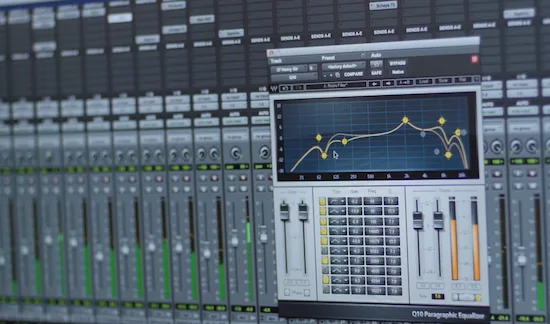 Mastering can refine a finished mix, but it cannot replace major mix changes.
- Printed clipping — distortion already present in the source cannot usually be cleanly undone during normal mastering
- Uncontrolled low-end — kick and bass fight instead of locking together
- Crushed dynamics — the track has no punch left to preserve
- Major balance problems — vocals, drums or other elements need level changes that cannot be corrected cleanly on the stereo master
If the mix needs major changes to individual elements, the better solution is to return to the mix before mastering.
Find Out What Your Mix Needs Before Mastering
Run a free technical check of your mix before you send it to an engineer. Review peak levels, clipping, stereo correlation, dynamics and frequency balance — and identify potential technical issues that may need attention at the mix stage.
Mastering Options
Each option is designed for a different type of mix.
Choose based on how much work your mix needs. Basic covers straightforward mixes. Standard and Premium give you more room for detailed tonal, dynamic and stereo work. Stem mastering is for mixes that need separate control of individual elements.
Basic
$59
for stable, well-balanced mixes essential tonal and loudness control 1 revision
Standard ⭐
$79
for mixes needing additional control deeper balance and translation work 2–3 revisions
Premium
$109
for demanding mixes needing detailed control deeper tonal, dynamic and stereo refinement unlimited revisions
Stem
$179
for mixes needing element-level control separate control of key mix elements up to 5 stem groups
What You Get With Our Mastering Service
A manual mastering service for artists who want to make a confident mastering decision before release.
- You hear the result first
Send your finished mix and receive a 30–60 second mastering preview before paying for the full track. - The comparison is level-matched
The preview is judged at matched levels so loudness does not create a false impression of improvement. - Your mix is assessed before processing
If the problem belongs in the mix rather than the master, you are told before processing starts. - You work directly with the engineer
No marketplace, account manager or automated processing stands between you and the mastering decision. - You can give feedback before final delivery
If something needs adjustment, the master can be revised based on your feedback.
About the Mastering Engineer
 Mastering is handled by Yurii Ariefiev — a mastering engineer with 10+ years of experience in audio production and release preparation. Over 1,000 tracks have been mastered across pop, hip hop, rock, electronic and instrumental music.
The processing chain changes from project to project. Each master is evaluated individually rather than run through a fixed template.
Mastering is performed in an acoustically treated monitoring environment, using controlled monitoring and reference playback to check balance, dynamics and translation before delivery.
Mastering FAQ
How much does mastering cost in the US?
Professional mastering varies widely depending on the engineer, project and level of service. Our single-track mastering starts at $59.
Do I need mastering for Spotify?
Spotify does not require a specific mastering loudness level. Mastering is the final opportunity to check the balance, dynamics and technical quality of the release before it reaches the listener.
What LUFS should my track be?
There is no single LUFS value that works for every release. The right level depends on the music, dynamics and intended result. A master should be judged by how it sounds and translates — not by chasing one number.
Can mastering fix a bad mix?
No. Mastering enhances a solid mix — it doesn’t rebuild it. If the balance is wrong, the problems become more obvious.
What does a mastering engineer actually do?
A mastering engineer prepares your track for release, controlling balance, dynamics and loudness so it holds up across playback systems and platforms.
How long does mastering take?
Usually 24–72 hours, depending on the mix.
Faster turnaround is possible when the mix is already stable.
Why does my track sound worse after upload?
Playback normalization can reduce the level of a loud master, removing the loudness advantage you heard in the session. Encoding and playback systems can also reveal problems with dynamics, peaks or tonal balance that were less obvious before release.
Can online mastering be as good as studio mastering?
The delivery method does not determine the quality of the master. What matters is the monitoring environment, the engineer and the quality of the source mix.
Send Your Track — Get a Real Master Before You Pay
Send your track and hear a real mastering preview before you pay.
No upfront payment. No guesswork. Just a level-matched before/after comparison on your own track.
If you like the result, we continue with the full master.
If it doesn't work for the track, you don't pay.
- free demo (30–60 seconds, level-matched)
- no upfront payment — pay only if you approve
- clear feedback on what’s holding the track back
- fast response — usually within a few hours
- secure file handling — your track stays private
- direct communication with the engineer