
Frequency Balance In Mixing: Why Great Mixes Depend On Frequency Relationships
A mix does not become balanced because every instrument sounds good on its own. In fact, many recordings contain excellent individual sounds while the finished mix still feels heavy, thin, crowded, dull, or overly bright. Frequency balance is not the condition of a single track. It is the relationship between all frequency regions working together at the same time. When those relationships are healthy, the mix feels natural and easy to follow. When they are not, listeners often sense that something feels wrong long before they can identify a specific cause.
Many engineers associate frequency balance with EQ decisions. In reality, balance begins with relationships between sounds. The way bass, vocals, drums, guitars, keyboards, and cymbals interact often has a greater influence on perceived balance than any individual frequency adjustment.
Why Frequency Balance Is About Relationships, Not Individual Sounds
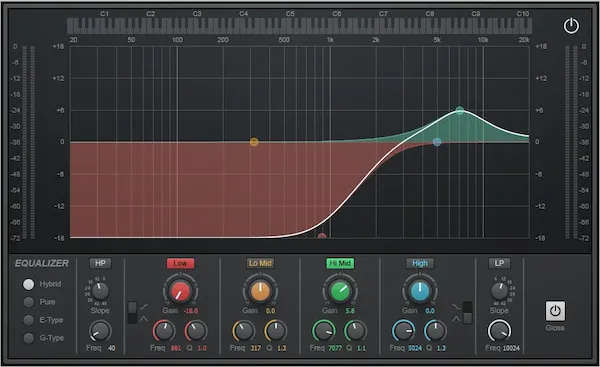 One of the most common misconceptions in mixing is the belief that frequency problems always belong to a specific instrument. A bass feels too large, so the bass must be the problem. A vocal feels buried, so the vocal must need attention. A mix sounds bright, therefore the cymbals must be responsible. Real sessions rarely behave that neatly. Frequency balance is not determined by isolated sounds. It emerges from the way sounds interact with one another across the entire spectrum.
Consider a situation we encounter regularly in studio projects. The vocal itself may not have changed at all, yet after adjustments are made to the low end, the vocal suddenly feels clearer and easier to follow. Nothing happened to the vocal track. The perception changed because the relationship between frequency regions changed. Listeners do not hear frequencies separately. They hear a combined picture created by everything happening at once.
The opposite can happen as well. A bass instrument may sound perfectly controlled when listened to alone, but once drums, guitars, keyboards, and vocals enter the arrangement, the low end can begin dominating the mix. The bass did not become objectively louder. Its relationship to surrounding elements shifted. This is why frequency balance cannot be judged by examining individual tracks in isolation. Context changes perception.
The same principle applies throughout the spectrum. A vocal that occupies more upper-mid energy may cause cymbals to feel less prominent, even though their actual level remains unchanged. Likewise, bright percussion can make a vocal appear less present despite no reduction in vocal volume. These interactions occur because multiple elements compete for listener attention at the same time. The ear constantly evaluates relationships rather than absolute values.
This is also why the same instrument can behave very differently from one mix to another. A guitar tone that feels perfectly balanced in a sparse arrangement may become aggressive once layered with several additional instruments. A piano that sounds warm and supportive in one production may feel overly dominant in another. The instrument itself has not changed. The surrounding frequency environment has.
During mixing, frequency balance is rarely improved by focusing on a single sound and assuming it contains the entire problem. More often, successful decisions come from understanding how instruments influence one another. A kick changes the way bass is perceived. Bass affects how vocals sit in the arrangement. Vocals influence the perceived brightness of cymbals and guitars. Every adjustment creates consequences elsewhere in the spectrum.
This interconnected behavior explains why experienced engineers evaluate frequency balance from the perspective of the complete mix rather than individual tracks. The goal is not to create perfect sounds independently. The goal is to create a frequency relationship where every important element can exist naturally without forcing attention away from something else.
Frequency balance does not live inside a bass track, a vocal track, or a drum track. It lives in the space between them. The moment that relationship becomes unstable, the entire mix begins to feel unbalanced even when every individual sound appears technically correct on its own.
How Listeners Perceive Low, Mid, And High Frequency Balance
Most listeners never think about frequencies. They do not sit down with a song and wonder whether the low mids are dominant or if the upper range contains too much energy. Instead, they react emotionally and instinctively. A mix feels powerful. A mix feels thin. A mix feels clear. A mix feels tiring. Those reactions often happen within seconds, long before anyone consciously identifies what is happening across the spectrum.
The reason frequency balance has such a strong influence is simple. The human ear does not experience low, mid, and high frequencies as separate technical categories. It experiences them as part of a single listening impression. When frequency relationships feel natural, the listener rarely notices them. Attention remains focused on the song itself. When those relationships become unbalanced, the mix begins drawing attention to its own weaknesses.
Low frequencies are often associated with weight, size, and physical impact. Even listeners with no technical background immediately recognize when a mix feels too light or too heavy. Interestingly, that perception extends beyond bass instruments themselves. Excessive low-frequency energy can make an entire production feel slower, darker, or less defined. On the other hand, insufficient low-end support often leaves a mix feeling small regardless of how good the arrangement may be.
The midrange plays a different role. This area contains much of the information listeners use to understand a song. Vocals, melodic hooks, guitars, keyboards, and many defining musical details live primarily within this region. When the midrange feels balanced, listeners tend to describe the mix as focused, present, or easy to follow. When balance begins to shift, words like crowded, distant, boxed-in, or hollow appear surprisingly often, even among people with no audio background.
High frequencies influence perception in a more subtle but equally important way. They contribute to detail, openness, and definition. A controlled amount of high-frequency information can make a mix feel alive and engaging. Too little may create the impression that something is missing. Too much can push attention toward the surface of the sound rather than the music itself. Listeners may not describe the issue as excessive highs. More commonly they say the mix feels sharp, tiring, aggressive, or difficult to enjoy for long periods.
What makes frequency perception particularly interesting is that the ear rarely evaluates these regions independently. Changes in one area influence how the others are experienced. A strong low end may reduce the apparent presence of the midrange. Additional high-frequency energy can make vocals seem less stable even if their level remains unchanged. The spectrum behaves as a connected system rather than a collection of isolated zones.
We see this regularly during studio work. A client may request more vocal presence because the lead feels hidden in the arrangement. Yet after broader balance adjustments elsewhere in the mix, the vocal suddenly appears clearer without any direct changes. The perception problem existed within the relationship between frequency regions, not within the vocal itself.
That challenge becomes even greater because frequency balance is difficult to judge objectively. The ear adapts quickly. After listening for hours, an imbalance can begin to feel normal simply because it has become familiar. Meanwhile, a first-time listener immediately reacts to the overall balance without analyzing why. Their attention moves naturally toward what feels too dominant and away from what struggles to be heard.
Ultimately, listeners do not experience songs as collections of frequencies. They experience emotion, energy, movement, clarity, and impact. Frequency balance influences all of those reactions behind the scenes. By the time someone consciously identifies a tonal issue, the overall impression has often already been formed. That is why successful mixes depend less on individual frequency decisions and more on maintaining relationships that feel natural across the entire spectrum.
Frequency Regions And Their Role In A Mix
| Frequency Region | Typical Perception | Common Imbalance Result |
|---|---|---|
| Low Frequencies | Weight and foundation | Thin or heavy mix |
| Mid Frequencies | Presence and focus | Hollow or crowded mix |
| High Frequencies | Clarity and detail | Dull or harsh mix |
Frequency Balance At A Glance
Frequency balance is rarely determined by a single instrument. Low frequencies provide weight and stability. Midrange frequencies carry most of the musical information. High frequencies contribute detail and definition. Problems begin when one region consistently attracts more attention than the others.
Listeners do not evaluate these regions separately. They react to the overall relationship between them. When that relationship remains balanced, the mix feels natural. When it does not, the listener notices the consequences long before identifying the cause.
Why Well-Mixed Instruments Can Still Create An Unbalanced Mix
A common source of frustration during mixing comes from a surprisingly simple observation: every individual instrument sounds good, yet the mix still feels wrong. The drums have impact. The bass sounds full. The vocal is clear. The guitars have character. Nothing appears obviously broken. And still, when everything plays together, the result lacks balance. This situation is far more common than many engineers expect because frequency balance is not determined by the quality of individual sounds. It is determined by how those sounds interact once they occupy the same musical space.
Listening in solo often reinforces a false sense of confidence. An instrument can sound impressive when isolated because it is no longer competing with anything else. There are no overlapping frequencies, no competing sources of attention, and no pressure from the surrounding arrangement. The moment that sound returns to the full mix, however, the situation changes. Every element must now share space with multiple other elements that are trying to achieve similar goals.
We regularly encounter projects where individual tracks have been carefully shaped and refined, yet the completed mix feels crowded. In most cases, the issue is not poor sound design. It is accumulated spectral energy. A bass instrument contributes low-frequency weight. The kick contributes additional weight. Several rhythm instruments add energy throughout the low-mid range. Keyboards occupy large portions of the midrange. Cymbals and percussion extend into the upper spectrum. None of these decisions may seem problematic by themselves. Together they can create a balance that feels heavier, brighter, or denser than intended.
Frequency relationships become increasingly important as arrangements grow more complex. A sparse acoustic production may contain only a handful of competing elements. A modern pop, rock, or electronic mix can contain dozens. As more layers are added, interactions become harder to predict. Small contributions from multiple sources begin accumulating across the spectrum. What appears insignificant on a single track can become highly influential once repeated throughout an arrangement.
Another challenge is that groups of instruments often compete as collections rather than as individual sounds. A vocal is not only competing with one guitar. It may be competing with several guitars, keyboards, backing vocals, percussion layers, and effects returns simultaneously. Likewise, the low end is rarely defined by a single source. Kick, bass, synths, toms, and various supporting elements all contribute to how weight is perceived. The listener experiences the combined result rather than evaluating each contributor independently.
This is one reason professional mixing decisions are almost always evaluated in context. As discussed in our How Professional Mixing Works guide, successful mixing depends on understanding how decisions influence one another throughout the project. Frequency balance follows exactly the same principle. A sound that appears perfect alone may become excessive once the rest of the arrangement is introduced. Conversely, a track that seems understated in solo can become exactly what the mix requires when heard alongside everything else.
The ear naturally judges relationships. Listeners do not separate the mix into isolated channels and evaluate them one by one. They hear the collective result. If several elements contribute energy to the same area of the spectrum, the combined effect becomes more important than the characteristics of any individual source. This explains why experienced engineers spend far more time listening to the complete mix than to isolated tracks.
Good individual sounds remain important. They provide the foundation of a strong production. But frequency balance is a higher-level outcome. It emerges from interaction, accumulation, and context. A collection of well-mixed instruments can still create an unbalanced mix if their combined spectral relationships fail to support one another. Ultimately, the listener responds to the whole picture, not the quality of its individual pieces.
Low-End Balance And Why Weight Often Becomes Excessive
 Few areas of a mix influence listener perception as strongly as the low end. Long before someone notices vocal detail, stereo width, or high-frequency clarity, they often react to the foundation of the record. The low-frequency region contributes a sense of size, power, stability, and momentum. When balance is working, listeners rarely think about it. The mix simply feels solid. When it is not, the entire production can begin feeling heavy, slow, crowded, or difficult to follow.
Low-end balance becomes difficult to judge because several sources often contribute to the same overall impression at once. The kick drum provides impact and rhythmic definition. The bass supplies depth and support. Additional instruments may introduce low-frequency information of their own, even when they are not traditionally considered part of the rhythm section. As these sources accumulate, their combined influence often becomes far greater than expected.
This accumulation is rarely dramatic at first. A kick sounds powerful on its own. The bass feels rich and full. A synth layer adds warmth. Floor toms contribute extra body. Each decision appears reasonable when evaluated independently. The problem emerges when all of those decisions begin reinforcing one another simultaneously. What originally felt like strength gradually turns into dominance.
Interestingly, excessive low-end energy often affects areas of the mix that seem unrelated to bass frequencies. A vocal may begin feeling less present. The overall balance of attention may begin shifting away from other important elements. High-frequency detail can seem less noticeable. The listener may not identify the low end as the source of the issue, yet their overall impression of clarity changes. This happens because frequency regions do not operate independently. Strong low-frequency energy influences how the rest of the spectrum is perceived.
We frequently encounter sessions where artists describe the mix as lacking definition even though no obvious problem exists in the midrange or top end. After stepping back and evaluating the complete frequency picture, the cause often becomes clearer. The low end is carrying more attention than intended. Nothing sounds distorted. Nothing sounds technically wrong. The foundation simply occupies a larger share of the listener's focus than the arrangement requires.
Perception plays an important role here. Human hearing does not experience low frequencies with the same precision it experiences mids. As a result, additional low-end energy can accumulate gradually without immediately drawing attention. Engineers may adapt to the change over time, particularly during long sessions. What initially felt slightly powerful begins feeling normal. Hours later, the balance may have shifted considerably without anyone consciously noticing.
Arrangement density can amplify the effect. A sparse production often allows the low end to breathe naturally because fewer elements compete for space. As additional layers enter the mix, the foundation becomes responsible for supporting a much larger structure. Small increases from multiple instruments start combining into a much larger overall contribution. The listener hears the sum of those additions rather than the individual sources behind them.
Another factor is expectation. Modern productions frequently aim for impact and weight, encouraging engineers and artists to prioritize low-frequency energy. The intention is understandable. Strong foundations often create excitement and emotional engagement. The challenge appears when the pursuit of weight begins reducing balance. More low end does not always create more power. At a certain point it can begin limiting the effectiveness of everything built above it.
Effective low-end balance is not measured by the size of the bass or the strength of the kick alone. It is measured by how the foundation supports the rest of the mix. When the relationship is working, vocals remain clear, instruments retain separation, and the song feels stable without becoming overwhelming. The listener experiences confidence and depth rather than excess. Ultimately, low frequencies shape far more than the bottom of the spectrum. They influence how the entire mix is perceived.
Why Midrange Balance Often Determines Mix Clarity
If the low end provides foundation and the top end contributes detail, the midrange is where much of the actual communication happens. This is the part of the spectrum that carries a large portion of the information listeners use to understand a song. Vocals, guitars, pianos, keyboards, synth leads, and many of the elements that define a production spend significant time competing within this region. When midrange balance is working properly, the mix feels focused and easy to follow. When it is not, clarity often disappears long before listeners can identify the reason.
Unlike extreme lows or highs, the midrange rarely attracts attention through sheer impact. Its influence is more subtle. Listeners tend to notice the consequences rather than the cause. A song may feel crowded. Important lyrics may seem harder to follow. Instrument parts may blur together. The production may feel busy even when the arrangement itself is not particularly dense. In many cases, the underlying issue is not the quality of the sounds involved but the way they are sharing the same frequency territory.
This becomes especially important because so many critical musical elements live in similar areas of the spectrum. A vocal is often expected to carry the message of the song. At the same time, guitars, keyboards, synths, backing vocals, and various melodic layers are attempting to capture attention as well. Individually, each part may sound excellent. Together, they can begin competing for the same listening space.
We regularly see projects where clients describe a mix as lacking clarity even though every instrument appears audible. Nothing is technically hidden. Nothing is obviously too quiet. Yet the arrangement feels harder to navigate than it should. The listener's attention moves between multiple competing sources rather than naturally settling on the most important information. As a result, the mix feels less focused despite containing all the necessary elements.
Vocals often reveal this problem first. A lead vocal may not require more level to become clearer. In many situations, the challenge comes from surrounding instruments occupying similar frequency regions. The vocal itself remains unchanged, but its perceived presence fluctuates depending on what else is happening around it. This relationship is one reason vocal balance remains such an important topic in professional productions. Our Vocal Mixing guide explores this subject in greater detail, but the broader principle applies throughout the mix: clarity depends on context as much as individual sound quality.
Midrange congestion can also develop gradually. As arrangements evolve, additional layers are often added to increase excitement, texture, or emotional impact. Each new part may seem relatively harmless on its own. Over time, however, those additions begin stacking within the same frequency region. The result is not necessarily obvious distortion or imbalance. More often, the mix simply becomes harder to read.
Another reason midrange balance matters so much is that listeners are particularly sensitive to this area of the spectrum. Human hearing relies heavily on the frequencies that carry speech and many recognizable musical details. Small shifts in this region can significantly influence how clear or confusing a mix feels. While excessive low end may create heaviness and excessive highs may create fatigue, midrange imbalance often affects comprehension itself.
The strongest mixes do not necessarily have the most midrange energy. They have the most effective distribution of attention within the midrange. Important elements remain understandable. Supporting elements contribute without competing unnecessarily. The listener can follow the song naturally without needing to work for information.
This is why midrange balance frequently determines whether a mix feels clear or cluttered. Much of the musical story lives here. When relationships within this region remain organized and proportional, the entire production becomes easier to understand. When they do not, even well-recorded and well-produced material can begin losing focus.
Frequency Problems Rarely Start With One Instrument
Many mixes feel unbalanced even when individual tracks sound perfectly fine on their own. More often, the issue comes from how instruments interact across the spectrum. We evaluate those relationships, identify where attention is being pulled away from important elements, and help determine whether the mix is communicating clearly as a complete production.
Professional evaluation. Practical feedback. Decisions based on the full mix.
High Frequencies And The Difference Between Detail And Excess
 High frequencies often receive special attention during mixing because they are closely connected to how listeners perceive detail. A mix with sufficient high-frequency information can feel open, defined, and engaging. Small textures become easier to notice. Transients feel more present. Individual elements appear easier to separate from one another. As a result, engineers and artists are frequently tempted to associate more high-frequency energy with better clarity. In practice, the relationship is rarely that simple.
One of the most common misconceptions surrounding frequency balance is the assumption that additional detail automatically improves the listening experience. At first, increasing the apparent brightness of a mix may create an impression of greater precision. Instruments seem sharper. Vocals appear more forward. Cymbals attract more attention. Yet as more energy accumulates in the upper spectrum, the perceived benefits often begin to diminish while new problems emerge.
This happens because listeners do not experience detail and brightness as separate concepts. They are closely linked. When high-frequency content increases, the ear initially interprets the change as additional information. After a certain point, however, the listener stops receiving more useful detail and instead becomes increasingly aware of the brightness itself. The focus shifts away from musical content and toward the spectral character of the mix.
We regularly encounter projects where every individual decision seems reasonable. A brighter vocal helps articulation. A more present acoustic guitar improves definition. Additional shimmer adds excitement to percussion. Slightly more top-end detail enhances a keyboard layer. None of these adjustments appear problematic in isolation. The challenge develops when all of them accumulate together. What began as a series of small improvements gradually becomes a dominant characteristic of the mix.
High-frequency accumulation can be surprisingly difficult to notice during long sessions. The ear adapts quickly. After extended listening, brightness often begins feeling normal simply because it has become familiar. Meanwhile, a fresh listener may immediately perceive the same mix very differently. Their first impression is not increased detail. It is the overall balance of the spectrum.
Another important factor is listener fatigue. Low frequencies tend to influence weight and scale. Midrange frequencies affect clarity and communication. High frequencies have a strong influence on comfort. When the upper spectrum occupies too much attention, listening becomes more demanding. The mix may still sound technically clean. Individual sounds may remain well-recorded and well-produced. Yet the experience itself becomes less relaxed and less natural over time.
Context also plays a major role. A bright element may contribute useful contrast within a darker arrangement. The same element can feel excessive inside a production that already contains significant upper-frequency activity. This is another reminder that frequency balance is never determined by individual sounds alone. Every decision must be evaluated relative to the rest of the mix.
Listeners rarely describe these situations using technical language. They do not usually identify a specific frequency range as the problem. Instead, they say the mix feels sharp, aggressive, tiring, or overly bright. The emotional reaction appears before the technical diagnosis. By the time someone begins thinking about frequencies, the listening impression has already been formed.
Successful frequency balance therefore requires restraint as much as enhancement. High frequencies play an essential role in creating detail, openness, and definition, but their value depends on proportion. The goal is not to maximize brightness. The goal is to provide enough information for the mix to feel clear without allowing the upper spectrum to dominate the listener's attention. More detail can improve perception. More detail can also become excess. The difference is determined by balance.
Spectral Competition: When Frequency Regions Fight For Attention
Frequency balance problems rarely appear because a single instrument becomes too important. More often, they develop because multiple elements begin competing for attention at the same time. Every sound in a mix occupies part of the spectrum, and every sound contributes to the listener's perception of what deserves focus. As arrangements become more complex, those competing demands can create a situation where no element feels clearly dominant and no frequency region feels fully balanced.
This process can be described as spectral competition. Instead of frequency regions supporting one another, they begin fighting for the same listening space. The result often feels crowded, unfocused, or unexpectedly difficult to follow even when every individual sound remains audible. Interestingly, the issue is often perceived long before anyone identifies the frequencies involved. Something simply feels crowded.
The challenge becomes particularly noticeable in modern productions where many elements remain active simultaneously. A lead vocal wants attention. Guitars want presence. Keyboards want width and texture. Percussion wants detail. Bass wants weight. None of these goals are unreasonable. Problems emerge when too many sounds attempt to occupy similar parts of the spectrum at the same moment.
One consequence of spectral competition is what engineers often describe as masking. While masking is frequently discussed as a technical phenomenon, it is often the result of broader competition throughout the mix. When several sounds contribute energy to the same region, the listener begins struggling to distinguish individual sources as clearly as before. The issue is not necessarily that one sound has disappeared. Rather, the surrounding context makes it harder to perceive.
A useful way to think about this is through listener attention. Human hearing does not distribute focus evenly across every sound in a production. At any given moment, the ear naturally prioritizes certain information while treating other information as background. When too many elements demand attention simultaneously, that prioritization process becomes less effective. The listener starts working harder to follow the music.
Many of these situations become easier to recognize when the mix is evaluated as a complete system rather than a collection of isolated tracks.
We encounter this regularly in dense arrangements. A client may feel that the vocal lacks impact. Another may describe the chorus as less exciting than expected. Sometimes drums seem less defined even though their level has not changed. In many cases, the problem is not located within those elements themselves. The surrounding frequency environment has become increasingly competitive, making important information more difficult to perceive.
This is one reason mix problems often appear as symptoms rather than root causes. As discussed in our Mixing Problems Guide, the issue that attracts attention is not always the issue that created the imbalance. A vocal that feels weak may actually be reacting to competition elsewhere in the spectrum. A section that feels crowded may reflect accumulated interactions between multiple groups of instruments rather than any individual sound behaving incorrectly.
Spectral competition also changes throughout a song. A verse may feel balanced because relatively few elements are active. The chorus introduces additional guitars, keyboards, backing vocals, percussion layers, and effects. Suddenly the same mix feels denser even though none of the original tracks have changed. The listener is now processing a much larger amount of spectral information at once.
Another important observation is that competition is not limited to neighboring frequencies. Strong activity in one region can influence how attention is distributed across the entire spectrum. A highly dominant area may pull focus away from other elements that are technically audible but psychologically less noticeable. Everything remains audible, but not everything receives the same amount of attention.
This is why frequency balance depends so heavily on cooperation between regions rather than dominance within them. The strongest mixes do not eliminate competition entirely. Music naturally contains contrast, energy, and moments of emphasis. Successful balance emerges when frequency regions support one another instead of constantly competing for control. Once too many elements begin fighting for the same space, frequency balance starts breaking down and the listener feels the consequences almost immediately.
Studio Observations: Mixes That Sounded Loud But Never Felt Balanced
 One of the more interesting patterns we encounter during mix evaluations is how often perceived strength is mistaken for balance. A mix can feel impressive during a session. The low end feels powerful. The top end feels detailed. Every major element appears present and energetic. On first listen, the production seems finished. Yet after spending more time with the record—or hearing it alongside other professionally mixed material—the imbalance becomes much easier to recognize.
This happens because volume and frequency balance are not the same thing. A mix can create a strong initial reaction without distributing attention evenly across the spectrum. In fact, some of the most convincing imbalances are those that sound exciting at first. The listener hears impact, energy, and detail. The underlying frequency relationships receive far less scrutiny until the excitement of the first impression begins to fade.
We often see this with low-frequency energy. A powerful foundation can immediately make a production feel larger and more confident. Artists frequently respond positively because the mix appears to have gained weight and authority. Yet after additional listening, the same record may start feeling slower, heavier, or less open than intended. Nothing about the low end seems obviously wrong in isolation. The issue emerges from its influence on everything surrounding it.
The opposite can occur at the top of the spectrum. Increased brightness often creates the impression of greater detail and precision. A mix appears clearer, more modern, and more engaging. However, once the initial excitement settles, listeners sometimes realize they are paying more attention to the brightness itself than to the music. The upper spectrum has become a dominant feature of the experience rather than a supporting contributor to it.
Some of the most revealing moments occur during contextual listening. A project may sound perfectly balanced when heard alone for hours. Then a comparison against other productions immediately changes the perspective. Suddenly the low end feels larger than expected. The midrange feels less organized. The high frequencies seem more prominent than originally perceived. The mix itself has not changed. Only the context has.
In many evaluations, the first sign of imbalance is not a frequency measurement or technical observation. It is a reaction from the artist. Comments such as “the vocal feels smaller today” or “the chorus suddenly feels crowded” often appear before any specific frequency issue is identified. The perception changes first. The explanation usually comes later.
In one session, a rock production arrived with excellent individual sounds and strong overall energy. The drums felt powerful, the guitars carried substantial weight, and the vocal remained consistently audible. Nothing immediately suggested a problem. Yet after listening to several songs in sequence, a different pattern emerged. Each section felt slightly heavier than the one before it. The low-frequency contribution from multiple instrument groups had accumulated enough energy to subtly shift the entire balance of the mix. No single track was responsible. The relationship between them was.
In another evaluation, a project arrived with more than 80 active tracks across the arrangement. No single instrument appeared excessive. The imbalance emerged from dozens of small contributions accumulating in similar areas of the spectrum.
Another project presented the opposite challenge. The production sounded exceptionally detailed during short listening sessions. Every instrument appeared sharply defined. After longer evaluation, however, the mix began feeling increasingly concentrated in the upper spectrum. Individual sounds still appeared well-crafted, but the frequency relationships created an experience that drew attention toward detail rather than musical focus. Again, the issue was not located within a single source.
These observations reinforce an important lesson from years of studio work. Frequency balance rarely announces itself through obvious technical problems. More often, it reveals itself through perception. A mix feels tiring. A mix feels heavy. A mix feels smaller or larger than intended. The listener reacts to the overall relationship between frequency regions rather than identifying specific causes.
The strongest productions are not necessarily the ones with the most low end, the brightest top end, or the greatest sense of impact. They are the ones where no frequency region constantly demands attention. The spectrum works together as a unified system. When that happens, listeners focus on the song itself rather than the balance decisions behind it. That distinction is often what separates an impressive mix from a truly balanced one.
Why Frequency Balance Changes As More Elements Enter The Arrangement
One of the reasons frequency balance can be difficult to evaluate is that it is never completely fixed. A mix may feel balanced during one section of a song and noticeably different during another, even when none of the individual tracks have changed. This happens because frequency balance is influenced not only by the sounds themselves but also by how many sounds are active at any given moment. As arrangements evolve, the spectral picture evolves with them.
A verse often provides a good example. Many arrangements begin with relatively few elements competing for attention. The vocal may sit on top of a simple rhythmic foundation. A handful of supporting instruments occupy the background. The listener can easily follow the song because the frequency relationships remain relatively straightforward. Each element has room to contribute without excessive competition from the surrounding arrangement.
Then the chorus arrives.
Additional guitars appear. New keyboard layers enter the mix. Backing vocals widen the image. Percussion becomes more active. Effects returns become more noticeable. Suddenly the spectrum contains significantly more information than it did only moments earlier. The listener is still hearing the same song, but the frequency environment has changed dramatically.
This increase in density creates one of the most common causes of balance shifts inside otherwise well-mixed productions. Individual sounds that felt perfectly proportional during the verse may contribute very differently once the arrangement expands. A guitar that seemed supportive earlier may become far more influential when combined with several additional layers. A vocal that felt comfortably present may begin sharing attention with new competing elements. The perceived balance changes because the relationships change.
We observe this regularly during mix evaluations. A verse may feel open, focused, and easy to understand. The chorus arrives with greater energy, yet clarity unexpectedly decreases. The issue is not necessarily caused by any individual instrument. More often, the cumulative effect of multiple additions alters the distribution of spectral energy throughout the mix.
Low frequencies are particularly sensitive to this phenomenon. A bass and kick relationship that feels controlled during a sparse section can feel much heavier once additional instruments reinforce the lower spectrum. The same principle applies to the midrange. New melodic layers may gradually increase competition for attention without sounding problematic on their own. By the time the arrangement reaches its most active section, the combined contribution of multiple sources has changed the overall balance.
The upper spectrum behaves similarly. Percussion, effects, background textures, and supporting instruments often introduce additional high-frequency information as a song develops. Individually, these additions may seem minor. Together, they can significantly alter how brightness and detail are perceived from one section to the next.
What makes this process particularly important is that listeners rarely analyze it consciously. They do not stop to identify which frequency regions have become more active. Instead, they react emotionally to the result. A chorus feels larger. A section feels crowded. A transition feels exciting. Another feels overwhelming. Those reactions are often connected to changing frequency relationships throughout the arrangement.
This is why frequency balance cannot be evaluated as a single static condition. A mix is not one moment frozen in time. It is a constantly changing combination of musical events. Every new layer influences the spectral picture. Every change in arrangement alters how the listener experiences the spectrum.
Well-balanced productions maintain a sense of balance even as density increases and decreases throughout the song. Frequency relationships adapt to the arrangement rather than collapsing under it. Ultimately, frequency balance is dynamic by nature. The question is not whether the spectrum changes. The question is whether those changes continue supporting the musical experience as the arrangement grows.
Reference Listening And Frequency Perspective
One of the biggest challenges in evaluating frequency balance is not the spectrum itself. It is the listener. The longer an engineer spends working on the same mix, the more difficult it becomes to hear that mix objectively. Human hearing adapts remarkably quickly. What initially sounds unusual gradually becomes familiar. What once stood out as excessive may begin feeling completely normal after hours of exposure.
This adaptation is not a technical problem. It is a natural part of perception. The brain continuously adjusts to its environment, allowing listeners to focus on changes rather than constants. During a mixing session, however, that same mechanism can make balance decisions increasingly difficult to evaluate. The engineer becomes accustomed to the current state of the mix, whether that state is balanced or not.
We frequently see situations where a mix sounds entirely convincing after a long day of work. Every decision feels justified. Nothing immediately appears problematic. Then a fresh point of reference enters the process. Suddenly the perception changes. The low end feels larger than expected. The midrange appears more crowded. The top end seems more prominent than originally believed. Nothing inside the session changed. What changed was the frame of reference used to evaluate it.
This is where frequency perspective becomes valuable. Reference listening is one of the most reliable ways to evaluate whether frequency relationships still feel balanced after extended work on a mix. The goal is not to copy another production or force every mix toward the same tonal profile. The real purpose is to establish an external point of comparison. Without that reference, the ear gradually loses its ability to judge balance from a neutral position. With it, frequency relationships become easier to evaluate in context.
Another benefit of reference listening is that it helps separate familiarity from accuracy. A mix may feel balanced simply because the engineer has heard it hundreds of times. A reference track introduces information that the brain has not adapted to in the same way. The comparison creates contrast, and contrast often reveals details that extended listening can hide.
This process is particularly useful when evaluating overall frequency distribution rather than individual sounds. Listeners rarely experience music in isolation. Every song is interpreted relative to previous listening experiences. Reference material helps recreate that broader context, making it easier to understand how a mix is likely to be perceived outside the studio.
As discussed in our Reference Tracks For Mixing guide, reference listening provides more than a technical benchmark. It provides perspective. And perspective is often what disappears first during long sessions. The challenge is not always identifying what should be changed. Sometimes the challenge is recognizing whether additional changes are necessary at all.
This is why experienced engineers often value perspective more than endless adjustment. A balanced mix does not emerge from constant intervention. It emerges from making informed decisions and evaluating them from an objective position. Reference listening helps restore that position when familiarity begins replacing accuracy.
Frequency Balance Is Built Across The Entire Mix, Not One Track At A Time
Frequency balance is often discussed as if it belongs to individual instruments. A bass feels too large. A vocal feels too bright. A guitar feels too forward. While those observations can be useful, they rarely tell the complete story. The listener never hears these elements separately. They hear the combined result of everything happening together.
For that reason, frequency balance cannot be assigned to a single track. It exists within relationships. The same vocal can feel perfectly balanced in one arrangement and overly dominant in another. The same bass can provide a solid foundation in one mix while overwhelming the spectrum in the next. Context changes perception.
Throughout this page, one pattern has appeared repeatedly: frequency regions constantly influence one another. Low frequencies affect how clarity is perceived. Midrange balance affects intelligibility and focus. High-frequency energy changes the way listeners experience detail and comfort. No region operates independently. Every decision becomes part of a larger system.
The strongest mixes are not built by making every instrument sound impressive on its own. They are built by creating relationships that allow instruments to coexist naturally inside the same spectral environment. When those relationships remain balanced, the listener follows the song without thinking about frequencies at all.
Ultimately, frequency balance belongs to the mix itself. It is not a characteristic of individual tracks. It is the result of interaction, context, and perception working together across the entire arrangement.
The Best Frequency Balance Allows Every Part Of The Mix To Be Heard Naturally
Throughout every stage of mixing, frequency balance ultimately comes down to one question: can the listener hear what matters without effort? The answer is rarely determined by a single instrument or a single frequency range. It emerges from the relationship between low-end foundation, midrange information, high-frequency detail, and the way those regions interact throughout the song.
When low frequencies become too dominant, they begin influencing how the rest of the mix is perceived. When the midrange becomes crowded, important information becomes harder to follow. When excessive energy accumulates in the upper spectrum, detail can turn into distraction. None of these situations exist in isolation. They affect one another continuously, shaping the listener's experience long before anyone starts thinking about frequencies.
Spectral competition plays a major role in this process. Every instrument contributes to the overall frequency picture, and every addition changes the balance of attention across the arrangement. The strongest mixes are not the ones where individual sounds demand constant attention. They are the ones where frequency regions support one another, allowing the song itself to remain the focus.
For that reason, experienced engineers evaluate balance from the perspective of the complete production rather than isolated tracks. Frequency relationships only become meaningful when heard in context. A sound that appears perfect on its own may behave very differently once the entire arrangement is playing.
A balanced mix does not require listeners to work for clarity. The vocal feels connected to the music. The low end supports without dominating. The high frequencies contribute detail without becoming the center of attention. Every part of the spectrum serves the song.
As productions become more complex, evaluating frequency relationships from the perspective of the entire mix becomes increasingly important. Frequency balance is not created by boosting or cutting individual sounds. It is created by building relationships between frequency regions that allow the mix to feel natural, stable, and easy to understand from beginning to end.
A Mix Is Only As Strong As Its Frequency Relationships
Frequency balance is rarely the result of a single instrument. More often, it is shaped by the way low-end weight, midrange focus, and high-frequency detail interact throughout the arrangement. We evaluate the entire picture to identify where balance, clarity, and listener focus may be working against each other.
Professional mixing. Objective evaluation. Decisions based on the complete mix.
Frequency Balance In Mixing FAQ
What is frequency balance in mixing?
Frequency balance is the relationship between low, mid, and high frequency regions within a mix. It is not determined by a single instrument or a single frequency range. A balanced mix allows different elements to coexist naturally without one part of the spectrum constantly dominating the listener's attention.
Why can a mix sound unbalanced even when individual tracks sound good?
Individual sounds are heard within the context of the full arrangement. A track that sounds excellent in isolation may contribute excessive energy once combined with other instruments. Frequency balance depends on how sounds interact, not on how they perform alone.
How do low frequencies affect overall mix balance?
Low frequencies influence the perceived weight, size, and stability of a mix. When low-end energy becomes too dominant, it can affect the perceived clarity of vocals, instruments, and other frequency regions even if those elements have not changed.
Why is the midrange so important in a mix?
Much of the information listeners use to understand a song exists in the midrange. Vocals, guitars, keyboards, and many melodic elements rely heavily on this region. If the midrange becomes crowded or unfocused, overall clarity often suffers.
Can too much high-frequency content reduce clarity?
Yes. High frequencies contribute detail and openness, but excessive energy in the upper spectrum can draw attention away from the music itself. More brightness does not always create greater clarity and may eventually lead to listener fatigue.
What is spectral competition in audio mixing?
Spectral competition occurs when multiple sounds compete for attention within similar frequency regions. As more elements occupy the same space, listeners may find it harder to distinguish important information, reducing overall clarity and focus.
Why does frequency balance change throughout a song?
Frequency balance changes as arrangements become more or less dense. Additional instruments, backing vocals, percussion, and other layers alter the distribution of energy across the spectrum, changing how the mix is perceived from section to section.
How do reference tracks help evaluate frequency balance?
Reference tracks provide an external point of comparison that helps restore perspective during long mixing sessions. They make it easier to identify imbalances that familiarity may have hidden and help engineers evaluate frequency relationships more objectively.
Can frequency balance be judged by looking at a spectrum analyzer?
A spectrum analyzer can provide useful visual information, but it cannot determine whether a mix is truly balanced. Frequency balance is ultimately judged by perception. Two mixes may display similar spectral shapes while creating very different listening experiences. An analyzer can reveal trends and relationships, but the final evaluation must come from listening to how frequency regions interact within the complete mix.
Why do balanced mixes translate better across different speakers?
Balanced mixes translate more consistently because no single frequency region dominates the listening experience. When low, mid, and high frequencies maintain healthy relationships, important musical information remains clear across headphones, studio monitors, car systems, Bluetooth speakers, and phones. While every playback system emphasizes frequencies differently, balanced frequency relationships help preserve the overall character of the mix regardless of where it is heard.
Is frequency balance the same thing as EQ?
No. EQ can influence frequency balance, but the two concepts are not identical. Frequency balance describes the relationship between different areas of the spectrum across the entire mix. EQ is only one of many factors that can affect those relationships.