
Mix Bus Processing: Why Great Mixes Behave Like One Record Instead Of Separate Tracks
Mix bus processing is often misunderstood as the final stage where a few processors are added to "polish" a mix before it leaves the studio. In reality, its influence begins the moment the mix starts taking shape. The mix bus is where separate tracks begin behaving like one musical performance instead of independent recordings. That shift changes how every balance decision is judged, because each adjustment is now heard within the context of the entire song rather than in isolation.
This is why experienced engineers rarely think of mix bus processing as a finishing trick. Its purpose is not to make a mix louder, wider, or more impressive through additional processing. Instead, it helps reveal whether the arrangement, dynamics, and tonal relationships are already working together naturally. A mix that feels cohesive usually reaches that point because its individual decisions reinforce one another, not because the stereo bus is carrying the weight of fixing unresolved problems. As we explain in our guide to what mixing really involves, every successful mix develops through relationships that remain consistent from start to finish, and the mix bus becomes the place where those decisions begin behaving like a single record instead of a collection of separate tracks.
Why Mix Bus Processing Is About Cohesion Rather Than More Processing
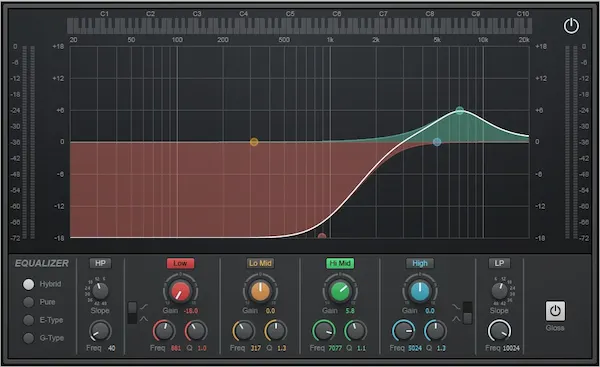 One of the most common misconceptions about mix bus processing is that it exists to make a mix sound bigger simply by adding more processing. That idea usually leads to the wrong decisions. Every processor placed across the stereo bus affects the entire song at once, so the goal is never to accumulate effects for their own sake.
The real objective is helping separate musical elements feel connected without changing their individual identities.
A well-balanced mix should not suddenly become exciting because something was added to the bus.
Instead, it should feel as though the instruments naturally belong together from the first note to the last.
Think about a band performing in the same room. The drummer, bassist, guitarist, and vocalist each have their own role, yet listeners rarely perceive them as isolated sound sources. They hear one performance. Mix bus processing follows a similar principle. Instead of changing individual tracks, it influences the relationships between them. When those relationships become more coherent, the mix feels less like dozens of independent recordings and more like a single musical statement.
This is why subtle decisions often produce the strongest results. A small adjustment across the entire mix can gently influence how kick and bass move together, how guitars support vocals, or how background elements settle into the arrangement. None of those parts necessarily sound dramatically different on their own. What changes is the way they interact. The listener may never notice a specific improvement, but the song becomes easier to follow because nothing feels disconnected from the whole.
In daily studio work, projects that already have strong balances usually respond best to mix bus processing. There is less temptation to force cohesion because much of it already exists. By contrast, mixes with unresolved arrangement or balance issues often encourage excessive bus processing in an attempt to create unity that has not been established earlier. That approach rarely succeeds. Relationships cannot be manufactured after the fact if they were never developed throughout the mixing process.
Restraint therefore becomes one of the defining characteristics of effective mix bus processing. The intention is not to hear the processing itself but to notice how naturally the entire record flows. When every instrument supports the others instead of competing for attention, the mix begins behaving like a complete performance. That sense of cohesion—not the amount of processing applied—is what gives mix bus processing its real value.
How The Mix Bus Changes The Way Individual Decisions Interact
Every decision made during mixing influences the next one, but those relationships become much easier to recognize once the entire mix is heard as a single system. A vocal level that seemed perfectly balanced on its own may suddenly feel too dominant. A rhythm guitar that sounded comfortably tucked away can begin masking important details elsewhere. Nothing about those tracks has changed individually. What changes is the way they interact after the mix starts behaving as one musical performance instead of a collection of independent channels.
This cumulative interaction is one of the defining characteristics of mix bus processing. Every instrument contributes a small part to the overall picture, and the combined effect is often far more significant than the influence of any single track. Every new track contributes more than its own sound. It changes how existing instruments relate to one another, often altering the perceived balance of the entire record. The mix bus exposes these cumulative relationships much more clearly than listening to isolated channels ever can.
One consequence of this broader perspective is that subtle adjustments often become surprisingly noticeable. A small vocal balance change may affect how the chorus feels emotionally. A slightly different drum relationship can influence the perceived energy of the entire arrangement. Even gentle refinements sometimes reshape the listener's impression because every element shares the same musical space. Engineers are no longer judging isolated sounds. They are judging how those sounds support one another over the course of the record.
This is also why experienced mixers avoid evaluating channels in isolation for too long. Solo listening has its place, but listeners never experience a finished song that way. They respond to interactions. They hear movement, tension, release, and continuity. The mix bus naturally encourages this wider perspective because every decision is immediately measured against the complete musical context instead of against one instrument alone.
Another interesting effect appears as sessions develop. Early adjustments that seemed insignificant often reveal their importance much later because each new decision builds on everything that came before. The overall direction of the mix becomes increasingly interconnected, making consistency more valuable than dramatic individual changes. Even the logic behind a mixing chain becomes meaningful only after every stage begins contributing to the behavior of the complete mix rather than functioning as a series of unrelated processing steps.
For listeners, this is where mix bus processing earns its place in professional mixing. It does not rewrite earlier decisions. Instead, it exposes how well those decisions cooperate. When instruments reinforce each other instead of competing for attention, the mix develops a sense of continuity that listeners rarely analyze consciously—but they notice it immediately. The record simply feels more connected, more intentional, and more believable from beginning to end.
| Mix Bus Situation | Typical Listener Perception | Mixing Result |
|---|---|---|
| No Overall Cohesion | Separate instruments | Fragmented mix |
| Balanced Bus Processing | Unified presentation | Cohesive record |
| Excessive Bus Processing | Artificial character | Reduced musical clarity |
| Subtle Mix-Wide Control | Natural glue | Stable musical balance |
Why Small Bus Decisions Often Produce Larger Changes Than Channel Processing
 One of the most surprising aspects of mix bus processing is how little it often takes to influence the entire listening experience. Engineers who are new to working with the stereo bus sometimes expect dramatic adjustments to produce dramatic improvements. In practice, the opposite is usually true. Because every instrument passes through the same final stage of the mix, even modest changes can reshape the way dozens of musical relationships are perceived at once. The adjustment itself may be subtle, but its effect spreads across the entire record.
This happens because listeners never evaluate instruments independently. They hear interactions. If the rhythm section feels more connected, the vocal often appears more confident without its level changing. If supporting instruments settle into the arrangement more naturally, the chorus may feel larger despite every individual track remaining exactly where it was. The mix bus does not replace earlier mixing decisions—it changes how those decisions cooperate with one another. That collective response is what makes relatively small refinements so influential.
A useful way to think about it is as adjusting the behavior of a group rather than correcting a single performer. Imagine an orchestra where every musician already knows their part. Changing the way the ensemble performs together has a much greater emotional impact than asking one violinist to play slightly louder. The audience experiences the performance as a whole. Music production works in much the same way. Once the mix begins behaving as one connected system, every small refinement affects the balance of the complete musical conversation.
This is also why experienced engineers tend to move carefully once they begin evaluating the mix as a whole. A decision that feels almost insignificant while making it can influence the perceived energy of an entire verse, the transition into a chorus, or the emotional continuity between sections. Larger changes are not necessarily more effective. In fact, aggressive adjustments often draw attention to themselves instead of strengthening the song. Small, deliberate refinements are more likely to preserve the character that was already working while quietly improving how every element fits together.
Another important observation from studio projects is that cumulative influence becomes easier to recognize as a project develops. Early in the mix, individual channels naturally demand more attention because their relationships are still forming. Later, those relationships become increasingly interconnected. At that stage, altering one isolated element may have surprisingly little impact compared to a careful refinement that gently affects the entire mix. The focus shifts from improving individual sounds to preserving the musical balance that already exists across the record.
Ultimately, this sensitivity is one of the reasons mix bus processing deserves patience rather than intensity. The objective is not to make listeners notice that something has changed. The real benefit is to make the song feel more complete without drawing attention to the process itself. When subtle bus decisions strengthen the way instruments support one another, the mix gains continuity, confidence, and musical focus—often through adjustments that would seem almost insignificant if applied to a single channel alone.
Why Engineers Often Mix Into The Bus Instead Of Finishing With It
Many people imagine mix bus processing as something that happens after every balance has already been finalized. The session is nearly complete, a few finishing touches are applied across the mix, and the work is done. Professional sessions often develop very differently. Rather than waiting until the end, many engineers prefer to hear the mix through the bus from an early stage so every decision grows within the same listening environment. The bus is not treated as a final destination—it becomes part of the conditions under which the mix is built.
This approach changes the way balances evolve. A vocal is adjusted while already interacting with the complete mix. Drum dynamics are judged against the musical energy of the entire arrangement rather than against isolated tracks. Harmonic instruments are placed according to how they support the song as a whole instead of how impressive they sound individually. Context becomes the constant reference point, allowing every decision to reinforce the next instead of requiring broad corrections later.
Imagine decorating a room while the lights are off, planning to switch them on only after everything has been arranged. The furniture might fit perfectly, yet the space could still feel awkward once the room is fully illuminated. Mixing follows a similar principle. Hearing the complete interaction from the beginning reveals relationships that would otherwise remain hidden until much later in the session. It becomes easier to recognize whether the record already feels connected instead of discovering that problem only after hundreds of individual adjustments have been made.
Working this way also encourages more natural balance decisions. Engineers spend less time chasing dramatic improvements because the mix gradually settles into a cohesive presentation as it develops. Small refinements accumulate instead of being replaced by large corrective moves near the end. The overall direction stays remarkably stable because each adjustment is evaluated under conditions that closely resemble how the finished mix will ultimately be experienced.
Another advantage is consistency over long sessions. As projects grow more complex, it becomes increasingly difficult to remember exactly how earlier choices were made. Hearing the mix through the same overall perspective from start to finish provides a reliable reference for every new decision. Rather than constantly adapting to changing conditions, engineers are simply refining relationships that have been evolving within the same musical framework all along. This is one reason professional workflows tend to remain remarkably organized even when sessions contain dozens or hundreds of tracks. Our guide explaining how professional mixing works explores this broader philosophy of maintaining stable decision-making throughout an entire project.
None of this means that every mix must begin with bus processing already in place. Different engineers have different methods, and different productions respond in different ways. The important principle is much simpler. Mix bus processing becomes most valuable when it helps shape decisions as they happen instead of attempting to redefine the character of the song after those decisions have already been made. By remaining part of the workflow rather than an afterthought, it encourages a mix that grows naturally into a unified record instead of being assembled from disconnected pieces.
Great mixes become cohesive long before the final bounce
A cohesive record is rarely created by adding more processing at the end of a session. It develops through consistent decisions that reinforce one another from the very first balance adjustment. We evaluate how your mix behaves as a complete musical performance, helping identify whether the overall presentation feels connected, natural, and ready to translate beyond the studio.
Professional evaluation. Cohesive results. Mixing decisions that serve the entire record.
Glue Is A Result, Not A Plugin
 Ask ten experienced mixing engineers what "glue" means, and very few will describe it as an effect. Most will talk about a feeling. It is the moment when the listener stops noticing separate instruments and begins hearing a complete record. Nothing suddenly jumps forward, nothing disappears, and nothing sounds artificially connected. The song simply becomes easier to believe. That is why glue is better understood as a musical outcome than as something that can be inserted into a session.
This distinction matters because many producers begin searching for cohesion in the wrong place. They assume the mix only needs another stage of processing before everything will finally lock together. In reality, cohesion develops from the relationships that already exist inside the arrangement. If the rhythm section supports the vocal naturally, if supporting instruments leave room for one another, and if transitions feel intentional, the mix already contains the foundation for glue. Bus processing can reinforce that musical interaction, but it cannot invent them where they do not exist.
Think about how people experience a live performance. Nobody leaves a concert talking about individual microphones or speaker cabinets. They remember how the band sounded together. The same principle applies inside a mix. Listeners respond to continuity. They notice whether instruments appear to belong to the same musical event, even if they cannot explain why. When every element feels connected to the same performance, the record becomes easier to follow because attention moves naturally from one musical idea to the next instead of constantly shifting between isolated sounds.
This is one reason subtle mix bus decisions can have such a meaningful effect. They encourage consistency across the entire presentation rather than emphasizing individual parts. A guitar does not suddenly become more exciting on its own. The vocal is not transformed into a different performance. Instead, the spaces between musical elements begin to feel more intentional. The song develops continuity, allowing listeners to stay emotionally connected instead of mentally separating one instrument from another.
In professional sessions, projects that are described as "glued together" usually share another characteristic: they remain remarkably stable as the arrangement grows. Additional layers strengthen the record instead of making it feel crowded. Choruses become larger without sounding disconnected from the verses. Dense productions retain direction because every new element supports the existing musical connections instead of competing with them. That consistency is far more valuable than any obvious sonic signature. Stable frequency relationships across the mix often contribute just as much to perceived cohesion, which is why overall frequency balance remains an important part of a connected mix.
Ultimately, glue is not something engineers chase directly. It appears when dozens of earlier decisions begin reinforcing one another across the complete mix. Most people will never consciously identify why the record feels more connected, yet they immediately notice that it holds together more naturally. Instead of hearing separate tracks assembled into a project, they hear one unified musical performance. That is why glue should be viewed as evidence that the mix is behaving consistently—not as proof that a particular processor has been added.
When Bus Processing Begins Solving Problems It Was Never Meant To Fix
One of the fastest ways to lose confidence in a mix is to expect the mix bus to solve problems that were created much earlier in the session. It is an understandable temptation. After spending hours balancing tracks, it is easy to believe that one final stage of processing will somehow pull everything together. Sometimes the mix feels closer for a moment, but that impression rarely lasts. If the underlying musical relationships are weak, bus processing simply makes those weaknesses more consistent rather than making them disappear.
Mix bus processing cannot repair weak musical decisions, replace thoughtful balancing, or create cohesion where none exists. Its role is to reinforce an already functioning mix, not to become a shortcut around earlier stages of the process.
A common example appears when instruments never established a clear relationship with one another in the first place. Perhaps the chorus feels crowded because too many parts are competing for attention, or perhaps the rhythm section never developed enough momentum to support the vocal naturally. Applying processing across the entire mix may change the overall presentation, but it cannot redefine how those musical roles were built. The record still depends on decisions that happened long before the mix reached the stereo bus.
This is why experienced engineers often pause before making broad mix-wide adjustments. Instead of asking, "How can the bus improve this?" they ask a different question: "Is this actually a bus problem?" That small change in thinking prevents countless unnecessary revisions. If the answer points toward an individual instrument, an arrangement decision, or an earlier balance choice, addressing the source almost always produces a more convincing result than trying to reshape the entire mix at once.
Many beginners assume that every mix should sound noticeably different after bus processing. That expectation often leads to unnecessary changes. In reality, experienced engineers frequently judge successful mix bus work by how little attention it draws to itself while allowing the song to feel more unified.
We regularly see projects where the mix bus becomes a place for chasing cohesion instead of confirming it. More processing is added because the song still feels disconnected. Another adjustment follows because the previous one did not fully solve the issue. Before long, the stereo bus is carrying the responsibility for problems that originated elsewhere. Ironically, this often makes the mix feel less natural, since every new change affects instruments that were already working well alongside those that were not.
Professional sessions tend to move in the opposite direction. Individual tracks are allowed to establish their musical purpose before the overall mix is asked to reinforce those relationships. Once that foundation exists, the bus can strengthen continuity instead of compensating for missing structure. If the foundation is unstable, however, broad processing simply magnifies the inconsistency. Many situations that appear to require mix bus intervention are actually examples of broader mixing problems that begin much earlier in the production process.
For this reason, the mix bus works best as a stage of confirmation rather than correction. It rewards thoughtful balances, complementary arrangements, and consistent musical direction that already exist inside the session. When those elements are in place, relatively small refinements can make the entire record feel more connected. When they are not, no amount of mix-wide processing can replace the decisions that should have been made before the bus ever entered the conversation.
Studio Observations: Sessions That Improved Without Changing Individual Tracks
 One pattern has repeated itself across countless mixing sessions in our studio. A client asks why the mix still feels disconnected even though every instrument sounds good on its own. The first instinct is often to revisit individual channels—adjust another vocal level, reshape the guitars, or continue refining the drums. Yet there are projects where none of those tracks are actually responsible for the missing sense of unity. The individual decisions are already solid. What the mix lacks is a stronger relationship between them.
During a recent indie rock mix in our studio, every major revision focused on separate instruments. The kick and bass had already found their balance, the vocal sat naturally in front of the arrangement, and the guitars occupied their own space without masking important details. Listening to any channel in isolation suggested very little still needed attention. The complete mix, however, never felt fully connected. Rather than beginning another round of channel revisions, we shifted our attention to how the entire record behaved as a single performance. That broader perspective changed far more than another series of isolated adjustments would have.
The result was surprisingly subtle. No instrument suddenly became louder or brighter. The vocal remained in the same emotional position, the rhythm section preserved its energy, and the arrangement itself was untouched. Yet the entire record became easier to follow because transitions between sections felt more natural and the relationship between instruments remained more consistent from beginning to end. Listeners would struggle to identify exactly what had changed, but nearly everyone described the revised mix as feeling more complete. None of the revisions involved rebuilding the mix from scratch. The improvement came from judging the record differently rather than chasing additional channel edits.
We have seen similar situations in dense productions with dozens of tracks. Engineers sometimes assume that adding complexity requires constant correction on individual channels. In practice, many of those sessions improve once the overall interaction becomes more coherent. Instead of repeatedly adjusting isolated elements, the mix begins responding as one musical system. Decisions become easier to judge because every change is evaluated against a stable overall presentation rather than against constantly shifting local balances.
Another interesting observation is how this approach often reduces unnecessary revisions. When the overall cohesion improves, engineers stop chasing problems that only seemed to exist because the complete record lacked continuity. Tracks that previously felt inconsistent suddenly make sense within the larger arrangement. Instead of creating more work, the mix becomes easier to trust because every instrument supports the same musical direction.
Experiences like these reinforce an important lesson from professional mixing. Cohesion is rarely measured by how impressive individual tracks sound in isolation. It is measured by how confidently the entire record moves from one musical moment to the next. Sometimes strengthening that shared behavior changes the emotional impact of the song without requiring additional processing on a single channel. Those are often the sessions where the biggest improvement is heard not in one instrument, but in the record as a whole.
Why Mix Bus Processing Supports Musical Perspective
One of the least discussed benefits of mix bus processing has nothing to do with processing itself. It changes the way engineers listen. Instead of concentrating on whether a snare drum needs more attack or whether a keyboard should be slightly brighter, attention gradually shifts toward a much broader question: does the song work as a complete performance? That change in perspective is often where the most meaningful improvements begin. The focus moves away from isolated sounds and toward the relationships that make a record feel believable from start to finish.
It is remarkably easy to lose that perspective during a long mixing session. Hours spent refining individual channels naturally encourage narrow decision-making. Every instrument starts asking for attention. Every small detail feels important. Before long, the mix becomes a collection of separate tasks rather than a single musical experience. The mix bus helps counter that tendency because every adjustment is immediately judged within the context of the entire arrangement. Engineers are reminded that listeners never experience the song one track at a time—they hear everything at once.
This broader viewpoint often changes the questions being asked. Rather than wondering whether a guitar sounds impressive on its own, the engineer begins asking whether it supports the vocal naturally. Instead of chasing the perfect drum tone in isolation, the emphasis shifts toward whether the rhythm section carries the energy of the record consistently from verse to chorus. Individual sounds still matter, but they stop being evaluated as independent achievements. Their success depends on how effectively they contribute to the complete musical picture.
Another advantage becomes obvious during lengthy projects with large track counts. As sessions grow more complex, it becomes increasingly difficult to remember why every earlier decision was made. Without a stable overall perspective, engineers often revisit the same channels repeatedly, making corrections that solve one local issue while unintentionally creating another somewhere else. Hearing the mix as one connected presentation reduces that cycle. Decisions remain tied to the direction of the record instead of constantly shifting according to whichever track happens to be under the cursor.
As engineers continue working through the session, the mix bus provides a stable reference that keeps decisions consistent. Instead of reacting to isolated tracks, attention stays focused on how every change influences the complete record.
Ultimately, the greatest value of the mix bus is not found in what it changes, but in how it changes the engineer's perspective. Once every decision is judged against the complete record instead of an isolated channel, consistency becomes easier to maintain and unnecessary revisions become far less common. That shift in perspective is often more valuable than any individual processing move.
Reference Listening Helps Reveal Whether The Mix Behaves As One Performance
After spending hours inside the same session, objectivity gradually fades. The mix starts to sound "normal" simply because the brain has adapted to it. Decisions that once felt obvious become harder to judge, and engineers often respond by making additional adjustments that move the mix farther from its original direction. This is one reason reference listening remains such an important part of professional mixing. Its value is not in copying another production. It is in restoring perspective.
When comparing a mix against a well-produced reference, experienced engineers are rarely asking whether the kick drum is louder or whether a vocal has more brightness. The more useful question is broader: does the record behave like one connected musical performance? Strong references make this surprisingly easy to evaluate. They reveal whether transitions feel natural, whether instruments support one another consistently, and whether the arrangement moves forward with a clear sense of purpose instead of feeling like separate layers competing for attention.
This wider perspective also exposes disconnected elements that are difficult to notice after listening to the same project for an extended period. Sometimes every individual track sounds convincing, yet the complete mix still feels fragmented. Other times the opposite happens—a few instruments seem imperfect on their own, but together they create a record that feels remarkably cohesive. Reference listening helps distinguish between these situations by shifting attention away from isolated details and back toward the musical experience listeners will actually hear.
Professional engineers therefore return to reference material not because they doubt every decision, but because they understand how easily familiarity can influence judgment. A trusted comparison provides an external point of reference that keeps the overall direction of the mix consistent throughout the session. As discussed in our guide to reference tracks for mixing, the purpose of a reference is to evaluate how complete records behave—not to imitate another engineer's processing choices.
Ultimately, reference listening supports the same goal as thoughtful mix bus processing. Both encourage engineers to judge the song as a unified performance rather than as a collection of unrelated channels. When the complete record maintains its flow, continuity, and emotional direction alongside trusted references, it becomes much easier to trust that the mix is communicating as intended.
Mix Bus Processing Belongs To The Entire Mix, Not Individual Tracks
A mix bus has no interest in individual instruments. It does not recognize a vocal, a snare drum, or a piano as separate priorities. It responds to the record as a whole. That is precisely why its purpose differs from channel processing. Individual tracks are refined so they can fulfill their musical roles. The mix bus exists to reveal whether those roles work together naturally once the entire performance is heard as one piece.
This is an important shift in perspective. A record becomes cohesive because its relationships remain consistent, not because every instrument has been perfected in isolation. The mix bus reinforces interaction, continuity, and shared movement across the arrangement. It encourages engineers to stop asking whether one sound has improved and start asking whether the entire song feels more believable. When that answer is yes, the bus has fulfilled its purpose. It has served the music instead of drawing attention to itself, allowing the complete record—not its individual tracks—to become the listener's focus.
The Best Mix Bus Processing Makes Listeners Hear The Song Instead Of The Processing
The most successful mix bus processing is often the least noticeable. Listeners rarely finish a song thinking about how cohesive the stereo bus sounded or wondering what happened across the final stage of the mix. They remember the chorus that stayed with them, the emotion carried by the vocal, or the way the entire record flowed naturally from beginning to end. That is exactly how it should be. Mix bus processing succeeds when it quietly strengthens musical relationships without becoming part of the conversation.
Throughout a session, small mix-wide decisions gradually shape how the record behaves as a whole. Balance, dynamics, arrangement, and tone all contribute to the same musical direction. The mix bus does not replace those decisions or compete with them. It allows them to work together more consistently, helping separate performances behave like one connected record. When that interaction feels natural, the listener experiences continuity rather than a collection of carefully engineered adjustments.
This is also why restraint remains one of the defining characteristics of professional mix bus work. The result is not to leave an obvious sonic fingerprint across every production. It is to preserve what already makes the song convincing while gently reinforcing its cohesion. If processing begins drawing attention to itself, the listener's focus shifts away from the music. If the processing disappears into the record, attention remains exactly where it belongs—on the performance.
Across hundreds of completed projects, the same pattern appears repeatedly. The strongest mixes are rarely those with the most elaborate processing. They are the ones where every decision supports the same musical intention. The bus simply helps maintain that direction, allowing the record to feel confident, unified, and emotionally consistent from the opening note to the final fade.
Great mix bus processing rarely announces itself. Listeners do not hear the bus—they hear a record that feels connected from beginning to end. That is the real purpose of the mix bus: helping every musical decision support the same performance without becoming the focus itself.
A great mix is remembered as one song—not a collection of tracks
Professional mixes are evaluated as complete musical performances, not as isolated channels. When every element supports the same artistic direction, the record feels cohesive, balanced, and emotionally convincing. We focus on how the entire mix behaves together, helping every instrument contribute to the song instead of competing for attention.
Thoughtful mixing. Cohesive records. Trusted by artists who want every mix to feel connected from the first listen.
Frequently Asked Questions
Should mix bus processing be added at the beginning or near the end of a mix?
There is no universal rule. Many experienced engineers prefer to hear the mix through the bus early because every balance decision is made within the same overall context. Others introduce bus processing later after the arrangement has stabilized. The important factor is maintaining a consistent workflow rather than choosing a specific moment.
Can mix bus processing improve a weak arrangement?
No. If instruments compete for the same role or the arrangement lacks clarity, the mix bus cannot solve those underlying musical issues. It can reinforce relationships that already exist, but it cannot create them from scratch.
Why do some mixes sound cohesive even with very little bus processing?
Strong cohesion usually begins with arrangement, balance, and consistent decisions throughout the session. When those foundations are solid, only subtle mix bus refinement may be needed because the record already behaves as a unified performance.
Is mix bus processing useful for every music genre?
Yes, although the objective changes with the production style. Dense modern productions often require careful control over overall interaction, while acoustic recordings may benefit from preserving natural dynamics and continuity. In both cases, the goal remains helping the song feel connected.
Can too much mix bus processing make a mix feel smaller?
It can. Excessive processing often reduces contrast, natural movement, and musical depth. Instead of improving cohesion, it may cause instruments to lose their individual character and make the entire production feel less engaging.
Should every revision include changes to the mix bus?
Not necessarily. Many revisions are better solved on individual tracks or through arrangement changes. The mix bus should only be revisited when the overall interaction of the song needs refinement rather than when isolated problems appear.
Why is it difficult to judge mix bus changes after long listening sessions?
Our hearing adapts surprisingly quickly. After listening to the same mix for an extended period, subtle improvements and subtle mistakes become harder to recognize. Short breaks and trusted reference material often make overall cohesion easier to evaluate.
Can a mix sound finished without noticeable mix bus processing?
Absolutely. If the musical relationships are already working naturally, listeners will rarely notice whether any mix-wide processing was applied. They respond to the final presentation, not to the amount of processing behind it.
Does mix bus processing replace careful channel balancing?
No. It depends on the quality of earlier decisions. Strong channel balances create the foundation that allows mix bus processing to reinforce cohesion instead of compensating for unresolved problems.
Can mix bus processing work without any processing at all?
Surprisingly, yes. Some engineers treat the mix bus primarily as a listening perspective rather than a place for heavy processing. If the mix already behaves as one cohesive performance, maintaining that perspective can be more valuable than adding additional processing.
How do professional engineers know when to stop adjusting the mix bus?
A good stopping point arrives when additional changes no longer improve the musical relationships. If new adjustments begin drawing attention to the processing instead of the song itself, the mix bus has likely gone beyond its most effective role.