
How To Fix AI Phase Problems: Before They Spread Across The Entire Mix
Some AI-generated songs sound impressive at first listen. The melody works, the arrangement feels complete, and nothing immediately suggests a technical problem. Then something changes. A guitar suddenly feels thinner than expected. Pads lose depth when another instrument enters. A powerful chorus somehow becomes smaller instead of bigger. Listeners often describe these moments as a "thin sound," even though they cannot explain exactly why.
The obvious assumption is that the mix needs work. In reality, the problem may have started much earlier. AI systems do not simply generate individual sounds—they generate relationships between sounds. When those relationships become inconsistent, subtle phase conflicts can develop long before anyone opens a mixing session. What appears to be a mixing issue may actually be part of the generated material itself.
Another common misconception is that every hollow or weakened sound automatically means phase cancellation. It doesn't. Similar symptoms can arise for different reasons, and treating them as identical often leads to unnecessary editing while the underlying problem remains untouched. That's why experienced engineers resist making quick assumptions. Before changing anything, they determine whether the signals are actually interacting in an unstable way.
The same principle applies throughout professional production. Whether evaluating a traditional recording or AI-generated material, successful work begins with identifying the true source of the problem rather than reacting to its symptoms. We explore that broader diagnostic mindset in our guide on What Is Mixing, because every reliable decision starts with understanding what the audio is really telling you.
When AI phase problems are identified correctly, they become far more predictable. The goal is not to chase every hollow moment, but to recognize when inconsistent relationships between generated audio layers are creating behavior that no amount of superficial editing can fully explain.
Why AI Phase Problems Are Different From Traditional Phase Cancellation
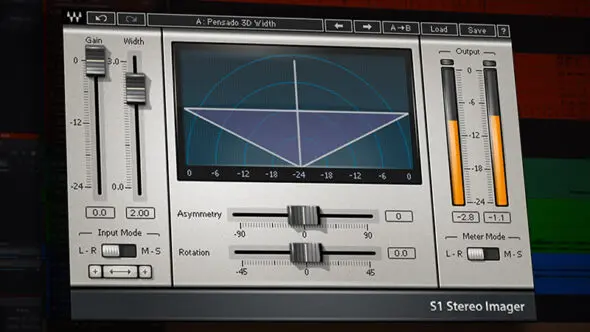 When engineers talk about phase cancellation, they usually mean a problem created during recording. Two microphones capture the same source from slightly different positions, the waveforms no longer align perfectly, and parts of the signal begin working against each other. The recording itself introduces the conflict. AI-generated music follows a very different path. There are no microphone distances to calculate, no misplaced overheads, and no accidental recording geometry. Yet phase-related behavior can still appear.
The difference lies in how generative systems build audio. Instead of capturing a single acoustic event, an AI model constructs multiple layers that are expected to behave as though they belong together. Those layers may share similar harmonic information without sharing the same underlying relationships. As a result, two elements can sound convincing in isolation while subtly competing once they exist inside the same musical context. The listener doesn't hear "bad recording." They simply notice that something feels weaker, less stable, or unexpectedly hollow.
This is why AI phase problems often appear before any production work begins. The instability is already embedded in the interaction between generated layers rather than being introduced later. During our evaluation process, it is common to encounter projects where every individual element seems acceptable on its own, yet the combination creates an inconsistent musical picture. Nothing has been processed, balanced, or rearranged. The relationship itself is producing the problem.
Another important distinction is that AI does not recreate one performance from multiple perspectives. Instead, it predicts and reconstructs related pieces of audio that are intended to function as a coherent whole. Those predictions are not always perfectly aligned. Similar textures, harmonics, or sustained tones can evolve in slightly different ways, creating subtle conflicts that resemble traditional phase behavior even though they originate from an entirely different process. The issue is not recording geometry—it is generation consistency.
This distinction matters because phase problems represent only one branch of a much broader AI repair process. As explained in our guide on How To Fix AI Generated Music, identifying the true category of the problem is often more valuable than searching for an immediate correction. Once the source of the instability is understood, it becomes much easier to decide whether the generated material is fundamentally reliable or whether another limitation is responsible for what you're hearing.
Thinking this way changes the diagnosis completely. Rather than asking whether two waveforms have become misaligned during recording, the more useful question is whether the AI created a stable relationship between the generated audio layers in the first place. That shift in perspective explains why AI phase problems require their own category instead of being treated as another variation of traditional phase cancellation.
Unlike a recorded performance, where every microphone captures the same physical event from a different position, AI predicts related audio independently. Those predictions can be remarkably convincing, but they are not always built from a single coherent acoustic reference. Small inconsistencies between generated layers may therefore appear even before any production work begins, creating relationships that would rarely occur in a traditional recording session.
The Listening Clues That Usually Reveal AI Phase Instability
One reason AI phase problems are frequently overlooked is that they rarely announce themselves with an obvious failure. Instead, they alter how the music behaves. The first clue is often a subtle hollow quality. A pad that felt wide and full a moment ago suddenly loses substance. A layered synth seems to retreat without any apparent reason. Nothing disappears completely, yet the music feels less solid than it should. Listeners may describe it as "thin," "empty," or "washed out," even when they cannot explain what changed.
Another recurring sign is the impression that certain frequencies refuse to stay consistent. Low-mid warmth may appear during one phrase and seem noticeably weaker during the next, despite the arrangement remaining virtually unchanged. High-frequency detail can fluctuate in a similar way. These shifts rarely behave like intentional musical variation. Instead, they follow repeated interaction patterns between generated layers, causing specific parts of the spectrum to become stronger or weaker as similar sounds overlap.
Low frequencies often provide another important clue. Rather than sounding consistently focused, the foundation of the track may alternate between tight and surprisingly lightweight. The bass itself has not necessarily changed, but its relationship with neighboring generated elements has. Small inconsistencies in those relationships can influence how confidently the low end is perceived, creating the impression that the track keeps changing weight from one section to another.
Many listeners also notice a constantly shifting tonal character without identifying a clear cause. One phrase feels balanced, while the next seems unexpectedly softer, sharper, or less defined. The individual sounds remain familiar, yet their interaction changes enough to affect the overall impression. These tonal fluctuations are often mistaken for arrangement choices or performance differences when they actually reflect unstable relationships inside the generated audio.
A more recognizable symptom is the subtle comb-filter character that occasionally appears on sustained material. Instead of hearing a smooth, continuous tone, the listener senses a faint hollow texture, almost as if parts of the sound are gently cancelling each other before naturally returning. Importantly, this behavior is rarely permanent. It tends to emerge only when specific generated layers interact in particular ways, which explains why repeated listening often reveals patterns that were easy to miss the first time.
This selective behavior is one of the strongest indicators that the issue is not random. Certain chords may consistently trigger the same change. Particular instrument combinations may repeatedly lose body. Similar passages may produce nearly identical tonal shifts every time they occur. Experienced engineers pay close attention to these recurring moments because AI phase instability follows recognizable acoustic behavior rather than unpredictable accidents.
Perhaps the most misleading aspect is that the problem can seem to disappear altogether. A section may sound completely natural, only for the same instability to return later under nearly identical musical conditions. That inconsistency leads many users to dismiss the issue as imagination or playback variation. In practice, recurring phase relationships inside generated layers often become active only when certain harmonic structures align, making the symptoms appear intermittent even though their underlying cause remains consistent.
For that reason, reliable diagnosis depends less on finding one dramatic defect and more on recognizing repeated listening patterns. AI phase problems rarely announce themselves through a single obvious event. Instead, they leave behind a consistent series of acoustic clues that become increasingly recognizable once attention shifts from individual sounds to the way generated layers behave together over the course of an entire song.
| What You Hear | What It Usually Indicates | First Diagnostic Step |
|---|---|---|
| Hollow center | Inconsistent phase relationship | Compare mono compatibility |
| Vanishing frequencies | Phase cancellation | Identify repeating sections |
| Unstable tonal balance | Layer interaction | Compare similar passages |
| Weak mono playback | Signal relationship issue | Check consistency |
| Comb-filter character | Phase instability | Determine affected layers |
Imagine two nearly identical sustained synth layers. Each sounds stable on its own. As soon as they overlap, tiny differences in the way AI generated their harmonic movement begin interacting. Nothing dramatic happens, yet the combined sound slowly loses focus instead of becoming fuller. This type of behavior is much more characteristic of unstable generated relationships than of an isolated performance issue.
Why Many AI Phase Problems Are Mistaken For Stereo Issues
One of the most common mistakes we see is assuming that every unstable sound field points to a stereo problem. An instrument seems to drift sideways, the center feels less defined, or the overall presentation changes from one section to the next. The immediate conclusion is often that the left and right channels are behaving incorrectly. In many AI-generated productions, however, those symptoms can begin much earlier—with inconsistent phase relationships between generated layers rather than with stereo behavior itself.
This confusion is understandable because both categories influence the way music is perceived in space. A vocal may appear firmly positioned during one phrase before feeling less anchored a few seconds later. A synth pad that initially sounds cohesive may gradually lose its sense of focus. None of these changes automatically identify the source of the problem. Similar listening impressions can result from entirely different technical causes, which is why experienced engineers avoid diagnosing phase issues based on spatial perception alone.
Another reason for the confusion is that AI-generated layers are expected to behave as though they belong to the same performance. When those relationships become inconsistent, the listener may interpret the resulting instability as movement inside the soundstage, even though the actual issue lies in how the generated signals interact with one another. The spatial impression changes because the relationship changes—not necessarily because the stereo presentation itself is incorrect.
We've also seen projects where artists spent hours trying to solve what they believed was a stereo imbalance, only to discover that the perceived movement disappeared once the underlying phase inconsistency was properly identified. The opposite happens as well. A genuine stereo issue can sometimes be mistaken for phase instability because both categories affect how stable a mix feels during playback. Relying on the symptom instead of the source often sends the entire repair process in the wrong direction.
That distinction is exactly why phase behavior and stereo behavior deserve separate discussions. They may produce similar listening impressions, but they originate from different relationships inside the audio and therefore belong to different diagnostic categories. If your project exhibits shifting spatial perception that is not caused by unstable phase relationships, our guide on How To Fix AI Stereo Problems explores that subject independently without overlapping the principles discussed here.
Recognizing this boundary prevents unnecessary guesswork. Instead of asking whether the sound simply feels wider, narrower, or off-center, a more productive question is whether the generated layers are interacting consistently throughout the performance. Once that distinction becomes clear, diagnosing AI phase problems becomes far more reliable, and problems that initially seemed identical begin to separate into their proper categories.
Not every phase problem is actually a phase problem
AI-generated music can produce symptoms that resemble phase instability while originating from entirely different generation behaviors. Before investing time in extensive editing, identify whether you're dealing with a true phase relationship issue or a broader AI generation limitation. An accurate diagnosis often determines whether repair is worthwhile—or whether regeneration will provide a stronger foundation.
Professional evaluation. Smarter decisions. Less unnecessary editing.
Studio Observations: The Phase Patterns We Encounter Most Often In AI-Generated Music
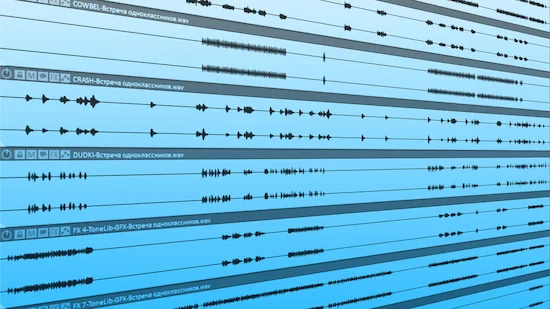 Working with AI-generated material long enough, you stop treating phase issues as isolated technical accidents. They tend to repeat. Not in identical form, but in behavior. The same kinds of inconsistencies appear across different projects, even when the musical ideas are completely unrelated. A vocal layer that felt stable in isolation suddenly becomes hollow when combined with another generated element. A synth that sounded fine in preview loses definition only after the full arrangement is assembled.
One pattern we see repeatedly is that phase-related problems are rarely obvious at the start. In many cases, the issue only becomes audible after a mix reaches a more complete stage. Engineers describe it the same way: everything sounds acceptable during early evaluation, but once multiple AI-generated layers interact, something stops holding together. The instability is not introduced later—it becomes exposed later.
Another recurring situation is when correcting one perceived issue reveals another. A section that initially feels thin is adjusted, only for a different instability to appear in a neighboring frequency range or musical layer. This is not a chain of independent mistakes. It usually points back to how the generated elements were related from the beginning. The behavior shifts because the underlying relationships were never fully stable to begin with.
We also see consistency across unrelated projects. Different genres, different creators, different tools—yet similar phase-related behavior appears in comparable structural moments of a track. Sustained textures, layered harmonics, and dense arrangements tend to expose the same weaknesses. The surface details change, but the pattern underneath remains familiar.
In many cases, the initial assumption is that something in the tonal balance is off, or that specific frequencies are masking each other. Those explanations can feel convincing, especially when listening casually. However, deeper evaluation often shows that the real issue is not frequency conflict in the traditional sense, but the way generated layers interact when combined into a single musical structure.
One detail that consistently stands out in studio evaluation is how quickly attention shifts toward surface-level fixes. Users often focus on equalization or tonal adjustments, while the instability itself remains unchanged. The result is repeated correction cycles that improve perception in one moment but fail to resolve the underlying behavior. That pattern is one of the clearest indicators that the issue is structural rather than cosmetic.
Our studio regularly evaluates AI-generated productions submitted by artists across the United States and internationally, and the same diagnostic reality appears again and again: phase-related instability is rarely a single isolated defect. It is usually a pattern that repeats across multiple sections once you know what to listen for.
Recognizing these recurring behaviors changes the entire decision-making process. Instead of reacting to individual symptoms, the focus shifts to identifying whether the relationships between generated layers are fundamentally stable. Once that distinction becomes clear, many “random” problems start forming predictable patterns.
When AI Phase Problems Can Be Improved And When They Cannot
Not every phase-related issue behaves the same way. Some are subtle, almost cosmetic in nature. Others are structural and embedded deep inside the generated material. The difference is not always obvious at first listening, which is why many decisions in AI-generated audio start in the wrong direction. What seems like a small instability can sometimes point to a deeper limitation in how the audio was originally constructed.
In milder cases, the issue is mostly perceptual. The relationships between generated layers are mostly stable, but small inconsistencies create a sense of unevenness or partial cancellation in specific moments. These situations can often feel distracting, but they still sit close enough to a coherent structure that the overall material remains usable. The instability is present, but not dominant.
At a different level, problems become embedded in the interaction between layers themselves. Instead of occasional inconsistencies, the relationships between generated elements behave unpredictably across sections. One part of a track may feel stable, while another collapses into a thinner or less defined structure without any clear external trigger. This is where the issue stops being about perception alone and becomes part of the generated architecture.
A key factor in diagnosis is whether the instability changes the material only in how it is perceived or whether it actually defines how the layers were constructed in the first place. When the issue is superficial, improving the balance between elements can reduce the effect. When it is structural, adjustments often change the surface behavior without resolving the underlying inconsistency. The sound may improve in one area, only for the same instability to appear elsewhere in a different form.
There is also a category of cases where the original interaction between generated layers was never fully coherent from the start. In these situations, the material itself lacks a stable reference point. What you hear is not a degraded version of something solid—it is the result of relationships that were never consistently formed during generation. In such cases, no amount of refinement can fully reconstruct what was never present in the first place.
This is why diagnosis matters more than immediate correction. As outlined in our broader guide on How To Fix AI Generated Music, the first step is always understanding the category of the problem before deciding how far it can realistically be taken. Without that distinction, it becomes easy to invest time in adjustments that only affect surface behavior.
Ultimately, the dividing line is simple but important. If the phase relationship is fundamentally intact, the issue can often be reduced to a more controlled level. If the relationship was never stable in the first place, improvement becomes limited by the structure of the generated material itself. Recognizing this early prevents repeated cycles of correction that never fully resolve the underlying behavior.
Why AI Phase Problems Often Become Obvious Only After Further Production
 One of the more confusing aspects of AI-generated music is that phase instability is not always obvious when a song is first created. An early preview can sound surprisingly convincing. Individual sections feel balanced, and nothing immediately suggests that the generated layers are working against one another. Then the project moves forward. More parts are organized, transitions become clearer, and the same song suddenly feels less stable than it did during the first listen.
This happens because additional production places existing relationships under greater scrutiny. As musical elements become more organized and easier to compare, subtle inconsistencies that once blended into the background begin to stand out. The generated material has not fundamentally changed. Instead, the listener gains more opportunities to notice that similar passages are behaving differently than expected.
Editing often contributes to this effect as well. Once repeated phrases are aligned and neighboring sections are evaluated side by side, differences that originally felt insignificant become much easier to recognize. A sustained texture may sound solid in one chorus but unexpectedly hollow in the next. Two nearly identical passages may no longer create the same impression, even though their musical role remains unchanged.
As a project becomes more organized and easier to evaluate, similar behavior often becomes easier to notice. As the overall presentation becomes more coherent, the ear naturally shifts its attention from individual sounds toward how those sounds interact over time. Relationships that previously escaped notice may begin drawing attention simply because the rest of the production has become more consistent. The instability was already there—it just had fewer opportunities to reveal itself.
Preparing stems can expose another layer of the same phenomenon. When generated elements are evaluated separately and then considered together again, recurring inconsistencies often become easier to identify. Some layers remain remarkably stable, while others produce slightly different behavior every time they interact with related material. Those repeating patterns are rarely introduced during preparation. They simply become easier to observe once the project is examined in greater detail.
This delayed recognition explains why artists are often surprised when a track that sounded perfectly acceptable at the beginning starts raising questions later in production. The additional work did not create the phase problem. It revealed relationships that had already existed inside the generated material. As the song becomes more transparent, those relationships become more difficult to ignore, turning subtle inconsistencies into recognizable listening patterns.
Understanding Phase Relationships Makes Better Repair Decisions Possible
Every successful evaluation begins with the same question: what is the audio actually doing? AI-generated music can produce symptoms that resemble familiar production problems while originating from entirely different relationships inside the generated material. That is why careful diagnosis consistently delivers better results than quick assumptions. Understanding how generated layers behave together provides a far more reliable foundation than reacting to the first unusual sound you hear.
It also creates realistic expectations. Some relationships remain stable throughout an entire song, while others become inconsistent only under specific musical conditions. Recognizing that distinction helps separate problems that are likely to improve from those that are limited by the way the material was originally generated. Instead of chasing isolated symptoms, the focus shifts toward identifying recurring behavior.
Ultimately, phase evaluation is less about finding faults than understanding patterns. Once the interaction between generated layers becomes clear, every decision becomes more predictable because it is based on the actual structure of the audio rather than on assumptions about how it should behave.
Reliable AI Phase Repair Begins With Understanding Signal Relationships
Reliable decisions rarely begin with correction. They begin with understanding why the audio behaves the way it does. AI-generated music can contain phase instability that remains almost invisible until certain layers interact under specific musical conditions. Looking only at the audible symptom—a hollow passage, weakened impact, or inconsistent tonal balance—often leads to the wrong conclusion. The more dependable approach is to identify whether the generated signals maintain stable relationships throughout the song or whether those relationships begin to break down in predictable ways.
This is also why recurring patterns matter more than isolated moments. A single section that sounds thinner than expected does not automatically point to a phase problem. However, when similar passages repeatedly produce the same change in character, they begin to reveal consistent signal behavior rather than random variation. Experienced evaluation focuses on those repeating interactions because they expose the underlying structure of the generated material far more accurately than individual listening impressions.
Another important consideration is accepting the limitations of the source itself. Some generated relationships remain coherent enough to support further production, while others never establish the stability required for consistent playback. Recognizing that boundary early prevents unrealistic expectations and helps determine whether the material offers a reliable foundation for continued work. As discussed in our guide on How To Fix AI Generated Music, identifying the true origin of a problem should always come before deciding how to move forward.
That same diagnostic mindset also makes it easier to distinguish AI generation issues from broader production challenges. Once unstable internal signal relationships have been identified—or confidently ruled out—the remaining symptoms can be evaluated in the wider context of the project. Our Mixing Problems Guide explores those production-related issues separately, allowing each category to be addressed on its own terms instead of treating every unusual sound as the same technical problem.
Ultimately, dependable AI phase repair is not built on reacting faster. It comes from recognizing how generated signals interact over time, identifying recurring instability before drawing conclusions, and making decisions based on the actual behavior of the material. When diagnosis comes first, every next step becomes more predictable because it reflects the relationships that already exist inside the audio rather than assumptions about what the problem might be.
Don't Spend Hours Correcting The Wrong Problem
Many AI phase problems are not created during production—they originate from unstable relationships between generated audio layers. A professional evaluation can determine whether the material provides a reliable foundation for further work or whether regeneration is likely to produce a better result before additional production begins.
Better diagnosis. Smarter production decisions. Fewer unnecessary revisions.
Frequently Asked Questions
Why do AI phase problems sometimes disappear when listening on headphones?
Headphones isolate the left and right channels, which can make certain phase relationships less noticeable than they are through speakers. The underlying inconsistency usually remains—it is simply presented differently, which is why comparing multiple playback systems often reveals behavior that headphones alone may not expose.
Can AI phase issues affect only certain instruments?
Yes. Phase instability often appears only in specific generated layers rather than across an entire song. Sustained pads, stacked synths, guitars, choirs, and textured backgrounds are more likely to reveal inconsistent signal relationships than short, isolated sounds.
Why does mono playback reveal AI phase problems more clearly?
When stereo information is combined into a single channel, conflicting relationships between generated layers become much easier to hear. Elements that previously sounded stable may lose body or clarity, making hidden phase inconsistencies far more apparent.
Are AI phase problems always audible throughout the entire song?
No. They often appear only when particular musical layers interact. A verse may sound perfectly stable, while a chorus or instrumental break exposes the same recurring instability every time similar elements overlap.
Can two similar AI-generated layers create phase instability?
Absolutely. AI systems can generate layers that share nearly identical harmonic content without maintaining perfectly consistent relationships between them. The closer those layers resemble one another, the greater the chance that subtle phase-related behavior becomes audible.
Why do AI phase problems become more obvious after editing?
Editing makes it easier to compare similar passages and evaluate how generated layers behave over time. As the production becomes more organized, recurring inconsistencies that were previously masked by the overall arrangement often become much easier to recognize.
Is a hollow sound always caused by phase cancellation?
No. A hollow character is only a symptom, not a diagnosis. Similar listening impressions can result from several different AI generation behaviors, which is why identifying the true source of the problem is more reliable than assuming every hollow sound points to phase instability.
When is regeneration more effective than trying to improve AI phase relationships?
If the generated layers never establish stable relationships throughout the performance, the limitation often belongs to the source material itself rather than to the production process. In those situations, creating a more coherent generation may provide a stronger foundation than continuing to refine an inherently unstable one.