
How To Fix AI Stereo Problems: Find The Instability Before Changing The Image
An AI-generated track can sound wide, modern, and convincing on the first listen and still have a stereo problem. The clue is often hard to name. A background element sits in one place during a section, then feels different when similar material returns. Something that appeared anchored a few seconds ago no longer feels quite as certain.
Most listeners notice this loss of spatial confidence before they understand what is causing it. They may describe the track as too wide, too narrow, or simply strange. But an AI stereo problem is rarely defined by size alone. One isolated moment can sound completely convincing. The stronger diagnostic signal appears when identical or near-identical musical sections produce different spatial behavior without a clear musical reason.
The first step is to determine whether the stereo image behaves consistently enough to be trusted. As we explain in what mixing actually involves, professional work begins by identifying the relationships creating the problem rather than processing the first symptom that attracts attention.
A Stereo Image Can Sound Impressive And Still Be Unstable
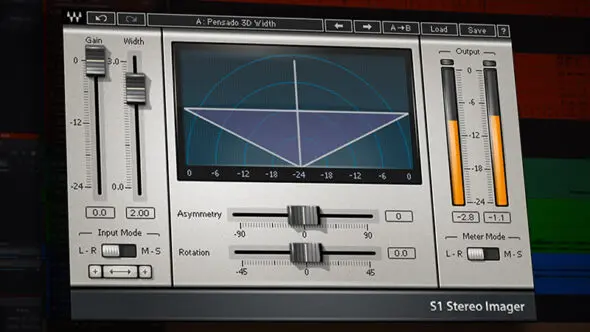 Width makes a strong first impression. A track opens up, the edges feel active, and the whole production seems larger than the speakers in front of you. That can be exciting. It can also hide a problem.
A large stereo image is not necessarily a stable one. The same is true of movement. An element that changes its perceived location is not automatically defective, because music is allowed to move. A chorus may naturally feel broader than a verse. A sparse section may give way to something more expansive. If those changes support the musical event, the listener accepts them without questioning where the sound has gone.
The key diagnostic signal is repetition mismatch: when identical or near-identical musical moments produce different spatial behavior without any musical reason for the change.
Take two similar choruses built from nearly identical material. The first feels confident. The main musical focus holds its place while the surrounding information creates a believable frame around it. When the second chorus arrives, the notes and overall density are similar, yet the spatial picture no longer behaves the same way. The focus seems less certain. A supporting element attracts attention from a different area. The background no longer occupies the same perceptual role. Nothing is dramatically wrong in isolation, but the comparison exposes a break in continuity.
Quick judgments about stereo image often miss the actual pattern. People often listen to ten seconds, hear an impressive spread, and assume the image is healthy. That is a snapshot. AI-generated stereo problems are often easier to recognize over time, especially when the material provides its own points of comparison.
Repeated sections are useful because the musical context is already familiar. So are neighboring phrases with similar density, recurring musical roles, and passages that should create roughly the same spatial impression. If those moments repeatedly behave differently without a corresponding musical change, the issue is no longer about whether the track feels big enough.
That difference is more important than the initial impression. Intentional movement has context. A section opens, contracts, shifts focus, or changes scale in a way that belongs to the performance. Generated inconsistency can feel more arbitrary: a stable location becomes uncertain, a familiar spatial relationship returns differently, or the image seems to reorganize itself even though the music has not meaningfully changed.
One strange moment proves very little. Neither does one wide moment. The more useful question is whether comparable parts of the song maintain a believable spatial logic. Stereo quality is not defined by maximum width. Consistency across similar musical moments tells us far more about whether the image can actually be trusted.
The Fastest Way To Recognize An AI Stereo Problem Is To Compare Similar Moments
The fastest way to identify an AI stereo problem is to stop judging the image by size and compare how similar musical moments behave. Choose two structurally comparable sections and listen for whether the same musical role maintains a recognizable spatial relationship.
Do not start by judging the entire song. A full-track impression contains too many changing variables: different instruments enter, density increases, sections open up, and the listener's attention moves with the music. Almost any spatial change can seem reasonable when everything else is changing at the same time.
A better test is much simpler. Find two moments that are musically comparable.
Repeated choruses are an obvious place to start, but exact repetition is not required. Two neighboring phrases can be useful if they contain similar material. So can recurring sections with roughly the same density or the same dominant musical role. The point is to reduce the number of differences. Once the musical context is familiar, unexpected changes in the stereo image become much easier to hear.
First, notice where the main focus seems to sit. Does the center feel equally definite in both passages, or does one section seem harder to locate? Then listen past the dominant element. Do the surrounding sounds occupy a comparable role, or does the background suddenly pull attention toward a different area? Finally, return to the element your ear follows most naturally. It does not need to remain motionless, but it should not lose its perceptual anchor for no apparent musical reason.
Here is a typical example. The first chorus feels secure: the main musical information holds a clear center, while the surrounding material gives the section scale. The second chorus uses almost the same musical content. Yet the center feels less definite, one supporting layer unexpectedly draws attention toward one side, and the surrounding information no longer creates the same spatial frame. Neither chorus has to sound obviously broken on its own. The difference between them is the evidence.
Now ask another question: does the change happen again?
A repeatable shift may belong to the production itself. An unpredictable one deserves more attention. If a similar musical event returns three times and the spatial focus behaves differently each time, the pattern matters more than any single moment. That kind of comparison is often more revealing than asking whether the track is generally wide enough or whether one passage looks unusual in isolation.
This is also why diagnosis should not depend on finding one ideal stereo value. Music changes. Density changes. The perceived size of a section can change too. What matters is whether comparable musical events preserve enough continuity for the listener to understand the spatial behavior as part of the song.
Repeated comparison can also reveal that the problem is not limited to stereo behavior at all. If several aspects of the generated material change unpredictably together, the issue may need to be evaluated within the broader process of fixing AI-generated music rather than treated as one isolated image defect.
That is the practical starting point: compare like with like. Repeated sections provide a more useful stereo reference than isolated snapshots, assumptions about ideal width, or a single impressive moment.
If two comparable sections establish conflicting spatial relationships without a clear musical reason, treat that difference as a diagnostic signal rather than a simple width issue.
| What You Notice | Most Likely Category | What To Determine First |
|---|---|---|
| Center appears to move between similar sections | Stereo image inconsistency | Does the movement repeat predictably? |
| Sound becomes hollow or frequencies disappear | Possible phase relationship problem | Does signal information cancel? |
| Track simply feels too narrow | Width decision | Is the image actually unstable? |
| One section feels spatially detached | Generated stereo inconsistency | How does it compare with an equivalent passage? |
| Background changes sides without a musical reason | Image movement | Is the same musical role behaving differently? |
| Entire spatial picture changes unexpectedly | Structural stereo inconsistency | Where does the change first become noticeable? |
Why Image Movement Is Not Automatically A Stereo Defect
A stereo image does not need to stay frozen from the first bar to the last. In fact, a completely static presentation can work against the music. Sections become denser. The sense of scale changes. Attention moves from one musical role to another. A quieter passage may feel more contained, while the next section occupies a larger spatial frame.
None of that automatically indicates a stereo problem.
The useful question is whether the change belongs to what the music is doing. When a chorus arrives with more layers and greater intensity, a different spatial impression can feel entirely natural. When the song pulls back, the center may become more exposed simply because less information surrounds it. These changes have context. The listener may not analyze them, but the musical event explains why the image feels different.
Generated inconsistency behaves differently. The spatial impression changes, yet the music provides no convincing reason for the change.
Consider two nearly identical choruses. The first opens into a larger frame and keeps its main focus easy to follow. When the chorus returns, it expands in much the same way. That repeatability suggests a coherent production choice. Now change the second example: the musical content remains almost the same, but the returning chorus pulls attention toward a different area, the center no longer feels equally secure, and the surrounding material creates a new spatial impression. Nothing important in the music explains the shift.
That difference is not subtle in practice. Dramatic movement can be intentional. Subtle movement can be problematic. The size of the change tells us less than its relationship to the musical event.
This is where single-moment judgments often fail. A listener can stop at one section, hear movement, and assume something is wrong. Or the opposite: one passage sounds impressive, so the image is considered healthy. Neither conclusion has enough context. Stereo behavior becomes meaningful when we hear what happened before, what happens next, and whether a comparable event behaves in a comparable way.
Not every change must repeat exactly. Music is allowed to evolve. A final chorus may legitimately feel different from the first. A transition may deliberately redirect attention. What matters is whether the change forms part of an understandable progression or appears as an unexplained break in spatial behavior.
Movement is not the issue. Consistency of behavior across similar moments is.
Why AI-Generated Stereo Can Change Without An Obvious Musical Reason
 With a conventional multitrack production, the same source often keeps a recognizable role as the song develops. A particular sound may change, but there is usually some continuity behind it. The listener learns where important information belongs and builds an unconscious expectation around that relationship.
AI-generated material does not always preserve the same kind of continuity.
This does not mean we can look at a finished audio file and claim exactly how an unknown generation system created it. We cannot. What we can evaluate is the audible result. And one pattern appears often enough to matter: similar musical roles do not always return with comparable spatial behavior.
A supporting texture may feel evenly distributed in one passage, then carry noticeably more weight toward one area when a similar passage returns. A recurring musical figure may seem easy to locate the first time and less anchored later. The center can feel firm during one section, then become harder to define even though the musical density has barely changed.
Sometimes the difference is small. That is what makes it difficult to identify. Nothing jumps out as obviously broken. The track simply becomes less convincing over time because the listener keeps receiving slightly different spatial information from material that appears to serve the same musical purpose.
The problem becomes harder to isolate when several generated sounds are perceived as one role. What seems like a single background texture, for example, may behave as a coherent spatial frame in one section and as a less stable collection of information in another. We do not need to speculate about how the generator produced that result. The diagnostic fact is enough: comparable musical material no longer creates a comparable spatial impression.
This is also where stereo instability differs from isolated audio artifacts discussed in our AI audio analysis. Some problems appear as isolated noises, damaged fragments, or other specific irregularities within the audio. Those belong to the broader diagnosis covered in our AI artifact analysis notes. A stereo problem is different. The individual sounds may appear intact while their spatial behavior changes across time.
That difference is easy to miss when each section is judged alone. One chorus may sound perfectly acceptable. So may the next. Put them next to each other, however, and the relationship changes: the same role no longer holds the same perceptual position, the background carries different spatial weight, or the center becomes less dependable without a clear musical event to explain why.
We treat those changes as evidence, not proof of a particular generation process. The distinction matters. Responsible diagnosis stays with what can actually be heard and compared instead of inventing a technical explanation for a system whose internal behavior is unknown.
The practical conclusion is narrow but important: AI stereo inconsistency becomes audible when similar musical roles stop maintaining comparable spatial behavior.
Before changing the stereo image, make sure stereo is actually the problem
An AI-generated track can feel too wide, too narrow, or difficult to center when the real issue is inconsistent spatial behavior. Changing the image may alter what you hear without addressing why similar sections behave differently. A professional evaluation can help identify the actual category of the problem before unnecessary correction begins.
Identify the problem first. Then decide whether correction, further production, or regeneration makes sense.
Studio Observations: The AI Stereo Behaviors That Keep Reappearing
 Our studio regularly evaluates AI-generated productions submitted by artists across the United States and internationally, and one pattern appears again and again: the opening of a song can create a convincing spatial impression even when the stereo behavior is not consistent across the full performance.
The first verse sounds settled. The first chorus feels large and easy to follow. Nothing immediately demands attention. Then the section returns.
That is often where the problem becomes easier to hear. A musical role that felt anchored earlier no longer holds the same perceptual position. The surrounding information carries different spatial weight. A background part still performs the same musical function, yet it no longer supports the section in the same way. The change may be small enough to escape a quick listen, but once the two passages are compared directly, it becomes difficult to ignore.
Artists often describe this as a width problem. In practice, that description can be misleading. We have received tracks where the second chorus was reported as feeling “smaller” than the first. Comparing the two sections showed something more specific: the overall size of the image was not the useful distinction. The first chorus had a dependable perceptual center and surrounding elements that maintained a coherent frame. In the second, the center felt less certain while the background pulled attention differently. “Smaller” was the artist's description of the experience, not the actual category of the problem.
This distinction matters because a single fragment can pass a quick check. Stop playback during either chorus and both may sound acceptable. Listen across the song, however, and the inconsistency becomes apparent. The issue is not necessarily one dramatic stereo event. It is the failure of comparable moments to establish the same level of spatial confidence.
Another recurring behavior appears in background information. A texture, supporting layer, or secondary musical role can seem to occupy one relationship to the main focus, then return with a different spatial emphasis even though its musical job has barely changed. This creates a recognizable inconsistency across repeated sections. More often, the section simply feels less settled.
One pattern becomes especially clear during revisions. Once an obvious spatial distraction is reduced, a deeper inconsistency elsewhere can become easier to notice. That does not mean the first change created a new problem. The stronger distraction had been masking a second one. We see this most clearly in songs where one section contains an obvious shift but the broader instability only becomes apparent after that section stops dominating attention.
This is why isolated examples can produce false confidence. A dramatic moment may attract too much attention, while a quieter inconsistency repeats through half the song. Or one impressive section may convince the listener that the entire image is stable when later repetitions tell a different story.
Across AI-generated productions, repeated behavior is the more useful evidence. Where does the same musical role return? Does the listener's focus remain dependable? Do comparable sections preserve a recognizable spatial relationship, or does each repetition ask the ear to rebuild its understanding of the image?
One unusual moment can belong to the music. A pattern of unexplained changes across comparable sections tells us much more.
When A Stereo Problem Belongs To One Layer And When The Whole Image Is Unreliable
Not every unstable stereo image is unstable in the same way. Sometimes one musical role behaves strangely while the rest of the song continues to provide a dependable spatial frame. In other cases, several relationships change together. Those are very different situations.
A localized inconsistency is easier to recognize because something stable remains around it.
Imagine a section where the main focus stays clear, the surrounding material keeps a familiar shape, and the overall hierarchy remains easy to follow. One background texture, however, changes its perceived side when the section returns. Or a supporting layer that previously sat behind the main information suddenly becomes spatially dominant. The behavior is distracting, but the listener still has a reliable reference for what the section is supposed to feel like.
That stable context matters. It gives the change a boundary.
We can hear that one relationship has become inconsistent because other relationships continue to behave predictably. The center still feels dependable. The main musical role remains easy to locate. Comparable passages preserve enough continuity to show where the exception begins and ends.
Structural stereo inconsistency is less cooperative.
Here, the problem cannot be reduced to one background element or one moment of unexpected movement. Several parts of the image change at the same time. The main focus becomes less definite, surrounding elements seem to occupy different perceptual locations, and the hierarchy heard in an earlier section no longer survives when similar material returns.
Consider two comparable passages. In the first, the listener immediately understands what leads, what supports it, and how the surrounding information frames the section. In the second, multiple elements appear to have changed their spatial relationship together. No single layer explains the difference. The whole section asks the ear to interpret the image again.
This is the critical distinction: a localized problem occurs inside an otherwise trustworthy frame. A structural problem weakens the frame itself.
The difference is not always obvious at first. One element may attract attention simply because it is the easiest symptom to describe. An artist notices that a supporting sound pulls toward one side and assumes that sound is the entire problem. But comparison with another section may reveal that the center also feels different, the background no longer holds the same role, and several elements have changed their relationship at once. What looked local was only the most noticeable part of a larger instability.
The reverse can happen too. A track may feel generally unsettled even though most of the image is consistent. One recurring layer changes its spatial behavior often enough to disturb the listener's sense of continuity. Remove the assumption that the entire image is unreliable, and the scope becomes much clearer.
Why does this matter before any correction is considered? Because the amount of stable context determines how much trustworthy information remains.
When one relationship changes but the surrounding structure stays coherent, there is still a meaningful reference for improvement. We know what remains consistent. We can compare similar moments and understand what the unstable role is breaking away from.
When the entire spatial hierarchy changes unpredictably, there is far less certainty. Which relationship should be treated as the intended one? Which section provides the reliable reference? If several roles shift together, preserving one may still leave the larger image inconsistent.
A localized inconsistency may leave enough stable context for improvement. A structurally unreliable image gives far fewer trustworthy relationships to preserve. Before deciding what should change, the first question is therefore about scope: is one part of the image breaking away from a stable structure, or is the structure itself no longer dependable?
Why Some AI Stereo Problems Survive Every Simple Width Change
 One of the most common reactions to an uncomfortable stereo image is to change its size. If the track feels scattered, make it narrower. If it feels restricted, make it wider. Sometimes that changes the immediate impression. It does not necessarily change the behavior that caused the problem.
A smaller image can still be inconsistent.
Suppose one generated layer occupies a believable role during the first chorus but returns with a different spatial emphasis during the second. Reducing the overall sense of width may make the contrast less dramatic. The two choruses now feel closer in size. Yet the original relationship has not become consistent. The same musical role still behaves differently when comparable material returns.
The symptom became quieter. The pattern survived.
The opposite assumption causes the same confusion. Making an image feel larger does not create a trustworthy anchor. A section can become more expansive while its main focus remains difficult to follow. Surrounding information can occupy more space without establishing the same relationship heard elsewhere in the song. Size has changed. Continuity has not.
This distinction matters because listeners do not experience stereo only as a measurement of how far sound extends. They also build expectations. Where does the main focus seem to belong? How does the surrounding material support it? When a familiar section returns, does the image preserve enough of that relationship to remain believable?
A simple width change can alter all of those impressions at once without identifying which one was unstable in the first place. That is why some corrections seem effective during a quick comparison. The track feels tighter, larger, or less distracting. After several listens, however, the same section still produces uncertainty because the inconsistency between comparable moments remains.
There is an important boundary here. Deliberate decisions about how much spatial scale a production should have belong to normal stereo width in mixing. A producer may intentionally create contrast between sections or decide that a particular musical role should occupy more or less space. That is a question of production choice.
Generated stereo instability is a different problem. The concern is not whether the chosen image is large enough. It is whether similar musical roles maintain relationships that the listener can trust.
Sometimes reducing the apparent size of an unstable image can make a problem less noticeable. That may be useful in a practical context, but it should not be confused with restoring consistency. If one passage still behaves differently from its closest musical reference, the underlying diagnostic evidence remains.
This is why repeated comparison matters more than the immediate before-and-after impression. A change can make one moment sound more comfortable while leaving the larger pattern untouched. The question is not simply whether the track now feels wider or narrower. Does the same musical information behave more consistently when it returns?
Changing how large the stereo image feels does not necessarily change how consistently it behaves. For AI-generated material, that difference can determine whether a simple adjustment has addressed the real problem or merely made the instability easier to overlook.
When AI Stereo Instability Can Be Reduced And When The Source Is Too Uncertain
Not every unstable stereo image presents the same repair opportunity. The deciding factor is not how dramatic the problem sounds. It is how much reliable spatial information remains around it.
Mild, localized inconsistency usually leaves useful context intact. One musical role behaves differently, but the center remains dependable. Comparable sections still share a recognizable structure. The surrounding information continues to support the same basic hierarchy. In that situation, the unstable behavior has something stable to be judged against.
Repeatability helps too.
If the same spatial problem appears in a recognizable way, its boundaries are easier to understand. A supporting role may repeatedly lose its usual position at a particular type of musical event. The behavior is unwanted, but the rest of the image still provides evidence of what remains consistent. There is a reference.
Structural uncertainty is different. Several relationships change between repeated sections. The main focus becomes less dependable, background information carries different spatial weight, and no single role explains why the image feels different. At that point, the problem is not simply that one part of the stereo picture needs attention. The source itself provides conflicting evidence about what the picture is supposed to be.
This creates a limit that is easy to overlook: reducing the perception of instability is not the same as reconstructing the intended stereo image.
An inconsistency may be made less distracting. A sudden spatial change may become less prominent. Two sections may feel closer to each other after further work. Those outcomes can improve the listening experience. They do not prove that the original spatial intention has been recovered.
Sometimes there may be no single stable intention to recover.
Consider a song in which three similar choruses establish three different relationships between the main focus and the surrounding material. Which chorus is the reference? The first may have the strongest center. The second may feel more coherent around the edges. The third may preserve one supporting role more convincingly than either of the others. Choosing one relationship as “correct” would require an assumption that the source itself does not clearly support.
That is where realistic expectations matter. Audio work can respond to information that exists. It can compare stable and unstable behavior, preserve dependable relationships, and reduce distractions. It cannot guarantee the recovery of a spatial intention that may never have existed in one consistent form inside the generated material.
The practical boundary becomes clearer when we ask three questions. Is the instability limited to one identifiable role? Do comparable sections preserve enough common spatial behavior to provide a reference? Does the rest of the image remain trustworthy while the problem occurs?
The more often the answer is yes, the more useful context remains. When several relationships change together and every repeated section suggests a different spatial hierarchy, certainty drops quickly.
At that point, the issue extends beyond narrow stereo diagnosis. The broader question is whether the generated source contains enough dependable information for further work at all. Our guide to fixing AI-generated music addresses that larger decision: when repair can build on usable material and when a different strategy may provide a stronger foundation.
Some stereo problems can be made less distracting. Others cannot be fully reconstructed because the generated material never contained one consistent spatial relationship to recover. Knowing which situation you are dealing with is more valuable than promising a correction the source cannot reliably support.
Once the pattern is clear, the next decision depends on what remains stable. If one spatial relationship changes while the rest of the image stays dependable, there may be enough context for targeted improvement. If several relationships change together and repeated sections provide conflicting references, further correction becomes less predictable. At that point, the useful question is no longer “How do I change the stereo image?” but “Is there a consistent image here to preserve?”
Further Production Often Reveals Stereo Instability That Was Already There
An AI-generated track can survive several early listens without its stereo instability becoming obvious. The song is new, the arrangement demands attention, and multiple distractions compete at once. Under those conditions, the listener may notice that something feels unsettled without identifying the spatial relationship responsible for it.
Further production changes the context.
As the material is edited, balanced, and prepared for additional work, competing distractions often become less dominant. Important musical roles are easier to follow. Repeated sections may reach a more comparable overall balance. None of this automatically creates a stereo problem. It can simply make an existing inconsistency easier to hear.
Imagine a recurring passage that initially feels different for several reasons at once. One return contains a distracting transition. Another has a supporting element that pulls too much attention. Early on, those obvious differences dominate perception. Once the surrounding material becomes easier to follow, another contrast emerges: the main focus does not occupy the same perceptual relationship each time, and the background frames the passage differently.
The spatial difference was already present. It was competing with louder clues.
This is why artists sometimes report that a stereo problem “appeared” after more work was done. In some cases, the later production stage did not introduce the instability at all. It removed enough uncertainty around the music for the original behavior to become recognizable.
Additional supporting production can expose the same issue from another direction. New material gives the ear more context for understanding what should remain stable. If an existing generated role changes its spatial behavior between similar passages, that inconsistency may become more noticeable once the surrounding production establishes a clearer frame.
Comparison also becomes more reliable when equivalent sections are no longer separated by unrelated distractions. A small change in spatial focus can be difficult to judge when one chorus is much harder to follow than another. Once the musical hierarchy is clearer, the ear can compare like with like. Differences that previously felt vague become specific.
There is a danger in misreading this sequence. If the problem becomes audible later, it is tempting to blame the latest production decision. Sometimes that conclusion is correct. Sometimes it is not. The timing of discovery does not prove the timing of origin.
That distinction is one reason broader production problems need their own diagnosis. Once the AI-specific spatial behavior has been identified, our mixing problems guide helps separate instability already present in the generated source from problems that emerge within the wider production.
A clearer surrounding musical context can reveal spatial relationships that were unstable from the beginning. Production may expose the inconsistency without having caused it.
A Trustworthy Stereo Image Does Not Need To Stay Motionless
Stability does not mean freezing the stereo image in place. A believable production can expand, contract, redirect attention, and create strong contrast between sections. The spatial picture may change significantly and still feel completely coherent.
Consistency does not mean identical behavior either.
A verse and chorus do not need to occupy the same perceptual frame. The final section can feel different from the first. Even repeated material can evolve when the music gives that change a reason. What matters is whether the listener can continue to understand the relationship between the musical event and the space around it.
That relationship creates trust.
When movement follows the performance, the ear accepts it without needing an explanation. A larger section feels larger because the music supports the change. Attention moves because something meaningful has shifted. Contrast feels intentional because it belongs to the progression of the song.
Instability begins when that frame of reference keeps changing without enough musical context. The listener is repeatedly asked to reinterpret where important information belongs or how the surrounding material relates to it. Nothing has to sound dramatically broken. The image simply becomes harder to believe.
This is why the goal is not perfect spatial repetition. Music would lose something important if every section were forced into the same shape. The useful standard is coherence: enough continuity for change to feel connected rather than arbitrary.
A trustworthy stereo image can move. It can surprise. It can become larger, smaller, closer, or more distant in perception. What it cannot do indefinitely is change its own spatial logic and still expect the listener to experience that behavior as intentional.
The goal is to preserve enough spatial logic that movement still feels connected to the performance.
Reliable AI Stereo Repair Starts With A Stable Point Of Reference
Before deciding what can be improved, one question has to be answered: what in the stereo image can still be trusted?
That question comes before correction. A track may feel spatially uncomfortable without having an AI stereo problem at all. If the issue is genuinely spatial, the next step is to determine whether the behavior is consistent. Does a musical role return with a recognizable relationship to the rest of the image, or does its perceptual position change without a clear musical reason?
Repeated sections provide the strongest evidence. They reveal whether movement belongs to the song or whether comparable moments keep establishing different spatial rules. One unusual passage tells us very little. A recurring inconsistency is much harder to dismiss.
Then comes scope.
If one role changes while the surrounding image remains dependable, there is still a stable point of reference. The main focus may hold. Other relationships may repeat convincingly. Enough continuity remains to show what is behaving differently and what should be preserved.
A structurally unreliable image offers less certainty. When several relationships shift together, the problem is no longer defined by one obvious source. The center feels different, surrounding information changes its role, and repeated sections fail to agree on the same spatial hierarchy. At that point, every proposed improvement depends on a harder question: which version of the image is the trustworthy one?
This is the limit that simple diagnosis has to respect. Repairability depends on the information the source actually contains. If stable relationships remain, they can provide context for further work. If the material presents several conflicting spatial versions of the same musical event, certainty falls quickly.
That does not mean every imperfect image should be abandoned. It means the goal has to remain realistic. Making instability less distracting is possible in more situations than reconstructing one definitive spatial intention. Those outcomes should not be confused.
Start with the category. Is the problem actually spatial? Then compare similar moments and define the scope. If enough of the image remains dependable, further work has a reference. If the reference itself keeps changing, the limits become much harder to ignore.
Once that boundary is clear, the stereo problem can be considered within the broader question of how AI-generated music can be repaired. Some sources contain enough stable information to build on. Others require a different decision because the relationships needed for confident correction were never consistent in the first place.
Reliable AI stereo repair depends on finding which spatial relationships remain trustworthy before deciding what can realistically be improved. Without that reference, correction becomes guesswork.
Does the track still have a stable enough spatial foundation to build on?
Many AI stereo problems are not simple width mistakes. When similar sections establish conflicting spatial relationships, the real question is whether enough trustworthy information remains for meaningful improvement. A professional evaluation can help determine whether the material provides a reliable foundation for further work or whether continuing to correct an unstable source will only create more uncertainty.
Evaluate the source. Identify what remains stable. Make the next production decision with better evidence.
FAQ
Can AI stereo problems affect only one section of a song?
Yes. A generated section can establish a different spatial relationship even when the rest of the song remains relatively consistent. The useful clue is whether comparable sections preserve the same basic spatial logic or whether one passage becomes an isolated exception.
Why does an AI-generated track feel different on headphones and speakers?
Each playback setup presents spatial information differently. Headphones separate the left and right channels directly at the ears, while speakers interact with the room and with each other before reaching the listener. A subtle inconsistency may therefore attract attention in one environment and feel less obvious in another.
Can the center remain stable while the rest of the stereo image changes?
Yes. The main focus can remain easy to locate while supporting information changes its spatial role. This usually points to a more localized inconsistency rather than evidence that the entire image is unreliable.
Why do repeated sections sometimes feel spatially different?
Similar musical material does not always return with identical generated spatial characteristics. The difference becomes diagnostically important when the change has no clear musical function and comparable repetitions establish conflicting spatial expectations.
Is an unstable stereo image always caused by phase problems?
No. Phase-related behavior is only one possible category. A track can show inconsistent spatial focus or changing image relationships without the audible pattern being defined by cancellation. The categories should be diagnosed separately rather than assumed to be interchangeable.
Can one AI-generated layer sound stable alone but unstable with the rest of the music?
Yes. Stability is partly relational. A layer may seem unremarkable by itself but behave inconsistently once the listener hears how its spatial role interacts with the surrounding material across repeated passages.
Why do some stereo problems become obvious only after repeated listening?
The first listen is dominated by the song itself. After the musical content becomes familiar, the ear has more attention available for smaller inconsistencies. A recurring change in spatial focus that initially felt vague can then become much easier to recognize.
When is regeneration more realistic than further stereo correction?
Regeneration becomes a more realistic option when several comparable sections provide conflicting spatial references and no version offers a dependable foundation to preserve. The less stable context the source contains, the more any attempted reconstruction depends on assumptions rather than evidence.