
Stereo Width In Mixing: Why Space Matters More Than Width Alone
Stereo width in mixing is the perceived sense of space between the left and right sides of a mix. However, width is not determined by positioning alone. Listener focus, center stability, depth, arrangement, and spatial relationships all influence how large a mix ultimately feels.
A mix can extend far beyond the speakers and still feel surprisingly small. At the same time, some recordings that appear relatively narrow create a strong sense of depth, openness, and space. This is where stereo width is often misunderstood. Many people associate width with how far sounds reach toward the left and right sides of the stereo field. In practice, listeners rarely experience width that way. What they notice is the overall feeling of space and how naturally the elements occupy it.
Inside professional mixing sessions, stereo decisions are rarely treated as isolated adjustments. They exist alongside balance, arrangement, dynamics, and listener focus. Many of the factors that influence stereo width originate from broader mixing decisions involving balance, focus, and arrangement. Stereo width follows the same principle. The goal is not maximum expansion. The goal is creating a sense of space that supports the music and strengthens the relationships between the sounds that matter most.
Why Stereo Width Is A Perception, Not A Measurement
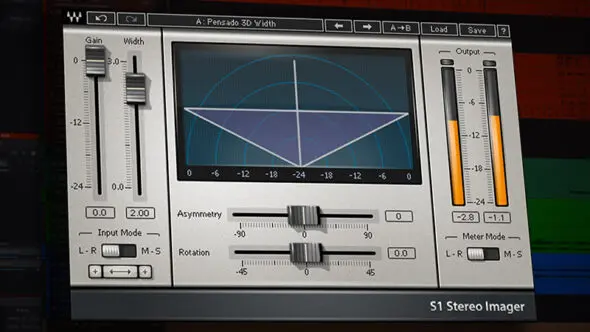 Stereo width often feels like something that should be easy to measure. If sounds extend farther to the left and right, the mix must be wider. Simple. Yet real listening experiences rarely follow that logic. Two songs can occupy a similar stereo field while creating completely different impressions of space. One feels open and immersive. The other feels disconnected or strangely flat. The difference is not necessarily where sounds are located. It is how the listener interprets those relationships.
Human hearing does not evaluate music the way a technical diagram does. Listeners do not mentally calculate distances between elements. They react to the overall presentation. A vocal positioned clearly in the center, supported by instruments that feel naturally distributed around it, often creates a stronger sensation of width than a mix where everything has been pushed outward. Space is experienced as a complete picture rather than a collection of isolated positions.
This becomes obvious when comparing different productions. Some acoustic recordings feel remarkably spacious despite containing relatively few elements spread across the stereo field. Meanwhile, densely produced tracks can occupy a much larger left-right area while feeling smaller than expected. The reason is that width exists inside a broader listening context. The brain continuously evaluates focus, contrast, stability, and spatial organization. Width is only one part of that process.
Psychoacoustics plays a larger role than many engineers initially realize. When a listener perceives a clear center and well-defined supporting elements, the stereo image often feels larger than its actual dimensions. Remove that stability and the opposite can happen. Sounds may technically occupy more space, yet the mix starts to feel unfocused. Instead of creating immersion, the expanded image begins competing with itself for attention.
In professional sessions we occasionally encounter mixes that seem extremely wide during the first few seconds of playback. Then something interesting happens. As the song continues, the sense of width fades. The listener adapts. What initially felt impressive becomes normal, and attention shifts toward the musical content itself. If the arrangement, balance, and spatial relationships are not supporting that experience, the width alone provides little long-term value.
Context also changes perception dramatically. A guitar part may feel wide during an exposed intro, then appear much narrower once drums, vocals, keyboards, and additional layers enter the arrangement. Nothing about the guitar changed. The surrounding environment changed. This illustrates an important reality: stereo width is rarely an absolute characteristic. It is a relative experience shaped by everything happening around it.
This also explains why two mixes can use remarkably similar stereo placement while creating completely different impressions of size. Listeners do not respond only to position. They respond to contrast. A mix with a clear center, defined supporting elements, and consistent spatial relationships often feels wider than another mix where sounds occupy similar positions but compete for attention.
In mix reviews we often demonstrate this by muting and restoring arrangement layers while leaving stereo placement unchanged. Artists are frequently surprised to discover that the perceived width changes significantly even though no positional decisions were altered. The surrounding context alone reshapes the listening experience.
That is why conversations about stereo width often become misleading when they focus entirely on dimensions. Listeners do not sit down wondering how many degrees of space a mix occupies. They react to whether the music feels comfortable, engaging, and naturally organized. The emotional impression arrives first. Technical analysis comes later, if it comes at all.
This distinction also explains why stereo width should not be confused with the stereo image itself. Width describes one aspect of spatial perception, while the stereo image includes positioning, focus, balance, depth, and the relationships that help listeners understand where sounds belong inside the mix.
Ultimately, stereo width succeeds when listeners stop noticing width itself and simply experience a convincing sense of space. The most effective mixes are not always the widest. They are the ones where spatial relationships feel intentional enough that the listener never questions them.
How The Center Of A Mix Shapes Everything Around It
When people think about stereo width, their attention usually goes to the edges of the mix. They imagine sounds extending left and right, creating a larger listening experience. Yet the most important part of the stereo field is often neither side. It is the center. Without a reliable anchor point, width loses context and quickly becomes difficult for the listener to interpret.
The center acts as a reference position for everything else in the mix. Human hearing constantly compares spatial information. To understand where sounds are located, the brain first needs something stable to compare them against. If that reference feels clear and consistent, surrounding elements appear more organized. If it feels weak or unstable, the entire stereo image can start to feel disconnected regardless of how wide it actually is.
This explains why some productions feel surprisingly expansive even when they are not aggressively spread across the stereo field. The listener immediately identifies a focal point. Vocals, drums, or other primary elements establish a sense of direction. Once that foundation exists, the remaining instruments can create contrast around it. Width becomes easier to perceive because the brain has a stable center from which to judge space.
Vocals often occupy this role naturally. Not because there is a technical rule requiring it, but because listeners tend to focus on the human voice before almost anything else. As discussed in our Vocal Mixing guide, the vocal frequently becomes the emotional center of the song. When that focal point feels stable, instruments surrounding it can appear larger and more spacious without competing for attention.
Drums can perform a similar function. In many modern productions, the kick, snare, or central rhythmic elements provide a sense of physical grounding. The listener may not consciously notice this, but the effect is significant. A strong center helps define the outer boundaries of the stereo image. Remove that stability and those boundaries become less meaningful.
One situation we frequently encounter in mixing sessions involves arrangements that initially seem wide but somehow lack impact. The sides appear busy. Instruments occupy plenty of space. Yet the mix feels smaller than expected. After closer evaluation, the problem often has little to do with the width itself. The center simply is not providing enough focus. Without a clear anchor, the listener struggles to organize the stereo field into a coherent picture.
An interesting paradox emerges from this. Increasing width does not always make a mix feel larger. Strengthening the center often does. Once the focal point becomes easier to follow, the contrast between center and sides becomes more apparent. The stereo image starts to feel wider even though nothing physically moved farther outward.
This relationship is especially noticeable during transitions between sections. A chorus can feel dramatically larger than a verse even when the actual stereo placement changes very little. What changes is the listener's perception of scale. The center remains recognizable while supporting elements expand around it. Because the anchor point stays intact, the added space feels intentional rather than chaotic.
The center also plays an important role in long-term listening comfort. A stereo image built entirely around the outer edges may sound impressive for a moment, but listeners often become fatigued when there is no obvious point of focus. Music is easier to follow when attention can settle naturally before exploring the surrounding space. The strongest mixes understand this balance instinctively.
In practice, stereo width depends on relationships. Those relationships require a point of reference. The center provides that reference. It gives surrounding elements meaning, defines the perceived size of the stereo field, and helps transform a collection of positions into a coherent listening experience. In many cases, the path to a wider-feeling mix begins not at the edges, but directly in the middle.
Why Wider Is Not Always Better
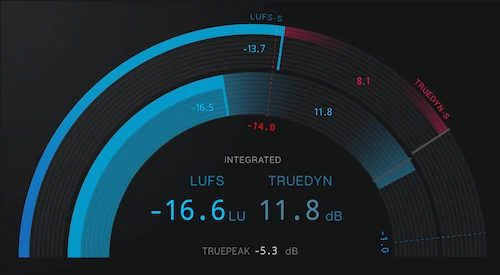 Few ideas are more common in modern mixing than the belief that wider automatically means better. The logic seems reasonable at first. If stereo width creates space, then more width should create more space. Yet listening experience does not always follow that equation. Some of the most impressive-sounding mixes feel remarkably open without pushing every element toward the edges. Others appear enormous for a few moments, then quickly lose impact as the song continues.
The reason is simple. Width is not the goal. Communication is. The listener is not evaluating a mix based on how far sounds extend across the stereo field. The listener is following melodies, lyrics, rhythm, emotion, and movement. When stereo width helps those elements work together, it becomes an asset. When it starts drawing attention away from them, it becomes a distraction.
One of the first problems caused by excessive width is the gradual loss of focus. Every mix needs a sense of organization. Listeners should instinctively understand where their attention belongs at any given moment. When too many elements appear to occupy extreme positions, the stereo image can become difficult to navigate. Nothing feels clearly connected to the center. Instead of experiencing a larger soundstage, the listener experiences uncertainty about where important information is actually located.
This often surprises artists during mix reviews. A version that initially feels exciting because of its size may begin to sound less engaging after several minutes of listening. The arrangement has not changed. The performances have not changed. What changes is the listener's ability to follow the musical message. Excessive spatial separation can weaken the relationships that help a song feel coherent.
Many artists interpret these reactions as a stereo width issue when the underlying problem actually originates elsewhere in the mix. As explored in our Mixing Problems Guide, symptoms such as reduced impact, weak focus, or listener fatigue are often the result of broader relationships inside the arrangement rather than a lack of space itself.
Another issue appears when width starts replacing depth. Space is not only about left and right positioning. It is also about how elements relate to each other within the overall listening environment. When every available opportunity is used to create width, the stereo field can become visually large but emotionally shallow. The mix occupies more territory, yet feels less connected as a complete performance.
We occasionally encounter projects where individual sections have been designed to feel as wide as possible from beginning to end. The first impression is dramatic. Everything appears huge. Then the chorus arrives and nothing changes. Because the stereo field was already operating at maximum intensity, there is no room left for growth. The arrangement loses one of its most powerful ways to create contrast. What initially seemed impressive ultimately limits the emotional impact of the song.
Listener adaptation also plays a significant role. Human hearing adjusts quickly. A very wide presentation can feel dramatic during the opening moments of playback, but that sensation rarely remains constant. Once the brain becomes accustomed to the spatial layout, width stops being the focus. At that point, clarity, balance, arrangement, and musical communication become far more important. If those foundations are weak, additional width offers little long-term benefit.
The strongest mixes rarely feel obsessed with sounding wide. Instead, they feel comfortable. The stereo field supports the arrangement rather than competing with it. Important elements remain easy to follow. Supporting parts contribute space without demanding attention. Nothing feels exaggerated purely for the sake of appearing larger.
This is why some classic recordings continue to sound powerful decades after they were created. Many are not exceptionally wide by modern standards. What they achieve is something more valuable: focus. Every spatial decision reinforces the song itself. The listener experiences openness, depth, and scale without consciously thinking about stereo width at all.
Width becomes problematic when it starts competing with clarity. The moment space draws more attention than the music it is supposed to support, the relationship breaks down. A successful stereo image does not win because it is larger. It wins because it helps every important element reach the listener more naturally.
| Stereo Characteristic | Listener Perception | Common Result |
|---|---|---|
| Narrow Centered Mix | Focused | Direct presentation |
| Balanced Width | Spacious | Stable image |
| Excessive Width | Exciting at first | Reduced focus |
| Inconsistent Width | Distracting | Unstable listening experience |
Panning Decisions And Their Influence On Perceived Width
Stereo width is often discussed as if it exists independently from the sounds inside a mix. In reality, width begins with placement. Before listeners perceive a mix as wide, they first perceive where elements appear to exist within the stereo field. Those positional relationships create the foundation from which every impression of space develops.
Panning plays a central role in that process because it helps establish spatial contrast. A sound positioned away from the center immediately changes the listener's understanding of the stereo image. Not because the mix suddenly becomes larger, but because the brain now has additional information about location. The greater the contrast between positions, the easier it becomes to perceive dimension.
What makes this particularly interesting is that width is rarely determined by a single element. The same guitar can feel extremely wide in one arrangement and relatively narrow in another despite occupying exactly the same position. The difference comes from the sounds surrounding it. Human hearing evaluates location comparatively. Every instrument gains meaning from the positions of other instruments nearby.
An important distinction is that width and separation are not identical. A mix can feel relatively narrow while remaining easy to navigate because each element occupies a clearly understood role within the stereo image. Likewise, a very wide mix can feel crowded when listeners struggle to distinguish where attention should go. Separation helps the brain identify relationships between sounds. Width simply influences how much space those relationships appear to occupy.
Imagine a sparse arrangement built around vocals, acoustic guitar, and percussion. Even small differences in placement can create a noticeable sense of openness because there are fewer competing reference points. Add layers of keyboards, backing vocals, effects, and additional instrumentation, and those same positions may feel far less dramatic. The stereo field has become more populated, changing how space is perceived.
This is one reason panning decisions often influence listener perception more than expected. They affect not only individual sounds but also the relationships between sounds. A mix begins to develop a visual structure inside the listener's mind. Certain elements feel connected. Others feel separated. Some create balance while others introduce contrast. Together these relationships define how spacious or confined the overall presentation feels.
Balance across the left and right sides is equally important. A stereo image does not need perfect symmetry, but it benefits from a sense of equilibrium. Listeners naturally notice when one side consistently feels more dominant than the other. The issue is not always volume. Sometimes it is simply the concentration of attention-grabbing elements in one area of the stereo field. The result can make a mix feel unstable even when individual sounds seem appropriately positioned.
In professional sessions, we occasionally encounter arrangements where every important part appears to be fighting for the same listener attention. Nothing feels misplaced. Yet nothing feels organized either. Once the positions of key elements begin supporting each other rather than competing, the stereo image often becomes larger without any increase in actual width. The listener gains a clearer sense of orientation inside the mix.
Another misconception is that panning only affects horizontal space. In practice, positioning influences perceived depth as well. Sounds that occupy distinct locations become easier to separate mentally. As separation improves, the mix often feels more dimensional. Listeners experience a stronger sense of space because the arrangement becomes easier to navigate.
This relationship explains why some mixes feel naturally spacious despite using relatively conservative stereo placement. The positions make sense. The listener always understands where attention should go next. Nothing feels crowded, and nothing feels disconnected. The stereo field functions as a coherent environment rather than a collection of isolated sounds.
Ultimately, stereo width often begins long before anyone thinks about making a mix feel bigger. It starts with placement. Every positional decision contributes to a larger picture, shaping how listeners perceive space, focus, and movement throughout the song. When those relationships are working together, width emerges as a result rather than a separate objective.
Many of these spatial relationships emerge from the same professional mixing decisions that determine balance, focus, and listener attention throughout a production.
A mix can feel small even when it sounds wide
Many stereo width problems are not caused by a lack of width. They are often the result of unstable spatial relationships that make the stereo image feel unfocused or disconnected. We evaluate how the center, sides, and supporting elements interact to determine whether the mix creates a convincing sense of space without sacrificing clarity.
Real-world mix evaluation. Practical feedback. Spatial clarity that serves the song.
Depth Versus Width: Why They Are Not The Same Thing
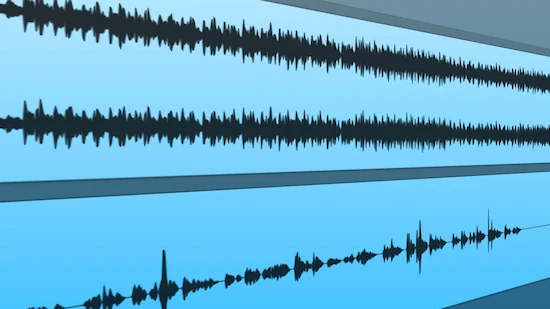 Stereo width and depth are often discussed as if they describe the same experience. Both contribute to a sense of space. Both influence how large a mix feels. Yet they affect the listener in very different ways. A mix can be extremely wide and still feel flat. Another can feel expansive, immersive, and three-dimensional without occupying an unusually large stereo field.
The distinction becomes easier to understand when thinking about how listeners experience music. Width is generally associated with left-to-right perception. It helps define the outer boundaries of the stereo image. Depth, on the other hand, creates a front-to-back experience. It influences whether sounds feel close, distant, intimate, or layered within the listening environment.
Imagine standing in a large room. The room may be physically wide, but if everything appears positioned on the same visual plane, the environment can still feel surprisingly shallow. Now imagine a smaller room where some objects feel close while others seem farther away. The second space often feels more realistic and more engaging because it contains dimension rather than simply size.
A useful comparison is a concert hall versus a long hallway. The hall may feel larger because sound surrounds the listener from multiple directions, while the hallway may feel wide in one dimension but limited in overall scale. Stereo width and perceived size often behave in a similar way.
The same principle applies to mixing. A stereo image can stretch well beyond the speakers, yet if every element appears equally present and equally forward, the result may feel less impressive than expected. There is width, but there is little sense of distance or layering. The listener hears a large surface rather than a convincing space.
This is one reason some productions seem enormous despite relatively restrained stereo placement. The feeling of size is not coming exclusively from width. It comes from the interaction between foreground and background elements. Certain sounds command immediate attention. Others appear farther away. Some feel physically close to the listener, while others contribute atmosphere from deeper within the arrangement. Together these relationships create scale.
In professional mixing sessions, this distinction often explains why two versions of the same song can produce dramatically different reactions. One version may sound wider at first glance. The other may sound larger overall. Artists frequently describe the second version as feeling larger, more dimensional, or more engaging even when its stereo field is not significantly wider. What they are responding to is dimensionality rather than pure width. Many of these differences originate from earlier mixing decisions that shape how spatial relationships are perceived throughout the production.
Depth also influences emotional connection. Human hearing naturally responds to perceived distance. A vocal that feels close can create intimacy. Supporting instruments that appear farther away can provide context and atmosphere without competing for attention. When these spatial layers interact naturally, the listener experiences a stronger sense of realism and involvement.
Another common misconception is that width automatically creates separation. In reality, separation often depends on depth as much as horizontal positioning. Two elements can occupy different positions across the stereo field and still feel crowded if they seem to exist at the same perceived distance. Conversely, elements that share similar positions may remain easy to distinguish when they occupy different spatial layers within the mix.
This relationship becomes especially important as arrangements grow more complex. Additional instruments do not simply consume space from left to right. They also affect how depth is perceived. As layers accumulate, the listener begins constructing a mental image of the entire environment. Width helps define the boundaries of that environment. Depth helps determine what exists within it.
Interestingly, many of the mixes that listeners describe as "huge" are not necessarily the widest. They simply create a convincing sense of scale. The stereo field feels stable. Important elements maintain focus. Supporting parts contribute dimension without overwhelming the arrangement. Nothing appears exaggerated, yet the overall experience feels larger than life.
Width alone rarely determines the quality of a stereo image. A mix that prioritizes expansion without considering depth may sound impressive during a quick demonstration but less engaging over the course of an entire song. Spatial size becomes more meaningful when listeners can also perceive distance, layering, and perspective.
Ultimately, depth and width influence space differently. Width defines how far the listening environment extends. Depth defines how that environment is experienced. The most compelling mixes rely on both, allowing listeners to perceive not only the size of the space but also the relationships that exist within it.
Why Stereo Width Changes As Arrangements Become More Complex
One of the most overlooked aspects of stereo width is that it is not a fixed characteristic. A mix does not possess a single, permanent amount of width from beginning to end. The listener's perception of space changes constantly as the arrangement evolves. The same stereo image can feel expansive during one section and surprisingly narrow during another without any obvious change in the positioning of individual elements.
This often becomes apparent when comparing a verse to a chorus. A verse built around a limited number of instruments typically leaves more room for the listener to perceive space. Fewer elements compete for attention. The stereo field feels open. Individual positions are easier to recognize. As a result, even moderate width can create a strong impression of spaciousness.
When the chorus arrives, the situation changes. Additional instruments enter. Supporting vocals appear. Layered guitars, keyboards, percussion, and other arrangement elements begin sharing the same listening environment. The stereo image may technically occupy the same dimensions, yet the perception of width shifts because the listener is now processing a far greater amount of information.
This is one reason some choruses feel larger than verses while others feel unexpectedly smaller. The determining factor is not always the amount of stereo width available. It is how effectively the arrangement allows listeners to interpret that width. If new layers support the existing spatial structure, the mix can feel significantly bigger. If those layers create confusion, the perceived size may actually decrease despite the addition of more material.
Listener attention plays a critical role in this process. Human hearing has limits. As arrangements become denser, the brain must decide which information deserves priority. Some elements naturally move into the foreground while others become supporting details. This redistribution of attention influences how space is experienced. Width that felt obvious in a sparse section may become less noticeable once the arrangement grows more demanding.
A common studio observation illustrates this perfectly. An artist may approve a spacious verse and then request a larger chorus. Yet after adding more layers, the chorus sometimes feels less open rather than more expansive. Nothing is necessarily wrong with the stereo image itself. The brain simply has more information to process. The perception of space changes because attention becomes divided across a larger number of musical events.
The opposite can happen as well. Some arrangements become dramatically larger without major changes to stereo positioning. The reason is that new elements reinforce the existing structure instead of overwhelming it. A clear sense of orientation remains intact while simultaneously experiencing greater scale. Space feels larger because the arrangement supports that impression rather than competing with it.
This dynamic nature of width explains why judging stereo space in isolation can be misleading. A guitar part that feels perfectly positioned during a quiet introduction may behave very differently once the full arrangement arrives. Likewise, a background vocal that appears subtle during one section may significantly alter the perception of space during another. The context surrounding each element continuously reshapes the stereo experience.
Professional mixing decisions often take this reality into account. The goal is not simply creating width at a single moment. The goal is maintaining a convincing sense of space as the arrangement develops. Every new layer changes the environment. Every section creates a new listening context. Width must remain meaningful across all of them.
Ultimately, stereo width is dynamic because music itself is dynamic. Space is not determined solely by where sounds are positioned. It is shaped by how those sounds interact within a changing musical landscape and how the listener's attention moves through that landscape over time.
Studio Observations: Mixes That Became Smaller After Becoming Wider
 One of the most common assumptions in modern music production is that additional width automatically creates a larger listening experience. On paper, the idea sounds logical. If sounds occupy more space across the stereo field, the mix should feel bigger. Yet real-world mixing sessions often tell a different story. Some of the smallest-sounding mixes we encounter are also among the widest.
This usually becomes apparent during revision stages. An artist may request a larger stereo image because the current version feels too narrow or constrained. After changes are made, the mix immediately appears more impressive during short listening tests. There is more movement at the edges. The stereo field feels expanded. The first reaction is often positive.
Then the song is played from beginning to end.
One recent project illustrated this clearly. A revision introduced substantially wider supporting guitars and ambient textures. The immediate reaction was positive because the stereo image appeared larger. After several full-song playbacks, however, attention consistently drifted away from the vocal during key sections. The mix sounded wider, but the song felt less focused. Returning part of the arrangement toward the center restored the emotional impact without reducing the overall sense of space.
In revision sessions this reaction is surprisingly common. The first playback often generates enthusiasm because the stereo field feels larger. By the third or fourth pass, comments begin shifting toward focus, energy, and emotional impact. The width remains, but the musical connection becomes harder to maintain.
That is where perception starts to change. The initial excitement remains, but something else begins to disappear. The center loses authority. Important musical elements feel less connected. The arrangement becomes harder to follow. What seemed larger during isolated evaluation starts feeling less impactful over the course of a complete listening experience.
A recurring pattern appears in many of these projects. The sides become more dominant while the center becomes less convincing. Listeners may not consciously identify the cause, but they often describe the result in similar ways. The mix feels less focused. The energy seems scattered. Certain sections appear wider, yet somehow less powerful. The stereo image grows physically while shrinking emotionally.
We frequently notice this effect when comparing multiple revisions of the same song. Version one may feel slightly conservative. Version two appears significantly wider. Yet after repeated listening, artists often return to aspects of the earlier version. Not because it was technically larger, but because it communicated the song more effectively. The listener always knew where attention belonged.
Another interesting observation involves solo listening versus full-song perception. Certain spatial decisions can sound extremely impressive when isolated. A guitar part feels enormous. A background texture fills the stereo field beautifully. A supporting element appears dramatically larger than before. Evaluated alone, these changes seem successful.
Once the complete arrangement is restored, the picture changes. The enlarged elements begin competing with the rest of the mix. The listener's attention becomes divided across too many directions. Instead of supporting the song, the expanded stereo image starts drawing attention to itself. The individual component sounds bigger. The overall production sounds smaller.
The distinction matters because listeners rarely experience songs one track at a time. They experience relationships. Every element influences the perceived role of every other element. When width strengthens those relationships, the mix feels larger and more immersive. When width weakens them, the opposite can occur despite the stereo field becoming objectively broader.
Unstable centers create similar problems. The strongest stereo images generally provide listeners with a clear point of orientation. Remove that stability and the listening experience becomes less predictable. The sides may appear exaggerated, but the overall presentation loses cohesion. Space begins replacing focus instead of supporting it.
Perhaps the most valuable lesson from years of mix evaluation is that perceived size and stereo width are not interchangeable concepts. Some productions feel massive because every spatial relationship serves a purpose. Others feel surprisingly small despite occupying enormous amounts of left-right territory. The difference is rarely the amount of width itself. It is how effectively that width supports the music.
For this reason, we rarely judge stereo decisions by asking whether a mix sounds wider. A more useful question is whether the listener experiences the song more clearly. If increased width improves connection, scale, and engagement, it is serving its purpose. If it reduces focus, weakens the center, or makes the arrangement harder to follow, the stereo image may have become larger while the musical experience became smaller.
Listener Attention And The Real Purpose Of Stereo Width
Stereo width is often treated as a visual characteristic of a mix. Engineers discuss space, positioning, and the size of the stereo image. Listeners experience something different. Most people never think about stereo width directly. They think about the song. They follow the vocal, react to the rhythm, connect with melodies, and absorb the emotional movement of the arrangement. Width only becomes valuable when it helps that process happen naturally.
This is why the real purpose of stereo width is not expansion. It is guidance. Every mix asks the listener to pay attention to certain elements at specific moments. The stereo field helps shape that journey. Some sounds move into focus. Others provide support from the background. Some establish context while others deliver the primary message. Width contributes to this hierarchy by helping the brain organize information more efficiently.
Listeners constantly decide where attention belongs. Faced with a complex arrangement, they cannot process every detail at the same time. Instead, the brain creates priorities. Instead, the brain creates priorities. Certain sounds become focal points. Others contribute atmosphere, energy, or movement around those focal points. A well-structured stereo image makes this process feel effortless.
Consider a song built around a strong vocal performance. The vocal should feel immediately accessible without forcing the audience to search for it. Attention should arrive there naturally. Supporting instruments can occupy surrounding space, adding dimension and emotional context without competing for the same level of focus. When the spatial relationships are working correctly, the mix feels easy to follow even during dense sections.
Problems often begin when stereo width stops serving this hierarchy. A mix may contain plenty of space, yet attention starts moving unpredictably from one side of the stereo field to the other. Important elements lose authority. Supporting parts become distractions. More effort goes into navigating the arrangement and less into connecting with the music itself.
This becomes especially important in dense productions. When dozens of elements share the same stereo field, listeners rely on spatial hierarchy to understand what matters most. Width helps create that hierarchy when it reinforces musical priorities instead of competing with them.
In the most effective mixes, listeners rarely think about the stereo image itself. What remains is the vocal, the hook, the groove, or the emotional impact of the performance. Spatial design contributed to that experience, but it remained invisible. The stereo image did its job without demanding recognition.
This relationship between attention and space becomes even more important as arrangements grow larger. Additional layers increase the amount of information available to the listener. Without a clear spatial hierarchy, the mix can become overwhelming. Width alone cannot solve that problem. In some cases, excessive spatial separation makes it worse by introducing additional complexity without improving communication.
Another important factor is emotional perception. Space influences how listeners feel about music. A focused stereo image can create intimacy and directness. A more expansive image can create openness and scale. Neither approach is inherently superior. The question is whether the spatial presentation supports the emotional goal of the song. Width becomes meaningful when it reinforces the intended experience rather than existing as a technical achievement.
In professional mixing sessions, some of the most effective stereo decisions are surprisingly subtle. They do not dramatically alter the size of the stereo field. Instead, they improve how listeners move through the arrangement. Attention arrives at the right place more quickly. Important moments feel more intentional. The mix becomes easier to understand without becoming simpler.
At its best, stereo width succeeds when it supports musical communication. The benefits of space should feel natural without becoming aware of the mechanics behind it. The strongest stereo images are not those that draw the most attention to themselves. They are the ones that help every important part of the song reach the listener exactly when it needs to.
Reference Listening And Stereo Perspective
One of the challenges of evaluating stereo width is that perception changes over time. The longer engineers work on the same mix, the more familiar its spatial presentation becomes. What initially felt unusual begins to feel normal. Elements that once appeared too wide, too narrow, or oddly positioned gradually become accepted simply because the brain adapts to repeated exposure.
This adaptation is not a technical problem. It is a human one. The auditory system constantly adjusts to its environment. After hours of listening to the same arrangement, it becomes increasingly difficult to judge the stereo image with complete objectivity. Decisions that seemed obvious earlier in the session may become much harder to evaluate accurately.
That is where reference listening becomes valuable. A well-chosen point of comparison provides an external perspective that the current mix can no longer provide on its own. The goal is not imitation. The goal is context. Without context, it is surprisingly easy to lose sight of how a stereo image is actually being perceived.
This pattern becomes especially obvious after long periods of working on the same project. A project may feel impressively spacious after several rounds of revisions. Then a reference track is played. Suddenly the perception changes. The mix that felt expansive now seems unfocused. In other cases, the opposite happens. A mix that appeared relatively narrow reveals itself to be perfectly balanced once placed alongside a familiar commercial production.
In one recent session, an artist was convinced the chorus lacked width. After comparing the mix against several commercial references, the issue turned out to be listener focus rather than stereo size. The chorus already occupied a similar amount of space, but the vocal and supporting instruments were competing for attention in a way that reduced the impression of scale.
These moments are valuable because they expose the difference between memory and reality. Engineers do not hear music in isolation. They carry expectations formed by thousands of previous listening experiences. Reference material helps reconnect current decisions to those expectations, providing a more reliable framework for judging spatial relationships.
The process is especially useful when evaluating width because stereo perception is highly relative. A section may feel enormous until another song provides a different point of comparison. Likewise, a stereo image that initially appears conservative may reveal impressive depth, focus, and stability when heard in context. Perspective frequently changes the conclusion.
This does not mean reference tracks provide absolute answers. Different productions pursue different goals. What works for one arrangement may not suit another. The value comes from comparison itself. Moving between the current mix and an external reference often highlights details that prolonged exposure has hidden.
For engineers who want to explore this workflow further, our Reference Tracks For Mixing guide examines how reference material can provide a more objective framework for evaluating mixing decisions.
Over time, one pattern becomes difficult to ignore. Width problems are often discovered not through additional adjustments, but through a change in perspective. A fresh comparison reveals issues that countless revisions failed to uncover. What seemed like a technical challenge turns out to be a listening challenge.
Playback systems influence stereo perception as well. A mix that feels extremely wide on headphones may appear far more restrained on speakers. This is one reason engineers rely on multiple listening perspectives before forming conclusions about spatial balance. Width is experienced differently depending on how the listener interacts with the playback environment.
Ultimately, perspective is one of the most valuable tools available when evaluating stereo space. The goal is not endlessly changing the mix. The goal is understanding how the mix is actually being experienced. In many cases, that understanding arrives faster through comparison than through further experimentation.
Stereo Width Exists Between Elements, Not Inside Them
Throughout a mix, it is tempting to think about stereo width as a property of individual sounds. A guitar feels wide. A keyboard feels narrow. A background texture appears to fill the sides of the stereo field. Yet listeners rarely experience space one element at a time. They experience spatial interaction.
A sound cannot create a convincing stereo image by itself. Width only becomes meaningful when positions create a believable sense of space around it. A guitar positioned away from the center feels different depending on what surrounds it. The same vocal can appear intimate in one mix and distant in another even when its level remains unchanged. Space is never created by isolation. It emerges from interaction.
This is why the strongest stereo images usually feel organized rather than exaggerated. The center provides orientation. Supporting elements establish contrast. Different parts of the arrangement occupy positions that help listeners understand the musical picture without consciously analyzing it. The stereo field becomes a coherent environment instead of a collection of separate locations.
The idea also explains why width cannot be judged by focusing on individual tracks. A sound that appears impressively wide on its own may contribute very little to the overall perception of space once the entire arrangement is playing. Conversely, a relatively simple element may become essential because it strengthens the relationships that define the stereo image as a whole.
At its core, stereo width is not about how far sounds extend. It is about how sounds relate to one another across the listening environment. The listener does not hear width inside a single track. The listener hears width in the connections between tracks, the stability of the center, and the way the entire mix occupies space together.
For that reason, stereo width belongs to the mix as a whole, not to any individual element within it. When those relationships feel natural, the stereo image feels natural as well.
The Best Stereo Width Helps The Listener Feel Space Without Thinking About It
By the time a listener notices stereo width, something unusual is often happening. Not necessarily something wrong, but something attention-grabbing. The most successful spatial presentations tend to work differently. They do not announce themselves. They support the music quietly, allowing listeners to focus on the song rather than the mechanics behind it.
This idea sits at the center of effective stereo design. Width is not an achievement on its own. It is one component of a larger spatial experience that includes focus, depth, perspective, and listener orientation. When those elements work together, space feels natural. The listener accepts the environment without questioning it.
A stable center plays a major role in this process. Listeners instinctively rely on central elements to orient themselves within a mix. Once that reference point feels reliable, surrounding sounds can create a stronger impression of openness and dimension. Ironically, width often becomes more convincing when the center remains solid rather than when the sides become more exaggerated.
The relationships created through positioning are equally important. Every element contributes to the overall perception of space. No instrument exists in isolation. The stereo image develops through interactions between sounds, their locations, and the way attention moves between them. When these relationships feel intentional, the entire mix becomes easier to understand.
Depth contributes another layer to the experience. Some sounds feel close. Others appear farther away. Together they create perspective. Combined with thoughtful left-right positioning, this sense of distance helps transform a collection of tracks into a coherent listening environment. The result feels larger not because every sound occupies more width, but because the space itself feels believable.
Consistency matters as well. A stereo image that constantly changes character without supporting the arrangement can pull attention away from the music. Listeners begin noticing the presentation instead of the performance. Strong mixes maintain a sense of spatial logic from beginning to end, allowing the arrangement to evolve while preserving a clear listening perspective.
Across client projects from sparse acoustic arrangements to dense modern productions, one observation appears repeatedly. The mixes that leave the strongest impression are rarely the ones that sound the widest. They are the ones that make the listener forget about width altogether.
This is also why spatial decisions are evaluated within the context of the complete mix rather than as isolated technical choices. Our Mixing and Mastering service focuses on how every element contributes to the overall listening experience, including the way space is perceived across the entire production.
Ultimately, stereo width works best when it strengthens musical relationships instead of drawing attention to itself. The listener should feel the space, trust the space, and move through the song naturally. When that happens, the stereo image has accomplished its real purpose.
Great mixes feel bigger because the space makes sense
A mix does not feel larger because sounds are pushed outward. It feels larger when space, focus, depth, and musical relationships work together naturally. We evaluate how the stereo image supports the arrangement, identify where attention is being lost, and help create a listening experience that feels clear, stable, and engaging from start to finish.
Professional mixing. Clear communication. Decisions that serve the song.
Frequently Asked Questions About Stereo Width In Mixing
What is stereo width in mixing?
Stereo width describes how much space a mix appears to occupy between the left and right speakers. It is not simply about how far sounds extend across the stereo field. Width is created by the relationships between elements and how listeners perceive space within the mix.
Why do some mixes sound wider than others?
Stereo width is influenced by arrangement, positioning, spatial contrast, center stability, and the interaction between elements. Two mixes can contain similar instruments yet create very different impressions of space depending on how those relationships are organized.
Is a wider mix always better?
No. Width becomes valuable when it supports clarity, focus, and musical communication. Excessive width can reduce listener focus, weaken important elements, and make the stereo image feel less stable.
What is the difference between stereo width and stereo image?
Stereo width refers to the perceived size of the left-right space. Stereo image is broader and includes width, positioning, balance, depth, and the overall organization of sounds within the stereo field.
Why is the center of a mix so important?
The center acts as an anchor point for the listener. A stable center helps create orientation, improves focus, and often makes surrounding width feel larger and more natural.
Can too much stereo width reduce clarity?
Yes. When width begins competing with focus, listeners may find it harder to follow important musical elements. The stereo image may feel larger, but the overall mix can become less effective.
How does panning affect stereo width?
Panning shapes spatial relationships between elements. Width often begins with placement rather than expansion. The way sounds are distributed across the stereo field strongly influences how spacious the mix feels.
Why can a mix sound wide but still feel small?
A mix may contain significant stereo spread while lacking focus, depth, or strong relationships between elements. Width alone does not guarantee scale. Listeners typically perceive size through the combined effect of space, organization, and musical clarity.
How do reference tracks help evaluate stereo width?
Reference tracks provide an external point of comparison. They help engineers identify whether a stereo image feels balanced, focused, and believable rather than relying solely on familiarity with the current mix.
Does stereo width change throughout a song?
Yes. Stereo width is dynamic. As arrangements become denser or simpler, the listener's perception of space changes. A verse, chorus, breakdown, and bridge may all create different impressions of width even within the same mix.
Can a narrow mix sound bigger than a wide mix?
Yes. Perceived size depends on more than stereo width alone. Strong center focus, depth, contrast, and spatial organization can make a relatively narrow mix feel larger and more immersive than a wider but less coherent production.
How do you make a mix sound wider?
A mix usually sounds wider when the relationships between the center and side elements become easier to perceive. Effective stereo width is created through balance, positioning, contrast, arrangement, and spatial organization rather than simply pushing sounds farther toward the edges.