
How To Fix AI Timing: Identify Temporal Instability Before Correcting Musical Performance
AI-generated music rarely sounds completely out of time. That is exactly what makes timing problems difficult to recognize. The rhythm may appear convincing during the first listen, yet something feels slightly unsettled. A phrase seems to rush forward for no obvious reason. A repeated section loses momentum even though every note appears to be in roughly the right place. Most listeners notice the discomfort long before they can explain what is causing it.
The problem is usually not one obviously misplaced note. It is a change in how generated events relate to one another over time. That difference matters because correcting the most noticeable moment may leave the underlying instability untouched.
Professional evaluation begins with diagnosis rather than immediate correction. Before changing the performance, it is necessary to determine whether the instability comes from AI generation or from another part of the production process. Identify the source first. Reacting to the symptom alone can make an unstable performance more complicated without making it more consistent.
Why AI Timing Behaves Differently From Human Performance
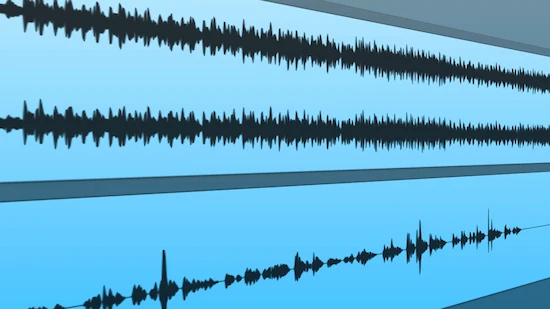 When people hear timing that feels inconsistent, the first assumption is usually simple: someone played poorly. That explanation works for a live recording, but it does not accurately describe AI-generated music. There is no performer hesitating before the beat or rushing into the next phrase. Instead, the timing is created by a generative system that predicts how one musical event should relate to another. The result can sound surprisingly natural at first while still containing subtle temporal inconsistencies that no human intentionally performed.
AI timing is best understood as the internal relationship between generated musical events. Every note, chord, texture, or rhythmic figure exists within a larger timeline that the model has constructed rather than performed. When those relationships remain consistent, the music flows naturally even if the rhythm is intentionally relaxed or expressive. When the relationships begin to drift, listeners often experience an undefined feeling that the performance lacks stability, despite being unable to point to a specific mistake.
Human variation usually carries intent. A skilled performer may push slightly ahead of the beat during an energetic chorus or relax behind it in a quieter verse while preserving a coherent musical direction. Those variations are connected to phrasing, expression, and musical context. AI-generated timing inconsistencies, by contrast, rarely reflect expressive choices. Similar passages may develop slightly different pacing for no artistic reason, repeated patterns can lose their internal consistency, and phrases that should feel connected begin evolving independently as the generated timeline unfolds.
The deeper difference is where the timing comes from. Human timing develops during performance. AI timing develops much earlier—during generation itself. The model is continuously predicting future events based on probability rather than lived musical intent, which means temporal relationships can become unstable before any editing or production work begins. By the time the audio is exported, those inconsistencies may already be embedded in the material, even though every individual note appears believable on its own.
Understanding that difference prevents many incorrect assumptions later in the production process. Timing is only one branch of the broader evaluation discussed in our guide on how to fix AI-generated music, but recognizing where temporal instability actually begins makes every following decision more informed. Rather than treating AI timing as the equivalent of an imperfect human performance, it should be viewed as the result of generated temporal structure—one that follows its own patterns and requires its own diagnostic approach.
The Listening Patterns That Reveal AI Timing Drift
AI timing problems rarely announce themselves with an obvious mistake. More often, they reveal themselves through a collection of small rhythmic inconsistencies that gradually undermine the musical flow. Nothing sounds dramatically wrong in isolation, yet the performance never feels completely settled. Listeners may describe the track as "awkward," "uneven," or "hard to follow" without realizing that timing—not the composition itself—is creating that impression.
Not every timing problem behaves the same way. Some AI-generated audio gradually drifts against a fixed tempo from beginning to end. The instability discussed here is broader: pacing can change inside phrases, between repeated sections, or across musical events even when the track does not show one continuous tempo offset. Recognizing that difference prevents a grid-sync problem from being mistaken for inconsistent generated timing.
One of the most common clues is an uneven rhythmic flow. Similar musical phrases should naturally establish expectations in the listener's mind, but AI-generated sections sometimes develop slightly different internal pacing each time they reappear. A phrase may feel relaxed during its first appearance, then unexpectedly hurried when it returns. The notes remain recognizable, yet the sense of continuity begins to weaken because the temporal relationships are no longer evolving consistently.
Another recurring pattern involves inconsistent note spacing. Individual notes may not appear dramatically early or late, but the distance between musical events subtly changes from one moment to the next. This creates a rhythm that feels unstable without becoming obviously incorrect. Listeners often perceive the music as lacking confidence rather than lacking accuracy, because the fluctuations remain just below the threshold of conscious detection.
Timing drift also affects the way momentum develops across a performance. Certain passages seem eager to move forward, while others hesitate just enough to interrupt the natural pulse. A verse may build comfortably until a short phrase suddenly rushes ahead. Elsewhere, a transition can feel unexpectedly restrained, causing the energy to flatten before recovering again. These shifts often appear without any clear musical reason, making them especially difficult to identify during a quick listening session.
Another reliable indicator is changing rhythmic tension. Well-structured performances maintain a predictable relationship between expectation and release, allowing listeners to follow the musical direction almost instinctively. AI timing drift can disturb that balance. The track may briefly feel as though it is leaning forward, then immediately settle back into place, creating subtle interruptions that repeat throughout the song. None of these moments is necessarily severe on its own, but together they reduce the sense of natural movement.
AI timing instability is rarely constant. A generated performance may sound convincing for long stretches before a single phrase loses its internal consistency. Moments later, everything appears stable again. This inconsistency often causes users to dismiss the issue because repeated listening produces different impressions depending on where attention happens to focus. The underlying behavior, however, is not random. Similar timing deviations frequently appear under comparable musical conditions, forming recognizable temporal patterns rather than isolated mistakes.
Once these recurring listening patterns become familiar, diagnosing AI timing becomes far more reliable. Instead of searching for individual notes that appear "wrong," the focus shifts toward identifying repeated changes in temporal behavior. That perspective makes it much easier to distinguish genuine AI timing drift from ordinary expressive variation and explains why stable musical timing depends on consistent relationships between events rather than mechanical precision alone.
Why AI Timing Is Often Confused With Groove Problems
 One of the most common comments we hear about AI-generated music is surprisingly vague: "The groove feels wrong." It sounds like a useful observation, but in many cases it points to the wrong problem. What listeners describe as poor groove is often the result of unstable timing relationships that quietly disrupt the musical flow. The track still follows the same tempo, yet something feels less connected from one phrase to the next.
Timing and groove are closely related, but they are not the same thing. Timing describes how consistently musical events occur in relation to one another. Groove is the overall sensation that those events move together in a satisfying and believable way. One influences the other, yet they should never be treated as interchangeable. A piece of music can maintain a convincing groove while using intentionally relaxed timing, and it can lose its sense of flow because timing relationships become inconsistent even though the musical idea itself remains unchanged.
The confusion starts with perception. Listeners rarely analyze the spacing between events; they react to whether the music feels connected. If repeated phrases seem to breathe differently each time they return, or if rhythmic momentum subtly changes without any musical reason, the immediate reaction is often to blame the groove. In reality, the groove is reflecting timing behavior that has already become inconsistent during generation.
Another reason for the confusion is that timing instability often develops gradually rather than all at once. The opening section may feel comfortable, while later phrases begin drifting just enough to weaken the musical pulse. Because the transition is subtle, listeners notice the overall feel changing instead of identifying the underlying temporal relationships. The result is a broad description—"it doesn't groove"—even though the real issue lies deeper.
This is also why two songs with nearly identical arrangements can create completely different listening experiences. One feels naturally connected from beginning to end. The other constantly hints that something is slightly off without ever presenting an obvious mistake. That difference usually comes from the consistency of timing relationships rather than from groove itself.
Keeping these concepts separate leads to more accurate diagnosis. Timing describes the consistency of events across time; groove is the broader musical result listeners experience. The wider relationship between musical elements belongs to the decisions involved in mixing a song. Here, the narrower question is whether unstable AI timing is making the groove feel unreliable even when the musical idea itself remains intact.
| What You Hear | What It Usually Indicates | First Diagnostic Priority |
|---|---|---|
| Rushing phrases | Local timing drift between generated musical events | Compare repeated phrases for consistency |
| Dragging passages | Unstable temporal pacing | Identify where momentum begins to slow |
| Uneven note spacing | Inconsistent timing relationships | Check spacing across similar musical sections |
| Unstable groove | Timing inconsistency affecting rhythmic continuity | Determine whether the behavior repeats |
| Repeated phrases landing differently | Temporal relationships changing between similar passages | Compare matching sections for pacing consistency |
| Shifting rhythmic flow | Recurring AI timing instability | Compare rhythmic behavior across the full song |
What To Do After You Confirm An AI Timing Problem
Once timing instability has been confirmed, the next decision depends on how widely it affects the generated performance. A problem limited to one short phrase is fundamentally different from temporal drift that changes the behavior of repeated sections throughout the song. The first may leave most of the musical structure intact. The second suggests that the generated timeline itself is unreliable.
Compare matching passages before changing anything. If one short phrase breaks an otherwise stable performance, localized correction may be reasonable. If the same type of drift returns in several sections, the problem is broader than one misplaced event. And if repeated passages keep changing their internal pacing in different ways, the generated timeline itself may be too inconsistent to repair predictably. Those three conditions—isolated, recurring, or structural—should determine what happens next.
A useful boundary is whether the surrounding timing remains trustworthy. If one phrase deviates but the sections before and after it preserve the same pacing, the problem is still local. If correcting one moment only exposes another inconsistency nearby, the issue is no longer isolated. At that point, continuing to edit individual events can hide the symptom without restoring a stable temporal foundation.
When the problem is truly local, the repair target is the relationship that changed—not the entire performance. That may mean restoring the pacing of one phrase, correcting a short section that lands differently from its earlier counterpart, or rebuilding a transition whose timing no longer follows the surrounding musical logic. The rest of the performance should remain untouched if it is already stable.
The objective is not to force every event into perfect alignment. It is to determine whether the existing performance contains enough stable temporal information to support further work. That distinction is what separates useful repair from endless correction.
Not Every AI Timing Problem Should Be Edited
Timing that feels unstable is not always the result of misplaced notes. Many AI-generated tracks contain inconsistent temporal relationships created during generation itself. Identifying the real source first can prevent unnecessary editing and help determine whether careful repair or a new generation provides the stronger foundation for the project.
Professional evaluation. Smarter production decisions. A stronger path from AI generation to release.
Studio Observations: Timing Behaviors We See Repeatedly In AI-Generated Music
 Timing problems rarely arrive as dramatic mistakes. In most AI-generated productions they develop gradually, which is why they are so often overlooked during the first few listens. Our studio regularly evaluates AI-generated productions submitted by artists across the United States and internationally, and one pattern appears again and again: the opening section feels convincing, the rhythm seems stable, and nothing immediately raises concern.
The instability becomes easier to hear only when familiar musical ideas return and their timing no longer behaves the same way.
Timing problems rarely arrive as dramatic mistakes. In most AI-generated productions they develop gradually, which is why they are so often overlooked during the first few listens. Our studio regularly evaluates AI-generated productions submitted by artists across the United States and internationally, and one pattern appears again and again: the opening section feels convincing, the rhythm seems stable, and nothing immediately raises concern.
The instability becomes easier to hear only when familiar musical ideas return and their timing no longer behaves the same way.
A common example involves repeated phrases that never feel exactly the same twice. The first chorus may flow naturally, while the second develops a slightly different internal pace without any intentional musical reason. Nothing sounds dramatically early or late. Instead, the relationship between events changes just enough to weaken continuity. Many artists describe this as the song "losing its feel," even though the written music has not changed at all.
In one type of project we encounter regularly, the first repeated section establishes a believable pace while the later return begins to compress the spacing between events near the end of the phrase. Viewed separately, both sections can sound acceptable. Compared side by side, the difference becomes obvious: one preserves its internal spacing while the other progressively compresses it. That is the point at which a vague feeling becomes a diagnosable timing pattern.
Another recurring observation is that listeners often blame the performance itself. They assume a virtual player became inconsistent or imagine that the generated musician simply lacks precision. In reality, the instability usually predates every production decision. The timing relationships were already embedded in the generated material before any balancing, editing, or additional processing took place. That misunderstanding can send projects in the wrong direction, with considerable effort spent chasing symptoms instead of identifying the original source.
Across unrelated projects, certain timing behaviors recur often enough to become diagnostically useful. We hear phrases that lean forward near the end of a repeated section, transitions that hesitate before the pulse recovers, and later returns that no longer preserve the pacing established earlier in the song. The genre and tempo may change, but the diagnostic clue remains the same: the inconsistency repeats as a pattern rather than appearing as one isolated mistake.
Some of the hardest timing problems to catch are the ones that survive the first few playbacks. During a quick playback, the track often sounds perfectly acceptable. After several complete listens, however, the brain begins noticing that certain sections never settle into the same rhythmic behavior twice. The discomfort grows even though the listener cannot immediately explain why. This delayed recognition is one reason AI timing problems are frequently underestimated during early review sessions.
We also hear a cumulative effect that is easy to miss when sections are auditioned separately. One phrase leans slightly forward, a later return compresses its spacing, and another passage hesitates before recovering. None of those moments is severe enough to define the song alone. Heard in sequence, however, they stop feeling unrelated. The listener gradually loses confidence in the timing because the performance keeps changing its own rules.
These recurring behaviors make diagnosis significantly more reliable than searching for isolated timing errors. Rather than asking whether one note arrived too early or one phrase lasted slightly too long, it becomes far more useful to identify patterns that repeat under similar musical conditions. Once those behaviors are recognized as recurring patterns rather than random mistakes, the project can be evaluated on the quality of its temporal foundation instead of on isolated moments that happen to sound uncomfortable.
When AI Timing Can Be Improved And When It Is Built Into The Generation
Not every timing problem has the same origin, which means not every inconsistency has the same potential for improvement. Some AI-generated tracks contain relatively shallow temporal irregularities that affect only isolated passages. The overall musical structure remains coherent, and the relationships between phrases stay largely intact. In those situations, the timing may feel uneven in specific moments without defining the entire performance. While the underlying behavior is still noticeable, it does not necessarily determine how the song functions as a whole.
Other projects are fundamentally different. Here, the timing is woven into the generated structure itself. Instead of a few unstable phrases, the entire musical timeline develops around inconsistent temporal relationships. Similar sections evolve with different pacing, transitions lose their natural continuity, and repeated ideas never settle into a predictable rhythmic framework. Because these relationships were established during generation, they become part of the foundation rather than a surface-level imperfection.
Temporal consistency depends on information that already exists inside the generated material. When that information is coherent, isolated irregularities can remain limited to a few moments. When the original temporal structure is unstable, there may be no reliable reference for how those relationships were supposed to evolve. Individual passages can still sound convincing even though the larger rhythmic logic never became fully consistent.
For that reason, some timing relationships can be improved only to a certain extent. Their perceived impact may become less distracting, yet the original continuity cannot always be fully reconstructed because parts of the temporal framework simply were not generated consistently in the first place. The issue is no longer one of isolated rhythm—it becomes a characteristic of how the AI built the performance.
Why Timing Problems Often Become More Noticeable During Production
 One of the more confusing characteristics of AI timing is that it often seems to get worse as a project moves forward. A freshly generated track may feel surprisingly natural during a quick listen, yet after closer editing, repeated playback, or preparation for further production, the same performance suddenly begins to feel less stable.
In many cases, nothing actually changed inside the timing itself. The production simply exposed relationships that were already there.
One of the more confusing characteristics of AI timing is that it often seems to get worse as a project moves forward. A freshly generated track may feel surprisingly natural during a quick listen, yet after closer editing, repeated playback, or preparation for further production, the same performance suddenly begins to feel less stable.
In many cases, nothing actually changed inside the timing itself. The production simply exposed relationships that were already there.
As a project becomes easier to hear into, subtle inconsistencies lose their cover. Cleaner separation between musical ideas gives the ear more room to compare one phrase with the next. Small variations that once blended into the performance begin standing out because the surrounding material has become more organized. The timing inconsistency was always present—it simply had fewer opportunities to draw attention earlier.
Repeated sections also play an important role. During the first listen, the brain is busy learning the song. By the second or third chorus, expectations have already formed. Similar phrases are expected to unfold with similar pacing. When AI-generated material introduces slightly different temporal relationships each time those sections return, listeners begin sensing that the performance is no longer behaving consistently. The change feels subtle, yet once it becomes noticeable, it is difficult to ignore.
Another factor is familiarity. The better someone knows a piece of music, the easier it becomes to recognize patterns that refuse to repeat consistently. Engineers often notice timing drift sooner than casual listeners—not because they search for mistakes, but because repeated listening naturally reveals inconsistencies in temporal behavior. Artists experience the same phenomenon after spending more time with a project. A section that sounded convincing yesterday may suddenly feel unsettled simply because the brain has developed a clearer internal expectation of how it should move.
This is why AI timing issues are frequently underestimated during early review sessions. A brief playback may suggest that everything is functioning normally, while longer listening gradually uncovers recurring rhythmic inconsistencies that were hidden beneath the novelty of the music itself. The production process does not create those problems. It simply removes enough distractions for the original temporal relationships to become easier to recognize. In many AI-generated projects, what appears to be a new timing issue is often the same instability finally becoming audible after the listener has learned how the performance is supposed to flow.
Successful AI Timing Repair Begins With Understanding Musical Consistency
Timing drift is rarely defined by a single phrase that arrives too early or too late. More often, it reflects a broader loss of consistency in the way musical events relate to one another over time. A generated performance may contain believable individual moments while gradually weakening the continuity that allows the listener to follow the music naturally. That is why reliable diagnosis always begins by evaluating relationships rather than isolated events.
The goal is not to find perfect precision. Music has never depended on mathematical accuracy alone. What matters is whether similar phrases evolve with similar temporal behavior, whether rhythmic momentum remains believable from section to section, and whether repeated ideas preserve the same internal logic throughout the performance. When those relationships remain stable, the music feels intentional. When they drift unpredictably, listeners begin sensing instability even if they cannot immediately explain why.
The scale of the instability also sets realistic limits. Some timing problems remain confined to a small part of the performance. Others originate from the temporal structure created during AI generation itself. Once that foundation becomes inconsistent, improving the listening experience may still be possible, but reconstructing every missing relationship is not always realistic because the original performance logic was never generated coherently.
Musical consistency has to be understood before the next step makes sense. The key question is whether the instability belongs to the generated material itself or emerged later as the project developed. That decision determines whether the existing performance remains a reliable foundation for further work.
Reliable AI timing repair is therefore not about correcting every irregular moment. It begins by understanding how generated musical events relate to one another, recognizing recurring timing behavior instead of isolated mistakes, and deciding whether the existing material provides a stable enough foundation for further work. Once those relationships are clearly understood, choosing between thoughtful correction and regeneration becomes a logical decision instead of a process of trial and error.
Understand The Real Timing Problem Before Investing More Time
Many AI timing issues originate from unstable temporal relationships created during generation rather than mistakes introduced later in production. A professional evaluation helps determine whether careful repair is worthwhile or whether a cleaner AI generation will provide a stronger musical foundation before additional work begins.
Professional evaluation. Realistic expectations. Better production decisions before investing in the next stage.
Frequently Asked Questions
Can AI timing problems affect only one section of a song?
Yes. Many AI-generated tracks remain rhythmically consistent for long stretches before timing instability appears in a specific chorus, transition, or repeated phrase. Localized timing drift is common because different sections are often generated with slightly different temporal relationships.
Why do repeated sections sometimes feel less consistent than the first verse?
Repeated musical ideas create expectations. When later sections develop slightly different pacing than earlier ones, listeners notice that the performance no longer follows the same internal timing logic, even if the notes themselves remain similar.
Can AI timing problems exist even when the tempo stays constant?
Absolutely. A stable tempo does not guarantee stable timing. Musical events can drift in relation to one another while the overall BPM never changes, producing a performance that feels unsettled despite maintaining the same speed.
Why do some timing issues become obvious only after several listens?
The brain first learns the structure of the song before evaluating consistency between repeated musical events. As familiarity increases, subtle timing differences become easier to recognize because the listener develops stronger rhythmic expectations.
Do all AI-generated genres show the same timing behavior?
No. Timing instability can appear in any genre, but the way it is perceived depends on the musical style. Music built around recurring patterns often exposes temporal inconsistencies more quickly because listeners naturally compare one return with the next.
Can multiple small timing inconsistencies become more distracting than one obvious mistake?
Yes. Minor timing deviations may seem insignificant individually, but when similar inconsistencies repeat throughout a song, they gradually reduce the sense of rhythmic stability and make the overall performance feel less convincing.
Is every uneven musical phrase evidence of an AI timing problem?
No. Musical expression naturally includes variation. A true AI timing issue is more likely to reveal itself through recurring temporal behavior that repeats under similar musical conditions rather than through one isolated phrase.
How do professionals decide whether AI timing deserves further attention?
The decision is usually based on consistency rather than perfection. If temporal relationships remain believable throughout the performance, small variations rarely define the listening experience. When the same timing instability repeatedly disrupts musical continuity, further evaluation becomes worthwhile.