
How To Make A Mix More Punchy: Why Impact Depends On Musical Contrast
One of the biggest misconceptions in mixing is that punch comes from making everything hit harder. More compression. More intensity. More attitude. In reality, those choices often produce the opposite result. We've evaluated plenty of mixes where every important element sounded forceful on its own, yet the song felt flatter after additional processing because nothing was allowed to arrive with genuine contrast.
A punchy mix isn't defined by loudness or aggression. It feels impactful because important musical moments stand out naturally, allowing the listener to recognize changes in energy, rhythm, and emotion without effort.
Understanding how musical relationships evolve throughout a song is the starting point for recognizing why impact is gained—or quietly lost. Throughout this guide, we'll examine why some mixes feel naturally punchy while others do not, how listeners perceive impact, which musical relationships most often reduce punch, and how experienced engineers evaluate those patterns before deciding whether a mix truly lacks impact.
Punch Is Judged Across Musical Events, Not Individual Sounds
 Ask someone why a mix feels punchy and they will often point to a specific sound. A powerful snare. A sharp guitar attack. A vocal that seems to jump out of the speakers. Yet that isn't how listeners actually experience music. They don't build the impression one track at a time. They respond to the way important musical moments arrive throughout the song and how naturally those moments command attention.
This is why punch should never be viewed as a property of an individual sound. It is a property of interaction. A single aggressive element may feel exciting for a second, but if every musical event arrives with the same urgency, nothing truly stands out. The ear quickly adapts, and what initially feels energetic becomes predictable. Impact fades not because the sounds became weaker, but because they stopped creating meaningful contrast with one another.
In our evaluations, the most convincing mixes rarely depend on one spectacular moment. Instead, they create a sequence of musical arrivals that feel intentional. One event establishes anticipation. The next fulfills it. Another briefly relaxes the intensity before the following phrase restores momentum. That continuous exchange is what gives listeners the impression that the music has real physical presence.
Perceived dynamics are closely tied to this behavior. They are not simply about whether something starts abruptly, but about whether its arrival feels significant within the surrounding musical context. A subtle entrance can carry remarkable impact if the moments around it prepare the listener to notice it. On the other hand, an obviously forceful sound can feel surprisingly ordinary when every neighboring event competes for exactly the same attention.
Transient perception follows the same principle. Listeners rarely analyze the shape of an attack in isolation. What they remember is whether a musical event announces itself clearly enough to create a distinct impression before the next one appears. When successive events preserve their own identity instead of blurring into one continuous stream of activity, the mix feels immediate, alive, and convincingly punchy without sounding exaggerated.
Punch emerges from the way musical events support one another over time. Individual sounds may contribute to that impression, but none of them create it alone. When timing, contrast, and musical separation remain convincing throughout the song, impact feels natural rather than artificially exaggerated.
The First Question Is Not "What Needs More Power?"
When a mix feels underwhelming, the instinct is almost automatic: make something stronger. Push the vocal forward. Give the guitars more attitude. Add weight to the rhythm section. The assumption is that one important element isn't doing enough, so increasing its presence should restore the impact that's missing.
Surprisingly, that's often not the real problem. We've reviewed many mixes where every major musical element already carried plenty of presence on its own. Nothing sounded timid. Nothing felt unfinished. Yet the mix still lacked punch because every important event demanded attention in exactly the same way. Instead of creating a sequence of clearly defined moments, the arrangement unfolded as one uninterrupted stream of energy.
Listeners don't experience impact by measuring how forceful each sound is. They experience it by sensing when one musical event meaningfully separates itself from the next. If every phrase arrives with equal urgency, the ear quickly stops recognizing individual arrivals. The music may remain energetic, but it no longer feels capable of surprising the listener. Without those moments of distinction, punch gradually disappears—even though nothing actually became weaker.
That is why our first evaluation rarely begins with the question, "Which sound needs more power?" A more useful question is whether the key musical moments still feel independent enough to create a sense of arrival. Can one phrase finish before the next begins to claim the listener's attention? Does each important moment establish its own identity, or do they all merge into the same continuous impression?
This distinction changes the entire diagnosis. A mix can feel restrained while preserving remarkable impact because every important event has room to be noticed. Another mix can feel relentlessly intense yet strangely flat because those events never separate clearly enough to create meaningful contrast. The difference isn't the amount of force being presented. It's whether the listener is still able to perceive individual moments as intentional musical statements rather than one constant level of activity.
Before evaluating punch, that's exactly what we examine. We listen for separation between significant arrivals, not because they should exist in isolation, but because every significant musical moment needs enough space to register as a distinct experience. When those arrivals remain recognizable throughout the song, punch becomes a natural consequence instead of something that has to be forced.
Punch Is Not The Same As Energy
One of the easiest ways to misdiagnose a mix is to confuse energy with punch. At first glance they seem closely related. Both create excitement. Both can make a performance feel engaging. But listeners do not experience them as the same quality. A song can feel energetic from beginning to end while still lacking the moments of impact that make musical phrases feel memorable.
This is where many mixes take a wrong turn. Once the music starts feeling less exciting than expected, the natural assumption is that it needs more intensity. In reality, the issue often lies in perception rather than strength. The mix isn't necessarily short on energy. Instead, individual musical events no longer distinguish themselves clearly enough to leave an impression. The listener hears continuous movement instead of recognizable moments of arrival.
| Musical Behavior | Effect On Perceived Punch |
|---|---|
| Significant musical passages arrive with clear separation | Impact feels immediate and memorable |
| Every phrase competes for attention at the same time | Individual moments lose their sense of impact |
| The listener can anticipate and recognize key arrivals | Punch becomes more convincing and easier to perceive |
| Musical contrast changes naturally throughout the song | Impact remains engaging instead of becoming predictable |
| Continuous intensity leaves no room for distinction | Punch gradually feels weaker despite the energy |
| Each important musical event has its own identity | The mix feels more dynamic, focused, and physically impactful |
Looking at these descriptions side by side makes one thing clear: similar listening impressions rarely point to the same underlying issue. A mix that lacks punch should not automatically be treated as one that feels weak, thin, or undersized. Those are separate listening experiences, each with its own semantic territory. If the diagnosis is wrong, every conclusion that follows is built on the wrong assumption.
For example, a mix that seems to lack impact may actually feel perfectly full. That belongs to a different discussion than why a mix sounds thin. Some productions appear smaller than expected without losing their sense of attack, while others create a spacious stereo presentation yet still fail to deliver convincing impact. Those perceptions belong to discussions about mix size and stereo width, not punch.
The most misleading symptom is constant intensity. At first it feels exciting because almost every moment seems important. Listen a little longer, though, and something changes. The music no longer produces memorable arrivals because every phrase competes with the same level of urgency. Nothing feels weak, yet very little feels decisive. The ear adapts, anticipation fades, and the impression of punch quietly disappears.
That's why punch should never be judged by how excited the mix feels overall. It should be judged by whether individual musical events still arrive clearly enough to leave a lasting impression. Recognizable impact—not uninterrupted intensity—is what listeners remember. The better that distinction is understood, the easier it becomes to identify the real listening problem before trying to improve it.
What Usually Prevents A Mix From Feeling Punchy
Before deciding whether a mix lacks punch, it's worth understanding which musical conditions most often prevent impact from being perceived in the first place.
| What Happens | How It Affects Punch |
|---|---|
| Musical events compete for attention. | Impact becomes harder to perceive. |
| Contrast gradually disappears between sections. | Emotional changes become less convincing. |
| Key musical moments lose their individual identity. | Impact becomes less convincing as musical ideas blend together. |
| Anticipation never has time to develop. | Musical peaks feel less satisfying. |
| Too many musical ideas overlap at once. | The ear adapts more quickly, reducing perceived impact. |
Musical Contrast Creates More Punch Than Constant Intensity
Punch is often mistaken for constant force. In practice, the opposite is usually true. A mix becomes memorable when important musical moments feel different from what came immediately before them. The listener doesn't simply react to energy—they react to change. Without contrast, even the most assertive performance gradually loses its ability to surprise.
This is why listener expectation matters. Before a musical event can feel impactful, the ear first needs a reason to anticipate it. That expectation doesn't have to come from silence or dramatic arrangement changes. Sometimes it comes from something much smaller: a phrase that briefly steps back, a sustained note that creates space, or a rhythm that leaves just enough room for the next idea to feel significant. Punch begins long before the impact itself. It begins with what prepares the ear to recognize that impact.
Equally important is release. Every convincing musical moment eventually gives way to something less demanding, allowing the listener's attention to reset. Without that natural cycle, every phrase starts carrying the same emotional weight. At first the song feels energetic. A minute later it simply feels busy. Nothing stands out because everything is asking to be noticed at once.
Rhythmic interaction plays an equally important role. Even subtle groove relationships between musical parts influence whether important arrivals feel connected, expected, and physically satisfying.
Musical separation plays a central role here. Listeners instinctively organize music into meaningful events rather than hearing it as one uninterrupted stream. When those events retain their own identity, each new arrival feels intentional. When they begin to overlap perceptually, the boundaries between moments become less obvious, and the sensation of punch slowly fades—even though the overall energy of the performance may remain unchanged.
A simple comparison illustrates the difference. Imagine a restrained verse that establishes a clear musical direction without constantly demanding attention. As the chorus arrives, only a few carefully timed changes appear. Perhaps a stronger rhythmic phrase, a more confident vocal entrance, or a harmonic shift that naturally expands the emotional momentum. Nothing feels exaggerated, yet the chorus lands with remarkable authority because the listener immediately recognizes that something meaningful has changed.
Now imagine another production where every section pushes with the same intensity from the opening seconds. The vocal is already at maximum urgency. Every instrument competes for attention. Every phrase feels equally important. The chorus may technically contain more information, but it often produces less impact because the listener has already adapted to that constant level of stimulation. The arrival no longer feels like an event.
This explains why truly punchy mixes rarely depend on relentless intensity. They depend on perspective. Contrast creates listener expectation, and that expectation makes important musical moments feel satisfying when they finally arrive. The result is not simply a stronger mix, but one where impact feels earned instead of continuously demanded.
Real Punch Comes From Better Musical Decisions, Not More Force
A punchy mix isn't created by making every sound bigger or more aggressive. It comes from allowing important musical moments to arrive with clarity, contrast, and purpose. We evaluate how impact develops throughout the entire song, helping each section feel engaging without sacrificing the natural flow of the performance.
Manual evaluation by experienced engineers. Every decision supports the musical experience—not just louder mixes.
Punch Should Survive Every Section Of The Song
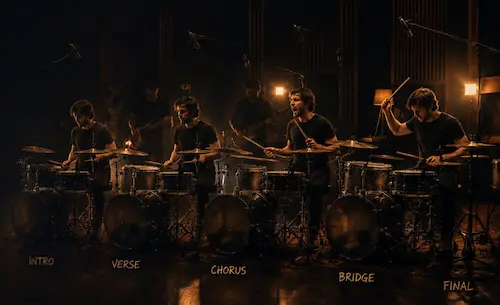 One of the clearest signs of a convincing mix is that punch doesn't belong to a single section. It evolves with the music. The verse, chorus, and bridge should each create a different emotional impression while preserving the sense that important passages continue to arrive with intention. The listener may experience changing levels of excitement, but the music never loses its ability to make those moments feel meaningful.
A restrained verse isn't supposed to feel weak simply because it isn't as energetic as the chorus. In fact, that quieter presentation often establishes the perspective that allows the next section to make a stronger impression. When the chorus finally arrives, its impact feels earned because the song has prepared the listener to recognize the change instead of presenting maximum intensity from the opening bars.
The same principle applies when the arrangement shifts again. A bridge often introduces a different emotional direction rather than attempting to outdo the chorus. It may reduce momentum, create uncertainty, or briefly change the musical focus before leading naturally toward the final section. Even though the emotional character changes, the listener should still perceive each important musical event as purposeful. Punch doesn't disappear simply because the song becomes more intimate for a moment.
This is where many otherwise well-crafted mixes become surprisingly inconsistent. One section feels immediate and engaging, while the next loses its sense of arrival. Nothing sounds objectively wrong, yet several musical moments compete for the listener's attention at the same time, making each one feel less meaningful than it should. Instead of guiding the listener through a sequence of distinct musical experiences, the song begins to alternate between convincing impact and passages that feel comparatively flat.
During evaluation, we rarely compare one section against another in isolation. The more important question is whether the listener's perception of impact remains believable as the arrangement develops. Does every new section establish its own identity while preserving the same level of musical conviction? Or does the sense of impact fade whenever the song changes direction?
The goal isn't to maintain identical punch throughout the song. It's to preserve the listener's confidence that every important section still feels intentional, believable, and emotionally convincing.
More Aggressive Sounds Do Not Always Feel More Punchy
It's easy to assume that a stronger sound automatically creates a stronger reaction. That's rarely how listeners experience music. A mix can become increasingly aggressive while feeling less punchy because the ear gradually stops recognizing individual moments as special. The music remains intense, yet its ability to create genuine impact quietly fades.
Punch isn't determined by how forcefully a musical event presents itself. It's determined by whether that event feels significant when it arrives. A phrase that immediately captures attention because it changes the listener's expectations often creates more impact than one that simply continues the same level of intensity established a few seconds earlier. The difference is subtle, but listeners recognize it instinctively.
Think about two productions that begin with equal confidence. In one, every important musical phrase enters with similar urgency. Nothing ever relaxes, nothing briefly steps aside, and nothing changes the listener's perspective. The song feels energetic from beginning to end, yet after a short time the emotional response becomes surprisingly consistent. Individual moments stop leaving lasting impressions because they all compete with the same degree of determination.
Now imagine another production where the musical direction remains focused, but important arrivals are allowed to create contrast. Not every phrase demands maximum attention. Some establish expectation. Others fulfill it. As the song develops, those arrivals continue to feel fresh because each one contributes something new to the musical conversation instead of repeating the same emotional statement. The overall performance may actually feel more controlled, yet listeners often describe it as having greater punch.
When evaluating impact, a few questions usually reveal more than searching for a single weak element.
- Does the impact still surprise the listener, or has every important moment become equally expected?
- Does each significant musical event remain recognizable on its own, or do several arrivals blend into one continuous impression?
- When the music becomes more intense, does it actually feel more impactful, or does it simply become busier?
These questions shift the focus away from individual sounds and toward listener perception. Punch isn't created because musical events become more forceful. It emerges because their arrival continues to feel meaningful throughout the song. When every important moment preserves its own identity instead of competing for attention in exactly the same way, impact remains believable, memorable, and emotionally convincing long after the first listen.
Decide Whether Punch Is Missing Locally Or Across The Entire Mix
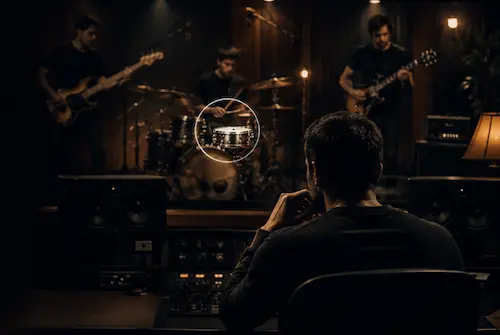 Not every punch problem has the same origin. That's an important distinction because two mixes can leave a similar first impression while requiring completely different conclusions. One may lose impact during only a few musical moments, while another never develops a convincing sense of impact at any point in the song. Treating those situations as identical often leads to unnecessary changes instead of a clearer understanding of what the listener is actually hearing.
Local loss of punch is limited to specific passages. Most of the song feels engaging, but one transition, one section, or one sequence of musical events suddenly feels less convincing than everything around it. The overall identity of the mix remains intact. In these situations, the objective is often to preserve what already works while carefully examining why that particular moment no longer feels as distinct. The problem belongs to the relationship between neighboring events rather than to the entire production.
Structural loss of punch is different. The impression begins near the start of the song and continues almost unchanged until the end. Every section follows a similar emotional pattern. Important arrivals no longer establish clear priorities, anticipation gradually disappears, and the listener rarely experiences moments that genuinely feel more decisive than those before them. Instead of one isolated weakness, the entire musical presentation begins to share the same level of urgency.
This distinction changes the questions worth asking. If the issue is local, the goal may be to preserve the existing musical direction and strengthen only the moments where impact becomes less convincing. If the issue is structural, it becomes more useful to reconsider how the song presents major transitions as a whole. Sometimes simplifying competing ideas reveals stronger impact than adding new ones. In other cases, the priority is simply to avoid allowing every significant moment to communicate with equal intensity.
During evaluation, we rarely classify a mix as simply "not punchy." We first determine the scale of the listening problem. Has the music temporarily lost its sense of arrival, or has that impression been missing from the beginning? Those are fundamentally different observations, and they lead to very different conclusions about the musical experience.
Recognizing the difference between local and structural punch prevents unnecessary changes and keeps the evaluation focused on listener perception rather than assumptions. Once the true scope of the issue becomes clear, it is much easier to preserve the strengths that already exist, strengthen the moments that deserve greater emphasis, simplify where competing ideas reduce impact, reconsider how musical events relate to one another, and avoid changing parts of the mix that were never responsible for the problem in the first place.
Punch Does Not Mean Every Moment Feels Explosive
One of the most common misunderstandings about punch is the belief that every important moment should hit with maximum intensity. It sounds reasonable until you listen to mixes that actually leave a lasting impression. They don't feel explosive from beginning to end. Instead, they guide the listener through changing levels of attention, allowing certain moments to feel more significant because others are deliberately less demanding.
Perspective is what gives impact its meaning. If every musical event announces itself with equal urgency, the listener quickly adjusts to that level of excitement. What initially feels bold gradually becomes the new normal. Nothing appears weaker, yet nothing feels especially important either. The music keeps moving, but the emotional peaks become harder to distinguish because there are no meaningful differences between them.
Pacing plays a central role in this experience. Music naturally unfolds through sequences of expectation and fulfillment rather than continuous emphasis. Some passages establish direction. Others introduce tension. Then comes a musical arrival that feels satisfying precisely because the listener has been prepared for it. Remove that sense of progression and even the strongest arrival begins to feel routine instead of memorable.
Restraint is equally important. It isn't the opposite of impact—it often makes impact possible. When every phrase competes to become the highlight of the song, the listener is left without a clear sense of priority. On the other hand, when certain moments are allowed to remain understated, the events that truly matter become easier to recognize. The music feels more confident because it no longer tries to prove its importance every second.
Contrast ties all of these ideas together. It gives the listener reference points. It creates perspective. It allows one musical arrival to feel different from the previous one without relying on constant escalation. As the song develops, those changing relationships keep the performance engaging because the ear continues to discover new moments worth noticing rather than hearing the same emotional statement repeated over and over.
That's why punch should never be measured by how explosive the mix feels overall. A convincing mix doesn't demand maximum attention every second. It earns the listener's attention by choosing the right moments to make an impact. When pacing, expectation, contrast, and restraint work together, punch becomes something the listener naturally experiences instead of something the music continuously insists upon.
Punch Should Be Evaluated Before Drawing Broader Conclusions
Punch is only one part of a complete mix evaluation, but it often influences how every other listening impression is perceived. When impact feels believable, engineers can judge balance, arrangement, and musical communication more objectively because the absence of punch is no longer dominating the listening experience.
This is why we rarely evaluate punch in isolation. A mix with convincing impact may still reveal other issues that belong to completely different listening categories. Some productions feel punchy but inconsistent from section to section. Others create satisfying moments of impact while remaining difficult to follow as the arrangement develops. Those observations shouldn't be confused with punch itself—they simply become easier to hear once the foundation of musical impact is no longer competing for the listener's attention.
Think of punch as improving the listening perspective rather than providing the final answer. When important musical arrivals feel clear and intentional, it becomes easier to judge whether transitions feel natural, whether the song develops convincingly, or whether individual musical ideas continue supporting the overall direction. The evaluation becomes more precise because one major listening variable is no longer masking everything else.
This is also why diagnosing a mix should never stop after deciding that it feels punchy. Strong impact doesn't automatically mean every other aspect of the production is equally successful. It simply removes one obstacle that might otherwise influence every listening decision that follows.
In our studio, punch is treated as one part of a broader evaluation rather than the final objective. Once the sense of impact feels natural throughout the song, we continue listening for the remaining characteristics that shape the complete musical experience. That broader approach is explored in our Mixing Problems Guide, where individual listening impressions are separated into distinct categories instead of being treated as one general problem.
In other words, punch supports diagnosis—it doesn't replace it. The clearer the sense of musical impact becomes, the easier it is to identify the next listening decision with confidence instead of assuming every remaining concern belongs to the same underlying cause.
What We Evaluate When A Mix Lacks Punch
 When a mix is described as lacking punch, our evaluation doesn't begin by asking which sound should become more aggressive.
That approach assumes the problem has already been identified before any careful listening has taken place.
Instead, we start by asking a different question: what prevents important musical events from feeling significant when they arrive?
The answer is rarely found in one isolated element. More often, it emerges from the way the entire musical presentation is perceived over time.
Some mixes reveal the issue within seconds. Others require listening through several sections before recurring patterns become obvious. That's why we evaluate complete songs rather than isolated moments whenever possible.
The first characteristic we examine is impact. Not whether the music feels energetic, but whether important moments actually leave a lasting impression. Listeners don't remember every note equally. They remember the arrivals that changed their attention. If those moments pass without creating a clear emotional response, the mix can feel surprisingly restrained even when every individual element appears confident on its own.
Next comes attack—not as a technical shape, but as a listening experience. We ask whether important musical events introduce themselves clearly enough to establish their own identity. A musical moment doesn't have to be dramatic to feel decisive. It simply needs to communicate with enough clarity that the listener immediately recognizes its role within the evolving musical narrative. Although transient shape contributes to the impression, we never evaluate transients separately from the surrounding musical context.
Contrast follows naturally. Every convincing moment gains meaning from what surrounds it. If consecutive musical phrases all compete with similar urgency, the ear gradually stops assigning special importance to any of them. When contrast begins to disappear, impact usually fades with it. The performance may remain active, yet the listener no longer experiences distinct moments that feel memorable.
Timing perception is equally important. We aren't measuring precision in a technical sense. We're listening for whether musical events arrive at moments that feel intentional and emotionally satisfying. A well-timed musical phrase creates confidence because it feels connected to everything that came before it. When that relationship weakens, the sense of punch often weakens as well, even if the overall intensity of the performance remains unchanged.
Finally, we evaluate musical separation. This isn't about isolating sounds from one another. It's about determining whether significant musical events retain enough individuality to be perceived as separate experiences instead of blending into one continuous stream of activity. In many technically clean mixes, this is exactly where punch quietly disappears. Nothing sounds objectively wrong, yet several musical moments compete for the listener's attention at the same time, making each one feel less meaningful than it should.
We also evaluate whether important musical events are being perceptually masked by surrounding material. Punch often disappears not because an arrival becomes weaker, but because overlapping musical activity makes it harder for the ear to recognize that musical moment as a distinct event. The masking may occur in the low end, across dense arrangements, or simply because too many musical ideas compete for attention at the same moment.
That observation appears surprisingly often during studio evaluations. Many well-produced mixes don't lack energy at all. They lose punch because the relationships between musical events become less distinct as the song develops. Once multiple musical moments begin sharing the same perceptual space, the listener no longer experiences them as individual moments of impact. The music remains active, but its ability to create memorable arrivals gradually diminishes.
For that reason, we evaluate perceived impact before drawing conclusions about individual technical decisions. Technical choices only become meaningful after understanding how the listener experiences the music as a complete sequence of arrivals, expectations, and contrast. When that broader perception is understood first, every later decision becomes more informed because it supports the musical experience rather than chasing isolated symptoms. That's why our evaluations begin with listening patterns before individual processing decisions. Once perception is understood, technical choices become far easier to judge in context.
About AREFYEV Studio
AREFYEV Studio is an independent online mixing and mastering studio working with musicians, producers, and labels around the world. Every mix is reviewed manually by experienced engineers who evaluate musical perception rather than relying on automated analysis. Our approach focuses on impact, clarity, consistency, and how a record translates as a complete listening experience across today's streaming platforms.
Know When Chasing More Punch Stops Helping
There comes a point where searching for more punch no longer improves the listening experience. Instead, it begins to erase the very qualities that made the music engaging in the first place. Every additional attempt to make important moments feel stronger gradually reduces the contrast those moments depend on. The result is a mix that appears increasingly assertive while becoming progressively less memorable.
This happens because punch is a relative perception, not an absolute one. Listeners don't evaluate impact in isolation. They constantly compare one musical event with the moments surrounding it. As long as those relationships remain clear, impact feels convincing. Once every arrival begins communicating with the same level of urgency, the ear quickly adapts and stops recognizing meaningful differences. More emphasis no longer creates more impact—it simply changes the average level of expectation.
That is why the final stage of evaluation is rarely about asking how to make the mix feel stronger. The better question is whether the music already communicates its most important moments with enough clarity. If the answer is yes, continuing to chase additional punch may solve a problem that no longer exists while creating a new one that wasn't there before.
Different conclusions are possible depending on what the listener actually hears. Sometimes the strongest decision is to preserve the relationships that already make the song feel engaging. In other situations, simplifying competing musical ideas allows genuinely important arrivals to regain their significance. Occasionally, it's worth reconsidering whether every section still contributes to the same overall musical direction. In many cases, preserving meaningful relationships between musical events produces a more convincing impression than increasing the intensity of every individual moment.
There is another possibility that is often overlooked. Not every production is meant to feel relentlessly impactful. Some songs intentionally rely on intimacy, patience, or emotional restraint. Those characteristics shouldn't be mistaken for weakness simply because they avoid constant emphasis. A quieter musical personality can still feel remarkably confident when its important moments remain clear and believable.
The most successful mixes understand that impact is earned, not continuously demanded. They know when to step forward and when to leave space for the next musical event to matter. That balance allows the listener to stay engaged from beginning to end because every important arrival continues to feel intentional instead of expected.
Ultimately, the objective is not to create the most aggressive mix possible. It is to create one believable musical experience where impact feels natural, contrast remains meaningful, and every important moment arrives with a sense of purpose. When that happens, punch no longer draws attention to itself—it simply becomes part of the way the music communicates.
Punch Is Earned Through Musical Decisions, Not Constant Intensity
If your mix still feels less impactful than the performance deserves, the answer is rarely to make everything more aggressive. We evaluate how musical events interact across the entire song, helping important moments feel clear, intentional, and naturally impactful while preserving the character of the production.
Every mix is evaluated by experienced engineers with one goal: creating musical impact that remains convincing everywhere people listen.
Frequently Asked Questions About Punch In A Mix
What actually makes a mix sound punchy?
A punchy mix is created when key musical moments arrive with enough contrast to feel distinct and memorable. Listeners respond to the relationship between moments rather than the strength of any single sound. When anticipation, clear arrival, and musical separation work together, the mix feels impactful without relying on constant intensity.
Can a loud mix still lack punch?
Yes. Loudness and punch describe different listening experiences. A mix may feel consistently powerful while individual musical events fail to stand out from one another. If every important moment communicates with the same urgency, the ear gradually adapts, making the overall presentation feel less impactful even though the music never seems quiet.
Why doesn't making everything stronger create more punch?
Because listeners judge impact through comparison. When every phrase tries to become the highlight of the song, nothing clearly separates itself from what came before. Instead of increasing punch, constant intensity often removes the contrast that allows meaningful musical arrivals to be recognized.
Is punch the same as dynamics?
Not exactly. Dynamics describe changes in musical intensity over time, while punch is the listener's perception of how convincingly important moments arrive. Dynamic variation can contribute to punch, but a mix may contain noticeable dynamic changes without creating memorable impact, just as a controlled mix can feel remarkably punchy when musical events are presented with clear contrast and timing.
Can a soft arrangement still feel punchy?
Absolutely. Punch is not reserved for aggressive music. A restrained arrangement can create a powerful sense of impact when key musical events are easy to recognize and feel intentionally placed within the song. The emotional scale may be smaller, but the impression of arrival can remain just as convincing.
When should I stop trying to add more punch?
When the most important musical moments already feel clear, recognizable, and emotionally satisfying. Beyond that point, pursuing additional impact often reduces the contrast that made those moments effective in the first place. The goal is not maximum intensity—it is a believable musical experience where every significant musical moment still feels intentional.