
How To Make A Mix Sound Wider: Why Width Depends On Spatial Relationships
Most people assume making a mix wider simply means adding more stereo information. In practice, that assumption often leads in the opposite direction. A production can spread sounds across the speakers, use dramatic stereo effects, and still leave listeners with the impression that everything is happening inside a surprisingly narrow space.
The reason is simple. Width is not judged one instrument at a time. It is experienced as the relationship between everything happening across the stereo image. When every element tries to sound equally wide, important spatial references begin to disappear. Instead of creating openness, the mix can lose focus and become harder to follow.
A mix usually feels wider when listeners can clearly understand how the left, center, and right sides work together. If those relationships become confusing, adding more stereo information rarely solves the problem. In other words, making a mix sound wider usually starts with improving the way the entire stereo image is perceived—not by making individual sounds occupy more space.
Before deciding that a mix needs "more width," it's worth asking a different question: does the entire stereo image already make sense to the listener? The first step is determining whether the horizontal image already feels believable as one complete musical space. That same approach also guides the broader decisions discussed in our How to Mix a Song guide, where the overall structure of a mix is established before individual qualities such as width are evaluated.
By the end of this guide, you'll be able to recognize whether your mix actually lacks width, whether the overall image is communicating clearly, and why expanding individual sounds often fails to make the entire production feel more spacious.
Width Is Perceived Across The Entire Stereo Image, Not Individual Sounds
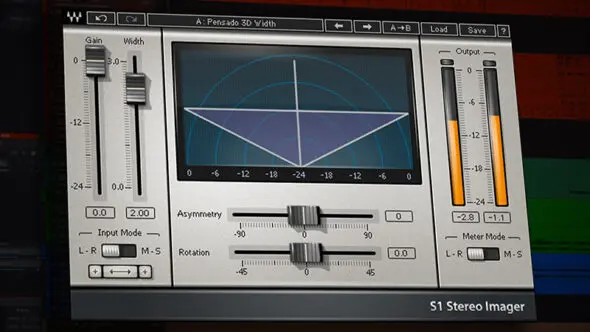 When listeners describe a mix as wide, they are rarely reacting to one particular instrument. Their attention naturally shifts toward the complete stereo picture. The brain combines everything happening across the left and right sides into a single impression, then decides whether the music feels open, connected, and easy to follow. That overall perception matters far more than the apparent size of any isolated track.
This explains why one exceptionally wide element does not automatically make the entire production feel spacious. Imagine an atmospheric guitar stretching far beyond everything else while the vocal, drums, bass, and keyboards remain concentrated in a much narrower area. The guitar may sound impressive on its own, yet the mix itself often continues to feel constrained because the surrounding stereo relationships never expand with it. Listeners judge the environment created by all of the elements together, not the most dramatic one.
During mix evaluations, we frequently encounter projects where a single part immediately draws attention because of its apparent width. At first, that seems encouraging. After a full listen, however, the rest of the arrangement still feels disconnected from that space. Instead of experiencing one coherent stereo image, the listener hears one oversized element surrounded by a collection of smaller, unrelated positions. The result is contrast without cohesion.
A convincing stereo image develops through consistent horizontal relationships. Sounds should appear to belong to the same musical environment, allowing the left side, center, and right side to work together instead of competing for attention. As those relationships become easier to understand, the stereo image begins to feel more continuous from edge to edge. The impression of width grows naturally because the entire presentation becomes more believable rather than more exaggerated.
For that reason, we rarely ask whether a particular instrument should sound wider. The more useful question is whether removing that instrument would noticeably change the listener's impression of the entire stereo image. If the answer is no, individual width was never the deciding factor. Perceived spaciousness belongs to the complete musical picture, not to isolated sounds.
The First Question Is Not "How Can I Make Everything Wider?"
One of the most common reactions to a narrow mix is to assume that every instrument needs more width. It sounds reasonable at first. If one wider sound creates more space, then making everything wider should create an even bigger stereo image. In reality, that approach often has the opposite effect. As more elements compete for the outer edges of the stereo field, the overall presentation becomes harder to interpret, and the impression of width gradually disappears.
Listeners rely on spatial reference points without consciously thinking about them. Some elements naturally establish the boundaries of the listening space, while others reinforce its center and help connect everything into a single presentation. When nearly every sound tries to occupy the maximum horizontal space, those references begin to disappear. Instead of hearing a convincing stereo picture, the listener hears a collection of equally dominant positions with no clear sense of organization.
A simple comparison illustrates the difference. Imagine a chorus where guitars, keyboards, background vocals, percussion, and effects all appear equally wide from the first beat. The result may seem impressive for a few seconds, yet the image quickly feels static because nothing defines its outer limits anymore. Now compare that with a mix where only selected musical roles establish the widest points while other elements naturally support the overall picture. The stereo image suddenly feels easier to understand, even though fewer sounds occupy the extreme edges.
This is why our first question is never, "How can we make everything wider?" We begin by identifying which musical elements define the horizontal image and which simply support it. Those roles are rarely distributed equally across an arrangement, and they should not be treated as if they were. Width becomes more convincing when different musical roles contribute different amounts of spatial information instead of all competing for the same position.
Before evaluating perceived width, we examine which musical elements actually define the horizontal image rather than assuming every sound should extend equally toward both sides. In our experience, mixes become more immersive when spatial roles remain distinct. Contrast between those roles—not universal expansion—is what allows listeners to perceive genuine width throughout the song.
A Narrow Mix Is Not Always A Width Problem
When a mix feels narrower than expected, it's tempting to assume that stereo width is the only issue. In practice, that conclusion is often reached too quickly. Several different mixing problems can produce a similar first impression, even though they originate from completely different musical relationships. Expanding the spatial picture before identifying the real cause may leave the mix sounding different without making it feel any wider.
This is why diagnosis always comes before evaluation. A listener may describe a song as "closed," "small," or "boxed in," but those descriptions are subjective. One project may truly suffer from limited horizontal space, while another may actually feel distant, crowded, or lacking in musical impact. The perceived symptom sounds similar. The underlying reason is not.
| Symptom | What The Symptom Most Likely Belongs To |
|---|---|
| Mix feels narrow | Perceived Width |
| Mix feels small | Bigger Mix |
| Mix feels distant | Front-To-Back Depth |
| Mix feels crowded | Masking |
| Mix feels weak | Punch |
| Mix feels spectrally uneven | Frequency Balance |
Notice that only the first row actually belongs to the topic of this page. The remaining symptoms may influence how spacious a mix appears, but they represent different listening problems with their own causes and evaluation methods. Treating every narrow-sounding mix as a stereo issue can easily send the analysis in the wrong direction.
Before asking how to make a mix sound wider, first determine whether width is genuinely what the listener is reacting to. Correct diagnosis keeps the evaluation focused on the real problem instead of chasing symptoms that belong somewhere else. Only after the source of the perception is clearly identified does it make sense to judge whether the horizontal image itself is limiting the listening experience.
Stable Left-To-Right Relationships Create Spaciousness
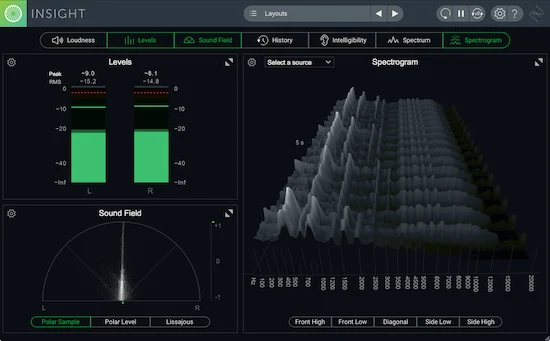 Listeners rarely sit down and analyze whether a sound is exactly 40% left or 60% right. That's not how width is experienced. Instead, the brain quickly decides whether the stereo image feels coherent enough to accept as one believable musical space. When those horizontal relationships remain clear from beginning to end, the mix naturally feels more open. If they constantly shift without an obvious musical reason, the sense of spaciousness begins to fade even though the amount of stereo information may never change.
Consistency plays a much bigger role than many people realize. Every important element contributes to the listener's understanding of the horizontal picture, creating familiar reference points across the arrangement. Those references do not need to remain perfectly fixed, but they should behave in a way that feels intentional. When a guitar seems to define the left side in one section, only to become difficult to locate moments later without any obvious musical explanation, the stereo picture becomes less convincing. The listener may not identify exactly what changed, but they often notice that the mix suddenly feels less open.
We often encounter mixes where individual sections sound spacious on their own, yet the complete song never develops a convincing horizontal image. The issue is rarely the amount of width. More often, the relationships between the left side, center, and right side fail to remain believable as the arrangement evolves. Instead of experiencing one continuous stereo environment, the listener keeps adapting to a picture that quietly reorganizes itself.
Picture a verse that feels comfortably contained between the speakers. Nothing dramatic happens when the chorus arrives, yet the stereo image suddenly seems more open. In many cases, the difference isn't additional width at all. The relationships between musical elements simply become easier to understand, allowing the entire stereo picture to feel larger without obviously changing its dimensions.
That is why we evaluate stability before apparent width. A believable stereo image preserves clear left-to-right relationships throughout the performance, allowing every section to feel connected to the same musical environment. Spaciousness grows from continuity and recognizable spatial organization—not from constantly pushing sounds farther toward the edges.
This becomes especially noticeable when switching between headphones and speakers. A mix that seemed impressively wide on one playback system may suddenly feel much narrower if the overall spatial relationships were never convincing to begin with.
Wider Mixes Do Not Push Every Sound Toward The Edges
It's easy to assume that a wider mix simply stretches farther from left to right. Many producers imagine the listening space as something that should be filled from edge to edge. Yet the most convincing mixes rarely behave that way. Spaciousness is not created by occupying every available position. It comes from how naturally those positions relate to one another.
When nearly every instrument reaches toward the outer limits of the spatial image, listeners gradually lose their sense of orientation. Nothing defines the boundaries anymore because almost everything is trying to become the boundary. Instead of hearing an open, believable presentation, the ear begins searching for stable reference points that no longer exist. Ironically, the mix may contain more horizontal spread than ever while feeling less spacious overall.
A well-developed stereo image gives every musical role an appropriate amount of space. Some sounds naturally establish the outer limits of the presentation, while others reinforce the overall picture without competing for those same positions. This balance allows the left-right perspective to breathe. Without consciously analyzing it, listeners quickly develop expectations about the horizontal layout.
Imagine listening to two choruses. In the first, nearly every instrument appears to occupy the full width of the presentation from the very first beat. It feels impressive for a moment, but the sense of openness quickly becomes difficult to appreciate because there is no remaining perspective. In the second chorus, only selected musical elements define the widest points while the surrounding parts naturally support the overall image. The presentation often feels larger and more immersive, even though fewer sounds actually extend toward the edges.
During evaluation, we focus on whether the spatial layout maintains a believable sense of openness instead of asking how much of the horizontal space has been filled. Width becomes convincing when listeners can comfortably follow the relationships across the entire image without feeling that every element is demanding equal attention. Balanced horizontal relationships create a stronger impression of spaciousness than universal expansion ever can.
A Wider Mix Starts With Better Spatial Decisions
A convincing stereo image is built through clear horizontal relationships—not by pushing every sound farther apart. Understanding how listeners perceive width makes it easier to recognize whether a mix already supports natural spaciousness or whether the listening space still lacks a believable sense of openness.
Real-world mixing insight. Practical evaluation. Musical decisions before technical ones.
Width Should Remain Consistent Throughout The Song
A convincing stereo image is not judged in a single moment. Listeners experience it as the song unfolds, comparing one section to the next without consciously realizing they are doing so. If the verse establishes one sense of horizontal space but the chorus suddenly feels disconnected from that environment for no obvious musical reason, the illusion of spaciousness begins to weaken. The mix may still contain plenty of stereo information, yet the overall image no longer feels trustworthy.
This does not mean every section should sound identical. Quite the opposite. A chorus can naturally feel broader than a verse, and a bridge may introduce a different sense of openness to support the emotional direction of the song. The important question is whether those changes feel like part of one continuous musical landscape or whether they seem to appear unexpectedly. When the stereo image evolves with the arrangement, listeners accept it. When it changes without a clear musical purpose, they often perceive the mix as unstable rather than spacious.
We often hear this during evaluations of otherwise well-produced tracks. The opening verse presents a believable horizontal picture, then the first chorus arrives and the entire stereo image seems to reorganize itself. Later, the bridge narrows unexpectedly before the final chorus expands again in a different way. None of these moments may sound wrong on their own, but together they create the impression that the song keeps moving between unrelated stereo environments instead of developing one coherent spatial identity.
A simple example illustrates the difference. Imagine a verse that feels intimate because the overall presentation is naturally restrained. As the chorus begins, the listener senses more openness, yet every important element still appears to belong to the same musical environment. That transition feels intentional. Compare it with another song where the chorus suddenly presents an entirely different horizontal picture, making familiar instruments seem disconnected from the space established only seconds earlier. The second version often feels less immersive despite sounding more dramatic.
One recurring observation is whether the stereo image expands and relaxes naturally while preserving a consistent sense of place throughout the song. Believable width is not defined by how far the image extends at any single moment. It is defined by whether listeners can follow one coherent horizontal perspective from the first section to the last. When that continuity remains intact, spaciousness survives every musical change instead of being reset every time the arrangement evolves.
When comparing different sections, ask yourself:
- Does the spatial layout evolve naturally, or does it suddenly feel unrelated?
- Do familiar instruments remain easy to locate throughout the song?
- Does the wider section feel more believable—or simply more dramatic?
Some Wide Mixes Still Feel Surprisingly Narrow
 At first glance, this sounds like a contradiction. If a mix already stretches broadly across the stereo image, why would anyone describe it as narrow? We hear this during evaluations more often than many people expect. The answer usually has very little to do with the amount of horizontal space. Instead, it comes down to whether listeners can make sense of the relationships inside that space.
A mix can contain an impressive amount of stereo information while still feeling confined. Imagine an arrangement where almost every important element appears equally wide. Nothing immediately sounds restricted, yet nothing clearly defines the stereo image either. As the music develops, the ear struggles to understand where one musical role ends and another begins. The image feels busy rather than spacious, leaving the listener with the impression that the song never truly opens up.
This is one of the biggest misconceptions surrounding perceived width. More horizontal information does not automatically produce a greater sense of openness. In fact, when the stereo image becomes difficult to interpret, listeners often perceive it as smaller despite hearing sounds distributed across a much larger area. Spaciousness depends on recognizable relationships, not simply on how much of the left and right sides are occupied.
When we evaluate mixes that feel unexpectedly narrow, we often pause and ask a few simple questions before drawing any conclusions.
Diagnostic questions:
- Does the stereo image feel more open as the arrangement develops, or does every section present roughly the same horizontal impression?
- Can you easily recognize how the left side, center, and right side work together, or do they compete for attention?
- Does the song itself feel more spacious, or do individual sounds simply appear farther apart?
These questions rarely produce numerical answers, but they reveal something more valuable: whether the overall spatial picture communicates a believable musical environment. If listeners can comfortably follow the horizontal relationships from one section to the next, the mix usually feels wider than its actual dimensions suggest. If those relationships remain unclear, even an extremely broad stereo presentation can leave the music sounding unexpectedly confined.
That is why we never judge width by stereo information alone. A convincing sense of spaciousness emerges when the complete horizontal picture feels organized, understandable, and musically connected—not merely because sounds extend farther toward the left and right speakers.
Decide Whether The Width Problem Is Local Or Structural
Not every mix that feels narrow suffers from the same kind of limitation. Sometimes the issue is confined to one musical area, while in other cases the entire stereo image lacks a convincing sense of horizontal space. Distinguishing between those two situations is an important part of the evaluation because they lead to very different conclusions. Before deciding what should change, it's worth asking how widely the problem is distributed throughout the song.
A local width issue affects only part of the stereo picture. Perhaps one musical role feels disconnected from the surrounding image, or one section of the arrangement briefly loses its sense of openness while everything else remains believable. In those situations, the overall spatial character can often be preserved because the underlying relationships continue to make sense. The narrow impression is limited rather than defining the entire listening experience.
A structural width issue is different. Here, the stereo image feels constrained from beginning to end regardless of which section is playing. The verse, chorus, bridge, and transitions all present the same restricted horizontal impression. Listeners never develop a stable understanding of how the music occupies the stereo field because the overall spatial identity remains limited throughout the arrangement. The problem no longer belongs to one element or one moment—it belongs to the complete stereo picture.
When evaluating this distinction, we usually think in terms of musical decisions rather than technical solutions. Some spatial relationships deserve to be preserved because they already contribute to a believable stereo image. Others may need to be limited if they distract from the overall presentation. In some cases, the horizontal relationships should be reconsidered because they no longer support one coherent stereo picture. Occasionally, the most effective choice is to simplify the spatial layout instead of introducing additional complexity. Just as importantly, it's worth knowing which changes to avoid when they would make the stereo image feel less natural instead of more convincing.
At our studio, we never assume that every narrow mix requires the same response. We first determine whether the perceived limitation belongs to a specific part of the stereo image or whether it reflects the character of the entire production. That distinction keeps the evaluation focused on the real source of the problem rather than its symptoms.
The goal is not to classify every mix as simply "wide" or "narrow." It is to understand whether the lack of spaciousness is isolated or structural. Once that becomes clear, the stereo image can be judged as a complete musical environment instead of a collection of unrelated horizontal impressions.
Spacious Mixes Rarely Feel Exaggerated
 Many listeners naturally associate extreme width with a better mix. The first impression can certainly be exciting. Sounds seem to extend far beyond the speakers, and the presentation immediately feels dramatic. Yet after a longer listen, that excitement often begins to fade. Instead of becoming more immersive, the stereo image can start drawing attention to itself, making the width feel like a feature rather than a natural part of the music.
The most convincing mixes usually create a different experience. Their spaciousness is obvious, but it never feels forced. Nothing appears to stretch beyond what the song itself can support, and the stereo image remains easy to follow from beginning to end. Rather than constantly noticing how wide everything sounds, listeners simply become absorbed in the performance. The music takes center stage while the sense of space quietly reinforces it.
We've evaluated many productions where the initial impression was simply that the stereo image felt unusually expansive. A few minutes later, another impression emerged: every section felt almost identical because the stereo image was trying to impress all the time. Compare that with a mix that feels comfortably open without demanding attention. It may seem less spectacular during the first few seconds, yet it often remains engaging through repeated listening because the spaciousness feels natural instead of exaggerated.
This difference matters because people rarely describe their favorite recordings by saying, "The width is incredible." More often, they talk about how open, effortless, or immersive the music feels. Those reactions come from a stereo image that supports the song rather than competing with it. Natural spaciousness blends into the listening experience so completely that most people stop thinking about width altogether.
At our studio, we don't judge width by how dramatic it appears during isolated moments. We listen for whether the horizontal image continues to feel comfortable, coherent, and stable as the song develops. When spaciousness no longer calls attention to itself, listeners are free to focus on the music—and that is usually where the strongest sense of width is found.
Once Width Feels Natural, Other Problems Become Easier To Recognize
A believable stereo image doesn't solve every mixing challenge, but it makes the remaining ones much easier to identify. When the horizontal relationships feel stable and natural, listeners stop questioning the sense of space and begin paying attention to the music itself. At that point, any remaining concerns become clearer because they are no longer hidden behind an inconsistent stereo presentation.
This is an important turning point during evaluation. Before the stereo image feels convincing, several unrelated issues can appear to be connected. A listener may describe the mix as unfocused or uncomfortable without being able to explain why. Once the horizontal picture becomes coherent, those broad impressions usually separate into more specific observations. Instead of hearing one undefined problem, it becomes easier to recognize which aspects of the mix deserve closer attention.
We see this regularly when reviewing completed mixes. An artist may initially believe the entire production feels constrained. After the stereo image begins behaving as one believable environment, the conversation changes. Rather than questioning the overall presentation, attention naturally shifts toward individual musical decisions that were difficult to notice before. The evaluation becomes more precise because the stereo image is no longer distracting from everything else.
That is why we treat perceived width as a supporting characteristic rather than a destination. A convincing horizontal image creates a reliable listening perspective, allowing other aspects of the mix to be judged on their own terms instead of through the lens of an unstable stereo picture.
If the stereo image already feels believable but the mix still doesn't communicate the way you expect, the next step is usually a broader evaluation of the production rather than additional width analysis. Our Mixing Problems Guide explores the other listening patterns that can affect how a finished mix is perceived once the stereo image itself is no longer the primary concern.
What We Evaluate When A Mix Feels Narrow
When a mix arrives with comments like "it feels too narrow" or "it doesn't open up," we avoid treating width as an isolated characteristic. The first step is understanding how the entire horizontal image behaves from the beginning of the song to the end. A convincing stereo presentation is rarely defined by one dramatic moment. It should remain understandable as the arrangement changes, allowing listeners to follow the music without constantly readjusting their sense of space.
Our evaluation begins with the overall horizontal image rather than individual instruments. We listen for whether the left and right sides feel connected as one musical environment, whether the stereo image remains consistent between sections, and whether important spatial reference points continue to make sense as new elements enter or existing ones leave. The goal is to determine whether the listener experiences one coherent stereo picture instead of a series of unrelated horizontal impressions.
We also pay close attention to spatial continuity. A mix may sound comfortably open during the verse, then gradually become difficult to interpret once the arrangement grows. In other projects, the opposite happens—the chorus suddenly feels disconnected from the stereo image established earlier. Neither situation necessarily indicates a lack of width. More often, it suggests that the perceived relationships across the stereo image are no longer behaving consistently enough for listeners to accept them as one continuous environment.
After evaluating mixes across different genres, production styles, and studios, one pattern appears again and again: technically impressive stereo images can still feel surprisingly narrow when listeners struggle to understand the overall horizontal picture.
For that reason, we evaluate perceived width before drawing conclusions about any individual stereo decision. If the complete horizontal image already feels believable, isolated moments become much easier to interpret in context. If the overall spatial presentation never develops a stable identity, focusing on individual elements first rarely explains why the mix feels narrow in the first place.
One recurring pattern is that artists often describe a mix as "too narrow" before identifying what actually feels restricted. Once the complete stereo image is evaluated from beginning to end, the original concern frequently turns out to be different from the one first reported. That is why we evaluate perception before discussing individual stereo decisions.
The wording changes from project to project—"too narrow," "boxed in," "stuck between the speakers"—but the first description rarely identifies the actual cause.
Know When Making Everything Wider Stops Helping
There comes a point where trying to make individual sounds wider no longer changes how the mix is perceived. You may compare several versions and notice that guitars extend farther, background parts occupy more horizontal space, or individual elements appear more expansive, yet the song itself still feels surprisingly narrow. When that happens, the limitation usually no longer belongs to isolated tracks. It belongs to the way the stereo image functions as a complete musical environment.
This is an important distinction because it changes the direction of the evaluation. If one element feels unusually restricted while the rest of the stereo image remains convincing, the issue is local. If every attempt to increase apparent width leaves the overall presentation feeling much the same, the overall stereo picture deserves far more attention than any individual sound. Listeners do not evaluate each position separately. They respond to whether the complete stereo picture feels coherent enough to accept as one believable space.
At that stage, several different conclusions become possible. Some stereo relationships should be preserved because they already support a natural listening experience. Others may need to be simplified if the image has become difficult to interpret. In some cases, it's worth reconsidering how the overall horizontal picture develops from one section to the next rather than concentrating on isolated positions. Occasionally, the most effective solution is to rebuild the way the stereo image is organized so listeners can immediately understand its spatial logic. And sometimes the right decision is simply to accept that the arrangement is meant to feel intentionally focused rather than exceptionally wide.
One observation appears repeatedly during studio evaluations. Mixes that feel naturally spacious rarely achieve that impression because every sound occupies as much horizontal space as possible. Instead, they create a stereo image that listeners understand almost instantly. The left and right sides support one another, the presentation remains coherent throughout the song, and nothing feels exaggerated simply for the sake of appearing wider.
Ultimately, the objective is not to maximize width or fill every corner of the stereo image. It is to create believable horizontal space that supports the music from beginning to end. Once the stereo relationships feel natural, listeners stop thinking about width altogether—and start paying attention to the song instead.
A Convincing Stereo Image Begins With Better Mixing Decisions
A wider mix is rarely created by making every sound larger across the stereo image. It comes from a coherent stereo layout that allows the music to feel naturally open without sacrificing focus. Understanding those relationships is often the difference between a mix that sounds impressive for a moment and one that remains immersive from beginning to end.
Experienced evaluation. Transparent pricing. Mixing decisions that support the music—not just the stereo image.
Frequently Asked Questions About Making A Mix Sound Wider
Why does my mix still sound narrow after adding more stereo effects?
Because adding more stereo activity doesn't automatically change how the entire mix is perceived. If the left, center, and right sides no longer work together naturally, additional width often makes the presentation feel more confusing instead of more spacious.
Can a mix sound wider without becoming bigger?
Yes. A mix can feel more spacious without feeling larger overall. Those are two different listening impressions, and they don't always change together.
Why do some very wide mixes still feel closed?
Because the listener may struggle to understand how the stereo image is organized. When nearly every element competes for the same horizontal space, the presentation can lose its natural reference points. Even though the image extends broadly from left to right, the overall impression may still feel confined because the spatial relationships no longer feel coherent.
Should every instrument occupy the full stereo image?
No. A believable stereo image depends on different musical roles contributing different amounts of horizontal space. If every element attempts to occupy the widest possible position, the presentation often becomes less organized. Spaciousness grows from complementary relationships rather than equal expansion across the entire mix.
Can a naturally intimate mix still feel wide?
Absolutely. Intimacy and width are not opposites. A restrained arrangement can maintain a convincing sense of horizontal openness while preserving its close emotional character. Listeners often describe these mixes as open rather than oversized because the stereo image supports the music without overwhelming it.
When should I stop trying to widen individual sounds?
If repeated attempts to make individual elements seem wider no longer change how the complete mix is perceived, it is usually time to evaluate the stereo image as a whole. At that point, the limiting factor is often the overall relationship between musical elements rather than the apparent width of any single track. The objective is not maximum expansion but one convincing horizontal environment that remains consistent throughout the song.