
Podcast Mastering — Why Some Podcasts Sound Clear for Hours and Others Become Exhausting Fast
A podcast can already be loud, clean, and professionally edited — yet still become tiring halfway through an episode.
Inside a quiet room, the dialogue feels balanced and controlled. Then the episode reaches earbuds during a morning commute, a car stereo on the highway, or a phone speaker in a noisy office kitchen. Suddenly the voice feels thinner, sharper, less stable. People start turning the volume up and down throughout the episode just to keep the dialogue comfortable.
Good podcast mastering keeps dialogue stable once the episode leaves the studio environment. A voice that feels smooth during editing can become surprisingly exhausting once everyday listening conditions start reshaping it.
Why Podcast Audio Falls Apart Outside the Studio (Even When It Sounded Fine During Editing)
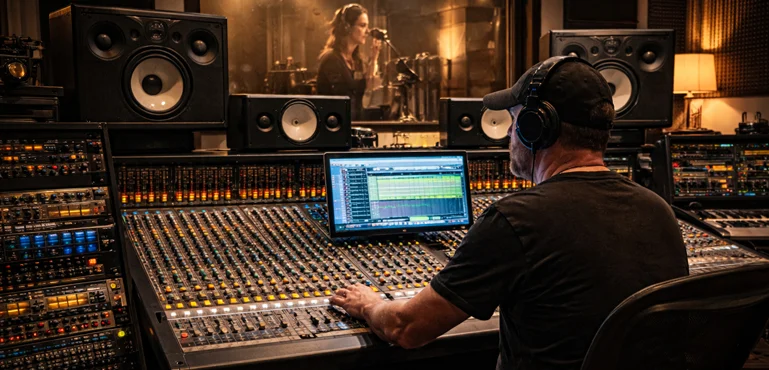 A lot of podcast problems hide in plain sight.
Inside the DAW, everything can feel controlled. The dialogue sounds clean on editing headphones. Nothing immediately feels broken during editing. Then the episode goes live and suddenly listeners start skipping ahead, lowering volume, or dropping off halfway through longer conversations.
Many creators only notice the problem after hearing their own episode between larger podcasts during everyday listening.
Most of the time, the recording itself is not the real problem. Spoken-word audio simply reacts very differently once it reaches real-world playback environments outside the studio.
Music often masks aggressive processing more easily because the listener’s attention constantly shifts between rhythm, instruments, and movement. Podcasts do not get the same forgiveness. Listeners notice small vocal problems much faster in spoken-word content than they usually do in music. Small vocal imbalances that barely stand out in the studio in a quiet room can become exhausting after thirty or forty minutes on earbuds.
Smartphone playback usually exposes these problems first.
Phone speakers tend to exaggerate upper-mid vocal energy while collapsing low-end support underneath the voice. Suddenly consonants feel sharper. “S” sounds start poking through the mix. Dialogue that felt intimate during editing becomes brittle and flat during normal daily listening.
Car playback often reveals another issue: excessive low-mid buildup inside spoken dialogue.
Inside a vehicle, spoken dialogue often accumulates extra weight around the lower vocal range. Some podcasts start sounding cloudy or boxed-in even though the original recording felt clear in the studio. Then the next sharp consonant suddenly feels even more aggressive a few seconds later.
Earbuds create another layer of instability, especially lower-cost consumer models that exaggerate upper vocal frequencies unevenly.
We regularly hear podcasts where dialogue levels technically remain “correct,” yet the perceived loudness keeps shifting from sentence to sentence. One phrase suddenly jumps forward. The next one disappears into background noise. People start putting extra effort into following the conversation instead of simply staying inside it. After twenty minutes, the dialogue no longer feels effortless to follow.
That is usually the point where listeners start disengaging from longer episodes. Most listeners never identify the technical issue directly. The episode simply starts feeling harder to stay inside for long periods of time.
Podcast audiences rarely stop an episode because they consciously think: “this master sounds bad.”
The dialogue starts feeling less controlled. Certain phrases suddenly jump forward while others become harder to follow once background noise and weaker playback systems get involved.
This is also why raw loudness is often overrated in podcast production. A louder podcast with unstable dialogue translation usually performs worse than a balanced master that remains easy to follow across different playback systems.
One of the most common mistakes we hear during podcast review sessions is over-processing speech until it feels unnaturally dense. Everything stays pinned to the front of the listener’s attention with no breathing room left between phrases. Heavily processed dialogue can initially sound bigger and more impressive than a balanced spoken-word master. Over a full episode, though, fatigue builds very quickly.
Good podcast mastering is largely about controlling listener fatigue before the episode reaches everyday listening environments. Earbuds during commuting, car systems in traffic, phone speakers in noisy environments — that is where spoken-word playback either stays comfortable or starts falling apart.
Many creators only notice these problems after checking how episodes behave across real consumer playback systems before release.
Podcast Loudness vs Listening Comfort (Why Louder Dialogue Does Not Always Feel Better)
A surprising number of podcast creators chase the wrong target.
They focus on loudness numbers first. LUFS targets. Matching playback levels. Making sure every episode looks “competitive” next to larger shows.
None of that is completely wrong. Consistent playback matters. Playback platforms still adjust spoken audio automatically just like they do music, and episodes with unstable perceived volume can feel unprofessional very quickly. But loudness alone does not create a comfortable listening experience.
In fact, some of the most exhausting podcasts we hear are already hitting perfectly reasonable normalization ranges.
The issue is usually not the average level itself. It is how the dialogue behaves while trying to stay loud.
Overcompressed speech creates a very specific kind of fatigue. The dialogue loses its natural pacing and dynamic movement. Every sentence feels pinned to the exact same intensity. Quiet phrases never relax. Emphasis loses meaning because everything arrives at the listener with identical pressure.
At first, heavily processed dialogue can sound bigger and more polished than a balanced spoken-word master. The problem usually appears later, once listeners spend enough time with the same voice.
One common problem is pumping dialogue. A host leans closer to the microphone during an emotional point and suddenly the entire vocal texture shifts unnaturally. The compressor reacts too aggressively, background tone moves with the speech, and listeners begin noticing level movement instead of focusing on the conversation itself.
We often receive podcast episodes where hosts sound dramatically different from their guests, remote interviews suddenly become thin and brittle, or dialogue collapses once listeners switch from studio headphones to phone speakers.
Flattened vocal dynamics create another issue. Podcasts rely heavily on micro-expression. Tiny changes in pacing, tone, pauses, and emphasis help keep long-form dialogue engaging. When mastering removes too much natural variation, speech becomes harder to stay connected to emotionally — even if the episode technically sounds “clean.”
After half an hour with the same voice, listeners start noticing problems they would ignore in music.
Podcasts operate differently. Spoken-word content stays exposed for long stretches without the constant movement and energy shifts that music naturally provides. That makes harshness, excessive density, and unstable vocal balance much easier to notice over time.
Even after playback platforms automatically rebalance listening volume, podcasts with unstable vocal balance still feel harder to listen to over time.
A heavily limited master may still hit the same playback target as a balanced spoken-word master once platforms apply normalization. Once playback levels get normalized, listeners mainly notice how comfortable the dialogue feels over time. That is why many podcasts with “competitive” levels still feel smaller, harsher, or less professional after real-world playback.
Even after platforms adjust playback levels automatically, unstable dialogue still becomes obvious very quickly during long listening sessions.
| Podcast Audio Type | Vocal Clarity | Listener Fatigue | Playback Stability | Perceived Stability |
|---|---|---|---|---|
| Untreated Podcast Audio | Often inconsistent between devices | Moderate during long sessions | Varies heavily across speakers and earbuds | Unstable dialogue perception |
| Overprocessed Podcast Audio | Initially sharp but tiring over time | High during extended listening | Technically loud but uneven in real playback | Aggressive and fatiguing |
| Balanced Podcast Mastering | Clear without excessive sharpness | Low during extended listening | Stable across phones, cars, earbuds, and speakers | Controlled and natural |
The goal of podcast mastering is not maximum density.
The real goal is stable hour-long playback across different playback environments. Good podcast mastering helps voices remain controlled, natural, and easy to follow once episodes reach real consumer playback systems.
A great spoken-word master keeps dialogue controlled without constantly demanding attention from the listener. People should stay focused on the conversation itself — not on adjusting volume, reacting to harsh consonants, or subconsciously fighting through vocal fatigue halfway into the episode.
A podcast can sound clean in the studio and still become exhausting in real playback
We hear this constantly with voice-driven audio. The dialogue already feels edited and balanced inside the session, but once the episode reaches earbuds, cars, or phone speakers, vocal harshness, unstable levels, and listener fatigue start showing up fast.
Our studio offers a free 30-second podcast mastering preview focused on vocal clarity, stable spoken-word playback, and long-session listening comfort — processed manually by a real mastering engineer, not automated software.
Built for podcasts that need stable spoken-word playback across real consumer listening environments.
Why Spoken-Word Mastering Requires Different Decisions Than Music Mastering (And Why Podcasts Break Faster Under Heavy Processing)
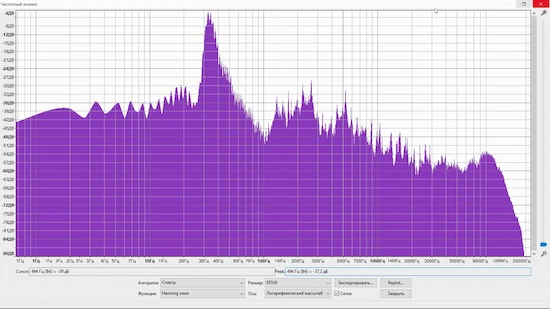 One of the biggest mistakes in podcast production is assuming that music mastering strategies automatically work for voice-driven content.
Some music mastering techniques can initially make podcasts sound more impressive, but the effect usually falls apart during longer listening sessions.
Aggressive processing can make a podcast sound impressive at first. The dialogue jumps forward. Initially, the added density can make the episode feel more polished than it actually is. But spoken audio behaves very differently over time than music does, especially once listeners move into real-world playback environments.
Music constantly shifts the listener’s attention. Podcasts do not. That makes small vocal problems far easier to notice over time.
In spoken-word content, the human voice remains exposed almost the entire time. There are no huge instrumental transitions distracting the listener from harsh upper mids or unstable vocal density. Small tonal problems that barely stand out during short listening sessions become much easier to notice over the course of a full podcast episode.
For example, transient perception works differently with dialogue. In music, sharp transients can create excitement and punch. In podcasts, overly aggressive consonants become tiring surprisingly fast. “T” sounds start cutting through earbuds. “S” sounds feel sharper as playback volume rises in noisy environments. A voice that seemed crisp during editing slowly becomes difficult to follow over time.
Music mastering often pushes constant density because energy helps tracks compete emotionally. Podcasts usually react much worse to that same approach. When every sentence arrives with the same intensity, conversations start feeling unnaturally dense over time.
Many music masters intentionally push density because constant energy helps tracks compete emotionally against other releases. Spoken-word audio usually reacts worse to that same approach. If every sentence arrives with maximum intensity, listeners lose natural pacing cues inside the conversation. After a while, every sentence starts carrying the exact same emotional weight, which slowly makes conversations feel less human.
We hear this often in heavily compressed interview podcasts. At first the episode feels controlled. Then twenty minutes later the conversation somehow starts feeling stressful even though nothing obvious sounds “wrong.” After a while, the conversation starts feeling unnaturally intense all the time.
Voice positioning also behaves very differently in podcasts compared to music releases.
In music, the vocal shares attention with drums, bass, synths, guitars, ambience, and stereo movement. Podcasts are far more exposed. People naturally focus on voices much more in podcasts than they do in music.
This is especially true when multiple guests are involved.
One speaker may sound thin and bright. Another suddenly feels overly deep and heavy. Then a remote guest enters through a different recording chain and the perceived depth of the conversation shifts again. Without careful dialogue balancing for real-world playback, the episode starts feeling fragmented even if the dialogue edit itself was technically solid.
We regularly receive podcast sessions where one speaker arrives heavily compressed from remote recording software while another still has completely raw vocal dynamics, forcing the final playback experience to feel inconsistent from sentence to sentence. Some remote call platforms also apply hidden speech processing automatically, which can suddenly make one guest sound much sharper or denser than everyone else in the conversation.
Narrative podcasts and long-form spoken content introduce another layer of complexity.
Long-form interviews, narrative podcasts, educational shows, and discussion-based formats all depend on stable vocal perception over extended periods of time. Listeners are not reacting to impact the same way they would with a song. Over time, even small tonal shifts become surprisingly obvious during long-form playback.
In practice, podcast mastering is much closer to dialogue stabilization than track-focused mastering.
Pushing speech too hard usually backfires in podcasts. Listeners may not notice the processing itself, but they notice when staying focused on the conversation starts becoming tiring.
The audience should stay inside the conversation instead of constantly reacting to the sound. Listeners are not distracted by sudden tonal shifts, unstable dialogue levels, or harsh consonants pulling attention away from the conversation itself.
This is also why vocal perception matters so heavily in spoken content compared to track-based releases. Our approach to spoken-word vocal balance focuses heavily on intelligibility, tonal balance, and maintaining natural vocal presence without creating fatigue during extended playback.
Why Consistency Between Podcast Episodes Matters More Than Peak Loudness (And Why Listeners Notice Instability Faster Than Creators Do)
Most podcast audiences never think about LUFS.
They are not comparing loudness targets between episodes. They are not analyzing tonal curves or checking dynamic range. What listeners actually notice is much simpler: Does the podcast feel stable every time they press play?
That sense of consistency has a huge impact on audience trust.
One episode sounds smooth and controlled during a commute. The next suddenly feels thin and sharp through the same earbuds. Then another episode arrives noticeably quieter with heavier low mids and unstable dialogue levels. Even if the content itself is strong, the listening experience starts feeling unreliable.
People rarely describe this problem technically.
Usually the reaction sounds more like: “Something feels off lately.” Or: “I used to binge this show for hours.”
Podcast listeners build subconscious expectations around playback behavior. Once a show develops a recognizable sound profile, sudden tonal shifts become surprisingly distracting — especially during long-form listening.
Guest recordings often create the biggest problems.
A host may record consistently week after week, then a remote guest enters with a completely different vocal texture, room tone, proximity effect, or speech intensity. Another guest may speak quietly with soft consonants, while the next one sounds sharp and overly forward. Without careful mastering decisions, the overall listening experience starts feeling disconnected from episode to episode.
Playback perception also changes more dramatically with spoken-word content than many creators expect.
A slightly brighter tonal balance may feel cleaner in one episode, but suddenly become tiring once listeners move to car speakers or higher playback volume. A low-mid heavy episode might sound warm in isolation yet feel muddy during back-to-back binge listening sessions.
Binge listening has also changed how audiences experience podcast consistency.
That continuity becomes much harder to maintain once guest recordings, remote interviews, and different playback environments enter the production process.
Professional podcast mastering helps stabilize perceived vocal weight, dialogue presence, tonal balance, and playback behavior across different episodes. The goal is not to make every recording identical. That would sound unnatural very quickly.
When playback behavior changes too much between episodes, audiences notice it immediately — especially during binge listening.
Strong consistency also affects perceived professionalism more than many creators realize. Audiences instinctively associate stable playback with larger, more established productions. When episodes constantly shift in tone, density, or vocal behavior, the podcast can start feeling less reliable — even if the content itself remains excellent.
Peak loudness alone cannot create that trust.
Consistency is what usually keeps listeners coming back.
Podcast Mastering for Real-World Streaming Playback (Why Dialogue Changes So Much Outside the Studio)
A podcast episode rarely gets heard the way it sounded during mastering.
Inside a controlled room, dialogue may feel smooth, balanced, and perfectly intelligible. Then the same episode reaches Spotify, Apple Podcasts, YouTube, or another streaming platform, gets reshaped by streaming playback and small consumer devices, and suddenly the voice behaves differently.
The problems usually build gradually once listeners spend enough time with the same voices across different playback systems.
A consonant becomes sharper on earbuds. Low mids lose definition on a smart speaker. Dialogue starts feeling thinner at lower playback levels inside a car. Eventually listeners stop staying fully engaged with the conversation.
Podcast listeners in the US increasingly consume spoken content in motion — while driving, exercising, walking through cities, working remotely, or multitasking at home. Very few people experience podcasts under ideal listening conditions anymore. Most playback happens through compact consumer devices that exaggerate certain frequency ranges while hiding others.
Earbuds are one of the most revealing examples.
Many podcast masters that feel controlled in the studio become surprisingly brittle once small in-ear speakers push upper vocal frequencies forward. Sharp consonants become more obvious. Fast speech starts feeling denser. Dialogue loses some of its depth and begins sitting unnaturally close to the listener’s attention.
Smartphones create another problem: weak speech foundation.
Small phone speakers often remove a large portion of vocal body and low-mid support. If dialogue-focused mastering already leaned too heavily toward clarity and upper presence, dialogue can start sounding thin and disconnected during mobile playback. Listeners compensate by increasing volume, which makes fatigue appear even faster.
Car playback exposes a different type of instability.
Inside vehicles, road noise competes directly with speech intelligibility. Low-mid buildup becomes far more obvious, especially in conversational podcasts with multiple speakers. Some voices suddenly feel muddy while others cut through too aggressively. A mix that sounded balanced at moderate studio levels may become uneven once environmental noise enters the equation.
Smart speakers simplify the soundstage even further.
Many home playback systems collapse spoken content toward a narrower and more center-focused presentation. Subtle tonal imbalances that felt harmless in headphones become much easier to notice when dialogue is reproduced through compact mono-oriented speakers during long listening sessions.
None of those playback systems forgive unstable dialogue very well.
The real question is not: “Does the episode sound good in the studio?”
What actually matters is whether the dialogue still feels natural once real-world playback starts changing the balance.
Once podcast episodes reach real-world listening environments, consistent voice balance becomes far more important than raw loudness.
Podcast dialogue has to remain stable once playback systems start reshaping the voice.
The conversation should remain natural whether playback moves from earbuds to a car system or a compact smart speaker. Dialogue should not suddenly turn sharp, muddy, or mentally exhausting once playback conditions change.
That stability is what keeps long-form dialogue comfortable outside the studio.
Professional Podcast Mastering for Long-Form Voice Content (Built Around Listener Experience, Not Just Loudness)
 Podcast mastering works differently when the priority is long-form dialogue instead of musical impact.
In music, the goal is often emotional energy, density, and impact during short listening windows. Podcasts operate on a completely different timeline. Listeners may stay with the same voices for an hour or more, often in imperfect playback environments with background noise competing against the dialogue the entire time.
Because of that, our studio approaches podcast mastering from a speech-first perspective.
The goal is not simply making episodes louder or brighter. The real priority is keeping voices controlled and comfortable across long listening sessions, especially once playback shifts between earbuds, phones, cars, and smart speakers.
That process still involves technical control, of course. But dialogue-focused mastering depends heavily on human evaluation rather than rigid processing templates.
Two podcast episodes may measure similarly on paper while behaving completely differently in real playback. One voice may become sharp at higher listening levels. Another may feel too dense after normalization. A remote guest recording may suddenly collapse in clarity once mobile playback systems reduce vocal depth.
Those decisions depend far more on human evaluation than on static processing templates.
This is especially important for conversational podcasts with multiple speakers. Hosts, guests, remote interviews, narration segments, archived recordings — every source can shift the perceived balance of the episode. The job of mastering is not to erase those differences entirely. It is to keep the listening experience feeling coherent and stable from beginning to end.
Consistency between episodes matters just as much.
Many podcasts release content weekly for months or years. Listeners subconsciously expect a recognizable playback experience every time they return to the show. Sudden changes in vocal weight, harshness, density, or dialogue depth can make a podcast feel less polished even when the actual content remains strong.
That is why many creators master full podcast seasons or episode groups together rather than treating every release as an isolated file. Many creators use our approach to maintaining consistency across podcast episodes to stabilize tonal balance and playback behavior across longer podcast releases.
Well-balanced spoken-word mastering usually disappears behind the conversation itself.
The best podcast mastering becomes almost invisible once the conversation starts flowing naturally. The audience stays focused on the conversation instead of constantly reacting to tonal shifts, harshness, or unstable vocal levels.
After a few minutes, listeners stop thinking about the playback and stay focused on the conversation itself.
People stay engaged longer when voices remain consistent instead of constantly shifting between playback systems.
When listeners keep adjusting volume, the problem usually is not the recording
Podcast episodes often sound consistent during editing, then start shifting in clarity, vocal depth, and dialogue balance once they reach real-world playback systems. Those changes become especially noticeable during long-form listening and binge playback.
Our studio offers a free 30-second podcast mastering preview focused on spoken-word clarity, playback consistency, and comfortable extended playback. Every demo is reviewed manually by a real mastering engineer and optimized for real-world playback conditions.
Built for podcasts, interviews, narration, and long-form spoken-word content.
Podcast Mastering FAQ (Playback, Loudness, Listener Fatigue, and Dialogue Clarity)
Is podcast mastering different from music mastering?
Yes — significantly. Music mastering is often built around impact, energy, and density. Podcast mastering focuses much more on dialogue stability, intelligibility, and long-session listening comfort. Spoken-word content stays exposed for extended periods of time, which makes harshness, unstable vocal balance, and listener fatigue far more noticeable than they would be in music.
Why do some podcasts sound harsh on phones and earbuds?
Small consumer speakers tend to exaggerate upper vocal frequencies while reducing low-mid support underneath the voice. Dialogue that sounded balanced in the studio can suddenly feel sharper and thinner during mobile playback. Aggressive processing, excessive brightness, and overcompressed speech usually make the problem worse after normalization and streaming playback.
Can a podcast be loud enough but still sound unprofessional?
Yes — and it happens constantly. Some podcasts already hit perfectly normal loudness targets but still feel tiring because the dialogue becomes overly dense, sharp, or unnaturally flat during long listening sessions. Listener comfort usually matters far more than maximum perceived volume.
Why does dialogue become exhausting during long podcast episodes?
Listener fatigue often comes from overly dense vocal processing, unstable upper mids, aggressive consonants, or flattened dialogue dynamics. Unlike music, spoken-word audio keeps the human voice constantly exposed to the listener’s attention. Small tonal problems that seem minor at first can become mentally tiring after thirty or forty minutes of continuous playback.
Does podcast normalization reduce the importance of mastering?
No. Normalization mainly adjusts playback level. It does not fix brittle dialogue, muddy low mids, unstable vocal perception, or poor translation across playback systems. In many cases, normalization actually exposes those problems more clearly because loudness differences between podcasts become smaller after streaming platforms adjust levels automatically.
Why do podcast episodes sometimes sound inconsistent from week to week?
Different guests, changing vocal tone, remote recordings, and playback translation shifts can all affect perceived dialogue balance between episodes. Even small tonal inconsistencies become noticeable during binge listening. Professional podcast mastering helps stabilize playback perception so episodes feel connected instead of randomly changing in density, sharpness, or vocal depth.
Does mono playback still matter for podcasts?
Very much. Many smart speakers, phones, Bluetooth devices, and portable playback systems reduce stereo width significantly or partially collapse dialogue toward mono playback behavior. Spoken-word audio still needs to remain clear and stable once playback systems simplify the stereo image.
If a podcast is already edited well, is mastering still necessary?
Editing and mastering solve different problems. Editing focuses on assembling and cleaning the episode itself. Mastering focuses on how the finished dialogue behaves after normalization, compression, streaming playback, and real-world listening conditions. A podcast can be edited extremely well and still become tiring or unstable once it reaches everyday playback systems.
Why do some podcasts sound clear in headphones but muddy in cars?
Cars emphasize different parts of spoken dialogue than headphones do. Road noise competes with speech intelligibility, low mids become heavier, and vocal balance can shift dramatically once environmental noise enters the playback environment. Podcast mastering helps stabilize dialogue across different listening systems.