u-he Zebra 3 Review: Is This Modular Synth Worth It in 2026?
u-he Zebra 3 is finally here in its final beta stage. After years of ожидания, the question is simple: does it actually make sense in a modern production workflow, or is it just another over-engineered synth?
No hype. This is a real-world breakdown of u-he Zebra 3 — how it performs, where it fails, and who should actually use it.
Is u-he Zebra 3 Worth It Right Now?
Short answer: it depends on how you work.
- If you need speed → no
- If you need deep sound design → yes
u-he Zebra 3 is not a “drop-in and go” synth. It’s a system. And systems take time.
What u-he Zebra 3 Actually Does Differently
Forget marketing. Here’s what matters.
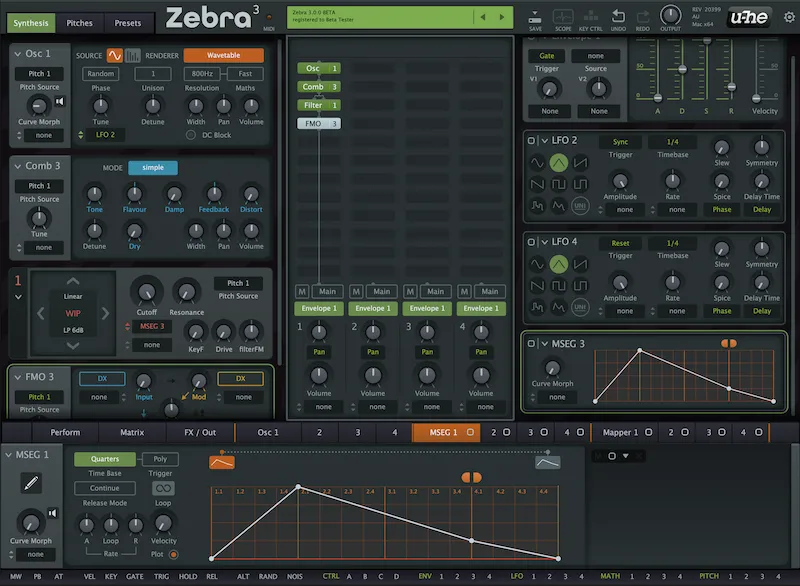
1. Modular signal design
You’re not tweaking presets. You’re building sound from scratch.
2. Spline-based oscillator
More control than wavetable. More complexity too.
3. Context-aware UI
Cleaner workflow, but still not beginner-friendly.
u-he Zebra 3 removes friction—but doesn’t remove complexity.
Real Test: Zebra 3 in a Heavy Session
We ran u-he Zebra 3 inside a 60+ track session.
- CPU per instance: ~30–45%
- Complex patches: stable, but heavy
- Multiple instances: requires freezing
Translation: this is not a lightweight plugin.
Also — beta stability is still an issue. Crashes happen.
Zebra 3 vs Serum, Pigments, Phase Plant
Serum
Fast, predictable, industry standard
But: limited depth
Pigments
Modern, flexible, visual
But: less precise control
Phase Plant
Modular, efficient
But: less advanced oscillator shaping
u-he Zebra 3 wins in one area: deep sound architecture.
It loses in speed. Every time.
Where Zebra 3 Fails
- High CPU usage
- Slow workflow
- No backward preset compatibility
- Beta instability
Most producers won’t need this level of complexity.
Where Zebra 3 Actually Works
- Film scoring
- Game audio
- Ambient / experimental music
- Custom sound design
If your goal is unique sound — u-he Zebra 3 makes sense.
If your goal is speed — it doesn’t.
Zebra 3 Plugin: Download, Price, Requirements
u-he Zebra 3 download is available via u-he (beta access).
Formats:
VST2 / VST3 / AU
System needs:
- 64-bit DAW
- Modern CPU
- Headroom for heavy patches
Price:
- Beta: ~€179
- Expected: ~€249
- Upgrade: ~€30
User Feedback: Not for Everyone
Positive:
“Insane depth. You can build anything.”
Negative:
“Too slow for real work.”
“Still unstable.”
This is a niche tool. Not a mass-market synth.
Important: Why Your Synth Won’t Fix Your Mix
Here’s the part most producers ignore.
You can build the most complex patch in u-he Zebra 3 — it won’t guarantee a finished sound in a track.
In real production, synths lose impact inside the mix. Dynamics collapse. Clarity drops.
That’s why the final stage matters. If you want your track to translate properly across platforms, it always comes down to professional mastering — not just sound design.
Final Verdict: Should You Use u-he Zebra 3?
Use it if:
- You need deep sound design
- You understand modular workflows
- You’re not chasing speed
Skip it if:
- You want fast results
- You work under deadlines
- You need stability now
Final call: u-he Zebra 3 is powerful—but impractical for most producers. It’s not replacing Serum. It’s a specialist tool for specific задач.