Fabric Vintage Synths Vol.1 Review — Sound Quality, Alternatives, and Should You Buy It?
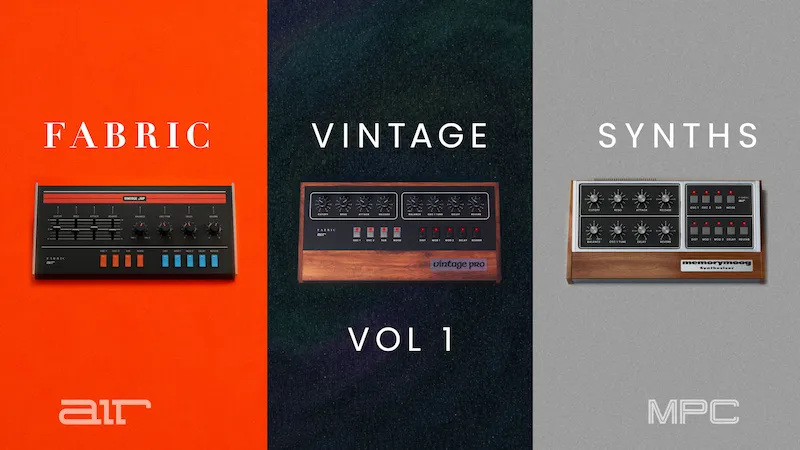
Fabric Vintage Synths Vol.1 is a hybrid VST instrument from AIR Music Tech that recreates classic analog polysynth tones using multi-sampled hardware sources combined with a modern synthesis engine.
Verdict upfront: it sounds polished and production-ready out of the box, but lacks the depth and movement of true analog modeling plugins.
- Best for: fast workflows, presets, commercial production
- Not for: deep sound design or unique sonic identity
- Core strength: speed
- Main limitation: static character
What Makes Fabric Vintage Synths Vol.1 Different
Fabric Vintage Synths Vol.1 doesn’t simulate circuits. It plays back multi-sampled recordings of real analog gear, then reshapes them through a modern engine.
This puts it in a different category than most VST synths.
You’re not building sound from oscillators — you’re modifying pre-captured tonal material.
- Vintage Pro — Sequential-style tone
- Jup — Jupiter-inspired sound
- Memorymoog — Moog-style weight
Engine structure:
- dual oscillator layer
- sub oscillator + noise
- LFO + envelope modulation
- extended polyphony
- MPE support
- integrated FX section
Bottom line: this is a controlled sound engine, not a fully open synth architecture.
Sound Character — What You Actually Get
Fabric Vintage Synths Vol.1 is tuned for modern production. The sound profile is predictable:
- Low-end: tight, controlled, not overly saturated
- Midrange: stable, sits easily in dense mixes
- High-end: softened, avoids harshness
This makes it easy to drop into a track without heavy processing.
But here’s the trade-off:
- less harmonic movement over time
- reduced transient variation
- limited response to saturation and analog-style processing
In practice: it sounds finished — but not alive.
That becomes obvious at the mastering stage. Sample-based instruments often flatten under compression and limiting. If you’re pushing loudness, you’ll need careful final processing — working with professional mastering helps retain depth, punch, and stereo separation even when the source lacks dynamic complexity.
Who This Plugin Is For
- producers working on tight deadlines
- artists building commercial tracks quickly
- composers needing instant pads and textures
- MPC users needing integrated synth workflow
Who Should Skip It
- sound designers
- experimental electronic producers
- users looking for analog behavior and randomness
Best Alternatives Right Now (2026)
If you’re considering Fabric Vintage Synths Vol.1, these are the direct alternatives:
| Plugin | Best For | Key Advantage |
| Arturia V Collection | Deep sound design | True analog modeling |
| Roland Cloud | Authenticity | Official emulations |
| UVI Vintage Vault | Sample libraries | Massive sound library |
| Omnisphere | Hybrid production | Extreme flexibility |
Positioning: Fabric sits between UVI and Omnisphere — faster than both, but less flexible.
Strengths
- instant usable sound
- clean mix translation
- fast workflow
- consistent interface
- MPE compatibility
Weak Points
- not true analog modeling
- limited sonic depth
- preset-driven workflow
- less uniqueness in final sound
User Feedback
Positive:
“It’s fast and sounds finished immediately”
“Great for getting ideas down quickly”
Negative:
“Feels static compared to modeled synths”
“Not enough control for serious sound design”
Pricing — Is It Worth It?
- $149 intro price
- $299 full price
At intro price: strong value.
At full price: you’re competing with higher-end tools.
FAQ
Is Fabric Vintage Synths Vol.1 analog modeled?
No. It uses multi-sampled sources.
Can it replace analog-style plugins?
Not fully. It lacks dynamic behavior.
Is it good for beginners?
Yes. Very easy to use.
Is it good for professional production?
Yes — as a fast workflow tool.
Final Verdict
Fabric Vintage Synths Vol.1 is built for speed, not depth.
It gives you polished, predictable results fast. But it won’t define your sound or replace high-end modeling synths.
If you prioritize workflow — it works.
If you prioritize uniqueness — look elsewhere.