Why Connection Type No Longer Matters When Choosing an Audio Interface in 2026
The long-running debate around USB vs Thunderbolt audio interfaces has effectively ended. What used to be a critical factor in performance is now one of the least relevant considerations when choosing an interface.
This isn’t a theoretical shift. It’s already reflected in how modern studios are built and how engineers evaluate gear. The bottleneck has moved — and many users haven’t caught up.
Context: The Industry Moved On, Most Advice Didn’t
For years, connection type dictated expectations. USB interfaces were associated with higher latency and instability, while Thunderbolt positioned itself as the professional standard for speed and reliability.
That distinction made sense in earlier generations of hardware.
Today, it doesn’t.
USB4 and Thunderbolt 4 now operate at comparable bandwidth levels. In practical terms, both protocols can handle modern production workloads without becoming the limiting factor.
The remaining difference is largely structural:
— Thunderbolt devices are certified, which increases consistency
— USB4 implementations can vary more, but deliver similar performance
“The connection is no longer where systems fail. It’s where outdated assumptions persist.”
Where Performance Actually Breaks Down
In real-world sessions, issues no longer originate from the connection protocol. They come from deeper layers of the system.
Driver architecture
Latency performance depends heavily on how the interface communicates with the OS. Two interfaces with identical specs can behave completely differently under load.
Internal processing and routing
Interfaces with optimized DSP and efficient routing maintain stability at lower buffer sizes.
Conversion quality
AD/DA stages now define clarity, stereo imaging, and transient response. This is where audible differences actually emerge.
System integration
Modern production environments are hybrid. Controllers, outboard gear, network audio, and DAWs share the same infrastructure. The interface is one part of a larger signal chain.
“You’re not choosing a port. You’re choosing how your entire system behaves under pressure.”
Throughput and Scalability: The Real Long-Term Decision
Channel count still matters — but not in the way most buyers assume.
Instead of focusing on connection speed, the real question is whether your interface can scale:
— ADAT for expanding input/output count in mid-sized setups
— Dante or AVB for network-based routing
— MADI for high-channel-count environments
Studios that grow don’t replace interfaces. They expand them.
Buying an interface without considering expansion options guarantees an upgrade cycle within a year or two.
Practical Impact on Mixing and Mastering
This shift directly affects how accurately engineers make decisions during production.
When attention is misplaced on connection types, critical factors get ignored:
— monitoring accuracy
— conversion linearity
— transient response
— low-frequency translation
Inconsistent playback leads to predictable problems:
— over-compression due to unclear dynamics
— incorrect low-end balance
— stereo field misjudgment
— unnecessary corrective processing
By the time a mix reaches its final stage, these issues are already baked in.
In professional workflows, where final mastering is performed with a focus on translation and accuracy, upstream inaccuracies from the interface become impossible to fully correct.
Top Audio Interfaces in 2026 (Working Engineer Picks)
Selection in 2026 is driven by workflow reliability, not connection branding. The following models consistently perform across different use cases:
Entry Level
— Focusrite Scarlett 2i2 (4th Gen) — predictable performance, broad compatibility (~$200)
— Audient iD14 MKII — strong preamps, cleaner gain staging (~$300)
Mid Tier
— MOTU M4 — excellent latency performance, stable drivers (~$300)
— SSL 2+ — analog-style front end, practical monitoring control (~$350)
Advanced
— RME Babyface Pro FS — consistent low latency, long-term stability (~$900)
— Universal Audio Apollo Twin X — integrated DSP workflow (~$1,200)
Professional
— RME Fireface UFX II — scalable architecture, highly stable (~$2,500)
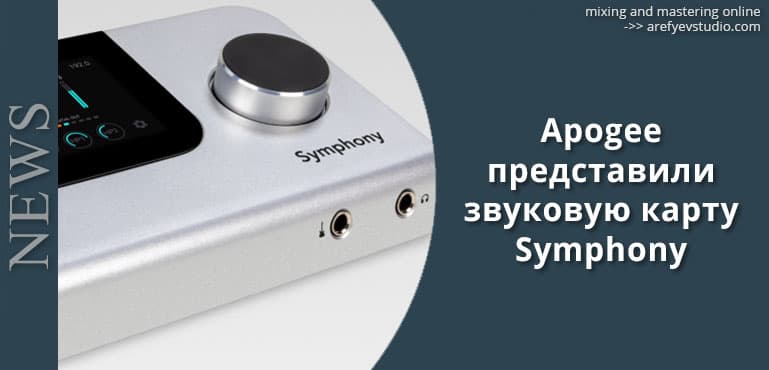
— Apogee Symphony Desktop — detailed conversion, strong stereo imaging (~$1,500)
“At higher tiers, the difference isn’t features — it’s how little the interface gets in the way.”
What Actually Matters in 2026
The priority stack has shifted:
1. Driver stability and real-world latency
2. Conversion accuracy and analog stage quality
3. I/O flexibility and expansion capability
4. Workflow integration and usability
5. Connection type
This order reflects how modern production environments operate.
Verdict
Connection type is no longer a deciding factor when choosing an audio interface.
Performance limitations have shifted away from bandwidth and into system design. Engineers who still prioritize USB vs Thunderbolt are optimizing for a constraint that no longer exists.
The real decision is no longer about how the interface connects — but how accurately it allows you to hear and process sound.