
EDM Mastering — Why Your Track Loses Energy When It Gets Loud
The drop hits hard in your session. Low-end feels massive. Everything moves. Then you master it… and suddenly it feels smaller?
That’s not a mastering problem. That’s your track reacting to pressure.
If it falls apart when it hits release level — it was never stable to begin with.
More level doesn’t fix a track. It exposes it.
In EDM, loudness doesn’t create energy — it exposes whether your mix can survive it. Once the track is pushed to release level, everything starts interacting differently. Some elements hold. Others start falling apart the moment the level goes up.
If your track changes the moment it gets louder, that’s exactly where a professional mastering approach makes the difference — not by adding level, but by stabilizing how the track behaves under pressure.
Why EDM Tracks Break After Mastering — What Actually Falls Apart
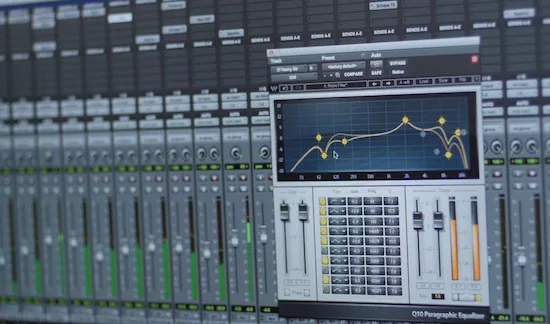 Push the limiter — and the track doesn’t get bigger. It gets weaker.
More level doesn’t fix the track. It exposes what’s unstable.
Push the limiter — and the track doesn’t get bigger. It gets weaker.
More level doesn’t fix the track. It exposes what’s unstable.
The level goes up, but the impact drops. The drop feels smaller, flatter, less alive. That’s not a mistake. That’s exactly how the track reveals itself under pressure.
What usually breaks first is the low-end. Kick and sub might feel fine in the mix, especially at moderate levels. But once the limiter clamps down, they stop coexisting and start competing. You’ll hear it as a blurred bottom or a pumping low-end that wasn’t there before. Here’s what’s actually happening: both elements are trying to dominate the same space, and the limiter forces them into conflict.
Then comes what engineers often call collapse — not in volume, but in energy. The limiter reduces peaks, but in EDM those peaks carry movement. When they get flattened, the track doesn’t just get controlled — it loses impact. The drop still measures loud, but it doesn’t feel loud anymore. That’s how tracks end up sounding loud — but hitting weaker than everything around them.
Stereo is another hidden fault line. Wide synths, effects, layered textures — they create space in the mix. But once the track is pushed, small phase inconsistencies become audible. Elements shift, the center loses focus, and suddenly the mix feels unstable. On headphones it might still sound “wide,” but on real systems, especially in clubs, it starts to fold in on itself.
There’s a reason this keeps happening. Mastering doesn’t introduce these problems — it reveals them. The moment you push a track to release level, every imbalance becomes obvious. That’s why tracks seem better before mastering. They haven’t been pushed hard enough to reveal the problem yet.
If you’ve ever noticed your track getting worse as it gets louder, you’re running into the same pattern described in why tracks fall apart during mastering. The difference with EDM is how quickly and how aggressively those issues show up.
Low-End in EDM — Why Kick and Sub Don’t Add Up
Most EDM tracks don’t break in the highs. They break in the low-end the moment you push them. They fail in the bottom 60 Hz. Not because there isn’t enough bass — because there’s too much happening in the same place.
More bass doesn’t fix it. It makes the conflict louder.
Kick and sub are often treated like separate elements. In reality, they behave like a single system. When both hit strong, especially around the same frequency range, they don’t stack — they compete. You might not notice it at mix level. The groove feels solid, the drop feels full. But once you push the track into a limiter, that relationship changes instantly.
At first, nothing seems wrong. The kick feels tight. The sub feels strong. But when they hit together, something shifts — the low-end either disappears or suddenly overloads. That’s how those elements behave under pressure — not individually, but as a system over time. And once a limiter reacts to that interaction, the imbalance becomes audible immediately.
Headroom becomes unstable. One moment the low-end feels tight, the next it blooms and takes over the mix. That “breathing” effect isn’t groove — it’s conflict. And the harder you push the limiter, the more obvious it gets. What sounded like power turns into inconsistency.
Sub energy behaves differently from everything else in the track. It’s slower, heavier, and takes more space to stabilize. When it isn’t aligned with the kick, the limiter doesn’t just reduce peaks — it reshapes the entire low-end envelope. That’s why drops lose definition after mastering. The relationship wasn’t controlled to begin with.
At release level, this conflict doesn’t stay subtle — it becomes the defining problem of the track. The issue isn’t EQ or level — it’s interaction. The same kind of low-end breakdown is described in why bass falls apart during mastering, but in EDM it becomes the central failure point, not a side problem.
Strong EDM masters don’t come from more bass. They’re built by making sure kick and sub stop fighting each other before the limiter ever gets involved. Because once they hit that stage, it’s already too late to fix the relationship — you can only control how badly it collapses.
That’s why this has to be controlled before mastering — not corrected during it.
We see this constantly in incoming mixes. The low-end feels powerful at first, but once it’s pushed, the balance shifts and the groove loses stability almost immediately.
On real systems, this shows up instantly — the low-end starts shifting instead of locking, and the groove loses its consistency.
Loudness vs Energy — Why “Louder” EDM Can Feel Smaller
You can push an EDM track to competitive levels and still have it feel underwhelming. It reads loud — but it doesn’t move anything. That difference is simple: what it measures vs how it hits.
Volume goes up — but the physical impact drops. The drop is still there — just without weight. When the limiter starts shaving peaks, it isn’t just controlling level. It’s reshaping the transient structure that makes a drop feel explosive. Kick attacks soften, snare snaps lose edge, and the contrast between build-up and drop gets flattened. The number goes up. The impact goes down.
That’s why two tracks at the same level can feel completely different. One keeps its punch because the transient information survives the limiting stage. The other gets smeared — everything is equally loud, so nothing stands out. In EDM, that difference is everything. The drop either hits… or it doesn’t.
Another trap: chasing loudness without controlling density. When layers stack — synths, bass, FX — the limiter has more to manage. Instead of transparent gain reduction, it starts compressing movement. You hear it as a constant “wall” with no depth. Then fatigue kicks in fast.
In practice, this is one of the most common issues we hear in EDM submissions — the track is loud enough, but the impact disappears as soon as it’s pushed.
If the track gets weaker as you push it, the problem is already there. This isn’t about how high you push it. It’s about what happens to the track when you push it to that level — and whether it still feels alive when you get there.
In EDM, pushing level is easy. Keeping the drop alive isn’t. The tracks that translate aren’t just pushed — they’re controlled in a way that lets transients survive the process.
Stereo Width vs Translation — Why Wide EDM Mixes Collapse in Clubs
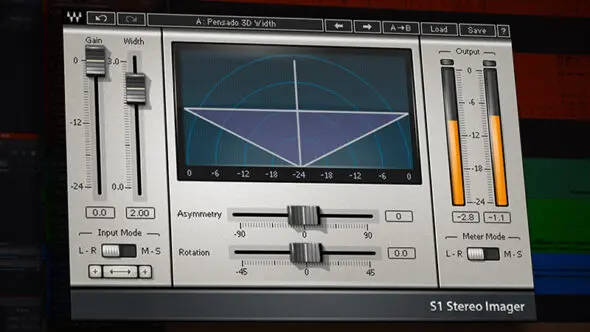 Wide doesn’t mean stable.
In the studio, everything feels wide and controlled. Then you play it in a club — and it shrinks. Because the mix was never built to hold outside your room.
Clubs don’t reproduce stereo the way you expect. Low frequencies are summed to mono. Speaker placement varies. Reflections blur spatial cues. All of that exposes weaknesses in how the mix is balanced. Elements that felt wide and separated start folding into each other. What’s left is often a narrower, less defined version of your track.
The issue usually sits in the mid/side balance. Too much information pushed into the sides without a stable center, and the mix loses focus when collapsed. You’ll hear it as a drifting low-end, unstable leads, or effects that suddenly overpower the core of the track. It doesn’t sound “wide” anymore — it sounds disconnected.
Another common scenario: stereo enhancements that feel impressive in isolation but don’t survive playback. Chorus, widening plugins, phase-based tricks — they add space, but they also introduce instability. Once the track is pushed during mastering, those inconsistencies become more obvious, not less.
A strong EDM master doesn’t try to maximize width. It stabilizes it. The center stays solid, the sides support it, and the track holds its shape regardless of playback system. Because wide doesn’t mean anything if it disappears the moment the track leaves your studio.
This is where a controlled, system-focused approach matters. The goal isn’t to reduce width — it’s to make sure it translates. That’s the difference between a mix that feels big in one environment and one that actually works everywhere, including real-world playback through a professional mastering process.
We hear this all the time. A track sounds wide in the studio, then loses focus on a club system within seconds. The sides collapse, and what’s left doesn’t match what the producer expected.
Drop Impact — Why It Disappears When You Push the Limiter
You build tension. The drop hits. Everything feels right — until you push it. Then it collapses. Same elements. Different behavior under pressure.
Impact isn’t about loudness. It’s about what survives it.
What matters here is how transients and sustain are handled under limiting. In EDM, the drop relies on contrast — sharp attacks followed by controlled body. When a limiter steps in, it doesn’t just reduce peaks. It reshapes that contrast. Fast, aggressive gain reduction can shave off the front edge of a kick or snare, while holding onto the sustain. The result? The drop feels longer, but weaker.
You can test this quickly. Lower the level — the drop feels alive again. Push it back up — it turns into a flat block. That shift is the limiter reshaping the transient, not improving it.
Attack and release behavior play a bigger role than most producers expect. If the limiter reacts too quickly, transients never fully form. If it releases too slowly, energy doesn’t recover between hits. Either way, movement gets compressed into a constant block. You don’t hear a groove anymore — just density.
Timing becomes part of the problem as well. EDM drops are built on rhythmic precision. When the limiter starts reacting unevenly — depending on which elements hit together — it subtly shifts how that rhythm feels. The track might still be “on grid,” but it doesn’t feel locked the same way.
Pushing harder doesn’t solve it. More gain reduction doesn’t bring back impact — it removes more of it. More level won’t fix it. The drop needs its transient structure to survive the process.
That behavior comes from how processing reacts when everything hits at once — which is exactly how a real mastering chain behaves under load.
If you haven’t heard your track behave at that level, you’re making decisions on a version that collapses the moment it’s pushed.
Streaming vs Club — Why One Master Doesn’t Fit Both
A track that sounds controlled on Spotify can fall apart in a club within seconds. And a version that hits hard on a big system might feel overcompressed or harsh on streaming. Same track — different result the moment playback changes.
Streaming platforms normalize playback. Clubs don’t. That alone changes how your track is perceived. On streaming, balance dominates. In clubs, energy takes over. If the master is built for one, it will break in the other.
| Aspect | Streaming | Club |
| Loudness perception | Normalized, relative loudness | Physical impact, no normalization |
| Bass behavior | Controlled, tight low-end | Sub-heavy, room-dependent response |
| Stereo image | Wide and detailed | Partially summed, less predictable |
This is where tracks that sounded fine in the studio start losing control in real playback. They’re optimized for one environment and assumed to work everywhere. Translation has to be built into the track — or it won’t survive playback.
If your track is built for streaming, normalization will reshape how it feels — which is why mastering for streaming environments focuses on maintaining balance after playback adjustment.
Hear how your EDM track actually holds up at release level
If low-end isn’t controlled, if the limiter reshapes your transients, if your track changes once it gets loud — mastering turns into guesswork. The only way to know is to hear it under real conditions, not just in your session.
Free demo mastering (up to 30 seconds). Real engineer. No presets.
Why EDM Needs a Different Approach — Not Just Another Master
EDM breaks if you treat it like a standard mastering job. It behaves differently. The density, the low-end weight, the way drops are built — all of it changes how the track reacts when pushed to release level.
Compare it to hip-hop. Both rely on strong low-end, but hip-hop often leaves more space between elements. The groove breathes differently. In EDM, layers stack. Synths, bass, FX, drums — everything hits at once, especially in the drop. That density forces completely different decisions at the mastering stage.
Pop is another contrast. It’s usually more controlled dynamically, with clearer separation between sections. Vocals sit upfront, and the arrangement supports them. EDM flips that. The drop becomes the focal point, and the entire mix is built to deliver impact in that moment. If that impact collapses during mastering, the track loses its purpose.
Even within electronic music, approaches vary. What works for trap — where 808 dominance shapes the entire low-end — doesn’t translate directly to EDM structures, where kick and sub interaction is more complex. This difference becomes obvious when you compare how low-end is built in trap versus EDM — for example, in trap, where 808 dominates the space, versus EDM where kick and sub have to coexist. That difference is explored in how trap mastering focuses on 808 control, but EDM requires a different balance between weight and stability.
That’s why genre isn’t just a label. It defines how energy is built, how elements interact, and how the track needs to be controlled at the final stage. Treat EDM like a generic mix, and it will fall apart the moment it gets pushed.
When Self-Mastering Stops Working — The Point You Can’t Hear Anymore
 At some point, the problem isn’t the tools — it’s your perspective.
You’re no longer hearing what’s actually there. You’ve heard it hundreds of times. What feels balanced to you isn’t neutral anymore — it’s familiar.
At some point, the problem isn’t the tools — it’s your perspective.
You’re no longer hearing what’s actually there. You’ve heard it hundreds of times. What feels balanced to you isn’t neutral anymore — it’s familiar.
That’s why “it sounds fine” is often misleading. In your session, it might hold together. On your monitors, at your usual level, everything feels controlled. But once the track leaves that environment — different speakers, higher playback levels, real-world systems — issues start showing up fast.
Low-end shifts. Transients behave differently. The drop doesn’t land the same way. None of this feels obvious while you’re working on the track, because your ear adapts. It compensates for imbalance without you noticing it.
There’s also a decision ceiling. The more you try to fix problems during mastering, the more you’re reacting to the mix instead of controlling it. Small adjustments turn into overcorrections. You push louder, then pull back. You tweak the low-end, then lose clarity somewhere else. It becomes a loop.
This is where an outside ear changes everything instantly. Not because of better tools — but because of objectivity. When someone hears your track without that built-in bias, problems become obvious in seconds.
If you’re not sure whether what you’re hearing reflects how the track actually translates, getting professional mastering feedback exposes those blind spots immediately — before they get locked into the final version.
Test your track before you release it
At this stage, it’s not about pushing it louder or tweaking one more setting. It’s about hearing what actually happens when your track hits real mastering conditions — and whether it still holds its energy.
Free 30-second demo. No commitment. Just clarity before release.
EDM Mastering — Common Questions
Why does my EDM track sound flat after mastering?
Because the energy wasn’t stable before mastering. When the limiter pushes the track, it exposes conflicts — especially in the low-end and transients. What felt powerful at mix level can collapse once everything is forced to compete under gain reduction.
How loud should an EDM track be?
There’s no single number that guarantees impact. Tracks with similar loudness can feel completely different. What matters is how well the energy survives limiting. If transients and low-end are controlled, the track will feel loud without being pushed to extremes.
Do I need separate masters for club and streaming?
In many cases, yes. Streaming platforms normalize playback, while clubs don’t. A master optimized for one environment can lose effectiveness in the other. That’s why translation needs to be considered, not assumed.
Can mastering fix a weak drop?
Not fully. Mastering can enhance what’s already there, but it can’t rebuild energy that isn’t present in the mix. If the drop lacks impact before mastering, pushing it harder usually makes the problem more obvious, not less.
How should I prepare an EDM track for mastering?
Focus on balance and interaction, not loudness. Leave headroom, avoid over-processing, and make sure the low-end relationship between kick and sub is stable. If the mix holds together before mastering, it has a much better chance of translating after.