
Mastering Chain Explained — What Actually Happens Between Your Mix and the Final Track
A mastering chain is the sequence of processing applied to your final mix — typically EQ, compression, and limiting — used to control tone, dynamics, and final loudness.
That sequence changes once the track is pushed to real playback level — that’s where problems start to show.
Most tutorials show a clean chain you can copy — but it breaks as soon as the track reacts under real playback levels.
The chain doesn’t define the result — the decisions behind it do.
Here’s what actually happens when your chain is pushed to release level — and why it breaks.
See how your mastering chain actually behaves →If the chain is wrong, the track falls apart before it even gets loud.
Why “Mastering Chain” Is Often Misunderstood (And Why Templates Don’t Work)
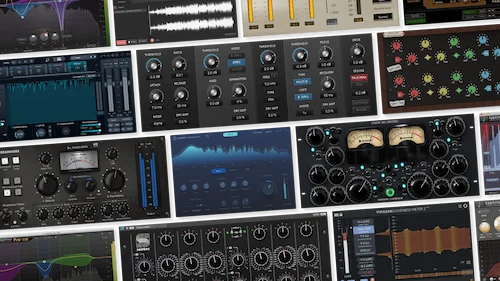 Search for “mastering chain” and you’ll see the same thing over and over again: neat diagrams, fixed plugin orders, clean signal flow from left to right.
It looks convincing — and that’s exactly why it’s misleading.
And it gives the impression that if you follow those steps, you’ll get a finished, competitive master.
Search for “mastering chain” and you’ll see the same thing over and over again: neat diagrams, fixed plugin orders, clean signal flow from left to right.
It looks convincing — and that’s exactly why it’s misleading.
And it gives the impression that if you follow those steps, you’ll get a finished, competitive master.
Most tutorials simplify mastering into a fixed order because it’s easier to teach. But real tracks don’t behave that way once you push them. EQ first. Compression next. Limiter at the end. It’s easy to remember. Easy to demonstrate. Easy to repeat.
Here’s the part that gets missed: the chain you see at the end of a mastering session is not the starting point. It’s the result. A snapshot of decisions that were made in response to a specific track.
That’s why copying a chain rarely works. You’re copying someone else’s outcome without understanding the problem it was solving. It’s like using the same EQ settings on two different mixes and expecting the same result — it doesn’t translate.
In the context of a mastering chain, tools are selected based on what needs to be corrected first.
The chain is a consequence. The decisions are the cause.
If you’re still thinking in terms of “what plugins should I use,” you’re skipping the part that actually defines the result. A more accurate starting point is understanding what mastering is solving in the first place — which we break down here: understanding what mastering is actually solving.
The Typical Mastering Chain (And Why It’s Not Universal)
Let’s look at what most people expect when they hear “mastering chain.” A clean sequence. Something like this:
EQ → Compression → Saturation → Stereo Processing → Limiter
On paper, it makes sense. Each stage has a role. EQ balances the spectrum. Compression controls dynamics. Saturation adds density. Stereo tools adjust width. The limiter brings the track up to final level.
And yes — in many sessions, you’ll see some version of this. But here’s where it breaks down.
That order is not a rule. It’s a snapshot.
On some tracks, EQ needs to come first to stabilize the low-end before any dynamics are applied. In another, compression happens earlier because the groove collapses before any tonal work even matters. In some tracks, saturation is barely used. In others, it becomes central to the sound.
The same chain can react completely differently depending on placement and input signal.
So instead of thinking in fixed steps, it’s more accurate to think in functions. What needs to be controlled? What needs to be enhanced? What’s getting in the way?
We often see mixes where a limiter is pushed before the chain is properly balanced. The result is predictable — distortion shows up early, and the track loses depth before it even reaches competitive loudness.
If you’re just starting, think of a mastering chain as:
– EQ to balance tone
– Compression to control dynamics
– Limiter to reach final level
That’s the simplified version. Everything else builds on top of it.
Example variations:
– Clean mix → EQ → limiter
– Dynamic issues → compression → EQ → limiter
– Harsh mix → EQ → saturation → limiter
In real sessions, we often rebuild the chain multiple times — because what works early in the process can fail once the track is pushed to final loudness.
| Process | Purpose | Typical Effect on Sound |
|---|---|---|
| EQ | Correct tonal imbalance | Cleaner low-end, clearer mids, smoother highs |
| Compression | Control dynamics and stabilize energy | Tighter groove, more consistent level |
| Saturation | Add harmonic density | Perceived warmth, slight loudness increase |
| Stereo Processing | Adjust width and spatial balance | Wider image or more focused center |
| Limiter | Control peaks and achieve final level | Increased loudness, controlled transients |
Notice something important. None of these processes are locked to a position. Their role stays consistent — but their placement shifts depending on what the track demands.
This is where stable masters separate from ones that collapse under level.
Another common confusion comes from mixing these roles with mixing decisions. Mastering works on the final stereo signal, not on individual tracks inside the mix. If that line isn’t clear, it’s easy to overload a mastering chain trying to fix things that don’t belong there. We break that distinction down here: mixing vs mastering.
So yes, the “typical” chain exists. But only as a reference point. Not as a formula you can rely on.
What Actually Determines the Order of a Mastering Chain (It’s Not the Plugins)
The order of a mastering chain isn’t chosen in advance. It’s revealed as you listen.
Every decision comes from one question: what is the track doing wrong when it’s pushed to real playback conditions?
Not what it looks like on meters. Not what a tutorial suggests. What actually breaks when the level goes up, when the low-end hits harder, when the track leaves your studio.
Three things shape that response more than anything else: the condition of the mix, the genre, and the target outcome.
Start with the mix itself. If the low-end is uneven — for example, kicks jumping out while the bass disappears — placing compression early can make things worse. The compressor will react to those peaks and exaggerate the imbalance. In that case, corrective EQ comes first. Clean up the low-end, stabilize what the compressor “sees,” and only then control dynamics.
Flip the situation. A well-balanced mix, but the groove feels inconsistent — some sections collapse, others feel too aggressive. Here, compression might come earlier, not to fix tone, but to stabilize movement. EQ follows after, once the dynamics are under control.
The same processors can produce completely different results depending on how they’re ordered.
Genre shifts the logic further. A dense hip-hop or trap track often demands tight low-end control before anything else — the interaction between kick and 808 defines how the limiter will behave later. In contrast, a sparse acoustic record may require almost no compression upfront, but subtle tonal shaping to keep the midrange from becoming harsh when pushed.
Then comes the target. Streaming platforms, club playback, broadcast — each exposes different weaknesses. If the goal is loudness, the entire chain needs to prepare the signal for limiting. That might mean earlier dynamic control, controlled saturation, and careful EQ to avoid frequency build-up that would choke the limiter. If clarity is the priority, the chain may stay lighter, focusing on balance rather than density.
This is where most fixed chains fail. They assume the same problem exists in every track.
In reality, the chain is a reaction. You’re not building it from left to right — you’re shaping it around what the track needs to survive outside your studio.
A quick example from practice. A mix comes in with a strong sub, but it’s slightly smeared. At low volume, it feels fine. Push it, and the limiter starts pumping. If you compress first, you lock that problem in place. If you clean the sub region first, even slightly, the entire chain behaves differently. The limiter works cleaner. The top end stays intact.
Simple rule for chain order:
– Fix tonal problems before dynamics
– Control dynamics before limiting
– Prepare the signal before pushing loudness
And this is exactly why preparation matters. The better the mix is controlled before it reaches mastering, the more flexible the chain becomes — and the fewer corrective decisions you need to make under pressure. If you’re not sure how mix decisions affect mastering behavior, it’s worth reviewing how to prepare a track properly: prepare mix for mastering .
The order isn’t a template. It’s a response.
How Each Processing Stage Affects the Next One (Why Order Changes Everything)
A mastering chain doesn’t work step-by-step. It works as a system.
Every move you make changes what happens next. Sometimes subtly. Sometimes in a way that completely shifts the outcome.
You’ll notice this immediately when pushing a track toward release level. A track that feels balanced at around -6 dB headroom can start collapsing once you push it toward release level. Low-end builds up, the limiter reacts unevenly, and suddenly the entire chain needs to be rethought.
Start with EQ. A small low-end boost might feel harmless in isolation. The track gets fuller, more weight. But once that signal hits the compressor, everything changes. Low frequencies carry more energy — so now the compressor reacts harder, often pulling down the entire mix when the kick hits. What felt like a tonal improvement turns into unstable dynamics.
Same idea in reverse. If you clean up the low-end first — even by a fraction — the compressor suddenly behaves more predictably. Less pumping. More control. The groove stays intact.
At that point, it’s no longer about EQ — it’s about how the chain reacts as a whole.
Compression creates another layer of dependency. Once dynamics are reduced, the limiter receives a denser, more controlled signal. That usually means you can push the level further without obvious distortion. But push compression too far, and you remove the transient structure the limiter relies on. The result? Flat, lifeless masters that sound loud but don’t move.
Then comes saturation. Often underestimated, but it quietly shifts how loud a track feels without necessarily increasing peak level. Add harmonic content, and the ear perceives more density. But here’s the catch — saturation also changes how the limiter reacts. A slightly saturated signal can hit the limiter more consistently, sometimes allowing cleaner gain. Or, if overdone, it can blur transients and reduce clarity before you even reach the final stage.
And finally, the limiter itself. This is where everything converges. Whatever you’ve done before — good or bad — becomes exposed here. If the chain leading into it is balanced, the limiter works smoothly. If not, it starts compensating: flattening transients, smearing low-end, pulling down entire sections unpredictably.
We regularly receive tracks where the limiter is doing all the work — and once earlier stages are bypassed, the entire balance collapses.
A common mistake is trying to fix limiter problems at the limiter stage. Pushing harder. Adjusting settings. Switching plugins. In most cases, the issue isn’t the limiter — it’s what you fed into it.
This is what actually defines the outcome: each stage doesn’t just process sound. It reshapes the conditions for the next stage.
A small decision early in the chain can define how far you can go later. Or how quickly everything falls apart.
This is especially obvious when working toward competitive loudness. Loudness depends on how the signal is prepared before limiting — it’s about how efficiently the entire chain prepares the signal for that final push. If you want to understand how loudness is actually measured and controlled, it’s worth digging into this: LUFS mastering guide .
In mastering, nothing is isolated. Every step is a setup for the next — or a problem waiting to happen.
If your mastering chain feels confusing — you’re following the wrong logic
Most problems don’t come from missing plugins. They come from trying to apply the same chain to completely different tracks. Send us your mix — we’ll create a free demo master (up to 30 seconds) and show you what actually needs to change, not what tutorials tell you to copy.
No presets. No guesswork. Just clear decisions based on your track.
Common Mistakes When Building a Mastering Chain (Why Good Intentions Go Wrong)
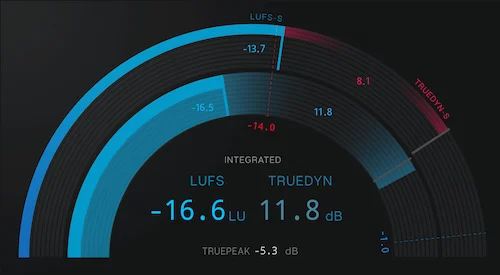 Most mastering chains don’t fail because of the tools. They fail because of the assumptions behind them.
We often receive mixes where the mastering chain is already overloaded before we even start. In many cases, removing half the processing improves the result more than adding anything new.
The first mistake is treating the chain like a fixed order. Load EQ, then compression, then limiter — no matter what the track actually needs. It feels structured, but it ignores the one thing that matters: the condition of the mix. If the problem sits in the low-end and you start compressing before addressing it, you’re locking that issue deeper into the signal.
Second — too much processing. This shows up fast. Multiple EQs, layered compression, saturation stacked on top of everything. The idea is to “improve” the track step by step. In reality, each added stage reduces clarity. Transients soften. The stereo field collapses. By the time the limiter hits, there’s nothing left to preserve.
We’ve seen this in real sessions. In some cases, removing processing entirely reveals that the original mix was more stable than the mastered version. A track comes in with five plugins already on the master bus — all trying to fix different issues. The result? Flat, smeared, and harder to control than the original mix.
Another common mistake is ignoring the input. A mastering chain is only as good as what you feed into it. If the mix is unbalanced, overly compressed, or masking key elements, the chain becomes a workaround instead of a solution. You’re not shaping the sound — you’re fighting it.
And then there’s the biggest one: trying to fix everything in mastering.
Mastering works with the final stereo signal as delivered — without access to individual mix elements. It can refine balance, control dynamics, and prepare the track for playback systems. But it won’t separate clashing instruments. It won’t restore lost headroom. It won’t undo aggressive mix decisions without side effects.
When people push a mastering chain too far, they’re usually compensating for something that should have been addressed earlier. That’s the point where problems become obvious.
A mastering chain doesn’t rescue a weak mix. It reveals it faster.
The pattern behind all these mistakes is the same: doing more instead of doing what’s needed. In many cases, a minimal chain — with precise decisions — will outperform a complex one every time.
If you’re running into issues like distortion, lack of punch, or muddy low-end after mastering, it’s rarely random. These problems follow patterns, and they usually trace back to how the chain was built. We’ve broken those down in detail here: mastering problems guide .
Minimal vs Complex Chains (When Less Actually Wins)
There’s a quiet assumption in mastering: more processing means a more “finished” sound. More control. More polish. More everything.
In many cases, it leads to the opposite result.
A minimal chain can be as simple as EQ into a limiter. That’s it. No extra stages, no layering, no unnecessary color. If the mix is already balanced and controlled, this approach keeps everything intact — transients stay sharp, stereo image stays clean, and the limiter works with the signal instead of fighting it.
We see this a lot with well-produced tracks. The mix arrives stable, nothing jumps out, nothing collapses when pushed. Add too much processing, and you start introducing problems that weren’t there to begin with.
Now compare that to a more complex chain. Multiple stages of EQ, controlled compression, maybe subtle saturation, stereo adjustments — each step targeting a specific issue. This approach makes sense when the mix needs it. When there are small imbalances that only show up under pressure. When dynamics need shaping before the limiter can do its job cleanly.
Often, reducing the chain from five stages to two improves translation more than adding anything new.
But here’s the difference. In a working chain, every stage has a reason to exist.
Stacking processes “just in case” is where things fall apart. Each additional step slightly reshapes the signal. Sometimes it helps. Sometimes it slowly erodes clarity without being obvious until the final stage. By then, it’s too late — the limiter exposes everything.
A quick scenario. Two versions of the same track. One goes through a minimal chain — light EQ, controlled limiting. The other runs through five stages of processing. On first listen, the second might feel denser. Louder. More “processed.” But play both on different systems, and the difference shows. The minimal version holds together. The complex one starts to smear, especially in the low-end and upper mids.
That’s the risk — solving one issue while creating another. Complexity can solve problems — or create new ones.
More processing doesn’t mean better mastering. It means more responsibility for every decision you make.
The goal isn’t to build a bigger chain. It’s to build the right one. Sometimes that’s two stages. Sometimes it’s five. The number doesn’t matter.
What matters is whether each step earns its place.
Why a Chain Alone Doesn’t Create a Professional Master (Tools Don’t Make Decisions)
It’s easy to believe that the right chain leads to the right result. Same plugins. Same order. Same settings — or close enough.
That assumption breaks the moment you test it on different tracks.
Two engineers can use an almost identical chain and end up with completely different masters. Not slightly different — fundamentally different in how the track translates, how it holds low-end, how it feels at higher playback levels.
The difference isn’t the chain. It’s everything around it.
Start with monitoring. If you can’t accurately hear what’s happening in the low-end, you’ll compensate blindly. Boost too much, or cut where nothing is actually wrong. The chain reacts to those moves, and suddenly you’re solving problems that didn’t exist — while missing the ones that do.
Then comes experience. Knowing when not to process is just as important as knowing what to use. A less experienced approach often adds stages to “improve” the sound. A more experienced one removes unnecessary steps and focuses only on what affects translation.
And most of all — decisions. Not plugin choices, but judgment. What actually needs to change? What should stay untouched? What will break when this track leaves the studio and hits real playback systems?
That’s where the gap shows. The same chain can either preserve a mix or slowly degrade it, depending on how those decisions are made.
We’ve seen tracks run through identical setups where one version stays open and controlled, while the other ends up over-compressed and narrow. Same tools. Same signal flow. Different thinking.
Same chain doesn’t mean same result. It never has.
In the context of a mastering chain, the result depends on how each step is applied.
That’s where professional mastering decisions becomes critical — not because of the tools, but because of the decisions behind them.
Final Perspective: Think in Decisions, Not Plugins (This Changes Everything)
 At some point, the idea of a “mastering chain” needs to shift.
It doesn’t disappear — but it stops working the way most people expect.
Instead of seeing it as a fixed sequence of tools, it becomes a flexible system. Something that adapts to the track in front of you. Something that responds, not dictates.
That’s how real mastering decisions are made under pressure.
You don’t start with “What should I use?” You start with “What’s not working?” What collapses when the level goes up? What masks detail? What loses impact outside your room?
From there, the chain builds itself. Not as a template, but as a reaction.
Sometimes that means doing very little. A small tonal correction, controlled limiting — and the track holds together everywhere. Other times, it takes multiple stages to stabilize what’s happening under pressure.
But the mindset stays the same.
You’re not assembling plugins. You’re solving problems.
And once that clicks, the entire concept of a mastering chain stops being confusing. It stops being something you try to copy — and becomes something you shape, track by track.
That’s where chains either stay controlled — or start breaking under level.
If you’re trying to get your track release-ready without guessing every step, the fastest way is to hear how professional mastering decisions handles your mix under real playback conditions.
A mastering chain only works when every step has a reason
The difference between a clean, powerful master and a flat, overprocessed one isn’t the plugins — it’s the decisions behind them. Send us your track and get a free demo master (up to 30 seconds). You’ll hear exactly what changes when every step is built around your mix, not a template.
Real engineers. Real decisions. No presets applied blindly.
Mastering Chain FAQ (What Actually Matters)
Is there a standard mastering chain?
No. There are common tools, but no fixed structure that works for every track. What you see online is usually a simplified example, not a real-world approach. In practice, the chain changes depending on the mix, the genre, and what breaks when the track is pushed. The “standard” chain is just a reference point — not something professionals rely on.
What comes first: EQ or compression?
It depends on the problem. If the mix has tonal imbalance — especially in the low-end — EQ usually comes first to stabilize what the compressor reacts to. If the issue is inconsistent dynamics, compression might come earlier. There’s no correct order without context. The decision is always based on what needs to be fixed first.
How many plugins should be in a mastering chain?
As many as necessary — and no more. Some tracks work perfectly with just EQ and a limiter. Others need more detailed control. The number itself doesn’t define quality. What matters is whether each stage has a clear purpose. If you can remove a plugin and nothing gets worse, it probably didn’t need to be there.
Can the wrong order ruin a master?
Yes. Not instantly, but progressively. A small mistake early in the chain can affect everything that follows. For example, boosting low-end before compression can cause unstable dynamics later. Or over-compressing before limiting can flatten the track beyond recovery. These aren’t isolated issues — they compound through the chain.
Do professionals use the same chain every time?
No. That’s one of the biggest misconceptions. Professionals might use similar tools, but the way they’re arranged — and how they’re used — changes from track to track. The chain is always built around the material, not the other way around. Same plugins, different decisions, different results.