
Mixing vs Mastering — What Actually Makes Them Different
Mixing shapes how your track sounds inside. Mastering defines how it sounds everywhere else.
Mixing works with individual elements — vocals, drums, instruments. Mastering works with the final stereo track.
In simple terms: mixing builds the track. Mastering prepares it for release.
Hear how your track actually translates outside your studio →Because what sounds right in your room isn’t always what the listener hears.
Mixing: Control Over Individual Elements
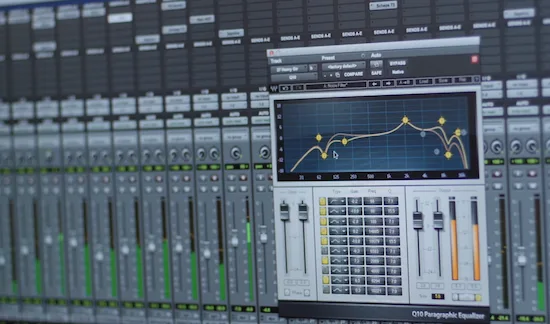 Mixing is where you control everything inside the track — vocals, drums, instruments — and shape them into a cohesive whole.
Mixing is where a track is built from individual elements working together. Every vocal line, every drum hit, every instrument sits in relation to something else, and none of it works in isolation. The job here isn’t to “make things sound better.” It’s to make them work together without fighting each other.
For example, vocals: too forward, and they disconnect from the track. Too buried, and the message disappears. Now layer that with drums — kick competing with bass, snare clashing with upper mids, hi-hats pushing harshness. These problems aren’t global — they exist inside specific elements, and they have to be solved there.
In practice, mixing comes down to managing conflicts: frequency clashes, dynamics, and space. Every decision is made in context — not “does this sound good,” but “does it work with everything else?”
And those decisions are always partial. You adjust one thing, something else shifts. Pull the bass tighter — now the kick feels different. Open up the stereo field — now the center feels weaker. Mixing is a chain reaction of small, precise moves, each one affecting the internal balance of the track.
Mixing isn’t about improving a track — it’s about building it correctly from the start. It’s construction. If something is off here, it doesn’t disappear later — it just becomes harder to deal with. Proper preparing your mix for mastering matters more than most producers expect. Once the track leaves this stage, those local decisions are locked in.
Mastering: Control Over the Final Perception
Once the mix is finished, it becomes a single stereo file — no separate vocals, no isolated drums, no second chances to rebalance elements. At this point, the question changes completely: not “does this part sit right,” but “does this track hold up everywhere it’s played?”
Mastering operates on that level — even small adjustments can completely change how a track feels, because every decision affects the entire track at once. You’re no longer fixing relationships between elements — you’re shaping how the whole record behaves across systems. Different playback systems react differently — the track has to hold together across all of them.
In real mastering sessions, even small changes shift how the entire track feels — because every move affects the full signal, not individual elements.
At this stage, precision matters more than the amount of processing.
This is where most tracks begin to fall apart under pressure. People expect mastering to “clean things up” or “fix what’s wrong.” It doesn’t work like that. If the vocal is too sharp or the low end is messy, mastering can’t isolate and repair it. What it can do is either reveal the issue more clearly — or control how aggressively it shows up.
For that reason, mastering is based on global decisions. Overall tone. How the track feels as a whole. Subtle moves that affect everything at once. A small shift here doesn’t just touch one element — it changes how the entire track feels. Sometimes for the better. Sometimes it exposes what wasn’t solved earlier.
In practice, mastering determines how your track holds up as a finished release. Most mixes are only judged in the studio — not in real-world listening conditions.
If you want to see how these decisions are applied in practice, you can explore how professional mastering actually works.
Where Mixing Ends and Mastering Begins (Critical Boundary)
Most confusion starts here — and where most tracks fall apart.
There’s a persistent idea that mastering is some kind of safety net. That whatever didn’t come together in the mix can be corrected later. In reality, the opposite is true. Mastering doesn’t fix a mix. It exposes it.
Think about balance. If the vocal is slightly too loud or the snare pushes too hard, that relationship is already baked in. At that point, you’re no longer fixing the cause — only reacting to the result. Mastering can’t reach inside and rebalance those elements. It can only affect the entire signal. So instead of “fixing” the issue, it often makes it more obvious — especially once the track is pushed to competitive loudness.
Low-end is another common trap. A mix with uncontrolled bass might feel powerful in the studio, but once it hits mastering, that energy becomes unstable. Push it even a little, and the whole track starts to collapse — kicks lose definition, sub becomes inconsistent, translation falls apart on smaller systems. You can’t separate it anymore. You’re dealing with the consequence, not the source.
This is one of the most common issues we see in real projects — low end that feels powerful in the studio but becomes unstable at release level.
High frequencies behave the same way. Harsh vocals, aggressive hi-hats, brittle synths — they don’t smooth out in mastering. They scale. What felt “a bit sharp” in the mix can turn into listener fatigue once the track is finalized and played back on real-world systems.
This is the actual boundary: mixing is where problems can be solved. Mastering is where those decisions are locked in and amplified. Not enhanced selectively — amplified globally.
In real sessions, this shows up fast. Tracks with clean internal balance move quickly. Tracks with unresolved conflicts stall — not because they’re bad, but because the stage for fixing them has already passed.
That’s why understanding common mastering-stage issues matters. Not as a checklist, but as a reflection of what wasn’t addressed earlier. If you’ve run into problems like distortion, imbalance, or lack of clarity after mastering, they’re almost always rooted in the mix itself — and you can see how those scenarios play out in detail in this how mastering problems actually appear.
Mixing vs Mastering: Side-by-Side Comparison
Mixing and mastering may seem similar, but they solve different problems and operate on different levels.
Here’s the difference, stripped down to what actually matters in practice:
| Aspect | Mixing | Mastering |
|---|---|---|
| Scope | Individual elements (vocals, drums, instruments) | Entire stereo track |
| Control Level | Local decisions within the mix | Global decisions affecting the whole track |
| Tools | Detailed processing per channel | Subtle processing on final output |
| Primary Goal | Build balance and clarity inside the track | Ensure translation and consistency across playback systems |
If you remember one thing: mixing works on individual elements. Mastering works on the final track.
Mixing shapes how the track works internally. Mastering determines how that finished result translates once it leaves your studio. Two stages, two levels of control — and confusing them is where most production problems begin.
Why a Great Mix Determines the Final Master
 A strong master doesn’t start at the mastering stage. It starts in the mix — long before the final file ever reaches a mastering chain.
Most expectations break down at this stage. There’s an assumption that mastering is where the track “comes alive.” In reality, mastering doesn’t create that impact. It reveals it. If the energy, balance, and clarity are already there, mastering brings them forward. If they’re not, it can’t invent them.
Think of mastering as a multiplier. Whatever decisions were made during mixing — good or bad — get scaled. A tight low end becomes solid and controlled. A messy one starts to break apart under pressure. A clean vocal sits naturally. A harsh one starts to dominate. Nothing appears out of nowhere. It all comes from what’s already in the mix.
We see this constantly in real sessions. Two tracks arrive at the same loudness target. One holds together — punch, clarity, depth all intact. The other starts breaking apart: low end loses focus, mids get crowded, high frequencies turn aggressive. The difference isn’t the mastering process. It’s the mix that came before it.
At this point, mastering is less about “improving” and more about controlling outcomes. You’re not building the structure anymore. You’re working with what’s already locked in, shaping how it translates without access to individual elements. That’s a completely different level of limitation — and responsibility.
A well-built mix gives mastering room to work. In projects with clean mixes, mastering moves stay minimal. In problematic mixes, even aggressive processing can’t fully stabilize the result. It allows subtle adjustments to actually make a difference. Without that foundation, every move becomes reactive — not controlled.
If you want to understand what needs to be right before a track reaches this stage, it helps to look at a practical what needs to be right before mastering. Not as a formality — but as a way to see which decisions are already locked in, and which ones will define how the final master behaves.
Can You Skip Mixing or Mastering?
This question comes up more often than it should — usually right before a release deadline. Can you skip mixing and go straight to mastering? Or skip mastering if the mix already sounds “good enough”?
Short answer: no. But the reasons are different for each.
Skipping mixing and jumping into mastering doesn’t work because mastering has no access to the parts of your track. If the vocal is off, if the kick and bass are fighting, if the stereo field feels unstable — none of that can be separated and fixed later. You’re handing over a locked structure and expecting it to be rebuilt from the outside. It doesn’t happen.
On the other side, skipping mastering creates a different problem. The mix might feel right in your studio, but that doesn’t mean it will translate. Different playback systems react differently — some exaggerate low end, others thin it out, some push highs forward. Without mastering, there’s no final control over how your track behaves across those environments.
Loudness is where this becomes obvious. What sounds punchy at your working level can collapse or distort once it’s pushed to competitive levels. And that shift isn’t just about turning things up — it’s about how the track holds together under pressure. That’s where loudness and how your track behaves under it become critical, not as a trick, but as a consequence of the process — something explored in more detail in this LUFS mastering guide.
So no — these stages aren’t interchangeable. Mixing builds the internal structure. Mastering prepares that structure for the real world. Remove either one, and the result stops holding together where it actually matters.
Understanding the difference is one thing. Hearing it is another.
You can read about mixing and mastering all day — but the real difference shows up in sound. Send your track and get a free demo master (up to 30 seconds), done by an engineer, so you can hear how your mix actually translates outside your studio.
No presets. Real engineer. Real result you can compare.
The Real Difference: Decision Level, Not Tools
 Most explanations get stuck on tools. EQ, compression, limiting. It sounds technical, but it misses the point. The real difference between mixing and mastering isn’t what tools are used — it’s the level of decisions being made.
Mixing is built on micro decisions. You’re adjusting individual elements in context. A vocal half a dB forward. A kick tightened slightly to sit with the bass. A synth widened just enough to open space without collapsing the center. Each move is small, but it directly affects how parts interact with each other.
Mastering works differently. At this stage, the perspective shifts — from inside the mix to above the entire track. The decisions are macro. You’re shaping how the entire track feels as one piece. Not “is the vocal right,” but “does the track feel balanced overall?” Not “is the snare too sharp,” but “does the top end translate without fatigue?”
That shift changes how every decision affects the final result. In mixing, you can isolate a problem and fix it at the source. In mastering, you’re managing outcomes. You don’t control individual elements — you control how their combined result is perceived. That’s a different kind of responsibility, and a different kind of limitation.
This is also why the same tools behave differently across these stages. The same type of adjustment affects a single element in mixing — but the entire track in mastering. What matters isn’t the tool itself, but the level at which it’s applied.
If you’ve ever looked into a typical mastering chain, it might seem similar on the surface. But the intention behind each step is completely different. In mastering, every decision is global. Every adjustment changes the full picture, not just a part of it.
That’s the key difference. Mixing shapes relationships between elements. Mastering shapes the perception of the finished result. Same tools — different level of thinking.
Why Beginners Confuse Mixing and Mastering
Most people confuse mixing and mastering for two simple reasons.
The first trap is loudness. A track gets louder after mastering, and suddenly it feels “better.” More energy, more impact, more presence. It’s easy to assume that mastering created that quality. In reality, it just revealed it. Loudness doesn’t fix balance, it just makes whatever is there more obvious.
That’s why two tracks at the same level can feel completely different. One sounds clean and controlled. The other feels harsh, crowded, or unstable. Same loudness — different mix decisions underneath.
The second mistake is expecting mastering to fix problems. It’s a natural assumption: if something sounds off, the final stage should correct it. But mastering doesn’t work like a repair tool. It doesn’t have access to the vocal, the kick, or the instruments separately. It only sees the combined result.
So instead of fixing issues, it often highlights them. A slightly muddy mix becomes more obvious. A vocal that’s a bit too sharp starts to dominate. What felt “almost right” suddenly feels off once the track is pushed to a finished level.
This is also where questions like “why is my track quiet?” come from. Not because the mastering is wrong, but because the mix can’t handle being pushed further without falling apart. If you’ve run into that situation, it usually points back to the mix itself — something explored more clearly in this breakdown of why tracks lose loudness.
Once you separate loudness from quality and stop expecting mastering to fix structural issues, the roles become much clearer. Mixing builds the track. Mastering reveals what you actually built.
Final Takeaway: Two Stages, One Result
Mixing and mastering aren’t interchangeable steps. They solve different problems at different levels.
Mixing builds the track from the inside — shaping how elements interact, how space is used, how balance holds together. Mastering takes that finished result and defines how it performs outside your studio, across real playback systems.
The line between them is simple once you see it: mixing is where you have control over the parts. Mastering is where you only have control over the whole.
And that’s why the outcome depends on both. A strong mix gives mastering something solid to work with. A precise master ensures that work actually translates beyond your setup.
Two stages. One result. And the boundary between them is what determines whether your track holds up — or falls apart the moment it leaves your room.
A great master starts with a strong mix — but it doesn’t end there
If your mix isn’t holding together, mastering will only make that clearer. But when the mix is ready, mastering is what defines how your track actually sounds to the listener — across platforms, devices, and real-world conditions.
Hear exactly how your track translates before you release it.
Common Questions About Mixing and Mastering
Is mastering necessary if my mix sounds good?
Yes — because sounding good in your studio doesn’t guarantee it will translate everywhere else. Different playback systems change how your track behaves. Mastering is what stabilizes that translation, so your mix holds up outside your environment.
Can mastering fix a bad mix?
No. Mastering works on the final stereo file, not individual elements. If something is unbalanced or conflicting in the mix, mastering can’t isolate and repair it. It usually makes those issues more noticeable, not less.
What comes first, mixing or mastering?
Mixing always comes first. It’s where the track is built and balanced. Mastering only begins once the mix is finalized and exported as a stereo file. Skipping that order breaks the entire process.
Why does my track sound different after mastering?
Because mastering changes how your track translates at real playback levels. Once the track is pushed to its final loudness and played across different systems, details that were less obvious in the mix can become more noticeable.