
Mastering Problems — Why Your Track Sounds Worse After Mastering
If your track sounds great in your room — but falls apart in the car, on headphones, or after upload — you’re dealing with mastering problems. The most common issues are harsh highs, muddy low end, distortion, loss of punch, and poor translation across systems.
This is one of the most common mastering issues we encounter — tracks that feel finished in the session but fail immediately outside it.
You finish the master. It’s louder. Feels tighter. Everything seems right — until you test it somewhere else.
The low end turns blurry. The highs get sharp. The punch disappears — even though nothing “broke.”
And the more you push the track, the more those hidden problems start to show.
Nothing actually broke — mastering just exposed what was already unstable in your track. Most of these problems don’t sound like mistakes at first — they sound like improvement while you’re still in your own setup.
That’s where most masters fail — not in the session, but the moment they leave your room and face real playback.
What Are Mastering Problems — Quick Explanation
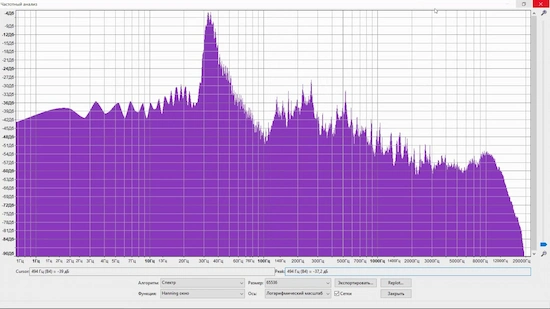 In simple terms, mastering problems are issues that only reveal themselves after the track leaves your setup.
Mastering problems happen when a track sounds finished in your setup — but falls apart on other systems.
They typically show up like this:
- harsh or aggressive highs
- muddy or undefined low end
- distortion after export or upload
- loss of punch and energy
- inconsistent sound across devices
In practice, this means:
- if highs feel sharp — your balance is unstable
- if the low end gets muddy — your structure isn’t controlled
- if punch disappears — your dynamics are being over-managed
- if distortion appears — your signal is pushed too far
If you’ve ever heard your track fall apart in the car, on earbuds, or right after upload — that’s not random — that’s exactly how mastering problems show up.
What matters isn’t how the track sounds in one place — it’s whether it holds up when conditions change.
If it only works in your setup, it’s not finished — it’s failing everywhere else.
That means the problem isn’t subtle — it’s already affecting how your track translates.
At that point, you’re not dealing with a minor issue — your master isn’t reliable yet.
And most of the time, you won’t fully hear that until it’s too late — when the track is already out.
At that stage, the problem isn’t hidden anymore — it’s already affecting how your track performs in real listening conditions.
If that sounds familiar — your master isn’t translating. It’s already failing outside your setup.
And if it’s failing there — it’s already affecting how listeners actually experience your track.
Why This Happens
Every move that feels like improvement in the moment also pushes the track closer to breaking somewhere else.
You’re not just improving the track — you’re increasing how sensitive it is to playback changes.
That’s why mastering problems don’t feel like mistakes — they feel like improvement until the track is tested outside your environment — where the result can’t be controlled anymore.
The Real Nature of Mastering Problems — They Don’t Sound Like Problems
Mastering problems usually come from how multiple small decisions interact when the track is pushed to final levels — especially when balance and control are pushed beyond what the mix can support.
Most mastering problems don’t show up as obvious errors. They don’t sound broken. They don’t feel wrong. In fact, they often feel like progress.
Turn the track up — it feels better. More energy. More presence. The brain reads that as improvement almost instantly.
Add compression — everything gets denser. The gaps close. It feels more “solid.” Again, your perception says: this is working.
But here’s the catch. None of that guarantees the sound is actually improving.
Our hearing isn’t objective — it reacts to what feels stronger in the moment. Even small changes in level can make a track feel clearer and more exciting, even when the underlying balance is getting worse. In short listening sessions, intensity wins over accuracy almost every time.
The track keeps shifting without clearly showing where it’s going wrong — which is exactly why it feels correct while you’re working on it.
Nothing in that moment feels like a problem — because the system is masking it.
And everything changes once it leaves your environment.
That’s when the result starts to fall apart. What felt tight becomes flat. What felt bright becomes harsh. What felt powerful starts to collapse on smaller speakers or streaming playback.
That’s why these problems usually stay hidden until the track leaves your environment. They don’t exist as obvious errors in the moment. They build quietly, masked by the very tools that are supposed to improve the sound.
The real issue isn’t what you hear while working. It’s what reveals itself after. That delay between decision and consequence is where most mastering problems live.
If you want to understand how loudness itself can distort your perception of quality, this becomes even more apparent when looking at how clipping affects perceived sound quality during mastering: how clipping affects sound perception in mastering.
Most Common Mastering Problems — And Why They Actually Happen
Mastering problems don’t appear randomly — they tend to repeat the same patterns across different tracks. They don’t come from one mistake — they come from how decisions interact under pressure. And we see the same patterns repeat across completely different tracks, genres, and producers.
In real mastering work, we often receive tracks that feel balanced in the producer’s session, but once we test them across multiple systems, issues in the low end and upper mids become obvious immediately.
Harsh highs.
It often starts as clarity. The track opens up. Details come forward.
Then you play it on headphones or in the car — and the top end starts to bite. Vocals get sharp. Cymbals feel aggressive.
In many cases, this starts when brightness is pushed to compensate for lack of definition elsewhere. It works short-term, but doesn’t hold across systems.
Muddy low-end.
The track feels heavy, but not controlled. Kick and bass lose separation. Everything blends together.
This comes from imbalance, not just “too much bass.” When the low end isn’t structured properly, adding weight reduces clarity instead of improving it.
If this is already happening, it usually shows up clearly in cases like muddy masters that don’t translate.
Distortion that appears later.
The master sounds clean during export. Then distortion shows up after upload or on different systems.
This is often the result of cumulative stress. The signal holds together in one condition, but breaks when playback changes.
Situations like distorted masters after processing are more common than expected.
Loss of punch.
The track gets louder, but feels weaker. Drums don’t hit the same way. Energy drops even though levels go up.
This often starts when over-controlling the signal instead of preserving its natural impact. The track becomes denser, but loses movement.
Stereo collapse.
The mix feels wide before mastering. After processing — it narrows. Depth disappears. Elements stack in the center.
In many cases, this is caused by subtle balance shifts. Small changes in processing can pull elements inward without it being obvious during the session.
These issues rarely exist on their own — each one affects how the rest of the track behaves.
Fix one thing — another shifts. Push clarity — you lose body. Add weight — you lose definition. Control dynamics — you lose impact.
You’re not fixing isolated issues — you’re shifting how the track responds as a whole.
In real projects, it’s common to fix one area and immediately hear a new issue appear somewhere else — which is why mastering problems are rarely isolated.
That’s exactly why mastering problems are rarely obvious during the process — they only become clear when the track is no longer under your control.
And at that point, you’re no longer fixing them — you’re reacting to how the track already behaves in the real world.
Why You Can’t Hear Your Own Mastering Problems — It’s Not Your Ears, It’s the System
Most producers run into the same situation sooner or later.
You listen back and think: “This sounds fine.” Nothing obviously broken. No major issues.
Then the track leaves your setup — and everything changes.
This isn’t just about experience — it’s about limitations in how you’re listening.
First — your environment.
Every room shapes sound differently. Some frequencies are exaggerated. Others disappear. You adjust your decisions based on what you hear — without realizing what’s missing.
So the balance makes sense in your room.
Outside of it, that balance shifts immediately.
We see this constantly in real projects. The same track can feel tight on studio monitors, then lose low-end control on small speakers or become harsh on headphones.
Adaptation
Another factor is adaptation.
The longer you work on a track, the more your hearing adjusts to it. Harsh elements stop feeling harsh. Muddy areas start to feel normal.
Stay on a track long enough, and almost any balance starts to feel “right” — even when it’s objectively unstable.
Level perception
Now add level.
As the level increases, perception shifts. The track feels more detailed, more energetic, more finished — even if the structure is getting worse.
Decisions start reinforcing each other in the wrong direction.
All of this happens inside the same listening environment. One setup. One reference point.
You’re not testing the track. You’re adapting to it — which means your decisions start reinforcing the problem instead of correcting it.
These issues don’t stand out while you’re working on the track.
And most of the time, many of these problems are already embedded in the material before mastering — even if they’re not obvious yet. They build earlier — in how the mix is prepared and how decisions are made before the final stage.
That’s why what happens before mastering often affects the result more than expected: how mix decisions directly affect mastering results.
Until the listening system changes, the result stays unpredictable.
That’s why mastering isn’t just about processing — it’s about controlled translation across systems: what it actually takes for a master to translate across systems.
It’s common for producers to feel confident in a master after long sessions — only to realize later that the same problems were there the entire time, just masked by repetition.
At that point, confidence doesn’t reflect accuracy — it reflects adaptation to the same listening conditions.
Why Mastering Problems Appear After Release — Not in Your DAW
 Everything sounded fine before export. That’s the part that confuses most people.
In your session, the track feels controlled. The balance holds. Nothing jumps out as broken. You render it, upload it — and suddenly something shifts.
The low end feels weaker. The top gets sharper. The overall energy drops. Same file — completely different result depending on where and how it’s played.
In reality, the version outside your setup is the one that exposes the real problems.
This isn’t random — it follows the same pattern every time. It’s the moment your track leaves a controlled environment and hits real-world playback conditions.
We regularly see tracks approved in the DAW that immediately show imbalance once played on consumer systems — even though nothing seemed wrong during mastering.
In many cases, the issues become obvious within seconds — even though the producer spent hours refining the master.
Playback systems don’t reproduce your master exactly the way you hear it in your DAW. Small differences in playback behavior can shift how the balance is perceived.
So that “perfect balance” you dialed in? It gets reinterpreted.
If your master depends on how loud you monitor it, it won’t stay consistent once playback conditions change.
That’s why tracks often come back from streaming sounding thinner, harsher, or less punchy. Not because something was damaged — but because the system revealed what wasn’t stable to begin with.
Then add playback differences.
Studio monitors. Laptop speakers. Car systems. Earbuds. Each one highlights a different part of the mix. Some exaggerate lows. Others strip them away. Some push midrange forward. Others bury it.
A master that only holds together in one environment isn’t finished — it’s untested.
And mastering, at its core, isn’t about making a track sound good in your room. It’s about making sure it survives everywhere else.
If you want to understand how level adjustments and platform processing affect your track after upload, this becomes clearer when looking at how platform processing affects perceived balance: how your master changes after upload.
Without that translation control, the result isn’t consistent. It’s conditional.
What feels like a small issue in the session often becomes obvious the moment the track is heard outside your setup — where you no longer control how it’s perceived.
Not sure what’s actually wrong with your master?
If your track sounds “fine” in your setup but falls apart everywhere else — the problem isn’t obvious, but it’s already affecting how your music translates. Send us your mix and we’ll run a real mastering test — so you can hear what actually happens to your track outside your setup. You’ll hear exactly what’s happening to your sound when it’s pushed to a release-ready level.
Real engineer. Real processing. No presets — just actual results.
The Hidden Chain Reaction of Mastering Mistakes — Why One Move Breaks the Next
Mastering problems rarely start where you think they do.
You hear something small — maybe the track feels a bit loose. So you tighten it. Add a limiter. Bring everything forward. It works. At least at first.
And that’s when things start to shift.
The transients lose their edge. Drums don’t hit the same way. The track feels flatter, even though it’s technically louder.
So you try to compensate for it.
A touch of EQ to bring back clarity. Maybe push the highs a bit. Now it feels brighter. More defined.
And that’s where it starts to fall apart.
That added top end starts to feel aggressive. Cymbals get sharp. Vocals lose smoothness. What felt like detail turns into harshness.
So you react to it — again. Maybe pulling something back. Maybe adding more control somewhere else.
This is usually where things start to spiral.
Processing decisions change how the track responds as a whole, especially when pushed to its limits.
And none of these steps feel like mistakes when you’re making them. Each move makes sense on its own — it solves the problem you hear in that moment.
But mastering decisions don’t exist in isolation.
Every move changes how the track responds to the next one. What you fix here creates pressure there. What you improve in one area destabilizes another.
That’s why trying to “fix one issue” almost always leads to another. You’re not working on separate problems — you’re working inside a system where everything is connected.
In real projects, this shows up as a loop. Each adjustment changes what you hear next, which leads to more adjustments — often in the wrong direction. The track gets more processed — but not more effective.
And at a certain point, the original energy is gone. Not because of one bad decision, but because of a sequence of reasonable ones.
Understanding this interaction is what separates controlled mastering from reactive adjustments. If you want to see how these relationships play out across different processing stages, it’s worth looking at how decisions connect inside the overall structure: how mastering decisions start affecting each other under pressure.
Because in mastering, nothing exists on its own. Every change echoes through the entire track.
When Fixing Mastering Problems Makes the Track Worse — The Trap of Overprocessing
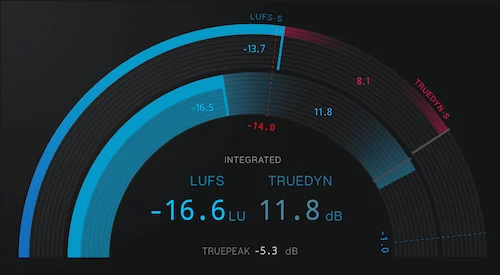 There’s a point where the process stops being creative and turns into fixing.
You’re no longer shaping the track — you’re trying to fix it.
Something feels slightly off. Maybe the low end isn’t tight enough. Maybe the highs don’t feel clean. So you reach for another move. A bit more compression. A bit more EQ.
And it works. Briefly.
It feels tighter. More controlled. Like it’s finally finished.
Then you listen again.
Now it feels smaller. Less alive. The energy that was there before starts to fade. Not dramatically — just enough to notice something’s missing.
So you make another move to compensate.
This is usually the moment where the track starts losing its original intent.
Each additional move is subtle. None of them seem destructive on their own. But they stack. Compression smooths the dynamics. EQ reshapes the tone. Layer by layer, the original character gets diluted.
It becomes more processed — but less impactful.
That’s the core problem with “fixing” mastering issues at this stage. You’re reacting to symptoms, not causes. And every reaction introduces new changes you didn’t fully account for.
It turns into a loop. Hear something → adjust → hear something new → adjust again.
Over time, the track loses contrast. The difference between loud and soft narrows. The transients soften. The sense of space tightens. Everything feels closer — but also flatter.
And here’s the part most people miss.
There’s a point where stopping is the better decision.
Not because the track is perfect. But because every additional move is doing more harm than good.
Mastering isn’t about applying more control. It’s about knowing when control starts to erase what made the track work in the first place.
How Professionals Detect Problems You Miss — It’s Not Better Hearing, It’s Different Hearing
There’s a common assumption: mastering engineers just have better ears.
That’s not really what’s happening.
The difference isn’t sensitivity — it’s focus. Professionals don’t listen for the same things you do. They’re not reacting to how the track feels in the moment. They’re scanning for how it behaves across contexts.
Take a typical session.
A producer might listen and think: “The track sounds full. The energy is there.” An engineer hears something else: low-end movement, midrange pressure, how the top end sits against the vocal.
Same track. Different interpretation.
That shift comes from repetition. Hundreds, sometimes thousands of tracks across different genres, systems, and delivery formats. Patterns start to emerge. Certain imbalances become obvious — not because they’re louder, but because they’re familiar.
Then there’s reference context.
Not in a technical sense — but as a constant anchor. A well-trained ear doesn’t evaluate a track in isolation. It compares. Instantly. Subconsciously. Against material that’s already proven to translate.
So when something feels slightly off, it doesn’t get ignored. It stands out.
Environment plays a role too — but not in the way most people think.
It’s not about having expensive gear. It’s about stability. A controlled listening space where decisions don’t shift depending on position, volume, or fatigue. When the environment is consistent, small problems stay visible instead of getting masked.
Put all of this together, and the gap becomes clear.
A non-engineer hears the track as a whole. The vibe. The energy. The emotion.
An engineer hears interactions. Balance under pressure. What might break when the track is pushed, normalized, or played back somewhere else.
That’s why certain issues get missed.
They’re not obvious in isolation. They only become obvious when you’re trained to expect them.
And once you hear them that way, you can’t unhear them.
This is exactly why professional mastering focuses on translation, not just sound inside one setup. You can see how this approach works in practice here: mastering that actually holds up across real-world playback.
If it works in your room but fails everywhere else — it’s not finished
You don’t need more plugins. You don’t need another version. What you need is control over how your track translates outside your setup.
Send us your mix and hear what actually holds up under real playback conditions. We’ll master a short section and show you exactly what changes — and why.
No presets. No guesswork. Just a result you can actually trust outside your room.
Quick Diagnostic: What Your Mastering Problems Actually Mean
Most mastering issues don’t need long explanations. You’ve already heard them — you just didn’t connect them to the cause.
Here’s a quick way to map what you’re hearing to what’s actually happening.
| Symptom | Likely Cause | What It Means |
|---|---|---|
| Track sounds louder but weaker | Loss of transients due to over-control | Energy is being flattened, not enhanced |
| Harsh highs on headphones | Overcompensation for clarity | Top end is unbalanced across systems |
| Low end feels heavy but unclear | Frequency overlap and poor definition | Weight is masking structure |
| Distortion appears after export | Cumulative processing stress | Signal is unstable under real playback conditions |
| Track loses width compared to mix | Balance shifts during processing | Spatial image is collapsing inward |
If you recognize even one of these — you’re not dealing with a small issue. You’re looking at a system that isn’t translating the way you think it is.
FAQ
Why does my master sound worse than my mix?
Because mastering exposes what the mix was hiding. When level, density, and control are added, small imbalances become more obvious. What felt balanced before can shift under pressure — especially outside your listening environment.
Why is my track loud but weak?
Loudness doesn’t guarantee impact. If transients are reduced and dynamics are flattened, the track can measure louder but feel smaller. The physical “hit” disappears even though the overall level increases.
Can mastering fix a bad mix?
Not reliably. Mastering can refine balance and improve translation, but it can’t rebuild structure. If core elements are fighting each other or lacking definition, those problems usually carry through — sometimes even more clearly.
Why does my track distort after upload?
Because the track reacts differently once it’s processed by streaming platforms or played back on different systems. What sounded clean in your session may have been close to the limit already, and small changes during playback expose that instability.
Do I need professional mastering?
If your goal is consistent translation across systems, yes. Not because of gear or plugins — but because of perspective. An external, controlled environment reveals issues you simply can’t hear from inside your own workflow.