
Mixing and Mastering Cost: What Actually Determines The Price Of A Project
One of the most common questions artists ask is why mixing and mastering costs can vary so dramatically from one studio to another. At first glance, it seems like pricing should be simple. A four-minute song is a four-minute song. Yet in practice, two tracks with nearly identical runtimes can require completely different amounts of work. That difference is often what determines the final project cost.
In most professional projects, cost is influenced primarily by project complexity, revision requirements, session size, and release scope rather than song length alone.
A sparse acoustic arrangement with a handful of tracks may be relatively straightforward to evaluate and develop. A modern production built around layered vocals, dense instrumentation, production edits, doubles, harmonies, and multiple arrangement transitions can demand significantly more attention before every element works together naturally. The length of the song may be identical. The amount of evaluation required to finish the project is not.
This is why professional pricing is rarely determined by minutes of audio alone. The real variable is project complexity. Every additional layer, competing element, revision cycle, or arrangement challenge increases the number of decisions that must be made throughout the process. Understanding what mixing actually involves helps explain why pricing often reflects the complexity of the project rather than the duration of the file itself.
From a studio perspective, the cost of mixing and mastering is usually connected to the amount of evaluation, judgment, and problem-solving required to move a project from a collection of recordings to a finished listening experience. The song length may stay the same. The workload behind the final result often does not.
Why Mixing And Mastering Prices Vary So Much Across Projects
 Artists are often surprised by how far pricing can vary from one project to another. A single song may receive one estimate, while another track of almost identical length receives a completely different quote. From the outside, that inconsistency can seem difficult to understand. Inside professional projects, however, the reason is usually straightforward. The amount of work required is rarely determined by song length alone.
Consider two four-minute songs. The first contains a lead vocal, a few supporting instruments, and a relatively simple arrangement. The second includes multiple vocal layers, doubles, harmonies, production effects, dense instrumentation, transitions, and a large session containing dozens of individual tracks. Both songs last the same amount of time. They do not require the same number of decisions.
This is where project complexity begins to influence cost. Every additional musical element creates new relationships that must be evaluated. More instruments create more interactions. More vocals create more opportunities for competition. More arrangement changes introduce more moments that require attention. The project becomes larger not because the song is longer, but because the number of decisions increases.
Arrangement density plays a significant role as well. Sparse productions often allow important elements to establish their place naturally. Dense productions rarely offer that luxury. As sessions become more crowded, maintaining clarity throughout the song typically requires a much higher level of evaluation. A chorus with dozens of active elements presents a different challenge than a verse built around only a few core parts.
Vocal count is another factor that frequently changes project scope. A single lead vocal creates one set of relationships within the arrangement. Add stacks, harmonies, doubles, ad-libs, background vocals, and layered production, and the listening experience becomes considerably more complex. Each additional layer affects how the entire song is perceived.
Revision expectations also influence pricing. Contrary to popular belief, revisions are not simply small adjustments made after the project is finished. Each revision requires the mix to be re-evaluated in context. A seemingly simple change can affect balance, focus, priorities, and relationships throughout the arrangement. This is one reason why project estimates often account for the expected decision workload rather than only the initial work itself.
The result is a marketplace where prices can vary dramatically across the United States. What appears to be the same service on paper may involve very different levels of complexity behind the scenes. Understanding how professional mixing works provides useful context for understanding why project scope and workload can vary significantly from one production to another.
What Artists Are Really Paying For Beyond The Final Audio Files
One of the biggest misconceptions surrounding mixing and mastering cost is the idea that artists are paying primarily for the final audio files. While the finished release is the visible outcome, much of the work happens long before the project reaches that stage.
Professional projects require continuous evaluation. Every arrangement decision, vocal priority, balance choice, and revision request must be considered within the context of the entire song. The workload is often less about changing audio and more about determining which decisions help the project move closer to its intended result.
Revisions are part of that process as well. A requested change rarely affects only one element. Adjusting a vocal, shifting attention within a chorus, or rethinking a musical priority often requires additional listening and re-evaluation before the project feels cohesive again.
Consistency is another major factor. Listeners experience a song as a complete journey rather than a collection of individual moments. Maintaining that consistency from beginning to end requires ongoing judgment throughout the project.
Perhaps most importantly, professional services carry responsibility. Every decision influences the final listening experience. Artists are not simply paying for processing time. They are paying for project evaluation, informed decision-making, revision management, consistency across the release, and the responsibility of delivering a result that translates outside the studio.
Why One Project Costs More Than Another In Real-World Production
Many artists assume pricing is primarily connected to song length. In practice, project scope is usually a much stronger factor. Two songs can last exactly four minutes and require completely different levels of evaluation, communication, revision, and decision-making. A simple session with a small number of tracks often presents fewer challenges than a dense production filled with layered vocals, complex arrangements, and multiple production elements competing for attention. The more relationships that exist inside a project, the more variables must be assessed before the final result feels complete. This is one of the main reasons why mixing and mastering costs can vary significantly even when songs appear similar on the surface.
| Lower Complexity Projects | Higher Complexity Projects |
|---|---|
| Fewer tracks | Large track counts |
| Simple arrangements | Dense arrangements |
| One lead vocal | Multiple vocal layers |
| Minimal revisions | Extensive revisions |
| Single release | EP or album project |
| Straightforward workflow | Multiple production challenges |
Most projects fall somewhere between low, moderate, and high workload. The challenge is that artists often underestimate how quickly vocal layering, dense arrangements, revision requirements, and release scope can move a project from one category into another. This is why professional evaluation usually happens before a final estimate is provided.
A Typical Cost Evaluation Process Before Pricing Is Determined
Although every project is unique, most professional mixing and mastering evaluations follow a similar logic. Before discussing cost, a studio first needs to understand the scope of the work. The goal is not to measure song length. The goal is to estimate the amount of evaluation, decision-making, and project management required to reach a finished result.
Most professional projects are evaluated through a similar process:
- Review the number of tracks.
- Assess arrangement complexity.
- Evaluate vocal and instrumental density.
- Estimate revision requirements.
- Determine project scope and delivery goals.
The purpose of this review is not to generate a random quote. It is to create a realistic estimate based on the actual demands of the project.
Some projects can be evaluated within minutes because the scope is immediately clear. Others require a deeper review before realistic pricing can be discussed. The more unknowns a project contains, the more important the evaluation stage becomes.
This process helps establish a realistic picture of the workload behind the project. A session with a moderate track count may still require significant attention if the arrangement is dense or the production contains many competing elements. On the other hand, a larger session can sometimes be surprisingly straightforward when the arrangement is organized and clearly structured.
For that reason, professional pricing is usually determined after understanding the number of decisions the project is likely to require. Studios estimate workload before estimating cost, because project scope often reveals far more than the audio file itself.
Track Count Is Important But It Is Not The Whole Story Behind Project Pricing
Track count is one of the first details studios look at when evaluating a project. It provides a useful starting point because larger sessions often require more attention than smaller ones. At the same time, track count alone rarely tells the full story. Two projects with the exact same number of tracks can require dramatically different amounts of work once the actual content of the session is examined.
This becomes obvious when comparing real-world productions. Imagine an acoustic singer-songwriter project built around a lead vocal, acoustic guitar, a few supporting elements, and a straightforward arrangement. The session may contain twenty or even thirty tracks once alternate takes, stereo recordings, and supporting parts are included. Despite the track count, the relationships inside the arrangement may be relatively simple and easy to evaluate.
For example, a thirty-track acoustic project may contain multiple microphone recordings of the same performance, a handful of supporting instruments, and very little competition for attention. A thirty-track modern pop session may contain stacked vocals, programmed layers, transitions, effects, and several competing focal points in every chorus. The track count is identical. The decision workload is not.
Now compare that with a modern pop production containing the same number of tracks. The session may include multiple lead vocal layers, doubles, harmonies, vocal effects, programmed drums, synth stacks, transitions, ear-candy elements, and dense arrangement changes between sections. On paper, both projects appear similar. In practice, the second project often contains far more interactions competing for attention throughout the song.
This is where decision density becomes more important than track count itself. Every additional relationship inside the arrangement creates another variable that must be considered. A vocal may interact differently with the verse than it does with the chorus. Instrument layers that feel balanced in one section may compete with each other in another. The complexity comes from the number of decisions required, not simply the number of files in the session.
Project organization also plays a surprisingly important role. We regularly receive sessions with large track counts that are clean, structured, and easy to navigate. We also encounter much smaller projects where inconsistent labeling, overlapping arrangements, unfinished production choices, or competing musical ideas create additional challenges long before any final decisions can be made. The amount of work is not always visible from the track count alone.
Another factor is the presence of unresolved production issues. Some projects arrive with clear priorities and strong arrangement decisions already established. Others contain elements that compete for the same role within the song. In these situations, additional evaluation becomes necessary because solving one issue can reveal several others. Many of the challenges discussed in our mixing problems guide become more common as sessions grow in complexity.
For this reason, professional pricing rarely treats every thirty-track project the same way. A larger session is not automatically more demanding than a smaller one, and a smaller session is not automatically simpler. Track count remains an important indicator, but it is only one part of a much larger picture. What ultimately influences workload is the number of decisions required to turn the project into a clear, cohesive listening experience.
Why Revisions Influence Project Cost More Than Many Artists Expect
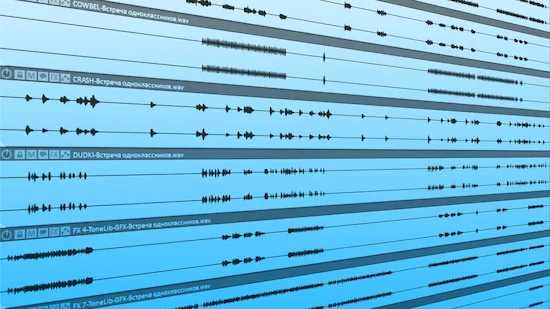 At first glance, revisions may seem like a relatively small part of a project. A few adjustments here, a couple of changes there, and the work continues. In reality, revisions often involve much more than modifying a single element. Every requested change requires the project to be evaluated again as a complete listening experience.
This is one reason two projects that appear almost identical on paper can end up requiring very different amounts of work. One artist may have a clear vision from the beginning and make only a handful of focused adjustments. Another project may go through multiple rounds of exploration as creative priorities evolve throughout the process. Neither approach is unusual. Both simply create different levels of decision workload.
The important distinction is that revisions rarely exist in isolation. A request to change the prominence of a vocal, adjust the impact of a chorus, or alter the balance of a particular instrument can affect how other elements are perceived. Once one relationship changes, other relationships may need to be reconsidered as well. The work is not limited to making a single adjustment. It often involves re-evaluating the surrounding context.
We see this frequently in larger productions. A revision that appears simple during a conversation can influence multiple sections of the arrangement once the full song is reviewed. What sounded balanced before may now feel different. What previously supported the focal point of the song may begin competing with it. The revision itself takes time, but the additional evaluation often requires even more attention.
Another factor is project readiness. Sessions that arrive with clear production choices and well-defined priorities typically move through the process more efficiently. Projects that are still evolving creatively tend to generate more revision cycles because important decisions are still being discovered along the way. This is one reason careful preparation often reduces uncertainty later in the project. Many of the final review considerations discussed in our mixing checklist become easier to manage when key creative decisions have already been established.
From a pricing perspective, revisions are not simply additional time on the clock. They represent additional rounds of listening, evaluation, comparison, and decision-making. That is why revision expectations often influence project cost. The complexity comes from the number of judgments required to reach a finished result, not merely the duration of the project itself.
In other words, revisions increase decision workload long before they increase project length. Two songs can look nearly identical at the start, yet require very different levels of ongoing evaluation before everyone feels confident that the project is complete.
Project complexity matters more than song length
Many artists estimate mixing and mastering cost by looking at the duration of a song. In professional projects, pricing is usually influenced far more by arrangement density, track count, revision expectations, and the number of decisions required to bring the project to completion. Evaluating those factors early helps reduce uncertainty and create more realistic budget expectations.
Clear expectations. Realistic planning. Professional project evaluation.
Single Songs, EPs, And Albums Follow Different Pricing Logic Because The Scope Changes
 One of the most common misconceptions about mixing and mastering cost is the idea that pricing scales in a simple, predictable way. Many artists assume that if one song requires a certain amount of work, an EP simply multiplies that workload a few times, and an album multiplies it even further. Real projects rarely behave that neatly.
A single song is usually evaluated as a standalone piece of music. The focus remains on the relationships inside that individual production. Decisions are made around the needs of one arrangement, one vocal performance, one set of musical priorities, and one listening experience. The project begins and ends with a single destination.
An EP introduces a different layer of complexity. Each song still requires its own evaluation, but the release must also function as a connected body of work. Tracks may have different arrangements, different energy levels, and different production styles while still feeling like they belong together. Consistency becomes part of the workload. The project is no longer evaluated only song by song. It is also evaluated release by release.
Albums push that challenge even further. A ten-song album is not simply ten singles grouped together. Larger releases often contain a wider range of production choices, emotional dynamics, instrumentation, and arrangement approaches. Some songs may be relatively straightforward while others are considerably more demanding. The overall project requires ongoing attention to how every piece contributes to the larger listening experience.
Project scope changes pricing expectations for a simple reason. The complexity does not increase only because there are more files to work on. The workload increases because there are more relationships to evaluate. Individual songs must work on their own while also supporting the identity of the release as a whole.
We see this frequently in independent projects. An artist may send three songs that appear similar in size but serve completely different roles within an EP. One track is built around a sparse arrangement. Another contains dense vocal layering. A third may include extensive production details and multiple arrangement shifts. The workload is created by the differences between the songs as much as by the number of songs themselves.
The same principle applies to larger album projects. Consistency is rarely accidental. It requires additional listening, comparison, and evaluation across the entire release. Every decision exists within a broader context than it would on a standalone single.
This is one reason project scope plays such an important role when estimating cost. As projects grow from singles to EPs and albums, the number of decisions expands beyond individual songs and into the relationships between them. That broader perspective is a fundamental part of professional mixing and mastering work and one of the main reasons pricing expectations change as releases become larger and more complex.
Why Professional Mixing And Mastering Services Can Cost More Than Expected For Some Projects
Many artists evaluate cost by comparing the final deliverable. The result is a finished song, so it can seem reasonable to assume that pricing should be based primarily on the length of the track or the amount of time spent processing audio. Professional projects rarely work that way.
Professional projects often differ dramatically in the number of variables that must be reviewed before realistic budgeting becomes possible. That difference is one of the primary reasons similar projects can receive very different estimates.
Consider two projects with similar track counts. One arrives with a clear arrangement, strong production choices, and obvious priorities. The other contains competing musical ideas, uncertain focal points, and multiple sections that pull the listener's attention in different directions. The amount of audio may be similar. The responsibility involved in evaluating those projects is not.
In commercial projects, the biggest workload is often discovered after the session is opened. We regularly receive projects that appear straightforward based on track count alone, only to find overlapping arrangements, competing vocal priorities, unfinished production choices, or inconsistent session organization. None of those challenges are visible from the file duration, yet all of them influence the amount of evaluation required before a project is ready for release.
Consistency is another factor that often goes unnoticed from the outside. A song is not experienced one moment at a time. Listeners experience it as a continuous journey from beginning to end. Maintaining that consistency requires ongoing judgment throughout the project. A decision that feels right during a verse may create unintended consequences during a chorus. Something that works in isolation may feel disconnected when heard in context. These relationships must be reviewed repeatedly before a project feels complete.
Quality control also extends beyond obvious technical concerns. A professional evaluation involves asking difficult questions throughout the process. Does the song communicate its priorities clearly? Does the project remain consistent from section to section? Are important elements remaining consistent across sections? Does the project feel cohesive from start to finish? These questions often require far more time than the final adjustments themselves.
For many projects, expertise becomes a larger variable than processing time itself. The challenge is rarely the processing itself. It is created by evaluating more variables throughout the project. It comes from the ability to identify problems, establish priorities, recognize unintended consequences, and make reliable decisions under complex circumstances. The larger and more demanding the project becomes, the more important those judgments become.
Artists exploring professional services often focus on the visible parts of the process because those are easiest to compare. The less visible part is responsibility. Every decision affects the final listening experience, and every unresolved issue carries forward into the finished release. That responsibility is one of the primary reasons professional projects can vary significantly in cost and one of the reasons artists eventually begin evaluating what separates experienced engineers from less experienced ones beyond technical processing alone.
In the end, clients are not paying for minutes of audio. They are paying for evaluation, judgment, consistency, accountability, and the ability to navigate hundreds of interconnected decisions throughout a project. That responsibility often represents the largest part of the work itself.
Why Cheap And Expensive Projects Often Look Similar At First Until The Evaluation Begins
From the outside, two projects can appear almost identical. Both may contain thirty-five tracks. Both may have similar song lengths. Both may belong to the same genre. At first glance, there may seem to be little reason why one project receives a significantly higher estimate than the other.
The difference often becomes visible only after a detailed evaluation begins.
We regularly encounter sessions that look straightforward until they are opened. One project may arrive well organized, with clear priorities, structured arrangements, and production choices that already support the direction of the song. Another project with the same track count may contain overlapping musical ideas, competing focal points, inconsistent organization, and unresolved production decisions that affect multiple sections of the arrangement.
In some cases, the largest challenges are not visible until the first review pass. A session may appear organized on the surface yet contain arrangement conflicts, competing priorities, or production decisions that affect multiple sections of the song simultaneously. These issues rarely appear in project summaries but often influence the amount of work required.
Neither situation is unusual. The important point is that both projects can appear nearly identical before anyone begins reviewing the actual content.
Much of the variation originates here. The visible size of a session rarely tells the full story. Much of the workload comes from evaluating relationships between elements, identifying hidden challenges, and determining which issues require attention before the project can move forward efficiently.
In many cases, the largest differences between projects are not found in song length or track count. They are found in the complexity that becomes visible only after professional evaluation begins.
Why Similar Services Can Carry Very Different Price Tags Without Being Equivalent
Many artists assume two projects with similar descriptions should cost roughly the same. In practice, pricing often reflects factors that are not visible from a service title alone.
Project scope, revision expectations, arrangement complexity, session organization, and release goals can vary dramatically from one production to another. Those differences frequently determine the amount of work required long before any final decisions are made.
For that reason, pricing alone rarely explains value. The amount of evaluation behind a project is often far more important than the label attached to the service itself.
Mixing And Mastering Costs Across The United States Have Become More Accessible Than Ever
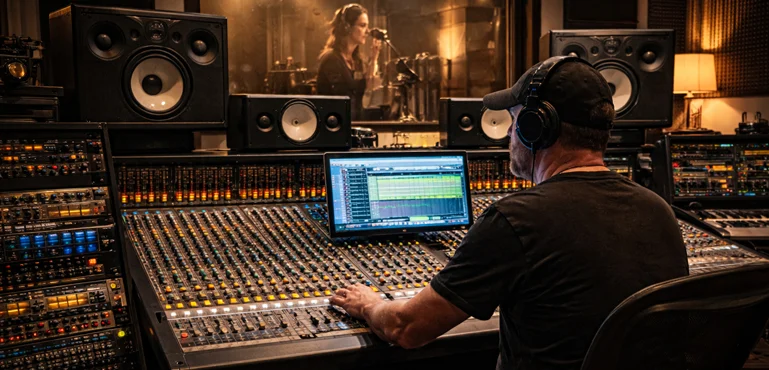 Not long ago, professional mixing and mastering services were often associated with major music cities. Artists in places like Los Angeles, Nashville, New York, or Atlanta had easier access to established studios, while musicians in smaller markets frequently faced fewer options. That reality has changed dramatically over the last decade.
Today, independent artists across the United States routinely collaborate with engineers hundreds or even thousands of miles away. A songwriter recording in rural Montana, a producer working from a home studio in Ohio, and a band tracking an album in Arizona all have access to the same professional services that were once concentrated in a handful of major music centers.
This shift has influenced pricing expectations throughout the industry. Artists are no longer limited to studios located within driving distance. Instead, they can evaluate services based on experience, communication, project fit, and budget rather than geography alone. As a result, pricing across the market has become far more competitive and transparent than it was in previous generations of music production.
The rise of self-produced music has also changed the conversation. Many modern projects are created entirely outside traditional commercial studios. Vocals may be recorded in a dedicated home setup. Production may happen across multiple locations. Collaborators may never meet in person. Yet the final release still requires the same level of critical evaluation before reaching listeners.
At the same time, workload complexity has continued to increase. Modern sessions often contain larger track counts, more vocal layers, more production details, and more revisions than comparable projects from years ago. Professional services remain valuable not because artists lack recording tools, but because the decision-making process becomes increasingly difficult as projects grow in size and complexity.
For independent artists, this creates a significant advantage. Access to professional mixing and mastering is no longer determined by location. Whether a project originates in a major music hub or a small town, experienced engineers can evaluate and develop it to the same professional standard. That nationwide accessibility is one reason many artists exploring their options eventually begin researching how to hire a mixing engineer in the USA based on expertise and project requirements rather than geographic proximity.
In today's music industry, location influences far less than it once did. The quality of the project, the complexity of the work, and the experience required to manage it have become much more important factors than the city where the recordings were originally created.
The Biggest Pricing Mistake Artists Make Before Requesting A Quote
The most common pricing mistake artists make is surprisingly simple: they assume the cost of a project can be estimated primarily by the length of the song. It seems logical at first. A three-minute track should require less work than a six-minute track. In reality, production complexity often has a much greater influence on workload than duration alone.
We regularly encounter situations where a short song requires considerably more evaluation than a longer one. A dense modern production packed with vocal layers, arrangement changes, production details, and competing musical elements may demand hundreds of individual decisions throughout the project. Meanwhile, a longer song built around a clear arrangement and a smaller number of elements can sometimes move forward with far fewer complications.
This misunderstanding often creates unrealistic expectations. Artists may compare projects based on runtime while overlooking the factors that actually influence workload. The result can be confusion when two songs of similar length receive very different estimates. From a studio perspective, however, the difference is usually easy to explain. The projects are not equally complex.
Another reason this assumption causes problems is that song length is visible while decision density is not. Anyone can see that a song lasts four minutes. What is much harder to see is the number of relationships inside the arrangement, the amount of revision potential, the complexity of the vocal production, or the number of elements competing for attention at any given moment.
Consider two songs that both run for four minutes. One contains a lead vocal, a few instruments, and a straightforward structure. The other contains stacked vocals, multiple production layers, extensive arrangement transitions, and dense instrumentation throughout the entire track. The difference in workload becomes obvious once the project is opened, even though the runtime remains identical.
That is also why experienced studios evaluate complexity before discussing cost. Track count, arrangement density, revision expectations, and overall project scope usually provide a much more accurate picture of the work involved than duration alone. Song length remains a factor, but it is rarely the factor that tells the whole story.
Artists looking for a more realistic estimate often benefit from evaluating the actual structure of the project rather than focusing exclusively on runtime. That is also why tools such as a mixing and mastering cost calculator typically rely on project characteristics that better reflect complexity instead of measuring only the number of minutes in the song.
Ultimately, project complexity predicts cost far more accurately than song length. The songs that require the most work are not always the longest ones. They are usually the ones that contain the greatest number of decisions waiting to be made.
Better Budget Planning Starts With Understanding Project Complexity Not Just Project Size
By the time artists begin discussing budgets, they are often looking for a simple number. The challenge is that music projects are rarely simple. Two songs can share the same length, contain a similar number of tracks, and still require very different amounts of work before they reach a finished state.
That is why realistic budgeting starts with understanding complexity rather than focusing on a single metric. Track count matters. Revisions matter. Project scope matters. More importantly, the way those factors interact determines the overall workload behind the project.
A straightforward production with clearly established priorities will usually require fewer decisions than a project containing competing ideas, evolving creative direction, and multiple rounds of re-evaluation. The difference is not always visible from the outside, but it becomes obvious once the project is examined as a whole.
This is also why pricing conversations are often more accurate when they begin with the structure of the project rather than the duration of the audio. The amount of work required depends on how many decisions must be made, how many relationships must be evaluated, and how much consistency must be maintained from beginning to end.
In practical terms, better pricing expectations come from understanding the actual demands of the project. Complexity, revisions, scope, and workload are closely connected. The clearer those factors are from the start, the easier it becomes to build realistic expectations around both budget and outcome.
Mixing And Mastering Cost Is Ultimately About Decision Complexity Not Song Length
After reviewing enough projects, a consistent pattern begins to emerge. The songs that require the most work are not necessarily the longest songs. They are usually the songs that contain the highest number of decisions waiting to be made before the project feels complete.
Throughout this discussion, the same factors have appeared repeatedly. Track count influences workload. Revision expectations influence workload. Project scope influences workload. Arrangement density influences workload. None of these factors operate independently. They interact with one another and collectively determine how much evaluation is required before a project reaches its final form.
For that reason, pricing can never be reduced to a simple measurement of file length. A four-minute song may contain a relatively small number of creative relationships and move through the process efficiently. Another four-minute song may involve layered vocals, dense production, multiple arrangement transitions, extensive revisions, and a far larger project evaluation burden. The duration remains identical. The complexity does not.
From a studio perspective, the most important variable is often the number of judgments required throughout the project. Every section of a song introduces choices. Every revision introduces new evaluations. Every production challenge introduces additional decisions that must be considered within the context of the entire release. As complexity grows, workload grows alongside it.
Project scope amplifies this effect even further. A standalone single presents one set of priorities. An EP or album introduces broader consistency requirements across multiple songs. The responsibility expands beyond individual tracks and into the relationships between them. More scope typically means more evaluation, more comparison, and more critical judgment throughout the project.
This is one of the reasons project estimates are often based on workload and complexity rather than runtime alone. The work involves understanding the full context of the project, identifying priorities, maintaining consistency, and making reliable decisions under changing circumstances.
For artists planning future releases, this perspective often leads to more realistic expectations. Instead of asking only how long a song is, it becomes more useful to ask how complex the project actually is. That question usually provides a far more accurate picture of the work involved and the resources required to complete it successfully.
Ultimately, mixing and mastering costs are driven by decision complexity, not by file length alone. The more relationships that must be evaluated, the more revisions that must be considered, and the larger the project scope becomes, the greater the workload behind the final result. Artists who want a more accurate estimate can begin by evaluating the true complexity of their project with a mixing and mastering cost calculator rather than relying solely on runtime as a predictor of cost.
Common Cost Assumptions That Often Lead To Confusion
- Longer songs always cost more.
- Track count alone determines pricing.
- Revisions have little impact on workload.
- All mixing and mastering services involve the same level of evaluation.
- Project complexity can be judged before reviewing the session.
Professional projects regularly prove the opposite. The factors that influence cost most heavily are often the least visible before a session is reviewed in detail.
Understanding cost is only the beginning
The real question is not how long the song is. It is how much work the project actually requires. Track count, arrangement density, revision expectations, and overall project scope all influence the number of decisions needed to achieve a professional result. Evaluating that complexity is often the most important step in building a realistic budget.
Professional evaluation. Clear budgeting. Better project planning.
Frequently Asked Questions About Mixing And Mastering Cost
How much does mixing and mastering cost?
The cost depends on the complexity of the project rather than a single factor. Track count, arrangement density, vocal layering, revision expectations, and overall project scope typically influence pricing more than song length alone.
Why do mixing and mastering prices vary so much?
Different projects require different amounts of evaluation, decision-making, and quality control. Two songs of identical length can involve completely different workloads depending on the complexity of the production and the goals of the release.
Does song length affect mixing and mastering cost?
Song length can play a role, but it is rarely the primary factor. In many cases, project complexity provides a much more accurate indication of the work required than duration alone.
Does track count influence pricing?
Yes, but track count is only one part of the equation. A well-organized session with many tracks can sometimes require less work than a smaller project containing dense arrangements or unresolved production challenges.
Why do revisions affect project cost?
Revisions require additional evaluation and decision-making. Even small changes can influence how other elements interact within the project, often creating new considerations that must be reviewed before the work is finalized.
Is an album more expensive than a single song?
Generally, yes. Albums involve a broader project scope, greater consistency requirements, and more relationships between songs. The workload extends beyond individual tracks and into the release as a complete body of work.
Why do professional services cost more?
Professional services involve more than processing audio. The cost reflects project evaluation, critical listening, decision-making, consistency management, quality control, and responsibility for the final listening experience.
How can I estimate the cost of my project?
The most accurate estimates begin with understanding the structure of the project itself. Track count, vocal complexity, arrangement density, revision expectations, and overall scope usually provide a clearer picture of cost than song length alone.