
Fast Mastering Service — Speed Without Destroying Your Mix
Fast mastering sounds convenient. In reality, it often wrecks the track.
If you need fast mastering, the real question isn’t speed — it’s whether the result holds after release.
Fast mastering service gives you a release-ready track within hours — processed by an engineer and ready to upload the same day without revisions.
Handled by a real mastering engineer — every decision is made in context, not by presets.
Get your track mastered today — ready to release today →Upload your track in under a minute — get a release-ready master the same day that holds after release.
What “Fast Mastering” Actually Means in Real Projects
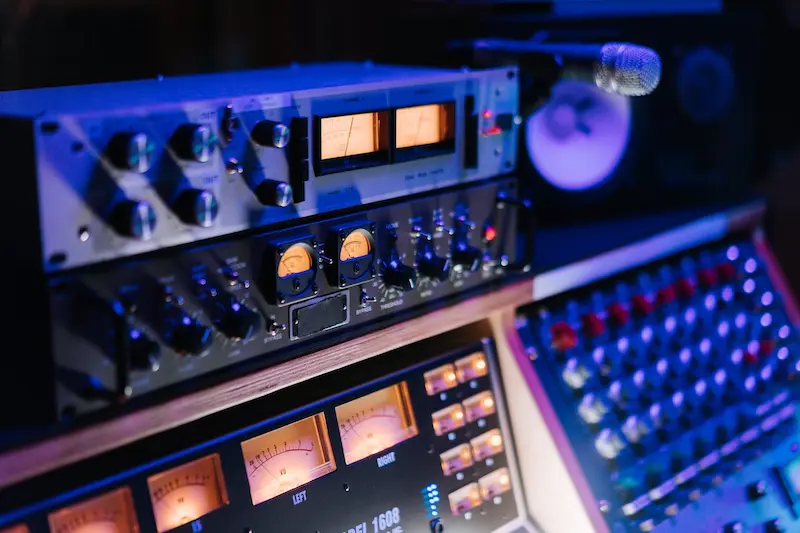 “Fast” gets thrown around like it means instant. It doesn’t. In real projects, fast mastering means one thing — your track moves to the front of the queue and gets handled within hours, not days.
Same-day delivery. 24-hour turnaround. That’s what most services promise. But speed like that doesn’t come from rushing through decisions. It comes from removing friction in the process.
A properly set up mastering environment is already dialed in before your track even arrives. Monitoring is consistent. Reference points are clear. There’s no time wasted “figuring things out” from scratch — the engineer is working from a stable baseline every time.
Then comes experience. Fast decisions only work when they’re informed. There’s no time to overthink. You hear the issue, test it, and commit immediately if it holds. That’s not trial and error — it’s built from constant real-world work.
Fast mastering removes waiting — you get a final version that holds after release.
If you want a deeper look at how those decisions are made step by step, it’s worth understanding how professional mastering works in detail under longer timelines.
What You Get With Fast Mastering
You get a release-ready master within hours — not a draft, not a preview, but a final version built to hold from the first pass.
No revision loop behind it — the first version is built to be final, not a starting point.
No waiting, no back-and-forth — just a final version that holds the moment it leaves the studio.
If you're unsure whether your track is ready for that kind of turnaround, check how to prepare your mix properly before mastering.
Why Most “Fast Mastering Services” Fail
Speed isn’t the real problem. Lack of context is.
Most fast mastering services are built to process more tracks — not to understand them. That’s where things start breaking.
First issue: AI mastering. It’s fast, sure. Seconds instead of hours. But it has no idea what your track is trying to do. It doesn’t know if that aggressive top end is intentional, or if the low-end imbalance is part of the genre or just a mix issue. It reacts to numbers, not intent. And when everything is reduced to targets, nuance disappears.
Second: presets. Same chain, slightly adjusted. Works on paper. Fails in reality. One track comes in clean and balanced — it survives. Another has a dense midrange or unstable low-end — the same preset pushes it over the edge. No one stops to ask if the material can handle it.
Third: batch processing. This is where speed turns into damage. Multiple tracks, minimal attention, automated decisions. It’s efficient, but it strips out individuality. Every track starts to sound like the same template, regardless of genre or production style.
You hear it immediately.
The top end gets aggressive instead of clear. Transients lose shape. Low-end turns unstable. Sometimes it’s subtle. Sometimes the track just falls apart completely. But the common pattern is always the same — the track feels louder, but less controlled.
Clipping shows up where it shouldn’t. Dynamics collapse just enough to make the track feel flat. Highs get pushed past the point of comfort. Not because someone chose that direction — but because nothing stopped it.
If you’ve ever received a master that felt “off” but couldn’t immediately explain why, you’re not alone. That’s exactly the kind of situation we break down in detail when analyzing when mastering results don’t translate as expected.
Most services never address this gap — and that’s exactly where they fall apart.
Fast vs Standard Mastering — What Actually Changes
 The assumption is simple: fast means less. Less attention, less precision, less quality. That’s not how it works — at least not in a controlled environment.
What actually changes is time allocation. In standard mastering, there’s more space for extended listening, second-guessing, stepping away and coming back. With fast mastering, that window compresses. Decisions happen earlier. You rely on trained judgment instead of prolonged analysis.
Revisions follow the same logic. Standard workflows may involve multiple rounds, especially when projects evolve during feedback. Fast mastering is built to land close to final from the start. Fewer loops, more accuracy upfront.
Depth of correction can also shift. Not because the engineer avoids complexity, but because some issues require time to fully rework. Fast mastering prioritizes what directly impacts translation and playback — not experimental fine-tuning that won’t survive real-world listening anyway.
What doesn’t change is the standard. The track still has to hold up across systems. It still needs balance, clarity, and control. Speed doesn’t lower the bar — it removes the margin for hesitation.
| Aspect | Fast Mastering | Standard Mastering |
|---|---|---|
| Turnaround | Same day / 24 hours | 2–5 days or more |
| Depth of Processing | Focused, priority-based adjustments | Extended refinement and micro-adjustments |
| Risk Level | Higher if process lacks control | Lower due to extended evaluation |
| Use Cases | Deadlines, single releases, urgent drops | Albums, complex material, iterative projects |
So no — fast doesn’t automatically mean worse. But it does mean less room for correction after the fact. If the process is solid, the result holds. If it isn’t, the flaws show up fast.
When Fast Mastering Makes Sense (and When It Doesn’t)
Fast mastering isn’t for every situation — and forcing it can break the result. Other times, it’s the wrong call — and forcing it will cost you more than it saves.
It works best when timing matters more than iteration. A single dropping tomorrow. A last-minute release that can’t move. A track that already feels stable and just needs to translate cleanly across platforms. In those cases, speed becomes an advantage — not a compromise.
We’ve handled projects where artists needed a master within hours before a scheduled upload. No time for back-and-forth. No room for experimentation. Just clear decisions, fast execution, and a result that holds up outside the studio. That’s where fast mastering actually holds.
Typical case — track finished at night, release scheduled for the morning. No revision window. The master has to hold immediately.
But not every project fits that model.
If the mix is unstable, fast mastering won’t fix it — it will expose it. If low-end is inconsistent or the midrange is crowded, those issues need time and careful handling. Rushing through that only locks the problems in place.
The same goes for multi-track releases. Albums require internal balance — not just individual track quality, but consistency from one track to the next. That’s a different workflow entirely. If you’re working on a full project, it makes more sense to approach it as a structured process, like in album mastering, where cohesion becomes part of the result.
Fast mastering is precise when the material is ready. When it’s not, speed doesn’t help — it just makes the outcome less predictable.
If the mix isn’t ready, fast mastering won’t fix it — which is why it’s important to make sure your mix is ready for mastering.
ow We Keep Control When Time Is Limited
Speed only works when nothing slips. Otherwise the track falls apart fast.
When the timeline compresses, the process doesn’t get simplified — it gets tighter. Every move has to land correctly the first time. There’s no room for “let’s try this and see.” Either it translates, or it doesn’t.
That’s where experience takes over. Fast decisions aren’t random. They come from pattern recognition. You hear a low-end imbalance, you already know how it will behave on smaller systems. You hear a sharp top, you know whether it’s energy or fatigue waiting to happen. That kind of response comes from working on real tracks every day under real deadlines.
We also work against references constantly. Not in a generic sense, but in context. A track isn’t judged in isolation. It’s measured against how similar releases behave in real playback conditions. That comparison happens quickly, but it’s not casual — it’s precise. If you want to understand how reference-based decisions shape the final result, it comes down to comparing your track against real releases in the same context.
Translation is the second checkpoint. Studio playback means nothing if the track falls apart elsewhere. So the focus shifts immediately — how does it hold up outside? Low-end stability, vocal presence, stereo balance. If something starts collapsing when pushed, it gets corrected before it becomes part of the final.
In practice, that’s where most fast masters fail — they sound fine in the studio, but collapse on real playback systems within seconds.
In fast sessions, most decisions are made within minutes — because we already know how they will behave across real playback systems.
If a decision isn’t right immediately, it won’t be right later — that’s the rule in fast mastering.
In most cases, the first pass lands close to final — so there’s no need to go back and fix it later.
That’s why most fast masters don’t come back for revision. If something feels off, it’s usually the mix — not the mastering stage.
In real sessions, that’s the difference between a track being approved immediately — or sent back for fixes. In fast workflows, there’s no buffer — if it works, it gets approved immediately.
Peaks are another critical point. Not just avoiding clipping — controlling how the track behaves at higher levels. You can push loudness quickly, but if it breaks the structure, it’s pointless. The goal is controlled energy, not forced volume. That balance is where most fast services fail, especially when they chase loudness without restraint. This is exactly where loudness and clipping in mastering start defining whether the track holds or collapses.
There’s also a discipline to stopping at the right moment. Over-processing happens fast under pressure. Adding one more adjustment, one more layer — until the track loses definition. Knowing when not to touch something is just as important as knowing what to fix.
Fast mastering doesn’t reduce control — it compresses the decision window. The structure stays intact, the decisions stay intentional, and the track keeps its identity — even under time pressure.
In real sessions, that often means approving the master on the first pass — not because it's rushed, but because there’s nothing left to fix.
Hear What Fast Mastering Really Does to Your Track
Not every “fast” result holds up after the first listen. Send your track and get a free 30-second demo — processed by a real mastering engineer, not an automated system. No commitment. Just a clear answer: does it translate or not?
Fast response. Real feedback. No automated shortcuts.
Fast Mastering vs AI Mastering
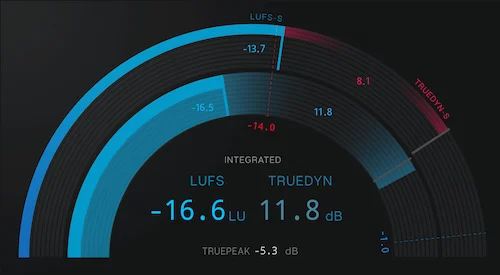 Both promise speed. Only one understands what your track is actually trying to do.
AI mastering is built for speed. Upload, process, download.
It’s fast because it skips decisions — not because it makes better ones.
It reacts to patterns, not intent. That’s why results often feel “almost right” — but don’t hold up outside the studio. An engineer hears that difference immediately and corrects it before it becomes a problem.
Fast mastering with an engineer takes longer — not because it’s slow, but because every decision is checked against context. What is the track supposed to feel like? Where does it sit against similar releases? How far can it be pushed before it starts losing definition?
We’ve seen tracks where AI output looked technically correct, but collapsed when played next to reference material. Same loudness. Different impact.
AI follows fixed rules. It doesn’t adapt when the track moves outside expected patterns.
If you want a deeper comparison of where automation holds up and where it breaks down, it’s covered in detail in AI mastering vs engineer.
What You Can Expect From a Fast Mastering Turnaround
A fast turnaround doesn’t mean a rushed result. It means you get a version that’s ready to hold up where it actually matters — outside the studio.
First, loudness. Not just pushing the level, but getting it to a point where the track competes without breaking apart. If it collapses when pushed, it’s not finished. Fast mastering aims for controlled loudness — not just numbers, but stability.
Then clarity. The mix should feel more defined, not sharper for the sake of it. Vocals sit where they should. Low-end stays readable. Highs don’t fatigue after a few listens. If anything starts feeling forced, it gets pulled back.
Translation is the real test. A fast master should still work across systems — headphones, cars, small speakers. If it only sounds good in one place, it’s not done. That check happens immediately, not as an afterthought.
As for timing, most fast mastering jobs are delivered the same day or within 24 hours. That’s the expectation. But speed doesn’t remove limits. If the mix has deeper issues, or if the track needs extensive correction, fast turnaround won’t magically solve it.
That’s where expectations either hold — or break. You’re getting a controlled, release-ready result — not a complete rebuild of the mix.
If you want to see what gets checked before a master is considered finished, it helps to look at a real mastering checklist. That’s the level every fast turnaround still has to meet.
In the end, fast mastering should feel simple on your side. You send the track. You get it back. And it’s ready to release — no second guess.
Fast Mastering — Common Questions
Can fast mastering match the quality of a standard process?
Yes — if the process is controlled. Speed alone doesn’t reduce quality. What matters is how decisions are made under time pressure. If the engineer knows where to act and where to stop, the result holds. If it’s automated or rushed without judgment, quality drops immediately.
How fast is “fast” in real terms?
In most cases, it means same-day delivery or within 24 hours. Some tracks are completed in a few hours depending on workload and complexity. But “fast” still includes full evaluation — it’s not instant output without listening.
Are revisions included in fast mastering?
Yes, but typically limited. The goal is to get very close to final on the first pass. Minor adjustments can be made, but fast mastering isn’t built around multiple revision cycles. If a project needs extended iteration, a standard timeline makes more sense.
Is fast mastering done manually or automated?
That depends on the service. Many platforms use automated processing to deliver speed. In a controlled mastering environment, the work is still done manually by an engineer — just without unnecessary delays between decisions.
Will fast mastering fix problems in my mix?
Not beyond a certain point. It can improve balance and translation, but it won’t rebuild a problematic mix. If deeper issues are present, they’ll still be there — just more exposed after processing.
If you're unsure whether your track is ready for a fast turnaround, it helps to make sure your mix is ready before mastering.
Fast doesn’t have to mean risky
If your track needs to be released today, there’s no room for testing or second attempts. You need a master that works immediately — the first time you hear it outside the studio.
No delays. No guesswork. Just a result you can release with confidence.