
How to Fix a Bad Master — Find the Problem Before You Try to Fix It
Your master gets worse every time you try to fix it?
Start here: reduce limiting by 1–2 dB and listen.
If it opens up — you were over-limiting.
If nothing changes — the problem is elsewhere.
Quick fixes:
Harsh → reduce 2–4 kHz slightly.
Flat → reduce limiting first.
Boomy low end → fix the mix.
Falls apart → adjust midrange.
What Actually Makes a Master Sound Bad — It’s Not One Thing
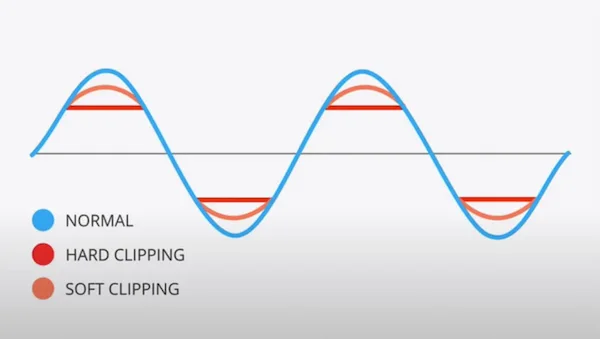 Most common causes:
Harsh sound → upper mids or limiting.
Flat sound → over-compression.
Weak low end → mix problem.
Falls apart on systems → translation issue.
Most common real fix:
Reduce limiting by 1–2 dB and re-check the track.
In many cases, this alone restores punch and depth.
Tonal imbalance.
Something feels off, but it’s hard to pin down. The low end may feel heavy but unclear. Highs get sharp and fatiguing.
Or the midrange disappears, making the track feel hollow. This isn’t about one frequency — it’s about how the spectrum holds together.
Dynamic breakdown.
The track stops breathing. Transients lose impact, or everything gets flattened into a constant level.
Sometimes it feels loud but small. Other times, parts jump out unpredictably.
Either way, the energy isn’t controlled anymore.
Distortion artifacts.
Not always obvious clipping. Sometimes it’s subtle — a crunchy vocal edge, a smeared kick, a harshness that wasn’t in the mix. This usually comes from pushing processing too far while chasing loudness or density.
Push level without control — this is where the balance breaks. We break that down in more detail here: Loudness vs Clipping in Mastering — What Actually Makes a Track Sound Loud.
Translation failure.
The track works in one place — then falls apart everywhere else. Too much bass in the car. No presence on small speakers. Harsh on headphones. That’s a clear sign the balance only works in a controlled environment.
A bad master isn’t one issue. It’s a balance problem across multiple dimensions.
To see how these issues affect the final result, here’s how that actually plays out: see how mastering actually works step by step .
Diagnosis First — How to Identify What’s Actually Broken
Fast check:
Same issue everywhere → structural problem.
Only on some systems → translation issue.
Only in loud parts → dynamics problem.
Isolation test:
Bypass your chain and listen to the raw mix.
If the mix sounds better — your processing is the problem.
If both sound off — go back to the mix.
Compare against a reference — level-matched.
Without level matching, most problems stay hidden — the louder version always sounds better at first.
| Symptom | Likely Cause | Where the Problem Lives |
|---|---|---|
| Harsh, fatiguing highs | Over-processing or imbalance in upper mids | Mastering or mix |
| Low end feels boomy or undefined | Poor low-frequency control or masking | Usually mix |
| Track sounds loud but small | Over-limiting, loss of dynamics | Mastering |
| Sounds good on monitors, breaks elsewhere | Translation issues | Mastering (sometimes mix) |
| Elements disappear in dense sections | Imbalance or masking | Mix |
Quick fix vs wrong fix:
Harsh highs → reduce upper mids (not boost highs).
Weak punch → reduce limiting (not add compression).
Boomy low end → fix the mix (not cut blindly).
Unstable sound → fix balance (not increase loudness).
When NOT to fix the master:
If vocals are inconsistent → go back to the mix.
If bass is unstable → fix low-end balance in the mix.
If elements fight each other → mastering won’t solve it.
Use this to double-check your result: final mastering check.
The Biggest Mistake — Fixing a Master That Shouldn’t Be Fixed
 Here’s the hard truth: not every bad master can be fixed at the mastering stage.
Pushing harder — more EQ, more limiting, more “correction” — usually makes it worse.
Mastering doesn’t repair problems. It exposes them.
In real sessions, the same problem repeats. A mix comes in slightly muddy. Someone tries to “clean it up” in mastering — cuts low mids, boosts top end. The result? Thinner, harsher, still unclear. The problem doesn’t disappear — it shifts.
Dirty mix.
If elements are masking each other, no amount of mastering EQ will separate them properly. You might create space in one area, but the imbalance just moves somewhere else. The track loses weight before it gains clarity.
Unstable balance.
If vocals jump in and out, or the low end isn’t controlled, mastering won’t stabilize it. Compression affects everything at once — you’re not fixing balance, you’re compressing imbalance.
Frequency conflicts.
Kick and bass fighting. Vocals clashing with synths. These are mix decisions. Trying to solve them in mastering is like adjusting lighting instead of fixing the scene.
Limiting often becomes the wrong tool here.
Pushing it harder might feel like it adds control — but it actually removes it.
Transients flatten, distortion builds up, and depth disappears.
Mastering can enhance a solid mix. It cannot fix a broken one.
Once you cross that line, every move becomes damage control.
If you’re unsure whether the issue comes from the mix, step back and check the foundation: Prepare Mix for Mastering: What Actually Matters Before You Send It.
Fix the problem at the source. Otherwise, you’re just reshaping it.
Fixing the Master — What Actually Works (and What Doesn’t)
Minimal fix process:
1. Reduce limiting (start here).
2. Adjust tonal balance (subtle EQ only).
3. Re-check on multiple systems.
4. Stop if punch or clarity drops.
Once the problem is identified, adjust — but stay within limits.
This is where most masters fall apart. They try to “fix” the master as if they’re rebuilding the mix. That’s not what mastering is for.
Fixing is correction — not reconstruction.
Start with the dominant issue. Make one move, then re-check.
Stop if:
The track loses punch.
Highs become harsher.
Low end gets less defined.
The track feels smaller instead of bigger.
Mild EQ correction.
One of the few areas where mastering can help — but only in broad moves. Slight tonal shifts, subtle harshness control, gentle clarity adjustments.
Even a 0.5 dB move can be enough. More than that usually shifts the balance instead of fixing it.
In one session, a 0.7 dB cut around 3 kHz removed harshness without affecting clarity — anything more made the vocal collapse.
The goal isn’t to fix frequencies — it’s to rebalance perception.
Push too far, and you’re no longer correcting — you’re reshaping the track.
Dynamic control.
If the master feels unstable, light compression can help — but only if it preserves movement.
Overdo it, and the track stops breathing. Movement disappears, even if everything looks “controlled.”
Limiting strategy.
Most masters fail at this stage.
Typical outcome: masters pushed too hard by 2–3 dB. The result is predictable — louder at first, but weaker on impact.
Most over-limited masters are pushed 2–3 dB too far — pulling back restores impact immediately.
At that point, transients are already damaged — reducing limiting won’t fully restore them, only improve perception.
Once transients are flattened, no limiter setting will bring them back — only reduce the damage.
Limiting should finalize the track — not define it.
If you’re using it to create punch or balance, you’re compensating for a problem earlier in the chain.
If your fix changes the character of the track — you’re not fixing anymore.
See how this works in a real chain: Mastering Chain Explained.
Not sure what’s actually wrong with your master?
Most problems aren’t where you think they are. Send your track — we’ll show you what’s actually broken, what can be fixed, and what needs to be left alone.
Real engineers. Real feedback. No guesswork.
Why Most DIY Fixes Make the Master Worse — Good Intentions, Bad Results
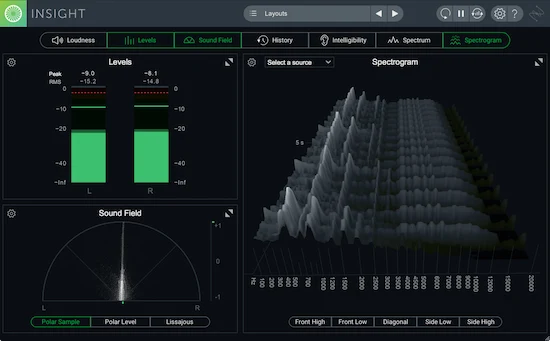 You hear a problem — and react immediately. That reaction creates a new issue. Then you fix that one. Within minutes, you’re far from the original problem, with a track that sounds worse than where you started.
Over-limiting.
The track doesn’t feel strong enough, so you push the limiter. Then the punch disappears. Transients flatten. The low end loses shape. What felt bigger becomes smaller and more aggressive.
Typical scenario: two versions of the same track — one slightly underpowered, one heavily limited. Almost every time, the less processed version had more impact and more room to improve.
Over-EQ.
Trying to fix tone by stacking adjustments. Cut here, boost there, compensate again. Instead of clarity, you get a disconnected spectrum. The track might sound cleaner alone — but falls apart next to a reference.
Often, removing a single EQ move improves translation more than adding multiple new ones.
Chasing loudness.
You’re not trying to break the track — you just want it to compete. So you keep pushing level and density.
But loudness isn’t a control — it’s a result. When you chase it directly, you start sacrificing what creates it in the first place.
Every adjustment affects multiple parts of the track at once.
You don’t just fix highs — you change balance, dynamics, and perception.
Without a clear diagnosis, each move creates a new problem.
If this keeps happening, it’s because the same mistake repeats across most DIY masters. This happens for a reason: Mastering Problems: Why Your Track Sounds Worse After Mastering.
When to Stop Fixing and Start Over — Knowing the Point of No Return
There’s a point where fixing stops working.
You’ll hear it quickly. Each move does less, but causes more problems. You push harder, and nothing improves — the issue just changes shape.
Here are the signs you’ve crossed that line:
Distortion that won’t go away.
You reduce limiting, ease processing — but the harshness stays. That means it’s already embedded. At this stage, you’re not removing distortion — only reducing how obvious it is.
Balance that won’t settle.
You fix the low end — mids fall apart. You fix mids — highs become aggressive. This loop doesn’t resolve because the problem isn’t isolated. The entire balance is unstable.
Translation never locks in.
It works in one place, fails in another. You fix the car — it breaks on headphones. You fix headphones — it loses impact on speakers. You’re no longer building a master — you’re chasing environments.
At this point, fixing stops being effective.
The only move that works is stepping back — either to the mix or to a clean mastering pass with a different approach.
We’ve seen projects where a fresh master, built with fewer moves, outperformed hours of trying to repair a damaged one.
You’ll hear this clearly here: How Professional Mastering Works — The Real Process Behind Finished Tracks.
Final Decision — Fix It Yourself or Let an Engineer Handle It
Simple problems can be fixed. A small tonal imbalance, a slight dynamic issue — if you’ve identified it correctly, you can handle it.
But once problems start interacting — balance shifts with every move, one fix breaks another — it stops being a technical task.
It becomes a perspective problem.
After multiple passes, you’re no longer hearing the track objectively. Every decision is influenced by what you already tried, what you expected, and what you want the track to be.
An external engineer hears none of that. Only the result.
That difference is often what determines whether a master works — or keeps falling apart.
If you want to see how a stable, balanced master is built in real conditions, this shows how the process works in real sessions: Quality Track Mastering — Professional Approach.
It’s not about better tools. It’s about knowing where to stop — and what not to touch.
Simple fixes are technical. Complex problems require experience.
If your master still changes character with every adjustment, you’re past the point of fixing.
At that stage, the fastest way forward is a clean, unbiased pass — not another iteration.
Your master still falls apart?
If the track keeps changing with every adjustment, the problem isn’t a setting — it’s the approach. At this stage, more tweaks won’t fix it.
Send your track and get a free demo master (up to 30 seconds). You’ll hear the difference immediately — before deciding anything.
Fast response. Clear result. No unnecessary processing.
Common Questions — What Happens When a Master Goes Wrong
Can a bad master be fully fixed?
Sometimes — but not always. If the issue is subtle (slight tonal imbalance, minor dynamic inconsistency), it can often be corrected. But if the master is heavily over-processed, distorted, or built on a weak mix, full recovery isn’t realistic. At that point, a clean re-master usually delivers a better result than trying to repair damage.
Can mastering fix a bad mix?
No. Mastering can enhance or slightly correct, but it can’t rebuild structure. If elements are fighting, the balance is unstable, or the low end is uncontrolled, those problems need to be fixed in the mix. Mastering will only make those issues more obvious.
Why does my master sound worse than my mix?
Because something in the process pushed the track out of balance. Most often, it’s over-limiting, excessive EQ, or chasing loudness too aggressively. The mix had space and movement — the master removed it. This is one of the most common outcomes when decisions are made without clear diagnosis.
How do I know if the problem is in mastering or mixing?
Check consistency. If the issue exists across all playback systems, it’s likely in the mix. If the track felt fine before mastering and only degraded after processing, the problem is in the master.
Reference comparison also helps — if your mix holds up better than your master, something went wrong in the final stage.
Should I remaster or go back to the mix?
If the core balance is solid but the final polish is off, remastering makes sense. If you’re constantly compensating — fixing one area and breaking another — it’s a mix issue. The key is whether the track works before mastering. If it doesn’t, going back will save time and preserve quality.