
How To Fix AI Stem Separation: Find Out Whether The Extracted Tracks Are Actually Usable
AI stem separation can produce separate vocal, drum, bass, and instrumental tracks that sound surprisingly clean on their own. That does not mean the musical roles were separated successfully.
A musical role can appear complete while part of it still survives inside another stem. A layer that seemed isolated may lose some of its body, texture, or supporting information during extraction. Everything can sound acceptable in solo, then one small change to a single stem unexpectedly alters another part of the song.
That is the distinction that matters. The first question is not, How clean does this stem sound? It is, Can this stem be changed independently without damaging the rest of the music? Isolation is not the same as independence.
Failed extraction is one part of the broader challenge of fixing AI-generated music. Here, the focus is narrower: identify where the separation failed, test whether the stems remain reliable, and decide whether the current result should be preserved, used with limits, separated again, or abandoned.
AI Stem Separation Does Not Recover The Original Multitracks
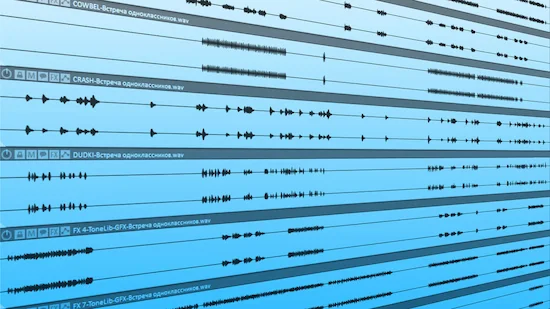 Original multitracks exist before a song is mixed. The lead vocal, bass, drums, guitars, synths, and other parts are still separate recordings or instruments, each with its own complete signal. AI-separated stems begin at the opposite end of the process. They are created after those elements have already been combined into a finished source.
By that point, the musical roles no longer exist as neatly isolated pieces. A vocal may share ambience with the instruments. A bass note may overlap the low end of a kick. Cymbals, guitars, keyboards, and vocal harmonies can occupy the same moments and share similar harmonic content. The separation system can only estimate where each musical role most likely belongs. It cannot recover information that no longer exists as an independent recording.
The result is an extraction, not a recovery of the original session. A file labeled vocals is not necessarily the vocal track that existed before the mix. The same applies to drums, bass, and instruments. One output may contain most of the intended role while another retains part of its tone, ambience, attack, or supporting layer. In other cases, information that helped define the role in the finished song may not survive cleanly in any single stem.
This is where expectations often go wrong. A producer sees four separate files and assumes they should behave like four independent groups from a production session. They may not. The files can recombine into something reasonably close to the source while still depending on one another in ways the labels do not reveal.
Consider a bass stem that carries the obvious low notes while some of the instrument's upper character remains inside the instrumental output. Lower the bass stem and the bass does not simply become quieter. Its balance changes. The remaining upper content may stay behind, making the role feel thinner or strangely detached. The edit affected one file, but the musical result was spread across two.
This practical distinction forms the basis of stem integrity. If an extracted output contains only part of a musical role, changing that file also changes its relationship with information held elsewhere. The stem may be isolated enough to sound convincing on its own, yet not independent enough to support the work you expect it to do.
A useful way to think about AI-separated stems is that they are reconstructed working copies rather than recovered production tracks. They may resemble the original arrangement closely enough for certain edits while still behaving very differently once independent changes begin.
The First Test Is Not How Clean A Stem Sounds In Solo
The quickest way to judge separated stems is also one of the easiest ways to misread them. Solo the vocal. Listen for bleed. Solo the drums. Notice what should not be there. Move through the files and keep the outputs that sound cleanest.
That check has value, but it cannot tell you whether the separation is usable.
A clean solo stem may be missing part of the musical role it is supposed to contain. The vocal can sound isolated yet lose some of the support that gave it weight in the original source. A drum stem may seem impressively clean while part of the percussion remains elsewhere. Another output can sound messy on its own but still carry information that the song needs when the stems are played together.
This is why separated material has to be heard in three different states: against the original source, one output at a time, and as an untouched recombination. Each comparison answers a different question. The original shows what existed before extraction. Solo listening reveals what landed inside each file. Recombination shows whether information split across several outputs still works together.
Sometimes the apparent defects partly hide each other. A trace of an instrument in the wrong stem may be less obvious when another output restores the rest of that role. A thin solo file may regain its body only when neighboring stems are added. The combined result can therefore sound much more convincing than any individual output suggests.
The reverse is more dangerous. Suppose a producer hears unwanted material in one stem and removes it because it sounds like contamination. After recombination, a supporting layer is suddenly weaker or a musical role no longer feels complete. What looked like dirt was also carrying information that the extraction had failed to preserve anywhere else in a usable form.
Before professional remixing, we do not approve separated material by solo quality alone. We compare the original source, the untouched recombination, and the result after one controlled change. The purpose of that change is diagnostic: does the effect stay with the intended role, or does something else in the song shift with it?
This is also why a rough-sounding stem can still be useful for a narrow task, while a polished, impressive extraction can fail the moment independent control is required. Solo quality tells us what a file sounds like. It does not tell us what that file can safely do.
The real test begins when the extracted stem is changed.
How To Tell Whether The Separation Failed Or Exposed Another Problem
Not every flaw you notice after AI stem separation was created by the separation itself. Some problems become easier to hear only because individual musical roles have been isolated. Others genuinely result from the extraction process. Telling those situations apart is the first step toward making the right decision.
A true stem separation problem affects how musical information is distributed between the extracted outputs. If one role survives across several stems, if important elements disappear during isolation, or if changing one file unexpectedly alters another, the extraction itself deserves closer attention. Other symptoms belong to different parts of the repair workflow and should be diagnosed separately instead of being blamed on stem separation.
| Observed Symptom | Most Likely Category | What The Symptom Most Likely Belongs To |
|---|---|---|
| One musical role remains spread across multiple stems. | Stem leakage | AI stem separation |
| Muting one stem also removes part of another musical role. | Separation integrity | AI stem separation |
| Only part of the intended source was successfully isolated. | Partial extraction | AI stem separation |
| Metallic, grainy, smeared, or warbling audio. | Generation artifact | See How To Fix AI Artifacts |
| Hollow tone or cancellation after playback. | Phase-related issue | See How To Fix AI Phase Problems |
| Stereo image shifts or width changes unexpectedly. | Stereo inconsistency | See How To Fix AI Stereo Problems |
| Artificial vocal behavior was already present before extraction. | AI vocal issue | AI vocal repair |
| Unrealistic drum performance existed in the original source. | AI drum performance | AI drum repair |
This distinction keeps the diagnosis focused. The purpose of this page is not to explain every defect that may appear after extraction. It is to determine whether the separation itself failed to preserve independent musical roles. Once a symptom clearly belongs to another category, the investigation should continue there rather than treating every audible imperfection as a stem separation problem.
Stem Leakage Matters When It Changes What You Can Edit
Bleed is often treated as a simple pass-or-fail test. Hear another instrument in the stem, and the separation must be bad. Hear nothing obvious, and the extraction must be good. Real projects are rarely that tidy.
A faint trace of another part may have almost no practical consequence. You might hear it clearly when the stem is soloed at high volume, yet it disappears into the full arrangement and never limits the change the file was extracted to support. In that case, the bleed is audible, but it is not necessarily the problem.
Other leakage behaves very differently. Imagine a vocal stem that carries a quiet trace of a guitar phrase throughout the chorus. Left untouched, the residue may seem harmless. Change the vocal stem, however, and that guitar fragment changes with it while the rest of the guitar stays behind in another output. The phrase now exists in two different states. What sounded like minor contamination in solo has become a limit on independent control.
The opposite situation can be just as revealing. A bass stem may appear clean, but part of the bass character remains embedded in the instrumental output. Change the extracted bass and only one portion of the musical role follows. The rest stays where it was. Instead of gaining clean control over the bass, you end up controlling one incomplete version while another fragment continues underneath it.
This is why the amount of audible bleed is a poor measure of severity. A loud residue can be irrelevant to the intended task. A much quieter one can become obvious the moment the target stem is changed. What matters is not simply how much unwanted sound can be heard, but whether the same musical event has been divided across outputs that no longer respond together.
We pay particular attention to recurring leakage. A stray sound in one brief transition may place few limits on the material. The same instrument appearing in the wrong stem every time a chorus arrives is different. Any change to that stem can repeatedly alter two musical roles at once, making the result harder to predict.
Not every trace of bleed needs repair. The relevant question is whether it changes the musical result when the stem is used for its intended purpose. If the effect stays local, the separation may still be useful. If one adjustment creates a doubled, incomplete, or mismatched version of another role, the leakage has become a stem-integrity problem.
Bleed severity should be judged by consequence, not visibility.
Partial Isolation Can Be More Dangerous Than Obvious Failure
An obviously bad extraction is easy to distrust. The vocal is buried under other instruments, the drum stem contains half the arrangement, or the isolated part is clearly too incomplete to use. Most producers hear the problem and stop treating that file as independent material.
Partial isolation is harder to catch because it often looks successful.
A vocal output may contain the lead phrase cleanly while some doubles and harmonies remain in another stem. A bass extraction can capture the fundamental notes but leave part of the instrument's upper character elsewhere. Percussion may appear to belong to the drum stem until muting the instrumental output removes a layer that had been supporting the groove all along.
Nothing in those examples has completely disappeared. That is exactly what makes the situation misleading. The musical role still exists, but the extraction has divided it into pieces that do not follow the same control.
The first warning is often disproportionate change. A small adjustment to one stem produces a much larger musical shift than expected because only one part of the role moves with it. Or the reverse happens: the intended change feels strangely incomplete because another part of the same role remains fixed in a different output.
Muting can expose the problem even faster. Turn off a supposedly unrelated stem and a harmony vanishes with it. Remove the instrumental output and the bass loses definition. Silence the drum stem and part of the percussion continues elsewhere. The labels suggest independent roles; the behavior says otherwise.
Solo inspection rarely explains this well. Each file may sound plausible on its own, and the untouched recombination may still resemble the original source. The weakness appears only after a production decision asks one extracted role to behave independently. At that point, the control that seemed available turns out to cover only part of the music.
That makes partial isolation more dangerous than an obviously poor extraction. A bad stem announces its limitations. A partially isolated role can survive several checks before revealing that the user never had control over the whole musical element in the first place.
The practical test is simple in principle: when one role is changed or removed, does the complete role follow that decision? If important pieces remain behind—or unrelated elements disappear with it—the separation created the appearance of independence without preserving the real thing.
A partially isolated role can create more misleading control than a visibly bad extraction.
More Separated Stems Do Not Always Mean More Control
 It is easy to assume that a larger stem count gives you more freedom. Two broad outputs seem limited. Four common stems look more useful. Separate the arrangement into even narrower roles, and the project appears to offer more precise control with every new file.
Sometimes it does. Sometimes the extra files only divide the same musical information into smaller, less reliable pieces.
Every additional output creates another boundary the separation has to estimate. A broad split may keep several closely related layers together, while a narrower extraction asks the system to decide exactly where one role ends and another begins. That distinction becomes difficult when instruments overlap, share ambience, or contribute to the same musical event.
Consider a simple case. With two broad outputs, a group of overlapping instrumental layers may remain intact. Ask for several narrower roles and one layer might be divided between them: its main body lands in one stem, part of its attack in another, and some supporting texture remains elsewhere. The project now contains more files, but none of them provides complete control over that role.
Four common stems can create the same problem on a smaller scale. A percussion layer may sit comfortably inside a broader instrumental output, yet a more detailed extraction places part of it with the drums and leaves the rest behind. The extra stem looks like added flexibility until the first independent change reveals that the musical role never became truly independent.
This does not make broad separation automatically better. A narrow output is valuable when the extracted role survives well enough to behave on its own. If changing that stem produces a local, predictable result, the additional granularity has created useful control. If the same role is now scattered across several files, the higher stem count has created more boundaries without creating more independence.
That distinction matters when choosing between two broad outputs, four familiar stems, or a larger set of narrowly extracted roles. The number itself says very little about separation quality. A smaller set of reliable stems can support more meaningful work than a detailed collection of incomplete fragments.
The question is not, How many stems can be extracted? It is, Does the additional stem create usable control, or only another incomplete fragment?
Granularity is useful only when independence survives it.
Before Fixing The Stems, Identify The Real AI Problem
A separated stem can sound clean and still fail when you try to change it independently. The first step is understanding whether the limitation comes from the extraction itself or from another AI-generated audio problem. Explore how different AI issues affect the final result before deciding what should be repaired.
Understand what the extraction actually preserved before deciding what deserves further work.
Recombine The Stems Before Deciding What Needs Repair
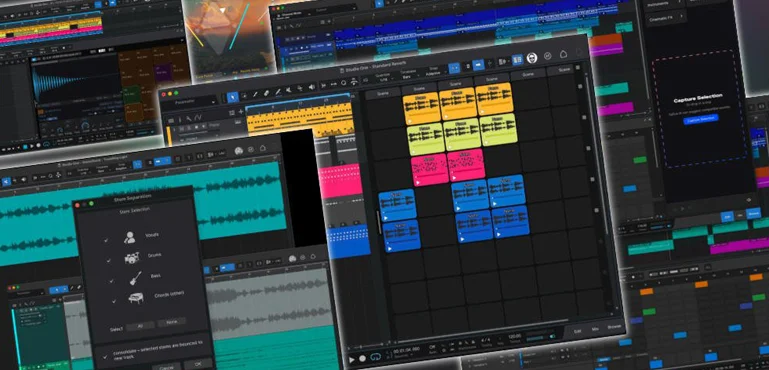 Once the files have been extracted, the temptation is to start fixing whatever sounds wrong in solo. That is too early. Before changing anything, keep an untouched copy of every output and rebuild the song from those files exactly as they arrived.
No corrective processing. No attempt to make an individual stem sound better. The first recombination is a diagnostic reference.
Compare it with the original source. The goal is not to demand a perfect match; separated outputs often behave differently from the material they came from. Listen instead for changes in musical roles and relationships. Does a part feel smaller than it did before extraction? Has a supporting layer weakened? Does an element appear complete only when two supposedly unrelated stems play together?
That last question often reveals more than solo listening. A guitar texture may seem incomplete in the instrumental stem, then regain its missing edge when the vocal output returns. A percussion detail can disappear from the drum stem but reappear when another file is added. The recombination tells us where the song still depends on information shared across outputs.
Then comes the test that matters most: make one controlled change to one stem and recombine the material again. The change itself is not the point. Its boundaries are.
Did the edit affect only the intended musical role, or did another part of the song change with it?
We use this locality of change as a practical measure of stem integrity. If one extracted role can be altered and the rest of the music remains reasonably stable, the stem has preserved useful independence. If the same action changes a second role, exposes a missing layer, or leaves part of the target element behind in another output, the separation boundary is less reliable than the file labels suggest.
Before remixing separated material, we check more than what each file contains. We listen for which relationships break after the first controlled change. That is often where an extraction that seemed convincing in solo reveals its real limitation.
Two stem sets can sound almost identical before editing and behave completely differently once the first production decision is made. That difference often determines whether the material is practical to work with or only useful for playback.
A useful stem does not need to behave like an original multitrack. That standard would be unrealistic. It does need to provide enough local control for the work being considered. A minor change may be safe even when a larger one is not. Another stem may support only a narrow purpose. The test should match the decision the material is expected to carry.
For that reason, recombination should come before any repair decisions. Without it, you can spend time improving an isolated file while missing the larger problem: the musical role you are trying to control may still exist across several outputs.
A usable stem should allow a reasonably local change.
Some Separation Errors Only Appear After One Stem Is Changed
An untouched set of separated stems can be deceptive. Play every output together and the result may sound reasonably close to the original source. The obvious conclusion is that the separation worked.
But reconstruction and editability are not the same test.
Several imperfect outputs can compensate for one another during playback. Information missing from one stem may still be present in another. A musical role that sounds incomplete in isolation can regain its shape when the remaining files return. Leakage may also blend back into the same element it came from, making the boundary error much less noticeable in the full recombination.
As long as every stem stays untouched, those dependencies can remain hidden.
Change one output and the compensation may disappear. A background part that seemed properly separated becomes more obvious because one copy of it changed while another did not. A role that felt complete in the recombined version suddenly loses weight because only one portion followed the edit. In another case, the target element changes in two places at once: directly in its labeled stem and indirectly through information that was assigned elsewhere.
This can produce a confusing result. The original source sounded coherent. The untouched recombination also sounded acceptable. Yet the first meaningful change makes the song behave in a way the stem layout did not predict.
Such behavior points to a latent dependency between outputs. The separation may have reconstructed the overall song convincingly because its errors still balanced one another when every file was played together. It did not necessarily create musical parts that could survive independent use.
We encounter this distinction before remixing AI-separated material. A stem set can pass a simple playback comparison and still fail once the project asks one role to move without taking another role with it. The failure was already present; the edit only made it audible.
This is why a close match to the source should not be treated as final proof of separation quality. Reconstruction accuracy asks whether the outputs can add back up to something convincing. Editability asks a harder question: can one of those outputs change while the musical information around it remains stable?
If the answer is no, repeated local corrections can become misleading. Each change may expose another dependency that the untouched recombination had been hiding. At that point, the problem is not simply that one stem sounds imperfect. The extracted files do not provide the independent control their labels imply.
A separation can reconstruct the song reasonably well and still fail as editable material.
Decide Whether The Problem Is Local Or Built Into The Separation
Once a separation problem is confirmed, the next question is about scale. Is one part of the extraction unreliable, or is the entire stem set built on boundaries that do not hold up when the files are used independently?
A local failure usually has a clear limit. One recurring musical role leaks into a neighboring stem. A single section is less successfully isolated than the rest of the song. Perhaps one extracted part becomes unreliable during a dense chorus, while the same stems remain predictable through the verses. Elsewhere, controlled changes stay reasonably local and the other musical roles continue to behave as expected.
That kind of material may still be useful. The weak area has to be respected, but it does not automatically invalidate every extracted output. If the intended work can preserve the stable parts and limit how much the unreliable boundary is asked to do, the current separation may remain practical.
A structural failure behaves differently. Several musical roles depend on information spread across multiple outputs. Parts repeatedly disappear when stems are isolated. One meaningful change exposes a dependency, then the next change exposes another. Soon there is no stable version of the separated material that can serve as a trustworthy working reference.
This is where endless cleanup becomes a poor strategy. Fix one apparent problem and another relationship changes. Correct that relationship and a different role becomes incomplete. The project starts accumulating local solutions around a separation that never preserved dependable musical boundaries in the first place.
We make this distinction before deciding how far to take AI-separated material. A recurring leak in one section is not the same problem as a stem set in which every important role depends on several files. Treating both situations with the same repair scope wastes time and can make the second one less coherent with every additional intervention.
For a local failure, the sensible choice may be to preserve what already works and limit the task around the unreliable area. For a structural failure, the better direction may be to re-separate the source under different boundaries or return to broader material that keeps more of the original relationships intact.
The key signal is consistency. If most of the stem set behaves predictably and the failure stays confined, the material has a usable structure with a known limitation. If every important decision reveals another hidden dependency, the limitation is not local. It is built into the separation.
Repair scope should follow the structure of the failure.
When A Different Separation Is Worth Trying
A failed extraction does not always mean the source is unusable. Sometimes the problem lies in the particular boundaries the current separation tried to create. In that case, another pass can be worthwhile—but only if there is a reason to expect a different result.
One clear signal is a musical role that repeatedly lands in the wrong output. Perhaps the same percussion layer follows the instrumental stem through every chorus, or an important supporting part never becomes independent no matter how clean the labeled stem sounds. If that misplaced information prevents the intended work, keeping the current extraction simply preserves the limitation.
Granularity matters too. A separation may fail because it asks for distinctions the source cannot support reliably. Several tightly overlapping parts can be divided into narrow outputs that look precise but behave like fragments. Trying a broader split may preserve more useful relationships, even if it produces fewer files.
The available source can also change the conditions. A different version of the song may contain a cleaner ending, less additional processing, or fewer alterations introduced after the version used for the first extraction. That does not guarantee a better result. It does mean the separation is no longer being asked to solve exactly the same source problem.
Whatever changes, the new stems should face the same independent-edit test as the old ones. If one role can now be changed without pulling another role with it, the new pass improved the boundary that mattered. If the same dependencies remain, a different-looking set of files has not created more usable control.
Repeating separation is not automatically progress. Ambiguous information can simply move. A layer that was partly trapped in the vocal output may appear in the instrumental stem on the next pass. Another attempt may divide it between both. The files are different, but the uncertainty remains.
Repeated extraction without changing the underlying conditions often turns into a cycle rather than real progress. Each pass may sound cleaner in one place and less complete in another, encouraging another attempt without solving the underlying problem: the source does not provide a stable boundary for the musical role you want to isolate.
A different separation is worth trying when it changes the conditions that created the failure—different boundaries, broader grouping, or a more suitable available source. If nothing meaningful changes, repeated passes may only redistribute the same compromised information.
Re-separation is useful when it changes the boundary problem, not merely the appearance of the outputs.
Sometimes Fewer, Broader Stems Preserve More Useful Information
 Maximum isolation sounds like the ideal outcome. If a song can be divided into more parts, each with its own file, the project appears to offer more control. But the most detailed separation is not always the most useful one.
Musical roles often overlap by design. Several instrumental layers may share attacks, sustain, ambience, or harmonic content that helps them function as one part of the arrangement. Ask the extraction to divide those relationships too narrowly and the result can be a collection of files that are technically more separate but musically less complete.
Imagine several overlapping instrumental layers that work together as one texture. A narrow separation may place the main body of one layer in its own output while leaving part of its attack in another stem and some of its supporting character elsewhere. You now have more individual files, yet changing any one of them alters only a fragment of the role you intended to control.
Keep those layers inside one broader instrumental stem and the internal relationship may survive. You lose the ability to address every component separately, but the control you do have is more dependable. The whole texture follows the decision instead of breaking into pieces that respond differently.
That tradeoff is easy to underestimate. Less control can be more useful than false control. A broader stem that behaves predictably may support the intended production decision better than several narrow outputs whose labels promise independence they do not actually provide.
The right level of separation therefore depends on what the material needs to do. If one specific role must change on its own, that role needs enough independence to support the decision. If several overlapping parts can remain together, forcing them apart may create problems that the project never needed to solve.
We do not treat the highest stem count as the best result by default. The useful question is whether the available outputs preserve enough musical independence for the work ahead. Sometimes that means a detailed set of stems. Sometimes one broader file keeps the important relationships intact and provides the more reliable path.
The goal is not maximum isolation. It is enough trustworthy control for the decision the project actually requires.
Useful separation is task-dependent, not stem-count-dependent.
A Usable Separation Does Not Need To Be Perfect
Once a separation problem becomes audible, it is easy to start chasing a cleaner result simply because the imperfection exists. A faint trace of another instrument remains in one stem. A soloed output sounds less complete than the source. One section separates better than another. None of those details, by itself, proves that the material is unusable.
The standard should match the work the stems need to support.
Minor bleed can be harmless if it stays unobtrusive and does not change the outcome of the intended decision. A stem may sound awkward in isolation yet behave predictably when used with the rest of the material. Another output may contain an obvious imperfection that never becomes relevant because the project does not require enough independent control to expose it.
Problems begin when the limitation affects the task. If changing one stem repeatedly alters another musical role, the separation no longer provides dependable control. If the effect stays reasonably local and the surrounding music remains stable, an imperfect extraction may still be entirely useful.
Trying to remove every sign of separation can work against that goal. Information that sounds unwanted in solo may also contribute to a role that was divided between several outputs. Push too hard toward perfect isolation and the result can become cleaner as a file while becoming less complete as music.
In practice, separated material tends to fall into three useful categories.
Usable for the intended change. The stems may contain minor imperfections, but the required decision remains controlled and predictable. The material does what the project needs it to do.
Usable only with limited independence. The extraction supports some changes but not others. One role may tolerate a modest adjustment while a more substantial change exposes leakage or missing information. The limitation is real, but it is also identifiable.
Unreliable for stem-level work. Important roles remain distributed across several outputs, and meaningful changes repeatedly create consequences elsewhere. At that point, the stem set does not provide a stable basis for independent decisions.
These outcomes are more useful than a simple clean-or-dirty judgment. A project does not benefit from perfect-looking stems if they fail the first decision they were extracted to support. It can benefit from imperfect stems when their limitations are understood and the required changes remain predictable.
The standard is functional integrity, not laboratory isolation.
Once The Stems Are Reliable, The Problem Changes
Stem separation diagnosis has an endpoint. Once the important musical roles are reliable enough for the intended work, continuing to blame the extraction for every weakness in the song leads the project in the wrong direction.
A usable stem set does not guarantee a finished production. The files may behave independently and still add up to something that feels unclear, disconnected, too dense, or difficult to follow. One part may draw too much attention. Another may struggle to hold its place. The overall result can lack depth or direction even though the separation itself is no longer the reason.
The distinction matters because the questions have changed.
During separation diagnosis, we ask whether a musical role survived extraction, whether important information remains elsewhere, and whether one stem can change without unexpectedly altering another. Once those answers are good enough for the task, the stem-integrity problem is largely settled.
From that point forward, concerns about how the elements relate to one another belong to the production stage. A reliable vocal stem can still sit poorly against the arrangement. Independent drums can still feel disconnected from the rest of the song. Several usable outputs can still combine into a result that does not communicate clearly.
Those are not reasons to keep separating the source again.
We draw this boundary before further work because repeated extraction cannot solve a problem that now exists between usable musical elements rather than inside the separation itself. If the stems preserve enough independence but the complete production still sounds wrong, the issue may belong to the broader class of mixing problems that appear after the material is already workable.
This does not mean every separated project is ready for unlimited production changes. Some stem sets remain useful only within known limits. The important point is simpler: once the required musical roles behave predictably enough for the intended task, separation has done what it needs to do.
Stem separation determines whether the material can be worked on independently. Mixing determines what should happen once that material is usable.
What We Check Before Working With AI-Separated Material
Before we work with AI-separated material, we do not start by choosing the cleanest-looking files. We first establish what each stem is actually capable of controlling.
The source remains the reference. We compare it with an untouched recombination of the extracted outputs and listen for musical roles that have changed during separation. Some differences are obvious. Others appear only when a part that seemed complete in one file turns out to depend on information held somewhere else.
Next, we define the job each stem is expected to do. A file labeled vocals is useful only if it provides enough control over the vocal role required by the project. The same principle applies to drums, bass, or a broader instrumental output. The label matters less than the behavior.
We also listen across neighboring stems. Does a supporting layer survive outside the file where it logically appears to belong? Does muting one output weaken a different role? Does an element return to its full character only when another stem is added? These details tell us whether the extraction preserved independent material or simply distributed the song across a new set of files.
Then we test the boundaries. One controlled change is often more revealing than several minutes of solo listening. If the intended role changes while the surrounding music remains reasonably stable, the stem may provide useful control. If another element shifts with it—or part of the target role stays behind—the available independence is narrower than it first appeared.
The most difficult projects are not always the ones with the dirtiest solo stems. Sometimes every file sounds remarkably tidy. The weakness appears only after the first meaningful change, when one musical role turns out to exist across two or three outputs that no longer respond together.
That is why we judge the material against the production work it is expected to support. A limited stem set may be sufficient for one specific change and unsuitable for another. The decision is not based on whether the extraction sounds impressive. It is based on whether the available files remain predictable when the project asks them to behave independently.
We evaluate stems by what they allow us to change safely, not by how impressive the extraction sounds in isolation.
Know When Stem-Level Repair Is No Longer The Right Strategy
There is a point where continuing to repair the current stems stops being productive. The problem is no longer one weak extraction or a known limitation. The entire set of outputs fails to provide the independence the project requires.
One warning sign is repeated cross-stem dependency. The vocal needs information from the instrumental output. The percussion is split between two files. A supporting layer disappears whenever a supposedly unrelated stem is removed. If every important role depends on several outputs, there may be no stable boundary left to repair locally.
Another sign is what happens after controlled changes. One adjustment affects an unrelated element. The next exposes missing information somewhere else. A third creates a new mismatch between fragments of the same musical role. When this pattern keeps repeating, more intervention can make the stem set harder to trust rather than easier to use.
The working reference matters too. If no combination of the current stems produces a stable version that can be compared, changed, and recombined predictably, the project has lost its baseline. This often becomes more obvious when different sections fail in different ways: the verses behave reasonably, the chorus depends on heavy cross-stem information, and the final section introduces another set of incomplete roles.
At that point, the intended production decision should determine what happens next. If the task does not require isolation, working from the full source may preserve more of the music. If narrow outputs created the problem, broader material may offer more dependable control. A different separation can be worth testing when it changes the boundary conditions. In other cases, the intended edit itself may need to be reconsidered.
Better source material should also take priority when it is genuinely available. An earlier or less altered version may provide a more useful starting point. Actual production files, when they exist, remove the need to treat reconstructed outputs as if they were original independent recordings.
The mistake is assuming that every extracted file must be rescued because time has already been spent creating or adjusting it. That effort does not make an unreliable separation more suitable for the task. The decision should follow the material that exists now.
The goal is not to rescue every extracted file. It is to preserve enough musical independence for the work that actually needs to be done.
Do Not Build The Next Stage Around Stems You Cannot Trust
Some AI-generated material can support further production work. Some needs a different repair path before the stems are useful. The critical step is knowing which situation you have. Identify what can realistically be fixed first—then, if the extracted material provides reliable control, move on to the production work the available material can realistically support.
Assess the source first. Move into production only when the available material can support it.
Frequently Asked Questions About AI Stem Separation
Can bad AI stem separation be fully repaired?
Not always. A local separation problem may still leave enough reliable information for the intended task. If important musical roles are repeatedly divided across several outputs, no later processing can recreate the independent recordings that never survived the extraction. The practical goal is usable control, not perfect reconstruction.
Why do separated stems sound clean alone but change when recombined?
Solo listening shows what is inside one file, not how musical information was distributed across the full stem set. A clean output may be missing content that survives elsewhere, while another stem may carry part of the same role. Recombination exposes those dependencies and can make the result behave differently from the individual files.
Is instrument bleed always a sign of failed stem separation?
No. Minor bleed can be harmless if it does not limit the intended change. The problem becomes significant when the leaked material causes two musical roles to respond together, leaves part of a role behind, or makes an independent decision unpredictable. Consequence matters more than the mere presence of residue.
Should I separate the song again if the first stems are unusable?
Only when another separation has a reason to change the failed boundary. A broader grouping or a more suitable available source may produce more useful material. Repeating the same process without changing the underlying conditions can simply move ambiguous information between outputs instead of creating better independence.
Are more separated stems always better for editing?
No. More outputs create more potential control, but also more boundaries where one musical role can be divided incorrectly. A smaller set of broader, reliable stems may be more useful than many narrow files that contain incomplete fragments. The right stem count depends on the independence the task actually requires.
Are AI-separated stems the same as original multitracks?
No. AI-separated stems are reconstructed from an already finished recording. They can support many production tasks, but they do not preserve the same independent relationships that existed inside the original recording session.