
Mastering AI Generated Music — Where Generation Ends and Mastering Begins
AI-generated music has changed how songs are created, but it has also created a new misunderstanding. Many artists assume that once an AI platform produces a track, the difficult part is finished and mastering simply adds the final polish. In reality, mastering begins with whatever the generation process has already created — both the strengths and the limitations.
Many AI-generated tracks sound finished long before they are actually ready for release. Two AI-generated songs can arrive at mastering sounding equally impressive during a quick first listen, yet respond very differently once release preparation begins. One may translate well across headphones, speakers, cars, and streaming platforms. The other may reveal inconsistencies that were hidden inside the original generation. The difference often has less to do with the mastering process itself and more to do with the quality of the generated source entering that process.
This is why mastering AI-generated music is not simply about making a track louder, brighter, or more competitive. Mastering works with the result of the generation process, not the generation process itself. The foundation already exists before mastering starts. If you're still exploring what audio mastering actually does, the goal is not to reinvent a song. Its role is to help a finished track remain convincing when listeners encounter it on real playback systems in the real world.
Why AI Generated Music Behaves Differently During Mastering
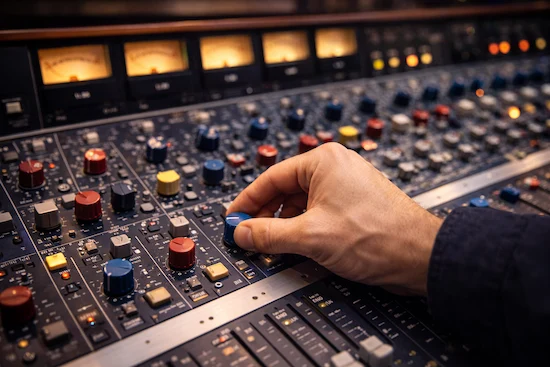 One of the biggest misconceptions surrounding AI-generated music is the idea that mastering treats it the same way it treats traditionally produced music. On the surface, that assumption seems reasonable. A song is a song. It has vocals, instruments, dynamics, and a stereo file ready for release. Yet once mastering begins, important differences often become obvious.
Common examples include vocals that change character between sections, ambience that feels disconnected from the instrumental, inconsistent low-end behavior, and arrangements that sound complete while still lacking development. These issues are not necessarily obvious during generation, but they often become easier to recognize when a release is evaluated as a finished record.
Traditional productions usually arrive after a long chain of creative decisions. A producer shapes the arrangement. An engineer balances individual elements. Mix revisions happen. Problems are discovered and corrected along the way. By the time the track reaches mastering, many important choices have already been evaluated by multiple people.
AI-generated music follows a different path. Large portions of the creative and technical decision-making process happen inside the generation system itself. The relationships between vocals, instruments, ambience, low-end energy, and spatial depth are often established long before the artist ever exports the file. Those decisions become part of the source material that mastering receives.
This creates a unique situation. A track may sound surprisingly polished during casual listening while still containing limitations that become more noticeable once release preparation begins. We regularly encounter AI-generated songs where the vocal feels perfectly balanced during the verse, then suddenly appears disconnected from the instrumental during a chorus. In other cases, background ambience sounds natural until playback levels increase, revealing spaces that feel unusually detached from the rest of the mix.
This is particularly common in songs generated from text prompts, where the artist never directly controlled vocal recording, instrument selection, arrangement details, or mix decisions. The generated result may sound complete, but many production choices were made automatically before the file ever reached mastering.
Low-end behavior is another area where AI-generated music often behaves differently. With traditional productions, bass relationships are usually shaped intentionally throughout the production process. AI systems can generate convincing low-end energy, but the consistency of that energy is not always predictable. A bass line may feel controlled during one section and unexpectedly dominate another. Sometimes the opposite happens. The low end appears strong on studio monitors but loses authority when heard on consumer playback systems.
We occasionally hear this during evaluation sessions when a bass line feels controlled in the studio but becomes noticeably inconsistent after moving between headphones, small speakers, and car playback.
Not every issue is dramatic. Some are subtle. A vocal may sit slightly further forward than expected. A reverb tail may linger a little too long. Stereo elements may shift in ways that are difficult to notice until the song is compared against commercial releases. None of these characteristics automatically make an AI-generated track unusable. They simply illustrate an important reality: the generation process has already made thousands of decisions before mastering begins.
Another factor is unpredictability. Two songs created using similar prompts can respond very differently to mastering. One may behave much like a traditionally produced record and require only modest refinement. Another may reveal limitations that become increasingly apparent as the master is pushed toward release level. This variability is one reason why assumptions based solely on the generation platform rarely tell the full story. Even within the same ecosystem, individual results can vary significantly. We see this frequently with projects created using platforms discussed in our analysis of Suno mastering, where the generation process itself often plays a major role in determining how the final master responds.
Across hundreds of AI-generated releases, the platform itself is rarely the deciding factor. Whether a song was created with Suno, Udio, or another system, the final mastering result is still influenced primarily by the quality of the generated source.
Understanding these differences changes expectations in a useful way. The goal is not to view AI-generated music as inferior to traditional production. Many AI-assisted releases perform extremely well after mastering. The important distinction is that AI-generated music often enters mastering with strengths and limitations that have already been deeply embedded into the source material. Mastering can improve presentation, consistency, and release readiness, but it works with the decisions that already exist. The quality of those earlier decisions often determines how far the final result can ultimately go.
Why Some AI Songs Improve Dramatically While Others Barely Change
One of the most interesting things about mastering AI-generated music is that the results are rarely predictable based on the platform alone. Two songs can come from the same generator, use similar prompts, follow a similar style, and still respond completely differently once mastering begins. One suddenly feels more focused, more competitive, and more convincing after release preparation. The other changes only slightly, even after careful work. Understanding why this happens is essential for setting realistic expectations.
The answer usually begins with the source itself. Every generated song arrives with a built-in quality ceiling. Mastering can help reveal the strengths already present in the material, but it cannot create strengths that never existed. When an AI-generated track contains stable balances, coherent dynamics, believable vocal placement, and consistent low-end relationships, mastering often has far more room to improve the listening experience. Small adjustments can produce surprisingly significant results because the foundation is already working. In those situations, mastering often feels larger than it actually is. The processing may be relatively modest, yet the overall listening experience improves substantially because the underlying generation was already doing most of the heavy lifting.
The opposite situation is equally common. A song may sound exciting during the first listen because the composition, melody, or concept is strong. Yet underneath that initial impression, there may be inconsistencies that limit how much mastering can achieve. The vocal may drift slightly in depth from section to section. The ambience may change character unexpectedly. Instrument layers may compete for attention in ways that become increasingly noticeable as playback systems change. In these cases, mastering can improve presentation, but the overall transformation will naturally be more limited.
We often see this when comparing different AI-generated projects submitted for evaluation. One artist may send a track that immediately feels organized and intentional despite being generated rather than traditionally produced. Another artist may send a song that contains several subtle contradictions working against each other. Both tracks can be enjoyable. Both can be releasable. Yet the amount of improvement available through mastering is rarely identical.
For example, we occasionally receive two tracks generated from nearly identical prompts. One arrives with surprisingly stable vocals and consistent low-end energy. The other contains small vocal shifts, changing ambience, and uneven balances between sections. Both songs may sound impressive during generation, but they rarely produce the same mastering outcome.
In some cases, two songs generated by the same artist within the same week produce completely different mastering outcomes. One may require only minor refinement before release, while another immediately reveals vocal instability, uneven ambience, or inconsistent low-end behavior. The difference is often visible before any processing begins.
In some evaluations, the contrast becomes obvious within the first few playback systems. A track that feels balanced on studio monitors may immediately become unstable on consumer headphones, while another remains remarkably consistent everywhere it is tested.
A useful comparison is photography. Imagine two images taken with the same camera. One is well-composed and captured under favorable conditions. The other is slightly out of focus with inconsistent lighting. Editing software can enhance both photographs, but the stronger image usually responds better to every adjustment. AI-generated music behaves similarly. The better the source material, the more effectively mastering can enhance what is already there.
This is why assumptions based on genre, generation platform, or track length often miss the point. What matters is not where the song came from. What matters is how well the generated elements work together before mastering starts. A three-minute pop song may respond beautifully to mastering while a more sophisticated cinematic production from the same system may reveal far greater limitations. Source quality remains the deciding factor.
Another important detail is that listeners often judge improvement differently than engineers do. Artists sometimes expect mastering to create dramatic changes because the word itself suggests transformation. In reality, some of the strongest masters produce results that feel natural rather than obvious. The song simply translates better. Playback becomes more consistent. Comparisons against commercial releases become more comfortable. Those outcomes may not sound dramatic during an A/B test, but they can have a significant impact after release.
For this reason, experienced evaluation is often more valuable than assumptions. Before mastering begins, it is often possible to identify whether a track is likely to benefit substantially from the process or whether expectations should remain more conservative. This is one reason many artists seek professional review through services such as pre-mastering feedback. Not because every song requires criticism, but because understanding the strengths and limitations of a generated source can provide a much clearer picture of what mastering is realistically capable of achieving.
The pattern becomes surprisingly consistent over time. Songs built on stronger generations tend to respond more positively to mastering. Songs built on weaker generations tend to show their limitations sooner. The mastering itself may be equally professional in both cases, but the final outcome is still influenced by decisions that were made long before the master was ever created. That is why the quality of generation often predicts the potential value of mastering more accurately than any plugin, process, or platform ever could.
What Mastering Can Improve in AI Generated Music
 Discussions about AI-generated music often swing between two extremes. Some people expect mastering to completely transform a generated track into a commercial release. Others assume mastering has very little value because the music was created by a machine in the first place. The reality sits somewhere in the middle. Mastering can make a meaningful difference, but the improvements usually happen in presentation rather than creation.
One of the most valuable areas is playback translation. AI-generated music is often evaluated through a limited number of listening environments during the creation process. A track may sound impressive through studio headphones, laptop speakers, or the playback system used by the generation platform itself. Release environments are much less predictable. Listeners move between earbuds, cars, Bluetooth speakers, gaming headsets, smart TVs, and countless other devices. Music that feels balanced in one environment can behave very differently in another.
Mastering helps reduce that uncertainty. No master can make every playback system sound identical. That is impossible. The goal is to create a version of the song that remains convincing across a wider range of listening situations. When AI-generated music translates more consistently, listeners spend less time noticing technical distractions and more time connecting with the song itself.
Tonal balance is another area where mastering can create significant improvement. AI generation systems often produce mixes that feel broadly correct while still leaning slightly too bright, too dark, too aggressive, or too soft in certain frequency areas. These imbalances are not always obvious during casual listening. They frequently become more noticeable when a song is placed next to professionally released material. Mastering helps bring those relationships into a more stable and competitive position without changing the identity of the music.
Consistency also matters more than many artists expect. A generated song can contain sections that feel slightly disconnected from one another even when the composition itself remains strong. One chorus may appear larger than the next. Energy levels may shift unexpectedly. The listener may not consciously identify the issue, but the overall experience can feel less cohesive. Mastering often helps smooth those transitions, creating a listening experience that feels more intentional from beginning to end.
Playback stability becomes increasingly important as release ambitions grow. A track that sounds exciting during a quick preview may behave unpredictably once it reaches streaming platforms, content libraries, commercial playlists, or public release channels. Small inconsistencies that seemed insignificant during generation can become much more noticeable when thousands of listeners encounter the music under different conditions. Preparing a song for that environment is one of the reasons mastering remains relevant regardless of how the music was originally created.
Commercial readiness is another important consideration. A track can sound impressive during generation and still feel out of place when compared against professionally released music. Mastering helps close that gap by preparing the song for the environments where listeners actually discover and evaluate new music.
This is also where release preparation enters the conversation. The strongest masters are not necessarily the most dramatic. In many cases, successful mastering is almost invisible. The song feels more reliable. More stable. More comfortable alongside other releases in the same genre. That release-focused mindset sits at the center of professional quality track mastering, where the objective is not simply to process audio but to help a finished track perform more confidently once it reaches real listeners.
What mastering does not do is rewrite the underlying composition. It does not replace songwriting decisions. It does not invent new arrangements. It does not fundamentally change the musical ideas generated by the source system. Those elements were largely established before mastering ever began. What mastering can do is help the strongest parts of the music communicate more effectively across real-world playback environments.
That distinction is important because it leads to realistic expectations. Artists who understand the role of mastering tend to evaluate results differently. Instead of looking for a completely different song, they look for a stronger presentation of the song that already exists. For AI-generated music, that is often where the greatest value appears. Not in changing the composition, but in helping listeners experience it more consistently after release.
What Usually Requires Regeneration Instead of Mastering
One of the most useful things artists can understand about AI-generated music is that not every problem belongs to mastering. This is especially important because AI music often arrives sounding surprisingly complete. The arrangement exists. The vocals are present. The song has structure. Everything appears ready at first glance. Yet some limitations were created during generation itself, and those limitations tend to follow the song all the way through the release process.
Lyrics are one of the clearest examples. If a generated vocal contains awkward wording, confusing phrases, incorrect pronunciation, or lines that simply do not support the emotional direction of the song, mastering cannot fundamentally change that outcome. The issue is not how the audio is presented. The issue exists inside the generated content itself. The same applies when an AI system produces a lyric that sounds technically correct but emotionally disconnected from the surrounding music.
Structural problems often fall into the same category. Sometimes a song reaches a chorus too quickly. Sometimes sections repeat longer than they should. Occasionally a generated arrangement introduces ideas that never fully develop or abandons ideas before they have time to create impact. These decisions affect how listeners experience the music as a composition. Mastering can help prepare the finished result for release, but it cannot redesign the architecture of the song.
Unnatural phrasing is another limitation that frequently originates during generation. AI vocals have improved dramatically in recent years, but certain performances still contain moments that feel slightly disconnected from human behavior. A phrase may arrive too early. A word may be emphasized strangely. A melodic line may feel technically accurate while lacking the natural movement listeners instinctively expect. These moments are often subtle. They may only last a second or two. Yet they can influence how authentic the overall performance feels.
We occasionally hear AI vocals that pronounce every word correctly yet still feel unusual because the timing, emphasis, or emotional delivery shifts unexpectedly between phrases. Listeners may not identify the exact cause, but they often recognize that something feels slightly unnatural.
Musical development is another area where limitations can emerge. Some AI-generated tracks create an excellent first impression but struggle to maintain momentum over time. The opening section feels compelling. The concept works. The production sounds modern. Yet as the song progresses, the listener stops discovering new information. Tension does not build. Emotional impact does not deepen. The arrangement continues, but the musical journey becomes less engaging than expected. This is not a mastering problem. It is a songwriting and generation outcome.
The distinction matters because expectations shape how artists evaluate results. If a generated song contains limitations that originate inside the composition, performance, structure, or generation logic, mastering should not be judged by its ability to erase those limitations completely. The purpose of mastering is different. It prepares music for release. It does not rewrite the source material that enters the session.
This is one reason evaluation remains so important before release decisions are made. Some AI-generated tracks arrive with only minor limitations and respond extremely well to mastering. Others reveal deeper generation-related issues that are unlikely to disappear regardless of how carefully the final master is prepared. Understanding that difference early helps artists invest time and resources more effectively. We discuss this broader process of identifying AI-specific limitations in greater detail within our guide on fixing AI-generated music, where the focus shifts toward recognizing which problems belong to the source and which belong to later stages of production.
The strongest AI releases often begin with a simple realization: mastering and generation solve different problems. Generation creates the song. Mastering prepares the song for listeners. When limitations originate during generation, the most effective solution is often a stronger generation rather than a more aggressive master. Recognizing where that boundary exists is one of the most valuable skills artists can develop as AI-generated music continues moving into mainstream release environments.
What Mastering Can Improve vs What Usually Requires Regeneration
One of the biggest sources of confusion surrounding AI-generated music is knowing where mastering can create meaningful improvement and where the limitation actually belongs to the generation process. Many artists hear a problem and assume mastering should solve it. Sometimes that expectation is correct. Often it isn't. The distinction matters because it helps set realistic expectations before release preparation begins. Mastering is extremely effective when the issue involves presentation, translation, balance, or playback behavior. It becomes much less effective when the limitation is embedded directly into the composition, performance, structure, or generated content itself. Understanding that boundary helps artists make better decisions about whether a track is ready for mastering or whether the source material would benefit more from a stronger generation.
| Issue | Mastering Can Improve | Usually Requires Regeneration |
|---|---|---|
| Tonal Balance | Yes | No |
| Playback Translation | Yes | No |
| Low-End Stability | Often | Sometimes |
| Vocal Artifacts | Limited | Usually |
| Lyric Errors | No | Yes |
| Structural Problems | No | Yes |
| Unnatural Phrasing | Limited | Usually |
| Arrangement Weaknesses | No | Yes |
Hear What Your AI Track Can Actually Become
Not every AI-generated song responds to mastering the same way. Some tracks improve dramatically. Others reveal limitations that began during generation. Send us your music and receive a free demo master (up to 35 seconds) created by a real engineer. You'll hear how the track responds to professional mastering before committing to a full project.
Real engineer review. Clear expectations. Better release decisions before your music goes public.
Why Release Quality Depends on More Than Generation Quality Alone
 A strong AI generation is an excellent starting point. It is not the finish line.
This distinction becomes increasingly important as AI-generated music moves beyond experimentation and into real releases. Many artists judge a track immediately after generation and assume that if the song sounds impressive during playback inside a browser, mobile app, or DAW session, it is already prepared for distribution. In practice, release quality and generation quality are related, but they are not the same thing.
Think about what listeners actually experience. They do not hear the generation process. They do not know which prompt was used. They do not compare alternate versions that existed before the final export. They hear a single release in a real-world environment surrounded by commercial music competing for attention.
That environment changes everything. Listeners rarely know how a song was created. More importantly, they rarely care. An AI-generated track is usually judged against every other song in the playlist, not against other AI generations. That comparison often reveals strengths and weaknesses that were invisible during creation.
A generated song that feels exciting in isolation may create a different impression once it appears inside a playlist. The vocal that seemed perfectly balanced during creation may suddenly feel less stable next to professionally released records. The low end that sounded powerful on studio headphones may become inconsistent across consumer devices. Small details that were easy to ignore during generation can become much more noticeable once the song enters the real listening world.
We occasionally hear this when artists compare an AI-generated track against a commercial playlist for the first time. Nothing sounds obviously wrong in isolation, yet the record suddenly feels smaller, less focused, or less consistent once other releases enter the comparison.
This is why export quality should never be confused with release quality. An exported file simply confirms that the generation process has ended. A release-ready record requires something different. It must survive comparison, playback variation, streaming environments, listener expectations, and repeated listening over time.
We see this pattern regularly with AI-generated projects. Some tracks arrive with excellent musical ideas, strong melodies, convincing vocals, and modern production aesthetics. Yet after release, the artist notices that the song does not feel as competitive as expected. The song still sounds good. What surprises the artist is that the emotional impact feels smaller once the track leaves the generation environment and begins competing against commercial releases.
Nothing may be obviously wrong with the song. The issue is that generation and release preparation solve different problems. A track can succeed at one while still struggling with the other. One creates the record. The other determines how that record holds up once listeners begin comparing it to everything else they hear.
A useful comparison is filmmaking. Shooting beautiful footage does not automatically create a finished movie. Editing, color grading, sequencing, and final delivery still affect how audiences experience the result. AI-generated music follows a similar pattern. A strong generation creates potential. Release preparation helps that potential survive contact with the outside world.
This is also why some artists are surprised by issues that only become visible after release. The song sounded great while being created. The upload process seemed successful. Early reactions were positive. Yet over time certain weaknesses become easier to hear. Playback inconsistency appears. Comparisons against commercial releases become less favorable. Listener engagement feels different than expected. Many of these situations are explored throughout our mastering problems guide, where post-release surprises often reveal limitations that were difficult to recognize beforehand.
None of this means AI-generated music is inherently disadvantaged. Many AI-assisted releases perform exceptionally well. Generation and release preparation solve different problems, and successful releases usually depend on both. Generation creates the opportunity. Release preparation helps that opportunity survive real-world listening conditions.
The strongest AI releases usually succeed because neither stage was ignored. Great generation creates opportunity. Effective release preparation helps that opportunity reach its full potential. When artists understand that distinction, they begin evaluating their music differently—not by how impressive the generation feels in the moment, but by how convincingly the finished release performs after the music leaves the studio and reaches the audience it was created for.
How Independent Artists Across the United States Are Releasing AI Music
As AI-generated music becomes part of real commercial releases, more artists face a practical question: what happens after the song is generated? Creating a track is one stage. Preparing it for listeners is another. This shift is one reason mastering has become an increasingly common part of AI-assisted release workflows across the United States. AI-generated music is increasingly appearing in the same release environments that were once dominated exclusively by traditional productions.
Independent artists have been a major driver of this shift. Many musicians operate without large production budgets, dedicated songwriting teams, or access to extensive studio resources. AI tools have lowered some of those barriers, allowing artists to develop ideas, build arrangements, generate vocals, and explore creative directions at a speed that would have been difficult only a few years ago.
The result is not necessarily the replacement of musicians. More often, AI has become another part of the creative workflow. Some artists use it to generate complete songs. Others use it to develop concepts, create demos, test arrangements, or overcome creative roadblocks. The final release may involve human editing, additional production, traditional recording, or further refinement before distribution.
Content creators have also embraced AI-generated music at an accelerating pace. Video creators, streamers, educators, marketers, and independent media producers often require original music on tight schedules. AI systems provide access to custom material that can be adapted to specific projects without the logistical challenges associated with traditional production workflows.
What makes this trend particularly significant is that the music is no longer staying inside experimental communities. AI-generated tracks are being uploaded to streaming platforms, used in commercial content, included in monetized projects, and released alongside conventionally produced records. Listeners often encounter AI-assisted music without knowing how it was created in the first place.
For self-funded artists, this creates new opportunities as well as new responsibilities. Lower production costs can make release schedules more flexible, but public audiences still evaluate the final result using the same standards applied to any other music release. Listeners rarely adjust their expectations because a song was generated with AI. They respond to the quality of the listening experience itself.
That reality is one reason release preparation has become increasingly important. As AI-generated music enters larger and more competitive release environments, artists begin focusing less on the generation process and more on how the finished record performs after distribution. The conversation shifts from "Can AI create a song?" to "How well does this release compete once listeners hear it?"
We see this trend across a wide range of projects submitted from different parts of the country. Independent artists in major music markets, creators working from home studios, and small teams producing content for online audiences are all participating in the same broader movement. Geography matters less than it once did, while access to professional release preparation has become increasingly available through nationwide workflows discussed in our overview of online mastering across the United States.
The most important takeaway is simple. AI-generated music is no longer a niche curiosity for many artists in the United States. It has become part of real-world release culture. Songs created with AI are reaching streaming platforms, commercial audiences, content ecosystems, and competitive listening environments every day. As a result, the focus is gradually moving away from the novelty of generation and toward the same question that has always mattered: how effectively the music performs once it reaches listeners.
Why AI Music Should Be Evaluated Before Mastering Decisions Are Made
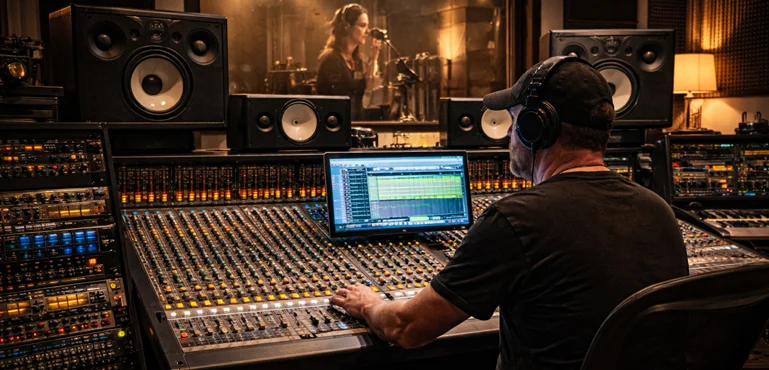 One of the most common mistakes artists make with AI-generated music is assuming that every finished generation automatically benefits from mastering in the same way. The logic seems reasonable. The song exists. The file exports correctly. The music sounds finished enough to share. The next step must be mastering.
In practice, the situation is rarely that simple.
AI-generated music can vary enormously from one generation to another. Two songs created on the same day using similar prompts may have completely different strengths, limitations, and release potential. One generation may feel remarkably complete from the first listen. Another can reveal issues almost immediately once it is compared against commercial releases. The gap between those outcomes is often much larger than artists expect.
This is why evaluation matters before mastering decisions are made.
Evaluation is not about deciding whether a song should be released. It is about understanding whether the generated version is already strong enough for release preparation or whether important limitations still remain inside the source. Artists often become attached to a generation because they have heard it repeatedly during the creative process. Familiarity creates confidence. Yet familiarity can also make certain limitations difficult to recognize.
A vocal phrase that feels natural after twenty listens may sound unusual to a first-time listener. A low-end balance that appears powerful in headphones may behave unpredictably across different playback environments. An arrangement that seems complete during creation may reveal pacing issues when evaluated as a commercial release.
These observations are not criticisms of AI-generated music. The same principle applies to traditional productions. The difference is that AI systems often make a large number of creative and technical decisions automatically. Because those decisions happen inside the generation process, artists may not always know which elements are working well and which elements are quietly limiting the release.
For example, an evaluation may reveal that the vocal is already strong enough for mastering, while the arrangement still feels unfinished. In another song, the structure may work perfectly, but generation artifacts become obvious when compared against commercial releases. These distinctions directly affect whether mastering is likely to create meaningful improvement or simply expose limitations that already exist. Without that step, artists sometimes expect mastering to solve problems that originate much earlier in the production chain. When those expectations are unrealistic, disappointment follows even if the mastering itself is performed correctly.
A useful example involves vocal presentation. Suppose an AI-generated track contains a vocal that occasionally changes character between sections. During casual listening, the shifts may seem insignificant. Once the song enters release preparation, however, those variations can influence how consistent the record feels from beginning to end. Identifying that limitation early creates a much clearer understanding of what mastering can realistically accomplish.
The same applies to ambience, stereo placement, low-end behavior, arrangement development, and overall cohesion. Evaluation does not always uncover problems. In many cases, it confirms that the current generation already provides a strong foundation for mastering and release preparation. That clarity can be just as valuable as identifying limitations.
This process becomes even more valuable as AI-generated music moves into commercial release environments. Artists are no longer generating songs simply to demonstrate what AI can do. They are releasing music to real audiences. Expectations become higher. Competition becomes stronger. Small limitations that once seemed unimportant can begin influencing listener perception in meaningful ways.
That is why evaluation often determines whether mastering will create substantial improvement or only modest refinement. A track with strong fundamentals often responds very differently than a track built on unstable generation decisions. Understanding those differences before release preparation begins frequently leads to better outcomes than discovering them afterward.
This broader focus on assessment before action is one reason source evaluation has become increasingly important for AI-assisted releases. Many important release decisions happen before mastering ever begins. The more accurately a track is assessed at this stage, the easier it becomes to understand what mastering can realistically improve and where generation itself remains the limiting factor.
In many cases, the evaluation itself becomes the turning point. It reveals whether the track is ready for release preparation, whether expectations should be adjusted, or whether a stronger generation would ultimately produce a better result. That clarity is often more valuable than any mastering decision that comes afterward.
A Simple Way to Think About Mastering AI Generated Music
When artists discuss AI-generated music, mastering often becomes surrounded by unrealistic expectations. Some expect mastering to completely transform a generated track into something it was never designed to be. Others assume mastering has little value because the music was already created by an AI system.
A simpler way to think about it is this: generation creates the foundation, and mastering improves the presentation.
The generation process determines most of the things listeners ultimately connect with. The song itself. The melody. The arrangement. The vocal performance. The emotional direction. The overall musical identity. Those elements are largely established before mastering ever begins.
Mastering works on a different level. It helps prepare that foundation for release. It improves how the music translates across playback systems, how consistently it behaves in different listening environments, and how comfortably it sits alongside other releases competing for attention.
That is why strong AI-generated songs often respond so well to mastering. The foundation is already working. Mastering helps present those strengths more effectively to listeners. When the generation is weaker, mastering still has value, but its ability to influence the final outcome becomes naturally more limited.
The principle is surprisingly simple. A stronger generation gives mastering something meaningful to work with. A stronger master helps that generation hold up once the music leaves the studio and reaches real listeners. Neither replaces the other. They work together.
Understanding that relationship leads to better expectations, better release decisions, and ultimately stronger results once the music reaches the audience it was created for.
Final Thoughts: The Best AI Masters Start With Better Generations
AI-generated music has changed the way songs are created, but it has not changed a fundamental reality of music production: the quality of the final release is heavily influenced by the quality of the generated source that enters the mastering stage.
Many AI-generated tracks sound finished at first listen. Some even sound ready for release. Yet once mastering begins, major differences often appear. One song responds extremely well to mastering. Another barely changes. The reason is rarely the mastering itself. More often, it is the quality of the generation underneath it.
That does not reduce the value of mastering. In many cases, mastering becomes even more important as AI-generated music enters professional release environments. Listeners compare AI-generated songs against the same commercial releases they hear every day. They do not evaluate the prompt. They do not evaluate the generation model. They evaluate the listening experience.
This is where mastering continues to play an important role. A strong master can improve playback consistency, strengthen tonal presentation, help a song translate across different listening systems, and prepare music for the realities of public release. Those improvements can significantly influence how a record is perceived once it reaches real audiences.
At the same time, mastering operates within the boundaries established by the generation itself. If the source contains strong musical development, convincing vocal relationships, stable balances, and coherent production choices, mastering usually has far more opportunity to elevate the final result. If major limitations originate during generation, those limitations often remain part of the release regardless of how carefully the master is prepared.
This is why generation quality and mastering quality should never be viewed as competing factors. They are connected stages of the same release journey. Better generations create stronger foundations. Artists who are unsure whether their track is truly ready often begin with a professional evaluation before committing to a full master, which is why many projects benefit from pre-mastering feedback. Better mastering helps those foundations perform more effectively in the real world.
Artists sometimes ask whether mastering or generation matters more. In practice, the question is misleading. A weak generation limits the potential of even excellent mastering. A strong generation can lose impact if release preparation is ignored. The most successful AI-assisted releases usually benefit from both.
As AI-generated music becomes a larger part of the commercial music landscape, this distinction will only become more important. The conversation is gradually moving beyond what AI can create and toward how those creations perform after release. That shift places greater emphasis on release readiness, listener experience, and long-term playback consistency rather than generation alone.
For artists preparing AI-generated music for distribution, the objective should not be finding the most aggressive master or chasing the biggest transformation. The objective is creating the strongest possible release from the material that already exists. That philosophy reflects a release-focused approach where the goal is not dramatic processing, but helping the strongest version of the track reach listeners through professional quality track mastering.
Whether the project is a standalone single or part of a larger release schedule, the same principle applies. Strong foundations produce stronger outcomes. When multiple tracks are involved, maintaining consistency across the entire project becomes equally important, which is why many artists also consider release-wide planning through services such as album mastering.
The central idea remains unchanged. Mastering can improve AI-generated music significantly. It can help a track feel more stable, more competitive, and more prepared for public release. Yet the biggest factor behind the final result is still the quality of the generation itself. The best AI masters almost always begin with better generations.
Find Out What Your AI Track Is Capable of Before Release
A generated song can sound impressive and still respond very differently once release preparation begins. Send your AI-generated track and receive a free demo master (up to 35 seconds) created by a real mastering engineer. Hear how the music translates, where its strengths already exist, and what level of improvement is realistically possible before investing in a full master.
Real engineer review. Better release confidence. Know how your AI music performs before it reaches listeners.
Frequently Asked Questions About Mastering AI Generated Music
Can AI generated music be professionally mastered?
Yes. AI-generated music can be mastered in much the same way as traditionally produced music. The mastering process focuses on improving playback translation, tonal consistency, release readiness, and overall presentation. The final result, however, will always depend on the quality of the generated source material that enters mastering.
Does mastering improve AI generated songs?
In many cases, yes. Mastering can help AI-generated music translate more consistently across playback systems, improve tonal balance, increase release confidence, and create a more polished listening experience. The amount of improvement varies from track to track because every generation responds differently.
Can mastering fix AI vocal artifacts?
Sometimes, but only to a limited extent. Minor presentation issues may become less distracting after mastering, but vocal artifacts that originate during generation are usually part of the source material itself. Significant vocal problems often require regeneration rather than mastering.
When should AI music be regenerated instead of mastered?
Regeneration is often the better option when the song contains lyric errors, unnatural phrasing, structural weaknesses, missing musical development, or obvious generation artifacts. These limitations typically originate before mastering begins and cannot be fully solved during release preparation.
Why do some AI songs respond better to mastering than others?
The primary reason is source quality. AI-generated tracks inherit thousands of decisions made during the generation process, including balances, vocal relationships, ambience, dynamics, and low-end behavior. The stronger those foundations are, the more effectively mastering can improve the final release.
Can AI generated music be released commercially?
Yes. AI-generated music is already being released commercially by independent artists, content creators, and self-funded producers throughout the United States. The important consideration is not whether the music was generated with AI, but whether the final release meets the expectations of the audience and the requirements of the distribution platform being used.
Is mastering still important for AI music?
Absolutely. Even when a song is generated with advanced AI tools, it still faces the same real-world playback challenges as any other release. Mastering helps prepare the music for streaming platforms, consumer playback systems, commercial comparisons, and listener expectations.
How do I know if my AI generated song is ready for mastering?
A track is usually ready for mastering when the core composition, arrangement, lyrics, and generated performance already represent the version you intend to release. If major creative or structural concerns remain, evaluating those limitations before mastering often leads to better long-term results.