Every year, producers, composers, and audio engineers ask the same question: which DAW is actually the best? In 2026, the answer has become clearer thanks to large-scale user surveys conducted across professional music platforms and independent communities.
Unlike promotional rankings or affiliate-driven reviews, this article is based entirely on real user votes. We analyzed polls, discussions, and annual surveys published on Production Expert, Songstuff Music Forum, Bobby Owsinski’s blog, the long-running Turkish DAW survey by ufukonen.com, and data aggregated by Synthtopia. In total, approximately 29,500 users participated in these polls.
While this does not represent the entire global market, it is a statistically meaningful sample that clearly shows which digital audio workstations musicians and engineers are actually using in 2026.
How This Ranking Was Compiled
It is important to clarify from the beginning:
- This is not a personal opinion
- This is not a subjective author ranking
- This is not sponsored content or advertising
Positions were determined by total mentions and percentage of votes across multiple independent sources. This approach filters out regional bias and one-platform popularity, offering a more realistic view of the current DAW landscape in the United States and beyond.
It is also worth noting that software alone does not define sound quality. A professional final result depends on experience, workflow, and post-production. In our studio, we provide professional mixing and mastering services for projects created in any DAW — from FL Studio to Pro Tools — delivering industry-standard releases ready for streaming platforms, radio, and record labels.
Top 5 DAWs of 2026
5th Place — FL Studio: Fast Entry and Massive Popularity

FL Studio by Image-Line opens the ranking. Development of this DAW began in the late 1990s, and today it is one of the most recognizable music production platforms in the world, particularly in the United States among beatmakers, hip-hop producers, and electronic musicians.
FL Studio is often chosen for its intuitive learning curve, pattern-based workflow, and the ability to turn ideas into finished tracks very quickly. Many users start producing music seriously for the first time inside FL Studio.
Importantly, FL Studio has long outgrown the reputation of being “beginner-only software.” In 2026, it is fully capable of multitrack recording, advanced production, detailed mixing, and even mastering. In the Turkish DAW survey, FL Studio received 19% of the votes and ranked second, but when all sources are combined, it lands in fifth place overall.
4th Place — Cubase: The Foundation of Modern DAWs

Cubase by Steinberg is one of the most influential DAWs in history. First released in 1989, it played a major role in shaping what we now consider the standard digital audio workstation.
Cubase is especially known in the US market for its deep MIDI editing, advanced arrangement tools, and strong presence in orchestral scoring, film composition, and hybrid music production. Many composers working with large virtual instrument templates still consider Cubase one of the most reliable platforms available.
Despite its long-standing “MIDI-first” reputation, Cubase remains a fully universal DAW, widely used for recording bands, producing modern genres, and mixing commercial releases.
3rd Place — Studio One: Modern Workflow and Reliability
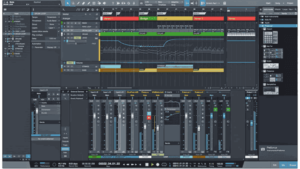
Studio One by PreSonus takes third place. Although relatively young compared to Cubase or Pro Tools, Studio One has earned a strong reputation since its release in 2009. Interestingly, it was developed by a team of former Cubase engineers, which explains its refined approach to workflow design.
Studio One is consistently praised for its clean interface, fast operation, and balanced focus on recording, production, and mixing. It avoids unnecessary complexity while still offering professional-grade tools.
In 2026, Studio One ranked third in Production Expert, third in the Turkish DAW survey, and consistently placed between third and fourth in Bobby Owsinski’s polls. It is a clear example of a DAW that does not try to dominate every niche but performs extremely well across all core production tasks.
2nd Place — Logic Pro: An All-in-One Creative Ecosystem

Second place goes to Logic Pro, one of the most popular DAWs among independent artists, producers, and songwriters in the United States. Since becoming an Apple-exclusive product, Logic Pro has remained macOS-only, but this has not limited its growth or influence.
Logic Pro regularly tops major polls, ranking first on Songstuff Music Forum, first in the Turkish survey, and second in Production Expert’s 2026 results.
One of Logic Pro’s strongest advantages is its massive built-in content library. Users gain access to a wide range of synthesizers, effects, virtual instruments, and professionally produced sample packs. For many musicians, Logic Pro is a true “all-in-one solution” that allows them to produce high-quality music without relying heavily on third-party plugins.
1st Place — Pro Tools: The Industry Standard

The undisputed leader of 2026 is Pro Tools by Avid. For more than three decades, Pro Tools has been regarded as the professional standard for audio recording and post-production.
Pro Tools ranked first in Production Expert, topped Bobby Owsinski’s surveys, and continues to dominate among professional engineers between 2023 and 2026.
It remains the primary DAW used in commercial recording studios, television production, film post-production, and vocal and live instrument recording sessions. Even with increasing competition, Pro Tools maintains its position as the backbone of professional audio workflows.
Why Samplitude and Other DAWs Are Not Included
Some readers ask why DAWs like Samplitude or several smaller platforms are missing from the ranking. The reason is straightforward: their share of user votes is currently too small to appear even in extended top-15 lists.
Market data shows that the DAW ecosystem has largely stabilized around a few dominant players. Their positions may shift slightly year to year depending on audience and region, but the overall structure remains consistent.
Ultimately, the choice of DAW matters far less than the quality of the final sound. That is why professional mixing and mastering remain essential stages of any release — regardless of which software you use to create your music.