
What Is Audio Mastering — And Why Your Track Sounds Different Everywhere
Your mix might sound right in the studio. But does it hold up outside of it?
Audio mastering is the final step before release, where your mix is shaped to sound consistent everywhere it’s played.
In simple terms, mastering makes sure your track holds up once it leaves your studio.
Hear how your track actually sounds outside the studio →See how your mix holds up outside the studio before you release it.
What mastering does in practice:
- keeps your track consistent across different playback systems
- controls perceived loudness and overall balance
- prepares the track for release and streaming platforms
- makes your track ready to compete with professional releases
This is where most mixes fail once they leave the studio. Without mastering, a track might sound right in your studio but fall apart everywhere else.
Why Mastering Exists — Not Theory, But Real-World Control
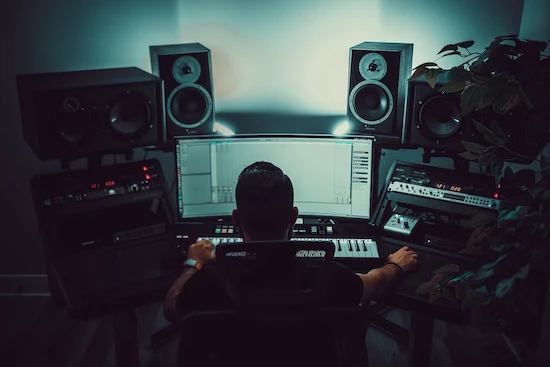 A mix can feel finished in your studio, but it hasn’t been proven outside of it yet.
The moment that context changes, the perception of your track changes with it.
A mix can feel finished in your studio, but it hasn’t been proven outside of it yet.
The moment that context changes, the perception of your track changes with it.
Ever noticed how a track sounds perfect in your studio, but completely different in the car?
Play the same mix in a car, and the low end might feel heavier or less defined. Switch to small speakers, and the vocal can lose presence. On headphones, certain elements suddenly jump forward while others disappear. The mix itself hasn’t changed — but how you hear it has.
For example, a mix that feels tight in a treated room can suddenly lose low-end definition in a car, or push the vocal too far back on small speakers. These shifts don’t come from the mix changing — they come from how different systems reveal its weak points.
What sounds right in one system often falls apart in another — because each system reveals different weaknesses in the same mix.
Then there’s loudness. A lot of producers push their tracks harder, assuming that more level will make the result stronger. In reality, uncontrolled loudness often does the opposite — it reduces clarity, flattens dynamics, and weakens the overall impact. What matters is not how loud a track measures, but how it is perceived across different systems. That’s a separate layer of control, and if you want to go deeper into it, you can explore how loudness actually works in mastering.
Balance is another weak point. Inside your studio, everything may feel aligned, but outside, relationships between elements start to shift. The kick can overpower the bass, vocals may sit too far back, or the top end may feel either harsh or dull depending on the system. These inconsistencies are not always obvious during mixing — they reveal themselves only in real-world playback.
Without mastering, there is no final control stage to stabilize these variables. The track remains dependent on the listening environment, reacting differently every time it’s played. In practice, this is why engineers check masters across multiple systems — not to hear differences, but to confirm that the track holds its shape everywhere. This often includes switching between studio monitors, headphones, and even consumer devices to catch inconsistencies that don’t show up in one system alone.
What Happens to a Track During Mastering — Decisions, Not Just Processing
At this stage, the track is already mixed. Mastering is about how the track behaves across different systems — and refining it so it stays consistent outside the studio.
Small changes can directly affect how the track translates across different systems. In many cases, the goal is not to change the sound dramatically, but to remove small inconsistencies that become obvious outside the studio. Tonal balance may be refined so that no part of the spectrum feels exaggerated or missing when played on different systems. It’s not about boosting frequencies — it’s about correcting how the mix translates.
Dynamics are also controlled. A common mistake is pushing the track harder instead of controlling it — which often reduces impact rather than improving it. A track that feels punchy in the studio can lose impact elsewhere, or, on the other hand, become too dense and fatiguing. The goal here is not to make everything louder, but to keep the energy consistent and controlled without collapsing the movement inside the music.
Peak control is another part of the picture. Unmanaged peaks can cause instability — especially when the track is pushed to competitive levels. Proper control keeps the track solid and predictable, so it doesn’t break apart or distort under real playback conditions.
In practice, even small peak issues can become obvious once the track is pushed to real listening levels.
There’s also the perception of space. Sometimes a mix feels wide and open in the studio, but narrower or less defined outside. Small adjustments can change how the stereo image is perceived, making the track feel more stable and coherent across different listening setups.
None of these decisions exist in isolation. Every move affects something else. There’s no fixed way to master a track — every decision depends on how that specific mix translates across different systems.
If you’re interested in the technical side — the specific processes and how they are combined — you can break it down in detail here: mastering chain explained.
If you want to go deeper into how these decisions are made in practice, see how professional mastering works.
Your mix works in the studio. But does it hold everywhere?
Most mixes sound right in the studio. The problem starts when they leave it. Send your mix and get a free demo master (up to 30 seconds) to hear how it performs across real-world playback systems.
Real engineers. Real playback translation. No presets.
Mastering vs Mixing — Where One Ends and the Other Begins
 Mixing and mastering are often confused, but they solve different problems.
Mixing happens inside the track. It’s where individual elements are shaped and balanced against each other — vocals against instruments, drums against bass, details against space. The goal is to make everything work together as a cohesive piece within your session.
Mastering starts when that internal balance is already set. At this point, the question is no longer “do these elements work together?” but “does this track work outside this environment?”
That’s the key difference. Mixing is internal. Mastering is external.
A mix can feel perfect in isolation and still fail in context. It might sound right in your studio but lose impact on streaming platforms, shift in balance on consumer devices, or feel inconsistent next to other tracks. Mastering addresses that outer layer — how the track behaves once it leaves your control.
There isn’t a hard line where one suddenly stops and the other begins, but there is a shift in perspective. Mixing is about building the sound. Mastering is about validating it in the real world.
If you want a deeper breakdown of how these stages differ in practice, see mixing vs mastering explained.
What Happens If You Skip Mastering — Where Tracks Start Falling Apart
Skipping mastering doesn’t always sound like a mistake at first. In your studio, the track may feel balanced, clear, even finished. The problem shows up when it leaves that environment.
The first thing that breaks is translation. What felt controlled on your monitors starts shifting depending on where it’s played. Low end becomes inconsistent, vocals lose position, and details either disappear or jump out too aggressively. The track no longer behaves predictably — it reacts to the system instead of holding its own shape.
Loudness becomes unstable too. Next to commercial releases, your track can feel weaker, smaller, less defined — even if the difference isn’t obvious in isolation. It’s not just about level, it’s about presence. Without proper control, the track doesn’t carry the same weight or consistency across playback conditions.
Balance is another weak point. Elements that seemed locked together begin to drift apart. The kick may dominate in one system and vanish in another. High frequencies can turn harsh or dull depending on the speakers. What you hear stops being reliable.
Then comes the bigger issue — context. Music today is not heard alone. It sits next to other tracks, playlists, releases that have already been optimized to perform everywhere. Against that standard, an unmastered track almost always feels unfinished, even if the mix itself is solid.
Nothing feels obviously wrong — but the track doesn’t hold together consistently.
You hear it instantly when switching between mastered and unmastered versions of the same track.
When You Actually Need Mastering — And When You Don’t
Not every track needs mastering. That’s the part most pages avoid saying, but it matters if you want a realistic approach.
If you’re preparing a track for release — whether it’s streaming platforms, a client delivery, or any commercial use — mastering is not optional. The moment your music leaves your environment and competes with other releases, it has to hold up under different playback conditions. Without that final control, even a strong mix can feel inconsistent or unfinished next to professionally released material.
The same applies if the track represents your work publicly. Once it’s out, you don’t control where or how it’s heard. Mastering ensures that the result remains stable regardless of the system.
But there are cases where you can skip it.
Demos, rough ideas, internal drafts — anything that stays inside your workflow doesn’t require that final stage. If the goal is evaluation, writing, or quick sharing, mastering doesn’t add much value. At that point, the track isn’t meant to perform in the real world yet.
The difference is simple: if the track is leaving your control, it needs mastering. If it’s staying inside your process, it doesn’t.
And if you’re preparing a track for that next step, the logical question becomes not “do I need mastering,” but “is the mix ready for it?” That’s where proper mix preparation starts to matter.
Can You Master a Track Yourself — Where DIY Hits Its Limits
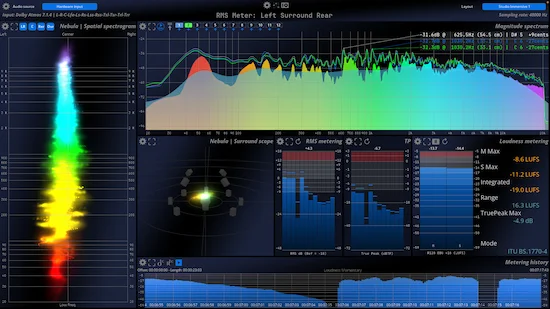 Yes, you can master your own track. The tools are accessible, and the process may seem straightforward. But the real limitation isn’t the software — it’s perception.
When you’ve spent hours or days working on a mix, you lose objectivity. You already know how it’s supposed to sound, and your brain fills in the gaps. What feels balanced to you may already be skewed, but you don’t hear it anymore because you’re too close to the material.
Monitoring adds another layer. Your room, your speakers, your headphones — they all shape what you hear. If that environment isn’t neutral, every decision you make is based on a distorted reference. You’re correcting problems you can hear, while missing the ones you can’t.
Experience is the third factor. Mastering isn’t about applying moves — it’s about knowing when not to touch anything, when a small change is enough, and when a track needs deeper correction. Without that perspective, it’s easy to overdo it or fix the wrong problem entirely.
So yes, DIY mastering is possible. But it’s inherently limited by how you hear and interpret your own work. You’re working inside the same context that created the problem in the first place.
That’s also why automated tools can feel convincing at first — they remove some subjectivity, but they can’t replace the decisions that come from experience and real listening context.
Professional Mastering vs Online Tools — Speed vs Context
Online mastering tools have made the process fast and accessible. You upload a track, get a result in seconds, and it often sounds cleaner or louder than the original. For many situations, that feels like enough.
But the difference shows up in how decisions are made.
An algorithm works on patterns. It analyzes the signal, compares it to a dataset, and applies a predefined response. That approach is consistent and efficient, but it doesn’t understand intent. It doesn’t know what the track is trying to achieve, what should stay untouched, or where subtle problems are hiding behind an otherwise “correct” balance.
A human approach is different. It’s not based on templates, but on context. The same type of track can require completely different decisions depending on arrangement, dynamics, and how it translates across systems. Sometimes the right move is to adjust. Sometimes it’s to leave the mix exactly as it is.
Speed is where automated tools win. Control is where they don’t.
The result from an online service may sound immediately improved, but it’s still a generalized outcome — built to work across thousands of tracks in a similar way. Professional mastering focuses on one track at a time, shaping decisions around its specific behavior instead of fitting it into a predefined model.
It’s not about one being “good” and the other “bad.” It’s about what level of control you need over the final result — and how precise that result has to be once the track leaves your hands.
How Mastering Affects Streaming Platforms — What Actually Changes After Upload
Once your track hits streaming platforms, you lose control over how it’s played back. The platform takes over — and one of the first things it does is normalize loudness.
That means your track is automatically adjusted to match the perceived level of other songs. It doesn’t matter how loud your file is on export — the platform will turn it up or down to fit its system.
This is where problems start to show.
If a track is pushed too hard before upload, normalization can expose its weaknesses. For example, a track that feels loud and aggressive in the studio can lose punch and clarity after normalization, making it sound weaker next to more controlled masters in a playlist. It may sound flatter, less punchy, or even smaller compared to tracks that were controlled more carefully. What felt “loud” in the studio no longer translates as strong or clear once it’s processed by the platform.
On the other hand, if the track isn’t controlled enough, it can feel inconsistent — quieter in perception, less defined, and less stable across different listening conditions. The balance shifts, and the track struggles to compete in a playlist environment where everything is expected to sit at a similar level.
The key point is this: streaming doesn’t reward raw loudness. It reveals how well the track holds together after normalization.
Mastering prepares for that. It shapes the track so that, even after platform processing, it maintains its presence, clarity, and balance. If you want to understand this layer in more detail, you can explore how loudness works in mastering beyond the surface level.
Why Professional Mastering Still Matters — Final Control Before Release
At the end of the process, everything comes down to control.
Not control inside your session — that part is already done. The real question is how your track behaves once it leaves your hands. Different systems, different environments, different contexts. That’s where the final result is defined.
Professional mastering exists to stabilize that outcome. It ensures that your track translates consistently, keeps its balance, and holds its impact no matter where it’s played. Without that layer, the result depends too much on chance — on the listener’s setup, on platform processing, on variables you can’t predict.
There’s also the competitive side. Music today doesn’t exist in isolation. It’s always compared — in playlists, recommendations, releases that have already been refined to perform everywhere. A track that isn’t controlled at this stage often feels weaker, even if the mix itself is strong.
Mastering doesn’t change your music. It defines how reliably it works in the real world.
If you want your track to hold that level of consistency and compete on equal terms, you can take the next step with a professional mastering service.
Make sure your track holds up everywhere
You’ve already done the hard part — writing, producing, mixing. Now it’s about making sure your track translates, competes, and stays consistent across every system and platform. Send your mix and hear how it performs when that final control is applied.
Fast response. Real mastering engineers. Consistent results.