
Why Is My Song So Quiet — It’s Not What You Think
Your song sounds quiet because the mix isn’t consistent — even at the same level as other tracks, it lacks the density your ear reads as loudness.
You open your track next to a reference. Same volume. Same speakers — theirs feels solid, yours disappears.
Quick answer:
Your song sounds quiet because the mix lacks density, mid-range presence, and consistent energy.
Even at the same level, it doesn’t stay stable enough for your ear to perceive it as loud.
If you have to turn your track up more than everything else just to feel it — this is exactly what’s happening.
So the problem isn’t volume — it’s that your mix doesn’t stay consistent enough to feel loud next to other tracks.
Short answer: your mix is inconsistent, so it never feels as loud as other tracks.
Why Your Song Feels Quiet — Main Causes
When a track feels quiet, it’s almost always one of a few issues:
- lack of mid-range presence
- unstable low end energy
- inconsistent dynamics between hits
- imbalance between key elements
In short: your track doesn’t maintain enough presence to feel loud.
What Does “Quiet” Actually Mean — It’s Not About Level
 A track feels quiet when it doesn’t stay consistent — even if the level is technically the same.
- the vocal drops back instead of staying forward
- the low end doesn’t stay consistent
- the mix loses energy between hits
- the mid-range is too weak to carry presence
In real playback, the track never stays stable enough to feel solid.
Peak level alone doesn’t explain why one track feels solid and another doesn’t.
If your low end changes from hit to hit, the track never builds weight.
If your vocal drops back, it loses presence.
If your mids are weak, the track disappears on small speakers.
This is why it feels smaller — even when the level is technically the same.
Raising the level doesn’t fix it — it just reveals what the mix can’t support.
If you want to hear how this behaves in real playback: why two tracks at the same level can feel completely different.
If the mix falls apart when you push it, it will always feel quieter than everything around it. Level just exposes that.
That’s why it feels quiet — not because of level, but because the mix never locks into a stable shape during playback.
If the mix keeps shifting, your ear never locks onto it as loud.
Quick Self-Check — Why Your Song Feels Quiet
Before you try to fix anything, stop and identify what you’re actually hearing. If one of these sounds familiar, you’re already closer to the real issue.
When a track feels quiet, it almost always follows one of these patterns:
| What you hear | What’s actually happening |
|---|---|
| The track feels small next to references | The mix lacks density — too much empty space between elements |
| Kick and snare hit, but everything else disappears | Peaks are strong, but the body of the track is weak |
| It sounds okay loud, but collapses at normal volume | Poor balance — key elements don’t hold their position |
| The track feels thin or empty in the middle | Weak mid-range — the area where presence and clarity live is underdeveloped |
| It feels dynamic but never “full” | Too much uncontrolled dynamics — nothing stays consistent long enough to feel loud |
| Your track sounds fine solo but weak in a playlist | It lacks mid-range presence and gets masked by other tracks |
| It only feels loud when you turn the volume way up | The mix has no internal energy — it relies on playback level instead |
If you recognized your track in any of these, you’re not dealing with volume — you’re dealing with structure.
This isn’t about numbers — it’s about whether the track actually holds up when it plays.
This is also why some tracks start falling apart after processing — not because of mastering itself, but because the mix can’t support it. The issues don’t go away — they become easier to hear. If you’ve run into that, you’ll recognize the same patterns in why problems become obvious after mastering.
Once you notice this, it becomes clear why the track feels smaller. You stop chasing loudness — and start understanding why it isn’t there in the first place.
Why Turning It Up Doesn’t Work — And Often Makes It Worse
 Let’s be honest — you’ve already tried it.
You pushed the gain. Dropped a limiter on the master. Maybe even stacked a couple. At first, it feels louder. Then something breaks.
Let’s be honest — you’ve already tried it.
You pushed the gain. Dropped a limiter on the master. Maybe even stacked a couple. At first, it feels louder. Then something breaks.
We often get tracks where everything is already pushed hard — limiter on, levels high — but the track still feels behind. The moment we pull it back and fix the balance, it suddenly feels louder without adding anything.
The low end gets messy. The highs turn sharp. The punch disappears. And somehow, even though it’s technically louder, it still doesn’t feel competitive.
This is where most mixes start falling apart when you try to push them louder.
An uneven mix exaggerates under pressure. A weak track gets exposed instead of louder. Unstable dynamics fall apart the moment you push them.
Same with gain — it doesn’t create presence, it just makes everything louder, including what’s not working.
Take two tracks and push them the same way — one stays solid, the other falls apart.
We’ve seen mixes hit aggressive levels and still feel quieter than commercial releases — because the structure wasn’t there to support it.
And here’s the uncomfortable part — if your track breaks when you push it, the problem didn’t start in mastering. It was already there.
Pushing volume at the end doesn’t fix what the mix can’t support. It only works if the mix can actually support it. Adding a limiter doesn’t fix the problem — it just pushes the same weaknesses harder.
So if turning it up isn’t working, stop pushing harder. The issue isn’t how much level you add — it’s what the track can handle.
If you have to keep turning your track up to make it feel right, that’s already a sign something inside the mix isn’t working.
Push it harder — and instead of getting bigger, it starts collapsing. That’s usually the point where the mix stops holding together completely.
At that stage, pushing it further doesn’t make it louder — it just makes the problems more obvious.
Where the Problem Actually Starts — Before Mastering Ever Happens
By the time you reach mastering, most of the outcome is already decided. Not finalized — but shaped. Direction locked in.
If the mix feels weak, the master won’t suddenly make it solid. If the balance is off, no final processing will magically fix it. Mastering works with what’s already there — it doesn’t replace what’s missing.
In many cases, we receive mixes that already hit competitive levels on meters, but still feel quiet next to released tracks. The issue isn’t loudness — it’s that the mix doesn’t hold together when played in real conditions.
Once the balance is corrected, the same track often feels louder even before any final processing is applied.
In many cases, this happens without increasing peak level at all — the track just stops collapsing, and your ear finally reads it as loud.
This is often the moment people realize the problem was never loudness — it was how unstable the mix actually was.
At that point, the problem becomes measurable — not in LUFS, but in how unstable the mix actually is from moment to moment.
We’ve had mixes come in that already looked “loud” on meters, but the moment we fixed the balance, they felt twice as present without adding level.
Most people think: “I’ll fix loudness at the end.” The reality is: loudness depends on how stable and consistent the mix feels during playback — not from what happens at the end.
We see it constantly. A typical case: the track looks loud in the session, but the moment you play it next to other songs, it immediately drops behind. A track comes in with decent peaks, nothing obviously wrong — but it doesn’t hold together. Kick hits, then drops. Vocals feel disconnected. The energy shifts instead of staying consistent. On meters, it looks fine. In playback, it feels small.
That’s not a mastering issue — that’s how the mix behaves when it actually plays.
A track that shifts constantly never feels solid. Conflicting elements scatter the energy. Weak frequency areas kill presence. When nothing locks in, there’s nothing to push forward.
And when that kind of mix hits mastering, there’s a limit to what can be done without damage. Push it too far — it distorts. Leave it as is — it stays quiet.
What you hear as loudness is determined by how stable the mix feels once it’s playing — not by what happens at the final stage. Either the mix supports it — or it doesn’t.
If the mix isn’t stable enough, it won’t hold together when you try to make it louder. And this is exactly why preparation matters — what happens if your mix isn’t ready for mastering.
So the real question isn’t “how do I make it louder?” It’s “why doesn’t this mix hold together when I try?”
We see this especially with tracks that look fine on meters but fall apart on real systems — cars, headphones, streaming. That’s where weak structure becomes obvious.
At that point, you’re not choosing between “quiet” and “loud” — you’re choosing between “quiet” and “broken.”
Still sounds quiet no matter what you try?
If your track keeps falling behind after gain, limiters, or presets — you’re not dealing with volume anymore. At that point, it’s about balance, density, and how your mix translates outside your session.
Send us your track. We’ll master a real 30-second section — not an automated preview — so you can hear what actually changes when the underlying issues are handled correctly.
No templates. No guesswork. Real engineer, real result.
How to Actually Fix the “Quiet” Problem — Focus on Structure, Not Volume
Once you stop chasing level, the real issue becomes obvious. You’re not trying to “make it louder.” You’re trying to make the track hold together.
The goal isn’t more level — it’s a mix that doesn’t collapse when playback level changes.
Start with balance. Not fader moves for the sake of numbers — but how elements relate to each other over time. If the vocal drops out when the kick hits, or the low end masks everything else, the track loses consistency. And without consistency, there’s no perceived loudness.
Then look at density. Does the track feel filled, or does it breathe too much between hits? A lot of mixes feel dynamic in isolation but collapse next to references because there’s no sustained energy. The energy drops before the next moment has a chance to build.
Dynamics matter too — but not in the way most people think. It’s not about removing movement. It’s about controlling it so the track doesn’t fall apart. If every section shifts unpredictably, the listener never perceives it as “solid.”
Mid-range is where most of this is decided. If that area is weak, the track disappears on phones, laptops, even cars. You can have deep bass and sharp highs — but without mid presence, it won’t translate as loud.
In the end, it’s always the same issue — the mix doesn’t stay stable. None of this is about pushing a meter higher. It depends on whether everything stays in place when the track moves.
The final stage doesn’t rebuild a mix — it only exposes how well it holds together. It comes from balance, density, and control — not from pushing it louder.
Before you finalize anything, it’s worth stepping back and checking whether the track actually holds up across these fundamentals — check if your track actually holds together before finalizing it.
If those pieces are in place, loudness comes naturally. If they’re not, no amount of gain will fix what’s missing underneath.
Why Reference Tracks Sound Louder — Even at the Same Level
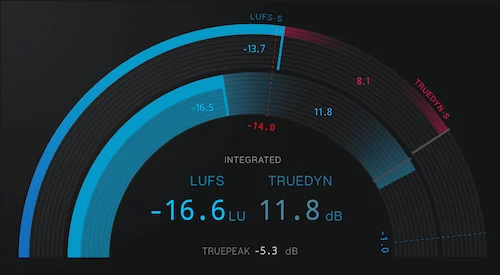 You line up your track with a commercial release. Levels matched. No cheating.
And still — theirs feels bigger, closer, more “there.”
You line up your track with a commercial release. Levels matched. No cheating.
And still — theirs feels bigger, closer, more “there.”
That’s not because they pushed it harder. It’s because the track holds its shape.
Commercial mixes are built to stay consistent. The low end doesn’t drift. The vocal doesn’t disappear when the arrangement gets busy. The energy doesn’t spike and drop — it stays controlled.
That consistency creates density. And density is what your ear reads as loudness.
There’s also balance. Nothing dominates to the point of masking everything else. Each element has its place, and more importantly, keeps that place from start to finish.
And then there’s control. Subtle, but critical. The track doesn’t fall apart when it’s pushed. It’s already stable before it gets there.
That’s why reference tracks don’t feel “forced.” They don’t sound loud because they’re maxed out — they sound loud because nothing inside them collapses.
If you’re working in a home setup, this gap becomes even more obvious. What feels full in your room can lose impact everywhere else. That’s a common issue — especially if you’re building mixes without reliable translation across systems, this is especially common in home studio setups.
So when your track feels quieter than a reference, don’t assume it needs more level. Look at what’s holding theirs together — and what’s missing in yours.
Common Questions — Quick Answers
Why is my song quiet after mastering?
Because mastering didn’t fix what was already weak in the mix. If the balance, density, or control isn’t there, the master just exposes it more clearly.
How loud should my song be?
There’s no single number that guarantees it will feel loud. What matters is how stable and full the track sounds — not how high it peaks.
Why does my track sound quiet on Spotify?
Streaming platforms normalize playback. If your track loses impact there, it usually means it lacks density or consistency compared to other releases.
Can mastering fix a quiet mix?
Only to a point. Mastering can enhance what’s already working, but it can’t rebuild a mix that doesn’t hold together.
At some point, you stop asking “how do I make it louder?” and start asking “why doesn’t it feel loud already?”
Your track shouldn’t fall behind
If your track still doesn’t compete next to other releases, it’s not about pushing it louder — it’s about fixing what’s underneath. That’s where most mixes break, and that’s exactly where we step in.
Send us your track and hear a real difference. We’ll master a section by hand so you can compare it directly with your version — same track, completely different result.
No presets. No shortcuts. Just a track that finally holds up everywhere.