
Mastering for Bedroom Producers — Why Your Track Still Doesn’t Translate
Sounds good at home. Falls apart everywhere else.
You’re working in a home setup — monitors, headphones, maybe an untreated room.
Then you play it in the car or next to a reference on Spotify — and everything immediately changes. Low end disappears. Highs get sharp. Balance shifts.
That’s not a mixing issue — it’s a translation problem.
Professional mastering is not about making your track louder. It’s about making sure it works everywhere — not just in your room.
At home, you hear one version of your track. Your listener hears another. That gap between perception and reality is where most DIY masters fall apart.
What Bedroom Producers Think Mastering Is (And Why It Fails)
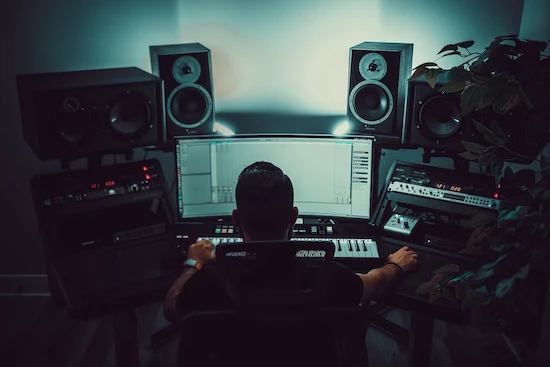 For most bedroom producers, mastering looks simple: clean up the mix, add some EQ, push a limiter until it feels loud — done.
Maybe you load a preset. Maybe you run it through Ozone or an AI tool. The track sounds better than before, louder, more polished. Good enough.
That’s the point most people stop — and that’s exactly why the result falls apart outside their setup. What feels “finished” inside your setup often has very little to do with how the track actually behaves outside of it.
In a typical home workflow, mastering turns into a quick final step — something you “add” at the end rather than something that defines how the track actually translates. If it sounds clearer and hits harder, it feels done. But every decision is based on what your room and your headphones are telling you — not on how the track actually behaves in the real world.
Presets make this worse. They give you instant results that feel expensive. You load a chain, adjust a couple of knobs, and everything opens up. But presets don’t hear your mix. They don’t hear your room. They don’t know if your low end is actually controlled — or just hidden.
Then comes loudness. Push it harder. Match your references. Make it competitive. But loudness without control doesn’t translate. A track can feel powerful in your room and completely fall apart on real systems — muddy bass, harsh highs, no depth.
Loud doesn’t mean finished.
This is the point where things start to break. Mastering is not about making a track louder. It’s about making it reliable.
Professional mastering is built around one thing — translation across real-world playback systems. It defines how the track holds together across different systems, playback conditions, and listening contexts — and that requires decisions that go far beyond a plugin chain. Even a technically correct mastering chain doesn’t guarantee results if those decisions are based on flawed monitoring.
The same applies to loudness targets. Numbers alone don’t fix balance or perception. You can hit the “right” level and still end up with a track that feels weak or unstable. If you want to understand how loudness behaves in real-world playback, see this LUFS mastering guide.
Inside your setup, everything feels under control. Outside of it, the track exposes what you missed.
The Real Limitation — You Can’t Hear the Problem
Most bedroom producers think the problem is in the tools. Not enough plugins, not the right chain, not the latest mastering software.
It’s not. The real limitation is monitoring. If what you hear isn’t accurate, every decision you make is based on a distorted version of your track.
Home studios are rarely neutral. Small rooms exaggerate some frequencies and hide others. Low end builds up in corners, mids get uneven, highs reflect unpredictably.
You think your bass is tight — but the room is boosting it. Or the opposite: you keep adding low end because your setup is canceling it out. Either way, you’re not fixing the track. You’re reacting to the room.
Headphones don’t fix this. They remove the room, but create a different problem — unrealistic stereo and misleading low end. Everything feels cleaner and wider than it actually is. Then you play it on speakers — and it falls apart.
Most home setups aren’t calibrated either. You change volume while working, and your perception shifts with it. Louder feels better. Quieter feels mid-heavy. You keep adjusting without realizing you’re moving the reference point itself.
And then there’s the part most people ignore — your brain. Your ears adapt. Spend enough time in the same room, and it starts to sound “normal.” Problems disappear. Imbalances feel correct.
That’s where things go off track. You boost highs that weren’t missing. You compress what was already controlled. You chase clarity, punch, loudness — but only inside your own environment.
You fix what isn’t broken — and miss what actually is.
Mastering isn’t about having more tools. It’s about making the right decisions. And those decisions only work if you’re hearing the truth.
If the foundation isn’t there, even a clean mix won’t translate. Start here if you haven’t: prepare your mix for mastering.
Because no plugin can fix what you can’t hear.
Why Your Master Sounds Worse Than Reference Tracks
You export your track, play it next to a release on Spotify or Apple Music — and something feels off.
Not obviously wrong. Just smaller. Less stable. Less convincing.
Because you’re not comparing your master to your mix anymore. You’re comparing it to fully mastered records — tracks designed to hold up across every system, every environment, every listener context.
You’re not competing with your mix. You’re competing with finished records.
The first thing that breaks is tonal balance. Reference tracks feel even and controlled from low to high frequencies. Your track might feel similar in your room, but outside of it, the balance shifts. The low end becomes overwhelming — or disappears. Highs turn sharp or lose detail.
Bass translation is one of the biggest problems — especially below 100 Hz, where small rooms introduce the most severe inaccuracies. In a bedroom setup, low frequencies are not just hard to judge — they’re often misrepresented entirely.
In one recent project, a track that sounded “finished” in a home studio lost almost all low-end energy the moment it was played in a car system. The issue wasn’t the mix — the room was boosting around 60 Hz, which led to incorrect decisions during mastering.
That’s how it usually plays out. We see this pattern consistently in bedroom-produced tracks sent to us for mastering — you either overcompensate or underdeliver. On larger systems, the bass turns muddy, while on smaller speakers it disappears almost entirely.
High frequencies fail differently. To compensate for a lack of clarity, producers often push the top end too far. In the studio, it feels clean. On real systems, it becomes harsh and fatiguing — especially next to well-balanced reference tracks. In more extreme cases, this turns into distortion issues that require correction: fix distorted master.
Then comes punch and dynamics. Professional masters feel solid without sounding crushed. Your version might be just as loud — or louder — but it doesn’t hit the same way. Transients soften. The track loses movement.
This is where most DIY masters fall apart. Not because of the tools — but because the decisions behind them are based on incomplete information.
You’re reacting to what you hear. But what you hear isn’t the full picture.
If you break it down, the same problems show up again and again. We’ve outlined them here: mastering problems guide.
And if your master doesn’t hold up against references, the real question isn’t “what plugin should I use?” — it’s “what am I not hearing?” That’s exactly what we fix here: fix my master.
Because the gap between your track and a reference isn’t about processing. It’s about accuracy. For many bedroom producers in the US, this is exactly where the gap becomes obvious — the track sounds right at home, but falls apart in real-world playback.
If you're unsure what exactly is wrong in your master, get professional feedback here: mastering feedback service.
If your track only works in your room — it’s not finished
Right now, you’re making decisions based on what your setup lets you hear — not how your track actually translates.
That’s why it falls apart on other systems.
Send your track and get a free 30-second mastering demo. Hear how your track actually translates when it’s processed in a controlled environment — side by side with your version.
Used by independent artists worldwide. Real mastering by a professional engineer — no automation.
Real mastering engineer. No presets. No automated processing.
What You Can Actually Fix at Home (And What You Can’t)
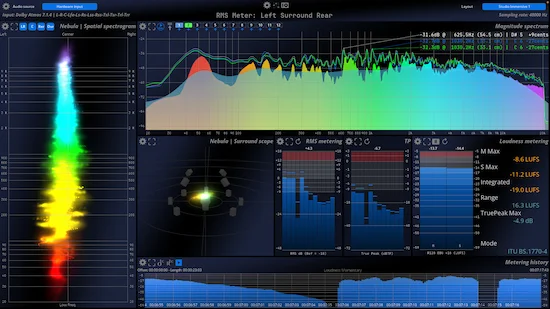 There’s a line most bedroom producers don’t see clearly. Not because of skill — but because the environment hides where that line actually is. The result is predictable: you keep pushing, tweaking, adding processing, trying to “finish” the track long after your setup has stopped giving you reliable information.
There are things you can fix at home — and you should. Basic tonal balance inside your mix, cleaning up obvious frequency clashes, controlling peaks, making sure your mix isn’t clipping and has enough headroom. These are foundational steps, and they matter.
Preparation is where you actually have control. If your mix is structured well, balanced internally, and exported correctly, you’ve already solved a large part of the problem. If not, no mastering process will save it. Start here if needed: prepare your mix for mastering.
But beyond that point, things change. Low-end accuracy is where most setups break. You might feel like your bass is tight and controlled, but that’s based on how your room or headphones present it — not how it actually behaves.
In real projects, we often see 40–80 Hz either overcompensated or missing entirely in bedroom masters. This range is the hardest to judge in small rooms, and it’s where translation issues usually begin. Sub frequencies interact with space in ways small rooms simply can’t reproduce, which is why tracks often sound boomy on one system and empty on another.
Stereo is another blind spot. In headphones, everything feels wide and detailed. On speakers, especially in untreated rooms, that image collapses or shifts. What feels clean and open in your setup can become narrow or unstable in real playback.
Many bedroom masters hit competitive LUFS values, but collapse after normalization because the internal balance isn’t stable. In another case, a track pushed to competitive loudness lost punch immediately after Spotify normalization. The LUFS target was technically correct, but the internal balance collapsed — making the track feel weaker than less processed references. This is exactly where things break: you push the limiter, it feels strong in your room, but transients soften, low end distorts, and clarity disappears once the track leaves your setup.
At that point, it’s no longer about effort or technique. It’s about visibility. You simply can’t make precise decisions on things you can’t accurately hear.
This is the point where the illusion of “I can do everything myself” starts to break — not because you lack skill, but because your setup imposes limits that no workflow can bypass.
DIY Mastering vs Professional Mastering (Real Difference)
Most comparisons focus on price or gear. That’s not where the real difference is.
You can use the same plugins, the same chain, even the same settings — and still get completely different results.
The difference comes from one thing: how accurate your decisions are.
In a bedroom setup, every decision is influenced by your room, your monitoring, and your listening conditions. In professional mastering, those variables are controlled. The engineer hears the track as it actually is — not as the room reshapes it.
That gap affects everything: tonal balance, low-end control, dynamics, and how the track holds up across real systems.
Here’s what that difference looks like in practice:
| Aspect | Bedroom Setup | Professional Mastering |
|---|---|---|
| Monitoring | Untreated room or headphones with biased frequency response | Acoustically controlled environment with accurate monitoring |
| Decision Accuracy | Based on perception shaped by room and playback conditions | Based on neutral reference and consistent listening conditions |
| Translation | Unpredictable across systems (car, earbuds, streaming) | Stable and reliable across all playback environments |
| Consistency | Varies from track to track, depends on setup and fatigue | Repeatable, controlled results across different projects |
Notice what’s missing here: plugins, software, even gear. None of that is the deciding factor. You can run the same chain in both cases — and still get results that behave completely differently outside your room.
That’s why the question isn’t “can you master at home?” — you can. The real question is whether those decisions will survive real-world playback.
If you want to go deeper into how different workflows compare, see online mastering vs local. And if you’re relying on automated tools, this breakdown explains the gap: AI mastering vs engineer.
Because in the end, it’s not about doing more processing. It’s about making decisions that still hold up after your track leaves your room.
When Bedroom Mastering Stops Working
At first, bedroom mastering works exactly as it should. You’re learning, testing ideas, figuring out how your tracks come together. It doesn’t need to be perfect — it just needs to move forward.
Then the context changes. You start releasing music, uploading it to platforms, comparing your tracks to other artists in your genre. And that’s where the same workflow that worked before starts to fall apart.
The first sign is inconsistency across systems. Your track feels solid in your room, but shifts everywhere else. In the car, the low end gets messy. On earbuds, vocals lose presence. On larger systems, the balance changes. You’re no longer dealing with small differences — the track behaves differently depending on where it’s played.
The second sign is comparison fatigue. You level-match your track against references, and the gap is still there. Not just in loudness, but in density, control, and overall impact. Your version feels smaller, less stable, less finished — even if everything seems technically correct.
Then comes the real test: release. You upload your track, and something changes. Platforms normalize it, process it, compress it — and the problems become more obvious. Punch softens, tonal balance shifts, energy drops. What sounded acceptable locally doesn’t survive real playback conditions. If you haven’t looked into this yet, this is where it starts to matter: mastering for streaming platforms.
Spotify is a common example. Tracks pushed too hard or balanced incorrectly often lose clarity after normalization and fall behind other releases — this is the same issue behind why your track sounds quiet: Spotify mastering.
This is the transition point most producers underestimate. You move from learning to competing, and that changes the standard completely. It’s no longer about what sounds good in your setup — it’s about how your track holds up next to everything else in your genre.
Bedroom mastering doesn’t fail because it’s wrong. It fails because it was never designed for that level of expectation.
How Professional Mastering Fixes What You Can’t Hear
Most producers think mastering is about processing — EQ, compression, limiting. From the outside, it looks like a chain applied at the end of the track. But that’s not where the real value is.
Professional mastering is about decisions. What to change, what to leave alone, and what will actually translate outside your environment.
It starts with the listening environment. In a properly calibrated mastering room, the sound isn’t shaped by the space. There’s no hidden bass buildup, no exaggerated highs, no blind spots in the midrange. What the engineer hears is close to what the track actually is, and that changes how every decision is made.
But accuracy alone isn’t enough. Experience is what turns that accuracy into results. A mastering engineer doesn’t hear your track in isolation — it’s immediately compared against references across genres, formats, and playback systems. Subtle problems stand out quickly: low-end imbalance, weak transients, tonal shifts that wouldn’t be obvious in a home setup.
That’s why professional mastering can look simple from the outside. The moves aren’t extreme, but they are precise. Sometimes a fraction of a dB in the right place does more than a full chain applied blindly.
You’re not paying for processing. You’re paying for correct decisions.
Those decisions define the final result — what gets adjusted, what stays untouched, and what gets preserved. The goal isn’t to reshape your track, but to make it stable across different systems without losing its identity.
If you want to see how this process works step by step, this explains it in detail: how professional mastering works. And if you’re comparing options, especially online services, this breakdown shows the difference between real engineering and automated results: best online mastering service.
Because mastering isn’t about adding more. It’s about removing uncertainty and replacing it with decisions that hold up everywhere.
Online Mastering for Bedroom Producers (Why It Works)
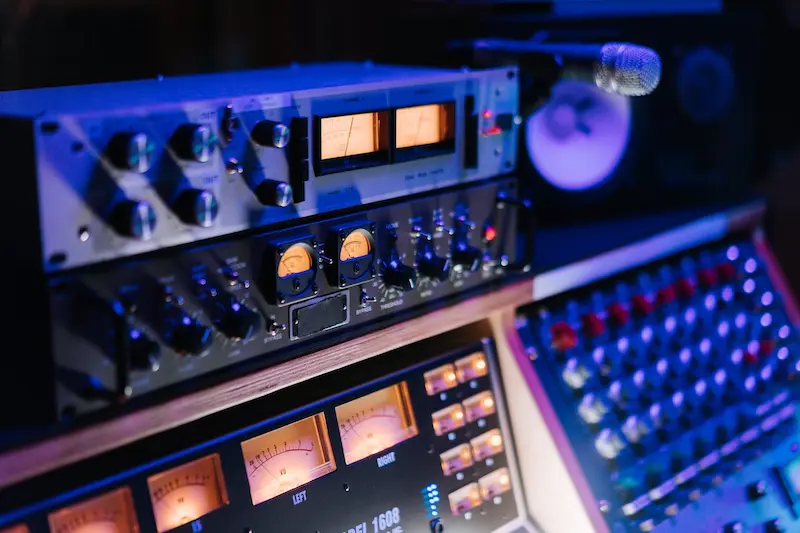 There’s still a belief that “real” mastering has to happen in a physical studio — in the same room, in the same city. For bedroom producers, that creates unnecessary friction and makes professional mastering feel out of reach.
But the quality of mastering has nothing to do with where you are. It depends on where the engineer is listening from.
A properly designed mastering environment, accurate monitoring, and experienced decision-making don’t require you to be physically present. The entire process translates directly into an online workflow without losing precision.
For bedroom producers, this often works better. You stay in your own setup and get access to a controlled environment that isn’t limiting your decisions.
There’s no travel, no scheduling delays, no adjustment to unfamiliar rooms. You send your track and get a result built for real-world playback — not just for your listening space.
Speed is another factor. Online mastering removes the delays of traditional sessions. Feedback, revisions, or a demo can happen within hours, not days, which keeps you in the creative flow.
It also removes geographic limits. You’re not tied to local studios — you can work with engineers who understand your genre and know how your music should translate. If you want to explore how this works across the US market, see: online mastering USA.
The process itself is simple. You send your mix, describe your direction if needed, and receive a version built for real-world playback. If adjustments are needed, they’re handled quickly and precisely: send your track for mastering.
Online mastering isn’t a compromise. It’s access to the one thing your setup can’t provide — an accurate listening environment and decisions based on it.
You can’t fix what you can’t hear.
You’ve done everything you can — this is where mastering starts
Your mix is already there. But the final 5–10% — the part that makes it translate, compete, and hold up next to released tracks — doesn’t come from more plugins.
It comes from accurate decisions made in the right environment.
Send your track and get a free 30-second mastering demo. Compare your version to a professionally mastered one and hear the difference on real playback systems.
Free demo. Real engineer. No automated processing.
FAQ — Mastering for Bedroom Producers
Can I master in headphones?
You can — a lot of producers do. The problem is what you’re missing. Headphones remove the room, but they also distort how you perceive low end and stereo width. Bass often feels tighter than it actually is, and the image feels wider than it will on speakers. A master that sounds clean in headphones can easily fall apart in a car or on small speakers. They’re great for details — not for final decisions.
Why does my track sound quiet after upload?
Because platforms don’t play your track the way you export it. They normalize loudness and apply their own processing. If your balance isn’t stable, the track gets turned down and loses impact. This is why some masters hit the “right” LUFS but still feel weaker than reference tracks after upload.
Is Ozone enough for mastering?
Ozone can get you part of the way there. The problem isn’t the tool — it’s what it’s reacting to. It doesn’t know your room, your monitoring, or how your mix actually translates. Presets can make things sound better fast, but they can also hide problems you’re not hearing.
Do I need acoustic treatment?
If you want more reliable results — yes. Even basic treatment improves how your room handles low frequencies. But it won’t turn a bedroom into a mastering room. You’ll reduce problems, not eliminate them, especially in the sub range where most translation issues start.
How close can DIY mastering get to professional results?
Closer than it used to be — but not consistent. You might get one track that works well, but repeating that result across different projects is where things usually break. Professional mastering is less about “better sound” and more about repeatable accuracy.
When should I hire a mastering engineer?
When the track stops being a demo and becomes a release. If it needs to stand next to other records on Spotify or Apple Music, that’s the point where accuracy matters more than experimentation.
Does online mastering work?
Yes — if it’s done by an actual engineer in a controlled environment. The result doesn’t depend on location, it depends on monitoring and decision-making. Online mastering just gives you access to that without being in the room.