
Fix Bass in Mastering — Why Most Fixes Fail and What Actually Works
Your mix had weight… but after mastering, the bass either blew up or disappeared?
Most bass problems aren’t about level — they’re about how the low-end reacts to processing.
This is where most “fix bass in mastering” attempts fail. You boost, cut, add saturation — and the result keeps shifting. One move helps, another breaks something else.
You’re not missing tools — you’re missing the cause.
Quick check: lower your limiter by 1 dB. If the bass tightens — it’s a dynamics issue. If nothing changes — the problem isn’t happening at the mastering stage.
That tells you instantly where the issue lives — and whether mastering can actually fix it. If it reacts — you can control it. If it doesn’t — you’re trying to fix the wrong stage.
What “Bass Problems” Actually Mean After Mastering — It’s Not One Issue, It’s Five Different Behaviors
 Most people describe it the same way: “the bass is off after mastering.”
But that phrase doesn’t mean anything on its own. In practice, we’re dealing with completely different behaviors that just happen to live in the same frequency range.
Most people describe it the same way: “the bass is off after mastering.”
But that phrase doesn’t mean anything on its own. In practice, we’re dealing with completely different behaviors that just happen to live in the same frequency range.
In some cases, the low-end gets boomy. You push the limiter, and suddenly the kick and bass feel oversized — like they’re swelling beyond control. The energy is there, but it’s unstable. Turn it up, and it starts to dominate everything else.
Other times it turns muddy. Not louder — just less defined. This isn’t always about EQ — sometimes it’s just how the low-end reacts to processing. If this behavior stays consistent across different playback levels, it’s usually not a mastering issue anymore.
Then there’s the opposite problem — weak bass. It felt present in the mix, but after mastering it loses weight. You raise the volume, expecting more impact… and nothing happens. The energy just isn’t translating anymore.
A more subtle one: inconsistent bass. One note hits hard, the next one drops off. Same instrument, same level — but the perception keeps shifting. This usually shows up after compression starts reacting differently to each transient.
And finally, the one that frustrates everyone: translation issues. It sounds fine in the studio. Then you check on a phone, in a car, or on earbuds — and the bass is gone. Not quieter. Gone.
Here’s the key point: these aren’t variations of the same problem. They come from different interactions between dynamics, frequency balance, and perception.
Limiter behavior. Compression timing. Harmonic content. All of it shapes how we perceive bass — not just how loud it measures.
Once you identify which of these you’re actually dealing with, the whole situation changes. Because now you’re not “fixing bass.” You’re solving a specific low-end behavior.
Why Bass Breaks Specifically During Mastering — Processing Doesn’t Add Problems, It Exposes Them
Low-end breaks when your bass triggers more gain reduction than anything else in the mix. And mastering is exactly that — controlled pressure applied to the entire mix.
The issue isn’t the tools — it’s how your low-end reacts under pressure. Push the master — and unstable bass stops behaving.
Start with the limiter. It doesn’t just reduce peaks — it changes how your low-end hits. The result? Less punch, more density. What used to feel tight now feels smeared.
A quick test: lower the limiter by 1–2 dB. If the bass suddenly feels tighter and more controlled — the issue wasn’t EQ. It was how hard the limiter was reacting to your low-end.
Then do the opposite: push it slightly harder.
If the bass starts collapsing or taking over the mix — you’ve found the exact point where your low-end stops being stable.
In real sessions, this shows up immediately — the bass starts triggering gain reduction before anything else in the track.
Push it harder, and the limiter starts reacting to low-end first. That’s when the bass begins to control the entire mix. In real mastering sessions, this often shows up as 2–3 dB of gain reduction driven almost entirely by the low-end.
Now add multiband compression. On paper, it gives you control. In practice, it can make bass feel unstable from note to note. One note triggers compression differently than the next, especially if the low-end isn’t consistent to begin with. Instead of stabilizing it, you end up with movement that wasn’t there before. That’s where that “rubber” feel comes from — subtle, but impossible to ignore once you hear it.
Stereo processing introduces another layer of risk. Low frequencies are meant to stay centered. When widening touches the low-end — even slightly — phase relationships start shifting. In stereo, it may sound wider. In mono, parts of the bass can partially cancel out. That’s how you end up with a track that feels full in the studio but collapses everywhere else.
Then there’s saturation. Used correctly, it can improve translation by adding harmonics. But when the low-end is already dense or muddy, saturation doesn’t “clean it up” — it amplifies the mess. More harmonics on top of an undefined signal just means more undefined energy.
These processes aren’t the problem. They’re standard tools. But they don’t fix structure — they react to it.
Most people miss this. Mastering isn’t the stage where problems get solved. It’s the stage where hidden problems become obvious.
If you look at the process as a whole, mastering applies controlled pressure to the entire mix. Each step exposes how your low-end reacts under pressure. If you want to understand how these stages connect in practice, it’s worth reviewing how low-end behaves across the mastering chain under pressure — not as a list of tools, but as a system reacting to your mix.
So when bass breaks during mastering, nothing new was created. It just stopped hiding.
The Critical Mistake: Trying to Fix the Mix in the Master — Where Mastering Actually Stops
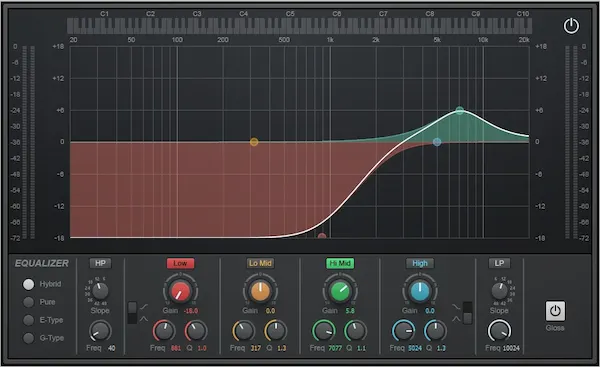 This is where most attempts to fix bass in mastering break down.
Mastering doesn’t have access to what caused the problem.
Take the kick and bass relationship. If they’re fighting in the mix — overlapping in timing, masking each other in the same frequency range — mastering can’t separate them. You’re working with a single stereo file. There’s no way to rebalance two sources that are already glued together.
You can tilt the low-end. You can shape it slightly. But you can’t tell the kick to step back while the bass moves forward. That decision had to happen earlier.
Phase is another hard limit. If the low-end is partially cancelling itself — maybe from layered bass sounds or stereo processing in the mix — mastering can’t rebuild that information. Once phase relationships are baked into the stereo file, you’re not correcting them. You’re reacting to them.
Then there’s headroom. If the mix is already dense and pushing into limiting before it even reaches mastering, the low-end has no space left to breathe. You can’t “restore” dynamics that were already flattened. Any additional processing just pushes it further into compression.
This is why some fixes seem to work — but never hold. You tweak the EQ, maybe adjust dynamics, and for a moment it sounds closer. Then you check it somewhere else — and the issue is still there, just in a different form.
Because the behavior of the low-end hasn’t changed — only how you’re reacting to it.
Mastering can refine balance. It can control behavior. But it cannot rebuild structure.
If you’re unsure whether the issue is even happening at the mastering stage, it’s worth checking whether the problem actually started during mastering — or was already there before.
For a full diagnostic approach, see how to diagnose what’s actually breaking in your master. And if the mix itself is part of the problem, the only real solution lives earlier in the process, long before the file ever reaches mastering. That’s the point where mastering stops being able to change the outcome, as outlined in what actually needs to be right before mastering begins.
Trying to fix a mix inside mastering isn’t just inefficient. It’s solving the wrong problem at the wrong stage.
Not sure what’s actually happening to your bass?
If the low-end keeps changing after every tweak, you’re not dealing with a simple EQ issue. Send us your track — we’ll run it through a real mastering chain and show you exactly how your bass behaves under pressure.
No presets. No automation. A real engineer listens, adjusts, and sends back a free demo master (up to 30 seconds) so you can hear what actually holds together.
Clear feedback included. No commitment. Just a real result you can compare.
What Can Actually Be Fixed in Mastering — And What’s Already Locked In
 Some bass problems can be controlled in mastering. Others are already locked in — and no processing will fully fix them.
Most advice treats mastering like a reset button. It isn’t.
Some bass problems can be controlled in mastering. Others are already locked in — and no processing will fully fix them.
Most advice treats mastering like a reset button. It isn’t.
Here’s where the line actually is.
What can be improved at the mastering stage:
Sub control is one of the few areas where mastering can make a real difference. If the low-end is slightly over-extended or uneven, it can be tightened. Not redesigned — just stabilized. Think of it as controlling how the sub behaves under pressure, not changing its identity.
We see this constantly in client mixes — the bass feels close to working, but collapses as soon as the limiter is pushed.
You can also shape overall low-end dynamics. If the bass feels a bit too loose or slightly inconsistent, careful processing can smooth it out. The key word is “slightly.” Subtle instability can be managed. Structural problems cannot.
Sometimes the bass isn’t wrong — it’s just sitting in the wrong place after processing. In those cases, mastering can rebalance perception, so the low-end supports the track instead of overpowering or disappearing.
Now, what cannot be fixed.
Sound design issues. If the bass itself lacks definition — wrong tone, wrong harmonic content, no presence on smaller systems — mastering won’t invent that. You can enhance what exists, but you can’t create clarity from a source that doesn’t have it.
Kick and bass conflict. If those two are fighting in the same space, mastering has no way to separate them. You’re dealing with a combined signal. Any move affects both at once. That conflict needs to be solved where the elements are still independent.
Phase problems. Once phase relationships are baked into the stereo file, they’re not something you “fix.” You can sometimes reduce the side effects, but the core issue remains. This is why the same bass can behave differently depending on how it’s processed — and why no amount of final-stage processing fully stabilizes it.
This is the point where fixes stop working entirely.
Mastering is not about rebuilding the low-end. It’s about controlling how it behaves when everything is pushed together.
If the foundation is solid, mastering can make it translate better, feel tighter, and sit correctly. If the foundation is unstable, mastering will only reveal that instability more clearly.
Knowing the difference saves you hours of chasing fixes that were never going to work.
Quick Diagnostic — What’s Actually Wrong With Your Bass
| Problem | Likely Cause | Can mastering fix it? |
|---|---|---|
| Boomy / overpowering bass | Limiter reacting to excessive low-end energy | Partially — can control, not fully rebalance |
| Muddy / blurred low-end | Overlapping frequencies, lack of separation in mix | Limited — depends on how severe the masking is |
| Weak or disappearing bass | Loss of harmonics or limiter flattening transients | Sometimes — if structure is still intact |
| Inconsistent bass levels | Dynamic imbalance or uneven source material | Partially — can smooth, not fully correct |
| Bass disappears on small speakers | Too much sub, not enough harmonic content | Rarely — requires changes in the mix |
If you want to fix bass in mastering, start here:
Push your limiter by 1–2 dB and listen carefully:
When the bass suddenly dominates, it means your low-end is driving gain reduction. If it disappears — you’re missing harmonic support. If it shifts from note to note — the instability is already in the mix.
Now reverse it: pull the limiter back by 1 dB.
If the bass tightens up instantly — the problem was limiter interaction, not EQ. If nothing changes — mastering won’t fix it.
This takes less than 10 seconds — and tells you exactly where the problem lives.
Here’s the takeaway:
Limiter causing it? That’s a dynamics problem — not EQ. Bass disappears? You don’t have enough harmonic structure. Bass jumps around? That instability is already in the mix.
If none of this changes when you adjust the limiter — the problem isn’t in mastering. It’s already in your mix.
Why Your Bass Sounds Different on Every System — It’s Not Volume, It’s Structure
You check your track in the studio — the bass feels solid, controlled, exactly where it should be. Then you play it in the car. Different. On a phone? Almost gone.
This isn’t random — it’s how your low-end behaves across systems.
Low-end doesn’t behave the same way across playback systems because most systems can’t reproduce true sub frequencies. Phones, laptops, even many consumer speakers simply don’t reach deep enough. So if your bass lives mostly in the sub region, those systems have nothing to work with.
That’s the difference.
A bass that translates well isn’t just “loud enough.” It has harmonic content that smaller speakers can reproduce. Those upper harmonics act like a blueprint — they let your brain reconstruct the presence of bass even when the actual sub isn’t there.
If those harmonics are missing, no amount of level will fix it. We often get tracks where the sub feels massive in the studio but disappears on phones — not because it's quiet, but because nothing supports it.
Mastering can sometimes enhance this perception slightly. It can bring out existing harmonics, tighten the relationship between sub and mid-bass. But it can’t create a structure that isn’t already there.
Two tracks with the same level can behave completely differently in real playback. One holds together everywhere. The other falls apart outside the studio. The difference isn’t LUFS — it’s how the low-end is built.
Another common pattern: bedroom setups that exaggerate or hide parts of the low-end. If your monitoring isn’t telling the truth, you end up compensating in the wrong direction — boosting what you don’t hear, or cutting what’s already missing. The result sounds fine in your room, but collapses elsewhere. This is a core issue behind translation problems, especially in untreated spaces, as explored in how your mix behaves outside your room.
So when bass disappears or changes from system to system, it’s not a volume issue. It’s a structural one.
And until that structure is right, no final-stage adjustment will make it translate consistently.
Why Standard “Fix Bass” Advice Doesn’t Work — Because Context Changes Everything
“Boost 60 Hz.” “Cut 200 Hz.” “Add saturation.”
That’s why two people can apply the same tip and get completely different results. Because the problem they’re trying to fix isn’t the same — even if it sounds similar.
You’ve probably tried these already. They sound actionable. Simple. And sometimes — by accident — they even seem to work.
The problem is simple: those moves only make sense in a very specific context.
Take the classic “boost 60 Hz.” On one track, that might add weight. On another, it pushes the limiter harder, triggers more gain reduction, and actually makes the bass feel smaller. Same move. Opposite result.
“Cut 200 Hz” is just as unreliable. Yes, that range can build up and blur the low-end. But it can also be where the body of the bass lives. Cut it blindly, and suddenly the track loses fullness instead of gaining clarity.
Then there’s saturation — probably the most misunderstood fix. Used right, it can help bass translate better by adding harmonics. Used without control, it stacks distortion on top of an already unstable low-end. What felt tight becomes noisy. What felt present becomes undefined.
You’ll notice this across different mixes. Generic advice assumes the problem is universal. It isn’t.
Every bass issue is tied to a specific interaction:
- how the low-end sits in the mix
- how dynamics react under processing
- how different elements compete for space
Change one of those variables, and the same “fix” behaves completely differently.
That’s why people end up going in circles. They try one tip, then another, then another — each time getting closer in one area and worse in another.
Because they’re not solving the actual problem. They’re applying moves that only make sense in a different context.
Once you stop looking for universal fixes and start identifying what’s really happening in your low-end, everything changes. Not because the tools are different — but because the decisions finally match the situation.
If your bass falls apart after mastering, it’s not a tweak problem
At this point, you’re not missing another setting — you’re hitting the limits of the material. When low-end doesn’t translate, the issue runs deeper than surface fixes. It takes controlled processing, accurate monitoring, and decisions based on how your track behaves outside your studio.
We approach mastering as translation control — making sure your bass holds up across systems, not just in one environment. Every move is based on what the track actually needs, not on assumptions.
No guesswork. Just a version that holds together everywhere.
Common Questions About Bass Problems in Mastering — What Actually Matters
Can mastering fix muddy bass?
Sometimes — but only to a point. If the muddiness comes from slight buildup or imbalance, it can be controlled. If it’s caused by overlapping elements or poor separation in the mix, mastering won’t fully clean it up. It might reduce the symptom, but the root stays.
Why does bass disappear after limiting?
Because limiting changes how low-end transients behave. When the limiter reacts to heavy bass energy, it can flatten the front of each hit and reduce perceived impact. In some cases, it also shifts the balance toward midrange, making the bass feel like it dropped — even if the level didn’t.
Should I fix bass in the mix or in mastering?
If the issue involves balance, tone, or interaction between elements — it belongs in the mix. Mastering is for control and refinement, not reconstruction. A stable low-end going into mastering will hold together. An unstable one won’t suddenly become solid at the final stage.
Why does my bass sound good in the studio but not outside?
Because your monitoring environment is shaping your perception. Rooms can exaggerate or hide parts of the low-end, leading you to compensate in ways that don’t translate. Outside that environment, the real balance is exposed — and that’s where inconsistencies show up.
Can saturation fix weak bass?
It can help, but only if there’s already a solid foundation. Saturation adds harmonics, which can improve audibility on smaller systems. But if the bass lacks structure or consistency, adding harmonics just makes the problem more noticeable, not better.
Why does bass feel inconsistent from note to note?
That usually comes from uneven dynamics or how processing reacts to different frequencies. One note might trigger compression more than another, especially in the low-end. The result isn’t a level issue — it’s how each note interacts with the processing chain.