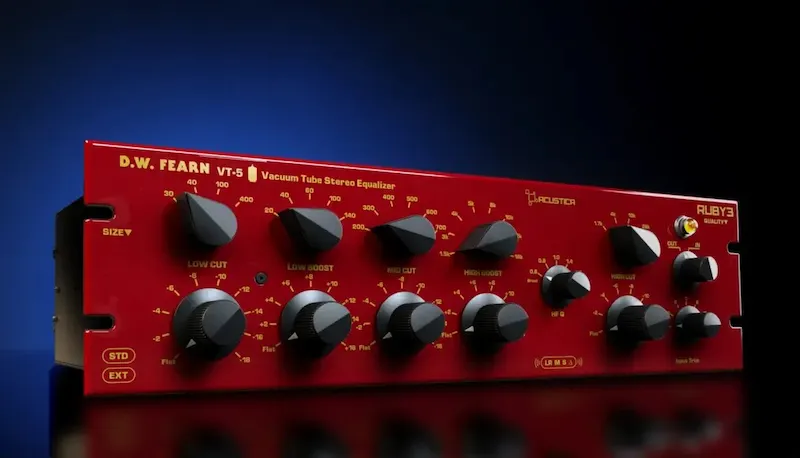
Acustica Audio Salt 2 release — unified analog EQ plugin with continuous control
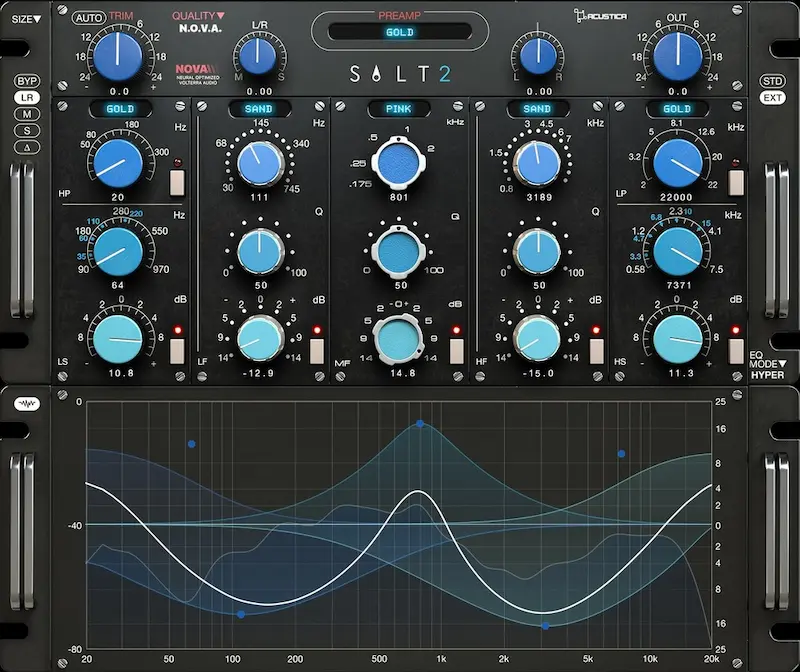
Acustica Audio Salt 2 has officially been released as a new EQ plugin that merges the company’s Gold, Pink, and Sand lines into a single interface. Positioned as a workflow upgrade rather than a new sound engine, Salt 2 introduces continuous frequency control, unified parameters, and improved performance through updated processing architecture.
For engineers working in mixing and mastering, this release targets a long-standing issue: analog-style EQs that sound musical but slow down decision-making due to fixed controls and inconsistent layouts.
Quick facts: Acustica Audio Salt 2
- Type: Analog-modeling EQ plugin
- Formats: VST3, AU, AAX
- OS support: Windows 10+, macOS 10.15+
- Intro price: €99 (until May 13, 2026)
- Regular price: €199
- Core update: Continuous frequency control + unified workflow
What Acustica Audio Salt 2 actually changes
The headline feature of Acustica Audio Salt 2 is not a new model, but a structural shift. Instead of separate plugins for Gold, Pink, and Sand, all three EQ characters now operate within a single system with identical controls.
This directly removes one of the main limitations of analog EQ emulations: fixed frequency points. In Salt 2, frequencies are fully continuous, allowing faster and more precise adjustments without abandoning analog-style curves.
The plugin runs on a combination of two internal technologies:
- NOVA — focuses on harmonic behavior and dynamic interaction
- Hyper — improves CPU efficiency and session stability
The result is a hybrid approach: analog response with a more modern control layer.
How Salt 2 fits into modern mixing and mastering
In real-world workflows, Salt 2 EQ plugin is not designed for corrective tasks. It operates later in the chain, where tone and movement matter more than precision.
Typical applications include:
- Mastering — subtle tonal shaping and harmonic depth
- Mix bus processing — cohesion and low-level saturation
- Vocal finishing — smoothing upper mids without digital harshness
The continuous control improves usability, but the underlying behavior remains non-linear. Gain staging still affects results, and harmonic buildup is part of the process.
In professional environments, tools like Salt 2 are used alongside surgical EQs, not instead of them. That separation between correction and character is standard in high-end production. For projects where translation across systems is critical, engineers often rely on external mastering as the final step — see dedicated mastering workflows for context on how tonal decisions are finalized beyond a single plugin.
Key features in practice (not marketing)
- Three EQ models — distinct tonal responses derived from Gold, Pink, Sand
- Continuous frequency control — removes stepped analog limitations
- Auto Gain — stabilizes level perception during adjustments
- Monitoring tools — delta and band listening modes
- Preamp stage — harmonic saturation tied to signal level
- Unified interface — consistent workflow across all modes
The practical gain here is speed. Engineers can move between tonal profiles without relearning controls or breaking flow.
Where Salt 2 holds up — and where it doesn’t
Where it delivers:
- Improved workflow compared to legacy Acustica plugins
- Analog-style harmonic response remains intact
- Flexible frequency control solves a real usability issue
Where it falls short:
- Not a new sonic category — core sound is familiar
- CPU load remains high compared to modern digital EQs
- Transient preservation is conditional, not guaranteed
- Still unsuitable for surgical corrections
The marketing frames this as removing analog EQ limitations. In reality, it removes interface limitations — not behavioral ones.
Positioning vs competing EQ plugins
Acustica Audio Salt 2 sits between established categories:
- FabFilter Pro-Q 4 — precision, speed, zero coloration
- Kirchhoff EQ — hybrid flexibility with advanced control
- UAD analog EQs — character with fixed constraints
Salt 2 is more flexible than traditional analog models, but less precise than digital EQs. That makes it a secondary tool in most professional setups.
It’s not competing for the same role as Pro-Q 4. It’s competing for the “tone stage” position after correction is already done.
Who Salt 2 is actually for
- Mixing engineers looking to add analog character without workflow friction
- Mastering engineers working with subtle tonal shaping
- Producers who already separate correction and coloration stages
Not ideal for:
- Beginners needing a single all-purpose EQ
- Fast-turnaround sessions with strict CPU limits
- Precision-heavy corrective workflows
Pricing and availability
- €99 intro price until May 13, 2026
- €199 full price after promotion
- Upgrade paths available for existing Acustica users
The pricing places Salt 2 in the mid-range of professional plugins, but its role is specialized rather than universal.
Verdict
Acustica Audio Salt 2 is not a breakthrough in analog modeling. It’s a correction of workflow inefficiencies that previously limited Acustica’s usability.
That shift matters.
- Better control without abandoning analog behavior
- Faster decision-making inside sessions
- Still constrained by CPU and non-linear response
Salt 2 works best as a tone-shaping stage — not as a primary EQ.
For engineers who already structure their chains correctly, it fits. For those expecting an all-in-one solution, it won’t.