Effectrix 2 Review: A Creative Multi-Effect Sequencer for Modern Electronic Production
Creative effects are no longer a niche production technique. Stutter edits, reverses, rhythmic looping, tape-stop transitions, granular textures, and sequenced modulation have become standard tools across EDM, techno, drum & bass, bass music, and modern pop production. The question is no longer how to create these effects. Every major DAW can accomplish them with enough editing, automation, and routing.
As productions become more complex, producers increasingly rely on tools that shorten the distance between an idea and a usable result. A creative effect that takes thirty seconds to build often gets used. The same effect requiring ten minutes of editing frequently gets abandoned. This reality explains why Effectrix has remained part of many professional workflows long after its original release.
Effectrix 2 enters a market crowded with multi-effects, modulation systems, and advanced sound design environments. Producers can choose from dedicated glitch processors, modular effects platforms, automation-driven plugins, and increasingly sophisticated DAW-native solutions. On paper, many of these tools appear capable of achieving similar results.
Developed by Sugar Bytes, Effectrix has maintained a strong reputation among electronic producers for more than a decade. Unlike many creative plugins that experience brief popularity before being replaced by newer alternatives, Effectrix has survived multiple production trends because its workflow addresses a practical problem rather than a temporary sound aesthetic.
Yet Effectrix continues to occupy a distinct position because its value is not defined by individual effects. Reverse, looping, filtering, stretching, and gating are widely available elsewhere. What separates Effectrix is the speed at which those processes can be combined, sequenced, and integrated into an arrangement.
For producers evaluating Effectrix 2 today, the central question is not whether it can generate creative effects. That has never been in doubt. The more relevant question is whether its workflow still provides a meaningful advantage in modern audio production, and whether that advantage translates into better arrangements, faster decision-making, and stronger mix outcomes.
On this page:
- Why Creative Sequencing Tools Still Matter
- What Makes Effectrix 2 Different
- Features That Still Matter in 2026
- The Most Useful Effects in Real Productions
- How Effectrix Affects Mixing Decisions
- Where Effectrix 2 Falls Short
- Effectrix 2 vs Modern Alternatives
- Who Should Use Effectrix 2
- Translation, Streaming & Mastering
- Final Verdict
Why Creative Sequencing Tools Still Matter in Modern Production
Building complex effect sequences through traditional editing often requires multiple automation lanes, clip duplication, routing changes, and rendered audio files. The results can be excellent, but the process is slow. More importantly, it interrupts decision-making during the arrangement stage, where momentum often matters more than precision.
That is where sequenced multi-effects continue to earn their place in professional sessions. Instead of treating creative processing as a series of isolated edits, they allow effects to become part of the arrangement itself. Transitions, fills, breakdowns, and rhythmic variations can be programmed as patterns rather than constructed one event at a time.
Effectrix was one of the earliest plugins built around this concept, and its core design remains relevant because the underlying production problem has not changed. Producers still need fast ways to introduce movement without stopping to build every effect manually.
The plugin’s grid-based workflow encourages a different approach to arrangement design. Rather than asking where a single effect should be inserted, users begin thinking in terms of recurring patterns, evolving phrases, and programmed transitions. That distinction is a major reason Effectrix continues to appear in modern production workflows despite the rise of more advanced modulation and multi-effect platforms.
What Actually Makes Effectrix 2 Different
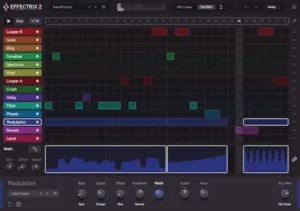 Most creative multi-effects compete by adding more modules, more modulation sources, or more complex routing options. Effectrix 2 takes a different approach. Its advantage is not the effects themselves. Nearly every process inside the plugin—looping, reverse playback, filtering, stretching, gating, scratching, and bit reduction—can be recreated with other tools.
The distinction lies in how those effects are deployed.
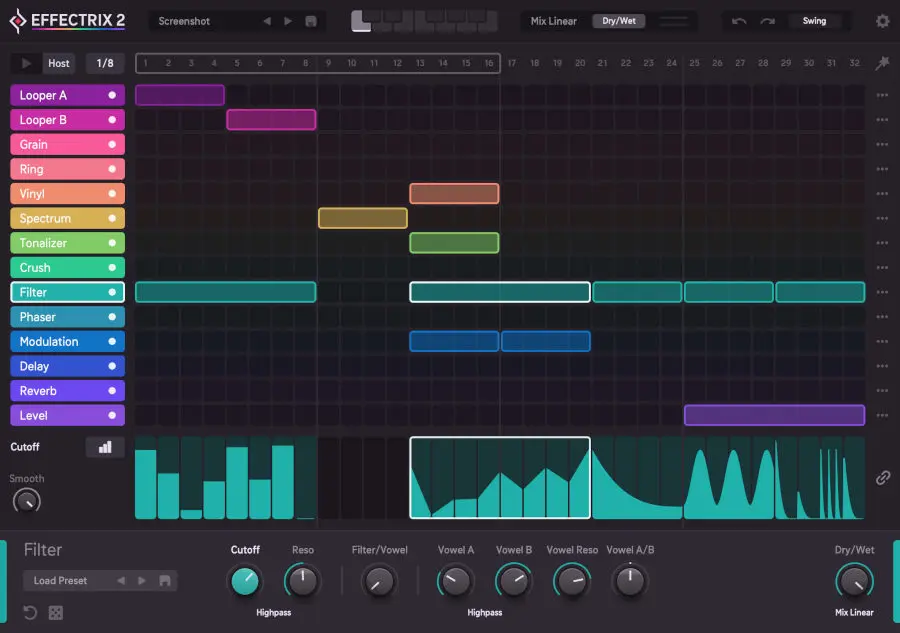
Rather than functioning as a conventional insert processor, Effectrix operates more like a sequencing environment. Effects are placed inside a time-based grid, allowing users to program processing as part of the arrangement rather than apply it as a static layer across an entire track.
This seemingly simple design changes the role of effects within a production. Instead of reacting to a finished arrangement, producers can build transitions, fills, rhythmic variation, and movement while the arrangement is still taking shape. Effects become compositional tools rather than post-production enhancements.
That workflow is particularly effective in genres where momentum depends on constant variation. A drum pattern can gain movement without additional editing. A synth phrase can evolve without rewriting MIDI. A transition can be developed in seconds rather than assembled from multiple automation passes and rendered audio clips.
Just as importantly, the visual grid encourages experimentation. Producers can test ideas rapidly, remove them instantly, and compare alternatives without disrupting the session. The process feels closer to programming rhythmic events than managing automation data.
This remains one of Effectrix’s strongest advantages over many modern alternatives. While competing plugins may offer deeper modulation systems or more advanced signal processing, they often require a greater investment of time before producing usable musical results.
Effectrix prioritizes immediacy. In practice, that can be more valuable than having the deepest feature set. Production bottlenecks rarely occur because engineers lack processing options. More often, they occur because turning an idea into a finished musical event takes longer than it should.
Unlike many modern multi-effect plugins, Effectrix 2 is built around a trigger matrix rather than a traditional modulation system. The plugin combines fourteen effect modules inside a pattern sequencer that allows individual processors to be activated rhythmically across the timeline. This architecture is a major reason why Effectrix feels fundamentally different from conventional multi-effects despite sharing many of the same processing categories.
Which Effectrix 2 Features Still Matter in 2026?
Software trends change quickly, but several aspects of Effectrix have remained unusually resilient. The trigger matrix continues to be one of the fastest interfaces available for programming rhythmic effects. The fourteen built-in processors cover most transition and arrangement tasks without requiring external routing. Preset browsing remains practical because patterns are immediately visible rather than hidden behind multiple modulation pages.
Perhaps more importantly, Effectrix still avoids the complexity inflation seen in many modern production tools. While competing platforms have expanded into comprehensive modulation ecosystems, Effectrix remains focused on rapid arrangement manipulation. That narrower scope has helped the plugin age better than many feature-heavy alternatives.
The Effects That Deliver the Most Value in Real Productions
Effectrix includes a broad collection of processors, but only a handful tend to become regular parts of professional workflows. The most useful modules are not necessarily the most extreme. In commercial productions, the effects that survive to the final release are usually the ones that improve arrangement flow, reinforce transitions, or create variation without disrupting the mix.
Loop remains one of the plugin’s most practical tools. Short repetitions can increase tension before a drop, reinforce rhythmic momentum, or create separation between arrangement sections. Because looping can be sequenced directly inside the grid, these edits feel integrated into the groove rather than layered on top as an afterthought.
Reverse is equally valuable for transition design. Reverse processing has become a standard production technique because it naturally directs the listener’s attention forward. In Effectrix, reverse events can be programmed quickly and adjusted in context without creating additional audio files or rebuilding edits inside the DAW.
Stretch and Scratch are often most effective when used sparingly. Both can introduce movement that would otherwise require substantial manual editing, particularly in electronic genres where variation is expected but complete arrangement changes are unnecessary.
Filter may be the least glamorous module in the plugin, but it is arguably one of the most useful. Filtering remains one of the safest ways to generate energy, create anticipation, and reshape transitions without compromising mix balance. Many producers will use Filter more frequently than some of the plugin’s more experimental processors.
At the opposite end of the spectrum are effects such as Crush, Tonal Delay, and more aggressive manipulation tools. These processors can be highly effective for sound design, but they tend to deliver the strongest results when treated as occasional events rather than constant layers within an arrangement.
This distinction separates effective production from effect-driven production. The modules that draw the most attention during preset browsing are not always the ones that contribute most to a finished record. In practice, successful mixes rely on controlled contrast. Creative processing is most effective when it highlights specific moments rather than competing with every element in the track.
Three Real-World Effectrix Workflows That Save Time
Many reviews discuss Effectrix in terms of effects. The more useful question is where it actually saves production time.
One common example is EDM transition design. A producer building a pre-drop section may need reverse sweeps, loop rolls, filter movement, and rhythmic interruption across several bars. Accomplishing the same result manually often requires multiple automation lanes, rendered audio files, and clip editing. Effectrix allows those events to be programmed from a single interface.
In techno, the plugin is often used less aggressively. Small filter movements, occasional loop repetitions, and subtle rhythmic variation can prevent repetitive patterns from becoming static without rewriting the arrangement.
Drum & bass producers frequently use Effectrix to create fills between phrases. Instead of editing individual drum hits, loop-based processing can generate variation quickly while preserving the underlying groove.
The common thread is efficiency. Effectrix rarely enables something that cannot be done manually. Its value comes from reducing the amount of time required to reach a usable musical result.
How Effectrix 2 Affects Mixing Decisions
One of the most overlooked aspects of creative effect plugins is their influence on the mix long after the production stage is finished. Many of the problems that appear later during mastering actually originate during production, particularly when heavy creative processing is applied without considering how the mix will translate. Proper preparation before mastering becomes increasingly important in these situations, especially when complex transitions, stutters, and rhythmic effects are involved. Learn more in our guide: Prepare Mix for Mastering.
Effectrix can reshape transient structure, stereo information, perceived loudness, rhythmic consistency, and frequency distribution. Those changes may sound exciting during sound design but can introduce challenges once a track moves toward final mixing and mastering.
Creative processing rarely becomes problematic because of a single effect. Problems emerge when multiple layers of rhythmic manipulation accumulate across the arrangement, gradually reducing separation between important musical events.
A looped fill that works perfectly on its own may compete with drum transients once additional layers are introduced. A reverse sequence can blur vocal phrasing. Repeated stutter edits may create the impression of increased energy while actually reducing contrast between arrangement sections. The more processing is applied across multiple elements, the more difficult it becomes to maintain separation and focus.
This is particularly noticeable in modern electronic productions where arrangements are already dense. When every section contains movement, automation, glitches, reverses, and rhythmic manipulation, the listener eventually stops perceiving those moments as special events. The arrangement becomes active without becoming more engaging.
One of the most common workflow mistakes is inserting Effectrix across full buses or large sections of the mix simply because the effect sounds impressive during composition. While this can produce immediate excitement, it often creates problems later. Groove can become less stable, transitions can lose definition, and low-frequency elements may begin behaving inconsistently from section to section.
In practice, Effectrix tends to deliver stronger results when applied selectively. Individual synth layers, percussion elements, vocal throws, risers, fills, and transitional sounds usually benefit more from sequenced processing than complete instrument groups or mix buses. This approach allows the effect to remain noticeable without dominating the arrangement.
There is also a broader mixing principle at work. Contrast is one of the primary drivers of perceived energy. A breakdown feels larger when the surrounding sections are controlled. A transition feels more dramatic when it interrupts stability. Creative processing becomes less effective when it is present everywhere.
Viewed through that lens, Effectrix functions best as a contrast-enhancement tool rather than a constant source of movement. Its strongest results often come from highlighting specific moments, creating anticipation, and directing attention toward key arrangement events rather than continuously processing large portions of a mix.
Critical Evaluation: Where Effectrix 2 Falls Short
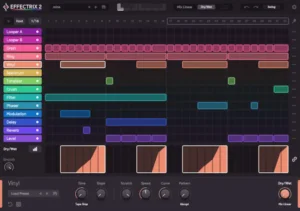 Effectrix 2 remains a highly effective creative workflow tool, but it is not the most flexible platform in its category. Its strengths become clear quickly, and so do its limitations.
The most important limitation is architectural rather than sonic. Effectrix is built around a pattern-based sequencing model, which makes it fast and intuitive for rhythmic manipulation. That same design can become restrictive when projects require highly customized modulation, complex parameter relationships, or non-linear effect behavior.
Modern competitors increasingly offer deeper control over modulation routing, macro assignment, signal flow, and effect interaction. Producers working in advanced sound design environments may eventually reach a point where Effectrix feels more like a creative sketchpad than a fully expandable processing system.
This does not make the plugin obsolete. It simply defines its role. Effectrix excels at generating ideas quickly. It is less effective when a project demands extensive customization at every stage of the signal chain.
Another weakness is predictability. Because the workflow is so efficient, many users arrive at similar solutions. Certain combinations of stutter edits, reverse transitions, gated patterns, and loop-based fills have become familiar production tropes across electronic music. The plugin makes these techniques accessible, but accessibility often leads to repetition.
The risk is not in the processing itself. The risk is allowing the plugin to dictate arrangement decisions. Tracks can begin to share similar transition structures, similar breakdown treatments, and similar moments of tension simply because those solutions are immediately available inside the interface.
Experienced producers typically avoid this trap by treating Effectrix as a source of raw material rather than a finished result. Effects are resampled, edited, layered, automated further, and combined with additional processing before becoming part of the final production. In many professional workflows, the plugin generates the idea, while subsequent editing creates the unique outcome.
There is also a broader arrangement concern. Creative processing almost always increases density. Additional repeats, modulation, harmonics, rhythmic events, and stereo movement all compete for attention within the same listening space. When used aggressively across multiple elements, Effectrix can make a production feel busy without making it feel larger.
This distinction becomes especially important during mixing. Records rarely suffer because they contain too little movement. More often, they suffer because every element is competing to be the focal point at the same time. Excessive creative processing can reduce contrast between sections, weaken musical hierarchy, and make transitions feel less impactful despite containing more activity.
For that reason, Effectrix tends to produce its strongest results when applied selectively. The plugin rewards intentionality far more than constant use. In many cases, a single well-placed sequence creates more impact than continuous processing throughout an entire arrangement.
Marketing Claims vs Production Reality
Creative effects plugins are often marketed as tools that can instantly make a track more exciting, more modern, or more professional. While Effectrix is capable of producing dramatic results, that framing oversimplifies how creative processing functions within a finished production.
Effectrix does not fix structural problems. It cannot rescue a weak arrangement, compensate for poor sound selection, or create energy that is missing from the composition itself. If a section lacks momentum before processing, adding stutters, reverses, or rhythmic effects rarely solves the underlying issue. More often, it disguises it temporarily.
Where the plugin succeeds is in enhancing material that already works. A strong groove can gain additional movement. A transition can become more engaging. A repetitive phrase can evolve without requiring major arrangement changes. The plugin amplifies existing strengths far more effectively than it corrects existing weaknesses.
This distinction becomes increasingly important as productions approach release. Many creative effects generate an immediate sense of excitement during solo playback or short listening sessions. That same processing may contribute very little to the overall impact of the record once every element is competing for attention.
Professional productions rarely rely on effects to create the core listening experience. The arrangement, sound selection, groove, and musical identity carry that responsibility. Creative processing works best when it reinforces those elements rather than attempts to replace them.
The same principle applies beyond creative effects. Whether the tool generates transitions, textures, or atmospheres, production fundamentals remain the deciding factor. We observed a similar pattern in our analysis of The Crow Hill Company Crystal Pads, where the value of the instrument depended far more on arrangement context and mix integration than on the raw sound of the patches themselves.
This is one reason heavily effect-driven productions often feel dated after trends change. The techniques remain recognizable, but the underlying musical foundation is not strong enough to support repeated listening. By contrast, records built on solid production fundamentals tend to remain effective even when the specific effects used on them fall out of fashion.
Viewed through that lens, Effectrix is best understood as an enhancement tool rather than a solution generator. Its value is not measured by how dramatically it can alter audio, but by how effectively it can support ideas that are already working inside the arrangement.
Competitive Positioning: How Effectrix 2 Compares to Modern Alternatives
Effectrix 2 no longer occupies a category of its own. The modern creative effects market includes sophisticated modulation platforms, advanced multi-effects, and highly specialized sequencing tools. As a result, most producers evaluating Effectrix today are not deciding whether to use creative processing. They are deciding which workflow best fits the way they build tracks.
That distinction is important because these products often overlap in functionality while serving very different production styles.
| Plugin | Primary Focus | Workflow Approach | Best Application | Main Limitation |
|---|---|---|---|---|
| Effectrix 2 | Sequenced creative effects | Grid-based pattern programming | Transitions, arrangement movement, remixing | Less flexible modulation architecture |
| Looperator | Loop and slice manipulation | Pattern-driven sequencing | Beat edits, rhythmic variation, loop-based production | More specialized feature set |
| ShaperBox | Modulation and automation control | Envelope and LFO-driven processing | Mixing, dynamic movement, precision shaping | Requires deeper setup |
| Infiltrator | Advanced multi-effect modulation | Modular-style signal design | Complex sound design and experimental processing | Higher workflow complexity |
The comparison most producers make today is not Effectrix versus Looperator. It is Effectrix versus ShaperBox. While both tools create movement, they approach the problem from opposite directions. ShaperBox focuses on modulation, automation, and precision control. Effectrix focuses on pattern sequencing, arrangement enhancement, and speed. Producers often choose between control and immediacy rather than sound quality alone.
The most significant difference between these tools is not sound quality. It is workflow philosophy.
ShaperBox is fundamentally a modulation platform. It excels when producers need precise control over movement, dynamics, stereo imaging, filtering, and automation behavior. Many mixing engineers prefer it because the modulation system can be integrated into highly controlled workflows.
Infiltrator approaches the problem from a sound design perspective. Its strength lies in deep effect interaction, extensive routing possibilities, and sophisticated modulation options. For producers building highly customized processing chains, it offers significantly more flexibility than Effectrix.
Looperator sits closer to Effectrix conceptually. Both plugins emphasize sequenced manipulation and rhythmic processing. However, Looperator remains more narrowly focused on slicing, looping, and pattern-driven audio transformation, while Effectrix covers a broader range of transition and arrangement effects.
Effectrix occupies the middle ground between these approaches. It offers enough creative flexibility to reshape a production while remaining significantly faster than many deeper modulation environments. That balance is the primary reason it has remained relevant despite increasing competition.
For producers focused on advanced sound design, Effectrix may eventually feel limiting. For engineers seeking surgical modulation control, other platforms may provide greater precision. Its strongest use case remains arrangement enhancement—creating movement, transitions, variation, and rhythmic interest without turning the creative process into a programming exercise.
Viewed from that perspective, Effectrix is not necessarily competing against more advanced tools. It is competing against the time required to achieve similar results manually. That remains one of its strongest advantages in modern production workflows.
Who Should Use Effectrix 2 — And Who Probably Shouldn’t
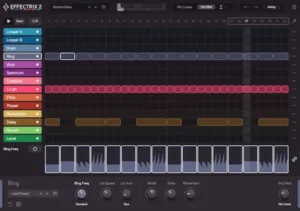 Whether Effectrix 2 is the right choice depends less on genre and more on workflow.
Producers who build tracks around transitions, evolving arrangements, and rhythmic variation will likely see immediate value. The plugin is particularly well suited to electronic music workflows where movement is a core part of the arrangement rather than an occasional production detail. Techno, drum & bass, EDM, bass music, and modern remix production all fall into this category.
Effectrix is also a strong fit for producers who prefer rapid experimentation. Its interface encourages quick decision-making and allows ideas to be tested without committing to extensive editing, routing, or automation work. For many users, the plugin becomes less of an effects processor and more of an arrangement tool.
That advantage becomes especially noticeable in deadline-driven environments. Remixers, content producers, and electronic artists working through multiple versions of a track can generate transitions, fills, and movement significantly faster than with traditional editing workflows.
At the same time, not every production environment benefits equally from what Effectrix offers.
Engineers focused primarily on corrective processing, precision automation, or detailed mix control may find limited value in its workflow. The plugin was not designed to solve mixing problems, perform surgical processing, or function as a modulation laboratory. Other tools are better suited to those tasks.
Its relevance also decreases as productions move toward more acoustic and performance-driven genres. In traditional rock, jazz, singer-songwriter, orchestral, or live-recorded projects, arrangement decisions are often driven by performance dynamics rather than programmed effect sequences. While Effectrix can still be used creatively in those contexts, it is rarely essential.
Producers who already work extensively with modular effect environments may reach a similar conclusion. If a workflow already includes advanced routing, custom modulation systems, and highly configurable multi-effects, the speed advantage that makes Effectrix attractive becomes less significant.
Ultimately, Effectrix delivers the most value to producers who prioritize arrangement movement over deep signal-chain customization. It is a workflow tool first and an effects collection second. Understanding that distinction is often the difference between a plugin that becomes part of a daily template and one that sits unused after the initial excitement wears off.
Real-World Production Perspective: Translation, Loudness, Streaming, and Mastering
Most reviews evaluate creative effects inside a production session. Far fewer examine what happens after the track leaves the studio.
That distinction matters because many Effectrix-based techniques alter more than texture and movement. They can influence transient definition, stereo localization, perceived loudness, spectral balance, and the way listeners perceive arrangement dynamics across different playback systems.
Translation is often the first challenge.
Effects that sound dramatic on studio monitors do not always retain the same impact on consumer playback systems. Rapid gating, micro-looping, granular processing, and aggressive stereo manipulation can become less defined on earbuds, Bluetooth speakers, laptops, and automotive systems where playback conditions are less controlled.
The issue becomes even more apparent once a track passes through streaming codecs. Modern encoding systems generally perform well, but heavily manipulated material can expose weaknesses that remain unnoticed during production. Dense transient clusters, exaggerated stereo information, and complex high-frequency movement may not translate as cleanly after compression as they do inside the DAW.
For that reason, producers working extensively with Effectrix should evaluate key sections across multiple playback environments before considering a mix complete. The goal is not to eliminate creative processing, but to verify that important musical information survives outside the studio.
Loudness introduces another layer of complexity. Many producers mistake increased activity for increased impact, especially when using stutters, loop fills, and aggressive transition effects. However, perceived loudness and actual loudness are not the same thing. Understanding the difference becomes critical during mastering, particularly when chasing competitive levels without introducing distortion or clipping. For a deeper explanation, see Loudness vs Clipping in Mastering. Many sequenced effects create the perception of increased energy without producing meaningful increases in musical impact. Repeated stutters, loop fills, gated passages, and transient-heavy transitions often make a section feel busier while contributing little to the emotional progression of the arrangement.
This can become problematic during mastering.
These challenges become even more apparent during modern loudness optimization. While tools such as Effectrix shape movement and arrangement energy, mastering processors are ultimately responsible for preserving clarity, dynamics, and translation at competitive release levels. We explored this balance in our review of Pulsar Modular P21 Atlas, a processor designed specifically around the relationship between loudness, Atmos delivery, and final-stage mastering decisions.
Mastering engineers frequently encounter productions where effect-driven sections consume so much attention that larger arrangement moments lose their impact. A build-up packed with constant movement can make a drop feel smaller. A transition overloaded with processing can reduce anticipation rather than increase it. More activity does not automatically create more excitement.
This is one of the most common reasons producers feel disappointed after mastering. In many cases, the master is not the source of the problem. The arrangement, density, and effect decisions made earlier in production are already limiting the result. We explore these scenarios in greater detail in Mastering Problems: Why Your Track Sounds Worse After Mastering.
The most successful productions maintain a clear hierarchy of attention. The listener should always recognize the primary musical event, whether that is a vocal, lead synth, groove, or drop. Creative effects are most effective when they direct attention toward those moments rather than compete against them.
There is also a practical workflow consideration. Experienced producers often print or resample Effectrix processing once a creative decision is finalized. Beyond reducing session complexity, this approach encourages further refinement. Rendered effects can be edited, layered, automated, filtered, or combined with additional processing in ways that are often more flexible than leaving every decision inside the plugin.
Viewed from a mixing and mastering perspective, the strongest Effectrix productions are rarely the most complex. They are the ones where creative processing remains intentional, translates reliably across playback systems, and supports the larger arrangement rather than becoming the focal point of the record.
Overall Rating
| Category | Rating |
|---|---|
| Workflow Efficiency | 9.5/10 |
| Creative Sequencing | 9/10 |
| Arrangement Enhancement | 9.5/10 |
| Mix Translation Impact | 8/10 |
| Sound Design Flexibility | 7.5/10 |
| CPU Efficiency | 9/10 |
| Value for Money | 8.5/10 |
| Overall | 8.7/10 |
Our rating reflects Effectrix 2’s position as a workflow-focused production tool rather than a deep sound design environment. The plugin scores exceptionally well for arrangement enhancement, transition design, and creative sequencing, but trails more modular competitors in customization and advanced modulation flexibility. For producers whose priority is moving quickly from an idea to a finished arrangement, its workflow advantages remain among the strongest in the category.
Verdict
Effectrix 2 remains one of the most practical creative effect plugins available, not because it offers the deepest modulation system or the most advanced processing architecture, but because it solves a workflow problem that still exists in modern production.
Many competing tools can achieve similar sonic results. Few can reach those results as quickly. Effectrix reduces the amount of editing, automation, routing, and setup required to create transitions, rhythmic variation, fills, and arrangement movement. That efficiency is the primary reason it continues to appear in professional production environments years after its original release.
Its strengths are clear. The workflow is fast, intuitive, and highly effective for electronic music production. The plugin encourages experimentation, supports rapid idea generation, and allows producers to integrate creative processing directly into the arrangement process rather than treating effects as a separate stage of production.
Its limitations are equally clear. Producers seeking deep modulation ecosystems, extensive routing flexibility, or highly customized sound design environments will find more powerful options elsewhere. Effectrix prioritizes speed over complexity, and that design philosophy will not suit every workflow.
The biggest risk is not a lack of capability but excessive reliance on it. Used strategically, Effectrix can create contrast, anticipation, and movement that strengthen a track. Used indiscriminately, it can reduce arrangement focus, weaken musical hierarchy, and make productions feel unnecessarily busy.
Professional mastering engineers evaluate these decisions from a different perspective than producers do during the creative stage. The focus shifts from effect design to translation, balance, consistency, and long-term listenability across playback systems. If you’re curious how those evaluations happen in practice, see our guide on How Professional Mastering Works.
For producers working in EDM, techno, drum & bass, bass music, remix production, and other arrangement-driven genres, Effectrix remains a relevant and highly effective tool. Not because it replaces traditional production techniques, but because it allows those techniques to be implemented faster and with less interruption to the creative process.
That is ultimately where its value lies. Effectrix is not the most powerful creative effects platform on the market. It is one of the fastest ways to turn an arrangement idea into a usable musical result.

Yurii Ariefiev is a mastering engineer and audio production editor specializing in mix translation, mastering preparation, and release-ready audio workflows. His editorial work focuses on how production decisions made during arrangement, sound design, and mixing affect the final master across streaming platforms and real-world playback systems.
This article evaluates Effectrix 2 from a practical production perspective, examining not only its creative capabilities but also its impact on mix clarity, loudness perception, arrangement contrast, and mastering outcomes in modern electronic music releases.
Key Takeaways
- Effectrix 2 remains one of the fastest creative sequencing plugins available.
- Its primary strength is workflow rather than individual effects.
- It excels in EDM, techno, drum & bass, and remix production.
- ShaperBox offers deeper modulation, while Effectrix offers faster arrangement editing.
- Excessive use can reduce mix clarity and arrangement contrast.
FAQ
Is Effectrix 2 useful for mixing or mainly for production?
Effectrix is primarily a production and arrangement tool. While it can be used during mixing for vocal throws, transition effects, percussion movement, and creative automation, it is not designed to replace traditional mixing processors such as EQs, compressors, or saturation tools.
Can Effectrix 2 be used on vocals?
Yes. Many producers use Effectrix on vocal phrases, ad-libs, backing vocals, and transition moments. Reverse processing, looping, filtering, and rhythmic gating can create movement without requiring extensive manual editing.
Does Effectrix 2 work well for mastering?
Not in a conventional mastering workflow. Most mastering engineers avoid placing sequenced creative effects across an entire mix. Its most practical mastering-related applications involve intros, outros, transition sections, and experimental projects rather than full-track processing.
How does Effectrix 2 compare to ShaperBox?
They solve different problems. ShaperBox is built around detailed modulation and automation control, while Effectrix focuses on rapid effect sequencing and arrangement-based creative processing. Producers often use both because they occupy different roles within a workflow.
Can Effectrix 2 replace manual automation?
For many creative tasks, yes. It can dramatically reduce the amount of editing required to build transitions, fills, and rhythmic effects. However, complex productions still benefit from dedicated automation, detailed editing, and custom parameter control.
Is Effectrix 2 suitable for techno production?
Techno producers frequently use it to introduce variation into repetitive arrangements. Looping, filtering, reverse effects, and subtle rhythmic manipulation can create movement without fundamentally changing the groove.
How demanding is Effectrix 2 on CPU resources?
CPU usage is generally reasonable on modern systems. In larger projects, workflow efficiency becomes a bigger consideration than processor load. Many producers eventually render or resample Effectrix processing to simplify session management and preserve creative decisions.
What genres benefit most from Effectrix 2?
Its strongest applications are found in EDM, techno, drum & bass, bass music, trap, glitch-oriented production, electronic pop, remix production, and cinematic electronic scoring where arrangement movement plays a central role.
How does Effectrix 2 compare to Looperator?
Looperator is more specialized around loop manipulation and rhythmic slicing. Effectrix covers a wider range of creative processing tasks, making it better suited for producers who want a broader transition and arrangement toolkit.
Does Effectrix 2 help tracks translate better on streaming platforms?
No plugin guarantees better translation. In fact, excessive creative processing can create translation issues if stereo movement, transient density, or high-frequency content become overly aggressive. Effective use of Effectrix typically involves moderation rather than maximum complexity.
Is Effectrix 2 still relevant in 2026?
Yes. Despite growing competition from advanced modulation platforms and modular multi-effects, Effectrix remains one of the fastest tools for creating transitions, rhythmic variation, and arrangement movement. Its workflow continues to be its primary advantage.
What is the biggest mistake producers make with Effectrix?
Overusing it. Many arrangements lose impact when every section contains stutters, loops, reverses, and constant movement. The most effective productions use creative processing selectively, preserving contrast between major musical moments.
Is Effectrix 2 worth buying in 2026?
For producers who regularly build transitions, fills, and rhythmic effects, Effectrix remains highly relevant. While newer platforms offer deeper modulation systems, few provide the same balance of speed, usability, and arrangement-focused workflow.
What makes Effectrix 2 different from a standard multi-effect plugin?
Most multi-effects process audio statically or rely on automation. Effectrix is built around pattern sequencing, allowing effects to become part of the arrangement itself rather than a conventional insert effect.
Can Effectrix 2 create glitch effects?
Yes. Glitch processing remains one of the plugin’s strongest applications. Looping, reverse playback, gating, scratching, stretching, and rhythmic sequencing can all be combined to create complex glitch-style effects without extensive manual editing.
Can Effectrix 2 be used for sound design?
Yes, but it is not primarily a sound design platform. While the plugin can generate unique textures, glitches, transitions, and rhythmic transformations, producers focused on deep modulation and complex signal routing may find dedicated sound design tools more flexible.