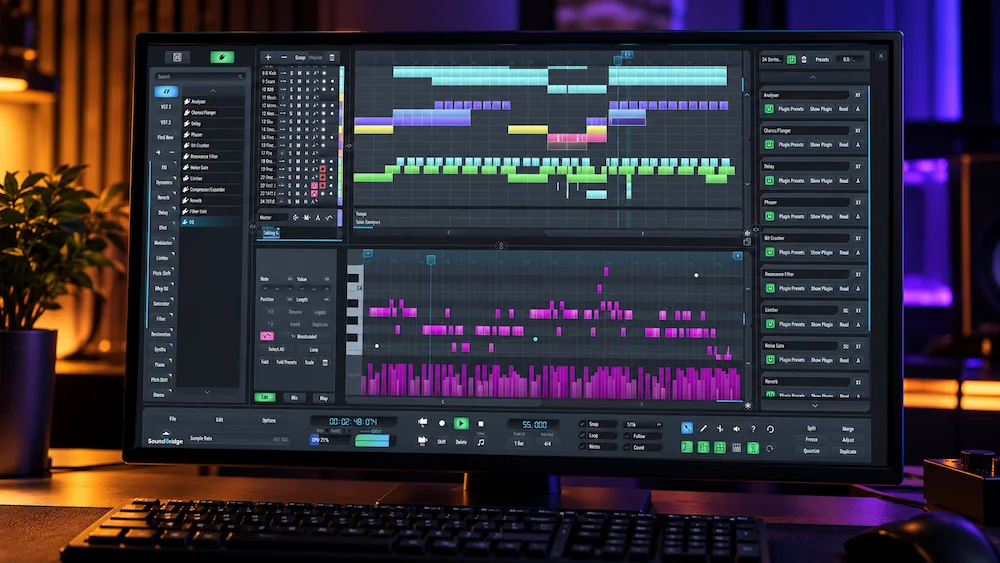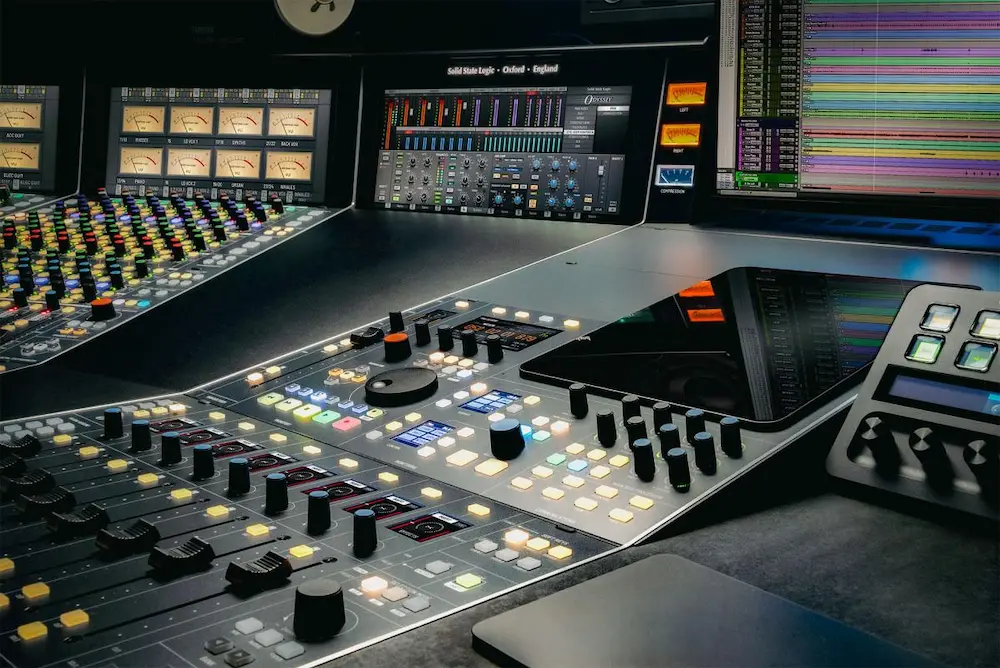
Ask almost any engineer who has spent time behind a large-format analog console what slows production down, and the answer is rarely the EQ, the compressors or the routing. It’s recall. Reopening a mix on an SSL 4000, Duality, API Vision or Neve Genesys can mean restoring hundreds of controls, rebuilding patchbay routing and verifying every setting before a single creative decision is made. Digital consoles eliminated that bottleneck years ago, but many commercial studios accepted the extra work because they weren’t willing to trade analog workflow and signal paths for convenience.
SSL Odyssey is designed around that problem. The console doesn’t promise a radically different SSL sound, nor does it introduce a completely new channel strip. Its biggest claim is operational: bringing instant, console-wide recall to a fully analog architecture through SSL’s ActiveAnalogue control system. The real question isn’t whether Odyssey sounds like an SSL console—it does—but whether eliminating manual recall fundamentally changes the economics and practicality of running a high-end analog studio.
That question carries more weight today than it did twenty years ago. Modern productions rarely move in a straight line from tracking to mix. Projects cycle through overdubs, client revisions, alternate mixes, stem deliveries, Dolby Atmos versions and streaming masters, often weeks apart. Every additional deliverable increases the cost of maintaining an analog workflow unless session recall becomes nearly instantaneous.
Instead of treating Odyssey as another flagship console announcement, it’s more useful to evaluate it as a production system. The important discussion isn’t whether its EQ sounds familiar or its preamps meet expectations. It’s whether ActiveAnalogue removes enough operational friction to make large-format analog production more competitive in an industry increasingly built around fast revisions, hybrid workflows and immediate client turnaround.
Why Analog Console Recall Has Become a Bigger Problem Than Sound Quality
 Large-format analog consoles were designed for an era when albums moved through recording, mixing and mastering as a relatively continuous process. Modern production rarely works that way. A single project may return for vocal revisions, alternate mixes, instrumental versions, streaming deliverables, Dolby Atmos releases and catalog updates months after the original session was completed. Every return to an analog console adds setup time before any engineering work can begin.
That shift has widened the operational gap between analog and digital production. A DAW restores every routing assignment, automation move and processing parameter in seconds. An analog console still depends on manual recall, engineer documentation and physical verification. In a commercial studio, those extra hours become part of the production budget rather than simply part of the engineering process.
Immersive audio has made the situation even more demanding. Facilities producing stereo, Atmos and broadcast versions of the same mix often need multiple console states for a single project. Maintaining those configurations manually increases the likelihood of small recall inconsistencies while reducing room availability for new sessions.
SSL began addressing that problem with Oracle, introducing ActiveAnalogue as a way to combine fully analog signal processing with digitally managed recall. Odyssey doesn’t change that philosophy—it scales it. Larger frame sizes, expanded routing and comprehensive console-wide recall target studios where dozens of active projects may share the same production room throughout the week.
That broader context explains why Odyssey matters. High-end console manufacturers are no longer competing solely on microphone preamps, EQ curves or bus compressors. Those designs have been refined for decades. The next competitive advantage is operational efficiency: reducing downtime between sessions without abandoning the analog workflow that many commercial engineers still prefer for tracking and mixing.
Great Gear Doesn’t Finish a Record—Mastering Does
Even the best analog workflow can’t compensate for unresolved mix translation, tonal balance or dynamic issues. If you want to hear how your track performs after professional mastering, upload up to 35 seconds of your mix and receive a free mastering demo. You’ll hear exactly what changes before deciding whether to master the full project.
Request your free mastering demo →
SSL Odyssey Prioritizes Workflow Over Reinventing Analog Sound
Engineers looking for a radically different SSL sound won’t find it here—and that appears to be intentional. Odyssey isn’t built around new equalizer curves, redesigned dynamics or experimental preamp topology. Its channel strip remains unmistakably SSL, combining PureDrive microphone preamps with adjustable Drive control, fully analog dynamics, switchable E- and G-Series EQ, dedicated filters, insert points and dual motorized faders. The innovation isn’t inside the individual processing blocks. It’s in how the console manages them.
ActiveAnalogue allows virtually every analog parameter to be stored and recalled without moving audio into the digital domain. That changes one of the biggest limitations of traditional large-format consoles. Instead of rebuilding a session from photographs, handwritten notes and patchbay documentation, engineers can restore an entire production environment in minutes while keeping the signal path fully analog.
For commercial facilities, that’s more than a convenience feature. Session recall directly affects room utilization, scheduling flexibility and client turnaround. Projects no longer need to occupy the console for days simply because recreating yesterday’s setup would consume half a session. Engineers can move between tracking, overdubs, stereo mixes, Atmos deliverables and revision work without treating recall as a production task of its own.
The console’s modular architecture supports that workflow. Odyssey scales from 24+8 to more than 96 channels, with configurable frame layouts, integrated producer sections and optional patchbay integration. SSL also moves the analog electronics into external processing racks, reducing heat and acoustic noise around the listening position while simplifying service access.
The most significant engineering question surrounding Odyssey isn’t whether its EQ sounds familiar—it does. It’s whether ActiveAnalogue can deliver long-term reliability while controlling hundreds of analog parameters with the consistency expected from modern digital production. SSL claims its architecture avoids many of the distortion, noise and power consumption compromises traditionally associated with digitally controlled analog systems, although independent long-term testing remains limited.
The practical advantages become obvious in high-volume production. A project may require stereo mixes, instrumental versions, broadcast edits, streaming masters and Dolby Atmos deliverables spread across multiple revision cycles. On a conventional analog console, every revisit begins with reconstruction. Odyssey replaces that process with session recall, allowing engineers to spend more time making decisions and less time rebuilding yesterday’s work.
Collaboration benefits as well. Multiple engineers can share the same console throughout the week without locking the room to a single project. That’s a meaningful operational improvement for commercial studios where room availability directly affects revenue.
It’s equally important to understand what Odyssey does not do. It doesn’t automate mixing, replace engineering judgment or introduce AI-assisted decision making. The console removes repetitive setup work, but every creative choice—from gain staging to compression and balance—still depends on the engineer behind the desk.
That distinction ultimately defines Odyssey’s value. It doesn’t try to convince professionals that analog suddenly sounds different. Instead, it argues that analog no longer has to operate with the workflow limitations that have traditionally made large-format consoles difficult to justify in fast-moving commercial production.
What Odyssey Changes—and What It Doesn’t
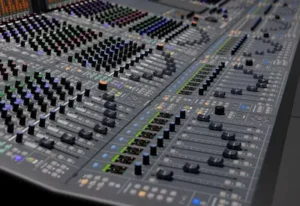 SSL describes Odyssey as a major step forward for analog production, and in several respects that claim is justified. Instant console-wide recall addresses one of the most persistent workflow limitations of large-format analog desks. That doesn’t mean every compromise associated with analog production disappears. Odyssey shifts the balance between workflow efficiency and traditional console operation, but it doesn’t eliminate the realities of owning and maintaining a flagship analog system.
The most obvious constraint is economics. Odyssey isn’t competing with hybrid studios built around a DAW, premium converters and a rack of carefully chosen outboard processors. It competes with other flagship consoles where acquisition cost extends well beyond the desk itself to include installation, acoustics, machine rooms, maintenance and long-term technical support. At that level, purchasing decisions are driven as much by facility utilization and client throughput as they are by sonic preferences.
It’s also important not to confuse ActiveAnalogue with a new form of analog processing. The microphone preamps, EQs and dynamics remain analog circuits. Digital control changes how those circuits are managed, recalled and automated—it doesn’t change their electrical behavior. Engineers expecting a fundamentally different SSL sound, or a breakthrough comparable to a new amplifier topology or compressor design, may find the innovation less dramatic than the marketing suggests.
The practical return on investment also depends heavily on workflow. Studios running multiple commercial sessions every week stand to benefit the most from instant recall because room turnover directly affects revenue. A mastering engineer working on one stereo project at a time—or a mixer who already relies on a hybrid DAW workflow with a handful of analog processors—will see a much smaller operational advantage. In many hybrid environments, software has already solved most recall challenges.
Infrastructure deserves equal consideration. Odyssey’s remote analog processing racks reduce heat and noise around the control surface, but they also introduce additional requirements for machine room space, cooling, power distribution and cable management. Studios replacing older analog consoles may need significant infrastructure upgrades before realizing the workflow benefits.
Long-term ownership raises another practical question. Traditional analog consoles remained serviceable for decades because their electronics were largely self-contained. Odyssey combines analog hardware with sophisticated digital control, software and communication systems. SSL has a strong record of supporting professional products, but long-term reliability now depends on both analog engineering and software maintenance.
Viewed objectively, Odyssey’s biggest contribution isn’t a new sonic signature. Its significance lies in making analog production substantially easier to manage inside modern commercial studios. That’s a more practical achievement than claiming audible improvements that many experienced engineers would struggle to identify in a blind comparison.
How SSL Odyssey Fits Into the High-End Console Market
Odyssey occupies one of the smallest segments of professional audio, where purchase decisions are rarely driven by specifications alone. Facilities investing in a flagship analog console evaluate long-term workflow, technical support, serviceability, client expectations and return on studio time just as carefully as microphone preamps or EQ design. In that context, Odyssey competes as much on operational efficiency as it does on audio performance.
Oracle is the most direct point of comparison because both consoles share SSL’s ActiveAnalogue architecture. The difference lies in scale rather than philosophy. Odyssey expands the concept with larger frame options, increased routing flexibility, dual-fader inline workflow and infrastructure intended for high-throughput commercial facilities rather than premium project rooms.
API Vision approaches the same market from a different direction. Its appeal has always been rooted in discrete analog circuitry and a forward, punch-focused character that remains popular for rock, country and live-band production. Odyssey doesn’t attempt to replace that sonic identity. Its advantage is operational: dramatically reducing recall time while preserving a fully analog signal path.
Neve Genesys Black targets studios that want tighter DAW integration without abandoning analog summing and outboard workflows. Compared to Odyssey, it places greater emphasis on hybrid production, whereas SSL prioritizes complete console recall and large-scale session management.
Harrison’s large-format consoles remain particularly strong in film scoring and broadcast environments, where routing flexibility often takes precedence over traditional music production workflows. Odyssey overlaps with those applications but distinguishes itself through SSL’s inline architecture and comprehensive recall system.
| Console | Primary Focus | Key Advantage | Best Suited For |
|---|---|---|---|
| SSL Odyssey | Analog workflow with instant recall | Console-wide recall, modular architecture, ActiveAnalogue | Large commercial studios, Atmos production, multi-room facilities |
| SSL Oracle | Compact ActiveAnalogue production | Same recall philosophy in a smaller footprint | Premium recording and mix rooms |
| API Vision | Classic discrete analog recording | Recognizable API tone and tracking workflow | Rock, country and live-band studios |
| Neve Genesys Black | Hybrid analog/DAW production | Integrated hybrid workflow | Studios balancing analog hardware with modern DAWs |
| Harrison 32Classic | Film and broadcast production | Advanced routing and post-production flexibility | Scoring stages and broadcast facilities |
| Avid S6 + High-End Outboard | Digital production workflow | Total DAW automation and instant session recall | Modern in-the-box commercial production |
The strongest competition may not come from another analog console at all. Many commercial studios replaced large-format desks with hybrid production systems because clients increasingly expect immediate revisions, alternate deliverables and rapid turnaround. In those environments, recall speed became more valuable than maintaining a fully analog signal path.
Odyssey directly addresses that shift. Its success won’t be measured by whether it sounds more “analog” than competing consoles—it won’t. Instead, it will depend on whether studios can recover enough productive engineering time to justify returning to large-format analog production without sacrificing the flexibility clients now expect.
Where SSL Odyssey Makes a Real Difference in Daily Studio Work
 Flagship console launches usually revolve around microphone preamps, equalizers and bus compressors. In commercial studios, those aren’t the features that determine how productive a room becomes. Workflow does. Every minute spent rebuilding yesterday’s session is a minute that isn’t spent recording, mixing or making creative decisions.
Odyssey targets that operational bottleneck directly. Consider a production schedule that moves from full-band tracking to vocal overdubs, stereo mixing, stem printing and Dolby Atmos delivery over several days, followed by client revisions a week later. On a conventional analog console, every transition requires some degree of manual reconstruction. Odyssey turns those console states into recallable sessions, reducing setup time between production stages.
For mix engineers, the biggest advantage isn’t faster mixing—it’s faster revisions. Most client feedback doesn’t require rebuilding a mix from scratch. It involves small automation moves, vocal balance adjustments, alternate edits or instrumental versions. Eliminating lengthy recall procedures means more session time can be spent evaluating the requested changes instead of preparing the console.
The same principle applies to mastering facilities using analog processing throughout an album project. Odyssey isn’t a dedicated mastering console, but complete session recall helps maintain consistency when multiple songs, revisions or stem masters return over extended production schedules. That kind of repeatability complements the workflow discussed in our guide to how professional mastering works, where maintaining consistent processing decisions across an entire release is often more important than making dramatic tonal changes. The benefit isn’t higher loudness or better codec performance; it’s reducing unnecessary variables between revisions.
Monitoring also becomes more reliable during client approvals. Engineers no longer have to question whether a difference comes from the mix itself or from an imperfect console recall. That confidence is particularly valuable when clients compare multiple revisions in real time.
Odyssey doesn’t change how streaming services encode audio or normalize loudness, but it can shorten the preparation of alternate deliverables. Stereo masters, broadcast versions, instrumentals and immersive mixes can all be recalled without rebuilding the console before each export pass. Those deliverables still need to account for platform-specific loudness behavior, a topic covered in our mastering for streaming platforms guide.
Unlike software-based production systems, Odyssey places virtually no processing load on the DAW because audio remains inside dedicated analog hardware. The computer manages automation, recall and system control rather than DSP, making console operation largely independent of CPU performance.
Ultimately, Odyssey doesn’t make engineers work faster because it mixes for them. It makes them faster by removing repetitive technical tasks that add no creative value. That’s a much more meaningful improvement than adding another variation of a familiar analog channel strip.
Verdict: A Better Analog Workflow, Not a Different Analog Sound
SSL Odyssey isn’t trying to reinvent the sound of an analog console. Its microphone preamps, EQs and dynamics build on technologies that have already earned their place in professional studios. The real engineering effort is focused elsewhere: removing the operational inefficiencies that have made large-format analog production increasingly difficult to justify in fast-moving commercial environments.
For facilities handling multiple artists, frequent client revisions, immersive formats and parallel deliverables, that shift has real value. Faster recall means less downtime between sessions, better room utilization and fewer opportunities for human error during complex production schedules. Those improvements may not appear in a frequency response graph, but they directly affect how efficiently a commercial studio operates.
Odyssey remains a niche product. Most producers, mix engineers and mastering engineers will never need a console of this scale, and many successful studios will continue relying on hybrid DAW workflows because they already provide excellent recall and lower operating costs.
Even so, Odyssey deserves attention beyond the relatively small number of studios capable of purchasing one. Throughout the history of professional recording, flagship consoles have often introduced technologies that later became standard across more affordable product lines. Flying faders, console automation and deep DAW integration all followed that path. ActiveAnalogue has the potential to do the same if SSL continues investing in the platform.
Odyssey ultimately succeeds or fails on a straightforward question: can it make analog production commercially practical without changing why engineers choose analog in the first place? Based on its architecture, the answer appears to be yes. The console doesn’t offer a fundamentally new sonic identity—it offers a modern operating model for analog production. For engineers interested in how those production decisions translate into the final release stage, our article on how a mastering chain actually works explores where console processing ends and dedicated mastering begins.
Great Records Aren’t Finished by Expensive Equipment Alone
SSL Odyssey demonstrates how much modern studios invest in improving workflow, consistency and production efficiency. But no console—regardless of price—can replace critical listening, experienced decision-making and precise mastering. The final release is judged by how it translates outside the studio, not by the equipment used to create it.
Hear what your mix still has to gain before committing to a full project. Upload up to 35 seconds of your track and receive a free mastering demo prepared by a professional mastering engineer. Compare your original mix with the mastered version and decide based on what you hear—not marketing claims.
Request your free mastering demo →
FAQ
Can SSL Odyssey replace a digital mixing console?
Not directly. Odyssey is designed for studios that still want a fully analog signal path but need the session management speed typically associated with digital consoles. It solves a different problem than live or broadcast digital desks.
Does ActiveAnalogue process audio digitally?
No. Audio remains in the analog domain. ActiveAnalogue digitally controls console parameters, allowing complete recall without converting the signal path into digital processing.
How much time can instant recall realistically save?
The answer depends on the studio. Facilities managing multiple commercial projects every week can reduce setup time significantly, while engineers working on a single long-form project may notice a much smaller operational benefit.
Is SSL Odyssey intended for Dolby Atmos production?
Yes. Its routing architecture and fast session recall make it well suited to facilities producing stereo, immersive and alternate deliverables from the same project without repeatedly rebuilding console configurations.
How does Odyssey differ from SSL Oracle?
Oracle introduced ActiveAnalogue technology, while Odyssey expands the concept into a larger modular platform with greater channel counts, dual-fader inline workflow and routing designed for high-throughput commercial studios.
Will Odyssey improve the quality of my mixes?
Not automatically. Mix quality still depends on engineering decisions, monitoring accuracy and source material. Odyssey’s primary advantage is improving workflow, consistency and recall—not fundamentally changing SSL’s established analog sound.
Who benefits most from this console?
Large recording facilities, scoring stages, immersive production rooms and commercial studios handling multiple clients gain the greatest return. Smaller project studios are unlikely to justify the investment.
Is Odyssey a practical choice for hybrid DAW workflows?
It can be, but the benefit depends on the studio. Hybrid workflows already solve many recall challenges, so Odyssey provides the greatest advantage where extensive analog routing remains central to daily production.
What are the biggest alternatives to SSL Odyssey?
Its closest competitors include SSL Oracle, API Vision, Neve Genesys Black and high-end hybrid systems built around Avid S6 control surfaces with premium analog outboard. Each prioritizes workflow, sonic character and infrastructure differently.
Is SSL Odyssey likely to become a long-term studio platform?
SSL has a strong history of supporting flagship consoles over many years. If ActiveAnalogue continues to evolve across future products, Odyssey could influence the next generation of professional analog console design well beyond its own market segment.

Yurii Ariefiev evaluates professional audio hardware from the perspective of real-world production workflows, focusing on how recording, mixing and mastering engineers actually use equipment in commercial studio environments. His editorial reviews prioritize long-term usability, session efficiency, signal integrity and practical engineering value over launch-day specifications or marketing claims.
This analysis of the SSL Odyssey examines where modern analog console design improves production workflow, where hybrid systems still offer practical advantages, and how large-format consoles fit into contemporary recording, mixing and mastering workflows inside professional studios.