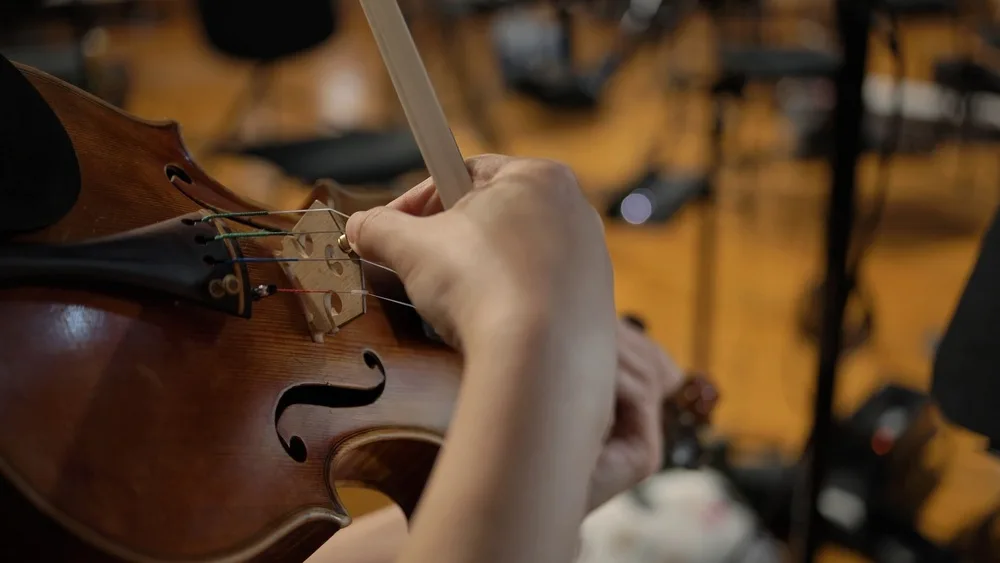
VSL Synchron Solo Violin 1 & Cello Sordino Review: Workflow, Realism and Mixing Performance
VSL Synchron Solo Violin 1 & Cello Sordino Review is ultimately a question of workflow rather than sound quality alone. Modern orchestral libraries have become remarkably good at reproducing solo strings, making basic realism less of a differentiator than it was a decade ago. The challenge today is capturing specific performance characteristics that remain difficult to fake in production. Muted strings sit squarely in that category.
Composers have been approximating sordino parts for years using EQ, dynamics processing, and careful orchestration. The problem is that a mute changes more than frequency balance. It affects articulation shape, transient response, harmonic development, and the perceived distance between performer and listener. Those details become exposed in sparse arrangements, emotional underscore, and modern hybrid scores where a single instrument may carry an entire scene.
That is the context in which VSL Synchron Solo Violin 1 & Cello Sordino should be evaluated. The relevant question is not whether these libraries sound good in isolation. It is whether dedicated muted instruments provide a meaningful advantage over existing solo string libraries when realism, programming efficiency, and mix translation become critical production concerns.
Why Muted Solo Strings Have Become a Valuable Production Tool
Contemporary film, television, and game scores are often built around emotional restraint rather than orchestral scale. Large string sections still dominate action, fantasy, and trailer music, but many modern productions depend on smaller, more exposed arrangements where a single instrument carries the emotional narrative. In these situations, the character of the performance matters as much as the composition itself.
The same trend is visible across other areas of cinematic production. In our Wavelet Audio Louisa Arc review, the discussion centered around expressive vocal performances filling a similar emotional role. Whether the focal point is a voice or a muted solo string, modern scoring increasingly depends on exposed performances capable of carrying emotional weight without relying on large orchestral arrangements.
Muted solo strings have become particularly useful because they occupy a space that standard solo instruments often struggle to reach naturally. A violin played with a mute does not simply sound darker. The mute alters the instrument’s attack profile, suppresses part of its natural projection, and changes how the harmonic content develops over the course of a note. The result is a tone that feels closer, more restrained, and less eager to dominate a mix.
That distinction becomes important in modern hybrid scoring. Composers regularly combine orchestral instruments with synthesizers, processed textures, piano, and sound design elements. Standard solo violins can easily become too forward in these arrangements, requiring EQ cuts, transient control, automation, or additional ambience to reduce their presence. A dedicated sordino performance often arrives much closer to the desired result before any processing is applied.
This is also where many conventional workarounds begin to break down. Reducing high frequencies with EQ can darken a violin patch, but it cannot replicate the way a mute changes articulation behavior, bow definition, dynamic response, and perceived distance. Those differences may seem subtle in dense arrangements, yet they become obvious in exposed passages where listeners are effectively hearing the instrument alone.
As orchestral libraries become increasingly realistic, purchasing decisions are shifting away from raw sample quality and toward workflow efficiency. For composers who regularly write intimate cues, emotional underscore, or sparse cinematic arrangements, dedicated sordino instruments are less about acquiring another orchestral color and more about reducing the amount of processing required to achieve a believable performance.
What Separates Synchron Solo Violin 1 & Cello Sordino From Typical Muted String Libraries?
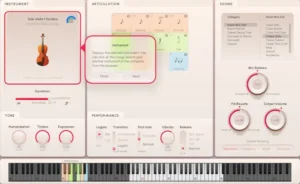 Many orchestral libraries include muted articulations as an extension of a standard instrument. They provide access to the color, but not necessarily to the full performance behavior that accompanies it. VSL takes a different approach by treating the sordino sound as a dedicated instrument rather than a secondary articulation.
The distinction is more significant than it appears on paper. A muted violin or cello does not simply produce less high-frequency energy. The mute changes how notes start, how they develop over time, how dynamic layers interact, and how the instrument projects within an acoustic space. These characteristics influence the perception of realism far more than tonal balance alone.
This becomes particularly important in exposed writing. In a full orchestral arrangement, individual imperfections can disappear behind dense instrumentation. Solo instruments operate under different conditions. Small inconsistencies in transitions, vibrato behavior, bow changes, or dynamic scaling become immediately noticeable because there is little else competing for the listener’s attention.
That is where the Synchron recording philosophy works in favor of these libraries. The Synchron Stage environment captures enough acoustic information to create a believable sense of space without forcing the user into a heavily ambient sound. For mixing engineers and composers, that balance provides greater control over depth placement. The instrument retains a natural acoustic identity while remaining flexible enough to integrate into dry hybrid productions, traditional orchestral arrangements, or modern cinematic mixes.
This flexibility is especially valuable with muted strings. Sordino performances already contain less spectral energy and less natural projection than their non-muted counterparts. Excessive room ambience can easily soften articulation detail and reduce definition. By maintaining a controlled relationship between direct sound and room response, the Synchron approach preserves the intimacy that makes muted solo instruments useful in the first place.
In practical production terms, the advantage is not that the libraries sound larger or more dramatic. The advantage is that they require fewer corrective decisions once they enter a mix. When a library arrives closer to the intended emotional character from the outset, composers spend less time compensating with EQ, transient shaping, automation, and additional spatial processing.
Library Content and Synchron Player Integration
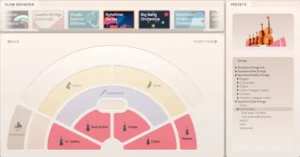
Beyond the musical concept itself, the practical value of Synchron Solo Violin 1 & Cello Sordino depends heavily on implementation. Both instruments operate inside the Synchron Player ecosystem, giving users access to VSL’s established articulation management, mixer architecture, microphone controls, and performance-oriented workflow.
For composers already working inside Synchron-based templates, this integration reduces friction considerably. Articulation switching, mixer consistency, and project organization remain aligned with the rest of the Synchron Series rather than introducing a separate workflow for specialized muted performances.
This matters more than specifications alone. Buyers evaluating Synchron Solo Violin 1 & Cello Sordino are typically looking at articulation coverage, legato implementation, microphone flexibility, mixer workflow, and template compatibility rather than raw sample counts. In professional scoring environments, those factors often determine long-term usability more than tonal differences heard in isolated demos.
Workflow Implications for Professional Composers
The value of dedicated sordino libraries is less about realism and more about decision-making speed. Most premium orchestral libraries are already capable of producing convincing solo string performances. The question is how much work is required to reach the desired result once the instrument enters a real production environment.
A common scoring challenge involves writing an intimate melodic line beneath dialogue, narration, or a sparse arrangement. Standard solo violins and cellos often arrive with more projection and presence than the cue requires. The instrument may sound excellent on its own but feel overly exposed once combined with speech, piano, synthesizers, or atmospheric textures.
At that point, the composer begins a familiar cycle of corrective processing. High-frequency content is reduced, dynamics are reshaped, ambience is adjusted, articulation peaks are controlled, and automation is used to maintain balance throughout the cue. None of these decisions are particularly difficult, but they accumulate across dozens of tracks and multiple revisions.
Dedicated sordino instruments start from a different position. Because the performance was recorded with the mute already influencing the instrument’s behavior, the sound naturally occupies a more restrained role within the arrangement. Less processing is required to achieve emotional distance, and less time is spent forcing the instrument into a character it was not originally designed to produce.
This distinction becomes increasingly important in television, streaming, and game production, where composers are often managing large templates under aggressive deadlines. Workflow efficiency is rarely discussed in marketing materials, yet it frequently determines whether a library becomes part of a daily production setup or remains an occasional creative option. Libraries that consistently require fewer corrective decisions tend to survive template optimization. Those that demand constant intervention often do not.
Template size also becomes part of the discussion. Every dedicated library occupies RAM, storage space, organizational attention, and maintenance overhead. The decision to add specialized sordino instruments therefore depends not only on sound quality but also on how frequently muted writing appears across real-world projects.
Viewed through that lens, the strongest argument for Synchron Solo Violin 1 & Cello Sordino is not that they sound dramatically different from every competing library. It is that they can reduce the number of technical adjustments required to achieve a believable muted string performance inside a finished cue.
Dynamic Behavior and Expression Performance
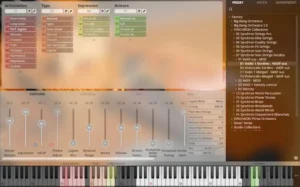 For muted solo strings, realism is determined less by tone and more by dynamic behavior. Most modern libraries can reproduce the darker timbre associated with a mute. Far fewer can convincingly reproduce how a muted instrument responds as a performance moves through different intensity levels.
This is where many sordino libraries reveal their limitations. The mute naturally reduces projection and high-frequency energy, making dynamic transitions harder to perceive. As a result, some sampled instruments sound emotionally compressed even when their MIDI velocity or expression data is changing significantly. The notes become softer or louder, but the performance itself does not appear to evolve.
In real-world scoring applications, that distinction matters. A muted violin carrying the emotional weight of a scene must be capable of building tension, releasing it, and changing character without relying on excessive automation or external processing. If the dynamic layers do not connect naturally, the listener stops hearing a performance and starts hearing sample playback.
For this reason, evaluating a library based on its sustain tone alone can be misleading. More revealing tests involve long dynamic swells, exposed melodic passages, and slow transitions between pianissimo and forte playing. These scenarios place far greater stress on the sampling architecture than short demonstrations or heavily orchestrated arrangements.
Muted instruments present an additional challenge because they offer fewer acoustic cues than standard solo strings. Much of the perceived emotional movement must come from subtle changes in bow energy, vibrato behavior, harmonic development, and dynamic layering. If those elements remain convincing throughout the instrument’s range, the library becomes useful far beyond its role as a specialty color.
That may ultimately be one of the most important factors separating a dedicated sordino instrument from a simple muted articulation. The goal is not merely to produce a darker violin or cello. The goal is to preserve expressive range after the mute has altered the instrument’s natural projection. When that balance is achieved, the result feels like a performance rather than a processed variation of an existing patch.
Mixing Perspective: Where Sordino Strings Offer a Practical Advantage
The mixing benefits of muted solo strings extend beyond tonal character. Their real advantage lies in how they occupy space within an arrangement. Standard solo violins are designed to project. Even well-sampled instruments often contain enough upper-midrange energy to compete aggressively with other foreground elements, particularly in sparse productions where every sound remains exposed.
In modern scoring environments, that can become a problem. Dialogue, vocals, piano transients, synth leads, and solo strings often converge within a similar perceptual range. When multiple elements compete for attention in the same region, engineers are forced into a series of compromises involving EQ, automation, transient control, or spatial placement.
Muted strings change the equation because the instrument’s natural projection is already reduced at the source. Rather than carving away presence after the fact, the mix begins with an instrument that occupies a more restrained position in the arrangement. The result is often a more stable balance between the solo line and surrounding elements.
This becomes especially valuable in hybrid orchestral productions. Contemporary film and game scores frequently combine acoustic instruments with synthesizers, drones, pulses, processed textures, and sound design layers. These arrangements can become densely populated even when they appear minimal on the surface. Every element contributes to the overall emotional atmosphere, leaving limited space for instruments that demand constant attention.
Under these conditions, a standard solo violin can sometimes feel larger than the cue itself. A dedicated sordino performance often integrates more naturally because its character is built around restraint rather than projection. The instrument remains present, but it is less likely to dominate the mix or trigger a chain of corrective processing decisions.
That does not mean muted strings are automatically easier to mix. The challenge simply shifts. Instead of controlling excessive presence, engineers are often focused on preserving articulation, maintaining note definition, and preventing the instrument from disappearing behind ambience or layered textures. Those are generally easier problems to solve than reducing an overly aggressive solo instrument without compromising its realism.
Many of the challenges discussed here belong firmly to the mixing stage rather than mastering. Understanding the practical difference between mixing and mastering helps explain why instrument placement, masking, articulation clarity, and spatial balance are typically solved long before a project reaches the mastering engineer.
For composers working under deadlines, the practical benefit is straightforward: fewer EQ moves, fewer automation passes, and less effort spent forcing an instrument into a role it was never designed to occupy. In large scoring projects, those small workflow advantages accumulate quickly.
Mastering Considerations for Intimate Orchestral Material
 Muted solo strings expose a challenge that mastering engineers encounter regularly in orchestral and cinematic productions: the elements that create emotional realism are often the same elements most vulnerable to processing.
Unlike large ensemble passages that derive impact from density and scale, sordino performances rely heavily on nuance. Small fluctuations in bow pressure, note development, dynamic movement, and phrasing contribute significantly to the listener’s perception of a human performance. Once those details are reduced, the instrument may remain technically clean while becoming noticeably less expressive.
This is one reason intimate orchestral music often responds differently to loudness optimization than modern pop, rock, or electronic productions. The goal is rarely maximum level. The greater concern is preserving depth, contrast, and dynamic movement without making the mix feel fragile on consumer playback systems.
For that reason, the quality of the arrangement and mix usually has a greater impact on the final result than the mastering chain itself. Many of the translation issues that appear later during mastering originate much earlier in the production process, which is why proper mix preparation before mastering remains critical even for highly detailed orchestral productions. When a muted solo instrument is fighting dense orchestration, excessive ambience, or frequency masking, additional processing at the mastering stage rarely solves the underlying problem. In many cases, it makes the compromises more obvious.
This is also why a mastering chain should be viewed as a refinement stage rather than a repair stage. Understanding how a professional mastering chain actually works helps clarify why unresolved orchestration and balance problems rarely disappear at the final stage.
Streaming platforms introduce another consideration. Despite the industry’s continued focus on loudness targets, intimate orchestral material often benefits more from preserving dynamic contrast than chasing additional level. Understanding modern LUFS targets in mastering helps explain why louder is not always better for emotionally exposed performances. Normalization systems have reduced the competitive advantage of extreme loudness, but they have not eliminated the need for reliable translation. A sordino performance that feels intimate and emotionally convincing on studio monitors should retain that character on headphones, laptops, televisions, and mobile devices. Achieving that consistency depends far more on balance, arrangement, and dynamic control during mixing than on loudness targets during mastering.
From a production perspective, this is where dedicated muted instruments can offer an indirect advantage. Because they often require less corrective EQ, transient shaping, and dynamic manipulation to achieve the desired character, they arrive at the mastering stage with fewer accumulated compromises. The result is greater flexibility when preparing a cue for distribution across streaming, broadcast, or game audio environments.
Marketing Claims Versus Production Reality
Orchestral sampling has reached a point where technical specifications no longer tell the whole story. Developers routinely promote realism, expressiveness, and authenticity, yet the practical differences between modern high-end libraries are often smaller than marketing language suggests. The more relevant question is how convincingly a library performs once it is placed inside a finished production.
That distinction is particularly important with solo instruments. A library may sound impressive in an isolated demonstration while revealing limitations in exposed passages, slow melodic writing, or scenes that depend on subtle emotional development. These are the situations where listeners stop evaluating tone and begin evaluating performance.
No sampled violin or cello fully replicates the decision-making of a skilled musician. Real performers constantly adjust timing, vibrato, bow pressure, articulation shape, and dynamic intensity in response to the music around them. Sample libraries can provide the raw material for that level of realism, but they cannot generate it automatically.
As a result, the quality of the final performance depends as much on programming as it does on the recordings themselves. Expression control, phrase development, dynamic shaping, articulation selection, and timing variation often have a greater impact on realism than the choice between two competing premium libraries.
This is where expectations should remain realistic. Synchron Solo Violin 1 & Cello Sordino can provide a more convincing foundation for muted string writing than attempting to simulate the effect through processing alone. They can reduce the amount of corrective work required during production and make certain musical ideas easier to execute. What they cannot do is eliminate the need for thoughtful orchestration, performance programming, and critical listening.
For experienced composers, that limitation is not a weakness. It is simply the reality of modern orchestral production. The libraries function best as performance tools rather than shortcuts. Their value comes from expanding what is possible within a template, not from replacing the musical decisions that ultimately determine whether a cue sounds convincing.
Where Synchron Solo Violin 1 & Cello Sordino May Be Overrated
The strongest criticism of dedicated sordino libraries is not that they fail to deliver convincing results. It is that many composers simply do not need them as often as they think they do.
Specialized orchestral tools are easy to justify during product demonstrations because they excel in highly specific musical contexts. The challenge comes later, when the library must earn a permanent place inside a working template. Not every sound that is impressive in isolation becomes essential during day-to-day production.
For composers focused on trailer music, large-scale action scoring, or dense orchestral arrangements, muted solo instruments may represent a relatively small percentage of the overall workload. In these environments, expanding articulation coverage, improving ensemble realism, or upgrading core orchestral sections often produces a greater return on investment than adding another specialized color.
The same logic applies to composers building their orchestral toolkit in stages. If fundamental areas of a template remain underdeveloped, a dedicated sordino library may solve a less urgent problem than additional strings, brass, percussion, or performance articulations. Specialized products tend to deliver the most value after the core framework is already established.
This does not diminish the quality of Synchron Solo Violin 1 & Cello Sordino. It simply defines their role more accurately. These are refinement tools rather than foundation libraries. Their purpose is not to expand the range of projects a composer can complete, but to improve the quality and efficiency of a specific type of musical writing.
That distinction is important because it separates genuine production needs from collection-driven purchasing decisions. The composers most likely to benefit are not those searching for more sounds. They are those who repeatedly encounter situations where standard solo strings fail to deliver the level of intimacy, restraint, or emotional subtlety required by the music.
Competitive Positioning
Synchron Solo Violin 1 & Cello Sordino do not compete directly with most solo string libraries. The more relevant comparison is not overall realism, but how efficiently each platform delivers exposed, emotionally restrained performances. Most competing products are designed as general-purpose solo instruments. VSL’s sordino releases target a much narrower production requirement.
That distinction makes direct comparisons difficult. A composer evaluating these libraries is often deciding whether dedicated muted instruments offer enough workflow and performance advantages to justify occupying template space alongside existing solo string solutions.
That decision becomes even more relevant for composers already working with streamlined orchestral templates. For example, our LUX Orchestral Strings Essentials review examined the opposite side of the workflow equation: broad orchestral coverage, template efficiency, and fast integration rather than specialized solo performance behavior. Synchron Solo Violin 1 & Cello Sordino occupy a much narrower but more focused role.
| Library | Primary Focus | Strength in Exposed Writing | Workflow Profile | Best Fit |
|---|---|---|---|---|
| VSL Synchron Solo Violin 1 & Cello Sordino | Dedicated muted solo performance | Built specifically for intimate, restrained passages | Specialized but highly focused | Film, television, and game composers working with emotional underscore |
| Spitfire Solo Strings | General-purpose cinematic solo strings | Strong character and musicality | Flexible but broader in scope | Composers seeking one primary solo string solution |
| Cinematic Studio Solo Strings | Streamlined orchestral workflow | Designed for fast integration into large templates | Efficient and straightforward | Writers prioritizing speed and consistency |
| EastWest Hollywood Solo Strings | Comprehensive orchestral ecosystem | Benefits from PLAY and ComposerCloud integration | Most valuable within existing EastWest workflows | Users invested in the EastWest platform |
| Berlin First Chairs | Orchestral section leadership and realism | Excellent ensemble integration | Requires more detailed programming | Advanced orchestral mockup specialists |
The key takeaway is that Synchron Solo Violin 1 & Cello Sordino are not attempting to replace established solo string collections. Most composers will continue to rely on broader libraries for everyday writing. The VSL instruments become relevant when muted solo performances appear frequently enough to justify a dedicated solution.
For occasional sordino passages, existing solo libraries may be sufficient. For productions where emotional intimacy, restrained expression, and exposed solo writing are recurring requirements, dedicated muted instruments offer advantages that general-purpose libraries are not specifically designed to provide.
For composers comparing VSL against Spitfire Solo Strings, Berlin First Chairs, or Cinematic Studio Solo Strings, the decision is rarely about overall sound quality. The more important question is whether dedicated muted performance behavior justifies a separate workflow category inside the template. VSL’s approach is narrower, but also more purpose-built for exposed sordino writing.
Who Should Consider Synchron Solo Violin 1 & Cello Sordino?
The ideal user is not necessarily the composer searching for the most realistic solo string library. It is the composer who repeatedly encounters situations where standard solo instruments feel too exposed, too present, or too emotionally direct for the music being written.
These libraries make the strongest case in workflows centered around film, television, and game scoring, particularly when cues rely on intimacy rather than scale. Emotional underscore, character-driven themes, sparse orchestration, and hybrid productions often place a premium on subtlety. In those environments, the ability to start with a naturally restrained instrument can be more valuable than adding another highly expressive solo patch to an already crowded template.
They are also relevant for composers working extensively with modern hybrid scoring techniques. When acoustic instruments share space with synthesizers, drones, piano, ambient textures, and sound design elements, muted solo strings frequently integrate more naturally than traditional solo instruments. The result is often less corrective processing and a smoother path from composition to final mix.
The value proposition becomes less convincing for users whose projects rarely depend on exposed solo writing. Trailer composers, large-scale orchestral writers, and producers focused primarily on impact, density, and projection may find themselves reaching for these libraries far less often than expected. In many of those situations, investment in broader orchestral coverage or additional articulations may produce a more noticeable improvement across a wider range of projects.
They are also difficult to recommend as an early purchase for composers still building a foundational orchestral template. Dedicated sordino instruments solve a specific production challenge. Their strengths become most apparent after the essential components of a scoring workflow are already in place.
Viewed practically, Synchron Solo Violin 1 & Cello Sordino are not libraries for everyone. They are libraries for composers who already know why they need muted solo strings and who encounter that requirement often enough to justify a dedicated solution.
Real-World Production Performance
The true test of any orchestral library begins after the programming is finished. Demo presentations can highlight tone, articulations, and expressive potential, but professional users ultimately evaluate a library based on how reliably it functions across complete productions, multiple playback systems, and demanding deadlines.
In that respect, one of the most practical advantages of dedicated sordino instruments is placement flexibility. Muted solo strings naturally occupy a less aggressive position within the frequency spectrum, making them easier to integrate into arrangements that already contain dialogue, piano, synthesizers, ambient textures, or other foreground elements. The instrument often requires less intervention before it settles into a believable role within the mix.
This characteristic can improve translation across a wide range of listening environments. A solo instrument that feels balanced on studio monitors is more likely to maintain its intended character on headphones, laptops, televisions, and consumer speakers when it is not dependent on excessive brightness or exaggerated presence for definition.
That does not mean dedicated sordino libraries automatically solve translation challenges. Poor orchestration, frequency masking, excessive ambience, or unrealistic programming can still create problems regardless of the source material. What changes is the amount of corrective work often required to reach a stable result.
From a workflow perspective, CPU performance is unlikely to be the deciding factor for most professional users. Template efficiency is usually shaped more by articulation management, storage demands, preload settings, and overall project organization than by the processing requirements of a single solo instrument. In large orchestral environments, those factors tend to have a greater impact on day-to-day productivity.
Ultimately, the purchasing decision comes down to frequency of use. The technical quality of dedicated sordino instruments is relatively easy to justify. The more difficult question is whether muted solo writing appears often enough in a composer’s workflow to warrant allocating template space, budget, and organizational complexity to a specialized solution.
Value for Money
Whether Synchron Solo Violin 1 & Cello Sordino represent good value depends almost entirely on usage frequency. Composers writing emotional underscore every week may recover the investment quickly through faster workflow and fewer corrective production decisions. Users encountering muted solo writing only occasionally may struggle to justify the additional template complexity.
These libraries are best viewed as efficiency tools rather than expansion tools. Their value comes from reducing friction in a specialized area of orchestral production rather than increasing the overall range of sounds available inside a template.
Verdict
Synchron Solo Violin 1 & Cello Sordino address a problem that many orchestral libraries acknowledge but few prioritize: the challenge of creating convincing muted solo performances without extensive corrective work. Rather than competing as all-purpose solo string solutions, these libraries focus on a specific musical role where subtle differences in articulation behavior, dynamic response, and tonal projection have an outsized impact on the final result.
Their value is unlikely to be measured by the number of articulations, microphone positions, or headline features. The more relevant metric is efficiency. Composers who regularly write intimate orchestral cues, emotional underscore, character themes, and hybrid scores may find that dedicated sordino instruments reduce the gap between an initial musical idea and a production-ready performance.
That does not make them essential purchases. For many composers, muted solo writing represents an occasional requirement rather than a central part of the workflow. In those cases, broader investments elsewhere in the template may deliver greater long-term value.
For users who frequently rely on exposed solo passages, however, the equation changes. The advantage is not that Synchron Solo Violin 1 & Cello Sordino make orchestral mockups sound dramatically different. The advantage is that they make a specific type of writing easier to execute, easier to mix, and easier to integrate into modern scoring workflows.
From a value perspective, these libraries make the strongest case for working professionals rather than casual collectors. Their return on investment comes from workflow acceleration and production efficiency, not from adding another color that appears only occasionally in finished projects.
From a review perspective, Synchron Solo Violin 1 & Cello Sordino succeed not because they reinvent solo string sampling, but because they solve a specific production problem more efficiently than most general-purpose alternatives. Their success will depend less on how impressive they sound in isolation and more on how often a composer encounters situations where a dedicated muted performance is the right musical choice.

Yurii Ariefiev analyzes orchestral libraries, mixing workflows, and mastering translation from the perspective of real-world production rather than product marketing. His work focuses on how virtual instruments behave inside finished mixes, how they survive mastering decisions, and how they translate across modern playback environments.
This review evaluates VSL Synchron Solo Violin 1 & Cello Sordino through practical scoring, mixing, and mastering considerations, including performance realism, workflow efficiency, mix integration, dynamic behavior, and long-term production value for professional composers and audio engineers.
FAQ
Can VSL Synchron Solo Violin 1 & Cello Sordino replace a standard solo string library?
No. These libraries are designed to complement existing solo strings rather than replace them. Their strength lies in muted performance behavior, not broad articulation coverage across every scoring scenario.
How much of the sordino sound can be recreated with EQ and processing?
EQ can approximate the darker tonal balance of a muted instrument, but it cannot reproduce the changes in articulation, projection, note development, and dynamic response that occur when a performer actually uses a mute.
Are dedicated sordino libraries useful in hybrid orchestral productions?
Yes. Muted solo strings often integrate naturally with synthesizers, piano, ambient textures, and sound design layers because they occupy a less aggressive position within the arrangement.
Do these libraries require advanced orchestral programming skills?
Users will get the best results if they are comfortable working with expression control, articulation management, dynamic shaping, and realistic phrase construction. The libraries provide the source material, but convincing performances still depend on programming decisions.
Is Synchron Solo Violin 1 & Cello Sordino worth buying if I already own Spitfire Solo Strings or Cinematic Studio Solo Strings?
In many cases, the answer depends on how frequently muted solo writing appears in finished productions. Existing libraries can reproduce occasional sordino passages, but dedicated muted instruments generally provide greater realism and require less corrective processing when intimate solo writing is a regular part of the workflow.
Do dedicated sordino instruments reduce mixing time?
In many cases, yes. Because the instrument begins with a naturally restrained character, engineers often spend less time reducing excessive presence, controlling projection, or reshaping the sound with corrective processing.
How do Synchron Solo Violin 1 & Cello Sordino affect template size and workflow efficiency?
The libraries add organizational complexity, storage requirements, and memory usage like any dedicated orchestral product. Their practical value comes from reducing production time during muted solo writing rather than simplifying the overall template structure.
How do Synchron Solo Violin 1 & Cello Sordino compare with Spitfire, Berlin, and Cinematic Studio alternatives?
The primary difference is specialization. Most competing libraries are designed as broader solo string solutions, while Synchron Solo Violin 1 & Cello Sordino focus specifically on achieving convincing muted performances with minimal compromise.
Are these libraries a good investment for composers building their first orchestral template?
Usually not. Most composers benefit more from strengthening core sections and articulation coverage before investing in highly specialized instruments intended for specific musical situations.
Do muted solo strings translate well on streaming platforms and consumer playback systems?
When properly mixed, they generally translate well because they rely less on aggressive presence and more on balance, dynamics, and performance detail. Translation quality remains dependent on the production itself rather than the library alone.