Dreamtonics Instrument X is built around a different orchestral-production approach: generate the performance rather than assemble it from recorded samples. Its neural acoustic engine turns MIDI and notation into playable instrument parts, with articulation, dynamics, and performance behavior generated within the instrument instead of being selected from velocity layers, keyswitches, and pre-recorded phrases.
That distinction matters because the biggest weakness of many orchestral workflows is not sound quality alone. It is the amount of programming required to make sampled instruments behave like players. Instrument X attempts to move that work into the synthesis engine, giving the composer more direct control over articulation, dynamics, phrasing, and performance variation.
After examining its instrument lineup, editing workflow, microphone architecture, DAW integration, pricing, and early user reports, my assessment is straightforward: Instrument X is a serious alternative for generating and shaping individual orchestral performances, but it is not yet a wholesale replacement for established sample-library ecosystems. Its strongest case is workflow efficiency and performance control; its main weaknesses are narrower coverage and less established ensemble behavior than mature orchestral libraries.
In this review
- Why Neural Modeling Matters
- Production Workflow
- Neural Acoustic Modeling
- Solo vs. Ensemble Realism
- Orchestral Coverage
- Instrument X vs. Kontakt, Spitfire & SWAM
- Microphone & Spatial Control
- CPU, Rendering & DAW Compatibility
- User Feedback & Limitations
- Price & Value
- Who Should Use Instrument X?
- Professional Verdict
- Editorial Assessment
- FAQ
Why Neural Modeling Matters for Orchestral Production
 Traditional orchestral sample libraries achieve realism through coverage. Developers record multiple dynamics, articulations, round robins, release samples, playing techniques, microphone positions, and transition samples, then give the user a system for selecting the appropriate recording at each point in a performance. The results can be excellent, but the workflow gets increasingly complex as the arrangement becomes more detailed.
A large orchestral template can consume substantial disk space and RAM, while articulation management becomes a production task in its own right. Keyswitches, articulation maps, controller lanes, velocity layers, and separate patches all exist to solve the same underlying problem: making a collection of recordings behave like a continuous performance.
Instrument X takes a different route. Rather than selecting a recorded performance for every articulation and dynamic state, its neural acoustic engine is designed to generate the instrument’s response from the musical input. In practical terms, the target is not simply to reproduce a violin note at a particular velocity, but to model how the instrument changes as the performance changes.
That distinction is where the technology becomes relevant to working composers. A conventional sample library asks the user to manage the available recordings. A modeled instrument can potentially move more of that work into the instrument itself, allowing the user to concentrate on phrasing, dynamics, articulation, and timing instead of constantly managing sample transitions.
The trade-off is equally important. Sample libraries inherit the microscopic variation of real performances because they are recordings of real players. A neural model has to recreate that variation algorithmically. If it gets the instrument’s basic tone right but produces overly consistent attacks, unnatural transitions, or synchronized ensemble behavior, the result can sound less convincing precisely because it is too controlled.
That makes Instrument X more interesting than a simple alternative to large sample libraries. It represents a different production model: use recorded samples to capture performances, or use acoustic modeling to construct them. The success of Instrument X ultimately depends on how well that second approach holds up once the parts leave the solo demo and enter a real arrangement.
What Instrument X Changes in the Orchestral Production Workflow
Note-Level Articulation Editing Reduces Programming Overhead
Instrument X’s most practical departure from a conventional orchestral library is the way it handles articulation. Established sample-based systems can be extremely sophisticated, with keyswitches, articulation maps, UACC-style control, and DAW expression maps providing detailed control over performance techniques. The problem is not a lack of control; it is the amount of management that control can require once a part becomes heavily articulated.
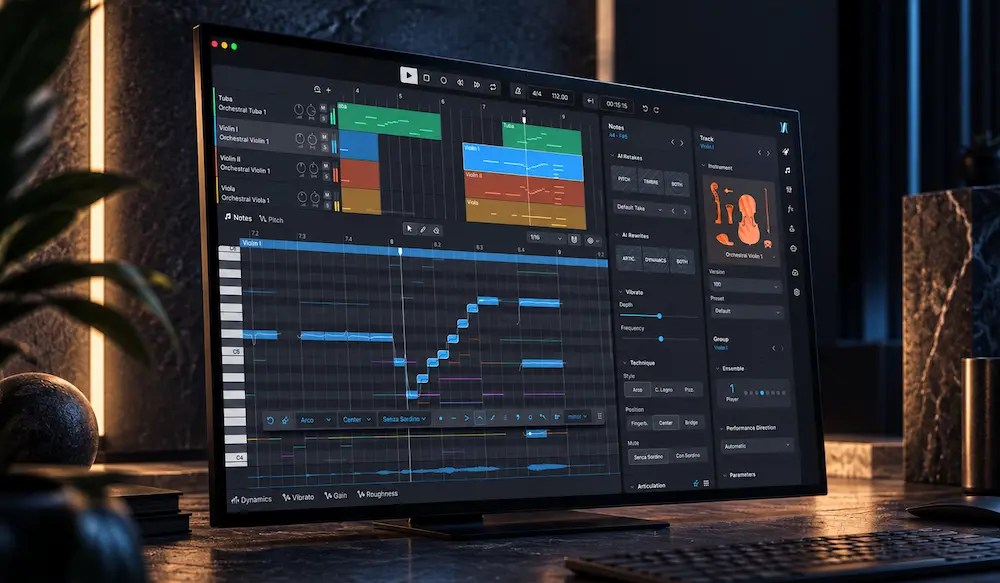
Instrument X moves those decisions into the instrument’s own editor. Staccato, legato, tenuto, pizzicato, tremolo, harmonics, mutes, portamento, and other instrument-specific techniques can be assigned directly to individual notes rather than managed primarily through a separate articulation layer.
That becomes particularly useful during revisions. Changing a phrase from sustained to staccato, introducing a mute, or combining techniques does not require rebuilding a keyswitch sequence or switching between multiple patches. The articulation is attached to the musical event itself, which keeps the performance data closer to the notes it is describing.
For a short sketch, the difference is minor. Across a full score with frequent articulation changes, it can remove a significant amount of MIDI housekeeping. The real advantage is not that Instrument X offers more articulations than established libraries; it is that the articulation system is integrated into the performance-editing workflow rather than treated as a separate programming problem.
Dynamics Control Goes Beyond Simple Volume Automation
Instrument X’s Dynamics Lane addresses one of the harder problems in sampled orchestral production: making dynamic changes alter the character of the instrument rather than simply making it louder or quieter. The system is designed to change the modeled response as performance intensity changes, affecting elements such as timbre, harmonic content, and playing behavior.
That is closer to how an acoustic instrument actually behaves. A violinist does not create a crescendo by applying gain after the note has been played. Bow pressure and position change, the balance of harmonics shifts, and the attack and sustain behave differently. Woodwinds and brass have their own physical responses to breath pressure and embouchure changes.
If the model reproduces those relationships convincingly, the result is more useful than conventional volume automation because the dynamic contour becomes part of the performance itself. It can also reduce the amount of controller editing required to make a MIDI line sound less mechanically programmed.
The limitation is that the quality of the workflow ultimately depends on the transitions. A dynamics system can be technically sophisticated and still produce an artificial result if timbral changes become exaggerated or inconsistent. Instrument X therefore needs to be judged on the musical continuity of its dynamic curves, not simply on how many parameters the engine exposes.
AI Performance Retakes Speed Up MIDI Iteration
AI Performance Retakes serves a different purpose. Instead of manually rebuilding a phrase when the notes are correct but the performance feels static, the system can generate alternative versions with changes to performance characteristics such as timbral variation, micro-pitch movement, and kinetic intensity.
That has a practical use in mockup production. A composer can keep the musical material intact while exploring several interpretations of the same phrase, then edit the strongest result. This is more useful than treating the feature as an automatic performance generator: variation is only valuable when the resulting take is musically convincing.
The feature should therefore be viewed as an iteration tool. It can shorten the distance between a technically correct MIDI part and a more expressive one, but it does not remove the need for musical editing. Timing, phrasing, balance, articulation choices, and the relationship between sections still require judgment.
A Smaller Footprint Changes the Practical Economics
Instrument X also addresses one of the less glamorous problems with modern orchestral production: keeping large sample libraries installed and available. Because its performances are generated rather than played back from a conventional sample library, the instruments can achieve a substantially smaller installation footprint than systems built around extensive velocity layers, round robins, release samples, and articulation recordings.
That matters far more on a laptop or mobile production system than it does on a dedicated scoring workstation with a large sample server. A smaller installation is easier to maintain across multiple machines, faster to back up, and less likely to become a bottleneck when a project needs to be reopened months or years later.
For established studios, storage savings alone are unlikely to justify replacing an existing orchestral library. For composers working on laptops, home-studio systems, or machines with limited internal storage, however, the reduced footprint is a meaningful part of Instrument X’s value proposition.
Hear What Professional Mastering Can Do for Your Mix
A well-programmed orchestral production still needs to translate as a coherent finished mix, with controlled dynamics, convincing depth, clear detail, and a stable stereo image across playback systems. If you want to hear how your own mix holds up through a professional mastering chain, you can send up to 35 seconds for a free mastering demo. Send your mix for a free mastering demo →
Inside Instrument X: How Neural Acoustic Modeling Works
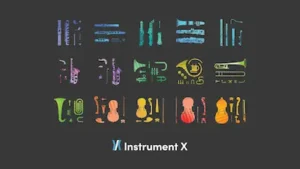 The most technically interesting part of Instrument X is not the use of AI itself. Neural audio synthesis and other forms of instrument modeling are no longer unusual; our review of Martinic Prodigy, for example, examines a different modeling approach built around circuit-level recreation of an analog instrument. The more consequential idea here is to model the behavior of an acoustic instrument separately from the acoustic environment in which it is recorded, then reconstruct the resulting performance and microphone perspectives from that model.
Dreamtonics describes Instrument X as combining neural acoustic modeling with physics-augmented neural synthesis, trained from licensed performances captured with acoustic measurements and multi-microphone recordings. The system was developed using a custom dodecahedral speaker array to measure the spatial characteristics of the recording environment, while the instrument expansions use 8 to 11 microphone feeds ranging from close positions to Decca tree and room ambience.
In practice, this architecture separates performance generation from spatial presentation. Instead of choosing from fixed microphone recordings attached to a sampled performance, the user can work with different modeled perspectives while keeping the underlying performance editable.
This separates the performance-generation concept from the acoustic presentation: the instrument is not only generating notes and articulations, but also providing control over how those performances are presented within the modeled space.
The important distinction is between the architecture Dreamtonics has documented and the sonic conclusions that can already be drawn from public use. The multi-microphone architecture, spatial modeling and neural synthesis are documented product characteristics; they are not, by themselves, proof that every expansion will outperform a well-recorded conventional library.
Early user reports suggest that the spatial system and underlying timbre can still divide opinion, particularly in ensemble contexts. Some users have preferred using only the Close microphones and handling positioning and room simulation externally, while others have found the built-in spatial presentation less convincing than the underlying instrument itself.
For production purposes, the useful conclusion is therefore narrower: Instrument X gives the producer unusually direct control over modeled microphone perspectives, but the presence of multiple modeled feeds should not be treated as evidence that they will automatically reproduce the depth or cohesion of a premium recorded scoring-stage library.
That distinction matters for engineers. Instrument X’s neural acoustic approach is genuinely different from conventional sample playback, but the technical novelty should not be confused with independently proven sonic superiority. The technology is promising because it changes how the performance and acoustic space can be generated; whether that translates into a consistently better result depends on the quality of the individual models and how well they hold up inside a dense production.
Where Instrument X Holds Up — and Where the Modeling Is Exposed
Instrument X makes its strongest case with exposed solo lines and small parts. A violin, cello, woodwind, or brass instrument has enough space in the arrangement for the listener to hear its phrasing, articulation changes, dynamic movement, and pitch behavior individually. In that context, the ability to shape a performance note by note can be more valuable than the sheer number of samples available in a conventional library.
The challenge changes when those instruments have to behave like an ensemble.
Real orchestral sections are full of small inconsistencies that are difficult to reproduce deliberately. Players do not start a note at precisely the same moment, vibrato develops at different rates, intonation moves independently between players, bow changes occur at different points in a phrase, and dynamic changes are never perfectly identical across a section. Those deviations are part of what makes several musicians sound like several musicians rather than one instrument duplicated across multiple tracks.
This creates a particular problem for neural performance generation. A model can produce an articulate and expressive individual voice while still making several voices too similar in timing, pitch movement, or dynamic response. Once multiple instruments are layered, those similarities become easier to hear because the ear starts detecting correlations between otherwise separate parts.
That is where some early Instrument X feedback becomes more critical. Certain combinations can sound unusually clean or synchronized, particularly when several modeled voices are performing closely related material. The issue is not simply that the sound is “too perfect.” It is that the variation between players is part of the acoustic information that tells the listener an ensemble is made of individual performers.
Established sample libraries have an inherent advantage here. Their round robins, separate performances, tuning differences, attack variations, and recorded room interaction come from actual sessions with musicians. The imperfections are therefore captured as part of the source rather than generated as an additional layer of artificial variation.
That does not make sampled instruments universally more realistic. Poorly programmed samples can still sound rigid, and a well-shaped modeled performance can be far more convincing than a badly managed sample patch. But it does define the current dividing line: Instrument X has a strong argument for controllable individual performances; traditional orchestral libraries still have the harder-earned advantage when convincing ensemble behavior is the priority.
Why Instrument X Still Falls Short of a Complete Orchestral Template
Instrument X’s biggest limitation is not the neural engine. It is coverage. The platform currently focuses on strings, woodwinds, brass, and saxophones, leaving important parts of a full scoring setup outside the system.
For a composer building a complete orchestral template, the current lineup does not cover every category required for a full scoring setup. Dedicated percussion and choir therefore still require another instrument ecosystem.
That makes Instrument X difficult to justify as the sole orchestral platform, particularly for composers who already own a mature collection of sampled instruments. Established ecosystems also provide deeper selections of specialized articulations, ensemble patches, and niche instruments.
The pricing therefore needs to be evaluated against what the system replaces, not simply what it costs. The complete collection can make sense for a user who specifically values the neural performance workflow across its supported instrument families. It makes considerably less sense as a purchase motivated purely by the number of orchestral instruments included.
For most professional setups, the more realistic role is supplement rather than replacement. Instrument X can take over selected parts of an existing template—particularly exposed solo passages and instruments that benefit from its performance editing—while established sample libraries continue to handle the sections where breadth and ensemble depth matter more.
Instrument X vs. Kontakt, Spitfire and SWAM: Which Approach Fits the Job?
| Platform | Best Suited To | Main Strength | Main Trade-Off |
|---|---|---|---|
| Instrument X | Editable modeled orchestral performances | Note-level performance editing with neural acoustic generation | Narrower coverage and less established ensemble behavior |
| Kontakt + orchestral libraries | Large scoring templates and broad orchestral coverage | Extensive recorded-instrument ecosystem and mature articulation systems | Greater storage and programming overhead |
| Spitfire Audio libraries | Recorded orchestral realism and ensemble scoring | Detailed recorded performances and acoustic spaces | Less flexible than modeled generation for some performance-editing tasks |
| SWAM | Real-time expressive instrumental performance | Continuous physical-modeling control | Different workflow from Instrument X’s editing-oriented approach |
| ACE Studio | AI-assisted instrumental and vocal production | Broader AI-oriented production environment | Less specifically focused on Instrument X’s orchestral performance model |
The Instrument X vs. SWAM distinction is especially important because both target lightweight modeled instruments but optimize for different workflows. SWAM is primarily an expressive real-time instrument: its strength is continuous controller-driven performance. Instrument X is primarily an editable performance-generation system: its strength is constructing and refining a part after the musical material exists. That makes the choice less about which engine is “more realistic” and more about whether the performance starts with a player or with MIDI and notation.
Kontakt represents a different trade-off again. Its advantage is not a single synthesis method but the ecosystem built around sampled instruments: extensive orchestral coverage, specialized libraries, established articulation systems, and compatibility with production templates that have evolved over many years. Instrument X cannot match that breadth, but it can eliminate much of the storage and sample-management overhead associated with it.
Spitfire and other premium recorded libraries remain particularly difficult to displace when ensemble realism and recorded acoustic character are the priority. Their recordings contain the small timing, tuning, dynamic, and room variations that naturally occur when real players perform together. Instrument X has to recreate those relationships computationally.
How Instrument X Handles Microphone Perspective and Spatial Depth
Instrument X has a more direct connection to mixing than most virtual-instrument reviews acknowledge. Its microphone mixer lets the producer decide how much of the instrument comes from close, Decca-tree, and room perspectives before the part ever reaches the mix bus. That makes microphone selection part of the sound-design and arrangement process rather than a decision deferred to post-production.
Microphone perspective affects more than stereo width: it also changes articulation emphasis, depth, and how much processing is needed later. A close position can emphasize articulation and upper-mid definition, while a tree perspective places the instrument further into the orchestral image. Room signals add depth, but they also introduce more diffuse energy and can consume headroom in a dense arrangement.
For an exposed string or woodwind line, a more distant perspective may provide enough natural space that little additional reverb is required. In a hybrid score with synths, drums, guitars, and aggressive low-end elements, the same room contribution can become a liability. The close signal may be easier to EQ, automate, compress, and place without fighting the rest of the production.
This is where Instrument X can save mixing time, but only when the microphone balance is chosen with the final arrangement in mind. A wide, reverberant orchestral image that sounds impressive while auditioning the instrument alone can create unnecessary low-mid buildup once the complete production is playing. Pulling that ambience back later is possible, but choosing the microphone perspective with the final arrangement in mind is usually cleaner.
There is also a practical limitation to keep in mind. A modeled microphone perspective should not automatically be treated as interchangeable with a microphone physically placed on a scoring stage. The output still has to translate through headphones, nearfields, consumer playback systems, stereo playback, and the final delivery format. The useful test is therefore not how convincing the room sounds in isolation, but whether the spatial information remains stable when the instrument is competing with everything else in the mix.
In that sense, Instrument X moves part of the mixing decision upstream. The producer is not simply choosing an instrument; they are choosing how that instrument occupies the acoustic field before the mix engineer begins processing it.
Instrument X CPU Usage, Rendering and DAW Integration
Instrument X separates storage requirements from processing requirements. Its instrument expansions are designed around neural generation rather than large collections of playback samples, so the smaller disk footprint does not automatically mean that large multi-instrument projects will impose little CPU load.
The more important practical distinction is that Instrument X can be used as a standalone application or as a plugin, with ARA Bridge and Full ARA workflows providing different levels of DAW integration. These modes are not equivalent in day-to-day use. In standard plugin operation, notes and performance data are edited inside Instrument X rather than directly in the DAW, while ARA Bridge Mode can synchronize the Instrument X editor with the DAW’s playback position and tempo. Full ARA Mode provides deeper integration in supported DAWs, including synchronization between the Instrument X editor and the host project, with available functions depending on the DAW and integration implementation.
DAW compatibility therefore depends on the integration mode rather than simply on whether a host supports VST3, AU or AAX. Dreamtonics currently documents Full ARA Mode for Studio One 5 and later, Cubase 12 and later, REAPER 6 and later, Cakewalk, ABILITY5 Pro, and Pro Tools. Full ARA is available through the VST3 and AAX versions rather than Audio Units, while ARA Bridge and standard plugin workflows have their own compatibility differences.
CPU performance remains one of the less certain parts of the evaluation. There is not yet enough standardized independent testing to establish reliable multi-instance performance across different processors, DAWs and orchestral project sizes. The useful question is therefore not whether Instrument X has a small installation footprint, but whether a particular system can keep a complex arrangement responsive while the generated performances are being edited and rendered.
What Early Users Are Finding in Real-World Use
Early user feedback is already revealing a more complicated picture than the launch demonstrations suggest. The strongest positive reports tend to focus on solo instruments and the speed of turning MIDI or notation into a usable musical performance. Several users describe the workflow as the platform’s most important advantage rather than simply the realism of the generated audio.
The weaknesses become more obvious when Instrument X is pushed toward ensemble work. Early public discussion points to a more mixed picture in ensemble contexts than in the strongest solo demonstrations. Some listeners have questioned the degree of variation between layered voices and have found certain ensemble combinations less convincing than the individual instruments. Other early reactions have been substantially more positive, particularly regarding articulation handling and the reduction of keyswitch-heavy programming.
The workflow itself is another dividing line. Instrument X is not simply a traditional virtual instrument that is played and left alone. The strongest results can require additional editing of dynamics, vibrato, articulation, timing, and note relationships. That is consistent with the product’s design philosophy, but it means the advertised reduction in programming overhead should not be interpreted as zero manual work.
These reports do not establish that Instrument X is universally weak. They identify a more useful distinction: the platform appears most convincing when it is used as an editable performance-generation system, while ensemble realism, edge-case artifacts and workflow friction remain the areas that deserve the most scrutiny before treating it as a replacement for a mature orchestral library.
The strongest early case is therefore workflow rather than universal realism: Instrument X is most convincing when editable performance control matters more than maximum ensemble authenticity.
Is Instrument X Good Value for Professional Production?
At launch, Instrument X is priced more like a modular instrument platform than a conventional orchestral library. Individual Instrument Expansions are listed at $99, while the Orchestral Strings Collection is $249, Orchestral Woodwinds Collection is $279, Orchestral Brass Collection is $249, Orchestral Essentials is $349, and the Complete Collection is $649.
Dreamtonics currently offers a 14-day trial for Instrument X and 14-day trials for individual Instrument Expansions. Expansion trials are subject to a 150-note group limit and do not support bouncing during the trial period.
The Complete Collection includes the launch Instrument X expansions covering strings, woodwinds, brass, and jazz saxophones. It still does not provide dedicated percussion or choir instruments, so it should not be evaluated as a complete replacement for a broad full-orchestra library ecosystem.
That does not make Instrument X inherently overpriced. It makes the value proposition fundamentally different. A conventional library is largely purchased for content breadth and recorded realism; Instrument X is being purchased for performance generation, editing flexibility, and a more compact production workflow.
For a composer who already owns a large orchestral template, buying Instrument X for coverage alone is difficult to justify. The existing library already solves that problem. The stronger case is for someone who repeatedly spends time programming solo lines, managing articulations, or working on systems where large sample installations are inconvenient.
There is also a secondary cost consideration: time. If Instrument X consistently gets a usable performance from MIDI with fewer articulation changes, controller edits, and sample-management decisions, its value is not captured by the price of the software alone. The question becomes how many hours of production work it can remove from a typical project.
If maximum orchestral coverage per dollar is the priority, Instrument X is not the obvious choice. If reducing programming overhead and working with compact, highly editable modeled instruments is the priority, its economics become considerably more attractive.
Who Should Use Instrument X — and Who Should Skip It?
| User | Recommendation | Why |
|---|---|---|
| Professional composer | Worth testing | Strongest fit for editable solo performances, fast mockups, and reducing articulation programming. |
| Film or game composer | Worth testing as a supplement | Useful for selected orchestral parts, but current instrument coverage is not broad enough to replace a complete scoring template. |
| Hybrid or electronic producer | Worth considering | Modeled orchestral parts can add expressive acoustic layers without the storage and programming overhead of large sample libraries. |
| Home-studio producer | Strong fit if workflow matters | Compact installations and integrated performance editing are particularly useful on systems with limited storage or for composers who want to avoid large sample-library installations. |
| Beatmaker | Low priority | The investment makes little sense unless orchestral instruments are a recurring part of the production style. |
| Mixing engineer | Useful specialist tool | Relevant when creating or revising orchestral parts, but it is not a replacement for established mixing tools or sample libraries. |
| Live keyboard player | Evaluate carefully before buying | The platform’s editing-oriented workflow is more compelling for constructed performances than for users who require immediate, expressive real-time response. |
| Established orchestral-template user | Supplement rather than replace | The main benefit is a different performance workflow, while mature libraries still provide broader coverage and established ensemble behavior. |
The clearest target is not a particular genre or experience level. It is a particular production problem: getting expressive orchestral parts from MIDI without maintaining an enormous sample-library infrastructure or spending excessive time managing articulations.
That makes Instrument X considerably more interesting to a composer building parts from a laptop than to a scoring facility that already has a mature orchestral template, dedicated sample storage, and years of investment in established libraries.
The Bottom Line for Professional Audio Production
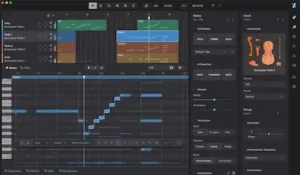 Instrument X is easier to recommend as a new orchestral production workflow than as a replacement for an established sample-library ecosystem.
Its strongest proposition is not “better samples.” It is the ability to turn MIDI or notation into an editable instrumental performance without building the same articulation and sample-management infrastructure required by conventional libraries.
That advantage is most convincing for exposed solo parts, small ensembles, rapid mockup work, and composers who value note-level performance editing. It becomes less decisive when the project depends on broad orchestral coverage, naturally irregular ensemble behavior, or the specific acoustic identity of a recorded scoring-stage library.
The current limitations are equally practical: early public reactions raise questions about ensemble variation and consistency across different instrument combinations, while the workflow can still require manual refinement despite reducing much of the traditional articulation-management overhead. These are more important buying considerations than the novelty of the neural architecture itself.
At launch, Instrument X looks strongest as a complementary orchestral performance system: its advantage is the editable neural-performance workflow, while established libraries retain the edge in breadth and proven ensemble behavior.
For that reason, I would test Instrument X against the most time-consuming parts of an existing orchestral workflow rather than replacing the entire template. The most useful comparison is whether a specific expansion can produce a finished part with less editing than the sample-based alternative already in the project.
The decisive question is simple: does Instrument X produce a convincing finished performance with less intervention than the system you already use? If it does, the reduced storage requirements and neural architecture become practical advantages rather than marketing talking points. If the generated performance still requires extensive correction to overcome artifacts, unnatural phrasing, or insufficient ensemble variation, those advantages become much less compelling. The final processing stage can refine a strong orchestral mix, but it cannot turn unresolved articulation, phrasing, or ensemble problems into a convincing performance.
At this stage, Instrument X is best understood as a specialist orchestral performance tool whose value depends on how much programming time it saves in a real production.
Instrument X Editorial Assessment
| Category | Assessment |
|---|---|
| Performance Generation | Strong |
| Articulation & Performance Editing | Very Strong |
| Dynamic Expression | Strong |
| Solo Instrument Realism | Promising / Strong in early reports |
| Ensemble Realism | Mixed |
| Orchestral Coverage | Limited compared with mature ecosystems |
| Workflow Integration | Strong, with DAW-specific caveats |
The core performance-generation concept is strong because Instrument X moves much of the work from triggering predefined recordings toward constructing an editable instrumental performance, although the final result still depends on how much refinement the generated part requires.
Note-level articulation and performance editing are among the platform’s most convincing advantages, because changes to individual musical events can be handled inside the instrument instead of relying primarily on external keyswitch and patch management.
Dynamic expression deserves a high score because the system is designed to alter the modeled performance as musical intensity changes rather than treating dynamics as simple output-level automation, but the quality of those transitions remains dependent on the individual instrument model.
Solo realism is a stronger area because exposed individual parts give the modeled articulation, phrasing and pitch behavior enough space to be heard without the correlation problems that become more obvious when several generated voices are layered.
Ensemble realism receives the largest reduction because the current generation of multiple modeled voices can expose synchronization and variation issues that are less problematic in isolated solo performances.
Orchestral coverage is the clearest limitation of the platform as a complete library: the launch collection spans strings, woodwinds, brass and saxophones, but does not provide the percussion, choir and broader ecosystem coverage expected from a mature full-orchestra library.
Hear What Your Mix Actually Needs
A carefully modeled orchestral performance can still leave questions about depth, balance, dynamics, stereo placement, and how the finished mix translates outside the production environment. Those decisions are easier to judge when the complete mix is evaluated as a finished record rather than as an isolated instrument or plugin workflow.
Upload up to 35 seconds of your mix and get a free mastering demo prepared by a real mastering engineer. The before-and-after comparison gives you a direct reference for what professional mastering can change in the finished mix — and what needs to be addressed earlier in the production chain. Upload your mix for a free mastering demo →
Instrument X FAQ
Can Instrument X be used alongside Kontakt orchestral libraries?
Yes. That is arguably the most practical way to use it. Kontakt-based libraries can continue to handle large ensembles, percussion, choir, and other established parts of a scoring template, while Instrument X can provide modeled solo instruments and performance editing where conventional articulation programming is slower.
Does Instrument X use less RAM than a large orchestral sample library?
Not in the same way as a large sample library. Instrument X uses neural acoustic modeling rather than storing a large collection of playback samples, so its disk footprint is substantially smaller. That does not automatically mean lower RAM or CPU usage in a complex project; storage and processing requirements are separate performance variables.
Can Instrument X improve an orchestral MIDI workflow?
That is one of its strongest use cases. Articulations, dynamics, and performance variations can be edited within the instrument rather than distributed across keyswitches, patches, and external MIDI programming. The time savings become most apparent when phrases need repeated revisions.
Is Instrument X suitable for large film-scoring templates?
It can be useful inside a large template, but it should not currently be treated as the only orchestral system. Its limited instrument coverage and the remaining questions around ensemble realism make a hybrid setup more practical for demanding scoring work.
Does Instrument X use recorded samples like Kontakt?
Its intended architecture is different from conventional sample playback. Dreamtonics describes Instrument X as a neural acoustic modeling system trained from licensed recordings and acoustic measurements. The neural engine models the instrument’s acoustic response and generates the performance rather than simply triggering a large collection of stored playback samples.
Can Instrument X be played from a MIDI keyboard?
Yes, but keyboard playability should not be confused with its primary strength. Instrument X is particularly valuable when the resulting performance is edited after recording. Musicians who need highly responsive real-time physical-modeling behavior may find dedicated modeled instruments more suitable.
Is Instrument X useful in a mixing workflow?
Yes, especially when the orchestral part is being produced as part of a larger mix. Its microphone perspectives let the user establish a closer or more ambient source before mixing, which can affect stereo placement, depth, masking, and the amount of additional reverb required later.
Does Instrument X make sense if I already own high-end orchestral libraries?
It can, but only if its editing model solves a problem those libraries do not. Buying it purely for additional orchestral coverage is difficult to justify. Buying it to accelerate solo-instrument programming or create a different type of MIDI performance is a stronger case.
Should I buy individual Instrument X expansions or the complete collection?
Individual expansions are the lower-risk option unless you already know that the complete instrument lineup fits your workflow. Use the 14-day expansion trials to evaluate the specific instruments you would actually use, and treat the separate 14-day Instrument X evaluation as a test of the editor and overall workflow rather than as an unrestricted trial of every expansion.

Yurii Ariefiev evaluates orchestral virtual instruments from a production perspective, with particular attention to how convincingly a modeled performance behaves beyond an isolated demo. For neural acoustic modeling, the important questions are performance variation, articulation continuity, ensemble realism, and how reliably the instrument translates into a complete orchestral context.
☕ Buy me a coffee