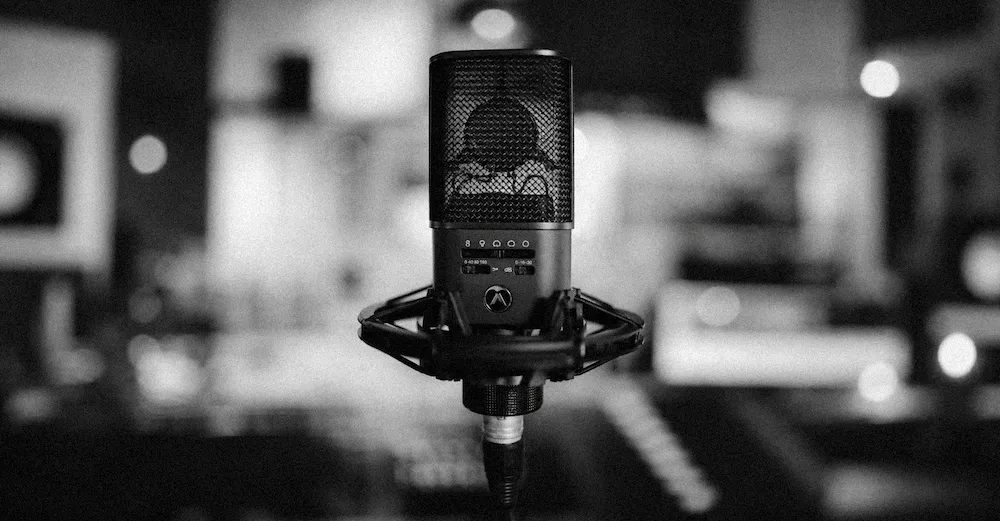
The Austrian Audio OC616 fills a useful gap in the company’s condenser lineup. At $749, it sits between the cardioid-only OC16 and the more sophisticated OC818, but the differences go beyond price. The OC616 uses Austrian Audio’s CKR12 dual-diaphragm capsule and offers five selectable polar patterns, while leaving out the OC818’s dual-output architecture and advanced post-recording control.
For a working engineer, that makes the real question less about how much technology Austrian Audio has packed into the microphone and more about how much of it actually changes the recording. Five polar patterns can be valuable when they alter the balance between a source and its room. A high-SPL rating matters when the microphone is going in front of a guitar cabinet or drum kit. A particular voicing matters when it determines how much corrective EQ, compression, or de-essing the source needs later.
The OC616 is therefore best viewed as a versatile tracking microphone rather than a stripped-down OC818. It is designed to cover vocals, acoustic instruments, amps, overheads, room recording, and stereo techniques from a single microphone. The trade-off is straightforward: you get considerably more flexibility than the OC16, but none of the OC818’s ability to capture both diaphragms and refine the pickup pattern after the recording has been made.
Where the OC616 Fits in a Working Studio
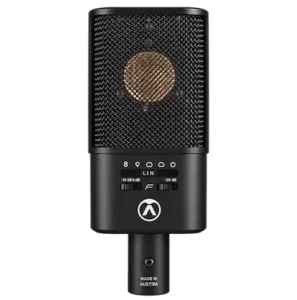 The OC616 makes the most sense as a general-purpose studio condenser for engineers who need more than cardioid but do not need the OC818’s deeper control. Its five polar patterns cover most of the recording techniques that routinely benefit from changing the relationship between the source and the room, while the CKR12 capsule gives it a different starting point from the entry-level OC16.
The distinction becomes important once the microphone reaches the mix. Austrian Audio gives the OC616 a more direct, assertive voicing than the smoother OC18 and OC818. On a vocal or acoustic instrument that needs presence and definition, that can reduce the amount of broad corrective EQ required later. On an already bright source, the same character can push the upper mids or sibilance in the wrong direction. The microphone is therefore making a tonal decision before any mixing plugin touches the track.
That is where the OC616 has its strongest argument. The value is not simply having five patterns on the specification sheet; it is being able to change the acoustic perspective at the microphone. Cardioid can keep a difficult room under control, wide cardioid can open the capture without going fully into room sound, hypercardioid can tighten rejection, and omni can make a good room part of the recording. Figure-eight adds practical options for Mid/Side and other stereo techniques.
For a project studio with a limited microphone locker, that versatility is meaningful. For a commercial room already stocked with multiple high-end condensers, the advantage is narrower: the OC616 becomes a flexible utility microphone rather than a replacement for a specialized collection. In a smaller production environment, that broader approach to recording can matter more than owning several narrowly specialized microphones, much like the priorities discussed in this guide to mastering for bedroom producers.
OC616 Features That Actually Matter in the Studio
The OC616 is a large-diaphragm true-condenser microphone built around Austrian Audio’s dual-diaphragm CKR12 capsule. Its pattern selector offers five choices: cardioid, wide cardioid, hypercardioid, omnidirectional, and figure-eight.
The useful part is not the number five. Each pattern changes the relationship between the microphone, the source, and the room. That affects rejection, room contribution, proximity effect, and the amount of off-axis sound entering the recording. In a good room, those differences can be as important as the microphone’s basic tonal character.
The analog controls are equally practical. The OC616 provides high-pass filters at 40, 80, and 160 Hz, plus -10 dB and -20 dB pads. Published specifications list 13 dB(A) equivalent self-noise, 13 mV/Pa sensitivity, a 20 Hz–20 kHz frequency response, and maximum SPL of 147 dB without the pad or 157 dB with the pad engaged.
None of these specifications is unusual in isolation. The attraction is having this combination of pattern control, filtering, and input headroom in a single XLR microphone.
Five Polar Patterns That Change the Recording
Cardioid is the obvious starting point, but the other four patterns are what give the OC616 its broader studio role.
Wide cardioid can open up the capture when standard cardioid feels too focused, while still providing more room control than omni. Hypercardioid moves in the opposite direction, narrowing the useful pickup area when isolation is more important. Omni removes the strong front-facing directivity of cardioid and makes the room a much larger part of the recording. Figure-eight provides the geometry required for techniques such as Mid/Side and Blumlein.
The difference is more significant than having several choices on a selector switch. Changing the pattern changes the acoustic balance at the source. It can alter how much room, bleed, proximity effect, and off-axis sound is recorded before any EQ or dynamics processing is applied.
Published Polar Patterns and Frequency Response
The published response charts are worth examining because the OC616’s main selling point is not simply having five patterns, but being able to change how much direct sound, room information, and off-axis energy becomes part of the recording. The frequency-response and polar-pattern plots provide useful context for evaluating those choices alongside the microphone’s stated voicing.
These charts should be read as reference data rather than a substitute for listening. The actual result still depends on source position, room acoustics, microphone distance, and the interaction between the chosen pattern and the surrounding arrangement.
Three High-Pass Filters for Tracking Decisions
The OC616’s 40, 80, and 160 Hz high-pass filters are useful when low-frequency energy is becoming a recording problem rather than a mixing problem.
At 40 Hz, the filter can help control subsonic content, mechanical noise, and very low-frequency room energy while leaving most of the musical low end intact. At 80 Hz, it becomes more relevant to proximity effect, low-frequency spill, and sources that simply carry more bottom end than the arrangement needs. The 160 Hz setting is considerably more aggressive and can noticeably reduce the body of a close-recorded source, so it is better treated as a deliberate tonal choice than a routine setting.
Because the filtering happens in the microphone’s analog signal path, unwanted low-frequency content is removed before it reaches the converter and subsequent processing stages. That can be useful when the goal is to capture a cleaner, more controlled signal rather than record unnecessary sub-bass and remove it later.
157 dB SPL Gives the OC616 Plenty of Headroom
A published maximum SPL of 147 dB, increasing to 157 dB with the pad engaged, puts the OC616 comfortably into territory suitable for loud guitar cabinets, brass, percussion, and close drum recording. The -10 dB and -20 dB pads provide additional margin when the microphone is placed close to a high-output source.
Austrian Audio also specifies a 134 dB dynamic range, which is relevant when a recording moves between quiet detail and high-level transients. Maximum SPL is not a reason on its own to buy the OC616, however. Its practical advantage is the combination of that headroom with multiple polar patterns, onboard filtering, and a more forward voicing.
That combination makes the OC616 more useful as an all-purpose tracking microphone than a condenser designed primarily around one recording application. The specification matters because it supports the microphone’s broader role, not because a high SPL number automatically makes it sound better.
Give Your Mix the Same Attention as the Recording Chain
A well-recorded source gives the final master more to work with: clearer detail, controlled dynamics, depth, punch, and a stereo image that can translate across different listening systems. If you want to hear how your own mix responds to professional mastering, you can submit up to 40 seconds for a free mastering demo and compare the result with your original.
Upload up to 40 seconds for a free mastering demo →
How the OC616 Can Shape the Mix Before Mixing Starts
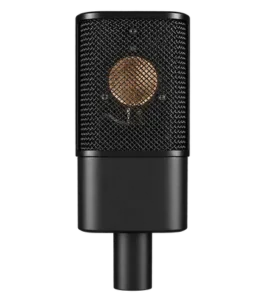 The OC616’s stated direct and assertive voicing is more relevant to a mix than a list of capsule specifications. A microphone does not simply capture a source; its frequency balance, polar response, and relationship with the room determine what the engineer has to work with later.
On a dense production, a source with useful presence and articulation may require less broad corrective EQ to establish its position in the arrangement. That can be valuable on vocals and acoustic instruments where intelligibility has to survive competing guitars, synths, cymbals, and other midrange-heavy material.
The same characteristic can work against the source. A singer with naturally strong upper mids or pronounced sibilance may need more de-essing or corrective EQ if the microphone reinforces that region. The OC616 therefore makes more sense as a source-dependent tool than as a universally flattering condenser.
That distinction is important when evaluating microphones. Terms such as “clear,” “detailed,” or “forward” have little practical value without knowing what they do to the source and the mix around it.
Vocals
Cardioid is the most obvious starting point for vocal tracking, particularly when room rejection and proximity control are priorities. The alternate patterns become useful when the acoustic environment is good enough to contribute to the recording or when a different balance between direct and reflected sound is desirable.
The OC616’s stated direct voicing can make sense for pop, rock, modern R&B, and spoken-word sources where articulation and presence are useful. With naturally bright or sibilant voices, however, the match is less predictable. If the source already carries substantial upper-mid energy, a smoother condenser may require less corrective work later. The important point is that the OC616’s voicing is part of the recording decision, not a guarantee that every vocal will benefit from a more forward presentation. The same balance then carries into later production stages, which is why vocal mastering starts with a source that is already under control.
Acoustic Guitar
Acoustic guitar is a particularly good example of why the OC616’s pattern selection matters. Cardioid can keep the recording relatively focused, wide cardioid can bring more of the instrument’s surroundings into the capture, and omni can make the room a deliberate part of the tone when the acoustic environment supports it.
The advantage is not that one pattern is inherently superior. It is the ability to change the acoustic perspective without changing microphones. That can be useful when the instrument sounds too dry, too narrow, too proximity-heavy, or too dominated by the room.
Drum Overheads and Room Recording
Drums put several of the OC616’s specifications to work at once. The high SPL capability provides substantial margin for close placement, while the pattern selector gives the engineer control over how much of the kit and room enters the recording.
Cardioid can produce a more focused capture, wide cardioid can broaden the image while retaining some directional control, and omni can work well when the room itself is part of the drum sound. Hypercardioid offers another option when rejection is more important than room contribution.
This flexibility becomes especially useful in smaller recording spaces. In a compromised room, changing the pattern can sometimes solve a placement problem more effectively than trying to repair excessive room sound with EQ after the fact.
Guitar Amps and Other Loud Sources
The OC616’s pads and published SPL rating make it a credible condenser option for guitar cabinets, brass, percussion, and other high-output sources. The additional headroom is useful when the microphone needs to be positioned close to the source.
It should not, however, be treated as a replacement for every other cabinet microphone. A dynamic microphone such as the Shure MV6 Gen 2, a ribbon, and a large-diaphragm condenser capture the same amplifier from different acoustic and electrical perspectives, with meaningful differences in transient response, off-axis behavior, and tonal balance. The OC616 is another serious option for the microphone locker, not a universal substitute for those designs.
OC616 vs OC818: The Feature That Separates Them
The OC616 should not be treated as a cheaper OC818. The two microphones share Austrian Audio’s CKR12 capsule platform, but their recording architectures are fundamentally different.
The OC818 uses dual outputs, allowing the signals from its two diaphragms to be captured separately. Combined with Austrian Audio’s software-based control, this gives the engineer considerably more freedom to alter the microphone’s directivity after the recording has been made. A decision that would normally have to be committed during tracking can, within the OC818’s workflow, be revisited later.
The OC616 takes a much simpler approach. It has a single analog output and five fixed polar patterns selected on the microphone itself: cardioid, wide cardioid, hypercardioid, omni, and figure-eight. Once the signal has been recorded, the selected pattern is part of the capture and cannot be changed independently in the way the OC818 allows.
That difference should determine which microphone makes more sense for a particular studio. If sessions involve uncertain room conditions, experimental stereo techniques, or a workflow where microphone directivity needs to remain flexible after tracking, the OC818 offers capabilities the OC616 simply does not have.
If the engineer prefers to make the acoustic decision at the microphone, the OC616 removes much of that complexity. It provides the patterns most studios actually use while keeping the signal path conventional and the workflow straightforward.
The result is a clear division between the two models rather than a simple difference in price. The OC616 prioritizes practical multi-pattern recording; the OC818 prioritizes control and flexibility beyond the recording session.
OC616 vs OC16 vs OC18 vs OC818: Where Does Each Microphone Fit?
| Microphone | Voicing | Polar Patterns | Capsule | Best Fit | Main Limitation |
|---|---|---|---|---|---|
| OC16 | Direct, clear | Cardioid | CKR6 | Vocals, instruments, project studios | Cardioid only |
| OC616 | Direct, clear, assertive | 5 | CKR12 | General-purpose tracking, room and stereo techniques | No dual output or post-recording pattern control |
| OC18 | Rich, smooth | Cardioid | CKR6 | Vocals and instruments where a smoother presentation is preferred | Cardioid only |
| OC818 | Rich, smooth | Multi-pattern with advanced control | CKR12 | Studios that need maximum control over microphone directivity | Higher cost and more complex workflow |
The OC616 is not the automatic winner of the lineup. Its advantage is more specific: it offers the broadest practical recording capability without moving into the OC818’s more elaborate dual-output and software-controlled workflow.
The OC16 makes more sense when cardioid covers almost every recording situation and the additional patterns of the OC616 would rarely be used. Paying for versatility that stays on the microphone stand does not improve the recording.
The OC18 is the more focused option when a cardioid-only condenser with a smoother presentation is a better match for the sources being recorded. Its limitation is the lack of alternate pickup patterns rather than any shortage of core recording capability.
The OC818 remains the more capable choice when the recording process needs to preserve options beyond the initial tracking decision. Its dual-output architecture and extended control over directivity put it in a different category from the fixed-pattern workflow of the OC616.
How the OC616 Fits Into a Real Production Workflow
The OC616 is straightforward to integrate into a recording system: microphone, XLR cable, preamp or audio interface, and DAW. There is no software layer between the microphone and the recording chain, so the important variables are acoustic rather than technical.
What matters in practice is what the microphone puts into the session. A pronounced tonal character becomes part of every processing decision that follows it. EQ, compression, de-essing, vocal automation, and even arrangement choices can change depending on how the source was captured in the first place. By the time the mix is ready for mastering, those earlier recording decisions are already part of the material, which is why preparing a mix for mastering starts with solving problems at the source rather than relying on the final stage to correct them.
That is why an isolated microphone comparison can be misleading. A brighter or more forward recording may sound more impressive when switching between microphones on its own, but the advantage can disappear once guitars, synths, cymbals, and other competing sources fill the same frequency range. The better microphone is often the one that requires less intervention once the complete arrangement is playing.
The OC616’s five patterns add another variable to that decision. Changing directivity changes the amount of room sound, off-axis information, and proximity effect captured with the source. In a controlled room, that can be used creatively. In a problematic room, it can determine whether the recording is easy to mix or requires substantial cleanup.
For a mastering engineer, the relevance of the OC616 is therefore upstream rather than within the mastering process itself. A microphone cannot improve mastering, but a well-chosen microphone can produce a cleaner, better-balanced source that reaches the mix with fewer problems to solve.
What the OC616 Specifications Actually Tell You
The OC616’s specification sheet supports a clear picture of its intended role, but it does not predict the entire recorded sound. The CKR12 dual-diaphragm capsule explains why the microphone can provide multiple polar patterns; the 13 dB(A) self-noise and high SPL capability indicate that it can cover both quiet and loud sources; and the three high-pass filters and two pads show that Austrian Audio expects engineers to make part of the signal-shaping decision before the preamp.
The Open Acoustic Technology claim should be treated more cautiously. Controlling internal acoustic reflections is a legitimate microphone-design objective, but the specification alone cannot establish how much of the final sonic character comes from that feature. Without controlled measurements or direct listening comparisons, claims about openness, dimensionality, or realism remain descriptions of the manufacturer’s design philosophy rather than independently demonstrated advantages.
The more useful engineering distinction is therefore between what is captured and what can be changed later. The OC616 gives the engineer substantial control before recording through polar pattern, filtering, pad selection, and placement. Once the take is recorded, however, those choices are largely fixed. That is the fundamental difference between the OC616 and the OC818, and it matters more to workflow than the shared capsule name.
Who Should Buy the Austrian Audio OC616?
The OC616 makes the most sense for engineers who will actually use its multiple polar patterns. Its value increases when one microphone needs to cover several recording techniques rather than a single repeatable setup.
Home and project studios: This is one of the strongest use cases. A single OC616 can cover vocals, acoustic instruments, amps, overheads, room recording, and stereo techniques without requiring several specialized condensers. The advantage is greatest when the room is good enough to make the alternate patterns useful.
Producers who record their own artists: A strong fit for fast production workflows. The ability to change pickup patterns and engage the high-pass filter or pad directly on the microphone can reduce the need to rebuild a setup when moving between sources.
Engineers who record and mix: The OC616 is worth considering when microphone choice is part of the mixing strategy. Its voicing and pickup pattern become part of the source before EQ, compression, and de-essing are applied.
Professional recording studios: Useful as a flexible utility microphone, particularly when another multi-pattern option is needed. Its value is less obvious in a studio that already has several high-end condensers covering similar recording applications.
Mastering engineers: Low priority. The OC616 is a tracking microphone. It can influence the quality of material that eventually reaches mastering, but it does not perform a mastering function.
Beginners: $749 is difficult to justify as an early microphone purchase unless the rest of the recording chain is already in good shape. Room acoustics, monitoring, placement, gain staging, and recording technique will usually have a larger effect on the finished result.
OC818 owners: The OC616 is not an upgrade. Its simpler single-output architecture and fixed pattern selection mean that it does not replace the OC818’s deeper control. It makes sense only if a second microphone with a different workflow or voicing is genuinely useful.
OC16 owners: The move to the OC616 becomes compelling when cardioid-only operation has become a practical limitation. If the OC16 already covers the majority of your sessions, the upgrade is difficult to justify purely on the basis of owning a more expensive microphone.
Is the $749 OC616 Worth the Price?
At $749, the OC616 sits between Austrian Audio’s $449 OC16 and $899 OC18, while the OC818 is positioned at $1,399. That makes the buying decision unusually clear: the OC616 is not simply a more expensive OC16, and it is not a cheaper OC818. It occupies the middle of the range for engineers who specifically need multiple polar patterns without paying for the OC818’s dual-output and advanced pattern-control system.
If the microphone will spend almost every session in cardioid in front of a vocalist, the OC16 is the more rational comparison. There is little reason to pay for four additional patterns if they will rarely leave the selector switch untouched.
The calculation changes for an engineer who regularly records different sources and techniques. Vocals, acoustic guitar, drum overheads, room microphones, loud cabinets, and Mid/Side recording can all benefit from having different pickup patterns available from the same microphone. In that workflow, the OC616 can reduce the need to buy or reach for several more specialized options.
That makes the $749 price reasonable, but not exceptional on specifications alone. The return on the investment comes from versatility and how often that versatility affects a recording decision. The CKR12 capsule is part of the proposition, but it should not be the sole reason to choose the microphone.
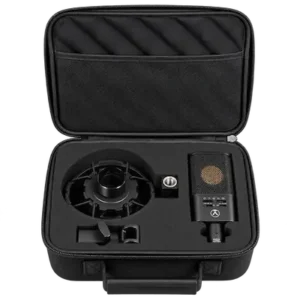
For a studio that will actively use the OC616’s broader recording capabilities, the price is easier to defend. The Studio Set also includes the OCS6 shockmount, OCH8 microphone clip, and MCS616 carrying case, making the package more complete for a working recording setup.
For a cardioid-only workflow, however, there are more economical ways to solve the same problem. The OC616 earns its price when its additional patterns, filtering, headroom, and recording flexibility are used often enough to affect real tracking decisions.
Overall Rating
| Category | Rating |
|---|---|
| Polar Pattern Versatility | 9.0/10 |
| Source & Room Control | 8.9/10 |
| Loud-Source Headroom | 8.9/10 |
| Analog Tracking Controls | 8.7/10 |
| Tonal Versatility | 8.2/10 |
| Post-Recording Flexibility | 6.7/10 |
| Overall | 8.4/10 |
The five polar patterns give the OC616 unusually broad control over the balance between direct sound, room contribution, rejection, and stereo capture, making pattern selection one of its strongest practical advantages.
The rating is driven by how often those five patterns can change an actual recording decision. The OC616’s strongest advantage is not simply pattern count, but the ability to change directivity, room contribution, and rejection without changing microphones.
The 147 dB SPL rating, 157 dB maximum with the pad engaged, and 134 dB dynamic range make the OC616 well suited to demanding sources, including loud cabinets, percussion, brass, and drums.
The 40, 80, and 160 Hz high-pass filters and two attenuation pads allow useful decisions to be made before the signal reaches the converter, although those decisions are committed to the recorded signal.
The microphone’s direct, assertive voicing can be useful when a source needs presence and articulation, but it is less universally forgiving with already bright or sibilant sources than a smoother condenser.
The main limitation is post-recording flexibility. Unlike the OC818, the OC616 records a single output with the selected pickup pattern already established, so engineers cannot revisit directivity in the same way after tracking.
The OC616 earns its strongest case as a versatile professional tracking microphone for engineers who will actively use its patterns, filtering, and headroom. Its weakness is not a lack of recording capability but the amount of acoustic decision-making that must be committed before the take is recorded.
Verdict: A Versatile Middle Ground, Not an OC818 Replacement
 The Austrian Audio OC616 gets its positioning right. It takes the CKR12 dual-diaphragm capsule platform, combines it with five fixed polar patterns, onboard high-pass filtering, two pads, and substantial SPL capability, then keeps the workflow straightforward enough for everyday studio use.
Its compromises are just as clear. The single-output design means the recording decision is largely made at the microphone, and there is no OC818-style dual-diaphragm capture or extended post-recording control over directivity. Engineers who need that flexibility should move up to the OC818 rather than expect the OC616 to provide a cheaper version of the same workflow.
For project studios and producers who record a wide range of sources, the OC616 has a convincing practical advantage. One microphone can move from vocals and acoustic instruments to amps, overheads, room recording, and stereo techniques without being limited to cardioid operation.
For a large commercial studio with an established collection of multi-pattern condensers, the argument is weaker. For a mastering-only setup, it is largely irrelevant. And for an OC16 owner whose sessions rarely require anything beyond cardioid, the additional cost only makes sense once those limitations become real rather than hypothetical.
At $749, the OC616 is not a bargain based on specifications alone. Its value comes from how often its flexibility changes the way a source is recorded. If those five patterns will regularly influence placement, room contribution, isolation, or stereo technique, the microphone earns its place in the locker. If they will not, a simpler condenser may deliver better value.
Verdict: The Austrian Audio OC616 is a well-positioned professional multi-pattern condenser for engineers who want broad tracking capability without the complexity of the OC818. It is not a flagship killer, and it does not need to be. Its strongest argument is simpler: for the right studio, it can be one microphone that solves several recording problems.
Hear What Professional Mastering Does With Your Finished Mix
The OC616 review makes one point clear: good results start with decisions made at the source, but the final mix still has to hold together as a complete production. Once the recording, EQ, dynamics, balance, depth, stereo image, and detail are working together, professional mastering can reveal how that mix translates beyond your own monitoring setup. Instead of judging the result by specifications alone, compare your actual mix with a master prepared by a real mastering engineer. Upload up to 40 seconds and get a free mastering demo to hear the difference for yourself.
Austrian Audio OC616 FAQ
Is the Austrian Audio OC616 the same microphone as the OC818?
No. Both microphones use Austrian Audio’s CKR12 dual-diaphragm capsule platform, but the OC616 has a single analog output and five fixed polar patterns. The OC818 adds dual outputs and more extensive control over its pickup pattern, including options that can be adjusted after recording.
Is the OC616 good for vocals?
Yes. Its direct, assertive voicing can suit vocals that need presence and articulation in a dense arrangement. Singers with naturally strong upper-mid energy or pronounced sibilance may be better matched with a smoother-sounding microphone.
Can the OC616 be used for Mid/Side recording?
Yes. Its figure-eight pattern makes it suitable as the Side microphone in a conventional Mid/Side setup. The microphone’s single-output design means it does not offer the same post-recording control available from the OC818.
Is the OC616 better than the OC16?
Not for every application. The OC616 adds four alternate polar patterns, a CKR12 capsule, and greater recording flexibility, while the OC16 is a simpler cardioid condenser. If cardioid covers most of your sessions, the OC16 may provide better value.
Is the OC616 better than the OC18?
They serve different priorities. The OC616 is the more flexible multi-pattern option, while the cardioid-only OC18 is aimed at engineers who prefer its smoother voicing. Neither is universally better; the choice depends on the source and recording environment.
Is the OC616 suitable for loud sources?
Yes. Its published maximum SPL is 147 dB, increasing to 157 dB with the pad engaged. That gives it enough headroom for applications such as guitar cabinets, brass, percussion, and close drum recording.
What comes with the Austrian Audio OC616?
The OC616 Studio Set includes the microphone, OCS6 shockmount, OCH8 microphone clip, and MCS616 carrying case. It uses a conventional XLR connection and requires 48 V phantom power from a compatible microphone preamp, audio interface, or mixer.
What are the main alternatives to the OC616?
Within Austrian Audio’s range, the OC16, OC18, and OC818 are the closest comparisons. The OC16 is the simpler cardioid option, the OC18 focuses on a cardioid-only workflow with a smoother voicing, and the OC818 provides substantially more control over directivity and signal capture. Other multi-pattern large-diaphragm condensers are also worth considering when comparing price, voicing, and established studio use.
Is the OC616 worth $749?
It can be, if you will regularly use its five polar patterns, high-pass filters, pads, and broad range of recording applications. If it will spend most of its time in cardioid on vocals, a less expensive cardioid condenser may provide a better return.

Yurii Ariefiev approaches large-diaphragm condenser microphones from the perspective of source capture: how polar response, off-axis behavior, proximity effect, and tonal balance influence the recorded signal before processing begins. For a multi-pattern microphone such as the Austrian Audio OC616, the useful question is not simply how many patterns are available, but how those choices affect the relationship between the source and the recording space.
Enjoyed this review?
If you found it useful, you can support independent audio research with a coffee.
☕ Buy me a coffee