
Affordable Mastering Service — Real Quality Without Inflated Pricing
Most tracks don’t fail in the mix — they fail after release, when the master doesn’t translate.
Affordable mastering delivers release-ready results — without paying for unnecessary overhead.
What you get: a master that translates, stays balanced, and holds after normalization.
Lower cost comes from efficiency — not from cutting corners.
Why Mastering Prices Vary So Much (And Where “Affordable” Actually Sits)
 Open any mastering service in the US and you’ll see a wide spread. One engineer charges $30 per track. Another sits at $300. Same word — “mastering.” Completely different price points.
The price difference comes from how the work is structured — not from how the track sounds in the end.
Experience is the first variable. Engineers who’ve spent years working across genres, fixing translation issues, and handling real-world releases operate differently. They focus on delivering a track that holds together across real playback conditions.
Then there’s workflow. Some studios still run complex, time-heavy chains with multiple stages, recalls, and revisions built into the process. Others have streamlined everything — fewer steps, tighter execution, faster turnaround without unnecessary overhead.
Time per track also matters. A project that requires multiple passes, detailed revisions, and extended communication will naturally cost more than a clean, well-prepared mix that can be handled efficiently.
Infrastructure plays a role too. High-end rooms, analog chains, and legacy setups come with real costs. But not every project actually needs that level of environment to translate well across streaming platforms.
This is where affordable mastering actually makes sense. Not at the bottom. Not at the premium top. Right in the middle — where the process is optimized, the engineer knows what to focus on, and the result isn’t inflated by unnecessary complexity.
For most artists, this is the point where paying more stops making sense — and the result still holds after release.
A detailed breakdown of mastering pricing is available here: mastering pricing breakdown
What Makes Mastering Affordable Without Killing the Result
“Affordable” only sounds risky if you assume the price reflects the sound. More often, the price reflects how the work is structured — not the result itself.
An efficient mastering approach removes that overhead. Not by skipping quality, but by removing redundancy.
For example, a well-prepared mix doesn’t need to be “rescued.” It needs to be evaluated quickly, adjusted with intent, and finalized without over-processing. When the source is solid, the job becomes focused. No need to stretch it into a multi-hour session just to justify a higher rate.
It comes down to how directly the engineer gets the track to a stable final version.
There’s also no need to stack unnecessary steps. Each additional stage introduces the risk of overcorrection. When the process stays controlled, the track keeps its original energy instead of being “overworked” into something flat or sterile.
Fewer steps. Clear decisions. No artificial delays. That’s how the cost stays lower without changing how the track performs.
You’re not getting less — you’re reaching the same result with fewer unnecessary steps.
Affordable vs Cheap vs High-End Mastering
These terms often get mixed up, but they represent very different approaches. What actually changes is not just the price — it’s the decision-making behind the result.
Cheap mastering is where things usually break. It’s fast, often automated, and built around volume rather than attention. At first, the result may seem acceptable, but it often lacks stability across different listening environments. It might pass as “loud,” but it doesn’t translate.
High-end mastering goes in the opposite direction. Maximum control, extended time per track, deeper listening environments. This level is built for complex material where every nuance matters — dense arrangements, high-budget releases, or situations where even subtle inconsistencies become audible.
Affordable mastering sits between those two — but not as a compromise. As a controlled middle ground. The goal isn’t to push the process further than necessary, but not to cut it short either. The focus stays on what actually affects playback: balance, consistency, and translation across real-world systems.
This is where the difference becomes obvious:
| Segment | Core Approach | What You Risk / Gain |
|---|---|---|
| Cheap | Speed-driven, often automated or rushed | Unstable translation, loss of detail, inconsistent playback |
| Affordable | Optimized workflow, focused decisions | Balanced result with controlled cost and reliable translation |
| High-End | Extended process, maximum control and detail | Highest precision, but often unnecessary for simpler projects |
In real terms, this is where you stop paying extra — and the track still performs exactly as it should after release.
If you compare this with fully automated solutions, the difference becomes even clearer — especially in how decisions are made versus how they’re calculated in AI mastering vs human engineering.
At this point, paying more doesn’t improve the result — it just adds unnecessary overhead.
Who Affordable Mastering Is Actually For
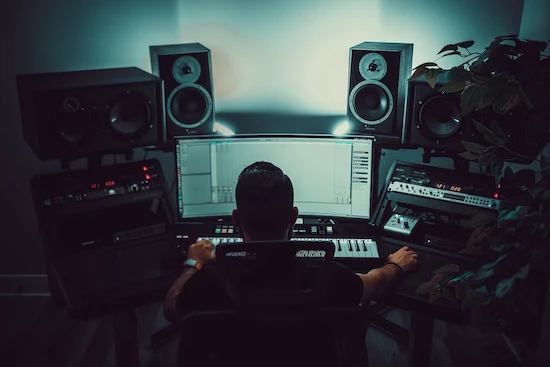 Not every release benefits from a high-budget mastering session. And not every track should be pushed through the cheapest option available. Affordable mastering sits in a very specific space — and it works best when the context matches.
Independent artists are the core audience here. When you’re releasing singles consistently, testing new material, or building momentum on streaming platforms, spending hundreds per track doesn’t always make sense. What matters is getting a result that translates — without slowing down your release cycle.
Bedroom producers fall into the same category, especially those who already understand their sound and can deliver a controlled mix. In that situation, mastering becomes the final alignment step — not a rescue job. The process can stay efficient because the foundation is already there.
Small releases are another clear case. EPs, demo drops, early catalog material — projects where the goal is clarity, consistency, and readiness for platforms, not ultra-fine polishing under a microscope. That’s where affordable mastering becomes the right choice.
When does it make sense? When the mix is stable, the creative direction is clear, and the priority is translation across real listening environments. Not perfection for its own sake — but a reliable, finished sound that holds up after release.
And when it doesn’t? If the track still has unresolved issues, or if the release demands extreme precision under tight quality control. That’s a different segment entirely.
For producers working in controlled home setups, the boundary becomes even clearer — and it’s explored deeper in how mastering works for bedroom producers and where efficiency starts to make sense.
Hear the Difference Before You Commit
Not sure how your track will translate after mastering? Don’t guess. Send it in and get a real demo — up to 30 seconds, processed by an engineer, so you can judge the result in your own listening setup before making any decision.
No commitment. Real engineer. Clear result.
What You Actually Get in an Affordable Mastering Service
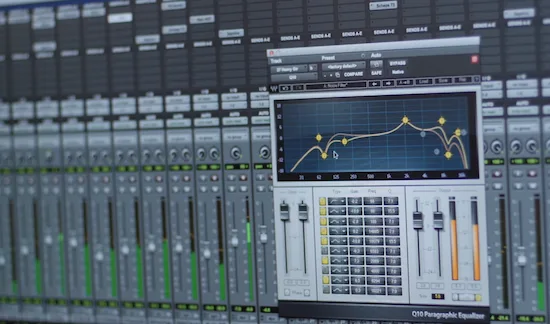 At this stage, what matters is the outcome: a track that plays consistently across streaming platforms, keeps its balance on different systems, and holds its energy without breaking under normalization.
First — translation. A track that sounds solid in your room should not fall apart in a car, on earbuds, or through a phone speaker. Affordable mastering focuses on that consistency. Not just how it feels in one environment, but how it holds together everywhere people actually listen.
We’ve seen tracks that feel powerful in the studio, then lose weight on streaming platforms. Kick disappears. Vocal shifts forward too aggressively. That’s not a “taste” issue — it’s translation. And it’s one of the first things a proper master locks in.
Second — balance. Not dramatic changes. Not a new mix. Subtle alignment that makes the track feel finished. Low-end sits tighter. Midrange stops fighting itself. Highs open up without turning sharp. It’s the difference between “almost there” and something that feels stable from start to finish.
Then comes loudness control. Not just pushing level, but managing how the track behaves when it’s pushed. A master should hold its energy without collapsing under normalization. You don’t notice it immediately — but you hear it the moment you compare it against other releases in the same playlist.
If these three areas hold — translation, balance, and controlled loudness — the price becomes secondary. If it holds across systems, it works. That’s the only metric that matters. Everything else is secondary.
A final check of how a track should behave before release is outlined in this mastering checklist.
Where Affordable Mastering Can Fail (And How to Avoid It)
Affordable doesn’t automatically mean safe. The price alone tells you nothing about how the track will behave after release. And this is where a lot of artists get burned — not because they paid less, but because they didn’t see what was behind that price.
The first risk is automation disguised as mastering. Upload a track, get a result in seconds, no context, no listening beyond an algorithm. It can sound acceptable at first. Then you check it on different systems — and things shift. Low-end becomes unstable, vocals lose position, the track feels inconsistent. Fast doesn’t mean controlled.
The second issue is inexperienced engineers. Not beginners — that’s normal. The problem is when someone doesn’t yet recognize how a track should translate outside their own setup. They might make the track louder, brighter, or cleaner — but miss the bigger picture. The result works in isolation, but not in real playback conditions.
Then there’s the source material. Affordable mastering assumes the mix is already in a workable state. If the foundation isn’t there, no efficient workflow will fix it. Instead, you get a processed version of the same imbalance — just louder and more exposed.
So how do you filter this out?
Look for signals of real control. Does the service offer a preview or demo before commitment? Do they talk about how the track translates, not just how loud it gets? Is there a clear boundary between what mastering can improve and what it can’t?
A reliable service doesn’t promise miracles. It shows consistency. You should be able to send a track, hear the result, and immediately understand what changed — not guess.
If something feels off after mastering, it’s usually not random. There’s always a reason behind it, and you can explore the typical causes in a deeper mastering problems breakdown to understand what might be happening.
How Pricing Scales for Albums and Multiple Tracks
Pricing shifts when you move from a single track to a full release. Not because the work becomes easier — but because the workflow changes.
When mastering an album or a group of tracks, there’s shared context. Once the tonal direction, loudness target, and overall feel are established, that foundation carries across the entire project. The engineer isn’t starting from zero every time. Decisions become more consistent, and the process becomes more efficient.
That efficiency is what reduces the cost per track.
It’s not a discount in the usual sense. It’s a reflection of continuity. Instead of treating each track as an isolated task, the project is handled as a unified body of work. Transitions between tracks are considered. Dynamics are aligned. The release feels cohesive, not fragmented.
We’ve seen this clearly with EPs and albums where tracks were mastered individually by different services. The result often feels disconnected — levels don’t match, tonal balance shifts from one track to another. Fixing that later usually costs more than doing it properly as a single project from the start.
With a structured album workflow, you get both: lower cost per track and a more consistent final result.
A practical way to estimate this is through the album mastering calculator, based on track count.
Stop guessing how your track will translate
Affordable mastering only works if the result holds up after release. Start with a real reference — hear how your track translates across systems before you commit to a full master.
No inflated pricing. No blind decisions. Just a clear result you can trust.
Final Perspective on Affordable Mastering
At some point, the price stops being the main variable. What actually matters is whether the track holds up after release — across systems, across platforms, across real listening conditions.
Affordable mastering works when the process is focused and the decisions are intentional. Not stretched out. Not rushed. Just executed with clarity. That’s where experience shows up — not in how long something takes, but in how accurately it’s handled.
We’ve worked on tracks where the difference wasn’t dramatic at first listen. Then you hear it in a playlist, next to other releases. Suddenly it’s obvious which one translates and which one falls apart. That’s the line that matters.
So no — price doesn’t define quality. Process does. Judgment does. The ability to know when to act and when to leave the track alone.
When those elements are in place, “affordable” stops sounding like a compromise. It becomes a more direct path to a finished, reliable result.
Affordable Mastering — Common Questions
Is affordable mastering good enough for streaming platforms?
Yes — if it’s done correctly. Streaming platforms don’t care how much you paid. They react to how stable your track is under normalization. If the balance holds and the energy doesn’t collapse, the result will sit properly next to other releases.
What’s the difference between affordable and cheap mastering?
Cheap mastering usually cuts attention, not just cost. It’s often rushed or automated. Affordable mastering keeps the critical decisions intact but removes unnecessary process. The difference shows up in translation — one holds, the other doesn’t.
Can I get professional results at a lower price?
Yes, if the workflow is efficient and the mix is ready. You’re not paying for fewer results — you’re paying for fewer wasted steps. The outcome can still meet the same release standard when the process is controlled.
How do I know if the mastering quality is real?
You should be able to hear it immediately in different environments. Not just louder — more stable. If the track keeps its shape across speakers, headphones, and streaming playback, that’s a real result. If it only works in one place, something’s off.
Does affordable mastering include revisions?
In most cases, yes — but within reason. Minor adjustments are part of the process. Unlimited revisions usually signal an unfocused workflow. A clear, controlled first pass is a better indicator of quality than endless tweaks.
What if my track still sounds off after mastering?
That usually points back to the source. Mastering can enhance and align, but it doesn’t rebuild a mix. If something feels wrong, it’s worth identifying the cause first — which is covered in a deeper mastering problems guide.