
Rock Mastering — Why Your Track Falls Apart When It Gets Loud
The mix hits hard. Guitars feel massive. Drums punch. But after mastering… something shifts — and not in a good way?
Rock mastering focuses on controlling dense, aggressive mixes — where clarity, punch, and balance start breaking once the track is pushed. This is exactly what professional rock mastering is built to handle.
If your rock mix loses punch, clarity, or balance when pushed — that’s exactly what professional rock mastering is designed to stabilize before release.
In rock, mastering is where dense mixes are stress-tested at release level — revealing whether they hold together or collapse under pressure. That’s where you find out if your track is ready for release.
That’s the difference between a track that falls apart — and one that stays punchy, clear, and stable on real playback systems.
Rock Mastering Service — Built for Real-World Playback
Rock mixes don’t fail in the studio — they fail when pushed. Our rock mastering service is built specifically for that moment — controlling midrange, preserving punch, and keeping your mix stable at release level across real playback systems.
- release-ready master for Spotify, Apple Music, YouTube
- midrange control for dense guitar mixes
- punch preserved even under heavy limiting
- stable vocal position in heavy arrangements
- consistent translation across streaming, car, and headphones
Rock mastering: $59–109 per track, depending on mix complexity.
| Turnaround time - Standard turnaround: 1–3 days per track. Faster delivery available on request. | Who this is for - rock bands preparing tracks for release - producers working with dense guitar mixes - artists struggling with punch and clarity at high levels | What you receive - final master in WAV (24-bit / 16-bit) - streaming-ready loudness for Spotify, Apple Music - optional alternate versions on request | How the process works - analysis of mix balance and midrange conflicts - targeted adjustments to preserve punch and clarity - level optimization for streaming platforms - final check across multiple playback systems |
This isn’t preset-based processing. We control midrange, preserve punch under limiting, and keep vocal position stable at release level.
Why Rock Falls Apart at the Mastering Stage — It’s Not the Level, It’s the Density
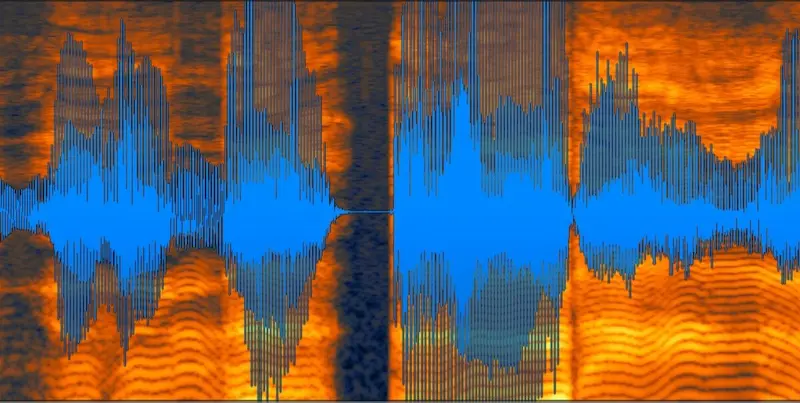 Why rock mastering often fails:
- drums lose punch when level increases
- guitars collapse into a dense wall
- vocal gets buried in the mix
- top end becomes harsh or fatiguing
These issues don’t come from mastering itself — they come from how rock mixes behave when pushed to release level.
Rock doesn’t fall apart because of mastering. It falls apart because mastering exposes what the mix can’t handle.
Rock is one of the few genres where everything important competes in the same space. Guitars, vocals, snare — all pushing through the midrange at the same time.
In the mix, that often feels right. Big guitars. Forward vocal. Aggressive drums. It sounds full. Alive. Like a record in progress.
As soon as the level comes up, that same density turns against the track. The midrange starts stacking. Elements stop separating. What felt powerful now feels crowded — or worse, harsh.
We see this constantly in real mastering sessions — across different rock styles, mixes, and production levels.
A mix comes in sounding solid at moderate levels. Nothing feels broken. No obvious distortion.
Then mastering begins — and the balance shifts immediately. The vocal sinks. Guitars smear together. The snare loses its edge.
That’s why mastering often feels like it broke the track — when it actually exposed what was already there. This is exactly what usually goes wrong in mastering when the mix isn’t built to handle level.
Rock mixes leave very little room — which is why they collapse the moment you try to bring them to release level. Not gradually — instantly.
Layered guitars create width — but also mask detail, especially once they start competing with the vocal in the same midrange. Drums add punch — but lose impact when the level rises. The vocal sits in the middle — and gets buried first when everything collapses.
In rock specifically, mastering doesn’t fix that kind of structure.
It won’t separate elements that are already glued together. It won’t rebuild space that was never there.
What it does is control how those elements behave when everything is pushed.
That’s the difference between a mix collapsing — and a track holding together at release level.
This is why a mix that feels strong in the studio can fall apart on real playback systems. It’s about whether the track holds together once it’s pushed — and whether it’s actually ready for release.
In rock, mastering acts as a stress test — not a polish stage. It determines whether the track stays clear, punchy, and controlled when it’s pushed — or falls apart before it’s ready for release. That’s where rock mastering becomes critical.
The Midrange Problem — Where Rock Tracks Actually Break
When midrange overload hits, this is what you hear:
- vocal stops leading the mix
- guitars lose definition
- snare becomes inconsistent
- the track feels aggressive but unclear
If there’s one place where rock falls apart, it’s not the low end. It’s not the top either. It’s the middle.
Most rock mixes are built around that range. Guitars sit right in the 1–4 kHz range. Vocals push even higher, often 2–5 kHz. The snare lives there too. Presence, attack, clarity — all fighting for the same space.
In the mix, that overlap feels like energy. Everything is forward. Everything feels “in your face.” You turn it up — it feels exciting.
Because what you’re actually hearing is multiple elements stacking in the same space. At that point, more level doesn’t add clarity — it exposes the conflict.
At moderate levels, it still feels separated.
Then mastering pushes the level.
At that point, even a small shift in level can completely change how the vocal and guitars interact. Guitars lose definition — not quieter, just less distinct. The vocal stops sitting “on top” and gets swallowed. The snare becomes either dull… or painfully sharp.
In many cases, even a 1–2 dB shift in this range completely changes how the vocal and guitars interact.
Not a technical error. A structural one.
The problem shows up when everything is pushed together. At that point, there’s no room left. Mastering doesn’t fix it — it controls how that conflict behaves under pressure.
That’s where rock mastering makes the difference. Especially when you understand how professional mastering actually works in practice.
We regularly receive mixes where the low end is controlled and the top end is clean — but the track still falls apart the moment it’s pushed. Not because of level — but because there was no space left for elements to separate. And once that space is gone, no amount of processing will bring clarity back.
Every time, the issue was here — and fixing it never required more level, only more space. When this is handled correctly, the difference is immediate — the vocal holds its place, guitars stay defined, and the mix doesn’t collapse when the level goes up.
Too many elements claiming the same space. Too much information competing for attention. No clear priority once everything is forced forward — and that’s exactly where mixes start collapsing under mastering pressure.
At that point, small level changes stop helping — because the issue is no longer balance, but space.
We’ve had mixes where pulling just one guitar layer back by 1–2 dB made the vocal suddenly lock into place — without touching the vocal or changing its level at all. That’s how sensitive this range is.
Midrange problems rarely sound obvious until the track is pushed and played outside the studio.
This buildup often turns into mud or harshness — but those are symptoms, not the root problem.
On the opposite side, when that same range gets pushed too far, it crosses into the territory explained in our how harshness builds up in rock mastering, where presence turns into fatigue.
Different symptoms. Same source — and the same reason rock mixes collapse once they’re pushed.
Rock doesn’t struggle because it lacks bass or top end. It struggles because everything important happens in the same place — and mastering forces that reality to the surface.
That’s why most rock mixes don’t break in the lows or highs — they break in the middle, where everything competes at once.
Density Collapse — Why Punch Disappears When the Level Goes Up
There’s a moment in rock mastering where everything just flattens.
The drums don’t hit the same. Guitars lose their edge. The whole track feels smaller, even though it’s technically louder.
Most people blame the limiter — especially when pushing louder stops working the way they expect, which is exactly what happens when pushing dense rock mixes.
But the limiter isn’t the problem. It’s reacting to what’s already there.
Most rock mixes are built to feel full all the time — almost nothing drops out. Multiple guitar layers. Sustained energy. Very little empty space. It works in the mix — because nothing drops out, nothing feels weak.
But that constant density comes at a cost.
When mastering pushes the level, it needs space to preserve movement — especially for transients. Kick and snare need room to breathe, to actually “hit.”
If the mix is already packed, there’s nowhere for that energy to go.
So instead of hitting harder, the transients get absorbed. Not removed — just buried under everything else.
This is why the snare starts feeling soft. Not because it’s quieter, but because it’s no longer separating from the wall of sound around it.
Guitars react the same way. They don’t disappear — they collapse inward. What used to feel wide and aggressive turns into a dense block with less definition.
We see this pattern repeatedly in mastering sessions — mixes that feel huge at moderate levels, but collapse once pushed to release level. Less impact. Less movement. More pressure, no punch.
We regularly get mixes with six or more layered guitars per side — and that’s exactly where punch started disappearing.
We see this often in mastering — once guitars reach a certain density, the snare stops competing on level and starts competing on space.
We didn’t change the drums at all — we reduced the buildup around them, and the punch came back instantly. In many cases, that means pulling back competing elements by 1–2 dB rather than pushing the drums harder — a typical mastering decision based on balance, not processing.
It’s not about pushing harder — it’s about how the mix reacts when you do.
It’s about how much is competing at the same time — and whether the track can stay clear once everything is pushed forward.
The more constant the mix is, the less room there is for contrast. And without contrast, punch doesn’t exist.
If you’ve ever pushed a rock track further and it started falling apart instead of hitting harder, the issue isn’t level itself — it’s how the mix reacts when everything is pushed forward. You’re running into the same limitation — where pushing further stops adding impact and starts breaking the mix.
Rock rewards constant energy — but when everything is always “on,” mastering has no room left to preserve punch.
Harshness vs Energy — The Trade-Off You Can’t Fully Solve
 Rock lives on edge — that’s the whole point.
The bite of the guitars. The snap of the snare. The vocal cutting through everything else.
Take that edge away — and the track loses its identity.
But leave it untouched, and something else happens. It starts to hurt.
Not immediately. At first, it just feels aggressive. Exciting. Loud in the right way. Then you turn it up… and the same frequencies begin to push back.
The trade-off becomes obvious at this point.
Pull the harshness down, and you also pull down presence. The vocal stops cutting through. Guitars lose their bite. The track becomes easier to listen to — but also less alive.
Leave it as is, and the energy stays. But so does the fatigue.
We’ve had masters where the difference between “powerful” and “too much” was barely a step. One version feels raw and exciting. The next one — same mix, slightly pushed — becomes sharp, almost tiring after a single listen.
There’s no perfect solution here — only a balance that works for the track.
Because the problem isn’t a mistake. It’s built into the genre itself.
Rock depends on that midrange aggression. The very thing that makes it hit is the same thing that makes it unstable under pressure.
In this context, mastering is always about balance, not elimination. You’re not removing harshness — you’re deciding how much of it the track can carry before it turns against itself.
If smoothing things out made the track lose energy, you’ve already hit this boundary. This behavior is explained in more detail here: how harshness builds up in rock mastering, where control often comes at the cost of intensity.
The challenge is keeping that impact without crossing the line where it stops being exciting — and starts being exhausting.
You don’t really know what’s wrong — until you hear it after mastering
Most rock mixes feel solid until they’re pushed. That’s where the mix starts revealing what it can’t handle — not on your monitors, but in the result. Send your track and hear how it actually behaves under real mastering conditions (up to 30 seconds), done by an engineer — not an algorithm.
No commitment. Just a real result you can compare.
Why DIY and AI Fall Apart on Rock Tracks — Context Beats Presets Every Time
 Rock is unforgiving — not because it’s complex, but because everything collides in the same space.
Guitars overlap vocals. Snare cuts through the same range. Energy comes from collision, not separation.
This is where automated mastering starts breaking down.
Most automated mastering systems are built to normalize. They look at balance, loudness, spectral distribution — and apply a template that works “well enough” across genres.
That approach can hold up on simpler material. Electronic, sparse arrangements, clean mixes — predictable behavior.
Rock doesn’t stay stable when pushed.
The same midrange that gives it character is also what breaks it. And an algorithm doesn’t understand intention — it only reacts to data.
So when it sees heavy midrange, it often tries to “clean it up.” Reduce buildup. Smooth peaks. Even things out.
On paper, that sounds correct.
In reality, it strips the mix of what made it feel alive. Guitars lose bite. The vocal gets pushed back. The track becomes more controlled — but less convincing.
DIY mastering runs into a different version of the same problem.
You’re working inside the mix you already built. You know how it should sound. You’re attached to it. So instead of questioning the structure, you compensate.
A bit more limiting. A small adjustment here. Trying to force the result without changing the foundation.
At that point, everything stacks on top of itself instead of working together.
The midrange conflict stays. The density stays. But now everything is pushed harder on top of it.
And instead of solving the issue, it gets locked in.
Rock doesn’t respond well to that kind of approach. It needs decisions based on context — the kind of judgment that only comes from real mastering work, not presets or automation.
Generic processing breaks down quickly in dense rock mixes.
This becomes obvious in AI vs engineer for mastering, especially on dense material like rock.
Rock is where context becomes more important than processing itself.
Rock Mastering for Albums vs Singles — The Format Changes the Goal
Not every rock release is treated the same — and that matters more than most expect.
A single is simple. It has one job: hit hard, translate fast, stand on its own.
You push it until it feels right. Until the chorus lifts, the drums cut through, and nothing holds it back. There’s no context to worry about — just impact.
Albums are a different game entirely.
Most rock projects still live in that format. Multiple tracks, different arrangements, different energy levels — but they still need to feel like one body of work.
This is where things get tricky.
Because what works for one track doesn’t automatically work for the next.
A dense, aggressive opener might sit perfectly on its own. But place it next to a more dynamic track, and suddenly it feels too pushed. Or the opposite — softer tracks start to feel weak in comparison.
So mastering shifts from “make it hit” to “make it hold together.”
Levels need to relate. Tone needs to feel consistent, even if the mixes are different. Transitions matter. The way one track ends and the next begins — that’s part of the listening experience.
We’ve worked on albums where individual tracks sounded great on their own, but once sequenced, the whole thing felt uneven. Too bright here. Too dense there. Energy jumping instead of flowing.
That’s not a mixing issue anymore. That’s a format issue.
Rock, more than most genres, still relies on that album continuity. And if it’s not controlled at the mastering stage, the listener hears it immediately.
If you’re working with multiple tracks, the process changes significantly — we break down that side in more detail in our album mastering overview, where consistency becomes the main focus rather than maximum impact.
A single needs to stand out. An album needs to stay together.
What We Actually Handle in Rock Mastering — Where Most Tracks Break
We’ve worked on rock tracks where reducing just one guitar layer by 1–2 dB completely restored vocal clarity — without touching the vocal at all.
We’ve also seen mixes where adding more limiting killed the punch — but removing density around the drums brought it back instantly.
This is how rock mastering actually works in practice — not by pushing harder, but by controlling what competes.
In rock, problems don’t come from one place — they stack.
Midrange collisions. Layered guitars masking the vocal. Snare losing impact as density builds.
Most rock mastering fails here — not because of processing, but because these conflicts are left unresolved.
Real rock mastering focuses on those pressure points — controlling midrange collisions, preserving punch under limiting, and keeping vocal position stable as the level increases.
Not making things louder — but making sure nothing collapses when the level goes up. That’s the point where rock mastering stops being theory — and becomes a practical process of controlling what holds and what breaks at release level.
What Actually Changes in Rock Mastering — Control, Not Tricks
In rock specifically, improvement is not about adding anything new — it’s about preventing collapse under pressure.
The vocal stays in place. The guitars remain separated. The drums keep their impact even as the level rises.
You don’t hear new elements — you hear the track stop collapsing at release level. That’s the difference — not added detail, but structure that holds when the level goes up.
The guitars don’t blur when the chorus hits. The vocal stays in place instead of drifting back. The drums keep their impact without fighting the rest of the mix.
This is where separation becomes obvious — not as a concept, but as something you actually hear when the track stays clear instead of collapsing.
Not created from scratch — but stabilized. So when the level goes up, the relationships between elements don’t collapse.
Then there’s control.
Rock mixes are rarely static. They move, push, build tension. But without control, that movement turns into instability.
We’ve had tracks where the verse felt tight, but the chorus suddenly overloaded. Or the opposite — everything sounded balanced until it needed to hit harder… and didn’t.
Mastering doesn’t add new energy — it determines whether the existing energy survives when pushed. It keeps the track from breaking — so the drums hit, the vocal stays forward, and guitars stay defined instead of collapsing when the level goes up.
And finally — translation.
A rock mix can sound powerful in one place and fall apart somewhere else. Too aggressive on headphones. Too flat in the car. Too messy on smaller speakers.
When mastering is done right, those shifts don’t disappear — but they stop breaking the track. The mix stays controlled and stable — even when it’s pushed beyond what the mix alone could handle.
That’s the difference between a track that translates — and one that falls apart under pressure.
When it works, the track translates consistently — it stays punchy on speakers, controlled on headphones, and clear even when pushed on streaming platforms.
In rock, it’s not about pushing louder or brighter. It’s about making sure the track doesn’t fall apart when it’s pushed — especially across different playback systems.
This only becomes obvious at release level — that’s where rock either holds together or starts breaking apart.
In rock specifically, mastering isn’t about changing the mix. It’s about making sure the mix survives — and that’s exactly what professional mastering is designed to keep the mix stable at release level.
At that point, it’s not about whether your mix is good or bad. It’s about whether it holds together once the level is driven up to real-world levels.
You’ve heard what’s going wrong — now hear what it sounds like when it’s right
At this point, it’s not about guessing anymore. You already know why rock tracks fall apart — midrange overload, density, loss of punch. The only real question is how your track behaves when those limits are handled correctly.
No assumptions. Just a finished result you can actually compare.
Rock Mastering FAQ — What Actually Goes Wrong
Why does my rock track sound worse after mastering?
Because mastering pushes everything forward — and rock mixes are already dense.
What felt balanced at lower levels starts collapsing when the level goes up.
Guitars blur together, vocals lose position, and the mix feels smaller instead of bigger.
It’s not that mastering made it worse — it exposed limits that weren’t obvious before.
Can mastering fix muddy guitars?
Only to a point.
If the mud comes from overlapping layers in the mix, mastering can’t fully separate them.
It can control how that buildup behaves, but it won’t rebuild clarity that isn’t there.
That’s why muddy guitars often show up even more once the track is pushed.
Why do rock tracks lose punch when made louder?
Because punch needs contrast.
When a mix is already dense, raising the level reduces the space where transients can stand out.
The drums don’t disappear — they just stop separating from everything else around them.
So the track gets louder, but feels flatter.
Is rock harder to master than other genres?
In most cases, yes.
Rock relies heavily on the midrange, where multiple key elements compete at once.
That makes it far more sensitive to level changes and processing.
Other genres often have more separation by design — rock doesn’t, and that’s what makes it harder to control.