Philadelphia doesn’t move like a West Coast festival city or a Nashville session hub. It runs on show momentum. Fishtown lineups rotate weekly, Union Transfer books touring acts back-to-back, and artists often play Philly while lining up dates in New York, D.C., or Baltimore the same month. The pressure isn’t just “finish the mix.” It’s “align the release with the run.”
In this kind of environment, mixing and mastering are not isolated technical steps. They are part of a regional performance cycle. When a track is released too late, it misses the live energy boost. When it’s rushed, quality drops. The real question for Philadelphia artists isn’t simply how long mixing takes — it’s how mixing fits into an East Coast show rhythm.
This guide breaks down how to align remote mixing and mastering with Philly’s live ecosystem so your release amplifies your stage presence instead of chasing it.
Why Philadelphia’s Show Culture Changes Release Strategy
 Philadelphia’s scene is tightly woven into the Northeast corridor. A band playing Johnny Brenda’s on Friday may be in Brooklyn on Saturday and D.C. midweek. That compressed touring geography creates opportunity — but also compresses production timelines.
Unlike cities where artists build toward one major annual event, Philly artists often release music in waves tied to clusters of shows. A single might drop two weeks before a Fishtown headline slot, then gain traction across regional dates. That only works if mixing and mastering are completed early enough to support press, playlist pitching, and pre-save campaigns.
This is where many projects fall apart. Artists assume mixing is a quick polish stage. In reality, mixing turnaround Philadelphia projects require structured planning around revision cycles and preparation quality, not just calendar days.
Mixing as Momentum Strategy, Not Just Post-Production
On the East Coast circuit, a release isn’t the end of production — it’s fuel for live visibility. If the master is delivered the same week as a show at Union Transfer, you’ve already lost part of the leverage window.
Ideally, a finished master should exist at least ten to fourteen days before the stage date. That allows distribution processing, Spotify pitching, and social buildup. To reach that point calmly, the final mix must be approved well before that window. Which means the first mix pass must arrive even earlier.
The common mistake in Philadelphia projects is stacking these phases too tightly. Artists book studio time or remote mixing only after a show announcement goes live. By then, the calendar is already compressed.
— See also: After the Show in Philly: How to Prep Multitracks for a Fast Remote Mix —
What “Mixing Turnaround” Actually Includes
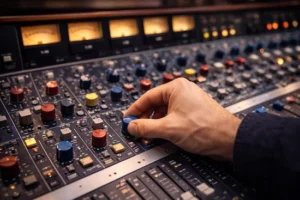 There is often confusion around the phrase “mixing turnaround.” Many assume it refers to the time between sending files and receiving a finished song. In practice, the process includes file review, first mix pass, feedback, revisions, mastering, and final delivery.
The first mix pass is not a finished product. It is the first complete interpretation of your session. Revisions are structured adjustments to existing mix decisions, not new arrangements or re-recordings. When those boundaries are unclear, deadlines stretch.
Unlimited revisions sound attractive in theory, but in a show-driven environment like Philadelphia, they blur scheduling and create uncertainty. Structured revision windows protect both creative focus and release timing.
A Realistic East Coast Show-Run Example
Imagine an indie band based in Fishtown planning a small Northeast run. They headline Union Transfer on June 30, then play Brooklyn and Baltimore within two weeks.
If the goal is to release a single that supports the entire run, backward planning becomes essential. The master should be finalized by mid-June. That implies final mix approval in early June. Which means the first mix pass ideally lands by mid-May.
That timeline creates breathing room for feedback and refinement. It also ensures the release is an amplifier for the shows, not an afterthought squeezed into show week.
Notice what’s different here. The deadline isn’t the show itself. The deadline is the promotional window before the show.
Live Recordings in the Philly Scene
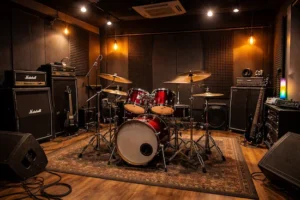 Philadelphia’s venues, especially rooms like Johnny Brenda’s or DIY spaces in South Philly, often produce energetic but acoustically complex multitracks. Bleed, room reflections, and phase interactions are common. These elements add character, but they also require corrective mixing work before creative shaping begins.
Live multitracks therefore extend turnaround expectations. Editing and phase alignment occur before tonal refinement and spatial depth decisions. In an East Coast run context, that means starting even earlier than with a studio single.
Live material demands patience if you want it to translate on streaming platforms while retaining stage energy.
The Northeast Corridor Effect
One unique factor in Philadelphia is geographic proximity. Artists frequently coordinate releases across multiple cities within a short window. A well-timed single can gain traction across several markets quickly.
This amplifies the importance of consistency. If you are releasing multiple tracks across a touring stretch, mixing cohesion matters. That cohesion takes time. The first song in a batch defines the sonic identity; subsequent songs build on it. Compressing that into a rushed week often results in uneven results.
A structured remote workflow supports this kind of multi-city planning more predictably than sporadic in-studio blocks that depend on room availability.
If you are unsure whether your current mix is ready for mastering or requires deeper work before release, a low-risk step is to test translation first. A free demo mastering of one track can reveal whether balance, headroom, or tonal issues remain. Hearing how your mix responds to professional mastering processing often clarifies whether timeline adjustments are needed before committing to full release scheduling.

Why Rush Mode Is Riskier on the East Coast
Rush work is not just about speed. It compresses decision time. When artists approach mixing ten days before a show, revision depth inevitably shrinks. There is less opportunity to live with a mix, test it in a car, or compare it against references.
On a dense East Coast schedule, that compression often overlaps with rehearsals and travel. Creative judgment suffers when logistics dominate attention.
Planning four or more weeks ahead preserves clarity. It also protects budget. Rush fees and emergency revisions increase costs without improving the artistic result.
Remote vs Studio Scheduling in Philadelphia
Local studios in neighborhoods like Northern Liberties or Fishtown remain excellent spaces for tracking and overdubs. However, mixing sessions booked by the hour introduce calendar dependencies. Session overruns can push work into additional days, especially if revisions require recalls.
Remote mixing avoids those room-based bottlenecks. Work proceeds in defined phases rather than rented time blocks. For artists juggling show schedules and regional travel, that predictability often aligns better with real-life constraints.
The key is preparation. Clean stems, consolidated sessions, and centralized feedback dramatically reduce friction in remote workflows.
A Mini Philly Case
A South Philly band initially scheduled mixing two weeks before a headline set. After mapping the full show-cycle calendar, they realized the release would collide with rehearsal and promo prep. By moving mixing earlier and building a four-week runway, they avoided rush costs and had time to refine two revision rounds calmly. The track was released nearly two weeks before the show, giving press and playlist outreach space to work.
The result was not just a finished song. It was a coordinated release moment tied to live energy.
The Bigger Perspective
Philadelphia is not just a live city. It is a corridor city. Releases interact with shows in multiple markets within short windows. Mixing and mastering are therefore strategic tools, not technical afterthoughts.
When approached with backward planning and realistic revision expectations, remote workflows can support that rhythm smoothly. When treated as last-minute tasks, they create stress and compromise quality.
If you are preparing a release tied to an upcoming show run, the smartest move is to map the calendar first, then align mixing accordingly.
Conclusion
 Philly’s music culture thrives on momentum. Fishtown stages, Union Transfer bookings, and regional touring loops create constant opportunity — but only if production timelines support them.
Treat mixing as part of your show strategy. Build buffers. Plan backward. Avoid rush compression when possible.
If you want a realistic timeline assessment and a clear workflow for your Philadelphia release, request a professional mixing and mastering quote at AREFYEV Studio and align your production with your stage momentum.