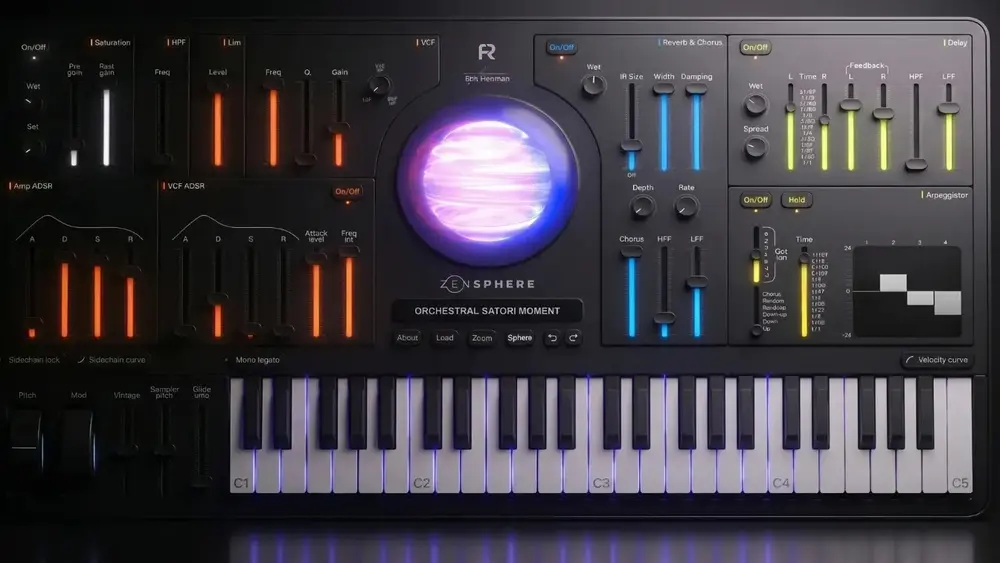
Rapid Flow Zensphere V2 Review: Is It Worth Buying for Professional Music Production?
The market isn’t short on virtual instruments with massive preset libraries. What remains surprisingly rare is an instrument that consistently delivers sounds requiring minimal cleanup once a mix starts taking shape. Rapid Flow positions Zensphere V2 around that idea, combining multisampled hardware sources with a workflow aimed at electronic producers, composers, and engineers who prioritize speed without sacrificing mix quality.
That positioning deserves a closer look. Factory presets are easy to make sound impressive in solo playback, but commercial productions are built in context. Once vocals, drums, bass, and effects compete for space, overly hyped presets often become a liability, demanding EQ, stereo control, and dynamic shaping before they fit the arrangement. The real question isn’t whether Zensphere V2 sounds polished on first listen—it’s whether its design choices reduce work during mixing and hold up through mastering.
This review evaluates Zensphere V2 from a production and engineering perspective rather than repeating the product specification. We’ll examine how the instrument fits into professional workflows, where its sample-based architecture offers practical advantages, where it imposes creative limitations, and how it compares with established alternatives used in modern audio production.
Technical Specifications
| Specification | Details |
|---|---|
| Developer | Rapid Flow |
| Product | Zensphere V2 |
| Category | Hybrid virtual instrument |
| Engine | Sample-based instrument with multisampled hardware sources |
| Platform | Windows • macOS |
| Plugin Formats | VST3 • AU • AAX |
| Content | Production-oriented preset library |
| Primary Focus | Electronic music production, cinematic scoring, hybrid composition |
| Copy Protection | Developer licensing system |
| Release | Version 2 |
Rather than competing as a fully programmable virtual synth, Zensphere V2 is positioned as a production-focused software instrument designed to accelerate modern DAW workflows through curated multisampled content and mix-oriented preset design.
Why Production-Ready Hybrid Instruments Are Gaining Ground
 The virtual instrument market has largely shifted from feature expansion to workflow optimization. Most flagship synthesizers already offer extensive modulation, wavetable processing, granular engines, physical modeling, and advanced routing. While those capabilities appeal to sound designers, they also increase the time required to move from an idea to a finished production.
That distinction has become increasingly relevant in commercial music production. Many experienced producers now separate their software instruments inside their daily DAW workflow into two groups: deep synthesis platforms for creating original sounds and curated production instruments designed to generate usable results with minimal preparation. The latter category continues to grow because modern production schedules rarely leave room for building every patch from scratch.
Zensphere V2 clearly targets that workflow.
Rather than functioning as an open-ended synthesizer, it builds its identity around multisampled hardware sources and production-oriented presets. The objective is not maximum programming flexibility, but faster decision-making during writing, arranging, and early mixing.
This approach reflects broader changes across the industry. Today’s producers often move between composition, editing, vocal production, client revisions, and rough mixing within the same session. In that environment, spending half an hour refining a single pad or texture isn’t always a creative decision—it can become a production bottleneck.
The rise of streaming has reinforced this shift. Modern releases compete for attention within seconds, placing greater emphasis on strong arrangements and immediately convincing sonics. As a result, many producers increasingly value instruments that arrive with balanced spectral content over those that require extensive corrective processing before they can sit comfortably in a mix.
That doesn’t diminish the role of synthesizers such as Serum, Phase Plant, Pigments, or Massive X. Those remain the preferred choice when a project demands original sound design or highly dynamic modulation. But for everyday production, many professionals rely on curated instruments that accelerate decision-making instead of expanding the number of creative variables.
This is the market Zensphere V2 enters. It competes less with traditional synthesizers than with production-focused platforms like Omnisphere, premium Kontakt libraries, Output’s instrument lineup, and other hybrid libraries built around polished source material rather than unrestricted synthesis.
For any instrument in this category, marketing claims matter far less than production behavior. Terms such as mix-ready, analog character, and premium samples have become standard advertising language. The real benchmark is whether presets maintain clarity once they share an arrangement with vocals, drums, bass, and multiple competing layers.
That is ultimately what producers evaluate before investing in another software instrument. Questions about preset count or feature lists quickly become secondary to practical concerns:
- Do the sounds layer cleanly without excessive masking?
- How much corrective EQ is typically required?
- Does the stereo image remain controlled in dense arrangements?
- Is CPU usage predictable in large sessions?
- Can presets survive revisions without requiring significant rebuilding?
Those factors determine whether an instrument becomes part of a daily workflow or ends up as another library that looks impressive in promotional videos but rarely appears in finished releases. Zensphere V2 is clearly designed to compete on workflow efficiency rather than synthesis depth—a positioning that aligns well with current production priorities.
How Zensphere V2 Performs in a Professional Production Workflow
The real value of a virtual instrument isn’t determined while scrolling through presets—it’s revealed over the course of an actual production. Composition is only the starting point. The more meaningful question is how an instrument behaves once arrangements become denser, revisions begin, and the project moves through mixing and mastering.
Zensphere V2 is built around multisampled hardware sources rather than an open-ended synthesis engine, and that architectural choice shapes its workflow from the first sketch to the final mix. The immediate advantage is consistency. Sample-based instruments generally produce predictable harmonic balance and repeatable dynamics, avoiding some of the modulation-driven variability that can complicate automation, layering, or gain staging later in the session.
That consistency speeds up decision-making during composition. Instead of repeatedly reshaping presets to fit the arrangement, producers can move quickly between sounds that already occupy recognizable roles—pads, plucks, textures, bass layers, transitions, or cinematic atmospheres. For deadline-driven projects, reducing those micro-decisions often has a greater impact on productivity than adding another page of synthesis parameters.
In practical production workflows, layered pad presets generally require less corrective EQ than many cinematic libraries designed primarily for standalone impact. Most sat below lead vocals without excessive low-mid masking, although some wider patches still benefited from stereo narrowing in dense arrangements.
That approach comes with an obvious tradeoff. Once a sound is based on recorded source material, editing flexibility becomes more limited than in fully programmable synthesizers. Producers who routinely redesign timbres using extensive modulation, wavetable manipulation, FM synthesis, or custom routing will eventually reach the boundaries of the underlying samples. Zensphere V2 favors efficient sound selection over unrestricted sound creation.
Its workflow becomes particularly relevant during mixing. Many modern software instruments intentionally exaggerate sub energy, stereo width, and top-end detail because those characteristics create an immediate impression during preset browsing. Inside a full arrangement, however, those same qualities often translate into additional EQ, stereo narrowing, transient control, or automation.
A production-focused library succeeds when its presets leave room for the rest of the mix. Controlled low-mid content, disciplined stereo imaging, and restrained harmonic density generally require fewer corrective moves once vocals, drums, and bass begin competing for space. Whether every preset achieves that balance depends on the genre, but the design philosophy is considerably more important than any individual patch.
Layering is another area where disciplined sound design matters. Modern productions rarely depend on a single oversized preset. Instead, multiple complementary elements share the arrangement: a focused pluck, an evolving texture, a supporting pad, subtle movement, and carefully controlled ambience. Instruments with balanced frequency content typically integrate into these layered productions more naturally than sounds engineered to impress in solo playback.
Performance also matters beyond audio quality. Large sessions routinely combine software instruments with oversampled processors, convolution reverbs, spectral editing, pitch correction, and mastering chains. An instrument that remains responsive under heavier project loads contributes directly to a smoother production process, particularly during client revisions where stability and fast recall become as important as sound quality.
Ultimately, Zensphere V2 is best understood as a workflow instrument rather than a sound-design platform. It isn’t intended to replace synthesizers built for deep programming. Its strength lies in reducing the time between selecting a sound and moving on to the next production decision—a distinction that becomes increasingly valuable as commercial projects move from writing into mixing, revisions, and final delivery.
Strengths, Tradeoffs, and the Reality Behind the Marketing
 Every software instrument promises some combination of analog warmth, mix-ready presets, or professional sound. Those phrases have become standard marketing language, making them poor indicators of how an instrument will perform inside an actual production. Zensphere V2 is no exception. Its value is better measured by workflow efficiency than by promotional claims.
The strongest aspect of the library is consistency. Experienced producers typically spend more time eliminating unsuitable presets than searching for new ones, so a smaller collection with disciplined sound design often proves more valuable than an enormous library with inconsistent quality. Zensphere V2 appears to favor that philosophy, offering sounds that share a relatively coherent tonal character instead of maximizing preset count.
Its hardware-based sampling approach also contributes to that consistency. Carefully sampled analog synthesizers retain subtle harmonic irregularities, oscillator drift, and circuit coloration that help patches feel less sterile than purely digital sources. While those characteristics should not be overstated, they often produce source material that requires less enhancement during production.
At the same time, sampled hardware is fundamentally different from hardware synthesis. Once an instrument relies on prerecorded source material, many parameters become fixed. Filter behavior, oscillator interaction, modulation response, and nonlinear circuit behavior can no longer evolve in the same way they do on the original hardware. Producers whose workflow depends on extensive sound design will inevitably encounter those limitations.
The same perspective applies to the idea of mix-ready presets. No sound can be universally mix-ready because every arrangement creates different masking relationships and tonal priorities. A pad that sits naturally beneath one vocal may dominate another, while a lead designed for melodic house may occupy far more spectral space than a dense cinematic arrangement can accommodate.
What developers can realistically optimize is spectral balance. Presets with controlled low-mid energy, disciplined stereo width, and restrained high-frequency emphasis typically require fewer corrective moves once they enter a full mix. That represents a genuine workflow advantage, but it should not be mistaken for eliminating the need for EQ, automation, or dynamic processing.
There is another consideration that receives less attention: factory preset saturation. Successful instruments inevitably appear on thousands of productions, making their signature sounds increasingly recognizable over time. Producers focused on developing a distinctive sonic identity should treat factory presets as production foundations rather than finished creative decisions, regardless of the instrument they choose.
Arrangement density exposes similar limitations. Sounds engineered to impress in solo playback often occupy more frequency and stereo space than they can realistically keep once vocals, drums, bass, and supporting layers enter the mix. Experienced engineers solve those conflicts through arrangement, automation, EQ, and stereo management—not by expecting a virtual instrument to resolve them automatically.
Viewed from that perspective, Zensphere V2 succeeds less as a replacement for deep synthesis platforms and more as an efficient production instrument. Its strengths lie in delivering balanced source material quickly, while its limitations stem from the same design philosophy that prioritizes speed over unrestricted sound creation. Producers who understand that tradeoff are far more likely to get lasting value from the instrument than those expecting it to replace a fully programmable synthesizer.
How Zensphere V2 Stacks Up Against Omnisphere, Kontakt, Pigments, and Output
Zensphere V2 doesn’t compete by offering the deepest synthesis engine or the largest content library. Its competitive position is defined by workflow. Rather than replacing flagship instruments, it targets producers who value fast sound selection, consistent source material, and minimal preparation before mixing.
That places it alongside several well-established production platforms, although each solves a different problem.
Omnisphere remains the benchmark for versatility. Its synthesis engine, hardware integration, and enormous library make it suitable for everything from cinematic scoring to electronic production. The tradeoff is complexity. Browsing thousands of presets and extensive programming options inevitably slows decision-making compared to a more curated instrument.
Kontakt occupies an entirely different role. It functions as a platform rather than a single instrument, with quality depending largely on the third-party libraries installed. That flexibility makes Kontakt indispensable for many composers, but it also means workflow consistency varies considerably from one library to another.
Pigments is aimed at producers who want to build sounds rather than select them. Its modulation system, synthesis engines, and visual workflow encourage experimentation, making it an excellent choice for original sound design. Zensphere V2 takes the opposite approach by reducing programming in favor of immediate usability.
Output’s instruments probably represent the closest workflow comparison. Both prioritize polished presets over deep editing, although Output focuses more heavily on cinematic layering and evolving textures, while Zensphere V2 leans toward broader electronic production.
| Instrument | Primary Workflow | Sound Design Depth | Workflow Speed | Typical CPU Usage | Best Fit |
|---|---|---|---|---|---|
| Rapid Flow Zensphere V2 | Curated production library | Moderate | Excellent | Moderate | Fast commercial production |
| Omnisphere | Hybrid synthesis workstation | Excellent | Moderate | Moderate to High | Maximum versatility |
| Kontakt | Sampling platform | Library-dependent | Variable | Library-dependent | Scoring and specialized libraries |
| Pigments | Advanced software synthesis | Excellent | Moderate | Moderate | Custom sound design |
| Output Instruments | Preset-driven hybrid production | Limited | Excellent | Moderate | Cinematic and modern pop production |
The comparison highlights an important point: Zensphere V2 is not trying to outperform Omnisphere or Pigments in synthesis depth. Its advantage lies in shortening the path from browsing sounds to building arrangements. For producers working under deadlines, that difference can have a greater impact on productivity than another modulation matrix or synthesis engine.
For studios producing a wide variety of projects, Zensphere V2 makes the most sense as a complementary instrument rather than a replacement. It fills the gap between deep programming environments and production-ready libraries, allowing each tool to be used where its workflow is most efficient.
Who Should Buy Zensphere V2?
Zensphere V2 is aimed at producers who value speed, consistency, and production-ready source material over unrestricted synthesis. It performs best as a workflow instrument that reduces decision fatigue during writing, arranging, and mixing rather than as a platform for deep sound design.
| Recommended For | Less Suitable For |
|---|---|
| EDM and electronic music producers | Dedicated sound designers |
| Cinematic and trailer composers | Experimental synthesis workflows |
| Hybrid scoring projects | Heavy modulation programming |
| Songwriters building productions quickly | Users wanting complete oscillator-level control |
| Commercial producers working under deadlines | Producers who create every preset from scratch |
If your primary goal is finishing commercial productions efficiently inside a modern DAW, Zensphere V2 makes considerably more sense than treating it as a replacement for a flagship software synthesizer.
How Zensphere V2 Fits Into the Final Mix and Master
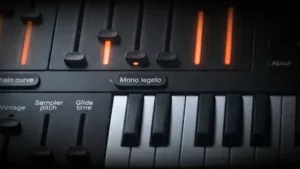 The real test of any virtual instrument begins after the writing stage. Sounds that feel expansive in solo playback often require significant correction once vocals, drums, bass, and supporting layers compete for the same spectral space. From a production standpoint, an instrument is only as useful as its ability to integrate into a finished mix without creating unnecessary technical work.
Zensphere V2 generally benefits from its curated design philosophy. Rather than relying on aggressively hyped factory presets, its patches appear intended to occupy recognizable production roles while leaving enough room for additional instrumentation. That doesn’t eliminate mixing decisions, but it can reduce the amount of corrective EQ and stereo management required compared to libraries designed primarily to impress during preset browsing. As with any production, the quality of the final master still depends heavily on how well the mix is prepared before mastering.
Translation remains one of the most important evaluation criteria. Wide pads, evolving textures, and layered atmospheres often sound dramatically different on headphones, smartphones, Bluetooth speakers, and full-range monitoring systems. Those differences become even more apparent after distribution, which is why mastering for streaming platforms requires a different approach than simply maximizing loudness. Instruments built around controlled spectral balance tend to survive those playback changes more consistently because they depend less on exaggerated width or excessive harmonic density.
The same principle applies during mastering. No virtual instrument guarantees a better master, but cleaner source material generally provides greater flexibility for bus compression, tonal shaping, and final limiting. Well-balanced arrangements almost always outperform mixes that rely on aggressive corrective processing after the fact. When problems do reach the mix stage, advanced spectral editing tools such as Steinberg SpectraLayers 13 can address issues that conventional EQ or dynamics processing often cannot.
CPU performance also deserves consideration in larger productions. Electronic sessions frequently combine multiple software instruments with oversampled processing, convolution reverbs, pitch correction, spectral repair, and mastering chains. Predictable resource usage becomes increasingly valuable during revisions, where stable playback and reliable project recall matter just as much as raw processing power.
Ultimately, Zensphere V2 contributes most by reducing production friction rather than introducing a radically different sound. Its workflow encourages faster integration into finished arrangements, which is arguably a more meaningful advantage than adding another layer of synthesis complexity.
Verdict
Zensphere V2 is not designed to become another all-purpose software instrument or flagship virtual synth. It addresses a different requirement: helping producers move from sound selection to a finished arrangement with fewer interruptions and less corrective work.
That approach makes the instrument particularly relevant for producers working on electronic music, modern pop, cinematic productions, and other genres where speed, consistency, and reliable source material often matter more than unlimited programming flexibility. For producers releasing club-focused records, that also means building sounds that will survive the demands of professional EDM mastering. Producers whose workflow revolves around extensive sound design will likely continue treating deeper synthesizers as their primary creative tools.
Its greatest strength is not a specific feature but the consistency of its overall design. A focused library with disciplined spectral balance, predictable behavior, and production-oriented presets often provides greater day-to-day value than a larger instrument whose flexibility comes at the expense of workflow efficiency.
Zensphere V2 should therefore be viewed as a complementary production instrument rather than an all-purpose replacement for flagship synthesizers. For producers who spend more time finishing records than programming oscillators, that distinction may ultimately prove to be its most compelling advantage. The same workflow-first philosophy is becoming increasingly common across modern production software, including mastering tools such as Transientik Master, where reducing repetitive engineering tasks has become just as important as expanding feature sets.
Overall Rating
| Category | Rating |
|---|---|
| Sound Quality | 9.0/10 |
| Workflow Efficiency | 9.6/10 |
| Mix Integration | 9.3/10 |
| CPU Performance | 9.0/10 |
| Sound Design Flexibility | 7.8/10 |
| Value for Money | 9.2/10 |
| Overall | 9.1/10 |
Zensphere V2 isn’t designed to compete with flagship synthesizers on programming depth. Its strength lies in delivering production-ready source material that integrates into professional mixes with minimal friction. For producers who prioritize finishing tracks over building every sound from scratch, it offers one of the most efficient workflow-focused approaches currently available.
Sound Quality — 9.0/10
The sampled hardware sources deliver polished, modern sounds with good harmonic balance. The overall quality is consistently high, although the instrument intentionally favors curated production material over unlimited sonic variety.
Workflow Efficiency — 9.6/10
This is where Zensphere V2 stands out. Fast browsing, predictable presets, and minimal preparation before arranging or mixing make it particularly effective in commercial production environments with tight deadlines.
Mix Integration — 9.3/10
Many presets occupy sensible spectral ranges and generally require fewer corrective moves than heavily hyped factory libraries. They still benefit from proper EQ and automation, but they tend to integrate into dense arrangements without excessive cleanup.
CPU Performance — 9.0/10
Resource usage remains practical for modern production sessions. Even alongside oversampled plugins, convolution reverbs, and larger processing chains, the instrument should remain manageable on contemporary studio systems.
Sound Design Flexibility — 7.8/10
The multisampled architecture naturally limits deep programming compared with synthesizers such as Pigments, Phase Plant, or Omnisphere. That tradeoff is intentional and reflects the product’s workflow-first philosophy rather than a technical weakness.
Value for Money — 9.2/10
For producers seeking production-ready sounds instead of another deep synthesis environment, the combination of speed, consistency, and polished source material offers strong long-term value.
Overall — 9.1/10
From a production and mastering perspective, Zensphere V2 succeeds because it reduces production friction rather than chasing feature count. Better source material rarely eliminates mixing or mastering, but it consistently shortens the path to a balanced, release-ready production.

Yurii Ariefiev is a mastering engineer and audio production editor specializing in mix translation, streaming optimization, and critical evaluation of professional music production tools. His editorial work examines how virtual instruments, plugins, and production workflows influence real-world mixing and mastering decisions.
This review evaluates Zensphere V2 from the perspective of commercial music production, focusing on workflow efficiency, mix integration, spectral balance, and how source material behaves throughout the mastering process rather than simply summarizing product specifications.
Frequently Asked Questions
Is Zensphere V2 worth buying if you already own Omnisphere?
That depends on your workflow rather than your plugin collection. Omnisphere remains significantly more flexible for synthesis and sound design, while Zensphere V2 emphasizes faster preset selection and a more curated production experience. Many producers could justify using both for different stages of a project.
Is Zensphere V2 better suited for EDM than cinematic music?
Its library naturally lends itself to electronic production, including melodic house, techno, trance, synthwave, and modern pop. That said, many of its evolving textures and atmospheric patches also fit cinematic and trailer-oriented compositions.
Can Zensphere V2 replace a dedicated software synthesizer?
Not entirely. Producers who regularly create original sounds using wavetable synthesis, FM, granular processing, or advanced modulation will still benefit from a dedicated synthesizer. Zensphere V2 works best as a production instrument rather than a complete synthesis environment.
Does Zensphere V2 require extensive mixing?
Like any virtual instrument, its presets should be treated as source material rather than finished mix elements. Well-balanced presets may reduce corrective EQ, but arrangement, automation, dynamics, and spatial processing remain essential parts of a professional mix. If you’re unsure where sound design ends and mastering begins, it’s worth understanding the practical differences between mixing and mastering.
How demanding is Zensphere V2 on CPU resources?
Performance depends on buffer size, project complexity, and the number of active instances. For most modern production systems, it should integrate comfortably into larger sessions without becoming a major CPU bottleneck.
Is Zensphere V2 a good choice for layering sounds?
Yes. Its curated approach makes it particularly effective for building layered arrangements where pads, plucks, textures, basses, and transitional elements need to complement rather than overpower one another.
Can factory presets be used in commercial releases?
Absolutely. However, producers seeking a distinctive sonic identity should consider presets as starting points. Additional processing, layering, automation, and creative editing help prevent recognizable factory sounds from becoming the defining element of a mix.
Who is Zensphere V2 best suited for?
It is best suited for intermediate and professional producers who prioritize efficient workflows over deep synthesis. Engineers, composers, and electronic music producers working under commercial deadlines are likely to benefit the most from its production-oriented design.
Final Perspective
Zensphere V2 reflects a broader shift in software instrument design. Instead of competing through deeper synthesis engines or ever-expanding feature lists, it prioritizes production efficiency—delivering source material that reaches the arrangement stage quickly and integrates into a mix with fewer corrective steps.
That philosophy won’t appeal to every producer. Sound designers looking for unrestricted synthesis will still gravitate toward more programmable platforms. For producers focused on completing commercial releases, however, a streamlined workflow often delivers greater long-term value than another layer of creative complexity.
Ultimately, Zensphere V2 succeeds by solving a practical production problem rather than introducing a new synthesis paradigm. In today’s studio environment, where speed, consistency, and reliable recall are increasingly important, that may be a more relevant advantage than simply offering more features.