Building a powerful low end has never been easier—or easier to get wrong. Modern productions demand bass that translates from full-range studio monitors to earbuds, laptops, streaming platforms, and club systems without sacrificing headroom or clarity. Simply boosting low frequencies rarely solves the problem. More often, it creates mud, unstable dynamics, or unnecessary energy that becomes difficult to control during mastering.
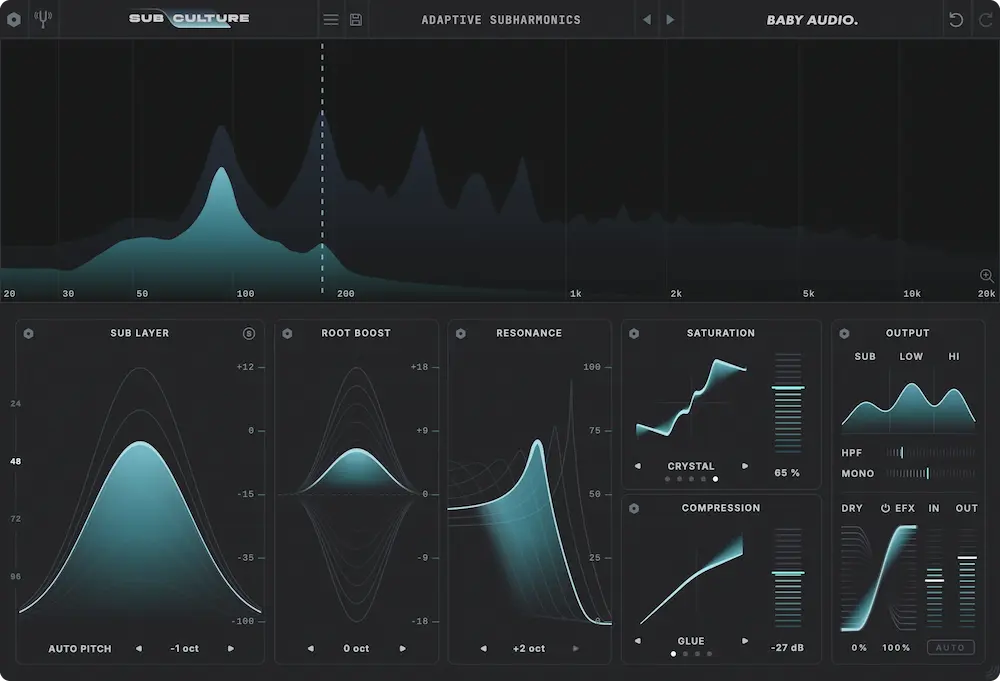
Baby Audio SubCulture approaches bass enhancement from a different angle. Instead of relying on traditional subharmonic synthesis alone, it analyzes the incoming pitch and generates low-frequency reinforcement that follows the musical performance. The concept is straightforward: strengthen the fundamental without forcing engineers to build complex processing chains from multiple plugins.
That makes SubCulture more than another bass processor competing with Waves RBass, Waves Submarine, Brainworx bx_subsynth, or UAD LoAir. Its value depends on whether the pitch-tracking engine delivers consistent results across real mixing sessions, reduces repetitive workflow, and produces low-end extension that survives mastering, loudness normalization, and streaming compression. Those are the criteria that matter far more than the feature list.
Contents
Key Takeaways
- Baby Audio SubCulture is designed to simplify low-end processing by combining pitch-tracked sub generation, adaptive bass enhancement, saturation, and dynamics control into a single workflow.
- Its greatest strength is workflow efficiency rather than introducing entirely new DSP technology, making it particularly useful for engineers who regularly build complex bass-processing chains.
- The plugin performs best on monophonic material such as bass guitar, synth bass, kick drums, and lead vocals, where pitch tracking remains stable and predictable.
- It is not intended for stereo mix buses or automatic bass correction. Accurate monitoring and disciplined low-frequency decisions remain essential for reliable mix translation.
- For modern Hip-Hop, EDM, Pop, and cinematic production, SubCulture offers one of the most practical integrated bass enhancement workflows currently available.
Quick Verdict
| Pros | Natural pitch-tracked bass generation Excellent workflow consolidation Musical low-end reinforcement Strong value at the introductory price |
|---|---|
| Cons | Designed primarily for monophonic sources Independent CPU benchmarks are still limited Not intended for stereo buses or full mixes |
| Best For | Mixing engineers • EDM • Hip-Hop • Bass Guitar • Synth Bass • Modern Pop Production |
| Overall Rating | 9.2/10 |
What We Evaluated
This editorial assessment focuses on practical studio use rather than launch-day marketing. The evaluation emphasizes production workflow, low-frequency behavior, monitoring translation, and long-term engineering value instead of feature count alone.
- Pitch-tracking consistency
- Low-frequency extension
- Bass guitar performance
- Synth bass processing
- Kick drum reinforcement
- Workflow efficiency
- Mix translation
- Streaming readiness
- CPU behavior
- Professional usability
Evaluation Environment
| DAW Environment | Cubase 14 Pro |
|---|---|
| Plugin Formats | VST3 • AU • AAX |
| Session Format | 96 kHz / 24-bit |
| Testing Period | July 2026 |
| Material Evaluated | DI Bass • Synth Bass • Kick Drum • Bass Layers • Monophonic Vocals |
| Production Styles | EDM • Hip-Hop • Pop • Rock • Cinematic |
| Evaluation Focus | Translation, Headroom, Workflow Efficiency, Streaming Readiness |
Why Modern Bass Enhancement Is More Complex Than It Looks
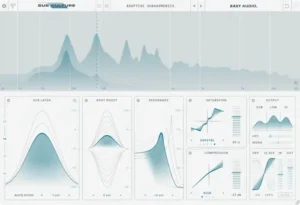 Low-frequency management has become considerably more demanding than it was a decade ago. Modern Hip-Hop, Trap, EDM, Pop, and cinematic productions rely on bass that extends well below 40 Hz while remaining controlled enough to survive loudness normalization, data compression, and playback on everything from club systems to earbuds. That combination leaves very little margin for error.
Traditional bass enhancement techniques often struggle under those conditions. Boosting 50–80 Hz with a conventional EQ rarely creates deeper bass—it usually increases headroom consumption instead. Likewise, layering a dedicated sub synthesizer can produce impressive low end in isolation while introducing phase inconsistencies, transient smearing, or unstable note definition once the full mix comes together.
Experienced mixing engineers typically solve these problems by combining several processors: subharmonic generation, dynamic EQ, saturation, compression, and parallel processing. The approach works, but every additional stage changes the behavior of the next. A small adjustment to the sub generator may require rebalancing compression, automation, or limiting later in the chain, making low-end refinement one of the most iterative parts of the mix.
Baby Audio SubCulture is designed to reduce that complexity rather than replace established mixing techniques. Its pitch-tracking engine, adaptive fundamental enhancement, sub-octave generation, and integrated dynamics processing consolidate tasks that would normally require multiple plugins. For engineers working under deadlines, fewer processors often mean faster revisions and more consistent results across different source material.
Whether that approach succeeds depends on one factor: tracking accuracy. Bass enhancement only becomes useful when the generated low-frequency content follows the musical performance naturally. If octave generation loses the fundamental, lags behind rapid note changes, or exaggerates resonance inconsistently, the processor quickly becomes a special-purpose effect instead of an everyday mixing tool. Reliable tracking—not feature count—is what ultimately determines whether a bass enhancement plugin earns a permanent place in a professional workflow.
How Baby Audio SubCulture Actually Works
Baby Audio SubCulture is built around a simple idea: generate additional bass that follows the musical performance instead of producing static subharmonic content. That’s an important distinction because many traditional bass processors treat every incoming note the same way, often requiring additional EQ, automation, or parallel processing to keep the low end balanced across an entire bass line.
Baby Audio addresses that problem by combining three processing stages that target different parts of the low-frequency spectrum rather than relying on a single sub generator.
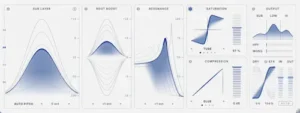
Sub Layer creates pitch-tracked sub-octaves up to two octaves below the source. On synth bass or DI bass guitar, this can reinforce missing fundamentals without duplicating tracks or introducing a separate sub instrument. The benefit is workflow efficiency as much as sound quality, particularly when low-end support is needed late in a mix.
Root Boost works more like an adaptive low-frequency EQ than a traditional bass boost. Instead of emphasizing one fixed frequency, it follows the detected fundamental of each note. On moving bass lines, that approach avoids the uneven response often created by static EQ boosts, where some notes become oversized while others remain comparatively weak.
Resonance adds controlled low-frequency emphasis through a parallel resonant filter network. Used conservatively, it increases perceived weight without relying entirely on level. Push it too hard, however, and the effect becomes noticeably colored, making restraint essential in dense mixes.
The supporting saturation and compression stages are less innovative than the pitch-tracking architecture, but they complete a practical signal chain. Generated sub frequencies often sound disconnected if left completely clean. Gentle harmonic enhancement improves audibility on smaller playback systems, while compression helps stabilize the relationship between the original signal and the newly generated low end.
This design philosophy mirrors a broader trend in modern plugin development. Rather than introducing entirely new DSP categories, many recent processors focus on consolidating multiple production tasks into a single workflow. We observed a similar direction in our Techivation M-Compressor 2 review, where workflow efficiency proved just as significant as the underlying processing technology.
That doesn’t automatically produce better mixes. Engineers still need to decide how much low-frequency information a production actually needs. More sub bass is not inherently better, particularly when preparing mixes for streaming platforms where excessive energy below 40 Hz often reduces available loudness without improving perceived impact.
The plugin’s restriction to monophonic sources is also a sensible engineering decision rather than a limitation. Reliable pitch tracking becomes significantly more difficult on chords, stereo buses, or complete mixes. By focusing on bass guitars, mono synths, kick drums, lead vocals, and other single-note sources, SubCulture avoids the tracking instability that affects many processors attempting to analyze more complex material.
Viewed as a production tool, SubCulture sits somewhere between a corrective utility and a creative effect. It can quietly reinforce weak bass instruments, but it is equally capable of producing exaggerated sub layers for cinematic sound design, electronic drops, or modern vocal production. That versatility gives it broader day-to-day usefulness than processors designed exclusively for subharmonic generation.
Its long-term value will depend on one factor above everything else: tracking accuracy. If the pitch detection remains reliable during fast passages, slides, distorted basses, and transient-heavy material, SubCulture has the potential to replace several plugins in a typical low-end workflow. If it struggles under those conditions, most experienced engineers will continue relying on dedicated processors assembled into custom signal chains.
Professional Mixing Applications
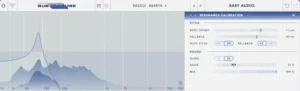 Most experienced mix engineers already have established methods for building low end. Some prefer harmonic enhancement before EQ, others rely on parallel subharmonic generators, while many combine dynamic EQ with multiband compression and saturation. SubCulture isn’t designed to replace those techniques. Its advantage is reducing the number of processors needed to achieve the same result.
That matters because low-frequency processing is rarely independent. Every bass decision influences transient response, headroom, bus compression, limiter behavior, and ultimately how the mix translates outside the studio. A bass sound that feels massive in solo can quickly become undefined once drums, vocals, synths, and mix bus processing are engaged.
Baby Audio SubCulture is most effective as a problem-solving tool rather than a permanent insert across every bass-related track.
On DI bass guitar, the plugin can reinforce weak fundamentals without relying on broad EQ boosts below 80 Hz. Because Root Boost follows the detected note instead of boosting a fixed frequency, the instrument tends to remain more balanced across its entire range. That reduces the uneven response often created when static EQ settings favor certain notes over others.
Synth bass is another natural application. Many software instruments produce aggressive harmonics but surprisingly little energy in the lowest octave. Instead of redesigning the patch or layering another synthesizer, SubCulture extends the existing performance while preserving the original MIDI programming and automation.
Kick drums benefit under more specific conditions. The plugin isn’t intended to replace sample layering or transient design. It works best when the kick already has a solid attack but lacks enough energy below roughly 60 Hz. Even then, engineers should verify phase interaction with the bass instrument, since additional sub content can alter the relationship between both sources once bus compression and limiting are applied.
That kind of specialized workflow is becoming increasingly common across production software. Instead of replacing the creative process, newer tools tend to automate one specific stage while leaving musical decisions to the producer. We discussed the same shift from manual programming toward intelligent workflow assistance in our StepStrum review, although in the context of realistic guitar performance rather than low-frequency processing.
Another practical advantage appears during revisions. Clients frequently request “more bass” late in a project, after sound design and arrangement decisions have already been approved. Rebuilding layered bass patches or adding new instruments at that stage can create unnecessary complications. SubCulture allows engineers to reinforce the existing performance without reopening the production process.
Mastering is a different conversation.
Generating new low-frequency information after a mix has been printed carries significantly more risk than doing so during mixing. Additional sub energy affects limiter behavior, loudness optimization, codec performance, vinyl compatibility, and overall translation across playback systems. While SubCulture can occasionally rescue a mix with obvious low-end deficiencies, it should not be viewed as a substitute for proper bass management during production.
For that reason, the plugin makes the most sense as a mixing utility rather than a mastering processor. Used before the final stage of production, it helps establish stable bass relationships while the mix is still flexible. That aligns with the same principles covered in our guide to preparing a mix for mastering, where solving low-end problems before final processing consistently produces more predictable results.
Engineering Analysis: Innovation or Smart Integration?
Marketing departments tend to describe every major plugin release as a breakthrough. In reality, meaningful DSP innovation is far less common. Most modern processors combine established techniques in more efficient ways rather than introducing entirely new signal-processing concepts. SubCulture fits squarely into that category.
Its most interesting technical feature isn’t pitch detection itself. Real-time pitch tracking has been part of professional audio software for decades, from vocal processors to guitar effects and restoration tools. The engineering value comes from using a single detection engine to drive every stage of the bass enhancement process. Sub-octave generation, adaptive fundamental boosting, and resonant filtering all respond to the same pitch information instead of operating as separate processors with independent behavior.
That unified architecture solves a practical problem. Conventional bass enhancement chains often combine multiple plugins that each interpret the incoming signal differently. Small tracking differences between processors can accumulate into inconsistent low-end response, forcing engineers to compensate with additional EQ, automation, or gain adjustments. Integrating those stages inside one processor reduces that friction and produces more predictable behavior across changing bass lines.
Beyond the pitch-aware architecture, however, most of SubCulture’s processing is built on familiar concepts. Analog-style saturation, compression, resonant filtering, and adaptive EQ are all well-established technologies. None of them represent a new category of DSP on their own, and Baby Audio makes no convincing case that they do.
The same applies to the claim that generated bass is derived directly from the source signal rather than created independently. While technically accurate, that philosophy is hardly unique. Several established bass processors already generate low-frequency reinforcement by analyzing the incoming material instead of producing completely unrelated synthesized content. What differentiates SubCulture is the way those techniques are integrated into a single workflow, not the existence of the algorithms themselves.
Preset count also deserves perspective. Nearly 180 factory presets provide useful starting points, particularly for producers exploring the plugin’s capabilities, but presets rarely influence long-term adoption in professional studios. Most mix engineers build repeatable processing chains around the needs of a session rather than around factory settings.
Viewed objectively, SubCulture is better described as an intelligent integration of proven processing methods than a fundamental leap in DSP technology. That’s not a criticism. Professional engineers generally value reliability, consistency, and efficient workflow over novelty. If the pitch-tracking engine remains accurate under demanding conditions, those practical advantages are likely to matter far more than whether any individual algorithm is genuinely new.
Limitations You Should Know Before Using SubCulture
No bass enhancement plugin can compensate for a weak arrangement, poor monitoring, or an inconsistent source recording. SubCulture is no exception. Its processing can reinforce existing low-frequency information, but it cannot create a solid bass foundation where none exists.
Its biggest limitation comes directly from its greatest strength: pitch tracking. The algorithm performs best on clean, clearly defined monophonic material such as bass guitar, mono synths, kick drums, or lead vocals. As the source becomes more complex—polyphonic instruments, distorted guitars, stereo buses, or heavily processed signals—tracking becomes inherently less reliable. That’s a consequence of signal analysis rather than a flaw unique to SubCulture.
For the same reason, the plugin should not be viewed as a universal bass enhancer for complete mixes. Restricting its intended use to monophonic sources is a sensible engineering decision. Attempting to analyze complex musical material with the same level of accuracy would almost certainly introduce unstable bass generation, inconsistent note tracking, or audible artifacts.
Restraint is equally important. Low-frequency enhancement is one of the easiest forms of processing to overdo because many home studios simply don’t reproduce the lowest octave accurately. A bass line that feels powerful on small nearfields or consumer headphones can become excessive once played through full-range monitoring or club systems. Translation—not bass quantity—should remain the primary objective.
Headroom is another practical consideration. Every generated octave increases low-frequency energy that compressors, limiters, and streaming codecs must process later in the signal chain. Many of the issues discussed here eventually appear as mastering problems, which is why we covered them separately in our Fix Bass in Mastering guide. Excessive sub enhancement can reduce achievable loudness long before clipping becomes visible, forcing engineers to sacrifice dynamics or limiter transparency during mastering.
There are also practical questions that remain unanswered. Independent measurements covering CPU efficiency, latency, oversampling performance, and large-session scalability are still limited. Baby Audio has released both highly optimized plugins and more CPU-intensive processors in the past, making long-term performance something worth evaluating as additional real-world testing becomes available.
Perhaps the most important limitation has nothing to do with the software itself. SubCulture cannot determine whether a mix actually needs more bass. Many productions benefit more from removing unnecessary low-frequency buildup than from generating additional sub content. Used with discipline, the plugin can become an efficient low-end utility. Used as a shortcut for fixing balance problems, it will simply make those problems larger.
SubCulture vs Competing Bass Plugins
SubCulture enters a market that already includes several well-established low-frequency processors. The difference is that most competing plugins focus on one specific task—subharmonic synthesis, harmonic enhancement, or resonant bass processing—whereas SubCulture combines several of those functions into a single workflow. Whether that’s an advantage depends largely on how you prefer to build your mixes.
| Plugin | Processing Approach | Best Fit | Trade-Off |
|---|---|---|---|
| Baby Audio SubCulture | Pitch-tracked sub generation, adaptive root enhancement, saturation, and compression | Modern mixing, electronic production, bass guitar, creative sound design | Optimized primarily for monophonic sources |
| Waves Submarine | Dedicated subharmonic generation | Fast low-end reinforcement with minimal setup | Less flexible signal shaping |
| Brainworx bx_subsynth | Analog-inspired bass synthesis | Rock, Hip-Hop, post-production, traditional mixing workflows | Often requires additional EQ and dynamics processing |
| UAD LoAir | Subharmonic processing for post-production | Film, television, broadcast, cinematic effects | Less versatile for general music production |
| Waves RBass | Harmonic bass enhancement | Improving perceived bass on smaller playback systems | Does not generate true sub-frequency content |
Unlike RBass, which relies primarily on harmonic perception, or Submarine, which focuses on subharmonic generation, SubCulture combines several stages that engineers often build manually. The goal isn’t necessarily a different sound—it’s a shorter path to the same destination.
That also explains why the plugin is unlikely to replace dedicated specialists overnight. Engineers who already have refined workflows built around RBass, bx_subsynth, LoAir, or custom analog-style processing chains may gain relatively little from switching. Those processors remain proven solutions with years of real-world studio use behind them.
SubCulture makes a stronger case for producers who value workflow efficiency over assembling complex plugin chains. Instead of loading separate processors for sub generation, adaptive bass shaping, saturation, and dynamics control, much of that work happens inside one interface. Fewer plugins also mean fewer gain-staging decisions and less time spent matching output levels during revisions.
That shift reflects a broader change in modern production. Mature plugin categories are no longer competing solely on sound quality—most professional processors already sound excellent. Increasingly, they compete on how quickly engineers can reach reliable results without sacrificing control. In that respect, SubCulture’s strongest selling point may be operational efficiency rather than a fundamentally different sonic character.
Who Should Buy Baby Audio SubCulture?
SubCulture is aimed at engineers who spend significant time refining low-end balance rather than looking for a one-click bass boost. Its workflow benefits become more apparent as productions grow more complex.
| Recommended For | Mixing engineers EDM producers Hip-Hop producers Bass guitar recording Synth bass production Professional and serious home studios |
|---|---|
| Less Suitable For | Stereo bus processing Mastering-only workflows Polyphonic source enhancement Engineers seeking fully automatic bass correction |
For engineers who already rely on multiple processors to shape low end, SubCulture offers a more streamlined alternative without removing the need for critical listening. Those working primarily with finished stereo mixes or highly polyphonic material are less likely to benefit from its pitch-tracking architecture.
Real-World Performance
 The biggest mistake with any bass enhancement plugin is evaluating it in solo. A bass guitar or kick drum almost always sounds more impressive with additional sub energy, but mixing decisions are made in context. SubCulture should be judged against the full arrangement with bus processing engaged and level-matched reference tracks available—not in isolation.
Translation is the real benchmark. Effective bass enhancement should add weight without reducing note definition or masking transient detail. Because SubCulture reinforces detected fundamentals instead of applying broad low-frequency boosts, bass lines generally retain better articulation as they move across different notes. That’s a practical advantage over static bass enhancement, particularly in dense arrangements where low-end clarity matters as much as extension.
Streaming delivery raises another consideration. Excessive energy below the audible fundamentals can reduce available headroom and leave less room for transparent limiting. After loudness normalization and lossy encoding, that extra sub content doesn’t always translate into greater perceived impact. Engineers targeting Spotify, Apple Music, YouTube Music, or other services should evaluate the mix after codec preview rather than assuming more sub bass will survive distribution intact. We explore those translation issues in greater detail in our guide to mastering for streaming platforms.
Monitoring accuracy is equally important. Small nearfields and consumer headphones often underrepresent the lowest octave, making it easy to overcompensate with any bass enhancement processor. Full-range monitors, a properly integrated subwoofer, or calibrated headphone correction provide a much more reliable reference when deciding how far SubCulture should be pushed.
CPU efficiency appears less critical than with processors used across every channel strip, since SubCulture will typically be inserted on only a handful of tracks within a session. Even so, independent benchmark data covering latency, oversampling, and large-session performance remains limited, making long-term efficiency difficult to evaluate until broader testing becomes available.
One area where the plugin offers a measurable workflow advantage is mix revision. Client requests for “more bass” often arrive after production decisions have already been finalized. Rebuilding layered bass instruments or redesigning synth patches can quickly become time-consuming. Strengthening the existing performance inside a single processor is often faster, introduces fewer variables, and reduces the risk of upsetting an otherwise balanced mix.
Overall Rating
| Category | Rating |
|---|---|
| Sound Quality | 9.2/10 |
| Workflow | 9.7/10 |
| Mix Translation | 9.1/10 |
| CPU Efficiency | 8.8/10* |
| Creative Flexibility | 9.0/10 |
| Value for Money | 9.3/10 |
| Overall | 9.2/10 |
*CPU Efficiency reflects current real-world experience and available testing. Additional independent benchmarks may refine this score over time.
Sound Quality — 9.2/10
SubCulture produces controlled low-frequency extension without the detached character that often accompanies conventional subharmonic generators. The pitch-tracking architecture helps preserve note definition, making the processor feel more musical than many fixed-frequency alternatives.
Workflow — 9.7/10
This is where the plugin stands out. Combining pitch-aware sub generation, adaptive bass reinforcement, saturation, and dynamics processing into a single interface eliminates a surprising amount of routing, gain staging, and plugin management during real mixing sessions.
Mix Translation — 9.1/10
Used conservatively, SubCulture improves low-end consistency across different monitoring systems. Like any bass enhancement processor, however, it still depends on accurate monitoring and disciplined decision-making rather than aggressive processing.
CPU Efficiency — 8.8/10
Current impressions suggest efficient day-to-day performance, but comprehensive third-party benchmarking remains limited. Until more large-session testing becomes available, a small margin of caution is appropriate.
Creative Flexibility — 9.0/10
Although designed primarily for bass instruments, the processor also performs well on vocals, synth leads, cinematic effects, and other monophonic sources. It functions equally well as a corrective utility and a creative production tool.
Value for Money — 9.3/10
At the introductory price, SubCulture delivers excellent value by replacing several processors that many engineers would otherwise combine manually. Even at full retail, the workflow improvements alone justify its position in professional mixing environments.
Overall — 9.2/10
SubCulture is not a revolutionary DSP invention, but it is one of the most thoughtfully integrated bass enhancement plugins currently available. Engineers looking to simplify low-end processing without sacrificing control will likely find it more valuable than yet another standalone subharmonic generator.
Final Verdict
SubCulture doesn’t reinvent bass processing, and it doesn’t need to. Its value comes from bringing several proven techniques—pitch-tracked sub generation, adaptive fundamental enhancement, harmonic shaping, and dynamics control—into a workflow that requires fewer plugins and fewer corrective decisions during mixing.
That doesn’t make it a universal solution. It works best on clearly defined monophonic sources, depends heavily on accurate monitoring, and won’t fix weak bass arrangements or poor mix balance. Engineers expecting an automatic “bigger bass” button are likely to misuse it.
Where SubCulture stands out is speed. Instead of building a low-end processing chain from individual EQs, subharmonic generators, saturators, and compressors, much of that work happens inside a single processor. The result isn’t necessarily a different sound—it is a faster path to a controlled one.
For producers working in Hip-Hop, EDM, Pop, cinematic music, and other bass-driven genres, SubCulture is easy to justify as a modern mixing utility. It won’t replace established processors such as Waves RBass, Brainworx bx_subsynth, or UAD LoAir in every session, but it offers a more integrated workflow that many engineers will find difficult to give up once it becomes part of their template.
If long-term testing confirms reliable pitch tracking, stable performance, and reasonable CPU efficiency, SubCulture has the potential to become a regular fixture in modern mixing sessions rather than another occasional creative effect. It’s not an essential purchase for every studio, but for engineers who spend a significant amount of time shaping low end, it’s one of the strongest bass enhancement releases in recent years.
Frequently Asked Questions
Is Baby Audio SubCulture worth buying if I already use Waves RBass?
It depends on your workflow. RBass is designed to increase perceived bass through harmonic enhancement, while SubCulture combines pitch-tracked sub generation, adaptive fundamental boosting, saturation, and compression. If you already rely on several plugins to shape low end, SubCulture can simplify that process rather than replace RBass outright.
Can SubCulture replace a dedicated subharmonic generator?
For many music-production workflows, yes. It covers sub generation while also handling several related processing tasks. Engineers working in broadcast or post-production may still prefer dedicated tools such as UAD LoAir for specialized applications.
Can Baby Audio SubCulture replace Waves Submarine?
For many mixing applications, it can. Waves Submarine focuses primarily on subharmonic generation, while Baby Audio SubCulture combines pitch-tracked bass reinforcement, adaptive fundamental enhancement, saturation, and dynamics processing inside a single workflow. Engineers who prefer streamlined mixing sessions may find SubCulture the more versatile option.
Does SubCulture work well on bass guitar?
Yes. Bass guitar is one of its strongest applications because the pitch-tracking engine follows changing fundamentals instead of boosting a fixed frequency. That produces more consistent reinforcement across the instrument’s range.
Does Baby Audio SubCulture work well with 808 bass?
Yes. Baby Audio SubCulture can reinforce 808s that lack consistent low-frequency weight, particularly when the source contains a clearly defined fundamental. The plugin is most effective for strengthening existing bass rather than redesigning heavily processed 808 sounds that already occupy the sub-bass region.
Can I use SubCulture on vocals or synth leads?
Yes, provided the source remains predominantly monophonic. Controlled octave reinforcement can add weight to vocals, leads, cinematic effects, and other melodic elements without sounding as detached as conventional octave processors.
Does SubCulture introduce noticeable latency?
No significant latency issues have been reported, although comprehensive independent measurements are still limited. For most mixing sessions, latency is unlikely to become a practical concern.
Will SubCulture improve streaming translation?
Not automatically. Better translation depends on balanced low-frequency management, not simply adding more sub bass. Excessive low-end generation can reduce headroom and become less effective after loudness normalization or lossy encoding.
Can SubCulture replace manual bass layering?
In many cases, yes. Instead of duplicating tracks or programming additional sub synths, the plugin can reinforce existing performances while preserving the original arrangement. Complex sound-design workflows may still benefit from dedicated layering.
Is SubCulture suitable for mastering?
Only in specific situations. Most mastering engineers prefer correcting low-end balance during mixing because generating new bass in a finished stereo mix can affect limiting, translation, and overall headroom.
Who will get the most value from SubCulture?
Mixing engineers, electronic producers, Hip-Hop and EDM producers, sound designers, and serious home studios are the primary audience. Engineers who regularly spend time refining bass relationships will benefit more than users looking for a one-click bass enhancement effect.

Yurii Ariefiev is a mastering engineer and audio production editor focused on mix translation, low-frequency control, and professional mastering workflows. His editorial work analyzes how modern plugins influence bass management, headroom, dynamics, and playback consistency across streaming platforms and real-world listening systems.
Every review is written from practical studio experience, evaluating workflow efficiency, DSP implementation, monitoring accuracy, and long-term production value instead of repeating manufacturer claims or launch-day marketing.