The market for analog-inspired software synthesizers is saturated. Producers can already choose from highly accurate Juno, Oberheim, Prophet, and Jupiter-inspired instruments, making it increasingly difficult for any new plugin to stand out on sound alone. Today, the more important question is whether a synth improves the production process instead of simply recreating another piece of vintage hardware.
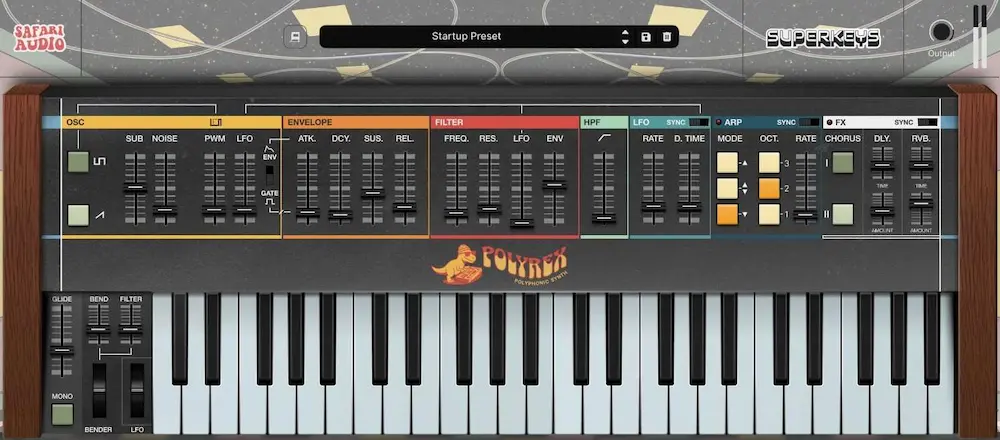
Safari Audio’s PolyRex doesn’t position itself as a circuit-accurate emulation. Instead, it focuses on the musical qualities that made early-’80s Japanese polysynths so enduring: animated chorus, subtle oscillator movement, responsive filters, and immediate playability. The emphasis is clearly on writing and arranging music rather than spending hours programming patches.
For producers, mixing engineers, and mastering engineers, that distinction matters. A synth may sound impressive in isolation yet become difficult to manage inside a dense arrangement. This review looks beyond factory presets to evaluate how PolyRex performs in real-world audio production, how easily it fits into modern mixing workflows, and whether it offers enough practical value to justify adding another analog-inspired plugin to an already crowded toolkit.
Contents
What Makes PolyRex Different From Other Juno-Inspired Plugins?
Most Juno-inspired software instruments pursue one of two goals: recreate the original hardware as accurately as possible or expand it with modern modulation, effects, and routing. PolyRex follows a different path. Instead of treating the Juno architecture as a historical reference, it treats it as a production workflow.
Rather than chasing component-level authenticity, Safari Audio focuses on the musical qualities that made early Japanese polysynths so widely used in commercial productions: quick programming, balanced harmonic content, animated chorus, and sounds that integrate naturally into a mix without extensive corrective processing.
That distinction changes who the plugin is built for. Producers looking for an exact replacement of vintage hardware may gravitate toward dedicated emulations. PolyRex is aimed at musicians who want familiar analog character but care more about finishing songs than recreating every circuit behavior of an instrument released more than four decades ago.
In practice, PolyRex feels less like a virtual museum piece and more like a streamlined production tool. The familiar tonal foundation remains, but the priority shifts from historical accuracy to writing, arranging, and mixing music with fewer technical distractions.
Quick Specifications
| Developer | Safari Audio |
| Platform | Windows & macOS |
| Formats | VST3, AU, AAX |
| Copy Protection | Safari Audio licensing |
| Price | $39.99 intro / $79 regular |
| Type | Analog-inspired polyphonic synthesizer |
Why Analog Poly Synths Still Dominate Modern Production Workflows
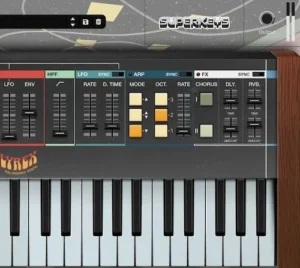 Software synthesis has never been more diverse. Granular engines, spectral processing, physical modeling, modular environments, and AI-assisted sound generation have expanded what producers can create inside a DAW. Yet one category continues to outperform most of them in everyday production: analog-inspired polyphonic synthesizers.
That expansion also includes offline AI instruments capable of generating complete musical ideas. We explored that direction in our OBSIDIAN Neural Local Edition review, but PolyRex represents almost the opposite philosophy—placing the musician, rather than the algorithm, at the center of the creative process.
The reason isn’t nostalgia. It’s consistency.
Well-designed analog-style synths occupy familiar spectral territory. Pads support a vocal instead of competing with it. Poly chords fill the stereo image without overwhelming guitars or pianos. Bass patches provide weight without consuming unnecessary headroom. That predictability shortens the mixing process because fewer corrective decisions are needed later.
This is why instruments inspired by classics such as the Roland Juno remain relevant decades after the original hardware disappeared from production. Their value isn’t limited to vintage character. They produce harmonically rich sounds that translate reliably across modern genres including indie pop, synthwave, film scoring, ambient, lo-fi, electronic pop, and contemporary R&B.
That reliability has become increasingly important as more producers handle every stage of a project themselves. Writing, arranging, editing, mixing, and preparing a master often happen inside the same session. Every plugin is expected to contribute immediately rather than demand extensive programming before becoming usable.
As a result, buying decisions have shifted. Absolute hardware accuracy still matters to some users, but for many producers workflow has become the deciding factor. Fast preset navigation, intuitive controls, efficient CPU performance, and sounds that require minimal corrective EQ often outweigh another claim of circuit-level authenticity.
That change has opened the door for smaller developers. Competing directly with established analog emulations on historical accuracy is difficult. Delivering an instrument that reaches production-ready results faster is a more compelling proposition.
PolyRex reflects that shift in development priorities.
Instead of chasing component-level authenticity, Safari Audio focuses on musical behavior. The interface stays deliberately compact, prioritizing immediate sound shaping over deep modulation systems or complex routing. Experienced producers can move from an initial idea to a usable part without navigating layers of menus or secondary pages.
From a mixing perspective, that design choice matters more than it first appears. The longer a producer spends building a patch, the more likely they are to judge it in isolation instead of within the arrangement. Instruments designed for rapid decisions encourage evaluating sounds in context—the place where they ultimately succeed or fail.
PolyRex enters a crowded market, but it isn’t trying to compete with modular synthesizers or feature-heavy flagship instruments. Its goal is narrower: deliver analog-inspired textures that integrate naturally into modern productions while keeping the creative process moving.
Built for Production, Not Endless Programming
The biggest difference between PolyRex and many modern software synthesizers isn’t its sound—it’s its design philosophy.
Current flagship instruments often try to cover every synthesis method within a single plugin. Multiple oscillator models, extensive modulation matrices, granular processing, advanced effects, sequencers, macros, and layered routing dramatically expand creative possibilities. They also increase the amount of time required before a usable sound emerges.
PolyRex deliberately avoids that approach.
Its architecture focuses on the characteristics that have kept analog polysynths relevant for decades: stable oscillator relationships, smooth filter behavior, animated chorus, and subtle movement that keeps sustained chords alive without constantly drawing attention to itself. Instead of offering hundreds of modulation possibilities, it concentrates on producing musically convincing sounds with minimal setup.
That decision has practical consequences during production. Much like reference comparison tools that remove unnecessary guesswork during mixing (as discussed in our Ninja AB review), PolyRex focuses on reducing creative friction rather than expanding the number of available options.
The character of a synth patch determines how much work follows during mixing. Sounds with excessive harmonic density often need dynamic EQ, resonance control, multiband compression, or saturation management before they fit comfortably alongside vocals and rhythm instruments. A more balanced source usually reaches the mix bus with significantly less corrective processing.
PolyRex generally favors that second approach.
Its factory patches avoid exaggerated brightness and oversized low end. Pads retain enough openness to support a mix without becoming brittle. Plucks preserve definition without producing overly sharp transients, while bass sounds emphasize weight instead of distortion-driven excitement. The result is an instrument that leaves room for arrangement decisions rather than forcing engineers to solve unnecessary masking problems later.
Perhaps its most convincing quality is how it handles movement.
Classic analog synthesizers never produced perfectly static waveforms. Slight oscillator drift, component tolerances, and chorus modulation created continuous micro-variation that listeners perceived as warmth. Modern software sometimes exaggerates those imperfections until they become the defining feature of the sound.
PolyRex takes a more disciplined approach. The modulation supports sustained notes instead of dominating them. That distinction becomes increasingly valuable once bus compression, saturation, stereo enhancement, and mastering limiting are applied across the production. Sounds that remain stable under processing typically translate more consistently than patches built around exaggerated modulation.
This also explains where PolyRex performs best.
Its strengths lie in supportive musical roles rather than attention-grabbing lead sounds. Pads, keyboard layers, restrained basses, mellow plucks, evolving chords, and cinematic textures all benefit from an instrument that occupies space without constantly competing for it. Those are the sounds producers return to throughout modern pop, indie, ambient, soundtrack work, and electronic music—not because they’re flashy, but because they consistently work inside finished arrangements.
That doesn’t make PolyRex the most flexible synthesizer in its category. Producers interested in deep modulation, experimental synthesis, or highly complex sound design will find more capable alternatives elsewhere. Safari Audio has clearly optimized this instrument for a different audience: musicians and engineers who value writing, arranging, and finishing records over building elaborate patches from scratch.
Whether that philosophy ultimately makes PolyRex a worthwhile addition depends on how those sounds survive outside solo mode. The real test begins once they are layered into a complete mix, processed through buses, and prepared for release.
How PolyRex Behaves Inside a Real Mix
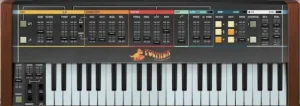 A synth shouldn’t be judged by how impressive it sounds in solo. The real test begins after drums, vocals, guitars, effects, and bus processing enter the session. Many factory presets that seem huge during a demo quickly become difficult to manage once they compete with the rest of the arrangement.
PolyRex is clearly voiced with that reality in mind. Rather than chasing oversized stereo images or exaggerated analog coloration, it produces sounds that integrate into a mix with relatively little corrective work.
The midrange is a good example.
Many analog-inspired synths deliberately push the upper mids to create extra presence. That helps during preset browsing, but it also places sustained chords directly against lead vocals, guitars, snare attack, and other mix-critical elements. The result is usually another round of dynamic EQ or narrow corrective cuts.
PolyRex takes a more disciplined approach. Pads and keyboard layers retain enough articulation without becoming overly forward, making them easier to position underneath vocals or between guitars without excessive EQ. The exact settings will always depend on the arrangement, but the source material starts from a more manageable place.
The low end follows the same philosophy.
Instead of delivering oversized bass energy, PolyRex favors controlled weight. That leaves more room for kick drums and dedicated bass instruments while preserving valuable headroom before mix bus processing and mastering. Keeping unnecessary low-frequency buildup under control early in production almost always leads to cleaner limiting later.
The chorus is equally restrained.
Wide analog chorus is one of the defining characteristics of vintage polysynths, but it also introduces phase movement that can become problematic after stereo enhancement, bus compression, or lossy encoding. PolyRex generates width without constantly calling attention to it, making stereo placement easier when multiple ambience processors and layered instruments already occupy the sides of the mix.
That balance also improves mono compatibility. While every production should still be checked in mono, the plugin avoids the exaggerated modulation that often causes synth layers to shift unpredictably between playback systems.
Workflow is another area where PolyRex earns its place.
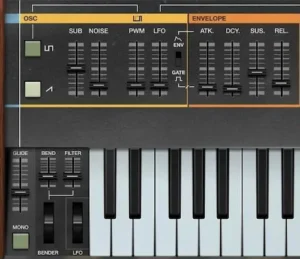
The interface keeps primary controls within immediate reach, allowing experienced users to shape sounds quickly instead of navigating multiple pages or complex modulation structures. That may seem like a minor convenience, but maintaining creative momentum often matters more than having another page of routing options.
The preset library follows the same philosophy. Instead of relying on sheer quantity, it emphasizes usable starting points that invite small adjustments rather than complete reconstruction. In commercial production environments, that approach is usually more valuable than scrolling through thousands of variations looking for a perfect preset.
From an engineering standpoint, PolyRex’s biggest strength isn’t vintage authenticity or synthesis depth. It’s predictability. The instrument consistently produces sounds that require relatively little repair before they sit comfortably in a finished mix. That may not be the most exciting selling point, but it’s one experienced producers tend to appreciate the longer a project evolves.
Where PolyRex Falls Short—and Why That May Not Matter
PolyRex is marketed as an instrument inspired by the musical feel of early Japanese polysynths rather than a component-by-component recreation of a specific vintage synthesizer. That’s an important distinction because it changes the criteria by which the plugin should be judged.
If you’re looking for absolute hardware authenticity, there are already well-established options. Roland Cloud, TAL Software, Softube, Arturia, and several other developers have spent years refining that space. Competing with them on historical accuracy was never PolyRex’s objective.
Its focus is much narrower: familiar analog textures delivered through a faster, less complicated workflow.
That approach solves one problem while creating another.
The analog polysynth market is already saturated. Warm pads, chorus-driven keys, drifting oscillators, vintage basses, and nostalgic plucks have become standard features rather than differentiators. Most experienced producers already own multiple instruments capable of producing similar sounds.
As a result, PolyRex doesn’t introduce a fundamentally new sonic palette. Its value comes from execution rather than innovation.
The streamlined architecture presents a similar trade-off.
For producers who enjoy deep sound design, extensive modulation, or experimental synthesis, PolyRex will eventually reach its limits. It simply wasn’t designed to compete with modern flagship synthesizers offering modular routing, wavetable engines, or highly programmable modulation environments.
That limitation is easy to misinterpret.
Fewer controls don’t necessarily mean fewer useful results. In commercial production, finishing a record usually matters more than building the most sophisticated patch in the session. A straightforward instrument that consistently reaches mix-ready sounds often proves more valuable than one with unlimited programming depth.
The real test comes six months after purchase.
New synthesizers almost always benefit from the excitement of unfamiliar presets. Six months later, the novelty has disappeared, leaving only workflow and sound quality. That’s the point where many plugins quietly disappear from daily use.
PolyRex has a better chance of avoiding that outcome because its appeal isn’t tied to unusual features. Its strength lies in producing dependable analog textures that fit naturally into contemporary arrangements. Whether that’s enough to justify another synth purchase depends largely on what already exists in your collection.
Brand recognition is another factor.
Safari Audio is still establishing itself alongside companies with decades of commercial history, larger preset ecosystems, and extensive third-party support. Some professional studios naturally prefer platforms with longer development track records, particularly when long-term compatibility is part of the purchasing decision.
Pricing deserves the same perspective.
An introductory discount makes almost any plugin easier to justify. The more meaningful comparison comes after promotional pricing ends. At its regular price, PolyRex competes directly with mature instruments that have years of production use behind them, extensive user communities, and proven reliability across countless commercial projects.
Ultimately, PolyRex succeeds by refusing to compete where it is least likely to win.
It isn’t the deepest analog synth available. It isn’t the definitive Juno recreation. It doesn’t attempt to replace flagship software synthesizers.
Instead, it targets producers who prioritize writing, arranging, and finishing music over designing increasingly elaborate patches. For users who already own several premium analog emulations, PolyRex is more likely to become another reliable production tool than the centerpiece of the studio. That may sound like faint praise, but in professional work, dependable tools often outlast the most impressive ones.
How PolyRex Stacks Up Against Established Analog Synth Plugins
PolyRex enters a market where most producers already have options. The question isn’t whether it can recreate familiar analog textures—almost every established developer can do that. The real comparison comes down to workflow, sound character, and how quickly those sounds become usable inside a production.
That’s where the plugin separates itself.
Instead of competing on feature count, Safari Audio focuses on reducing the distance between an idea and a finished part. Producers looking for deep modulation systems, advanced routing, or experimental synthesis will find more capable instruments elsewhere. PolyRex is designed for sessions where writing and arranging take priority over building patches from the ground up.
This distinction becomes increasingly important in commercial production. Every additional layer of complexity adds another decision. Sometimes that’s creatively rewarding. More often, it simply slows down the process.
| Plugin | Workflow Focus | Excels At | Best Fit |
|---|---|---|---|
| Safari Audio PolyRex | Fast production workflow | Mix-ready analog textures, songwriting, layering | Less suitable for advanced sound design |
| TAL-U-NO-LX | Vintage authenticity | Classic Juno character with excellent efficiency | Limited expansion beyond the original concept |
| Arturia Jun-6 V | Modernized vintage workflow | Expanded features and flexible modulation | More programming before reaching finished sounds |
| Softube Model 84 | Premium analog realism | Detailed emulation and refined analog response | Higher price with a focused sonic scope |
| Cherry Audio DCO-106 | Affordable versatility | Broad feature set at a competitive price | Less distinctive overall identity |
| Roland Cloud Juno-106 | Official Roland ecosystem | Recognizable factory sound and brand integration | Subscription-based licensing |
PolyRex’s competitive advantage isn’t that it sounds dramatically different. In many situations, experienced listeners could achieve similar musical results with several of the instruments above.
The difference is how quickly those results are reached.
The plugin consistently favors balanced patches over attention-grabbing presets. Instead of oversized stereo images, aggressive harmonics, or exaggerated analog movement, it produces sounds that typically require less corrective EQ and fewer mix decisions once other instruments enter the arrangement.
That makes PolyRex particularly effective for layered productions where synths support vocals, guitars, acoustic instruments, or orchestral elements rather than dominate them. Producers working in indie pop, cinematic music, ambient, lo-fi, or modern electronic genres are more likely to benefit from that balance than those building highly experimental or modulation-heavy sound design.
For sound designers, the equation is different.
If the goal is creating entirely original timbres, modular signal paths, or evolving textures driven by extensive automation, PolyRex will reach its limits long before flagship hybrid synthesizers. That isn’t a weakness so much as a design decision.
Viewed alongside its competitors, PolyRex isn’t trying to become the most comprehensive analog synth on the market. It fills a narrower role: a production-focused instrument that delivers dependable analog character with minimal friction. For many working producers, that’s a more valuable distinction than another page of modulation options they’ll rarely use.
How PolyRex Fits Into the Final Stages of Production
 A synth isn’t judged by how it sounds in solo. It earns its place once the session reaches mix revisions, bus processing, mastering, and distribution across streaming platforms. Those final delivery stages often expose issues that weren’t obvious during production, particularly after normalization and codec conversion on today’s major services. (Learn more about mastering for streaming platforms.)
PolyRex generally starts from a favorable position because it avoids exaggerated frequency shaping.
Its factory patches tend to emphasize balanced mids over hyped brilliance, while the low end remains supportive instead of oversized. That gives producers more flexibility during mixing and helps preserve headroom for the instruments that actually drive the foundation of a record, such as kick drums and bass.
Balanced source material also leaves more room for mastering decisions. When a synth isn’t overloaded with upper harmonics or unnecessary low-frequency energy, bus compression and limiting typically require fewer corrective moves to maintain clarity. Much of that work starts long before mastering, which is why preparing a mix for mastering has a greater impact than many producers expect.
Stereo imaging follows a similar philosophy.
Wide chorus has always been part of the analog polysynth sound, but excessive modulation can create phase inconsistencies that become more noticeable after stereo processing or mono fold-down. PolyRex keeps that movement under control, making it easier to place within already dense stereo arrangements without constantly adjusting image width.
That doesn’t eliminate the need for mono compatibility checks—every professional mix should include them—but it reduces the likelihood that the synth itself becomes the primary source of stereo instability.
Another practical consideration is session efficiency.
Large productions routinely combine virtual instruments with oversampled processors, convolution reverbs, linear-phase EQs, and complex mastering chains. Plugins that demand excessive CPU resources quickly become workflow bottlenecks, especially during the later stages of production.
PolyRex isn’t marketed as an ultra-lightweight synthesizer, but its relatively straightforward architecture suggests a more efficient workflow than feature-heavy instruments built around multiple synthesis engines and deeply layered modulation systems. Producers working on larger sessions are likely to appreciate that balance between capability and resource consumption.
The broader takeaway is that PolyRex behaves like a production instrument rather than a showcase instrument.
Its sounds are intended to support an arrangement instead of dominating it. That may make some presets feel understated when auditioned in isolation, but subtle source material often proves easier to mix than sounds engineered to impress during a quick demonstration.
For experienced engineers, that’s a meaningful distinction. A synth that consistently arrives at the mix bus with controlled dynamics, balanced frequency content, and manageable stereo width usually requires less corrective processing throughout the mastering chain than one built around maximum impact from the first note.
Overall Rating
| Category | Rating |
|---|---|
| Sound Quality | 8.8/10 |
| Workflow | 9.5/10 |
| Mix Translation | 9.3/10 |
| CPU Efficiency | 8.9/10 |
| Sound Design Flexibility | 7.7/10 |
| Value for Money | 8.8/10 |
| Overall | 8.9/10 |
Sound Quality — 8.8/10.
PolyRex delivers polished analog-inspired textures with balanced harmonic content and restrained stereo movement. It doesn’t redefine the category, but it consistently produces musical sounds that integrate well into modern productions.
Workflow — 9.5/10.
This is where PolyRex stands out. The streamlined interface, fast preset selection, and immediate control layout encourage writing and arranging instead of prolonged programming. Producers who prioritize finishing tracks over building complex patches will appreciate this design.
Mix Translation — 9.3/10.
Factory patches generally arrive at the mix bus with controlled mids, manageable low end, and stereo width that rarely demands aggressive corrective processing. That predictability becomes valuable as sessions grow more complex.
CPU Efficiency — 8.9/10.
While not marketed as an ultra-lightweight synthesizer, PolyRex avoids the computational overhead common in larger hybrid instruments. Its relatively straightforward architecture makes it well suited to modern production sessions with multiple virtual instruments.
Sound Design Flexibility — 7.7/10.
Deep modulation, modular routing, and experimental synthesis are not the focus here. PolyRex deliberately favors immediate musical results over exhaustive programming possibilities, making flexibility its weakest category—but also an intentional design choice.
Value for Money — 8.8/10.
At its introductory price, PolyRex represents strong value. At full retail, it competes in a mature market filled with excellent analog-inspired alternatives, making workflow and usability the primary reasons to choose it.
Overall — 8.9/10.
PolyRex succeeds by solving practical production problems rather than introducing new synthesis technology. It rewards producers who value efficient workflows, mix-ready sounds, and dependable analog character over feature-heavy sound design. While unlikely to replace established flagship synths, it earns its place as a focused production instrument that fits naturally into professional writing, mixing, and mastering workflows.
Verdict
PolyRex isn’t trying to become the definitive analog synth of this generation—and that’s probably the right decision.
Instead of chasing circuit-level authenticity or competing with feature-heavy flagship instruments, Safari Audio has built a synth that emphasizes speed, musicality, and mix-friendly sound design. For many producers, those qualities have a greater impact on finished records than another modulation page or a longer specification sheet.
That doesn’t make PolyRex essential. Studios already built around instruments such as TAL-U-NO-LX, Jun-6 V, Model 84, or Roland Cloud are unlikely to replace their existing workflow. The analog polysynth market is mature, and most experienced producers already have reliable tools covering similar territory.
Where PolyRex earns its place is in day-to-day production. It reaches usable sounds quickly, avoids many of the exaggerated design choices that complicate mixing, and fits naturally into arrangements instead of demanding constant corrective processing.
If your goal is deep sound design, modular experimentation, or building entirely original synthesis structures, there are stronger options available. If your priority is writing music, finishing productions, and spending less time repairing source material during mixing, PolyRex makes considerably more sense.
Its biggest strength isn’t originality—it’s practicality. For producers who value efficient songwriting, predictable mix behavior, and reliable analog textures over endless programming depth, PolyRex is one of the more practical additions to this year’s growing software synth market.
Frequently Asked Questions
Does PolyRex sound like a Roland Juno?
It captures many of the musical characteristics associated with classic Juno-style synthesizers, including animated chorus, smooth filtering, and subtle analog movement. It is not intended to be a circuit-accurate recreation, so the experience is closer to a modern interpretation than a direct emulation.
Is PolyRex a good synth for mixing dense arrangements?
Yes. Its factory patches generally avoid exaggerated highs and oversized low end, making them easier to position alongside vocals, guitars, drums, and orchestral layers without extensive corrective EQ.
Is PolyRex better than TAL-U-NO-LX?
They target different priorities. TAL-U-NO-LX focuses on classic Juno authenticity, while PolyRex emphasizes production workflow and quickly reaching mix-ready sounds. Producers looking for vintage accuracy may prefer TAL, while those prioritizing speed may find PolyRex more practical.
Can PolyRex replace a flagship software synthesizer?
No. It works best as a dedicated analog-style production instrument rather than an all-purpose synthesis platform. Complex sound design, modular routing, and advanced modulation remain the strengths of larger flagship synths.
Is PolyRex suitable for professional music production?
Yes. Its restrained harmonic balance and straightforward workflow make it well suited for commercial production, particularly when fast arrangement and efficient mixing are higher priorities than extensive sound design.
Which genres benefit most from PolyRex?
PolyRex naturally fits synth-pop, indie pop, dream pop, ambient, lo-fi, cinematic scoring, electronic pop, soundtrack work, and modern R&B. It is less focused on aggressive EDM leads or highly experimental electronic production.
Does PolyRex require a powerful computer?
Its streamlined architecture suggests moderate CPU demands compared with many hybrid synthesizers. Actual performance depends on project size, buffer settings, oversampling, and the capabilities of the host system.
Is the built-in chorus likely to cause mono compatibility issues?
Under normal production conditions, the chorus remains relatively controlled compared with heavily exaggerated analog-style effects. Standard mono compatibility checks are still recommended before final release.
Is PolyRex worth buying if you already own several analog synth plugins?
If your collection already includes multiple Juno-inspired instruments, the decision comes down to workflow rather than sound alone. PolyRex offers another production-focused approach instead of introducing a fundamentally new sonic category.
Who is PolyRex designed for?
Its workflow is best suited to producers, composers, songwriters, and mixing engineers who want dependable analog textures without spending significant time programming patches. Users seeking extensive synthesis depth will likely benefit more from larger flagship instruments.
Is PolyRex MPE compatible?
At the time of writing, PolyRex is not positioned as an MPE-focused synthesizer. Its workflow emphasizes traditional keyboard performance rather than advanced multidimensional expression, making it better suited to conventional MIDI production.
Does PolyRex include onboard effects?
Yes. PolyRex includes built-in processing that contributes significantly to its overall character, particularly its chorus and vintage-inspired spatial movement. The effects are designed to complement the instrument’s analog aesthetic without turning it into an all-in-one production environment.

Yurii Ariefiev is a mastering engineer and audio production editor specializing in evaluating how virtual instruments translate from production to final release. His reviews focus on mix behavior, spectral balance, stereo imaging, workflow efficiency, and the practical decisions that affect mastering—not marketing claims or feature lists.
Every plugin analysis is written from the perspective of real mixing and mastering sessions, examining how source sounds behave inside finished arrangements, how much corrective processing they require, and how reliably they translate across modern playback systems.