Three-Body Technology Unmask Review: A New Dynamic EQ Plugin Built for Modern Mix Density
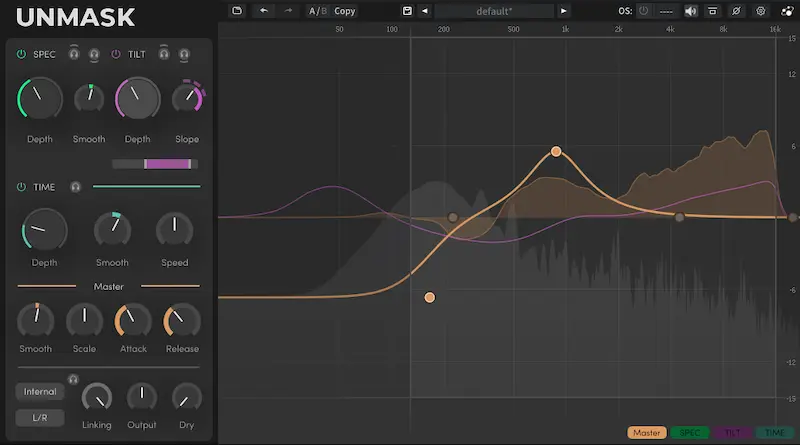
Three-Body Technology has released Unmask, a psychoacoustic dynamic EQ plugin designed to reduce spectral masking and improve separation inside dense modern mixes. The plugin targets a growing category of adaptive processors focused less on corrective EQ and more on perceptual clarity management during mixing and mastering.
That market is already crowded with tools like Gullfoss, Soothe2, DSEQ, and Smooth Operator. Most of them solve variations of the same problem: modern productions are overloaded with competing information. Layer counts keep increasing, transient density keeps rising, and static EQ moves often create cleaner analyzers while making mixes feel smaller.
Unmask approaches the problem from a slightly different angle. Instead of behaving primarily as a resonance suppressor, the plugin analyzes masking across spectral, tonal, and temporal domains simultaneously. In practice, the goal is not simply to remove harshness, but to recover intelligibility and depth without excessive subtractive EQ.
That distinction matters because many modern mixes are no longer suffering from isolated frequency buildup. They suffer from perceptual congestion. Dense vocal stacks, clipped drum buses, layered synth arrangements, and aggressive loudness processing all compete for the same acoustic space. Traditional EQ can separate elements technically while still collapsing front-to-back depth and mix cohesion.
Unmask is available in VST, VST3, AU, and AAX formats for Windows and macOS. The plugin is currently priced at an introductory $59 USD until July 29th, 2026, before moving to its standard $129 USD retail price.
Quick Navigation
Why Psychoacoustic Mixing Plugins Are Taking Over Modern Production Workflows
The rapid growth of plugins like Gullfoss, Soothe2, DSEQ, Smooth Operator, and TEOTE reflects a larger shift in how modern mixes are built. Sessions are carrying significantly more spectral information than they did a few years ago, while loudness expectations remain aggressively competitive across streaming platforms.
Modern production chains are stacked with layered sub-bass, clipped drums, stereo-enhanced synths, parallel saturation, transient shaping, and dense vocal arrangements fighting for the same perceptual space. In that environment, traditional subtractive EQ stops scaling efficiently.
That production density is also being accelerated by larger software ecosystems and increasingly layered instrument workflows. Massive integrated environments like Native Instruments Komplete 26 are giving producers access to more simultaneous harmonic and transient content than ever before, which indirectly increases the demand for adaptive masking and spectral management tools during mixing. More on that shift can be seen in the Native Instruments Komplete 26 release overview.
The standard response has been deeper corrective carving. But excessive static EQ creates its own problems. Mixes become cleaner on analyzers while losing physical weight, depth layering, and internal movement. Engineers solve masking mathematically while making records sound emotionally smaller.
That is why psychoacoustic processors have become so aggressive as a plugin category. They are not trying to “fix frequencies” in the traditional sense. They are attempting to dynamically redistribute perceptual focus as the arrangement changes in real time.
Different tools approach that problem differently. Soothe2 focuses heavily on dynamic resonance suppression. Gullfoss continuously rebalances spectral energy across the signal. DSEQ behaves more like a surgical spectral stabilizer.
Unmask positions itself somewhere between those worlds. The plugin combines masking reduction, tonal rebalancing, and temporal recovery processing into a single adaptive workflow instead of focusing exclusively on harshness control or automatic tonal correction.
That positioning makes sense in the current market because modern mixes are rarely suffering from one isolated issue anymore. Most density problems are cumulative. Frequency overlap, transient competition, saturation buildup, and limiter stress all interact simultaneously by the time a mix reaches the mastering stage.
What Makes Unmask Different From a Traditional Dynamic EQ Plugin?
Most dynamic EQ plugins operate like frequency-dependent compressors. A band crosses a threshold, gain reduction activates, and the processor reacts to level buildup inside a defined range. That approach works well for resonance control, but it does not fully address perceptual masking inside dense modern productions.
Unmask is built around a broader concept. Instead of reacting only to amplitude spikes, the plugin continuously analyzes how competing information is perceived across spectral, tonal, and temporal domains.
The processing architecture is divided into four main sections:
- SPEC — adaptive spectral masking reduction.
- TILT — perceptual tonal slope correction.
- TIME — transient-related masking recovery.
- EXT Glue — psychoacoustic balancing between interacting signals.
Three independent Depth controls scale processing intensity across those domains without forcing the user into a fully automated workflow. That matters because most intelligent spectral processors become dangerous when engineers lose control over where the algorithm is intervening.
The most technically interesting section is TIME.
Most adaptive EQ plugins focus almost entirely on spectral relationships. But dense mixes often lose articulation because of temporal masking, not just frequency overlap. After a strong transient occurs, nearby lower-level information becomes perceptually obscured for a short period of time. The ear prioritizes the transient, while surrounding detail effectively disappears.
Traditional EQ cannot properly solve that problem because the issue is not static buildup at a fixed frequency. It is a timing-related perception issue tied to transient dominance and auditory recovery behavior.
That distinction is important in modern production environments where clipped drums, transient shaping, and aggressive loudness processing constantly compete for attention. In those sessions, mixes can measure balanced while still sounding congested and physically flat.
If Unmask manages temporal recovery transparently without destabilizing tone or stereo depth, it immediately separates itself from the growing wave of “smart EQ” plugins that simply automate dynamic resonance suppression.
How Unmask Performs in Real Mixing and Mastering Workflows
 Unmask makes the most sense in sessions where clarity problems come from cumulative density rather than isolated resonances. That distinction is critical because the plugin is not behaving like a traditional corrective EQ designed to hunt down a few harsh frequencies.
Its strongest use cases are likely to be:
- Dense vocal productions with layered harmonies and doubles.
- EDM arrangements with stacked synth leads and clipped drums.
- Trap mixes where kick, bass, and upper harmonics constantly compete.
- Hyperpop sessions overloaded with saturation and transient shaping.
- Cinematic hybrid scoring with overlapping orchestral and synthetic elements.
- Modern rock and metal masters pushed into aggressive limiter territory.
On vocal buses, Unmask appears capable of reducing the amount of static subtractive EQ normally required to keep leads intelligible against dense instrumentation. Instead of permanently carving upper mids out of synths, guitars, or backing vocals, the plugin dynamically reallocates perceptual focus as masking conditions shift throughout the arrangement.
That workflow matters because aggressive static separation often creates sterile mixes. Engineers achieve cleaner analyzers while unintentionally stripping away interaction, glue, and harmonic density between elements.
The plugin is potentially more interesting on transient-heavy material.
Modern drums are frequently clipped, saturated, layered, transient-shaped, and hard-limited before they even reach the mix bus. That production style dramatically increases transient masking and upper-mid congestion, especially once loudness processing begins accumulating during mastering. Engineers interested in how clipping changes perceived loudness and density can also read the Loudness vs Clipping in Mastering analysis.
If the processing remains stable under heavy material, Unmask could become useful on drum buses where engineers normally alternate between transient designers, dynamic EQ, and spectral balancing just to maintain articulation.
For mastering workflows, the plugin makes the most sense as a low-intensity enhancement stage before final limiting. Dense masters often lose perceived openness once broadband limiting, clipping, and codec optimization begin accumulating. Recovering a small amount of intelligibility before loudness maximization can produce more audible improvement than another half dB of limiter gain.
That said, this is also where adaptive spectral processors become risky.
A plugin can sound impressive in isolated A/B comparisons while quietly destabilizing translation across headphones, nearfields, cars, and streaming normalization environments. Slight spectral movement that feels “clearer” during short listening tests can flatten depth relationships over an entire record.
That is why long-session monitoring matters more than demo impressions with tools like this.
Unmask vs Gullfoss vs Soothe2 vs DSEQ
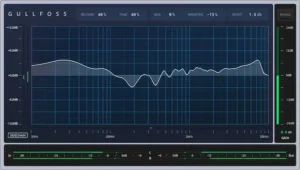 The inevitable comparison is Gullfoss because both plugins operate inside the same broad category of perceptual spectral processing. But in actual workflow terms, they are solving different problems.
The recent wave of intelligent spectral processors has also expanded into more hybrid dynamic EQ territory. Empirical Labs moved in a similarly advanced direction with ParaDyn, although its workflow philosophy is far more focused on dynamic tonal shaping than psychoacoustic masking recovery. Engineers interested in the broader evolution of adaptive EQ design can also read the Empirical Labs ParaDyn review.
Gullfoss behaves more like a continuously adaptive balancing processor. It analyzes the signal globally and redistributes spectral energy across the mix in real time. Many engineers use it almost like an automatic mastering EQ — subtle, broad, and mix-wide.
Unmask feels more intervention-oriented.
Its architecture appears focused less on overall tonal balancing and more on resolving localized masking conflicts inside dense material. The addition of temporal masking recovery pushes it even further away from the traditional “smart mastering EQ” category.
That distinction matters because mixes do not always lose clarity for the same reason.
Some productions suffer from tonal imbalance. Others suffer from transient congestion, overlapping harmonics, limiter accumulation, or stacked upper-mid density. Gullfoss is extremely effective at broad spectral redistribution, but it is not specifically designed around transient-related masking behavior.
Compared to Soothe2, the separation becomes even clearer.
Soothe2 is fundamentally a dynamic resonance suppressor. Its strongest use cases are harsh cymbals, brittle vocals, resonant guitars, sharp synths, and aggressive upper-mid buildup. It reacts extremely well to unstable resonant material that changes over time.
Unmask is not primarily targeting harshness reduction.
It is attempting to improve intelligibility and separation inside crowded arrangements without relying entirely on resonance attenuation. In practical workflow terms, Soothe2 removes irritation while Unmask attempts to recover clarity.
That does not make one better than the other. They address different stages of the same broader problem.
Against DSEQ, the contrast shifts again.
DSEQ behaves almost surgically when controlling spectral aggression. It is highly effective at stabilizing harsh broadband material, especially during mastering, but its processing philosophy remains heavily corrective.
Unmask appears more perception-driven than correction-driven.
That difference may ultimately become its strongest competitive advantage.
Most engineers already own tools capable of suppressing resonances. Far fewer own processors specifically designed around adaptive masking recovery and perceptual separation under modern loudness conditions.
The real selling point for Unmask may not be sound quality alone. It may be workflow compression.
| Plugin | Primary Focus | Best Use Case | Main Strength | Potential Drawback |
|---|---|---|---|---|
| Unmask | Psychoacoustic masking recovery | Dense modern mixes and mastering | Spectral + temporal clarity management | Can flatten depth if overused |
| Gullfoss | Adaptive tonal balancing | Mix bus and mastering enhancement | Smooth global spectral correction | Less targeted on transient masking |
| Soothe2 | Dynamic resonance suppression | Harsh vocals, cymbals, guitars | Extremely transparent harshness control | Not designed for mix-wide masking recovery |
| DSEQ | Spectral harshness stabilization | Mastering and broadband correction | Surgical spectral control | More corrective than perceptual |
Modern mixing sessions routinely involve manual automation, multiband control, dynamic EQ carving, transient shaping, saturation balancing, and stereo management just to maintain intelligibility in dense productions. If Unmask can reduce part of that workload without introducing instability, phase flattening, or artificial movement, it becomes much more than another spectral plugin release.
How Unmask Fits Into a Modern Mastering Chain
Unmask is not replacing mastering EQ, broadband compression, clipping, or limiting. Despite how adaptive processing plugins are often marketed, no intelligent spectral tool eliminates the need for proper tonal balance and dynamic control upstream.
Where Unmask becomes useful is in specific problem-solving positions inside dense modern mastering chains.
The most logical insertion points are:
Processors like Unmask are becoming increasingly common inside modern hybrid mastering workflows where clipping, saturation, dynamic EQ, stereo control, and loudness management all interact simultaneously. Engineers unfamiliar with how those stages influence each other should also read the Mastering Chain Explained breakdown.
- Before bus compression to reduce masking feeding into gain reduction.
- Before final limiting to recover intelligibility lost during loudness processing.
- After saturation or clipping stages where harmonic buildup starts collapsing separation.
- Inside parallel enhancement chains using the Dry Mix control.
- On Mid/Side workflows where stereo density overwhelms center definition.
The plugin makes the most sense in mastering environments where arrangements are already crowded before the limiter stage even begins. Modern productions frequently arrive with clipped transients, overstretched stereo width, stacked harmonics, and aggressive upper-mid saturation baked directly into the mix.
In those situations, traditional EQ often creates another tradeoff: improving separation while thinning impact.
That is where adaptive masking recovery can become more useful than additional subtractive processing. Instead of permanently removing information, the processor dynamically shifts perceptual focus as masking conditions evolve throughout the song.
The included Processing Frequency Range and Priority Curve controls are probably more important than the marketing material suggests.
Without strict boundaries, adaptive spectral processors tend to overreach. They continuously chase clarity across the spectrum until tonal stability starts drifting between sections. Choruses become brighter than verses, transient balance changes unpredictably, and stereo depth gradually flattens over long playback sessions.
That behavior is one of the biggest hidden problems with intelligent mixing and mastering plugins.
Short A/B comparisons often sound impressive because the ear immediately notices increased separation. But during full-track listening, constant spectral movement can create subtle fatigue and reduce mix cohesiveness without the engineer realizing it in real time.
This is why experienced mastering engineers rarely allow adaptive processors unrestricted access across the entire frequency spectrum.
Careful range limitation is what separates controlled enhancement from artificial spectral instability.
CPU Load, Latency, and Real-World Workflow Concerns
Three-Body Technology includes a Zero Latency mode based on minimum-phase processing, which makes sense for producers working in real-time composition, tracking, or low-buffer mixing sessions.
But there are unavoidable compromises with any processor operating across multiple adaptive spectral domains simultaneously.
Continuous masking analysis, temporal recovery processing, oversampling, and dynamic spectral redistribution all require substantial computation compared to conventional EQ workflows. On smaller sessions that may not matter. On large modern productions already running oversampled saturation, linear-phase mastering chains, and heavy bus processing, it becomes a different conversation.
Unmask does not look like the kind of plugin engineers will casually insert across forty channels without consequences.
Realistically, it makes more sense as a selective utility processor used on high-conflict buses, mix groups, or mastering stages where masking problems are actually limiting translation and intelligibility.
That approach is probably healthier anyway.
One of the most common mistakes with adaptive spectral plugins is over-deployment. Engineers hear increased separation on a few sources, then start placing the processor everywhere until the mix loses density, glue, and spatial realism.
There is also the issue of perceived phase behavior.
Even when obvious phase artifacts are absent, aggressive adaptive processing can flatten front-to-back depth relationships and reduce natural spatial contrast over time. The mix may initially sound “cleaner,” but repeated spectral redistribution often decreases the sense of physical space between elements during long listening sessions.
That problem becomes more noticeable on orchestral material, acoustic recordings, jazz, ambient production, and spacious mastering work where micro-depth cues matter more than raw separation.
Dense EDM and hyperpop productions may tolerate heavier processing because the aesthetic is already aggressively controlled. More natural material usually exposes intelligent spectral movement much faster.
This does not make Unmask flawed. It simply means the plugin needs disciplined deployment.
The engineers who benefit most from processors like this are usually the ones willing to use them conservatively.
Where the Marketing Starts Overreaching
Three-Body Technology describes Unmask as a processor capable of revealing detail that “traditional EQs and compressors cannot reach.” That claim needs to be interpreted carefully.
No spectral processor restores information that does not exist in the source material. Unmask is not recovering hidden audio trapped inside the waveform. It is reshaping perceptual priority inside dense signals so certain elements become easier for the ear to distinguish.
That misconception is one of the reasons many engineers overprocess muddy masters instead of identifying the original source of the congestion. In many cases, masking problems begin much earlier in the arrangement, balance, or saturation structure itself. A deeper breakdown of that issue is covered in the Fix Muddy Master guide.
That is an important distinction because the audio industry constantly confuses increased separation with increased fidelity.
They are not interchangeable.
Many adaptive processors create an immediate sense of openness by dynamically thinning overlapping material, especially in the upper mids where perceptual clarity is most sensitive. During short A/B comparisons, that often sounds impressive because the ear interprets additional separation as additional detail.
But clarity enhancement always carries tradeoffs.
Push spectral redistribution too aggressively and mixes can lose physical density, harmonic interaction, and front-to-back cohesion. The result may sound cleaner while simultaneously feeling emotionally smaller and less connected.
This is where psychoacoustic processing becomes difficult to judge objectively.
A plugin can appear highly effective during isolated demo playback while quietly destabilizing translation across headphones, nearfields, cars, consumer Bluetooth systems, and streaming normalization environments.
The problem is not obvious harshness or audible artifacts. It is cumulative perceptual drift.
Small adaptive movements repeated continuously across an entire mix can gradually flatten depth relationships and alter how energy is distributed over long listening sessions. Engineers often stop noticing the processor working because the ear adapts alongside it.
That is why serious evaluation of tools like Unmask happens during extended monitoring, not five-minute comparison clips.
If the plugin maintains tonal stability, depth consistency, and playback translation while improving intelligibility, then it becomes genuinely useful. If clarity improvements disappear once the mix leaves the studio monitors, it becomes another spectral processor that sounds smarter than it actually is.
Who Should Actually Use Unmask?
Despite the simplified interface and broad marketing language, Unmask is not really a beginner-oriented plugin.
Adaptive spectral processors are easy to misuse because they can create the illusion of improvement before the engineer fully understands what problem is actually being solved. Less experienced producers often reach for tools like this to compensate for overcrowded arrangements, weak sound selection, excessive layering, or poor balance decisions upstream.
That usually creates dependency instead of better engineering habits.
Unmask makes far more sense in workflows where the user already understands masking behavior and simply wants a faster or more flexible way to manage it under production pressure.
The plugin is likely to be most useful for:
- Mix engineers working on dense pop, EDM, trap, metal, or hyperpop productions.
- Mastering engineers dealing with aggressive loudness targets and spectral congestion.
- Post-production editors trying to improve dialogue intelligibility in crowded scenes.
- Electronic producers balancing transient-heavy layered arrangements.
- Engineers handling sessions with excessive harmonic accumulation from saturation and clipping.
In those environments, masking problems are often dynamic rather than static. Frequency overlap changes continuously as the arrangement evolves, which makes manual EQ automation slow and difficult to maintain consistently across an entire mix.
That is where a processor like Unmask can potentially save time.
The plugin becomes much less compelling on sparse or naturally open material.
Acoustic recordings, jazz ensembles, orchestral work, ambient production, and highly dynamic mixes often rely on natural spatial interaction and depth relationships that do not benefit from constant spectral intervention. In those contexts, aggressive adaptive processing can reduce realism faster than it improves clarity.
Not every production needs additional intelligibility management.
Sometimes the better engineering decision is leaving the mix alone.
Is Unmask Worth Buying at $59?
At the introductory $59 price, Unmask is positioned aggressively enough to attract engineers already using adaptive spectral processing inside daily mixing or mastering workflows.
That price point matters because the plugin is entering a category dominated by mature tools with years of real-world trust behind them. Gullfoss, Soothe2, DSEQ, and similar processors are already deeply integrated into professional workflows, which makes switching behavior difficult unless a new tool offers either a meaningful sonic advantage or measurable workflow acceleration.
At $59, Unmask does not need to completely outperform those plugins to justify itself.
It only needs to solve certain masking and intelligibility problems faster, cleaner, or with fewer side effects in specific production scenarios.
The value proposition becomes less convincing at the full $129 retail price.
At that level, engineers start comparing long-term reliability rather than feature lists. Adaptive spectral processors are notoriously difficult to evaluate in short sessions because many of them sound impressive during initial demos.
The real test happens later.
Can the plugin survive repeated translation checks across headphones, monitors, cars, earbuds, streaming codecs, and loudness-normalized playback environments without introducing fatigue or tonal instability?
Does the processing still feel natural after multiple mastering revisions?
Does the mix retain depth and impact after extended listening sessions?
Those questions determine whether a spectral processor becomes a permanent utility or another short-lived “smart mixing” experiment that disappears from templates six months later.
That is the barrier every intelligent mixing plugin eventually runs into.
The market no longer lacks adaptive EQ tools. It lacks processors engineers continue trusting after the novelty wears off.
Verdict
Three-Body Technology Unmask feels more technically grounded than most of the “intelligent mixing” plugins currently entering the market. Instead of selling generic AI-assisted cleanup, the plugin is built around a specific production problem: perceptual masking inside dense modern mixes.
That focus gives it a clearer identity than many adaptive EQ releases that simply automate resonance control and call it innovation.
The strongest part of the design is the attempt to address masking across spectral and temporal domains simultaneously. Most competing processors operate almost entirely in the frequency domain. Unmask is at least trying to solve the broader perceptual interaction problem modern productions create once transient density, clipping, saturation, and loudness processing begin stacking together.
That does not make it a miracle processor.
Unmask will not fix weak arrangements, poor sound selection, unstable balances, or excessive layering. Used carelessly, it can likely create the same problems every adaptive spectral processor eventually risks: flattened depth, reduced cohesion, tonal drift, and artificial separation that sounds impressive for five minutes before becoming exhausting over an entire record.
The real question is whether the plugin remains trustworthy under long-term translation testing.
If the TIME processing behaves transparently across different playback systems and loudness conditions, Unmask could become genuinely useful for engineers working on modern high-density productions where static EQ workflows start breaking down.
If the adaptive movement becomes noticeable over extended listening, it will end up joining the long list of spectral processors that generate excitement during launch cycles before quietly disappearing from professional templates.
That is ultimately where plugins like this succeed or fail.
Not in demo videos. Not in analyzer screenshots. In whether engineers still trust them after hundreds of hours of real mix revisions, mastering passes, and translation checks.
FAQ
Is Three-Body Technology Unmask an AI plugin?
Not in the generative-AI sense currently dominating plugin marketing. Unmask relies on adaptive psychoacoustic analysis and real-time spectral processing rather than machine-generated mixing decisions or cloud-based automation.
Can Unmask replace Soothe2?
Not realistically. Soothe2 is primarily a dynamic resonance suppressor designed to control harshness and unstable resonant buildup. Unmask is aimed more at perceptual separation, masking reduction, and clarity recovery inside dense arrangements.
Is Unmask better than Gullfoss?
They solve different problems. Gullfoss behaves more like a broad adaptive balancing processor, while Unmask appears more focused on localized masking conflicts and transient-related intelligibility issues.
Is Unmask useful for mastering?
Potentially yes, especially on loud modern productions where limiting, clipping, and saturation reduce perceived openness. Conservative settings are critical because excessive adaptive processing can flatten depth and destabilize translation.
Does Unmask use a lot of CPU?
Most likely in larger sessions. Continuous spectral analysis, oversampling, and multi-domain adaptive processing are computationally expensive compared to standard EQ workflows, particularly at low buffer settings.
Can Unmask improve vocal clarity?
Probably, especially in dense productions where vocals compete with stacked synths, guitars, harmonics, and upper-mid saturation. The plugin appears designed to redistribute perceptual focus dynamically rather than relying entirely on static EQ cuts.
Can Unmask replace manual EQ decisions?
No. It may reduce the amount of corrective carving required in crowded mixes, but it cannot replace arrangement decisions, balance control, gain staging, or proper sound selection.
Does Unmask work well on acoustic or orchestral music?
Possibly in moderation, but sparse and naturally dynamic material generally exposes adaptive spectral movement much faster than dense electronic productions. Heavy processing could reduce realism and depth perception instead of improving clarity.
What makes Unmask different from a normal dynamic EQ plugin?
Traditional dynamic EQs react mainly to threshold-triggered frequency buildup. Unmask is designed around psychoacoustic masking behavior across spectral, tonal, and temporal domains simultaneously.
Can Unmask fix a muddy mix?
Only partially. It may improve intelligibility and reduce masking, but it cannot fully repair weak arrangements, overproduction, excessive layering, or poor balance decisions made earlier in the mixing process.