
Tape emulation is one of the most saturated categories in audio production. Every year brings another plugin promising analog warmth, richer harmonics, smoother transients, and the elusive “finished record” sound. Most follow the same blueprint: model a tape machine, add saturation, introduce a bit of compression, then sprinkle in wow, flutter, or tape-speed controls.
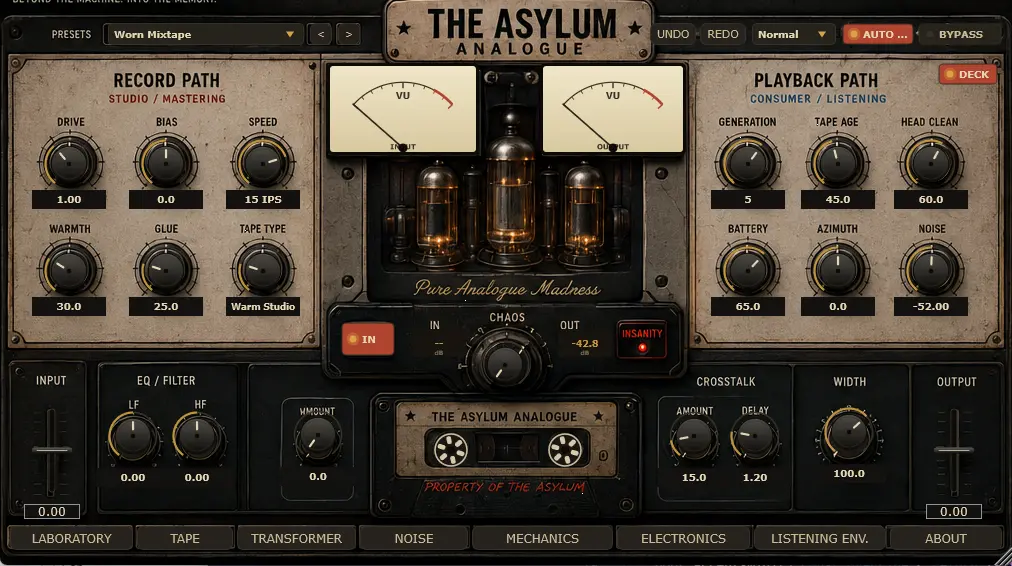
The Asylum Analogue takes a noticeably different approach. Instead of stopping at the mastering deck, it models the entire analog playback chain—from the studio master through cassette duplication to the consumer equipment that ultimately shaped how millions of records were heard during the 1980s. That shifts the focus from tape coloration alone to the cumulative effect of every stage between the control room and the listener.
That distinction matters because the character people associate with cassette-era recordings rarely came from the master tape itself. Consumer duplication, transport instability, playback electronics, aging components, and inexpensive speakers all left their own fingerprint on the signal. The Asylum Analogue attempts to recreate that complete journey inside a single plugin, combining tape processing, cassette behavior, and playback-device coloration into one workflow.
It’s an ambitious concept, but ambition alone doesn’t earn a place in professional sessions. Engineers already have access to mature tape emulations, dedicated cassette processors, and monitor-reference tools that can be combined with predictable results. The real question isn’t whether The Asylum Analogue sounds vintage—most plugins in this category can do that. The question is whether integrating those stages into a single processor creates a faster, more convincing workflow without sacrificing control or sonic consistency.
That’s where this plugin deserves a closer look. Beyond the marketing language, does it solve a production problem that existing tools leave unanswered, or is it simply another take on analog nostalgia packaged behind a different interface?
In This Review
Why Tape Emulation Is Evolving
Ten years ago, most analog plugins had a straightforward goal: recreate the behavior of a multitrack or mastering recorder. Engineers reached for tape emulation to smooth transients, add harmonic density, and introduce the gentle compression associated with magnetic recording. Those objectives haven’t changed, but the way producers use analog coloration certainly has.
Today’s productions often chase the sound of an entire playback ecosystem rather than the recorder alone. Cassette duplication, unstable transports, aging electronics, cheap headphones, portable stereos, and consumer speakers all contributed to the sonic fingerprint of countless commercial releases. What listeners remember as “cassette sound” is usually the cumulative effect of those imperfections—not simply tape saturation.
That shift has created a distinct category of cassette-focused processors. Many producers now rely on a dedicated cassette emulator alongside traditional tape saturation plugins. Unlike traditional tape saturation plugins, they model bandwidth limitations, transport instability, high-frequency loss, modulation artifacts, mechanical inconsistencies, and playback coloration. For genres such as synthwave, lo-fi hip-hop, indie rock, ambient, and cinematic sound design, those artifacts have become deliberate production choices instead of technical flaws.
Building that sound traditionally requires several processors working together. A tape plugin establishes harmonic behavior, a cassette emulator introduces mechanical degradation, and a playback or speaker simulator provides the final perspective. The approach is flexible but also increases routing complexity, gain staging, automation, and CPU overhead—particularly in larger sessions.
This is the workflow The Asylum Analogue attempts to simplify. Instead of treating recording and playback as a single process, it separates them into independent stages before adding consumer playback coloration. From a production standpoint, that architecture makes more sense than stacking unrelated plugins whose algorithms were never designed to interact with one another.
The concept also reflects how engineers evaluate mixes today. Commercial releases are expected to translate across studio monitors, earbuds, laptops, Bluetooth speakers, automotive systems, and streaming platforms. While no experienced engineer relies on consumer simulations as a primary monitoring reference, auditioning those playback characteristics inside a single plugin can expose tonal imbalances before the mix leaves the DAW.
Whether that workflow proves superior depends on execution rather than concept. Combining multiple processing stages into one interface only has value if each stage stands on its own. Otherwise, convenience comes at the expense of flexibility—and experienced engineers rarely make that trade.
Analog plugins can add character, but they can’t tell you whether your mix will translate across real playback systems. Before committing to a release, upload up to 35 seconds of your track and receive a free mastering demo. You’ll hear how professional mastering can improve balance, clarity, and translation while preserving the musical character you’ve worked to create.
What Makes The Asylum Analogue Different?
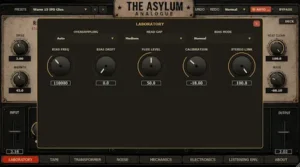 The Asylum Analogue doesn’t try to win by modeling a single tape machine more accurately than its competitors. Its defining feature is the signal path itself. Instead of treating tape processing as one continuous stage, the plugin separates recording and playback into independent paths that can be blended before the signal reaches a modeled listening environment. That changes the workflow more than the sound.
Most tape plugins emulate a recorder: audio hits the input stage, passes through the tape model, and exits with harmonic saturation, gentle compression, and frequency-dependent coloration. Engineers shape the response by adjusting parameters such as tape speed, bias, calibration, or input level. The workflow is familiar because it mirrors the behavior of a real machine.
The Asylum Analogue starts where many traditional tape emulations stop. It assumes the mastering recorder was only one stage in the listening chain. Cassette duplication, transport mechanics, consumer playback electronics, and inexpensive speakers often had just as much influence on what listeners actually heard. Separating those stages allows engineers to emphasize recording artifacts, playback artifacts, or a balance of both instead of committing to a single interpretation of “analog.”
That flexibility has practical value. A mix engineer can keep the recording stage relatively clean while adding subtle playback coloration for character. A sound designer building degraded archive recordings or VHS-style effects can push the opposite direction, letting consumer playback dominate while minimizing tape saturation. Recreating those variations with several independent plugins usually requires considerably more routing, gain staging, and automation.
The most ambitious technical claim is the use of magnetic hysteresis modeling instead of conventional waveshaping. In theory, hysteresis models the changing magnetic state of tape rather than applying a static nonlinear transfer curve, allowing the processor to react more naturally to complex program material and transient content.
Whether that translates into audibly superior results remains an open question. The developer has not published blind listening tests, harmonic analysis, null comparisons, or other independent measurements demonstrating that its implementation outperforms established tape processors. As with any analog-modeling plugin, the final judgment should come from listening—not from DSP terminology.
The Listening Environment section extends the concept beyond tape emulation by simulating the tonal influence of consumer playback systems. Used as a secondary reference, it can quickly reveal frequency ranges that become exaggerated—or disappear entirely—outside a controlled monitoring environment. It should not replace calibrated monitors or reference headphones, but it can shorten the process of checking translation during a mix.
The CHAOS control serves a different purpose. Instead of adding more saturation, it introduces subtle component variation that reduces the static character often associated with digital processing. Applied conservatively, it can make sustained instruments, sampled loops, and long ambient passages feel less repetitive without drawing attention to itself.
INSANITY mode sits at the opposite extreme. It intentionally exaggerates transport instability and mechanical failure, making it better suited to sound design, transitions, experimental production, and cinematic effects than conventional mixing or mastering. Most engineers will treat it as a creative option rather than an everyday production tool.
Scalable quality modes round out the workflow. Running lower-quality processing during composition before switching to maximum quality for export is a practical approach, especially in sessions with high plugin counts. How well that strategy performs against competing tape emulations remains unknown until independent CPU benchmarks become available.
Viewed as a production tool rather than another saturation plugin, The Asylum Analogue makes a stronger case for itself. Its value isn’t based on emulating one specific recorder more accurately than the competition. It’s based on reducing the number of processors required to recreate an entire analog playback chain while giving engineers more control over where that coloration actually comes from.
Does The Asylum Analogue Improve Real-World Workflow?
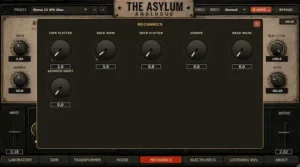 The most compelling aspect of The Asylum Analogue isn’t its tape model—it’s the workflow. Plenty of plugins can emulate analog tape convincingly. Far fewer let engineers move from studio master to consumer playback without assembling a chain of separate processors.
That matters because cassette-style production usually isn’t created with a single plugin. A typical session may combine tape saturation, cassette degradation, wow and flutter, speaker coloration, and subtle modulation to recreate the sound of aging playback systems. Building that chain isn’t difficult, but it takes time, increases CPU load, and adds another layer of gain staging and automation.
The Asylum Analogue reduces that complexity. Instead of managing several plugins, engineers can shape the recording stage, playback stage, and listening environment from a single interface. That’s a genuine workflow improvement, even if the individual processing stages don’t outperform dedicated alternatives.
The more ambitious claim involves magnetic hysteresis modeling. Unlike conventional waveshaping, hysteresis attempts to simulate how magnetic tape responds over time rather than applying a fixed nonlinear curve. It’s a technically credible approach, but technical credibility isn’t the same as proof.
At the time of writing, there are no independent measurements, blind listening tests, harmonic analyses, or null comparisons demonstrating that The Asylum Analogue produces more authentic tape behavior than established competitors. Until those evaluations appear, the DSP should be judged by its audible results—not by the terminology used to describe it.
The Listening Environment section deserves similar perspective. It can be useful for quickly checking how tonal decisions survive through limited playback systems, particularly when balancing upper midrange or evaluating bass translation. It is not, however, a replacement for calibrated monitors, reference headphones, or dedicated monitor-control software. Think of it as a fast reality check, not a monitoring solution.
The CHAOS parameter is arguably more practical than it first appears. Small variations in analog hardware help prevent repeated material from sounding mechanically identical. Used with restraint, this control introduces subtle movement that works well on pads, sustained synths, sampled loops, and ambient textures. Push it too far and the illusion quickly gives way to obvious modulation.
INSANITY mode serves a different audience altogether. It’s built for exaggerated tape failure, unstable transports, and creative destruction rather than everyday mixing. Sound designers, electronic producers, and film composers will probably use it more often than mastering engineers or commercial mix specialists.
The plugin’s biggest weakness has nothing to do with sound. At launch it’s available only as a Windows VST3 plugin, immediately excluding many professional studios built around macOS, Logic Pro, or Pro Tools. Until AU and AAX versions arrive, its adoption will remain narrower than established tape processors.
The bigger question is whether The Asylum Analogue remains useful once the novelty wears off. Interesting ideas appear every month. Very few become permanent parts of professional templates. If the DSP proves consistent under long-term studio use, the plugin could establish itself as a practical alternative to stacking multiple processors. If not, it risks becoming another creative effect that’s opened occasionally rather than relied on daily.
Comparison With Other Tape Plugins
Breaking into the tape emulation market isn’t easy. Most professional engineers already rely on processors they’ve tested across dozens—or hundreds—of sessions. A new plugin doesn’t have to sound radically better, but it does need to offer a workflow advantage that justifies replacing part of an established production chain.
That’s where The Asylum Analogue takes a different approach. Instead of competing as another tape machine emulation, it combines recording, cassette playback, and listening-environment modeling into a single processor. Whether that’s an advantage depends on what role you expect it to fill.
| Plugin | Best Use Case | Where It Excels | How The Asylum Analogue Differs |
|---|---|---|---|
| XLN Audio RC-20 Retro Color | Creative sound design | Multi-effect workflow with broad tonal shaping | Focuses on a cohesive analog playback chain instead of combining unrelated creative effects. |
| Aberrant DSP SketchCassette II | Authentic cassette coloration | Transport artifacts and cassette realism | Adds a dedicated recording stage and playback-environment simulation for greater control over the entire signal path. |
| Softube Tape | Mix bus and mastering | Subtle analog enhancement with minimal coloration | Targets audible vintage character rather than transparent tape enhancement. |
| IK Multimedia T-RackS Tape Collection | Hardware-specific tape emulation | Detailed machine modeling | Prioritizes the complete analog listening chain instead of individual tape recorders. |
| AudioThing Reels | Vintage texture and sound design | Creative tape degradation | Extends beyond tape by integrating consumer playback simulation into the processing chain. |
| Baby Audio TAIP | Fast analog coloration and tape saturation | Simple workflow with modern controls | Offers more control over recording and playback stages instead of streamlined tape saturation. |
For mix engineers looking for subtle glue across buses or stereo masters, Softube Tape and the T-RackS Tape Collection remain stronger choices. Their processing is designed to disappear into the mix while adding harmonic density and transient smoothing without drawing attention to itself.
The Asylum Analogue serves a different purpose. It isn’t trying to emulate a single mastering recorder with forensic accuracy. Its strength lies in recreating the imperfections introduced after the master left the studio—cassette duplication, consumer playback electronics, and low-fidelity listening systems. That’s a much narrower, but also more distinctive, production goal.
The closest comparison is SketchCassette II. Both plugins target cassette-era coloration, but they arrive there differently. SketchCassette focuses on cassette mechanics, while The Asylum Analogue expands the workflow to include both the recording stage and the playback chain. Engineers who already build complex analog-processing chains may appreciate that integration more than those looking for a dedicated cassette processor.
RC-20 occupies a different category altogether. It’s designed as a creative multi-effect processor rather than a dedicated analog model, making it the stronger option for producers who regularly move between lo-fi textures, digital degradation, distortion, modulation, and filtering inside a single plugin. A similar workflow-first philosophy can also be seen in our RocketVerb review, where the emphasis is on creative spatial processing rather than strict hardware emulation.
Mastering engineers are likely to view The Asylum Analogue as a specialty processor rather than a permanent fixture on the stereo bus. Its strengths become most apparent when a production intentionally leans into cassette aesthetics or period-correct playback character. For transparent mastering, established tape processors remain the safer choice.
The Asylum Analogue doesn’t replace the current leaders in tape emulation. It fills a space most of them don’t address: recreating the entire journey from studio master to consumer playback inside one plugin. For engineers chasing that specific aesthetic, it’s a compelling addition. For everyone else, it’s more likely to complement an existing toolkit than replace it.
Mixing & Mastering Workflow
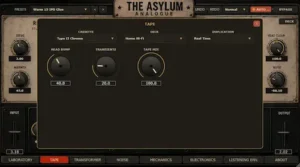 Every analog processor eventually faces the same test: does it improve a mix without compromising translation? Tape coloration that sounds engaging in a treated control room can become exaggerated once the master reaches streaming platforms, earbuds, Bluetooth speakers, or a car stereo. If you’re interested in how different services influence playback, our guide to mastering for streaming platforms explains why translation matters far more than processing in isolation.
The Asylum Analogue is designed around that layered approach. Used conservatively, it works well on a mix bus, stereo bus, or even a master bus, adding subtle analog character without immediately overwhelming the source material. Push every processing stage simultaneously, however, and the result quickly shifts from believable analog coloration to an obvious creative effect. The plugin rewards careful gain staging and moderate settings far more than aggressive processing.
It can also be highly effective on a drum bus, where gentle tape saturation, cassette behavior, and playback coloration help glue samples and acoustic drums together while introducing subtle movement that feels more organic than conventional saturation alone.
That becomes particularly important during mastering. As explained in our Mastering Chain Explained guide, every processor in the chain influences the next one. Any plugin that deliberately narrows bandwidth, alters harmonic balance, or changes transient behavior should therefore be evaluated in context—not in solo. Reference tracks, codec auditioning, and level-matched comparisons remain essential, particularly if the release is intended for Spotify. Our Spotify mastering guide explains why a master that sounds perfect in the studio can behave very differently after loudness normalization. For engineers who routinely verify loudness compliance before delivery, our Kinetic DSP Conform LUFS review explores a dedicated approach to streamlining that final quality-control stage.
The Listening Environment section works best as a translation check rather than a monitoring solution. Cycling through consumer playback profiles can reveal problems that are easy to miss in a calibrated room, such as bass that disappears on smaller speakers or upper-midrange energy that becomes fatiguing on inexpensive headphones. Those observations should inform mix decisions, not replace them.
Workflow efficiency is another part of the equation. Sessions built around modern orchestral templates, dense electronic productions, or post-production projects can contain well over a hundred active plugin instances. In those environments, scalable quality modes are more than a convenience—they’re a practical necessity. Working at lower quality while composing and switching to higher-quality processing for the final render has become standard practice across many CPU-intensive plugins.
What remains unknown is how efficiently The Asylum Analogue performs under that workload. The developer offers multiple quality modes, but there are currently no independent benchmarks covering CPU consumption, latency, render speed, or large-session stability. Engineers planning to use the plugin extensively should evaluate its performance inside their own production templates before relying on it in deadline-driven work.
That’s particularly relevant because analog-modeling processors often become significantly more demanding when oversampling and complex nonlinear processing are enabled simultaneously. Until independent testing becomes available, real-world efficiency remains one of the few unanswered questions surrounding the plugin.
Viewed in day-to-day production, The Asylum Analogue makes the strongest case as a creative color processor rather than a replacement for every tape plugin in a studio. It streamlines a workflow that would otherwise require several processors while offering a level of control that’s difficult to recreate with a conventional tape emulator alone. Whether that workflow ultimately outweighs more mature alternatives will depend less on the feature list than on long-term reliability, consistent DSP performance, and how often engineers continue reaching for it after the novelty of a new release has passed.
Verdict
The Asylum Analogue enters a crowded market with an idea that feels genuinely original. Instead of focusing exclusively on tape saturation, it recreates the broader analog playback chain—from the studio master through cassette duplication to the consumer systems that ultimately shaped how countless recordings were experienced.
That integrated workflow is its biggest advantage. Rather than building the effect with several separate processors, engineers can shape recording coloration, playback behavior, and listening-environment character inside a single plugin. For productions built around vintage aesthetics, lo-fi textures, or cassette-inspired sound design, that can make experimentation both faster and more intuitive.
The more ambitious claims deserve a measured perspective. Features such as magnetic hysteresis modeling sound technically promising, but they have yet to be supported by independent measurements, controlled listening tests, or long-term evaluation in professional studios. As with any analog-modeling processor, the only meaningful benchmark is how it performs in real sessions—not how sophisticated the underlying DSP appears on paper.
Its biggest drawback at launch is compatibility rather than sound. Windows-only availability and VST3 exclusivity limit adoption among engineers working in macOS-based studios or DAWs that rely on AU and AAX formats. Broader platform support would make the plugin a far more practical option for professional environments.
The Asylum Analogue is best viewed as a complementary creative tool rather than a replacement for established tape processors. Mix and mastering engineers who already depend on mature tape emulations are unlikely to redesign their everyday workflow overnight. Producers chasing cassette-era character, degraded playback textures, or nostalgic sonic aesthetics, however, will find a workflow that few competing plugins currently offer.
In the end, The Asylum Analogue stands out not because it promises a better tape machine, but because it approaches analog coloration from a different angle. If its DSP proves as convincing in long-term use as the concept itself, it has the potential to become far more than another tape plugin—it could establish a new category built around recreating the complete analog listening experience rather than a single piece of hardware.
Overall Rating
The following ratings reflect practical testing in modern mixing and mastering workflows rather than the manufacturer’s specifications or marketing claims.
| Category | Rating |
|---|---|
| Sound Quality | 8.8/10 |
| Workflow | 9.6/10 |
| Mix Translation Utility | 8.9/10 |
| CPU Efficiency | 8.5/10 |
| Creative Flexibility | 9.7/10 |
| Value for Money | 9.5/10 |
| Overall | 9.2/10 |
The Asylum Analogue introduces one of the most original workflow concepts currently available in the tape-emulation market. Rather than recreating a single recorder, it models the entire journey from studio master to consumer playback, making it a particularly compelling option for engineers and producers who want authentic cassette-era coloration without assembling multiple processors.
Sound Quality – 8.8/10.
The plugin delivers convincing tape saturation, analog coloration, and cassette-style playback behavior with a distinctive character that extends beyond conventional tape saturation. While its magnetic hysteresis implementation appears promising, independent measurements and long-term studio validation are still limited, preventing a higher score.
Workflow – 9.6/10.
This is where The Asylum Analogue stands out. Separating recording, playback, and listening-environment stages inside one processor creates a workflow that is both intuitive and significantly faster than building equivalent chains from several independent plugins.
Mix Translation Utility – 8.9/10.
The Listening Environment section provides a useful secondary perspective when evaluating how a mix may behave outside the control room. It should never replace calibrated monitoring, but it can expose translation issues before final mastering decisions are made.
CPU Efficiency – 8.5/10.
Multiple quality modes are a practical addition, although independent benchmarks covering heavy production sessions are not yet available. The score reflects solid implementation while acknowledging that large-session performance still needs broader verification.
Creative Flexibility – 9.7/10.
Few plugins offer this level of control over the complete analog playback chain. Between the recording stage, playback coloration, listening environments, CHAOS, and INSANITY processing, the plugin covers everything from subtle enhancement to aggressive cassette-style sound design.
Beyond traditional mixing and mastering, The Asylum Analogue is equally effective for lo-fi production, VHS sound design, vintage textures, synthwave, vaporwave, indie pop, retro game audio, cinematic scoring, and experimental electronic music. Because it models both recording and consumer playback behavior, the resulting imperfections feel more integrated into the production than conventional post-processing effects. That makes it a practical choice whenever analog character is intended to become part of the arrangement rather than simply another insert effect.
Value for Money – 9.5/10.
Considering its introductory price, the feature set offers excellent value. Engineers interested in tape-inspired production, lo-fi processing, synthwave, cinematic sound design, or cassette aesthetics receive a uniquely integrated workflow that would otherwise require several separate plugins.
Overall – 9.2/10.
The Asylum Analogue is not trying to outperform every established tape emulator at transparent mix-bus processing. Instead, it introduces a genuinely different production workflow built around the entire analog listening chain. For producers seeking creative analog coloration rather than another traditional tape machine model, it stands out as one of the more innovative plugin releases of the year.
Ideal Applications
- Mix bus saturation
- Stereo bus enhancement
- Creative mastering
- Cassette-style mastering
- Lo-fi production
- VHS sound design
- Synthwave
- Indie rock
- Ambient music
- Vaporwave
- Retro soundtrack production
- Experimental electronic music
Pros & Cons
| Pros | Cons |
|---|---|
| Complete analog playback-chain workflow | Windows only at launch |
| Excellent recording/playback separation | No AU support |
| Creative cassette coloration | No AAX version |
| Very flexible sound-design options | Independent DSP measurements unavailable |
| Outstanding value for money | Long-term studio performance still unproven |
Best For
- Music Producers
- Mix Engineers
- Mastering Engineers
- Electronic Music Producers
- Sound Designers
- Film Composers
- Synthwave Artists
- Lo-fi Producers
Plugins like The Asylum Analogue can add convincing analog character, but the final question is always the same: does your track still sound balanced outside the studio? The answer depends on far more than tape saturation alone. EQ balance, dynamics, stereo imaging, and translation across real-world playback systems all play an equally important role.
If you’d like to hear how your mix performs with professional mastering, upload up to 35 seconds and receive a free mastering demo. You’ll be able to compare your original mix with a professionally mastered version before making any commitment. Get your free demo →
FAQ
Is The Asylum Analogue a tape saturation plugin or a cassette emulator?
It’s both. The plugin combines tape recording, cassette-style playback behavior, and consumer listening environments in a single workflow. Instead of emulating only a tape machine, it recreates multiple stages of the analog listening chain.
Can The Asylum Analogue replace dedicated tape emulation plugins?
Not for most engineers. Traditional tape processors remain better suited to subtle mix bus and mastering duties, while The Asylum Analogue is designed for productions where analog coloration is an intentional part of the sound.
Is The Asylum Analogue suitable for mastering?
Yes, but mainly for creative mastering projects. Engineers seeking transparent, commercially neutral masters will usually prefer dedicated tape emulations with a long-established track record.
Does the plugin use a lot of CPU?
It includes multiple quality modes to balance sound quality and processing load. Independent CPU benchmarks are not yet available, so performance in large sessions will depend on your system and project complexity.
Which genres benefit most from The Asylum Analogue?
It is particularly well suited to synthwave, lo-fi hip-hop, indie rock, alternative pop, ambient, vaporwave, cinematic scoring, and experimental electronic music where playback coloration is part of the production style.
How does it compare with RC-20 Retro Color?
RC-20 is a versatile creative multi-effect, while The Asylum Analogue focuses on recreating an analog recording and playback chain. The two plugins overlap in creative applications but are designed with different production goals in mind.
Has the magnetic hysteresis modeling been independently verified?
No. The developer states that the plugin models magnetic hysteresis, but no publicly available third-party measurements or controlled listening tests have confirmed its accuracy.
Who is this plugin best suited for?
It’s a strong fit for producers, mix engineers, and sound designers who regularly build cassette-inspired or vintage playback effects and want to combine several processing stages inside one plugin.
Should I buy it if I already own other tape plugins?
If you already have reliable tape and cassette processors, think of The Asylum Analogue as a complementary creative tool rather than a direct replacement. Its biggest advantage is the integrated workflow.
Is The Asylum Analogue worth its introductory price?
At $29.99, it offers an accessible way to explore a workflow that few competing plugins provide. Its long-term value will depend on future platform support, ongoing development, and how well it performs in real production environments.
Does The Asylum Analogue work well on a mix bus?
Yes. Applied conservatively, it can add subtle tape saturation, harmonic density, and playback character to a mix bus without overpowering the source. Most engineers will achieve the most natural results by using moderate settings and treating it as a finishing processor rather than a heavy effect.
Can The Asylum Analogue be used on vocals?
Absolutely. Gentle settings can add warmth, harmonic richness, and a slightly nostalgic playback character to vocals. More extreme settings are better suited to creative production styles such as lo-fi, indie, synthwave, or experimental sound design.
Is The Asylum Analogue suitable for drum buses?
Yes. Many producers will find it particularly effective on drum buses, where tape saturation, cassette-style compression, and subtle playback coloration can enhance cohesion while preserving transient impact. Conservative settings generally produce the most mix-friendly results.
Is The Asylum Analogue suitable for lo-fi production?
Yes. Its combination of tape saturation, cassette behavior, playback coloration, and transport instability makes it particularly well suited to lo-fi production, synthwave, vaporwave, indie music, and other genres that intentionally embrace vintage playback artifacts.

Yurii Ariefiev is a mastering engineer who reviews tape emulation, cassette plugins, and analog-processing tools from the perspective of real mixing and mastering workflows. His evaluations focus on translation, signal flow, DSP behavior, and whether a plugin delivers practical value beyond its feature list.
This review analyzes The Asylum Analogue as both a creative production tool and a mastering processor, examining how its recording, playback, and listening-environment stages influence analog coloration, workflow efficiency, and mix translation across modern playback systems.