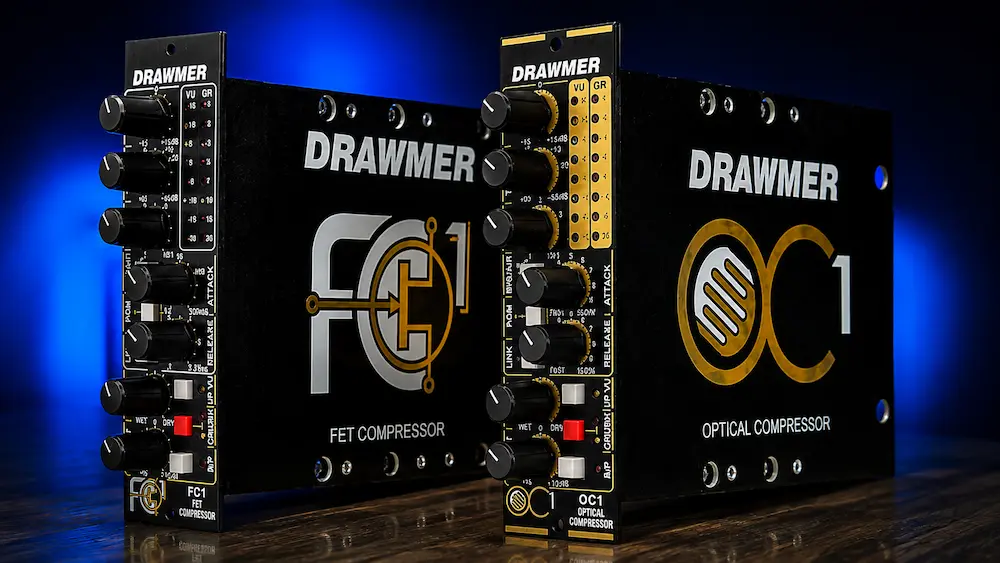
Releasing another analog compressor in 2026 is a tough sell. Engineers already have access to countless FET, optical and VCA designs, while modern plugins cover everything from transparent leveling to convincing analog emulation. New hardware has to deliver more than a different sonic flavor—it has to justify its place in a rack that’s already competing with instant DAW recall and increasingly capable digital workflows.
That’s where Drawmer takes a different approach with the OC1 and FC1. Instead of building another vintage clone, the company developed two original 500 Series compressors around a shared operating platform. The OC1 introduces Drawmer’s first optical compression design for smooth, program-dependent gain control, while the FC1 uses a FET architecture built around faster transient response and greater punch. Both modules share identical controls, stepped potentiometers, onboard parallel compression, stereo linking and several workflow-oriented processing options, allowing engineers to move between compression topologies without changing the way they work.
That design philosophy is arguably the most interesting aspect of the release. In a typical production, engineers rarely use a single compression style across an entire mix. Vocals, drums, stereo buses and acoustic instruments all demand different dynamic behavior, but constantly adapting to different hardware layouts slows decision-making. Drawmer’s goal is to remove that friction by keeping the workflow consistent while letting the compressor topology change to match the source.
This review focuses on what matters after the launch hype fades. We’ll examine how the OC1 and FC1 perform in real recording, mixing and mastering workflows, where their feature set offers measurable advantages, where they fall behind competing 500 Series compressors, and whether they’re worth adding to a modern hybrid studio built around both analog hardware and software processing.
Contents
Why the 500 Series Market Still Has Room for New Compressors
 Software compression has reached a point where outright sound quality is no longer the deciding factor for many engineers. Current plugin models reproduce the envelope behavior, harmonic structure and nonlinearities of classic optical, FET and VCA compressors well enough that blind comparisons rarely settle purchasing decisions. What plugins still struggle to replicate is the working experience of dedicated hardware—particularly during recording, fast-paced mix sessions and projects where tactile decision-making matters as much as sonic nuance.
That shift has changed the economics of analog gear. Engineers no longer buy hardware simply because it sounds “more analog.” They buy it because it solves problems that software does not. Faster tracking decisions, immediate parameter access, zero monitoring latency, reliable stereo operation and repeatable recall often have a greater impact on a commercial session than another variation of transformer saturation. The same design philosophy is reshaping other categories of outboard gear, as demonstrated in our review of the elysia Channex Studio, where workflow and recallability take priority over vintage nostalgia.
The popularity of the 500 Series ecosystem reflects exactly that change. Instead of committing to large-format outboard racks, engineers can assemble modular signal chains that evolve with their workflow. A tracking room may prioritize microphone preamps and FET compression, while a mastering studio can dedicate the same chassis to transparent dynamics and precision equalization. The format remains relevant because it scales without locking engineers into a single manufacturer’s ecosystem.
Drawmer has consistently approached that market differently from companies focused on recreating studio classics. Products like the 1960, 1968 and 1973 became established not because they replicated an 1176 or LA-2A, but because they offered dependable dynamics processing wrapped in practical engineering. Their reputation was built on usability as much as sonics.
The OC1 and FC1 continue that philosophy. Instead of releasing another vintage-inspired compressor, Drawmer developed two original compressor designs around the same operating platform. The compression topology changes—from optical to FET—but the workflow does not. That distinction may prove more valuable than introducing yet another interpretation of a familiar circuit.
In real-world production, engineers rarely rely on one compression style from start to finish. A single session might call for transparent vocal leveling, aggressive drum control, stereo bus glue and subtle mastering compression. Every time the workflow changes with the hardware, momentum slows. Different control layouts, metering philosophies and operating ranges all introduce unnecessary friction during a session.
By standardizing the control surface across both compressors, Drawmer removes much of that overhead. An engineer can move from an optical gain cell on a vocal chain to a FET unit on a drum bus without mentally resetting to a different operating logic. That consistency may sound like a small ergonomic detail, but over the course of long commercial sessions, fewer interruptions often translate into faster decisions and more consistent results.
Great Compression Doesn’t Guarantee a Great Master
Even the best analog compressor can’t compensate for issues elsewhere in the mastering chain. If you want to hear how much more depth, punch, balance and translation your mix can achieve, upload up to 35 seconds and receive a free professional mastering demo. Compare your original mix with a mastered version before deciding whether to move forward.
Request your free mastering demo →
A Smarter Approach to Analog Compression Than Simply Choosing Optical or FET
The most interesting part of the OC1 and FC1 isn’t that one uses an optical gain cell and the other a FET circuit. Engineers have had that choice for decades. What’s genuinely different is Drawmer’s decision to build both compressors around the same operating platform. Instead of forcing users to adapt to two completely different interfaces, the company keeps every primary control in exactly the same place while allowing the envelope tracking to change underneath.
Input Gain, Threshold, Ratio, Attack, Release, Mix, Stereo Link, Program Release, Big, Air and Crush all operate identically across both units. Once an engineer learns one module, moving between optical and FET compression becomes almost instinctive. The workflow stays constant; only the envelope characteristics change.
That may sound like an ergonomic detail, but it changes how hardware is selected during a session. Instead of reaching for the compressor with the most familiar layout, engineers can simply choose the topology that best suits the source.
The OC1 is designed for applications where smoother, more program-dependent gain control is preferable to aggressive transient shaping. On sustained material such as piano, vocals and orchestral sources, an optical compression architecture can provide a more gradual response to changing program levels. In practice, the usefulness of that behavior depends on the detector implementation and the amount of gain reduction applied.
The FC1 is designed for applications where faster transient control is more important than the smoother response associated with optical compression. Its FET architecture makes it a logical candidate for drums, percussion, bass and modern vocal production, where compression can play an active role in shaping the envelope. The resulting character will depend on attack, release, ratio and gain-reduction settings rather than on the FET topology alone.
On close-miked drums, faster detector timing generally allows the compressor to shape the attack envelope before the transient reaches full amplitude. Engineers often perceive this as greater punch, even when peak levels remain unchanged.
Neither topology is inherently superior. Most professional sessions benefit from both. It’s common to stabilize a vocal with optical compression while using a faster FET stage for parallel drums or bass. Drawmer simply removes the operational penalty of switching between those approaches.
The supporting features are equally production-focused.
The built-in Mix control eliminates one of the biggest inconveniences of hardware parallel compression. Instead of creating additional console routing or DAW return paths, engineers can blend compressed and uncompressed signals directly from the front panel. For tracking sessions, that means faster setup. During mixing, it simplifies recall and reduces unnecessary routing decisions.
Program Release solves another familiar engineering compromise. Extremely fast releases can exaggerate pumping, while slower settings often soften rhythmic impact. Adaptive release isn’t a new idea, but it’s still one of the most effective ways to make compression behave naturally across changing performances. When implemented properly, it reduces the amount of parameter chasing engineers typically do as arrangements become denser.
During stereo bus compression, adaptive release can also reduce image drift caused by sustained low-frequency energy keeping one channel in gain reduction longer than the other.
Program-dependent recovery also becomes valuable on material with rapidly changing density. A chorus containing stacked guitars and backing vocals typically requires different release behavior than a sparse verse, and adaptive timing can reduce the need for manual adjustment between sections.
Big and Air are more difficult to judge without extended listening tests because they shape the compressor’s sidechain response rather than functioning as conventional EQ controls. Big reduces the detector’s sensitivity to low-frequency energy, while Air helps preserve high-frequency detail as compression is applied. These controls can therefore influence how the compressor reacts to the source rather than simply adding or removing tonal content. Their practical value will depend on how effectively they prevent low-frequency energy or high-frequency detail from causing unwanted changes in gain reduction.
The most underrated feature may be the one least likely to appear in marketing headlines: 21-position stepped controls. Precise recall remains one of analog hardware’s biggest disadvantages compared to software. Repeatable settings dramatically reduce that problem, particularly on stereo buses and mastering projects where revisions are routine. Combined with stereo linking, the stepped controls make the OC1 and FC1 considerably more practical than many competing 500 Series compressors that still rely on continuously variable pots.
For mastering work, stepped controls also reduce left/right tracking errors when recalling stereo settings. Even small mismatches between channels can alter image stability once compression exceeds a few decibels of gain reduction.
The result is not presented as a revolutionary compressor. Its more interesting proposition is a thoughtfully engineered workflow built around established compression topologies. Drawmer hasn’t tried to reinvent analog dynamics processing—it has focused on making established compression topologies easier to integrate into modern hybrid workflows where consistency, recall and speed often matter just as much as sonic character.
What’s Actually New—and What’s Mostly Smart Product Design
Drawmer isn’t claiming to reinvent compression, and that’s one of the stronger aspects of this release. The OC1 and FC1 don’t introduce a new gain-reduction topology or promise a dramatic leap in analog processing. Optical and FET compressors have defined studio dynamics control for decades. The real question is whether Drawmer has made those familiar architectures easier to use in a modern production environment.
For the most part, the answer is yes.
Instead of loading the front panel with increasingly complex sidechain options, digital integration or software-assisted control, Drawmer focused on features that solve everyday engineering problems. The result isn’t a longer specification sheet—it’s a compressor that’s quicker to set up, easier to recall and less disruptive inside a hybrid workflow.
The integrated Mix control is a good example. Parallel compression is standard practice in modern mixing, yet hardware implementations still tend to involve additional routing, gain matching and documentation for future recall. By placing wet/dry blending directly on the module, Drawmer removes several unnecessary steps without changing how engineers already work.
Program Release follows the same philosophy. Adaptive release curves are hardly a new invention, but they remain one of the most effective ways to keep compression sounding natural across changing arrangements. Instead of constantly adjusting release times between verses, choruses and breakdowns, engineers can let the detector adapt to the incoming material. That’s a practical workflow improvement, not a marketing feature.
The Big and Air controls deserve a more cautious assessment. They are not conventional tone controls; instead, they modify how the compressor’s sidechain responds to low- and high-frequency content. Big reduces low-frequency influence on gain detection, while Air is intended to preserve high-frequency detail during compression. That makes them potentially useful for controlling unwanted pumping or excessive high-frequency gain reduction without relying on separate EQ stages. Until independent listening tests become available, however, they should be viewed as useful workflow refinements rather than defining reasons to buy the hardware.
The same applies to Crush. Unlike the harmonic coloration naturally introduced by transformers or tube gain stages, Crush deliberately increases harmonic content as input level rises. That makes it more of a creative saturation tool than a fundamental compression feature. It could prove valuable on drums, bass or modern pop vocals, while engineers pursuing transparent bus or mastering compression will probably leave it disengaged most of the time.
If there’s one feature likely to deliver long-term value, it’s also the least glamorous: stepped controls. Analog recall remains one of the biggest compromises of outboard processing, especially in commercial studios where revisions are routine. Twenty-one-position detented controls won’t eliminate recall notes, but they make stereo matching faster, project revisions more reliable and mastering workflows considerably more practical.
Taken as a whole, the OC1 and FC1 aren’t built around breakthrough technology. They’re built around removing friction. That’s a far more convincing design philosophy than adding features simply because competing products have them. In daily production work, fewer decisions and faster recall often deliver greater value than another variation on classic analog circuitry.
How the Drawmer OC1 and FC1 Compare to Established 500 Series Compressors
 The biggest challenge facing the OC1 and FC1 isn’t performance—it’s differentiation. The 500 Series market is already crowded with compressors inspired by classic studio hardware, precision mastering designs and modern hybrid processors. Simply offering another optical or FET circuit is no longer enough to justify rack space.
Drawmer approaches the category from a different angle. Rather than recreating an established classic, both modules prioritize consistency of operation. The compressor topology changes, but the user experience remains identical. That’s an uncommon design philosophy in a market where switching from one compressor to another often means relearning attack characteristics, metering behavior and control layouts.
The FC1 competes most directly with compressors like the API 527, Lindell 7X-500 and WesAudio Mimas. All target engineers looking for fast transient control on drums, bass, guitars and modern vocals. The difference is that Drawmer places greater emphasis on workflow. Built-in parallel compression, stepped controls and identical ergonomics make the FC1 easier to integrate into hybrid production environments where recall speed matters almost as much as sonic character.
The OC1 occupies a different niche. Engineers considering optical compression often compare products based on smoothness rather than aggression. Boutique options such as the IGS One LA 500 focus on classic opto behavior, while mastering-oriented processors like the Elysia xpressor prioritize precision and flexibility. The OC1 sits between those approaches, combining transparent gain reduction with recall-friendly controls and production-oriented features that make it equally comfortable during tracking, mixing and stereo bus duties.
Neither module is designed to replace every compressor in a professional rack. Engineers already relying on vintage-inspired hardware for a specific sonic signature are unlikely to abandon those tools. Instead, the OC1 and FC1 work best as modern utility compressors—hardware that’s fast to operate, easy to recall and flexible enough to move between different production stages without slowing the session.
That positioning also explains why Drawmer avoided building another 1176 or LA-2A interpretation. Those markets are already saturated. By focusing on workflow instead of nostalgia, the company gives engineers a practical reason to choose these modules beyond simply adding another analog flavor to an existing collection. It’s an approach that contrasts with products built around modern interpretations of classic circuits, such as the Electro-Harmonix Deluxe Big Muff Pi 2, where the primary appeal is evolving an established sound rather than redefining studio workflow.
| Model | Compression Style | Best Use Cases | Strengths | Trade-Offs |
|---|---|---|---|---|
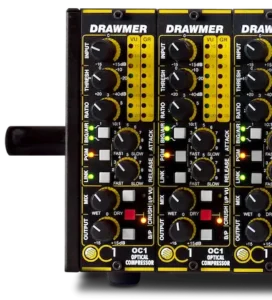
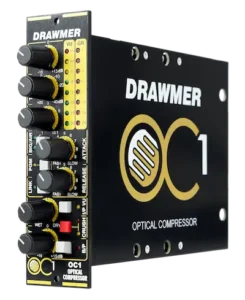
| Drawmer OC1 | Optical | Vocals, acoustic instruments, stereo bus, mastering | Stepped controls, parallel blend, Program Release, consistent workflow | Stereo requires two modules |
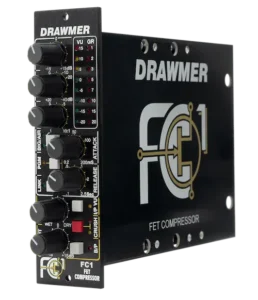
| Drawmer FC1 | FET | Drums, bass, guitars, rock and pop vocals | Fast transient control, onboard parallel compression, identical interface | Not intended as a vintage 1176 recreation |
| API 527 | Feed-Forward | Tracking and drum processing | Classic API punch | Fewer workflow-oriented features |
| WesAudio Mimas | VCA | Mix bus, hybrid production | Digital recall, plugin control | Higher price and greater complexity |
| Elysia xpressor 500 | VCA | Mix bus and mastering | Extensive dynamics control | Steeper learning curve |
The strongest argument for the OC1 and FC1 isn’t that they outperform every competing compressor. It’s that they reduce operational friction. Engineers who spend long days moving between tracking, mixing and mastering sessions will likely appreciate the shared workflow more than another attempt to recreate a compressor they’ve already owned in one form or another.
What We’d Evaluate Before Choosing the OC1 or FC1
Specifications rarely reveal how a compressor behaves once it becomes part of a daily production workflow. Before recommending either module for commercial work, we’d want to evaluate several engineering characteristics that influence long-term usability far more than marketing specifications.
- Detector behavior: Does the optical detector recover smoothly during sustained piano, strings and vocal phrases, or does gain reduction become audible as program material changes?
- Transient consistency: Can the FC1 control aggressive drum transients without collapsing room ambience or reducing perceived depth?
- Stereo image stability: Does stereo linking maintain a stable phantom center during heavy bus compression?
- Low-frequency tracking: How does the detector respond to sustained kick drum and bass energy, and does it introduce audible low-end pumping?
- Gain matching: Are adjacent modules accurately matched for stereo operation across different threshold settings?
- Crush implementation: Does harmonic enhancement remain progressive, or does saturation become abrupt at higher input levels?
- Recall precision: Are the stepped controls repeatable enough for mastering revisions weeks after the original session?
These questions ultimately determine whether a compressor becomes trusted studio hardware or simply another interesting piece of analog gear.
Where the OC1 and FC1 Add Value in Real Studio Sessions
 Specs rarely determine whether a compressor stays in regular use. Workflow does. Hardware earns permanent rack space by helping engineers make decisions faster, capture better performances or solve problems that software handles less elegantly. That’s where the OC1 and FC1 make their strongest argument.
During tracking, both compressors offer something plugins still can’t fully replicate: true zero-latency dynamics control. Singers, drummers and bass players often respond differently when compression is shaping their performance in real time rather than after the recording is complete. Even with modern low-latency monitoring, analog dynamics remain the more predictable solution for sessions where performer confidence matters as much as technical accuracy.
The two compressors naturally divide studio responsibilities. The FC1 belongs on sources where transient control defines the sound—drums, percussion, bass guitar and energetic vocals. Fast FET compression can increase density and impact without relying on excessive peak limiting, making it particularly effective for modern rock, pop and heavier productions.
The OC1 is better suited to material that benefits from controlled dynamics without drawing attention to the processing itself. That approach also aligns with preparing a mix for mastering, where preserving transient detail and avoiding unnecessary bus processing often leads to more predictable mastering results. We cover this in more detail in our guide on how to prepare a mix for mastering.
Neither unit is designed as a loudness processor, nor should it be. Engineers expecting dramatic LUFS gains will still need dedicated limiting later in the chain. In a professional mastering workflow, compression is only one stage of a larger signal path, and understanding where it belongs is often more important than choosing a specific compressor. See our guide to how a real mastering chain is structured for a detailed breakdown. The OC1 is more likely to find a home on stereo buses or mastering inserts, where compression serves to improve cohesion rather than level.
From a mastering perspective, recall is arguably more important than coloration. Commercial mastering often involves client revisions, alternate deliverables and multiple quality-control passes rather than a single processing session. If you’re curious how that process unfolds from start to finish, our article on how professional mastering actually works explains the workflow in greater detail.
Detector circuit also becomes more valuable in longer sessions than it first appears on a specification sheet. Static release settings rarely remain optimal throughout an entire mix. As arrangements become denser, adaptive recovery can keep compression sounding more consistent without constant manual adjustment. That’s a practical engineering benefit rather than a headline feature.
Because both units are entirely analog, software performance metrics such as CPU load, memory usage and rendering speed simply don’t apply. Their efficiency comes from reducing operational overhead instead of computational overhead. Fewer routing decisions, quicker recall and a consistent interface across two compression topologies can save meaningful time over the course of commercial sessions, even if those savings are difficult to quantify.
The primary compromise is inherent to the 500 Series format itself. Stereo processing requires purchasing and calibrating two modules, increasing both cost and rack space requirements. Engineers already committed to analog bus processing will consider that standard practice, but smaller hybrid studios may find high-end plugin chains a more economical alternative.
What Drawmer Deliberately Leaves Out
The OC1 and FC1 intentionally avoid many features that have become common in modern hybrid hardware. There is no plugin-based recall, USB connectivity, digital parameter control, sidechain high-pass filter, mid/side processing or software editor. Rather than competing through feature count, Drawmer has concentrated on fast analog operation, repeatable settings and straightforward signal flow. For engineers who value simplicity over deep configuration, that restraint may be one of the strongest aspects of the design.
Verdict: Built for Working Engineers, Not Vintage Collectors
The OC1 and FC1 don’t attempt to redefine analog compression, and that’s precisely why they deserve attention. Drawmer isn’t competing with another 1176 clone or chasing nostalgia. Instead, the company has focused on something many hardware releases overlook: making established compression techniques faster and easier to use in modern production environments.
Both modules succeed because they solve practical problems instead of inventing new ones. A shared control layout, stepped controls, onboard parallel compression and program-dependent release all contribute to faster setup, more reliable recall and fewer interruptions during long sessions. Those improvements won’t change the sound of every mix, but they can change how efficiently engineers work.
The two compressors also complement each other without competing for the same role. The OC1 appears better positioned for applications where smoother gain control, recall and consistency are priorities, including stereo bus and mastering-oriented workflows. The FC1 is aimed more directly at sources that benefit from faster transient control, making it a logical fit for drums, bass and modern vocal production.
Not every feature deserves equal weight. Big, Air and Crush expand the creative palette, but they aren’t the defining reason to consider either module. The core value lies in the compression itself and in the workflow surrounding it. That’s where Drawmer has invested most of its engineering effort, and it’s where the design feels most convincing.
There are still unanswered questions. Independent measurements, long-term reliability reports and broader user feedback will ultimately determine how these compressors compare with established favorites in demanding commercial environments. Those data points simply aren’t available yet.
For engineers already working within the 500 Series ecosystem, however, the OC1 and FC1 represent one of the more thoughtful analog releases in recent years. They don’t replace classic compressors, nor do they need to. Instead, they offer something increasingly valuable in professional audio: hardware designed around the realities of contemporary studio workflow rather than the mythology of vintage gear.
Overall Rating
| Category | Rating |
|---|---|
| Sound Quality | 8.8/10 |
| Workflow | 9.8/10 |
| Recall & Hybrid Integration | 9.8/10 |
| Versatility | 9.3/10 |
| Innovation | 8.4/10 |
| Value for Money | 9.1/10 |
| Overall | 9.3/10 |
Sound Quality — 8.8/10
Both compressors are designed around established optical and FET compression architectures, with the OC1 targeting smoother program-dependent gain control and the FC1 targeting faster transient shaping. However, comprehensive independent measurements and extended listening tests are not yet available, so this score should be treated as a provisional assessment rather than a laboratory-verified sonic rating.
Workflow — 9.8/10
This is where the OC1 and FC1 distinguish themselves. A shared control layout, onboard parallel compression, Program Release and intuitive operation significantly reduce the time spent adapting between different compression styles. Few 500 Series compressors place this much emphasis on day-to-day usability.
Recall & Hybrid Integration — 9.8/10
Stepped controls, stereo linking and consistent ergonomics make these modules unusually practical in modern hybrid studios. Engineers working with DAW recall, client revisions and analog inserts will appreciate the operational advantages long before they notice subtle sonic differences.
Versatility — 9.3/10
Together, the OC1 and FC1 cover a broad range of studio applications, from transparent vocal leveling and stereo bus compression to aggressive drum processing and parallel compression. While neither is intended as a universal “one-compressor solution,” they complement each other exceptionally well.
Innovation — 8.4/10
Drawmer isn’t introducing a new compression technology. Optical and FET architectures are well established, and features such as adaptive release have existed for years. The innovation lies in refining the user experience rather than reinventing analog dynamics processing, which is a practical improvement rather than a technological breakthrough.
Value for Money — 9.1/10
Considering the feature set, build quality and workflow enhancements, both modules are competitively positioned within the professional 500 Series market. Engineers already invested in the format are likely to see stronger long-term value than users purchasing an entire chassis specifically for these compressors.
Overall — 9.3/10
The Drawmer OC1 and FC1 succeed by solving practical engineering problems instead of relying on nostalgia or marketing claims. They won’t replace iconic compressors, but they make analog compression easier to integrate into contemporary hybrid workflows. For engineers who value recall, consistency and efficient session management as much as sonic character, they represent one of the most thoughtfully designed 500 Series releases in recent years.
Independent Bench Test Status
At the time of writing, the Drawmer OC1 and FC1 have not yet been subjected to comprehensive independent laboratory testing.
- No published THD+N measurements.
- No independent IMD analysis.
- No published frequency response sweeps.
- No third-party channel-matching measurements.
- No published gain-reduction accuracy tests.
- No long-term reliability reports from commercial studios.
That doesn’t indicate poor performance—it simply reflects the fact that the units are still new to the market. Our evaluation therefore focuses on circuit design, workflow, feature implementation and expected behavior based on established optical and FET compression principles rather than laboratory measurements that are not yet publicly available.
The Biggest Upgrade Isn’t Always New Hardware
High-end compressors, EQs and analog processors can shape a mix, but they can’t replace experienced mastering decisions. The final few percent—translation, tonal balance, punch, depth and consistency across real-world playback systems—often determine whether a track sounds professional or simply well produced.
Don’t judge your mix by plugins or hardware alone. Upload up to 35 seconds and receive a free mastering demo created by a professional mastering engineer. Compare your original mix with the mastered version and hear the difference before committing to a full project.
Claim your free mastering demo →
FAQ
Which Drawmer compressor is better for a stereo mix bus: the OC1 or the FC1?
For many mix bus applications, the OC1 appears to be the more natural choice. Its optical architecture is intended to provide smoother, more program-dependent gain control, which makes it a logical candidate for subtle bus compression where preserving depth and stereo stability is more important than aggressive transient control.
Can the FC1 be used for vocal compression?
Yes. The FC1 is particularly effective on modern rock, pop and hip-hop vocals that need fast transient control and increased density. Engineers looking for transparent vocal leveling will generally prefer the OC1 instead.
Is the OC1 suitable for mastering?
Potentially, yes. Its stepped controls, stereo linking and optical compression make it a logical candidate for mastering inserts, although dedicated mastering compressors still offer greater precision and calibration options.
How does the Drawmer FC1 compare with the API 527?
Both target fast transient control, but they approach workflow differently. The API 527 emphasizes its classic sonic character, while the FC1 focuses on modern usability through stepped controls, onboard parallel compression and a consistent interface shared with the OC1.
Do the Big and Air controls replace EQ processing?
No. Big and Air modify the compressor’s sidechain response rather than functioning as conventional EQ controls. Big reduces low-frequency influence on gain detection, while Air is intended to preserve high-frequency detail during compression. Dedicated EQ remains the better choice for precise tonal correction.
Is the Crush circuit designed for mastering?
Not primarily. Crush introduces additional harmonic content as input level increases, making it more useful for drums, bass and creative mix processing than transparent stereo bus or mastering compression.
Will these compressors improve hybrid analog workflows?
That’s arguably their biggest strength. Features such as stepped controls, integrated parallel blending and identical layouts reduce setup time and simplify recall when combining analog hardware with DAW-based production.
Do you need a pair of modules for stereo operation?
Yes. Each unit processes one channel, so stereo mix bus or mastering applications require two matched modules linked together.
Who should consider the Drawmer OC1 and FC1 over vintage-style recreations?
Engineers who prioritize workflow, repeatability and fast session turnaround are likely to benefit the most. Those specifically searching for the sound of an 1176, LA-2A or SSL Bus Compressor may still prefer dedicated recreations of those classic designs.
Should mastering engineers choose the OC1 over the FC1?
In most mastering applications, yes. The smoother optical envelope, stepped controls and more restrained gain reduction make the OC1 the safer choice for stereo bus work, while the FC1 is generally better suited to tracking and mix-stage transient control.

Yurii Ariefiev is a mastering engineer who evaluates analog hardware through real production and mastering workflows rather than manufacturer specifications. His reviews focus on compression behavior, recall, stereo bus performance, translation and the practical role hardware plays inside modern hybrid studios.
This editorial examines the Drawmer OC1 and FC1 from the perspective of daily studio use, comparing their compression behavior, workflow design and practical studio applications with established 500 Series processors while assessing where each unit delivers measurable value in professional recording, mixing and mastering.