How Loud Should a Track Be for Spotify and Other Streaming Platforms?
One of the most common questions in modern mastering is: What LUFS level should my track have? To answer this properly, it’s essential to understand what LUFS is and how different streaming services handle loudness normalization.
LUFS (Loudness Units relative to Full Scale) is a measurement of perceived loudness over time. Unlike peak levels, LUFS reflects how loud a track actually feels to the listener. Today, nearly all major streaming platforms in the United States use loudness normalization based on LUFS to ensure consistent playback volume across playlists and albums.
Most streaming services normalize audio between -13 and -16 LUFS integrated. If your master exceeds that range, the platform will automatically turn it down. This means that excessive loudness no longer provides an advantage—and can actually reduce clarity, punch, and depth.
The real goal of mastering is not simply volume. It is sonic quality, clarity, and translation across devices. A great master balances loudness with dynamics, impact, and musicality.
Professional Mixing & Mastering That Translates Everywhere
Before releasing your music on Spotify, Apple Music, or YouTube, make sure it sounds powerful, balanced, and competitive. At AREFYEV Studio, we provide professional mixing and mastering services tailored for modern streaming platforms and the US music market. Order a custom master that preserves dynamics, translates across platforms, and stands up next to commercial releases.
Ideal LUFS Targets by Genre
For modern electronic and urban genres popular in the US market, such as techno, house, EDM, and hip-hop, we often master tracks between -7 and -10 LUFS integrated. Short-term LUFS typically falls between -6 and -9 LUFS, allowing the track to feel energetic and competitive without excessive distortion.
For more dynamic genres like ambient, cinematic music, acoustic productions, or experimental soundscapes, integrated values between -10 and -14 LUFS are not only acceptable but often preferable. In these styles, emotional movement and dynamic contrast are far more important than raw loudness.
There is no single “perfect” LUFS number. The correct target always depends on genre, arrangement, and artistic intent.
Вы часто можете читать, что -14LUFS должен быть целью качественного мастеринга. Вы должны стремиться звучать примерно так же громко, как другие популярные исполнители, не смотря на значение LUFS. Этот подход в настоящее время является лучшим, пока нормализация громкости не будет улучшена и полностью стандартизирована. Оставьте нормализацию громкости различным поставщикам потоковой передачи, потому что автоматическая нормализация ваших песен не портит звук. Если ваш трек после мастеринга звучит хорошо, он также будет хорошо звучать и на стриминговых платформах.
— See also: Black Rooster Audio – Ro-Gold (free EMT 140 style reverb) —
Should You Always Master to -14 LUFS?
The idea that -14 LUFS is the universal mastering standard is widespread—but often misunderstood. While many platforms normalize to this level, mastering exclusively to -14 LUFS can introduce real-world problems.
When you order mixing and mastering from AREFYEV Studio, you can request multiple master versions optimized for different use cases. Yes, we provide a -14 LUFS streaming master when appropriate, but we also analyze reference tracks within your genre and adjust loudness accordingly.
In many cases, a louder master will still sound better after normalization than a quieter one.
Important Considerations When Mastering Only to -14 LUFS
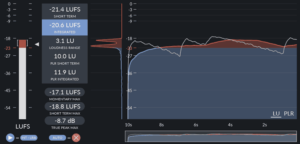
Not all listeners experience loudness normalization in the same way. In the US market especially, playback environments vary widely.
Many users listen through Spotify Web Player, smart TVs, car systems, or third-party devices where loudness normalization may be disabled or unavailable. In these situations, a track mastered to -14 LUFS will sound noticeably quieter than most commercial releases.
Even with normalization enabled, many producers report that -14 LUFS masters feel weaker in playlists compared to professionally mastered tracks with higher integrated loudness.
Streaming platforms also change their standards over time. Spotify reduced its playback target by 3 dB in 2017 and transitioned fully from ReplayGain to LUFS measurement in 2021. Spotify Premium currently offers multiple loudness settings—low, normal, and loud—each affecting playback differently. The Audio Engineering Society (AES) now recommends a -16 LUFS reference for streaming, but adoption is inconsistent.
Some studios, including AREFYEV Studio, offer multiple masters: one optimized for streaming and others for digital stores or promotional use. However, most US digital distributors such as DistroKid and TuneCore only allow one master per release, making strategic loudness decisions even more critical.
The most reliable approach today is simple: aim to sound as loud and impactful as competitive commercial releases in your genre, regardless of the exact LUFS number.
— See also: RØDE Unveil RØDECaster Pro II Podcasting Console —
What Is LUFS and Why Does It Matter?
LUFS measures average perceived loudness over time rather than momentary peaks. During the height of the loudness war, tracks were pushed aggressively through compression and limiting, sacrificing dynamics for volume.
Modern loudness normalization has changed that landscape. Platforms like YouTube, Spotify, and Apple Music now reduce overly loud tracks automatically. As a result, excessive limiting above 3 dB of true peak reduction often causes more harm than benefit.
Today’s professional mastering philosophy—especially in the US—focuses on transparency, depth, and dynamic integrity, similar to the principles long used in vinyl mastering.
If a track sounds great before normalization, it will still sound great after normalization.
Streaming Platform Loudness Standards (US Market)
Below is a practical overview of loudness targets used by major digital platforms:
- YouTube: approximately -13 LUFS
- YouTube Music: approximately -14 LUFS
- Spotify: approximately -14 LUFS
- Apple Music / iTunes Radio: approximately -16 LUFS
- TIDAL: approximately -14 LUFS
- Amazon Music: approximately -14 LUFS
- Beatport: approximately -10 LUFS
- Bandcamp: no loudness normalization target
These values are guidelines—not strict rules—and real-world playback varies significantly.
Free LUFS Metering Plugins
To accurately measure loudness during mixing and mastering, the following free VST plugins are widely used by professionals in the US:
- DP Meter 3 provides detailed loudness, RMS, and peak analysis suitable for mastering workflows.
- Youlean Loudness Meter 2 (Free Version) offers precise LUFS, short-term, and integrated measurements with a clean interface and streaming presets.
- Loudness Penalty Analyzer helps estimate how much a platform will reduce your track’s volume, allowing smarter loudness decisions before release.