
For many artists in San Antonio, one of the most confusing moments comes right before release. The track feels almost finished, but a key question remains unanswered: should you pay for mixing, mastering, or both? This uncertainty is especially common among independent artists who record at home, work with leased beats, and handle most of the production process on their own.
San Antonio has a large DIY music community where vocals are often recorded in bedrooms and small project rooms, then placed over two-track beats or stemmed instrumentals. Because of this workflow, many local artists struggle to understand which stage will actually improve their track and which one might simply waste budget. By the end of this guide, you’ll know what your San Antonio track needs right now, how to identify that based on the symptoms you hear, and how to prepare your material properly before spending money.
If you’re unsure what your San Antonio track needs, this guide will help you decide before you spend money.
Why San Antonio Artists Confuse Mixing and Mastering
Mixing and mastering are often confused because of how these terms are used online. On YouTube, social media, and forums, “mastering” is frequently described as the step that makes a track louder or more professional. This oversimplification leads many San Antonio artists to believe mastering is a shortcut that can fix deeper problems.
The confusion becomes even stronger in the most common local scenario: vocals recorded over a two-track beat. When an artist only has a stereo instrumental and a vocal track, it feels logical to skip mixing and jump straight to mastering. Unfortunately, this often results in spending money without achieving the desired improvement, because mastering cannot rebalance vocals, fix masking issues, or reshape the relationship between elements that were never mixed properly in the first place.
What Mixing Actually Does and What Problems It Solves
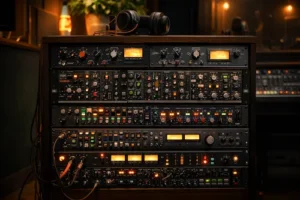 Mixing is the process of working with multiple audio elements and shaping how they interact with each other. This includes vocal levels, tone, dynamics, space, and how instruments occupy the frequency spectrum. In San Antonio genres like hip-hop and trap, mixing controls how vocals sit over 808s and bass-heavy beats. In Latin and pop-influenced tracks, it manages rhythm, clarity, and stereo width. In R&B, mixing focuses on smooth dynamics and emotional presence.
Common problems solved during mixing include vocals that feel disconnected from the beat, low end that overwhelms small speakers, harshness or muddiness that causes listening fatigue, and effects that feel uncontrolled or inconsistent. Mixing is where the track becomes a cohesive piece rather than a collection of sounds.
What Mastering Actually Does and What It Can’t Fix
Mastering works on a finished stereo mix, not on individual elements. Its purpose is to prepare the track for the outside world by improving translation across systems, refining tonal balance, and setting loudness for release platforms. Mastering also ensures consistency when multiple tracks are released together, such as on an EP or album.
What mastering cannot do is fix balance issues inside the mix. It cannot move vocals forward if they are buried, remove conflicts between bass and kick, or undo heavy processing decisions made earlier. This is why engineers consistently say that mastering does not save a bad mix. For San Antonio artists, understanding this limitation is crucial to avoiding unnecessary expenses.
— See also: How Much Does Online Mixing & Mastering Cost for San Antonio Musicians? —
Mixing vs Mastering: The Practical Differences for a San Antonio Release
The practical difference between mixing and mastering starts with what you send to the engineer. Mixing requires stems or multitracks so relationships between elements can be shaped. Mastering requires a single stereo file that already represents the final creative balance.
The results are also different. Mixing determines how the track sounds internally, how vocals and instruments interact, and whether the song feels controlled or chaotic. Mastering determines how that finished mix sounds in the real world, on streaming platforms, in cars, and on consumer speakers. Fixing problems earlier in the process is almost always cheaper and more effective than trying to correct them later.
Do You Need Mixing or Mastering? A Practical Way to Decide
 If your vocals feel unstable, the bass changes from note to note, instruments fight for space, or effects feel either overwhelming or absent, you likely need mixing. These issues point to relationships between elements rather than overall polish.
If your track already feels balanced, translates well across systems, and only needs final loudness and consistency for release, mastering may be enough. This is often the case when a mix already sounds competitive but lacks final refinement for streaming platforms.
If your track was recorded at home with multiple layers, or if you are planning to release several songs together, you usually need both. Mixing establishes a solid foundation, and mastering ensures the final presentation works as a complete release.
Real-World San Antonio Scenarios
One of the most common cases in San Antonio is a vocal recorded over a stereo beat. In this situation, mixing options are limited because the instrumental cannot be rebalanced internally. However, a skilled mixing approach can still improve vocal placement, tone, and overall cohesion before mastering is applied.
Another frequent scenario involves full sessions with beat stems, lead vocals, harmonies, and ad-libs. Here, mixing delivers the biggest improvement because it allows detailed control over every element. For EPs or mixtapes, mastering becomes essential to ensure songs sound consistent next to each other, even if they were recorded at different times or in different spaces.
— See also: Online vs Local Studios: Why San Antonio Artists Choose Remote Mixing & Mastering —
Common Mistakes San Antonio Artists Make That Waste Money
The most frequent mistake is ordering mastering when the track clearly needs mixing. Another is asking for loudness without defining the release goal, such as streaming versus performance playback. Many artists also skip reference tracks, leaving the engineer to guess the intended sound.
Poorly prepared stems are another issue. Clipped vocals, unorganized files, and unbalanced levels slow down the process and limit results. These problems are well documented across engineering communities, and most professionals agree that strong mixing matters far more than aggressive mastering.
How to Prepare Your Track Based on What You Need
When mixing is needed, preparing clean, consolidated stems with proper headroom is essential. This allows the engineer to focus on creative decisions instead of technical repairs. When mastering is needed, exporting a clean stereo mix without heavy limiting preserves dynamic range and gives the mastering process room to work.
Understanding this difference in preparation saves time and prevents revision cycles that frustrate both artist and engineer. It also connects directly to proper stem preparation for San Antonio releases and the overall online mixing and mastering workflow.
What to Expect From Online Mixing vs Online Mastering
Online mixing usually involves an initial mix, structured feedback, and a small number of focused revisions. Communication is asynchronous, allowing artists to listen carefully and respond thoughtfully. Online mastering follows a more linear process, where the focus is on final adjustments, delivery formats, and platform readiness.
Knowing how each process works reduces anxiety before purchase and helps San Antonio artists set realistic expectations for timelines and results.
Conclusion: What San Antonio Artists Really Need Before Release
 Before paying for any service, the most important step is identifying whether your track needs mixing, mastering, or both. For San Antonio artists and musicians working independently, this clarity often saves more money than searching for the cheapest option.
Once you understand what stage your music is in, the path forward becomes much simpler. If you’re unsure, start with a quick track review to determine whether mixing, mastering, or both will give the biggest improvement.
If you’re preparing a release and want professional results without guesswork, you’re welcome to order online mixing and mastering at AREFYEV Studio. We work remotely with San Antonio artists and help turn home-recorded tracks into confident, release-ready music.