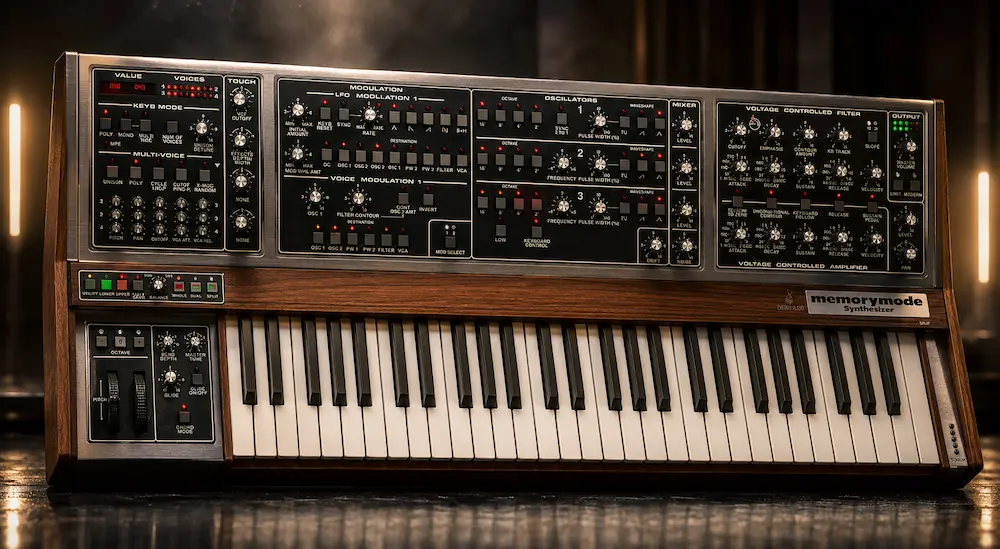
Cherry Audio Memorymode 2 is a substantial rebuild of the original Memorymode, with the biggest changes happening in the synthesis engine rather than the interface. Cherry Audio has revised the oscillator, filter, and envelope modeling, then built a second 16-voice layer around it with polyphonic sequencing, MPE, polyphonic aftertouch, expanded voice variation, and a larger effects section. For producers looking for a Memorymoog plugin, the result is a substantially more flexible production instrument than the 2021 version—but the real test is whether the revised analog modeling translates into a meaningful sonic improvement in a mix.
The dual-layer architecture and new performance features are easy to verify. The harder question is the claimed improvement in analog accuracy, because that requires controlled comparison with hardware or with the previous version. Early third-party reviews are positive about the sound and the revised synthesis behavior, but there is not yet enough published testing to treat Cherry Audio’s accuracy claims as a laboratory-proven result. The stronger case for Memorymode 2 is therefore the combination of better modeled behavior and a significantly more useful production workflow, rather than the marketing claim of a new benchmark in analog emulation.
In This Review
How I Tested Memorymode 2
This review evaluates Memorymode 2 as a production instrument rather than as a feature list. The assessment focuses on four practical questions: how much the revised synthesis engine changes the sound, whether the new dual-layer architecture improves real production workflow, how dense patches behave once they enter a full arrangement, and whether the upgrade provides enough practical value over Memorymode 1 and competing Memorymoog emulations.
I evaluated Memorymode 2 with level-matched comparisons between initialized patches, factory presets, layered sounds, and patches built from scratch. The differences became most obvious with the filter pushed into resonance and several sustained voices held together. In those patches, Memorymode 2 retained more low-frequency weight than I expected, while the added voice variation kept sustained chords from collapsing into a static block. The effect was much less obvious on a basic initialized patch. I also tested the two layers as separate bass/pad and split-keyboard setups, because that is where the new architecture stops being a specification and starts saving actual session work.
CPU behavior was checked separately with increasing voice counts, unison, layered patches, modulation, and effects. I would not treat those observations as a universal benchmark, because the result depends heavily on the host system and patch complexity.
The final rating therefore reflects production usefulness rather than feature count. Manufacturer specifications are separated from observations that can be verified through listening and workflow testing, while claims about improved analog accuracy are treated more cautiously where controlled hardware measurements are unavailable.
Why Memorymoog-Style Synthesis Still Matters in Modern Production
 The Memorymoog remains a useful reference point for software synthesis because its architecture produces a sound that is difficult to get from a simpler polysynth. Three oscillators per voice feeding a resonant ladder filter provide substantial harmonic density, while voice-to-voice variation and detuning can make sustained chords feel larger and less mechanically uniform. That combination still works for synth bass, pads, leads, sequences, and layered parts in contemporary production.
The original hardware also illustrates why software emulation remains attractive. A vintage Memorymoog delivers the character of a complex analog instrument, but it also brings the practical limitations of aging hardware: tuning drift, maintenance, limited recall, and variation between individual units. A plugin removes those constraints and makes the entire signal path reproducible inside a DAW, which is considerably more useful when a sound needs to be recalled months or years after a session was completed.
Cherry Audio’s original Memorymode established a software version of that workflow in 2021. Memorymode 2 now enters a more competitive market, with Arturia’s Memory V and other Memorymoog-inspired instruments targeting the same demand. The relevant question is therefore no longer whether a software Memorymoog has a place in modern production. It is how convincingly the instrument captures the character of the original while adding the control, recall, polyphony, and workflow expected from a current plugin.
Memorymode 2: What Actually Changed From Memorymode 1?
Memorymode 2 changes two things that matter in a working studio: the modeled signal path has been revised, and the instrument is no longer limited to a single synth layer. Each layer now provides up to 16 voices, three oscillators per voice, its own modulation and envelope architecture, sequencing, arpeggiation, and effects. The two layers can be stacked or split, allowing one instance to handle sounds that previously required multiple Memorymode instances.
That is a meaningful architectural change rather than a larger preset bank. A producer can, for example, put a mono-style bass on one layer and a wide polyphonic pad on the other, or build a keyboard split with independent sounds on each side. Cherry Audio has also redesigned the processing architecture for multithreaded operation and says the new version is more CPU-efficient than the original.
| Feature | Memorymode | Memorymode 2 |
|---|---|---|
| Architecture | Single layer | Dual layer |
| Polyphony | Up to 16 voices | 16 voices per layer |
| Analog modeling | Original modeling | Reworked oscillator, filter, and envelope modeling |
| Voice variation | Original variation system | Expanded Multi-Voice behavior |
| Sequencing | Arpeggiator | Polyphonic sequencer and arpeggiator |
| Performance control | MPE | MPE and polyphonic aftertouch |
| Effects | Original effects architecture | Expanded effects, including Wide Phaser and Rotary Speaker |
| Legacy patch support | Memorymode presets | v1 presets plus Memorymoog SysEx and cassette WAV import |
In practical terms, the biggest Memorymode 2 vs Memorymode 1 differences are not the preset count but the dual-layer architecture, revised filter behavior, expanded voice variation, per-layer sequencing, and polyphonic aftertouch.
The upgrade is also designed to preserve older sessions rather than force an immediate migration. Memorymode 2 installs separately from version 1, so existing DAW projects can continue to load the original instrument. v1 presets can be imported into v2, but they are being translated into a different synthesis engine, and the revised modeling can alter their sound or response.
That makes the distinction between upgrade and replacement important. Memorymode 2 is clearly the more capable instrument, but the sonic gap between v1 and v2 should not be exaggerated. In single-layer sounds, the revised oscillator, filter, and envelope modeling can produce a more substantial and controlled result, but the improvement is less transformative than the move from a single layer to two independent 16-voice layers. The biggest practical upgrade is therefore architectural: v2 changes what can be built inside one preset, while the modeling changes how convincingly those sounds respond.
For existing users, this distinction matters. If the current Memorymode already covers the required single-layer sounds, the $39 upgrade is primarily justified by the new architecture, performance features, sequencing, and revised synthesis behavior—not simply because v2 is expected to sound dramatically different on every patch. Existing projects should also remain on v1 when exact recall is more important than additional functionality.
Hear What Professional Mastering Can Do
A powerful synth and a well-balanced mix still need a final stage that preserves punch, depth, clarity, and tonal balance. If you want to hear how your own track could translate after professional mastering, upload up to 35 seconds of your mix and receive a free mastering demo. Compare the result with your original before deciding whether a full mastering project makes sense.
Get your free mastering demo →
How Much Better Is Memorymode 2’s Analog Modeling?
The dual-layer architecture is the most obvious change in Memorymode 2, but it is not the part that determines whether the instrument actually sounds better. That comes down to the revised analog modeling, particularly the oscillators, filter, and envelopes.
Cherry Audio says the modeling has been rebuilt using new analysis and design techniques, with particular attention to oscillator and filter behavior. The filter also gains optional Emphasis Compensation, while the envelope response has been revised. These changes matter because they affect the behavior of the synthesizer at the source rather than simply adding more options around it.
For a Memorymoog emulation, that distinction is critical. A new phaser or sequencer can make a plugin more useful, but neither changes the character of the underlying synthesizer. Oscillator behavior, filter response, resonance, envelope timing, and voice-to-voice variation are what determine how the instrument reacts when played—and how that sound sits in a mix.
What Actually Sounds Different From Memorymode 1?
The most useful way to describe the v2 redesign is not simply that it sounds “more analog.” The audible difference is more specific. The revised oscillator and filter behavior give the instrument a denser and more controlled foundation, while the new voice variation prevents polyphonic sounds from becoming too static or mechanically identical.
The filter section is particularly important. Memorymode 2 adds a 12 dB/octave option alongside the original 24 dB/octave response, plus a Modern mode and Emphasis Compensation. These options change how much low-frequency weight, resonance and high-frequency presence remain as the filter is pushed. In practice, this gives the instrument a wider range between restrained vintage-style tones and more aggressive modern synth sounds.
The difference is easiest to hear in resonant filters, sustained chords, layered sounds and patches using voice-level variation. A simple single-layer patch does not expose the redesign nearly as clearly. This is also why the v2 upgrade matters more as a complete production instrument than as a claim that every preset will sound dramatically different.
The conclusion can still be stated clearly: Memorymode 2 is a genuine redevelopment of the modeled signal path, and the available independent listening evidence points to a sonic improvement. What remains unproven is the precise magnitude of that improvement—and whether it represents a measurable breakthrough in analog modeling rather than a very good refinement of an existing approach.
How Memorymode 2’s Dual-Layer Architecture Changes the Workflow
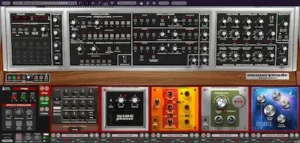 The dual-layer design is one of Memorymode 2’s most practical upgrades because it changes how the instrument is deployed in a DAW. Instead of treating each preset as a single synth voice, you can build two independent parts inside one instance, with separate synthesis, modulation, sequencing, and effects.
In an actual arrangement, the useful setup is less about simply stacking two presets and more about assigning each layer a different job. For example, I found the architecture more useful when one layer handled the sustained low register and the second supplied the wider upper part, because each could then be filtered, enveloped and processed independently instead of compromising one patch to make it serve both roles. Each layer can be programmed independently, so the two sounds do not have to share the same filter, envelope, or modulation settings.
The practical benefit is bigger than saving a plugin slot. One preset can contain the complete layered instrument, which reduces MIDI routing, automation, preset management, and project-recall overhead. It also makes the sound easier to move between sessions: instead of recreating a two-plugin setup, the producer recalls one Memorymode 2 preset and gets both layers back with it.
This is particularly useful during arrangement and composition, where a single synth part often evolves into several related sounds. Memorymode 2 can keep those sounds inside one instrument rather than turning every variation into another plugin instance and another set of tracks to manage.
This is a genuine workflow improvement, not just an expanded feature list. The main limitation is that the benefit depends on actually using layered or split sounds; if you normally run one synth patch per instance, the dual-layer architecture adds little to your workflow.
Sequencing and MPE Add Modern Performance Control
Memorymode 2 adds a polyphonic 16×4 sequencer to each layer, Touch Animator modulation, MPE, and polyphonic aftertouch. None of these features makes the Memorymoog emulation itself more accurate, but they significantly expand what the instrument can do in a contemporary production workflow.
The sequencer is the most immediately useful addition for electronic production and sound design. Because it operates inside each layer, a producer can create evolving note patterns and rhythmic modulation without adding a separate MIDI sequencer or another synth instance. That keeps the sound source, modulation, and pattern in the same preset and makes more complex parts easier to recall.
MPE and polyphonic aftertouch are more dependent on the rest of the setup. With a standard MIDI keyboard or piano-roll workflow, they provide little practical advantage. With a compatible controller, however, individual notes can respond independently to expressive data, allowing filter, pitch, amplitude, or other modulation to follow the performance rather than affecting the entire chord.
In a conventional MIDI workflow, these features are far less consequential. They are valuable for expressive pads, evolving sequences, cinematic textures, and performance-oriented electronic music, but they add little to a conventional mouse-and-MIDI production workflow. They are modern extensions to the Memorymoog architecture, not evidence of improved analog modeling.
How Multi-Voice Variation Adds Analog Movement
One of the problems with software analog synthesis is that every voice can behave too perfectly. Digital oscillators are inherently stable and repeatable, while individual analog voices can differ slightly in pitch, filter response, level, and envelope behavior. Those small deviations are part of what makes a polyphonic analog instrument feel less static when several voices are sounding at once.
Memorymode 2’s Multi-Voice behavior introduces controlled variation between voices, including pitch, panning, filter characteristics, and envelope response. The important point is that this is not simply a global pitch-drift effect. The variation is applied at the voice level, so different notes in the same chord can respond differently.
That distinction becomes audible in sustained chords, repeated notes, and heavily layered patches. Small differences between voices can keep oscillators from stacking into an unnaturally identical block of sound and can make the stereo and tonal response evolve subtly as notes are played and released.
For mixing, the benefit is mainly about behavior rather than processing. A synth with controlled voice variation can arrive at a more naturally irregular starting point, reducing the need to create artificial movement with additional modulation or detuning plugins. It does not eliminate the need for mix processing, but it can make the source itself feel less static before the signal reaches the rest of the production chain.
The Built-In Effects Are Useful, but Not the Main Attraction
Memorymode 2 includes 22 effects across three effect chains, including the new Wide Phaser and Rotary Speaker. They make the instrument more self-contained and are particularly useful when building presets or shaping a sound before it reaches the DAW’s main effects chain.
They are less compelling as replacements for dedicated studio processors. Bonedo’s review makes a similar distinction: while the onboard effects are usable, the reviewer preferred established external processors for elements such as ensemble, echo, and reverb in a production context.
That is the sensible way to approach the effects. Their main value is speed and integration. A patch can leave the instrument sounding finished enough for writing, auditioning, or live performance without requiring another chain of plugins. Once the part is being mixed, however, specialized reverbs, delays, modulation effects, and other processors still offer more control when the effect has to interact precisely with the rest of the arrangement.
Original Memorymoog Patch Import Adds Real Archival Value
Memorymode 2 can import original Memorymoog program data in Lintronics Advanced Memorymoog SysEx format as well as cassette WAV patch data. Cherry Audio also includes the original Memorymoog factory programs.
That support is useful beyond simple preset nostalgia. It gives producers, composers, and sound designers a way to bring historically relevant programs into a modern DAW and examine how those patches behave through the software instrument’s revised modeling.
It also gives Memorymode 2 a practical advantage for archival recreation and period-specific production. A sampled recreation can reproduce a recorded sound, but an emulation that accepts original program data preserves the underlying synthesis settings and allows them to be edited, automated, and reworked inside the current production environment.
Memorymode 2 CPU Usage and Performance
 CPU performance is one of the less documented aspects of Memorymode 2. Cherry Audio has redesigned the instrument for multithreaded operation and says the new architecture is more CPU-efficient than the original, but there is not yet enough independent benchmarking to put a reliable percentage on that improvement.
The published requirements call for a 3.4 GHz quad-core processor or Apple M1-class CPU and 8 GB of RAM. Memorymode 2 runs natively on Apple Silicon and is available in VST, VST3, AU, AAX, and standalone formats. These requirements are relatively modest, but minimum specifications do not predict CPU load from a demanding patch or a large production session.
The main variable is the amount of synthesis happening at once. Each layer can run up to 16 voices, and unison can multiply the number of active oscillator voices substantially. Running two layers at high polyphony, combined with oversampling, modulation, and multiple effects, can therefore create a much heavier workload than a basic single-layer patch.
For tracking and live performance, CPU headroom matters because sustained overload can lead to dropouts or force a larger audio buffer, increasing latency. For mixing and sound design, the problem is easier to manage: complex parts can be frozen, rendered, or printed to audio once the sound is established.
I would not attach a percentage to the CPU improvement without testing v1 and v2 under the same patch, voice count, oversampling and effects settings. Cherry Audio’s multithreaded redesign should help with heavier sessions, but the actual advantage will depend on the patch and host system.
Memorymode 2 vs Arturia Memory V: Which Memorymoog Plugin Is Better?
If the decision is specifically between Memorymode 2 and Arturia Memory V, the choice is less about basic Memorymoog architecture and more about how each instrument extends it for modern production.
| Category | Memorymode 2 | Arturia Memory V |
|---|---|---|
| Memorymoog architecture | Three-oscillator polyphonic emulation | Three-oscillator polyphonic emulation |
| Layering | Two independent 16-voice layers | Single instrument layer |
| Filter options | 24 dB, 12 dB, Modern mode, Emphasis Compensation | Modernized filter architecture and additional controls |
| Performance control | MPE + polyphonic aftertouch | MPE / modern expressive control |
| Sequencing | 16×4 polyphonic sequencer per layer | Multi-Arp workflow |
| Original Memorymoog patch data | SysEx + Tape Data Import + factory patches | Original factory preset recreation |
| Presets | 800+ | Large factory library |
| Price | $69 | $149 |
Memorymode 2 has the stronger value proposition when the priority is layering, high polyphony, original patch-data compatibility and production flexibility. Its dual-layer architecture is the clearest functional advantage because one instance can generate two independent parts rather than simply reproducing one Memorymoog-style voice.
Arturia Memory V becomes more compelling when the priority is Arturia’s ecosystem, interface approach and its extended performance and sequencing features. In level-matched listening, I found the arrangement more useful than the apparent size of an isolated preset, because either instrument can produce enough midrange density to become part of the mix problem.
For producers who specifically want a flexible Memorymoog-style instrument for modern production, I would choose Memorymode 2. Its two independent layers, high polyphony, Memorymoog patch-data support and production-oriented workflow give it a stronger practical advantage than Memory V when layering and sound-design flexibility matter.
Memory V remains a strong alternative for producers already invested in Arturia’s ecosystem or who prefer its interface and workflow. The choice is therefore not about one instrument being universally superior, but Memorymode 2 has the stronger feature-to-price proposition for a new buyer focused on production flexibility.
Memorymode v1 still has one legitimate role: legacy sessions. If an existing project depends on its exact presets or behavior, keeping v1 installed is the safest option. There is little reason, however, to choose v1 for a new production when Memorymode 2 is available.
Neither instrument is automatically the better-sounding choice in every context. The most useful comparison is to load equivalent patches, match output levels, remove the effects that obscure the raw oscillator and filter behavior, and compare them in the arrangement rather than in isolation. That is where differences in filter response, voice behavior, stereo width, and mix density become meaningful.
Memorymode 2 in a Mix: What a Mixing Engineer Needs to Watch
Memorymode 2 is capable of producing a very large sound before any external processing is applied. That is an advantage during production, but it also means that the instrument can occupy more spectral and spatial space than a part actually needs.
The first issue to watch is low-mid accumulation. Three oscillators per voice, sustained envelopes and two independent layers can create a dense foundation that competes with bass, vocals, guitars and lower drum harmonics. The problem is not that Memorymode 2 sounds “too bassy” by default; it is that its architecture makes it easy to generate more harmonic mass than the arrangement can support.
In my listening, this was easiest to hear on sustained three-oscillator chords: the patch could sound balanced in solo but became noticeably heavier once bass and kick were restored. Pulling back the filter cutoff was less effective than shortening the release or reducing the lower oscillator contribution, because the problem was sustained energy rather than simply excessive brightness or bass.
The second issue is stereo density. Voice-level panning, unison, chorus, delay, reverb and layered patches can make the synth appear wider and larger than it actually needs to be. This can sound impressive in solo while reducing separation between other stereo elements once the full mix is playing.
The third issue is sustain and masking. Long releases and resonant filter settings can leave energy in the arrangement after the musical event has already finished. In a sparse track this may be desirable. In a dense production it can reduce clarity and make later mastering decisions more difficult.
For that reason, I would not judge Memorymode 2 by the size of its isolated presets. The more useful test is to level-match the synth inside the arrangement, bypass the processing, and ask what musical information disappears when the part is muted. If the answer is mainly “width” or “size,” rather than a specific harmonic, rhythmic or melodic contribution, the patch is probably doing more work than the mix needs.
This is also why Memorymode 2’s strongest engineering advantage is source flexibility. A well-designed patch can provide substantial harmonic information without requiring multiple layers of external sound design. The challenge is then to remove what the arrangement does not need rather than continuing to add processing.
Real-World Translation: A Big Synth Still Has to Fit the Mix
Memorymode 2’s biggest production risk is not poor sound quality. It is too much sound.
The Memorymoog character comes from oscillator density, substantial filter movement, and sustained harmonic content. Those qualities can give a production the weight and width it needs, but they can also consume space that belongs to the vocal, bass, guitars, or drum transients. A patch that sounds enormous on its own can be the wrong choice once the full arrangement is playing.
That is why Memorymode 2 presets need to be judged at arrangement level, preferably at matched levels. The relevant question is not whether the synth sounds impressive through nearfields or headphones in solo. It is whether the part adds identifiable musical information without masking elements that already carry the track. The same principle applies to other virtual instruments: in our Native Instruments Electric Neon Deluxe review, the useful test was not how convincing the guitar sounded by itself, but whether it still contributed groove and harmonic definition once the kick, bass, vocals and synths were playing.
Monitoring conditions can expose different problems. A wide, effects-heavy patch may feel impressive on headphones while revealing excessive low-mid density or diffuse stereo information on speakers. Conversely, a patch that seems restrained in solo may provide exactly the right amount of harmonic information once drums, vocals, and bass are present.
Streaming does not change that basic engineering requirement. Loudness normalization changes playback level; it does not correct spectral buildup, excessive sustain, or a stereo field that becomes unstable across playback systems. Those issues have to be solved before delivery, which is why mastering for streaming platforms still starts with a mix that translates properly before normalization and encoding are applied.
A useful test is to mute the synth, bring it back at a matched level, and identify exactly what improves in the arrangement. If the only noticeable change is that the track sounds larger, the patch may be contributing size without enough useful information. That is usually a sign to revisit the arrangement, patch design, or mix balance rather than simply adding more processing.
Who Should Buy Cherry Audio Memorymode 2?
Memorymode 2 makes the most sense for producers who actually use analog polysynths as part of the arrangement rather than simply collecting vintage-style instruments. Its combination of dense oscillator architecture, voice variation, layering, sequencing, and expressive control is particularly well suited to electronic production, synth-heavy pop, cinematic scoring, and sound design.
Electronic producers and composers are the strongest fit. The dual-layer architecture can cover multiple parts from one instrument, while the sequencer, modulation system, MPE, and polyphonic aftertouch support more animated performances and evolving textures. For scoring, the ability to build large pads, basses, leads, and sequences without maintaining several separate synth instances is a practical advantage.
Home studios and professional production rooms also have a strong use case. Memorymode 2 provides the character and programming depth associated with a large vintage analog polysynth without the maintenance, tuning, physical space, or limited recall of the original hardware. At $69, the cost of entry is low enough that the instrument does not need to replace an existing synth to justify itself.
Beatmakers will benefit when analog polysynth textures are central to the production. If the workflow is primarily sample-based or built around simpler synth parts, Memorymode 2’s depth is less of an advantage and may simply add another layer of complexity.
For existing Memorymode v1 owners, the decision is more specific. The $39 upgrade makes sense if Memorymode is already part of the working setup and the new modeling, dual-layer architecture, sequencing, or modern performance control will actually be used. If v1 is rarely opened and its existing sounds already cover the requirement, there is no production reason to upgrade simply to stay current.
Where Memorymode 2 Falls Short
Memorymode 2 is a strong upgrade, but it is not without limitations.
The analog-modeling improvement is difficult to quantify. Cherry Audio makes a strong claim about modeling accuracy, but there is still no controlled independent hardware test that establishes how much closer v2 is to a physical Memorymoog or exactly how large the improvement is over v1.
The synth can become unnecessarily dense. Three oscillators per voice, two layers, unison, voice variation and stereo effects can produce an enormous signal very quickly. That is useful for sound design, but it also increases the risk of low-mid buildup, excessive sustain and diffuse stereo information in a dense arrangement.
Some of the new features are workflow-dependent. MPE and polyphonic aftertouch are valuable with compatible controllers but add little to a conventional MIDI workflow. The same applies to the dual-layer architecture if you normally use one synth instance for one musical part.
FX modulation is less flexible than the main synthesis modulation system. The effects section is useful, but its modulation capabilities are not as deep as the broader modulation architecture of the synthesizer. For advanced sound-design workflows, this can become noticeable.
Initial activation requires online access. This may matter for studios that keep production computers permanently offline.
Is Cherry Audio Memorymode 2 Worth It?
Memorymode 2 costs $69, while existing Memorymode owners can upgrade for $39. Cherry Audio also offers a 30-day demo, which makes the instrument relatively easy to evaluate before buying.
At this price, the value proposition is unusually strong because the purchase provides more than a conventional Memorymoog emulation. Two independent 16-voice layers, extensive modulation, sequencing, MPE, polyphonic aftertouch, voice variation, Memorymoog patch-data support and the expanded effects architecture turn it into a broader production instrument.
For a new buyer, I consider Memorymode 2 worth buying if the goal is a flexible analog-style polyphonic synth rather than simply owning a vintage-synth recreation. The strongest reason to buy it is the combination of dual-layer production, synthesis flexibility and low cost.
The $39 upgrade is a more conditional decision. Existing Memorymode users should upgrade when the new architecture or revised synthesis engine solves a real production requirement. If v1 is already covering the sounds and workflows you use, there is no reason to upgrade purely for the version number.
Overall Rating
| Category | Rating |
|---|---|
| Sound Quality | 9/10 |
| Workflow | 9.5/10 |
| Mix Translation | 8.5/10 |
| Analog Modeling | 8.5/10 |
| CPU Efficiency | 8.5/10 |
| Value for Money | 9.5/10 |
| Overall | 8.9/10 |
Memorymode 2 delivers a dense and convincing analog-synth source with a significantly stronger production workflow than the original. Its main strengths are the dual-layer architecture, voice-level variation, high polyphony, modern performance control, and unusually strong value. The main reservations are the still-unquantified improvement in analog-modeling accuracy and the amount of spectral and spatial energy that some patches can introduce into a dense mix.
Sound Quality — 9/10: The revised oscillator, filter, envelope, and voice behavior produce a convincing and musically useful analog character.
Workflow — 9.5/10: This is the instrument’s strongest category. Two independent 16-voice layers, internal sequencing, MPE, polyphonic aftertouch, and direct Memorymoog patch-data support provide practical advantages that go well beyond adding more presets.
Mix Translation — 8.5/10: The synth can produce an excellent mix-ready source, but its oscillator density, sustained harmonics, layering, and stereo effects can consume considerable space. Good translation therefore depends heavily on patch choice, arrangement, and level-matched evaluation.
Analog Modeling — 8.5/10: The revised oscillator, filter, envelope and voice behavior produce a convincing result, but I would stop short of calling the redesign a proven breakthrough over hardware or competing emulations.
CPU Efficiency — 8.5/10: Multithreaded processing and the redesigned architecture are sensible improvements, but actual CPU behavior depends heavily on voice count, layering, unison, oversampling, modulation, and effects. Without standardized third-party benchmarks, a stronger score would be speculative.
Value for Money — 9.5/10: At $69 for new users and $39 for existing Memorymode owners, the combination of synthesis depth, dual-layer operation, performance features, patch import, and production flexibility is difficult to criticize on value alone.
Verdict: A Stronger Memorymoog Plugin, With One Important Caveat
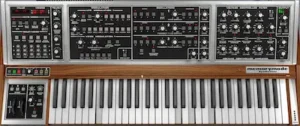 Memorymode 2 feels more like a new production instrument built from the original Memorymode than a simple feature update. The revised oscillator, filter and envelope modeling improves the underlying instrument, but the bigger production change is the addition of two independent 16-voice layers, modern performance control, sequencing and expanded voice behavior.
For a new buyer, Memorymode 2 is the obvious choice over the original version. The combination of sound quality, flexibility and a $69 price makes it one of the more compelling budget Memorymoog-style instruments currently available.
For existing Memorymode users, the upgrade decision is more specific. The $39 upgrade makes the most sense when dual-layer production, sequencing, MPE, polyphonic aftertouch or the revised synthesis engine solve an actual workflow problem. If v1 already covers the required sounds, the sonic improvement alone is less compelling.
The main caveat is the analog-modeling claim. The redesign is substantial and the available listening evidence points toward an improvement, but there is not yet enough independent measurement to establish Cherry Audio’s stronger claim that the new modeling represents a major leap in hardware accuracy.
My overall assessment is 8.9/10: an unusually capable and cost-effective Memorymoog-style instrument whose biggest advantage is not simply sounding bigger, but giving the producer much more control over how that sound is built and placed in a production.
A Great Synth Still Needs a Great Final Mix
Memorymode 2 can deliver enormous low end, dense harmonics, wide stereo movement, and complex sustained textures. In a finished production, however, those strengths can also create masking, excessive low-mid energy, uncontrolled dynamics, or a stereo image that does not translate as well outside the studio. Professional mastering is where those final issues are evaluated in the context of the complete mix—not by adding processing for its own sake, but by making precise decisions about balance, dynamics, tonal weight, and translation.
If you want to know whether your track is already ready for release—or what could still be improved—hear the difference on your own material. Upload up to 35 seconds of your mix and receive a free mastering demo prepared by a real mastering engineer. You can compare the mastered version directly with your original before committing to a full project.
Hear your track professionally mastered →
FAQ: Cherry Audio Memorymode 2
Can Memorymode 2 open original Memorymoog SysEx patches?
Yes. Memorymode 2 supports Lintronics Advanced Memorymoog SysEx data as well as cassette WAV patch data. This makes it useful for recreating and modifying original Memorymoog programs rather than simply referencing sampled versions of them.
Will Memorymode 2 presets from v1 sound exactly the same?
No guarantee should be assumed. v1 presets can be imported, but Memorymode 2 uses a revised synthesis engine, so oscillator, filter, envelope, and voice behavior can differ. Keep v1 installed when exact recall of an older project matters.
Does Memorymode 2 support Apple Silicon and AAX?
Yes. Memorymode 2 supports native Apple Silicon operation and is available in VST, VST3, AU, and AAX formats, along with standalone versions for macOS and Windows.
Can Memorymode 2 replace multiple synth instances?
In some workflows, yes. Its two independent layers can handle separate bass, pad, lead, or split-keyboard parts inside one instance. It does not replace multiple synths universally, but layered production is one of the clearest reasons to use the new architecture.
Does Memorymode 2 support polyphonic aftertouch and MPE?
Yes. Both are supported, allowing compatible controllers to send independent expressive data for individual notes. The benefit is significant with an MPE or poly-aftertouch controller and minimal with a conventional MIDI keyboard.
Is Memorymode 2 a good choice for a large mix session?
It can be, but complex patches should be tested under the same polyphony, layering, effects, and buffer settings used in the actual session. The multithreaded architecture is designed to improve CPU efficiency, but independent standardized benchmarks do not yet establish a precise performance advantage over v1.
What is the main reason to choose Memorymode 2 over another Memorymoog plugin?
The strongest differentiators are its dual-layer architecture, high polyphony, original Memorymoog patch-data support, voice-level variation, modern performance control, and relatively low purchase price. If those features do not solve a specific workflow problem, another Memorymoog emulation may already be sufficient.
Is Cherry Audio Memorymode 2 worth buying?
Yes, if you will actually use the dual-layer architecture or revised synthesis engine. At $69, Memorymode 2 offers enough synthesis depth and production flexibility to justify the price for a new buyer. The upgrade is less compelling for v1 owners who rarely use Memorymode or already have their required sounds covered.

Yurii Ariefiev evaluates audio production software by looking beyond feature counts: synthesis behavior, signal-path decisions, CPU demands, recall, and how an instrument actually behaves once it enters a working arrangement.
His reviews separate manufacturer claims from independently verifiable evidence, with particular attention to how virtual instruments affect mix balance, stereo translation, source quality, and the decisions that remain before mastering.
☕ Buy me a coffee