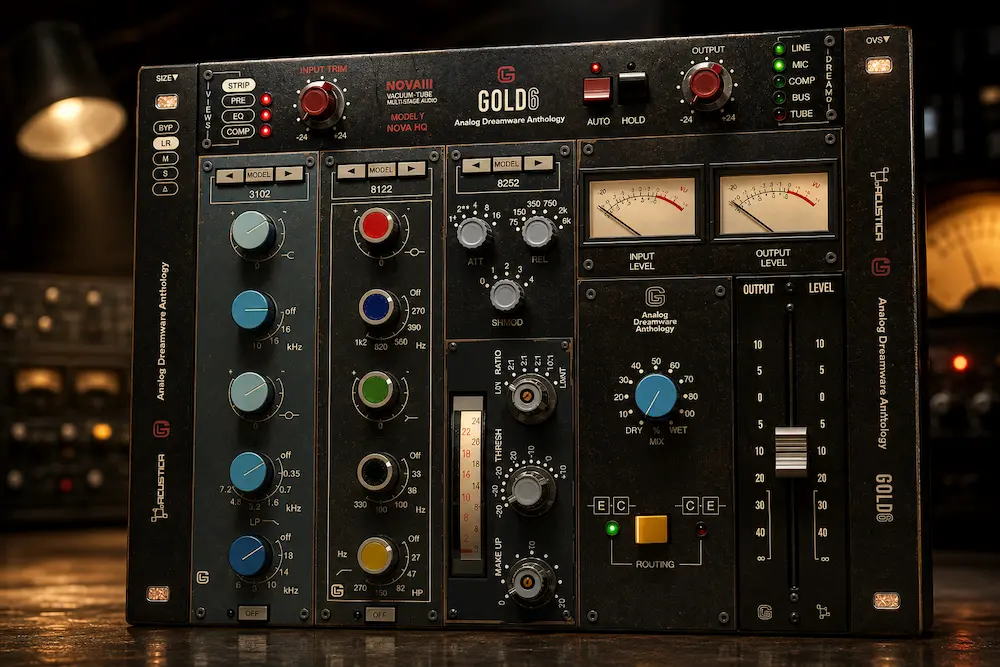
Acustica Gold 6 is a major revision of the company’s British console collection, built around a new generation of nonlinear preamp modeling rather than a simple channel-strip refresh. The suite now separates the PRE, EQ, and COMP sections into dedicated plugins while retaining the full channel strip, with 52 preamp models, nine British EQs, and six compressor variants.
NOVA is the main reason Gold 6 is more than a routine Gold 5 refresh. It moves the new processing architecture into the preamp section, where level-dependent nonlinear behavior matters most. That makes the PRE stage the part worth testing first when deciding whether Gold 6 actually sounds different from the previous generation.
Gold 6 also raises a practical question for existing users. If Gold 5 already covers the EQ and compression duties you need, the upgrade has to justify itself through the new preamp processing and workflow rather than another set of familiar console-style controls. This review focuses on that distinction—and on where Gold 6 makes sense in professional mixing and mastering workflows.
In This Review
Is Gold 6 Worth It?
What Sets It Apart
Specifications
Mixing Workflow
NOVA Modeling
Gold 5 vs Gold 6
Alternatives
CPU & Latency
Mixing & Mastering
Who Should Buy It?
Overall Rating
Verdict
FAQ
Updated: August 29, 2026 · Gold 6 launch version · Focus: features, workflow, NOVA processing and upgrade value
Is Acustica Gold 6 Worth It?
Acustica Gold 6 is worth buying if you want a broad library of British-style preamp coloration and a modular console workflow rather than a single transparent channel strip. The strongest part of the package is the 52-model PRE section, now powered by NOVA, while the standalone EQ and COMP processors make it easier to use only the stage a mix actually needs.
For a new user, the €99 introductory price makes the suite particularly attractive if analog-style console coloration is missing from the existing plugin collection. For Gold 5 owners, the answer is more conditional: the upgrade makes sense when the new NOVA preamp processing, modular routing, or current platform support solves a real limitation in the existing workflow.
Gold 6 is less compelling if your priority is transparent processing, very low CPU usage, or a simple one-console workflow. In that case, a focused channel strip or dedicated digital EQ and compressor can be faster and easier to deploy.
What Sets Gold 6 Apart From Conventional Console Plugins
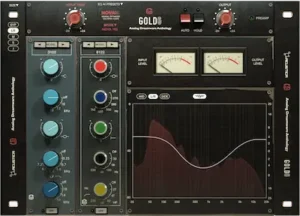 British console emulation is a crowded category. A modern mix engineer can already choose from dedicated channel strips, preamp models, EQs, compressors, and saturation processors from several established developers. The basic console workflow is not difficult to reproduce in software. What matters is how much useful variation a plugin gives the engineer without turning that flexibility into unnecessary complexity.
Gold 6 approaches the problem through scale and modularity. The suite includes 52 preamp models covering LINE, MIC, COMP, BUS, and TUBE paths, nine British EQ designs, and six compressor variants derived from two designs. PRE, EQ, and COMP are available as separate processors, while the full channel strip combines them into a single environment.
The preamp section is the more important distinction. Its role is not simply to add a layer of saturation before an EQ. Changing the nonlinear stage at the front of the chain can change the harmonic content, frequency-dependent response, and level behavior that the following EQ and compressor receive. In practical terms, the same EQ setting can behave differently depending on which preamp model drives it.
That makes Gold 6 more useful as a tonal signal path than as a collection of interchangeable console presets. An engineer can use the PRE stage on its own, combine it with the standalone EQ or COMP, or build the entire chain inside the channel strip. The benefit is not the number 52 by itself; it is the ability to choose where and how nonlinear coloration enters the mix.
NOVA is the technology behind that change. Acustica describes it as a hybrid architecture combining its Vectorial Volterra Kernels with neural audio modeling, designed to reproduce level-dependent nonlinear behavior rather than only the static frequency response of the modeled hardware. The architecture is technically significant, but its practical value ultimately comes down to one question: does the new modeling produce a more useful result in a mix than the previous Gold generation?
Acustica Gold 6 Specifications
| Specification | Gold 6 |
|---|---|
| Plugin suite | PRE, EQ, COMP and full Multi-View channel strip |
| Preamp models | 52 |
| EQ models | 9 British EQ designs |
| Compressor variants | 6 variants based on the 8252 and 8254 |
| Preamp modes | NOVA, NOVA HQ, NOVA GPU and LEGACY |
| Processing | Independent PRE, EQ and COMP stages with flexible routing |
| Sample rates | 44.1, 48, 88.2 and 96 kHz |
| Formats | VST3, AU and AAX |
| Apple Silicon | Native support |
| Trial | 30 days |
Hear What Professional Mastering Adds
Plugins can add character, weight, and color, but the final master still has to translate as a complete record. If you want to hear what professional mastering can change in your own mix, upload up to 35 seconds and get a free mastering demo before ordering the full master.
Get your free mastering demo →
Hands-On Testing: Gold 6 in a Real Mixing Session
I tested Gold 6 as a mix processor rather than evaluating it only from the feature set. The first thing that becomes obvious is that the PRE section is where the character of the plugin changes most noticeably. The 52 models are not simply interchangeable saturation presets: changing the selected preamp changes how the signal feels before it reaches the EQ and compressor stages.
For practical mixing, I found the PRE section more useful when driven conservatively than when treated as an obvious distortion effect. Small amounts of input coloration can change density and forwardness without making the processing sound deliberately saturated. This is also where the distinction between a console-style preamp and a dedicated saturation plugin becomes meaningful: the preamp is shaping the signal that the rest of the chain receives.
The NOVA modes are best compared at matched output levels. Without level matching, the extra density and apparent loudness can make a setting sound better simply because it is louder. Gold 6’s Auto Gain and HOLD controls are useful for this reason, particularly when comparing subtle preamp changes rather than obvious effects.
The modular design is also more useful in practice than it looks on a specification sheet. I would not treat Gold 6 as a plugin that has to replace an entire mix chain. The PRE stage can be used for coloration, followed by a different manufacturer’s EQ or compressor, while the Gold EQ and COMP can be brought in only when their particular circuit behavior is useful.
My main conclusion from the first tests is that Gold 6 makes more sense as a selectable analog-color palette than as an “always-on” channel strip. The value is in choosing the right stage for the source rather than loading the complete strip on every track.
How Gold 6 Behaves in a Real Mixing Workflow
PRE: The Most Significant Change in Gold 6
The PRE section is the part of Gold 6 that matters most when comparing it with Gold 5. British EQ and compressor emulations are no longer difficult to find, but a library of 52 modeled preamp paths gives Gold 6 a much broader range of nonlinear behavior to work with. NOVA is applied across that preamp collection, making the input stage the main technical focus of the new generation.
The PRE plugin offers four processing modes: NOVA, NOVA HQ, NOVA GPU, and LEGACY. They should be viewed as different operating modes rather than four different sounds. NOVA is the main next-generation path, NOVA HQ prioritizes the higher-quality processing option, NOVA GPU is intended to use GPU-assisted processing where supported, and LEGACY preserves the previous Gold processing approach.
| Mode | Primary purpose | Best use |
|---|---|---|
| NOVA | New nonlinear processing architecture | General mixing and everyday use |
| NOVA HQ | Higher-quality NOVA processing | Critical sound-design and mix decisions |
| NOVA GPU | GPU-assisted processing path | Systems where GPU processing is advantageous |
| LEGACY | Previous-generation Gold behavior | Gold 5 comparison and compatibility checks |
Acustica does not currently provide enough independent benchmark data to treat one mode as universally faster or better. The useful approach is to compare the modes on the same source and at matched levels, then choose the lowest processing mode that delivers the character you actually need.
In a mix, the preamp stage is useful precisely because it happens before the rest of the chain. A vocal can take a small amount of nonlinear coloration before corrective EQ, allowing the EQ to work on a differently weighted signal. A bass can be driven into a model before compression so that the compressor reacts to the added harmonics and altered envelope. On drums and instrument buses, a restrained preamp stage can add density without requiring a separate saturation plugin.
That does not make Gold 6’s preamps interchangeable with dedicated saturation processors. Processing position changes the result. Saturation inserted after EQ and compression is responding to a processed signal; a console-style preamp changes the signal that those later stages see. At moderate drive, that difference can be more useful than simply adding more distortion.
EQ: Broad Tone Shaping With More Routing Flexibility
Gold 6 EQ includes nine British EQ models, but the more useful design choice is the ability to combine individual sections rather than treating each model as a fixed four-band unit. High, high-mid, low-mid, and low sections can be selected independently, allowing an engineer to build a curve from different modeled circuits within one plugin.
The standalone EQ also supports L/R and Mid/Side processing, along with real-time response and spectrum displays. That expands its usefulness beyond the traditional console workflow. On a mix bus, for example, the engineer can use the Mid channel for a broad tonal adjustment while leaving the Side information comparatively untouched. On individual tracks, the hybrid model selection can be faster than stacking several separate console EQ plugins.
The trade-off is precision. These processors are designed around the behavior of hardware EQ circuits rather than the surgical control of a modern digital equalizer. That makes Gold 6 more compelling for broad tonal decisions than for narrow corrective work. In mastering, that distinction becomes even more important: a modeled EQ can be an excellent color stage, while a transparent digital EQ remains the better tool when the job is to remove a specific resonance without changing anything else.
COMP: Useful When Compression Is Part of the Tone
Gold 6 COMP is based on the 8252 and 8254 designs and provides Classic, SA, and SAR variants. The processor includes sidechain controls, gain-reduction metering, and a dedicated MIX control for parallel operation
Its natural territory is sources where the compressor is expected to contribute to the sound rather than simply control level. Vocals, bass, drums, and instrument buses are obvious examples. The ability to blend the compressed signal back with the dry path is particularly useful on drum and mix buses, where maintaining transient definition while increasing density is often the goal. For engineers choosing a dedicated processor specifically for this kind of bus work, the differences between VCA, variable-mu, and digital designs are worth considering alongside Gold 6’s more integrated console approach; our mix bus compressor comparison looks at those behaviors in greater detail.
It is less compelling as a general-purpose dynamics processor. If the task is transparent gain control, a modern digital compressor will usually provide more predictable timing, cleaner behavior, and finer control. Gold’s appeal is the interaction between its modeled circuit behavior and the material being compressed.
That distinction also matters for mastering. Earlier Gold-generation users have reported good results on buses and parallel processing while finding the compressor less predictable for transparent mastering applications. Those reports are useful context, but they should not be treated as direct evidence about Gold 6’s new implementation. The sensible approach is to judge the compressor by how little it needs to be pushed before it stops improving the master.
What NOVA Changes in Gold 6’s Analog Modeling
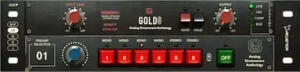 NOVA is the central technical change in Gold 6. Acustica describes Neural Optimized Volterra Audio as a hybrid modeling architecture that combines its Vectorial Volterra Kernels with neural audio modeling. In Gold 6, the new architecture is applied across the preamp collection rather than being confined to a single processor.
The underlying problem is real. A hardware preamp does not have one fixed response that can be captured by a frequency curve or a static impulse response. Its behavior changes with input level and program material, and nonlinearities can alter the harmonic content and spectral balance as the circuit is driven. Modeling those relationships is considerably more demanding than reproducing the nominal response of the hardware.
That is where the Volterra and neural components become relevant. Volterra-based approaches are well suited to describing nonlinear system behavior, while neural models can be used to approximate complex relationships that are difficult to represent with conventional fixed models. Acustica’s approach combines the two rather than treating neural processing as a replacement for its existing modeling technology.
NOVA is technically interesting, but the technology name is not the useful part of the review. What matters to an engineer is what happens when the input level changes: whether the preamp becomes denser, changes its harmonic balance, preserves transients, or simply becomes louder. That is the comparison that matters against Gold 5.
That evidence is still limited at launch. There is not yet a sufficiently broad independent blind comparison of Gold 5 against Gold 6, nor a published third-party measurement set covering harmonic distortion, aliasing, latency, or CPU behavior across the different NOVA modes. Claims of improved realism therefore need to remain provisional until those tests exist.
NOVA gives Gold 6 a technically credible reason to exist, but the upgrade should be judged by the audible and workflow difference it creates, not by the modeling terminology itself.
Gold 5 vs Gold 6: Is the Upgrade Worth It?
| Feature | Gold 5 | Gold 6 | What It Means |
|---|---|---|---|
| Preamp processing | Previous-generation processing | NOVA + LEGACY modes | Gold 6 makes the preamp section the main upgrade point. |
| Preamp library | 52 models | 52 models | The upgrade is not about adding more models; it is about how the existing library is processed. |
| Standalone PRE | Yes | Yes | Both generations can be used selectively rather than as a complete channel strip. |
| Standalone EQ | Yes | Yes | Gold 6 keeps the established British EQ concept while integrating it into the new modular workflow. |
| Standalone COMP | Yes | Yes | The compressor family remains based on the 8252 and 8254 designs. |
| Processing modes | Previous Gold architecture | NOVA, NOVA HQ, NOVA GPU, LEGACY | Gold 6 provides more control over the processing path. |
| Channel-strip workflow | Gold workflow | Multi-View with flexible routing | Gold 6 is designed to make individual stages easier to integrate into mixed-plugin chains. |
| Best reason to upgrade | — | NOVA preamp processing and revised workflow | Existing owners should upgrade for workflow or sonic reasons, not model count. |
For existing Gold 5 users, the upgrade decision is much narrower than the question of whether Gold 6 is a good plugin. Gold 5 already provides the core British console workflow, so Gold 6 has to deliver a meaningful advantage in the parts of the system you actually use.
The strongest reason to move is the new NOVA preamp architecture. Gold 6 retains the previous-generation processing through its LEGACY mode while adding NOVA, NOVA HQ, and NOVA GPU options. That makes a direct A/B comparison possible and puts the preamp section at the center of the upgrade decision.
If Gold 5 is mainly used for a few familiar EQs or compressor settings, there is less incentive to change. Those parts of the Gold workflow are evolutionary rather than a fundamental change in what the collection is designed to do. If, on the other hand, the preamp models are used aggressively for tone, harmonic density, or level-dependent coloration, Gold 6 gives you a more substantive reason to revisit the collection.
The standalone PRE, EQ, and COMP plugins also make Gold 6 easier to integrate into a mixed plugin workflow. You can use a Gold preamp without committing to the rest of the channel strip, insert a third-party processor between Gold stages, or use only the EQ where its particular curves make sense. That flexibility is more relevant to an established engineer than simply having another channel-strip preset library.
Gold 6 also brings current platform support, including native Apple Silicon operation, VST3, AU, and AAX formats, and support for sample rates from 44.1 to 96 kHz. Those changes matter when an older Gold installation is becoming a compatibility problem, but they are not, by themselves, compelling sonic reasons to upgrade a working Gold 5 system.
The pricing makes the decision more favorable for new users than it does for every existing owner. Gold 6 is currently offered at an introductory price of €99, compared with a regular price of €199. Existing customers receive account-specific upgrade offers, so the relevant comparison for a Gold 5 owner is the actual price shown in the Acustica account rather than the public introductory price.
Bottom line for Gold 5 owners: upgrade for the preamp modeling and the new workflow, not for the version number. If Gold 5 already supplies the few processors you rely on and your sessions are stable, there is no compelling reason to replace a working system without first hearing a level-matched difference.
Gold 6 Upgrade Price for Gold 5 Owners
Gold 5 owners do not all see the same upgrade price. Acustica provides personalized upgrade offers through the user account, so the public €99 Gold 6 introductory price should not be treated as the actual upgrade cost for an existing owner.
The practical way to evaluate the upgrade is to compare the offer shown in your Acustica account with the value of the new PRE processing. If you mainly use Gold 5 for its EQ or compressor sections, the upgrade case is weaker. If the preamp is a major part of your workflow, the new NOVA processing is the more relevant reason to consider paying for Gold 6.
Do not judge the upgrade by the 52-model count. Gold 6 still lists 52 preamp models; the meaningful change is how that existing preamp library is processed and integrated into the new workflow.
Acustica Gold 6 Alternatives: UAD, Softube, and Lindell
| Alternative | Where Gold 6 Has the Edge | Where the Alternative Has the Edge | Better Choice If… |
|---|---|---|---|
| UAD British console plugins | A much larger collection of modeled preamp paths and a broader range of British-style coloration in one suite. | A mature ecosystem, established workflows, and a large installed user base make UAD a more familiar choice for many engineers. | You want to explore multiple British console behaviors rather than commit to one specific hardware workflow. |
| Softube console emulations | More extensive preamp and circuit-model variation, with separate PRE, EQ, and COMP processing. | Softube’s console workflows are generally more focused and can be faster to navigate when you already know the sound you want. | Speed and simplicity matter more than having a large range of tonal options. |
| Lindell 80-series processors | Greater variety across preamp models and a wider range of British-style circuit coloration. | Lindell’s more focused console approach can be easier to deploy consistently across a mix. | You want a straightforward console workflow rather than a large modeling library. |
| Clean digital EQ and compression | Analog-style nonlinear behavior and circuit coloration are part of the processing rather than unwanted side effects. | Modern digital processors offer greater precision, lower overhead, and more predictable behavior for corrective or transparent work. | You need surgical EQ, transparent dynamics, or mastering-grade control. |
Gold 6’s competitive advantage is therefore not that it is universally better than other console plugins. It is the breadth of its analog-style processing inside a single ecosystem. The 52 preamp models are particularly important here; they give the engineer considerably more room to change the character of a source before EQ and compression.
That advantage comes with a trade-off. A large model library is useful when the engineer wants to audition different circuit behaviors, but it adds decisions to a workflow that can otherwise be very fast. An engineer who already has a small set of trusted channel strips may get more work done with a simpler system.
The strongest case for Gold 6 is therefore not replacement. It is expansion: adding a deep British console palette to a system that does not already have one. If your existing plugins already provide the coloration you need and your priority is speed, transparency, or low CPU overhead, Gold 6 is much harder to justify.
CPU, Latency, and Workflow: The Practical Trade-Offs
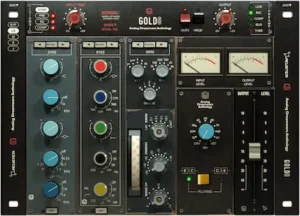 Gold 6’s sound is only part of the evaluation. Acustica’s earlier products have often divided engineers on CPU load, interface responsiveness, and plugin-management workflow, so performance deserves particular attention when a large console emulation is being considered for a working session.
Gold 6 should not be judged by Gold 5 CPU behavior. The new release introduces NOVA, NOVA HQ, NOVA GPU and LEGACY processing paths, so the relevant question is how the current version scales with the selected mode, sample rate and number of instances. At launch, there is not enough independent benchmark data to give a reliable universal CPU figure.
Gold 6 gives users several processing paths: NOVA, NOVA HQ, NOVA GPU, and LEGACY. That is a practical design choice because the engineer can trade processing demands against the desired modeling mode instead of running every instance at the same quality setting.
What remains unclear is how large that trade-off is in a real session. At launch, there is not yet a sufficiently broad independent benchmark covering CPU usage, RAM consumption, latency, instance scaling, and render performance across the different modes. Early KVR discussion has already raised questions about the latency of the full channel strip, but there is not yet enough measured data to turn those concerns into a definitive performance verdict.
For mixing, that uncertainty is usually manageable. Plugin delay compensation makes moderate latency largely irrelevant once tracking is finished, and a few carefully chosen Gold instances can be used where their character actually contributes to the mix. Tracking is different: inserting a processor with meaningful latency on a live vocal or instrument path can immediately affect the player’s or singer’s experience.
The same distinction applies to large sessions. One Gold instance on a vocal bus is a different proposition from dozens of nonlinear processors across individual tracks. In a large project, the practical question is not whether a single instance is fast enough; it is how the processing scales as the session grows. Until independent Gold 6 benchmarks are available, engineers should treat CPU and latency as variables to test on their own system rather than assuming the new architecture is either lightweight or excessively demanding.
Where Gold 6 Makes Sense in Mixing and Mastering
Mixing: Where the Suite Is Most Useful
Mixing is Gold 6’s strongest use case. The combination of modeled preamps, EQs, and compressors gives an engineer several ways to shape the character of a source before reaching for more specialized processors. The advantage is not that every track needs a Gold stage; it is that the same suite can cover different stages of a mix without forcing the engineer into a single console topology.
The PRE section is particularly useful at the front of a chain. A vocal can take subtle preamp coloration before corrective EQ, a bass can be driven into a nonlinear stage before compression, and a drum or instrument bus can use the compressor’s Mix control to add density without completely replacing the dry transients. These are situations where the modeled circuit behavior is part of the sound rather than an unwanted side effect.
The full channel strip also allows the PRE, EQ, and COMP sections to be reordered, while the three processing stages are available independently when a track already contains processors from other manufacturers. That makes Gold 6 easier to integrate into an established DAW workflow than a fixed channel-strip architecture.
In practical terms, Gold 6 works best when an engineer is making broad tonal and dynamic decisions rather than trying to perform every corrective task inside one plugin. A clean surgical EQ, de-esser, clipper, or transparent compressor can still follow it. This is also where it differs from tools such as Sonible smart:chain, which is designed to speed up repetitive technical setup across a mix rather than provide a large palette of deliberately chosen analog-style coloration. Gold 6 does not need to replace those tools to be useful.
Mastering: Useful for Color, Not Correction
Mastering is a different proposition. Gold 6 can add density, harmonic color, broad tonal shaping, and controlled compression, but those benefits become harder to justify when the mastering chain requires maximum transparency and repeatability. The choice between this kind of modeled coloration and a cleaner digital approach is part of the broader analog vs. digital mastering decision, where the processing goal matters more than the technology used to achieve it.
The EQ section’s L/R and Mid/Side processing makes it relevant to stereo mastering, particularly for broad tonal moves where the engineer wants to treat the center and sides differently. The compressor can also work as a character stage when a small amount of gain reduction contributes to the desired presentation.
What Gold 6 does not replace is the precision layer of a modern mastering chain. Narrow resonance removal, exact low-end correction, transparent dynamic control, clipping, limiting, and loudness management are still better handled by dedicated mastering processors. Using a colored console emulation simply because it is available is more likely to reduce headroom and transparency than improve the master.
The Auto Gain and HOLD functions are particularly relevant here because level matching is critical when evaluating subtle analog-style processing. A louder version will often sound more impressive even when the underlying change is not beneficial. Tools that make A/B comparison easier are therefore more valuable in mastering than they might appear from the feature list alone.
The practical conclusion is straightforward: Gold 6 belongs in a mastering engineer’s optional color palette, not at the center of a precision mastering toolkit.
Gold 6, Loudness, and Mix Translation
Gold 6 can improve perceived density, presence, and tonal weight, but it cannot fix a mix that is fundamentally unbalanced. Analog-style coloration can make a source feel fuller or more forward, yet excessive low-end energy, unstable dynamics, or poor monitoring will remain problems after processing.
Level matching is especially important with Gold 6. Preamp drive, compression, and harmonic coloration can increase perceived loudness, making a processed signal appear better simply because it is louder. Auto Gain and HOLD are therefore useful when comparing settings, but the final decision should still be made at matched loudness.
For mastering, Gold 6 is best treated as a deliberate color stage rather than a loudness solution. If the processing only sounds better when it is louder, the perceived improvement is not enough to justify keeping it in the chain.
Who Should Buy Gold 6 — and Who Should Skip It?
Gold 6 makes the most sense for mixing engineers and producers who actively use analog-style coloration as part of their signal path. The combination of 52 preamp models, multiple EQ designs, and character compression gives those users enough range to justify the size of the suite. The value is lower for engineers who already have a small, well-established set of console plugins and rarely need to change their tonal approach.
Professional mixing engineers are the clearest target. Gold 6 can function as a dedicated color palette for vocals, drums, bass, guitars, and buses without forcing every source through the complete channel strip. The standalone PRE, EQ, and COMP processors also make it easier to integrate individual stages into an existing mix template.
Serious home-studio users and producers can also get substantial value from the suite, particularly at the introductory price, provided their systems handle the processing load comfortably. For these users, Gold 6 can provide a wide range of console-style coloration without buying or maintaining equivalent hardware.
Mastering engineers should be more selective. Gold 6 is useful when a master needs deliberate harmonic color, broad tonal shaping, or character compression. It is not a replacement for a transparent mastering EQ, surgical dynamics processor, clipper, or limiter, so its role is likely to remain specialized.
Beginners and live engineers are lower-priority buyers. Beginners are unlikely to benefit from having dozens of tonal options before they have a consistent gain-staging and monitoring workflow, while live engineers have stronger reasons to prioritize low latency, predictable CPU behavior, and operational simplicity.
Gold 5 owners should not upgrade on model count alone. The sensible test is whether NOVA’s preamp processing and the revised workflow provide a difference you can hear and use. If Gold 5 already covers the processors you rely on, there is no inherent production advantage in replacing a stable system simply because Gold 6 is newer.
Overall Rating
| Category | Rating |
|---|---|
| Tonal Character | 9/10 |
| Signal Path Flexibility | 9.5/10 |
| Mixing Utility | 9/10 |
| Mastering Utility | 7.5/10 |
| CPU & Session Efficiency | 6.5/10 |
| Upgrade Value | 8/10 |
| Overall | 8.4/10 |
Tonal Character — 9/10: The depth of the preamp library is Gold 6’s strongest sonic asset. The combination of multiple modeled input paths and nonlinear processing gives an engineer substantially more tonal range than a conventional single-console channel strip. The score stops short of a perfect rating because the audible advantage of NOVA over Gold 5 still needs stronger independent verification.
Signal Path Flexibility — 9.5/10: This is arguably the best part of the Gold 6 redesign. PRE, EQ, and COMP can operate independently, while the channel strip allows the stages to be reordered. That makes the suite practical inside mixed-plugin sessions rather than forcing the engineer into one fixed console architecture.
Mixing Utility — 9/10: Gold 6 has a clear job in mixing: add controlled analog-style character, density, and broad tonal shaping before or between more precise processors. The preamps are especially useful on vocals, bass, drums, guitars, and buses. It loses a point because the sheer number of models can add decision-making overhead where a faster, more focused channel strip would be more efficient.
Mastering Utility — 7.5/10: The EQ and compression can be valuable when a master needs deliberate color, but Gold 6 is not a substitute for transparent corrective EQ, precision dynamics, clipping, or limiting. Its strongest mastering role is as an optional color stage rather than a core mastering processor.
CPU & Session Efficiency — 6.5/10: This is the least certain category. Gold 6 provides several processing modes, which is useful, but there is not yet enough independent testing to establish how efficiently NOVA scales across large sessions. Until CPU, latency, and instance-scaling measurements are available, the conservative rating is more defensible than assuming the new architecture is lightweight.
Upgrade Value — 8/10: New users get a substantial collection at the introductory price, particularly if British-style nonlinear processing is missing from their toolkit. Gold 5 owners have a harder decision: the upgrade makes the most sense when the preamp section is central to the workflow and NOVA produces an audible improvement worth paying for.
Engineer’s assessment: Gold 6 earns its value through the combination of preamp depth, modular signal routing, and usable console coloration, not through model count alone. It is a strong mixing processor with a narrower mastering role, and its main unresolved question is whether NOVA delivers enough audible improvement over the previous generation to offset the potential processing overhead.
Verdict: A Strong Mixing Tool With a Specific Job to Do
Acustica Gold 6 is a substantial update to the Gold platform, not a cosmetic Gold 5 refresh. NOVA changes the preamp modeling architecture, while the standalone PRE, EQ, and COMP processors make the collection easier to use selectively inside an existing production workflow. The preamp section is the main reason to pay attention; the expanded channel-strip workflow is the practical advantage.
The important qualification is that Gold 6 should not be judged by its model count or by the use of neural processing alone. The real test is whether NOVA produces a meaningful improvement in nonlinear behavior and tone over Gold 5, and whether that improvement justifies the additional processing demands in a working session. Independent Gold 6 measurements are still too limited to answer those questions conclusively.
For a new buyer, the €99 introductory price makes Gold 6 easy to justify if British console coloration is a regular part of the production workflow. For a Gold 5 owner, the calculation is different. If the existing version already provides the EQs and compressors you rely on, the upgrade needs to earn its place through the new preamp processing or a materially better workflow.
The clearest recommendation is therefore straightforward: Gold 6 is a strong choice for mixing engineers who want a deep library of British-style nonlinear processing, a useful specialist option for mastering, and a poor fit for engineers whose priorities are transparency, minimal latency, or maximum CPU efficiency.
For anyone on the fence, the 30-day trial is more useful than a generic recommendation. Compare Gold 5 and Gold 6 at matched levels, test the NOVA modes in a real session, and listen for changes that remain useful after the rest of the mix is in place. Acustica offers Gold 6 as a 30-day trial, making that direct comparison the most reliable way to determine whether the new architecture adds something your existing workflow actually needs.
Your Mix May Need Less Processing — and Better Decisions
A powerful mix is not created by adding another compressor, saturator, or console emulation. The final stage is about making the right decisions: controlling tonal balance, preserving punch and dynamics, improving depth, and making the track translate reliably beyond your studio.
If you want to know what your mix can actually gain before paying for a full master, upload up to 35 seconds and hear a free mastering demo prepared by a real mastering engineer. Compare it directly with your mix and decide based on the result, not a sales promise.
Hear your free mastering demo →
Acustica Gold 6 FAQ
Is Acustica Gold 6 a major upgrade from Gold 5?
Yes, technically, but the practical difference depends on how you use Gold 5. NOVA is the main change, particularly across the preamp section. If your Gold 5 workflow relies heavily on preamp coloration, the upgrade is more relevant than it is for someone who mainly uses a few familiar EQ or compressor models.
Can Gold 6 and Gold 5 be used in the same DAW project?
They can be installed alongside each other, which is useful when comparing the two generations or maintaining older sessions. Gold 6 also includes a LEGACY mode for the preamp section, but existing projects should still be checked rather than assumed to sound identical after a plugin replacement.
Does Gold 6 work well at 96 kHz?
Gold 6 supports 96 kHz operation, but higher sample rates can increase the processing burden of nonlinear modeling. Whether running the suite at 96 kHz is worthwhile depends on the session, available CPU resources, and how many instances are active.
Is Gold 6 suitable for vocal tracking?
It can be used for monitored coloration, but tracking is where latency and CPU behavior matter most. For low-latency recording, test the exact PRE mode and buffer configuration on the intended system before putting Gold 6 in the monitoring path.
Can Gold 6 be used without the full channel strip?
Yes. PRE, EQ, and COMP are separate plugins, so an engineer can use only the processing stage required and combine it with processors from other manufacturers. This is one of the more useful workflow differences between a modular suite and a fixed channel strip.
Is Gold 6 a good choice for mastering?
It is best treated as a character processor. The EQ and compressor can be useful for broad tonal shaping and controlled coloration, but engineers who prioritize transparent correction, precise dynamics, and predictable low-level changes will generally need dedicated mastering processors alongside it.
Is Acustica Gold 6 CPU heavy?
There is no single useful CPU figure because processing demand varies with the selected modeling mode, sample rate, buffer settings, and number of instances. NOVA, NOVA HQ, NOVA GPU and LEGACY provide different processing paths, but independent Gold 6 scaling benchmarks are still limited. For large sessions, test the number of instances you actually expect to run rather than relying on a generic CPU requirement.
What makes Gold 6 different from a standard British-style channel strip?
Its main distinction is the size of the modeled preamp library. Gold 6 combines 52 preamp paths with nine EQ designs and six compressor variants, allowing engineers to change the character of the signal before downstream processing rather than working from one fixed console topology.
Is Gold 6 a better alternative to UAD, Softube, or Lindell plugins?
Not across the board. Gold 6 is the stronger choice when a large range of British-style preamp and console coloration is useful. A competing channel strip can be the better option when the priority is a faster, more focused workflow or a specific console sound.
What is the latency of Acustica Gold 6?
There is not yet enough independent measurement data to give a reliable latency figure for every Gold 6 processing mode. Early launch discussion has already raised the latency of the complete channel strip as a user concern, so Gold 6 should not be assumed to be zero-latency. For mixing and mastering, this is usually manageable with plugin delay compensation; for live tracking, the exact mode and system should be tested before using Gold 6 in the monitoring path.
Is Acustica Gold 6 worth buying at €99?
At the €99 introductory price, it is strong value for engineers who actually need a broad British-style analog processing palette. The case is weaker at the regular €199 price unless Gold 6 fills a gap that the existing plugin collection does not already cover.

Yurii Ariefiev evaluates audio plugins from a mixing and mastering engineering perspective, focusing on nonlinear processing, tonal behavior, dynamics, and how modeled analog processing responds inside real signal chains.
His reviews focus on practical studio value rather than feature counts: where a processor improves a mix, where coloration becomes a liability, and whether a new modeling approach offers a meaningful advantage over established tools.
☕ Buy me a coffee