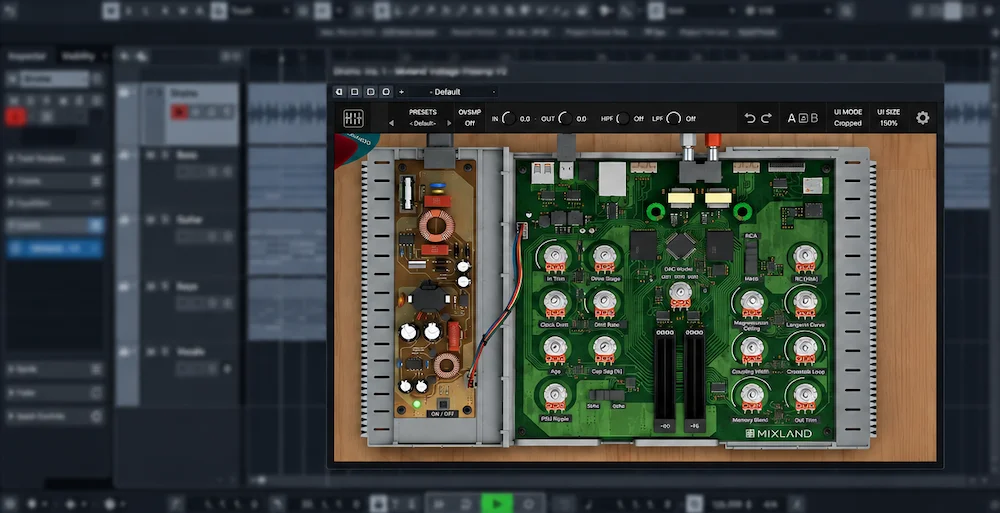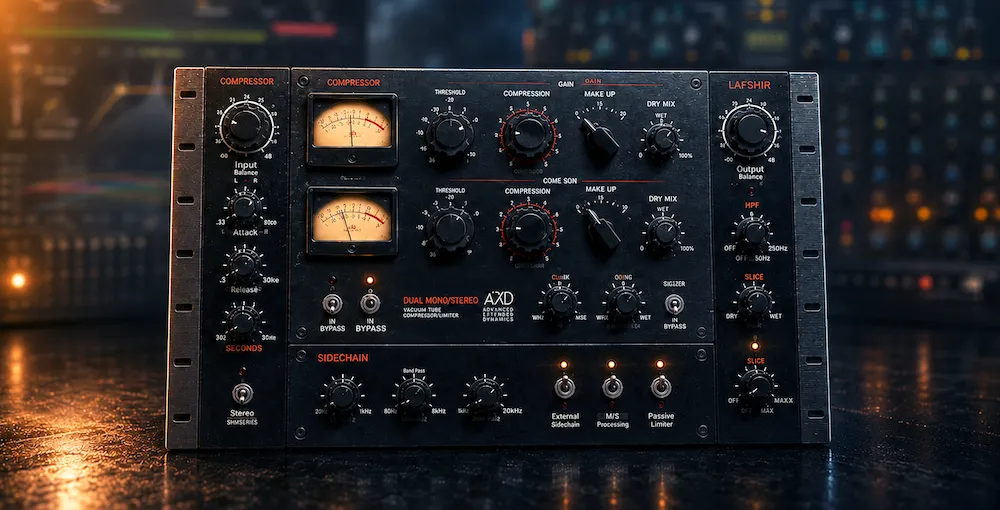
A mix bus compressor shapes the dynamics of the entire stereo mix rather than controlling an individual track. The right plugin can add cohesion, preserve punch, stabilize the low end, increase density, or introduce analog-style color without making the mix feel over-compressed.
The right choice depends on what the mix actually needs. An SSL-style VCA is usually the fastest route to familiar mix-bus glue, an API-style compressor gives more control over punch and low-frequency interaction, variable-mu designs can add density and tone, and modern digital compressors are useful when the dynamics need to change without adding another layer of coloration.
This guide compares the best mix bus compressor plugins for stereo buses, drum buses and related group-processing duties. The selection is based on compression topology, detector behavior, attack and release response, stereo linking, low-frequency sensitivity, tonal coloration, workflow and practical value—not simply on how closely a plugin models a famous piece of hardware.
On This Page
- Best Bus Compressor Plugins: Quick Picks
- How We Evaluate Bus Compressor Plugins
- What Makes a Good Mix Bus Compressor?
- Detailed Reviews of the Best Bus Compressor Plugins
- VCA vs. Vari-Mu vs. Digital
- How Much Gain Reduction Should You Use?
- Mix Bus Compressor Settings
- Sidechain High-Pass Filtering
- Attack and Release
- Mix Bus Compression Before Mastering
- Best Free and Budget Bus Compressors
- Which Mix Bus Compressor Should You Buy?
- Frequently Asked Questions
Best Bus Compressor Plugins: Quick Picks for Mix Bus Glue
| Plugin | Best For | Compression Character | Primary Strength | Main Trade-off |
|---|---|---|---|---|
| SSL Native Bus Compressor 2 | Classic mix bus glue | VCA, punchy, controlled | Fast, familiar cohesion across a stereo mix | Can become assertive on already-dense material |
| UAD API 2500 Bus Compressor | Punch and low-end control | VCA, weighty, aggressive | Highly adjustable detector and stereo behavior | More involved to dial in than a conventional glue compressor |
| Softube Bus Processor 670 | Analog density and color | Variable-mu, tube, transformer | Smooth compression with substantial tonal character | Less suitable when transparency is the priority |
| FabFilter Pro-C 3 | Transparent mix bus control | Digital, highly configurable | Precise dynamics without forcing analog coloration | Less inherent character than dedicated analog-modeling designs |
| Kiive Audio Complexx | Rock, drums and aggressive buses | Colored, character-driven | Combines compression, limiting and expansion for assertive bus shaping | Not the first choice for transparent stereo-bus work |
| Cytomic The Glue | Efficient classic VCA compression | VCA, controlled, relatively clean | Simple workflow, low overhead and proven bus-compression behavior | Fewer tonal options than newer all-purpose compressors |
Best overall for classic mix bus glue: SSL Native Bus Compressor 2.
Best for punch and low-end control: UAD API 2500 Bus Compressor.
Best for analog density and coloration: Softube Bus Processor 670.
Best for transparent dynamics: FabFilter Pro-C 3.
Best for aggressive rock and drum buses: Kiive Audio Complexx.
Best value-oriented classic VCA option: Cytomic The Glue.
How We Evaluate Bus Compressor Plugins
I do not judge a bus compressor by the gain-reduction number alone. In practical mix-bus work, I compare how the same material changes at matched level: whether the kick still has impact, whether the chorus keeps its size, how quickly the gain reduction recovers, and whether the stereo image starts moving when the left and right channels are driven differently.
- Compression topology: VCA, variable-mu, diode-bridge and modern digital designs produce different envelope behavior and tonal results.
- Detector behavior: we consider how kick, bass and sustained low-frequency energy influence gain reduction.
- Attack and release: timing determines whether the compressor preserves transient impact, follows the groove, or begins to pump.
- Stereo behavior: linked, partially linked, dual-mono and Mid/Side approaches can produce substantially different stereo movement.
- Transparency and coloration: some compressors are chosen because they disappear, while others are valuable precisely because they add density, saturation or harmonic character.
- Workflow: controls such as sidechain filtering, Mix, auto-release, metering and recall matter when the compressor is used repeatedly across real production sessions.
- Practical value: a plugin is not recommended simply because it is expensive or closely models famous hardware. It must provide a useful behavior that justifies its place in a modern mix-bus chain.
This is why the list includes both analog-modeled compressors and clean digital processors. The goal is not to find the most impressive-sounding compressor in isolation, but the best bus compressor for a specific mixing problem.
What Makes a Good Mix Bus Compressor?
Mix bus compression is fundamentally about program-level dynamics. Because the compressor is responding to the combined signal, every kick, snare, bass note, vocal phrase and stereo element can influence the same gain-control envelope.
On a mix bus, every major element shares the same detector. A kick transient can therefore trigger gain reduction on the guitars, vocals and cymbals, even though those sources have nothing to do with the kick itself. The attack determines how much of that transient gets through; the release determines how the rest of the mix recovers around it. That interaction is where much of the perceived glue comes from.
The useful differences between bus compressors come down to a handful of behaviors:
- Attack and release behavior: how the compressor preserves transient impact and how its recovery interacts with the rhythm of the mix.
- Detector response: how strongly kick, bass and other low-frequency energy influence the amount of gain reduction.
- Stereo linking: how the left and right channels respond when the energy of the mix is not evenly distributed between them.
- Compression character: whether gain reduction feels tight, soft, aggressive, dense or deliberately transparent.
- Non-linear behavior: whether the circuit model adds saturation, transformer color or harmonic density alongside the dynamics processing.
That is also why comparing compressors by the gain-reduction meter alone is misleading. Two processors can both show 1 dB of reduction and produce noticeably different mixes because they reach that number through different detector weighting, timing and gain-control behavior. For mix-bus work, how the compressor moves is often more important than how much it compresses.
Detailed Reviews of the Best Bus Compressor Plugins
1. SSL Native Bus Compressor 2 — Best for Classic Mix Bus Glue
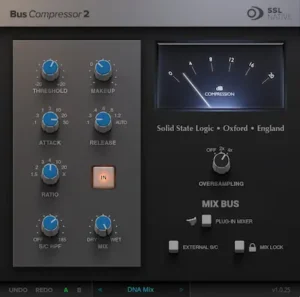 The SSL 4000 G Series bus compressor remains the reference point for a reason: its VCA design can make a mix feel more cohesive without requiring heavy gain reduction. The familiar slow-attack/controlled-release approach lets transients establish themselves before the compressor pulls the body of the mix together.
SSL Native Bus Compressor 2 takes that basic behavior and extends it with features that are useful in a modern mix. Sidechain filtering reduces the influence of low-frequency energy on the detector, while the Mix control makes parallel bus compression practical without setting up a separate routing path. Additional timing and ratio options also give it more range than the original console implementation.
Its real strength is restraint. Around 0.5–2 dB of gain reduction can tighten the relationship between drums, bass and the harmonic material without making the compressor itself the dominant sound. Attack and release choices have a pronounced effect on the result: slower attack times can retain drum impact, while the release determines whether the mix simply settles back into place or begins to move audibly with the groove.
The limitation is the same characteristic that makes the design useful. An SSL-style bus compressor is not neutral. On a mix that is already aggressive in the upper mids or unstable in the low end, additional bus compression can exaggerate those problems by making the entire mix respond to the same transients.
2. UAD API 2500 Bus Compressor — Best for Punch and Low-End Control
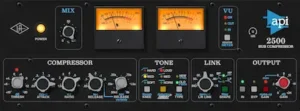 The API 2500 approaches bus compression differently. Where an SSL-style compressor is often chosen for straightforward cohesion, the 2500 gives you much more control over what drives the detector and how aggressively the compressor responds.
The key control is Thrust, which alters the detector’s response to low-frequency content. That matters on mixes where the kick or bass would otherwise dominate the compressor. Instead of allowing every low-end transient to pull the entire stereo bus down, the detector can be shaped so the compressor responds more usefully to the overall program.
The 2500 also provides selectable feed-forward and feedback behavior, multiple knee settings and variable stereo linking. Those controls are not there simply to expand the feature list. They change the way the compressor interacts with the groove, transients and stereo image. This makes the API particularly effective when the goal is controlled aggression rather than barely audible glue.
On a drum bus, that extra control can be used to tighten the kit while retaining the apparent weight of the kick. On a full mix, the 2500 can add forward motion and density, but its behavior is more assertive than the typical conservative SSL bus-compression setting.
That makes it a poor choice when the only requirement is transparent cohesion. If the mix already has enough punch and density, the additional character can be unnecessary. When the rhythm section needs to become more controlled without simply being flattened, however, the API’s detector and stereo controls give it a clear advantage.
3. Softube Bus Processor 670 — Best for Density, Tone and Variable-Mu Glue
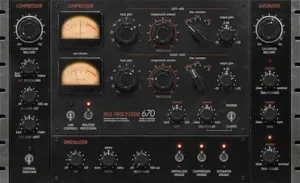 A variable-mu compressor changes the way a mix bus is shaped. Compared with the more immediate gain-control behavior of a typical VCA compressor, variable-mu designs tend to build compression progressively as the signal level rises. On a stereo mix, that can produce density and movement without the harder edge that aggressive VCA compression can introduce.
Softube Bus Processor 670 takes the Fairchild 670 concept and adapts it specifically for modern bus processing. Along with the variable-mu compression and limiting behavior, it provides independent control over stereo width and additional tube and transformer coloration. Those controls make it less of a strict historical recreation and more of a tonal processor for the entire mix.
The distinction matters when the mix already has the right balance but still feels too clean or disconnected. Rather than using compression primarily to tighten transients, the 670 can be driven for a thicker, more continuous presentation. The effect is often more noticeable in the body of the mix than in the initial attack of individual drums.
That character also creates a clear boundary. If the low-mid range is already crowded, additional tube and transformer saturation can make separation worse. Likewise, a sparse arrangement that depends on precise transient contrast may lose some of its openness under heavier variable-mu processing.
The Bus Processor 670 therefore makes the most sense when the compressor is part of the tonal architecture of the mix, not simply a dynamics-control stage. It is a specialist choice for engineers who want the bus compressor to contribute density and color as well as cohesion.
4. FabFilter Pro-C 3 — Best for Transparent Mix Bus Compression
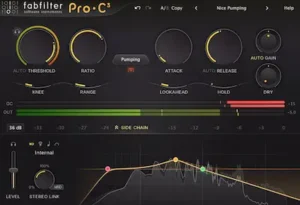 There is a strong case for using a compressor on the mix bus that does not try to sound like hardware at all. If the mix already has enough saturation, console color and harmonic density, adding another layer of analog character can solve a problem that does not exist.
FabFilter Pro-C 3 is useful in that situation because its strength is control rather than coloration. Its compression modes, sidechain processing and visual feedback make it possible to shape the envelope precisely while keeping the processor’s sonic footprint relatively low.
On a stereo bus, that makes it particularly effective when the objective is to reduce dynamic variation without changing the tonal balance. You can use a slower attack to preserve transient definition, shape the release around the musical phrasing, and filter the detector when low-frequency events are causing unnecessary gain reduction.
The trade-off is character. Pro-C 3 will not give you the particular harmonic density of a tube-and-transformer design or the familiar response of an SSL-style VCA simply by being placed across the mix. Its value is that it can solve the dynamic problem while leaving those tonal decisions to the rest of the signal chain.
That makes it a strong alternative to analog-modeled bus compressors when the mix already sounds finished and only needs tighter dynamic control. In that situation, transparency is not a missing feature—it is the reason to choose the plugin.
5. Kiive Audio Complexx — Best for Aggressive Bus Shaping
 Kiive Audio Complexx takes a different approach to bus processing. Rather than focusing on the familiar SSL-style glue formula, it combines compression, limiting and expansion in a single processor based on the ADR F760X-RS concept.
That combination becomes useful when a bus needs more than cohesion. On drums, for example, compression can control the main hits while expansion helps clean up the space between them. This can produce a tighter, more forward result without relying exclusively on fast attack times that would otherwise blunt the transients.
Complexx also brings saturation and stereo processing into the same workflow, so it is better understood as a character bus processor than as a transparent dynamics tool. That makes it particularly effective when the objective is to make a drum or instrument bus feel denser, more aggressive and more controlled at the same time.
It is a less obvious choice for a clean stereo mix bus. On productions where transient detail, low-level ambience and natural dynamics are important, the additional processing options can be unnecessary. Its strengths become more apparent when the bus itself needs to contribute attitude.
6. Cytomic The Glue — Best for Fast, Focused VCA Bus Compression
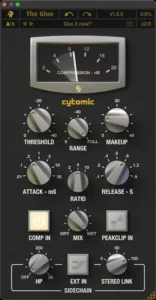 Cytomic The Glue has remained relevant because it concentrates on one job and does it without unnecessary complexity: classic VCA-style bus compression with a workflow that is quick to understand and easy to recall.
Its SSL-inspired behavior makes it a natural choice for the stereo bus, but its appeal is not simply that it resembles another famous compressor. The processor is lightweight, responsive and deliberately focused on the timing and gain-reduction behavior that make this type of compression useful in the first place.
That gives The Glue a practical advantage in large sessions. If you already know the basic VCA bus-compression workflow, there is little interface overhead between opening the plugin and making a meaningful decision. It also makes sense when CPU efficiency matters or when you want a dedicated bus compressor without the broader feature set of a modern all-purpose dynamics processor.
The obvious question is why you would choose it over SSL Native Bus Compressor 2. The answer is not that The Glue is inherently more authentic or more powerful. It is that The Glue remains a focused alternative for engineers who want the core VCA workflow without paying for additional features they may never use.
It also means its limitations are easy to define. If you want tube or transformer coloration, a fundamentally different detector response, or a compressor that can move between transparent and heavily characterful processing, another design on this list will give you more range.
VCA vs. Vari-Mu vs. Diode-Bridge vs. Digital Bus Compressors
Choosing between bus compressor types is more useful than comparing plugin brands alone. VCA, variable-mu, diode-bridge and modern digital designs differ in detector behavior, gain-control response, transient handling, stereo interaction and harmonic coloration.
| Compressor Design | Typical Behavior | Primary Strength | Main Risk | Best Fit |
|---|---|---|---|---|
| SSL-style VCA | Tight, controlled, cohesive | Fast route to conventional mix-bus glue | Can reduce transient contrast when pushed too hard | Pop, rock, electronic and dense stereo mixes |
| API-style VCA | Punchy, weighty, more assertive | Detector shaping and low-end control | More obvious dynamic movement at higher settings | Drum-heavy mixes, rock, hip-hop and aggressive buses |
| Vari-Mu | Progressive, smooth, dense | Density and harmonic character | Can soften transients and increase low-mid weight | Tonal mix-bus processing and smoother arrangements |
| 33609-style diode bridge | Smooth, controlled, relatively restrained | Gentle dynamics shaping with tonal weight | Less immediate punch than a typical VCA design | Full mixes, buses and material that benefits from restrained compression |
| Modern digital | Clean, precise, highly controllable | Transparency and detailed envelope control | Little inherent analog coloration | Transparent mix-bus processing and precision dynamics |
In practice, the choice comes down to the behavior you want from the bus. If a dense mix needs its elements to move together without much tonal intervention, an SSL-style VCA is usually the fastest route. If the rhythm section needs more authority and the detector needs to be shaped around the low end, an API-style design offers more control. A variable-mu compressor makes more sense when density and tone are part of the objective, while a 33609-style design sits between dynamic control and subtle coloration.
When the mix already sounds right and only needs its dynamics tightened, a modern digital compressor can be the better engineering decision. There is no advantage in adding analog character simply because the plugin is being used on the mix bus.
How Much Gain Reduction Should You Use on a Mix Bus?
There is no target gain-reduction number for a mix bus. The useful range depends on the compressor, the material, and what you want the dynamics processor to contribute to the mix.
For subtle glue, 0.5–1 dB of gain reduction is often enough to change the relationship between the elements without making the compression itself obvious. Around 1–2 dB, the compressor’s timing becomes more audible: the release starts to affect the groove, transient impact changes, and the mix can take on a noticeably denser presentation.
Once you are consistently beyond 2–3 dB on a full mix, the compressor is no longer just providing background cohesion. It is becoming part of the arrangement’s dynamics. That can work extremely well on aggressive productions, but you should be able to hear a specific benefit from the additional reduction rather than treating the meter as a target.
The better way to set a mix-bus compressor is to listen for what changes when you bypass it at matched level. If the compressed version only sounds better because it is louder, the gain reduction is not doing useful work.
For that reason, the question is not “How much compression should I use?” It is “What is the compressor improving, and does that improvement survive level-matched bypass?”
Mix Bus Compressor Settings: Ratio, Attack, Release and Gain Reduction
There is no universal mix bus compressor setting, but a conservative starting point makes it easier to judge what the processor is actually doing. Ratio, attack, release and gain reduction should be adjusted together rather than treated as independent targets. Start with a low ratio, preserve the initial transient, and set the release so the gain reduction returns naturally with the music.
| Starting Point | Typical Range | What to Listen For |
|---|---|---|
| Ratio | 1.5:1–2:1 | Gentle control rather than obvious flattening |
| Attack | 10–30 ms as a starting point | Kick and snare retain enough initial impact |
| Release | Auto or roughly 100–300 ms | Gain reduction follows the groove without pumping |
| Gain reduction | About 0.5–2 dB for subtle glue | Cohesion improves without reducing musical contrast |
| Sidechain high-pass | Use when low end dominates the detector | Kick and bass remain stable while the rest of the mix is controlled |
| Mix / Dry-Wet | Use for parallel compression when appropriate | More density without forcing the full signal through heavy compression |
These are starting points, not targets. A slower attack can preserve transient punch, while a faster attack can deliberately soften peaks. Release should be judged against the musical phrasing rather than selected from a fixed chart. The correct setting is the one that produces a measurable or audible improvement that remains convincing after level matching.
Do You Need a Sidechain High-Pass Filter on a Mix Bus Compressor?
A sidechain high-pass filter changes what the compressor listens to; it does not remove low frequencies from the audio path itself. This distinction is important on bass-heavy mixes where kick and sub-bass can dominate the detector and cause the entire stereo mix to duck.
Filtering some low-frequency energy from the detector can make the compressor respond more consistently to the rest of the program while allowing the kick and bass to retain more apparent weight. This is one reason sidechain filtering is particularly useful on modern pop, electronic, hip-hop and other productions with substantial sub-bass content.
The API 2500 takes this idea further with its Thrust detector shaping, while many modern bus compressors provide a conventional sidechain high-pass control. The right choice depends on whether you simply need to prevent low-end pumping or want the detector itself to have a more distinctive frequency-dependent response.
If the compressor is already reacting naturally to the full mix, there is no reason to engage a sidechain filter simply because the control exists. Use it when the low end is causing unwanted gain-reduction movement.
Attack and Release Shape the Mix More Than the Plugin Name
The same compressor can produce very different results on the same mix simply by changing its timing. On a stereo bus, attack and release are not secondary controls; they determine how the compressor interacts with the transients and phrasing of the entire arrangement.
A faster attack brings more of the transient into the gain-control envelope. On a full mix, that can reduce the apparent impact of drums and other short-duration events. A slower attack allows more of the initial transient through before the compressor acts on the body of the signal, which can preserve punch while still creating cohesion.
The same timing principle matters before a signal ever reaches the mix bus. On vocals and other foreground sources, compression determines how much of the source’s transient and body enters the wider mix before bus processing reacts to it. Our Black Rooster Audio PS-VC1 review looks at this from the vocal-chain side, where compression is integrated with tonal shaping and other processing rather than treated as an isolated dynamics stage.
Release is closely tied to musical phrasing. If it is too fast, the gain reduction can become audible as pumping or modulation. If it is too slow, the compressor may still be recovering when the next significant event arrives, leaving the mix under continuous gain reduction and reducing contrast between phrases.
Auto-release can be effective when the compressor’s program-dependent behavior follows the material naturally, but it is not inherently better than a fixed release. On tempo-driven material, a deliberately chosen release time can make the compressor’s recovery reinforce the rhythm rather than simply follow it.
There is also no guarantee that two compressors set to the same attack, release and gain reduction will sound alike. Their detectors, envelope shapes, knee behavior and gain-control circuits determine how those settings are actually translated into the mix. That is one of the main reasons bus compressors cannot be meaningfully compared by control ranges or feature lists alone.
Does Mix Bus Compression Make a Mix Louder?
Mix bus compression can increase perceived loudness, but loudness is usually a consequence of the dynamics change rather than the primary benefit of the compressor.
By reducing the difference between peaks and the average level of the program, compression can lower the mix’s crest factor and allow more makeup gain before the same peak level is reached. The result may sound denser or louder, particularly when the compressor is working consistently across the arrangement.
The problem is what happens to the transients. If the compressor removes too much of the kick, snare or other short-duration peaks, a clipper or limiter later in the chain has less transient structure to work with. The master may reach a higher measured loudness while losing punch, contrast and perceived size. This is closely related to the broader problem of loudness and clipping in mastering: pushing level is only useful when the transient structure that gives the track its impact survives the process.
This is why mix bus compression should be evaluated as part of the entire dynamics chain. The useful question is not whether the compressor makes the mix louder on its own, but whether it produces a better envelope for whatever follows it—whether that is a clipper, limiter, mastering processor or nothing at all.
Always compare the processed and bypassed versions at matched level. If the compressed mix only appears better because makeup gain has made it louder, the compressor may be adding level without adding value.
When Mix Bus Compression Makes a Mix Worse
Mix bus compression is easy to overestimate because the immediate result often sounds more finished. A denser signal, a little more level and a tighter low end can create the impression of improvement even when the compressor has reduced musical impact.
Pull the compressor out—or back off the settings—when you hear any of these symptoms:
- The kick is controlling the entire mix: every low-frequency transient causes the guitars, vocals and other elements to dip noticeably.
- The chorus gets smaller: the compressor has not recovered enough between sections, so the arrangement loses contrast when it should open up.
- Drum transients lose definition: the snare or kick becomes softer without gaining a corresponding increase in density or weight.
- The low end becomes unstable: bass level or perceived punch changes from hit to hit because the detector is reacting too strongly to the bottom end.
- The stereo image starts moving: asymmetrical material produces audible left/right modulation through the compressor’s linking behavior.
- The compressor is solving the wrong problem: a balance, arrangement or tracking issue is being treated with bus dynamics instead of being fixed at its source.
- The processed mix only wins when it is louder: once levels are matched, the supposed improvement disappears.
The last test is the most important. A bus compressor can make a mix sound immediately denser and more polished, which makes it unusually easy to mistake more processing for a better mix. If the compressor does not improve punch, cohesion, movement or tonal density at matched level, there is little reason to keep it on the bus.
Should You Use a Bus Compressor Before Mastering?
There is no mastering rule that says a mix must arrive without bus compression. If the compressor is part of the mix’s intended sound—shaping the groove, density or relationship between the instruments—it should generally remain in the mix.
A mastering engineer can work perfectly well with a compressed mix. The important distinction is between creative bus compression and compression used simply to control peaks. If the compressor is contributing to the character and movement of the production, removing it changes the mix rather than giving mastering more freedom. That distinction is one of the practical boundaries between mixing and mastering: processing that defines the production usually belongs to the mix, while mastering should refine the finished balance rather than reconstruct it.
Peak control is a different case. If the only reason the compressor is on the bus is to reduce occasional peaks or make the mix appear louder, the problem may be better handled elsewhere in the chain. The same principle applies when compression is introduced earlier in a hybrid signal path: an external compressor can become part of the recording or mixing chain, but committing dynamics before the signal reaches the DAW is a different engineering decision from applying reversible bus compression during mixing. Our Harrison Flex-10 review examines this distinction in the context of analog inserts, external compression, and hybrid signal flow.
The practical test is simple: bypass the compressor at matched level and ask whether the mix loses something intentional. If the answer is yes, print the mix with it. If nothing musical disappears, there is little reason to keep dynamics processing on the stereo bus merely because it is part of a conventional mixing workflow.
Are Expensive Bus Compressor Plugins Worth It?
Not necessarily. Once a compressor provides the attack, release, detector and stereo behavior required for the job, spending more money does not automatically improve the mix.
The strongest reason to buy another bus compressor is to gain a meaningfully different behavior: for example, moving from an SSL-style VCA to a variable-mu compressor, from colored analog processing to transparent digital control, or from conventional detection to a processor with more sophisticated sidechain and stereo options.
Four similar SSL-style compressors usually provide less practical range than one dependable VCA paired with a genuinely different topology.
Which Mix Bus Compressor Should You Buy?
| If You Need | Best Choice | Why It Fits |
|---|---|---|
| Classic mix bus glue | SSL Native Bus Compressor 2 | Direct route to controlled SSL-style VCA cohesion |
| Punch and low-end stability | UAD API 2500 | Thrust and flexible detector/stereo behavior |
| Transparent compression | FabFilter Pro-C 3 | Detailed dynamics control without strong analog coloration |
| Analog warmth and density | Softube Bus Processor 670 | Variable-mu compression plus tube and transformer coloration |
| Classic glue on a budget | Cytomic The Glue | Focused SSL-style VCA workflow without unnecessary complexity |
| Aggressive drum and group shaping | Kiive Audio Complexx | Compression, expansion and limiting for more assertive bus processing |
If you already own a capable SSL-style compressor, the strongest reason to add another processor is not to get a slightly different version of the same sound. Choose a different compression family when you need a different response—more detector control, more density, more transparency or more aggressive bus shaping.
Best Free and Budget Bus Compressor Plugins
You do not need an expensive analog-modelled compressor to get professional mix-bus results. A good digital compressor can provide cleaner and more predictable control than a premium hardware emulation, particularly when the mix already has enough saturation and character.
- TDR Kotelnikov: the strongest choice when transparent stereo-bus compression is the priority and budget matters.
- Klanghelm MJUC: a strong low-cost option when the goal is variable-mu density, warmth and character rather than transparency.
- Cytomic The Glue: a practical choice when you specifically want the classic VCA/SSL-style approach without a complicated workflow.
The important distinction is not free versus expensive. It is whether the compressor provides the dynamic behavior your mix actually needs. A transparent compressor that solves the problem is more useful than an expensive analog model that adds coloration you did not need.
Final Verdict: Which Bus Compressor Should You Choose?
SSL Native Bus Compressor 2 is the strongest all-around choice for classic mix-bus glue. Its VCA behavior is familiar, effective and flexible enough for modern production without losing the basic character that made this type of compressor a mix-bus standard.
UAD API 2500 is the better choice when the mix needs more punch and detector control. Its ability to shape the compressor’s response around low-frequency energy gives it an advantage on rhythm-heavy material and aggressive buses.
Softube Bus Processor 670 is the specialist choice when compression and tone need to work together. Its variable-mu behavior and tube/transformer coloration make it useful when the mix needs density rather than simply tighter peak control.
FabFilter Pro-C 3 is the logical choice when transparency matters more than analog character. It can solve a dynamics problem without forcing another recognizable compressor sound onto a mix that may already have enough coloration.
Kiive Audio Complexx makes the most sense when a bus needs aggressive shaping rather than conventional glue. Its combination of compression, expansion and limiting gives it a different role from the dedicated stereo-bus compressors above.
Cytomic The Glue remains a focused option for engineers who want straightforward VCA compression without a large feature set. Its appeal is efficiency and workflow rather than trying to cover every possible dynamics-processing scenario.
There is no universal winner because mix-bus compression is not a single job. The right processor depends on whether the mix needs cohesion, punch, density, transparency or character. A compressor that improves one of those qualities can easily damage another.
For most engineers, there is also little practical value in collecting multiple near-identical SSL-style compressors. One dependable VCA design plus a genuinely different compressor—whether variable-mu, diode-bridge or transparent digital—will cover considerably more ground than a shelf full of minor variations on the same circuit.
When More Mix Bus Compression Is Not the Answer
A better bus compressor cannot fix a mix that already has a balance, low-end, transient, or translation problem. Professional mastering starts with understanding what the mix is actually doing, then improving its dynamics, tonal balance, punch, and translation without forcing unnecessary processing onto the finished track.
Before buying another compressor or pushing the mix bus harder, hear what an experienced mastering engineer can do with your existing mix. Upload up to 35 seconds and receive a free mastering demo prepared by a real mastering engineer.
Get your free demo →
Frequently Asked Questions About Bus Compressor Plugins
What is the best bus compressor plugin for mix bus glue?
For classic mix bus glue, SSL Native Bus Compressor 2 is the strongest all-around choice. The API 2500 is better when punch and detector control are priorities, while FabFilter Pro-C 3 is the better option when you want transparent dynamics control.
Is SSL compression still the best for mix bus compression?
SSL-style VCA compression remains one of the most effective approaches for cohesion and controlled punch, but it is not universally superior. Variable-mu designs can provide more density and color, while modern digital compressors can deliver tighter control with less coloration.
What is the best alternative to an SSL bus compressor?
The API 2500 is the strongest alternative if you want a different VCA behavior with more control over detector response and low-frequency interaction. For transparency, a compressor such as FabFilter Pro-C 3 is a more meaningful alternative than another SSL-style emulation.
Should I use an API 2500 or SSL compressor on the mix bus?
Choose an SSL-style compressor for straightforward cohesion and familiar VCA punch. Choose the API 2500 when the mix needs more aggressive control, particularly when kick and bass interaction makes conventional bus compression unstable.
How much gain reduction should a mix bus compressor use?
About 0.5–1 dB is a useful starting range for subtle glue, while 1–2 dB produces a more obvious dynamic effect. Higher amounts can work, but the additional gain reduction should create a deliberate sonic benefit rather than simply make the mix louder.
Should I use a mix bus compressor before mastering?
Yes, if the compression is part of the intended mix sound. If it is only being used to control peaks or increase apparent loudness, it may be better to solve that problem elsewhere. Mastering does not require an uncompressed mix by default.
Does a bus compressor affect the low end?
Yes. Kick and bass energy can dominate the detector and cause the entire stereo mix to move. Sidechain filtering and detector designs that reduce low-frequency weighting can help preserve low-end stability while maintaining useful compression.
What is the best free mix bus compressor?
TDR Kotelnikov is one of the strongest free options for transparent stereo-bus compression. It is particularly useful when you want to control dynamics without adding obvious analog coloration. If you want color rather than transparency, a low-cost variable-mu compressor such as Klanghelm MJUC is a more appropriate direction.
What is the best bus compressor for drums?
The UAD API 2500 is one of the strongest choices when drum-bus punch and low-end control are priorities. Its detector and stereo-linking options allow substantial compression while preserving the apparent weight of the kick. SSL-style VCA compressors are a better choice when the goal is more conventional cohesion.
What is the best transparent bus compressor?
FabFilter Pro-C 3 is a strong choice for precise, transparent control, while TDR Kotelnikov is an excellent budget-oriented alternative. Both make sense when the mix already has sufficient analog coloration and the compressor should primarily manage dynamics.
Should I use the same compressor on the mix bus and drum bus?
You can, but there is no reason to force the same compressor onto both jobs. A mix bus usually benefits from controlled, low-profile gain reduction, while a drum bus may benefit from faster timing, stronger gain reduction, or more aggressive detector behavior. The best compressor is determined by the dynamics problem rather than the bus name.
Are analog-modeled bus compressors better than stock DAW compressors?
Not inherently. A stock compressor can handle mix-bus dynamics extremely well. A dedicated analog-modeled plugin becomes worthwhile when its envelope behavior, detector response, harmonic character or workflow produces something you cannot achieve as effectively with the tools you already own.
Is a bus compressor worth buying if I already own an SSL-style plugin?
Usually only if the new compressor offers a genuinely different behavior. Another SSL-style VCA provides diminishing returns; an API-style VCA, variable-mu design or transparent digital compressor will generally expand your practical mixing options much further.

Yurii Ariefiev evaluates mix bus compression from a production and mastering perspective, focusing on transient preservation, detector behavior, stereo dynamics, low-end interaction, and how different compressor designs affect the finished mix.
At AREFYEV STUDIO, bus compressors are judged by what they actually change in a mix—not by analog modeling, feature count, or plugin price. The goal is to identify when compression improves cohesion, punch, density, and translation and when it simply adds processing without solving a real mix problem.
☕ Buy me a coffee