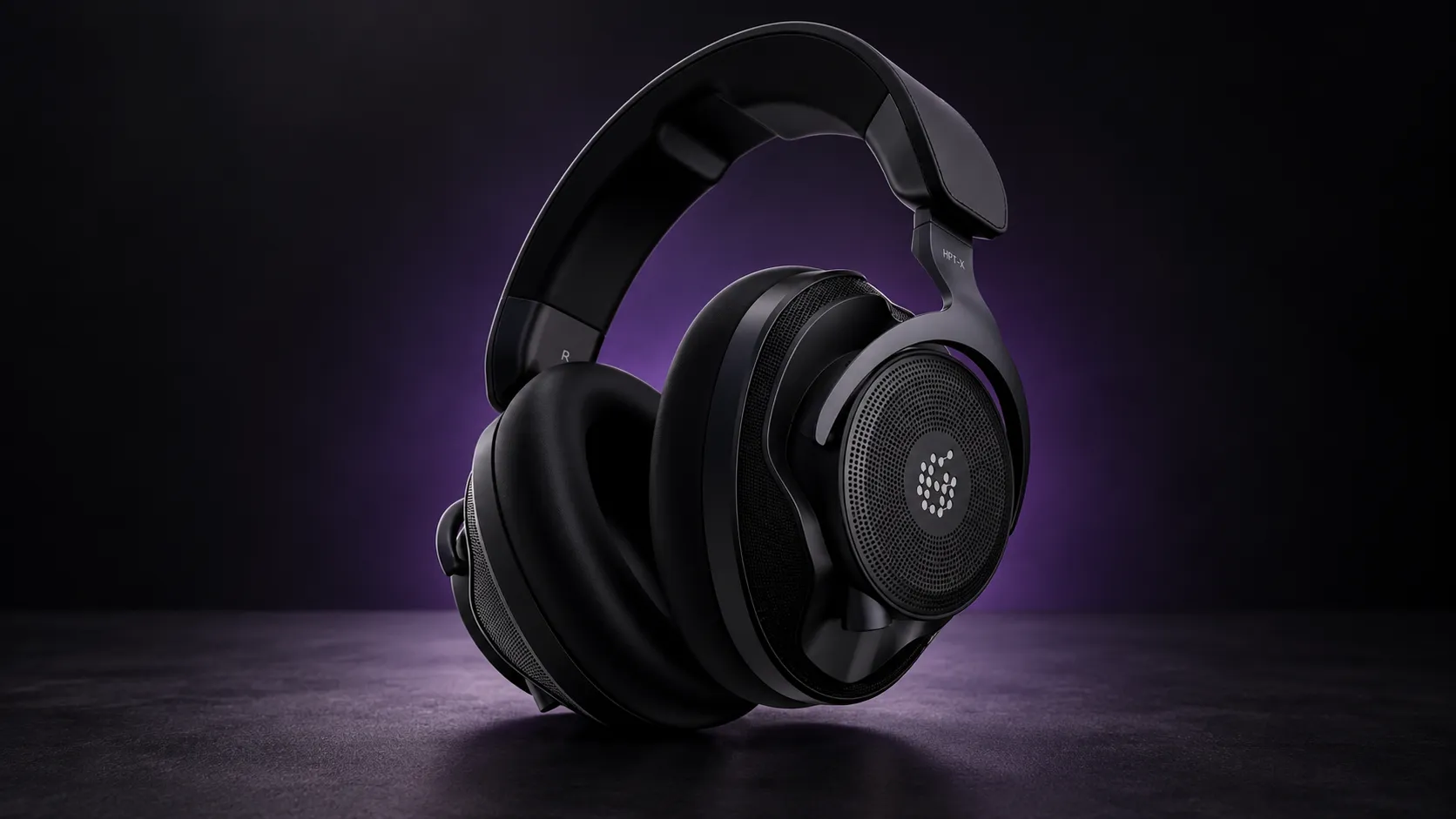
The ADAM Audio H715 Reference is an open-back, 150-ohm studio headphone designed for mixing, mastering, and Hi-Fi listening. Its main differentiator is the software package: H715-specific calibration profiles and adjustable crossfeed in Headphone Utility, alongside ListenHub for system-wide monitoring and reference comparison on macOS.
ADAM Audio’s US store lists the H715 at $699.99 but currently marks it out of stock, with availability expected at the end of 2026. Sweetwater is accepting pre-orders and lists an estimated arrival date of November 6, 2026. The launch announcement listed a US MAP of $824.99, so both pricing and delivery estimates should be confirmed with the retailer before buying.
Is it worth considering? The H715 has a distinctive monitoring workflow, but its specifications and software features do not establish that it is more accurate than established reference headphones. This review assesses the published specifications, documented features, practical use cases, and unresolved questions. It is not a hands-on listening test: independent frequency-response measurements, channel-matching data, and controlled comparisons are still needed to establish its acoustic performance.
Why Headphone Calibration Matters More Than Another Reference Headphone
 Choosing reference headphones by reputation alone is increasingly difficult to justify. Calibration, crossfeed, and virtual monitoring can change how a headphone performs in a working mix environment, making the monitoring chain as important as the transducer itself.
The trade-off is familiar to any engineer who works across rooms. Loudspeakers interact with room modes and reflections; headphones remove those variables but introduce their own frequency-response deviations and alter the spatial cues used to judge stereo placement. Neither approach guarantees translation on its own.
In an untreated room, headphones can provide a more repeatable reference than loudspeakers whose bass response changes with listening position. But repeatability is not accuracy: if a headphone has a broad response peak or dip, an engineer can make the same wrong EQ decision consistently. Calibration can address some of those deviations, provided the correction profile is appropriate for the headphone and its fit.
The ADAM Audio H715 Reference combines its open-back, dynamic design with Headphone Utility, which provides H715-specific calibration profiles and adjustable crossfeed, and ListenHub, a macOS application for system-wide monitoring and reference comparison. The relevant question is whether this integration makes critical listening more reliable and reduces friction in everyday work—not whether software features automatically make the headphones more accurate.
That distinction matters at this price. Established reference headphones already have known behavior that experienced engineers have learned to work around. The H715 needs to offer either a meaningful improvement in monitoring performance or a workflow advantage substantial enough to justify changing a trusted setup. Its software package makes that case plausible, but independent measurements and controlled listening comparisons are needed to establish the actual benefit.
ADAM Audio H715 Reference: Driver Design and Technical Specifications
The ADAM Audio H715 Reference is an open-back, circumaural headphone built around a 40 mm dynamic driver with a titanium-plated PEN diaphragm. ADAM Audio also specifies neodymium magnets, a tuned suspension, and a patent-pending ventilation system designed to support the driver’s acoustic performance. These construction details describe the engineering approach, but they do not establish how accurately the headphones reproduce a mix.
| Specification | Published information |
|---|---|
| Driver type | 40 mm dynamic driver with titanium-plated PEN diaphragm |
| Acoustic design | Open-back, circumaural |
| Impedance | 150 ohms |
| Sensitivity | 102 dB SPL at 1 Vrms; 94 dB SPL at 1 mW, as specified by ADAM Audio |
| Frequency response | 9 Hz–40 kHz at -3 dB, according to the manufacturer |
| Maximum SPL | 113 dB SPL at 1 kHz and 0.05% THD, according to the manufacturer |
| Total harmonic distortion (THD) | Less than 0.05% at 1 kHz and 100 dB SPL |
| Maximum input power | 100 mW (3.8 V), according to the manufacturer |
| Weight | Approximately 302 g without cable |
| Headphone connection | Dual-sided cable entry; 2.5 mm TRS connectors at the earcups |
| Source connections | 3.5 mm TRS studio connection with 6.3 mm adapter; dedicated 4.4 mm Pentaconn cable for compatible balanced Hi-Fi equipment |
| Included accessories | 1.3 m coiled studio cable (extending to 3 m), 3 m Hi-Fi cable, hard carry case, soft-cloth and faux-leather ear pads, and Hi-Fi mode activation pin |
| Replaceable parts | Ear pads and headband pad |
| Software | ADAM Audio Headphone Utility and ListenHub by Sonnox |
| US store price | $699.99 on ADAM Audio’s US store; the launch announcement listed a US MAP of $824.99. These are different published price points, so confirm the price at checkout. |
| Availability | ADAM Audio’s US store currently lists the headphones as out of stock and available at the end of 2026. The launch announcement specified worldwide availability from December 2026; retailer stock and delivery estimates may differ. |
The H715 also includes a dedicated Hi-Fi mode for use with compatible differential headphone amplifiers. ADAM Audio states that this mode separates the common ground connection, allowing the supplied 4.4 mm Pentaconn cable to be used with a compatible balanced output. This is a connection option, not evidence that balanced operation automatically sounds better: the amplifier’s output design and the actual listening comparison still matter. Buyers should confirm that their equipment supports the required connection before treating this feature as a benefit.
The diaphragm material is one part of the design, not a reliable shortcut to judging sound quality.
The published frequency range of 9 Hz–40 kHz, specified at -3 dB, also needs context. Those endpoints do not show the shape of the response across the audible spectrum. They cannot tell you whether the headphones have a broad bass lift, a recessed midrange, a treble peak, or meaningful left-right response differences. Nor do they show how the response changes with ear-pad seal, head shape, or headphone position.
For mixing and mastering, those variations are more consequential than an extended upper-frequency limit. Reliable tonal decisions depend on the balance of the bass, midrange, and treble across the spectrum—not simply on the lowest and highest frequencies listed in a specification sheet.
The distortion figures require similar restraint. A THD specification measured at 1 kHz and 100 dB SPL provides a reference under one stated condition; it does not describe distortion across the full frequency range or at every playback level. The separate maximum-SPL figure should not be treated as proof of low distortion at all frequencies. Independent measurements across frequency and level would be needed to assess the H715’s distortion performance against competing reference headphones.
Check Your Mix Beyond the Headphones
Headphone calibration and crossfeed can shape how you judge tonal balance and stereo placement, but the final test is how your master translates across different playback systems. Our free mastering demo gives you a chance to hear your own material through a professional mastering process and evaluate the result with fresh perspective. Upload up to 40 seconds of your mix for a focused assessment of its balance, clarity, dynamics, and stereo image.
Request Your Free Mastering Demo →
Headphone Utility and ListenHub: Where the H715 Gains Practical Value
The ADAM Audio H715 Reference has a stronger case as an integrated monitoring system than its driver specifications alone might suggest. Its software package combines Headphone Utility, a calibration and crossfeed plug-in developed with Sonnox, with ListenHub, a standalone macOS application designed for system-wide monitoring and reference comparison. The potential advantage is workflow consistency: engineers can shape their headphone monitoring and evaluate reference material without relying exclusively on a DAW’s master-bus processing.
Headphone Calibration and Tonal Accuracy
Headphone calibration uses corrective equalization to bring a headphone’s frequency response closer to a defined target. In mixing and mastering, a suitable correction profile may help engineers make more consistent judgments about kick-and-bass balance, vocal presence, upper-midrange energy, and broad tonal relationships.
Calibration does not make every headphone universally accurate. Its effectiveness depends on the target curve, the quality of the underlying measurements, and how closely the profile represents the headphone being used. Individual ear anatomy, pad condition, and headphone positioning can all affect the response at the listener’s ears. Equalization also cannot fully reproduce the acoustic interaction between loudspeakers and a room.
There is an important distinction between a model-specific profile derived from representative measurements and a correction based on measurements of an individual unit. Neither approach should be assumed to eliminate all response variation. ADAM Audio’s H715-specific profiles provide a practical starting point, but their real-world accuracy depends on the measurement methodology and the residual response error after correction. Those factors require independent verification before the software can be treated as proof of reference-grade tonal accuracy.
Crossfeed for Stereo Monitoring
Headphones deliver the left and right channels primarily to their respective ears. With loudspeakers, each ear also receives sound from the opposite speaker, with differences in arrival time, level, and frequency response. That change in listening geometry affects how engineers perceive panning, stereo width, and the position of elements within a mix.
Crossfeed introduces a controlled, processed contribution from each channel into the opposite channel. Depending on its design and settings, it can make headphone monitoring feel closer to listening through loudspeakers and may help some engineers assess stereo placement with a more familiar spatial perspective.
Crossfeed is a monitoring aid, not a substitute for checking a mix on loudspeakers. It changes the signal being auditioned, and its usefulness depends on the implementation and the engineer’s familiarity with the resulting presentation. A stereo image that feels more speaker-like is not automatically more accurate, so critical decisions still need to be checked against other monitoring references.
ListenHub for System-Wide Monitoring and Reference Comparison
ListenHub’s practical distinction is that it can route audio from DAWs, streaming services, and local files through a shared monitoring path on macOS. It also provides spectral and stereo-image analysis, including tools for examining frequency bands and the spatial boundaries of a mix. The application can A/B between separate monitoring systems, such as headphones and loudspeakers, making it relevant to engineers who routinely compare the same material across playback chains.
These functions are useful only if the comparison remains controlled. Match playback levels, verify that both sources follow the intended calibration path, and confirm that the selected output device and routing configuration behave as expected. ListenHub’s feature set creates a practical way to organize these checks; it does not, by itself, establish that a mix will translate better.
Compatibility deserves attention before adopting the software in a production environment. Engineers should check how ListenHub works with their audio interface, DAW configuration, output device, sample-rate settings, and other system-audio tools. Its standalone macOS implementation should not be assumed to offer the same system-wide workflow on Windows.
For a studio with an established monitoring setup, the software package earns its place only if it improves consistency, simplifies reference checks, or reduces routine setup work. If it introduces routing conflicts or makes level-matched comparisons more difficult, the additional processing layer may create more friction than value. The key question is whether the integrated workflow improves monitoring decisions in practice—not how many features the software includes.
What the H715 Changes in a Mixing or Mastering Session
The practical case for the ADAM Audio H715 Reference rests on monitoring consistency, calibration, and a more integrated reference-listening workflow. The headphones do not improve the audio file directly. Their value depends on whether the monitoring setup helps an engineer identify problems more reliably and make decisions that translate to other playback systems.
Low-Frequency Decisions in a Home Studio
Room modes and speaker placement can produce substantial bass variations across a listening space. Headphones avoid those room-dependent playback effects, giving engineers a useful alternative when the room is untreated or the loudspeaker response is unreliable. This can help with assessing the relationship between kick drum, bass, and other low-frequency elements.
A suitable calibration profile may make the headphone response a more useful tonal reference, but it cannot eliminate every uncertainty in low-frequency judgment. Headphones do not reproduce the same physical interaction between loudspeakers, the room, and the listener. Bass decisions should therefore be checked against other trusted playback systems whenever possible, particularly when the final mix depends on precise sub-bass balance.
Reference Matching During Mixing
Comparing a mix with well-chosen commercial references can expose differences in vocal placement, spectral balance, transient character, stereo presentation, and perceived loudness. Using reference tracks for mixing also gives engineers a consistent point of comparison when evaluating tonal balance and stereo placement. An integrated monitoring workflow may make those comparisons easier by reducing the need to switch manually between applications or rebuild signal paths.
Reliable comparison still depends on level matching. A louder reference can seem fuller, brighter, or more detailed even when those qualities are largely the result of playback level. Metering can help establish a useful starting point, but engineers must also compare appropriate sections and listen critically. Calibration and convenient routing do not compensate for an uncontrolled comparison.
A Secondary Monitoring Perspective for Mastering
Headphones can reveal details that are difficult to isolate in a room, including clicks, edit discontinuities, low-level distortion, and certain stereo artifacts. They also provide a consistent secondary reference when working outside a dedicated control room. Calibration may make that reference easier to interpret, provided the correction profile is appropriate for the headphones and listening conditions.
For mastering, however, detail retrieval is only part of the job. Decisions about bass balance, stereo width, dynamics, and playback translation benefit from checking the program on more than one monitoring system. The H715 may serve as a useful calibrated reference, but its published specifications do not establish that it can replace a familiar loudspeaker setup or other established translation checks.
Can the H715 Save Time?
The most plausible time savings come from workflow integration: keeping calibration available, switching between supported reference sources, and reducing repetitive monitoring setup. These conveniences may make a session easier to manage, but they should not be confused with proven improvements in mix quality or mastering accuracy.
The available product information does not establish independent CPU, memory, latency, or long-session stability performance for the complete software setup. The headphones themselves are passive, but monitoring latency and system stability depend on the software, audio routing, interface, buffer settings, and host configuration. Engineers working to tight monitoring-latency requirements should test the full signal path in their own setup rather than assume that the additional software introduces no meaningful overhead.
ADAM Audio H715 Reference: What Still Needs Independent Verification
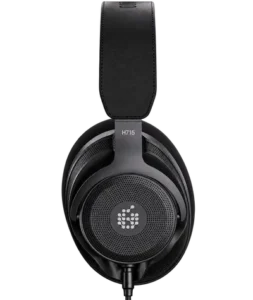 The H715 combines a detailed specification sheet with an integrated software package, but neither establishes its real-world accuracy on its own. Several aspects of its performance require independent measurements or extended use before the headphones can be judged against established studio references.
- Frequency response and tonal neutrality: The reference designation does not establish a flat response at the listener’s eardrum or consistent tonal balance across different listeners and fits.
- Low-frequency accuracy: A published lower frequency limit does not reveal bass response linearity, distortion at low frequencies, or how consistently the headphones reproduce sub-bass.
- Transient performance: Diaphragm materials and suspension design describe the construction, but do not independently demonstrate superior transient reproduction or audible detail.
- Calibration effectiveness: H715-specific correction profiles are useful in principle, but their practical accuracy depends on the measurement method, target response, unit variation, and residual error after correction.
- Stereo translation: Crossfeed changes the relationship between the left and right channels, but cannot fully recreate the acoustic interaction of loudspeakers, a room, and the listener.
- Long-term durability: Replaceable ear pads and headband padding can simplify maintenance, but they do not establish the product’s long-term reliability or service history.
A meaningful independent evaluation would need full frequency-response measurements, left-right channel matching, and distortion measurements across both frequency and playback level. Measurements before and after calibration would help establish how much correction is achieved and where significant deviations remain. Controlled, level-matched listening comparisons against established reference headphones would then help determine whether those measured differences translate into a practical advantage for mixing and mastering.
Comfort deserves the same scrutiny. ADAM Audio lists the H715 at approximately 302 g without the cable and specifies replaceable ear pads and headband padding. Weight and replaceable components are useful reference points, but they cannot establish how the headphones behave during a four-hour mastering session. Clamp force, pressure distribution, heat buildup, pad fit, and listening fatigue require evaluation over time.
How to Evaluate the H715 Before Buying
If you can audition the H715, compare it with a reference headphone you already know rather than judging it from a short first impression. Use familiar, well-produced material and keep playback levels as closely matched as possible. Even modest level differences can influence perceived bass weight, clarity, and detail.
Start with Headphone Utility bypassed, then enable the H715 calibration profile. Listen for changes in kick-and-bass balance, vocal presence, upper-midrange energy, and treble. Repeat the comparison with crossfeed enabled and disabled so you can distinguish tonal correction from changes in stereo presentation.
Next, compare a few decisions on your usual studio monitors. Check low-frequency balance, vocal level, reverb depth, and stereo placement. If a decision changes substantially when you move between monitoring systems, investigate the difference instead of assuming that one presentation is automatically correct.
Finally, test the complete software workflow on the computer and audio interface you intend to use. Confirm that your reference sources route correctly, that monitoring levels remain consistent, and that switching between applications does not disrupt the session.
This procedure cannot establish absolute accuracy or replace independent measurements. It can, however, help you decide whether the H715’s calibration and monitoring workflow is useful in your own studio. If you cannot audition the headphones, wait for independent measurements and controlled comparisons before treating them as a proven acoustic upgrade.
ADAM Audio H715 Reference vs. Competing Studio Headphones
The ADAM Audio H715 Reference competes with established headphones used for critical listening, mixing, and mastering. The meaningful comparison is not which model lists the widest frequency range, but how its acoustic performance, fit, and monitoring workflow serve a particular engineer. The H715’s main differentiator is its integrated calibration and reference-monitoring software; established alternatives may appeal to engineers who already know how those headphones translate in their own work.
| Model | Why Consider It | What Matters Before Buying |
|---|---|---|
| ADAM Audio H715 Reference | H715-specific calibration profiles, adjustable crossfeed, ListenHub integration, and a dedicated Hi-Fi mode. | Confirm software compatibility and current availability. Independent measurements are still needed to establish its acoustic accuracy relative to established reference headphones. |
| Neumann NDH 30 | An established open-back monitoring option with a longer history of professional use and independent coverage. | Consider fit, comfort, amplifier compatibility, and whether its presentation suits a workflow you already know. |
| Sennheiser HD 800 S | A long-established premium open-back headphone that may be a familiar reference for some engineers. | Evaluate its fit and presentation against your own work. A premium price or established reputation does not automatically guarantee better translation for every user. |
| Audeze LCD-X | A planar-magnetic alternative for engineers who want to evaluate a different transducer design. | Consider weight, fit, amplification, current pricing, and comparable measurement or listening evidence before deciding. |
The H715’s most distinctive proposition is its bundled monitoring software. Headphone Utility provides H715-specific calibration profiles and adjustable crossfeed, while ListenHub extends the workflow to supported system audio on macOS. For engineers who want these functions integrated into their monitoring setup, the package may be more convenient than assembling separate tools around conventional headphones.
There is also a practical argument for staying with a familiar reference. Engineers who have learned how a particular headphone translates to loudspeakers, consumer playback systems, and finished masters have developed a useful working baseline. Switching to a new model means learning its behavior, even if calibration is available. The H715 therefore needs to demonstrate a meaningful advantage in monitoring performance or workflow before replacing a trusted pair becomes worthwhile.
At ADAM Audio’s listed US price of $699.99, the H715 is a substantial investment. Its value depends on how much the integrated software contributes to the buyer’s daily work, as well as on the headphones’ independently verified acoustic performance. Regional prices, retailer availability, and bundled software terms should be checked at the time of purchase. Price and feature count alone are not evidence of superior monitoring accuracy.
Who Should Buy the ADAM Audio H715 Reference?
Mixing engineers: The H715 is worth evaluating if headphone calibration, crossfeed, and reference comparison would improve an established workflow. Before buying, assess the fit, available response measurements, and whether the software offers a practical advantage over the monitoring tools already in use.
Mastering engineers: The H715 may be useful as a secondary reference for detail checks and work outside a dedicated control room. Engineers with a trusted monitoring chain should compare it against their existing headphones and loudspeakers before considering it a replacement. Its specifications alone do not establish mastering-grade accuracy.
Home-studio producers working in untreated rooms: Headphones can provide a more repeatable listening reference than loudspeakers in a room with problematic bass response. The H715 may be worth considering if its calibration workflow fits the budget, but it will not resolve every translation problem. Checking mixes on additional playback systems remains essential.
Electronic music producers and beatmakers: Calibration and crossfeed may support decisions about kick-and-bass balance, synth layering, stereo placement, and tonal density. The main consideration is whether the integrated software improves those decisions enough to justify the premium over a familiar pair of reference headphones.
Beginners and budget-conscious creators: The H715 is difficult to justify as a first major monitoring purchase without a clear need for its software features. A dependable, more affordable headphone setup, suitable metering tools, and a consistent reference-listening routine may deliver greater value at this stage.
Professional studios and multi-workstation facilities: The integrated monitoring approach may be attractive where engineers need repeatable headphone setups across different workstations. Before a wider rollout, test software compatibility, calibration consistency, routing behavior, service arrangements, and long-term reliability in the actual studio environment.
At $699.99, the H715 makes the most sense for engineers who specifically want its combination of headphones and monitoring software. Buyers who need only a dependable reference headphone should compare its independently verified acoustic performance and overall ownership cost with established alternatives before committing to the purchase.
Editorial Assessment
| Category | Assessment |
|---|---|
| Hardware Proposition | Promising on paper |
| Software Integration | Distinctive feature set |
| Compatibility | Verify against your intended setup |
| Independent Acoustic Evidence | Not yet established |
| Value for Money | Depends on workflow needs and verified performance |
Editorial note: This assessment is based on published specifications and documented software features, not an independent listening test. Acoustic accuracy, long-session comfort, and performance relative to established reference headphones remain unverified.
Verdict: A Distinctive Monitoring Package That Still Needs Testing
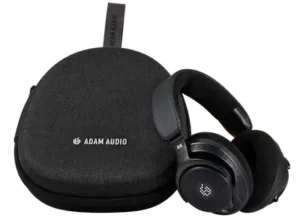 The ADAM Audio H715 Reference stands out for combining H715-specific headphone calibration, adjustable crossfeed, ListenHub, and a dedicated Hi-Fi mode. For engineers who want those functions in one monitoring workflow, the software package is its clearest reason to consider the headphones.
The key unanswered question is whether the H715’s acoustic performance justifies its price against established reference headphones. Independent measurements, level-matched comparisons, and extended comfort testing are needed to answer that question.
At the currently listed US store price of $699.99, the H715 is worth evaluating if its software directly addresses your workflow. Before buying, confirm the current price and availability, check compatibility with your setup, and compare it with a reference headphone you already know. Treat it as a potential monitoring option—not a proven upgrade—until stronger independent evidence becomes available.
Hear What Your Mix Needs Beyond Monitoring
Even with calibrated headphones, crossfeed, and careful reference matching, the final balance of a mix still needs to hold up beyond your monitoring setup. A mix that seems clear and controlled in headphones may present different relationships between bass, vocals, transients, and stereo width on other playback systems. Another plugin is not always the answer; a professional mastering perspective can help you assess the finished mix and hear what changes during the mastering process. Upload up to 40 seconds of your mix to receive a free mastering demo prepared by a real mastering engineer, then compare the original and mastered versions to judge the differences for yourself. The result will depend on the material and the processing it needs.
Upload Your Mix for a Free Mastering Demo →
Frequently Asked Questions
Can the ADAM Audio H715 Reference work with any audio interface?
It uses a wired 150-ohm connection and can work with an interface that has a suitable headphone output. Available volume and clean headroom depend on the output stage, so check the interface specifications if you need high monitoring levels.
Does the H715 need a dedicated headphone amplifier?
Not necessarily. Impedance alone does not determine whether an external amplifier is required. The relevant factors are the interface’s output capability, the headphone’s sensitivity, and the listening level you need. Test for sufficient clean volume and headroom before adding another device to the signal chain.
Does Headphone Utility work with every DAW?
Compatibility depends on the plug-in formats and operating systems supported by the current release. Check the software’s system requirements and supported formats before purchase rather than assuming it will work in every DAW configuration.
Can ListenHub apply monitoring to audio outside a DAW?
ListenHub is designed for system-wide monitoring on macOS, extending the workflow beyond a single DAW signal path. Check the current documentation for supported audio-routing configurations, device compatibility, and any application-specific limitations.
Does the H715 include headphone calibration software?
Yes. ADAM Audio lists Headphone Utility and ListenHub by Sonnox as part of the H715 software package. Headphone Utility provides H715-specific calibration profiles and adjustable crossfeed, while ListenHub is a standalone macOS application designed for system-wide monitoring and reference comparison. Check the current software documentation for supported operating systems, plug-in formats, and routing requirements before relying on it in your studio.
Will headphone calibration make mixes translate to every playback system?
No. Calibration can make headphone monitoring more consistent, but it cannot eliminate differences between headphones, loudspeakers, rooms, and consumer playback systems. Check important mix decisions against additional references.
Is the H715 suitable for recording vocals?
Its open-back design provides limited isolation, which can allow playback to leak into a vocal microphone. Closed-back headphones are generally a safer choice when recording vocals in the same room, particularly with sensitive microphones or quiet passages.
Can the H715 replace studio monitors for mastering?
It can serve as a useful secondary reference, especially when room acoustics are problematic or a portable setup is necessary. Whether it can replace loudspeakers depends on the engineer’s workflow and the results of careful translation checks; the published specifications alone do not establish equivalence.
Is the ADAM Audio H715 Reference worth the price?
The H715 may be worth considering if you will regularly use its calibration, adjustable crossfeed, and reference-monitoring workflow. ADAM Audio’s US store currently lists it at $699.99, while the launch announcement cites a US MAP of $824.99. Check current retail pricing and availability before buying. Without independent measurements and controlled comparisons, its relative acoustic performance remains unconfirmed.

Yurii Ariefiev is a mastering engineer and audio production editor. This review examines the ADAM Audio H715 Reference through its published specifications, documented monitoring software, and relevance to mixing and mastering workflows. Manufacturer claims are distinguished from performance questions that still require independent measurements and hands-on evaluation.
Enjoyed this review?
If you found it useful, you can support independent audio research with a coffee.
☕ Buy me a coffee