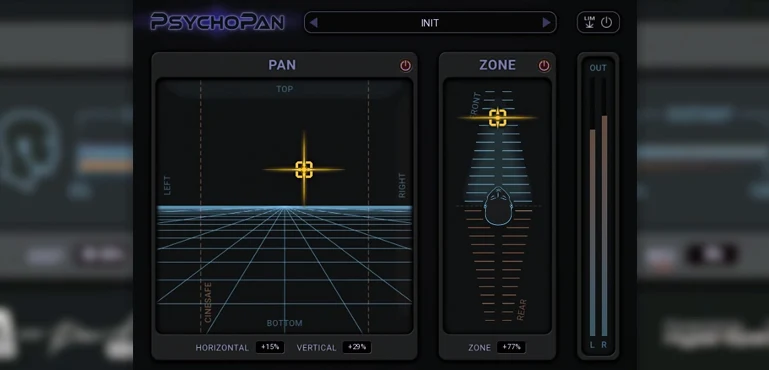
W.A. Production PsychoPan Review: Can Psychoacoustic Positioning Actually Improve Mix Depth?
Creating depth inside a modern mix has become increasingly difficult. Dense arrangements, aggressive loudness targets, and headphone-dominated listening have pushed many traditional spatial techniques to their limits. Engineers can still rely on panning, EQ perspective, delay, and reverb, but these tools often introduce compromises between separation, clarity, and focus.
W.A. Production PsychoPan approaches the problem from a different angle. Rather than generating width or simulating acoustic space, the plugin uses psychoacoustic processing to influence how listeners perceive position and distance within a stereo mix. The concept is intriguing, but it also raises a practical question: does PsychoPan provide meaningful spatial control, or does it create an effect that sounds impressive in isolation yet contributes little once the full mix is playing?
That question is particularly relevant for producers working in electronic music, cinematic scoring, game audio, and modern pop. In these genres, creating space is rarely about making elements audible. The real challenge is preventing dozens of competing layers from occupying the same perceived location. A tool that can improve front-to-back separation without relying on additional reverb or excessive stereo processing has obvious appeal. Whether PsychoPan delivers on that promise requires a closer look at how psychoacoustic positioning functions in real-world production workflows.
Contents
- Why Spatial Positioning Plugins Matter More Than Ever
- What W.A. Production PsychoPan Is Actually Trying to Do
- Where PsychoPan Makes Sense Inside a Mixing Workflow
- Potential Translation Issues Engineers Should Consider
- Critical Evaluation: Where PsychoPan Delivers and Where It Falls Short
- How PsychoPan Compares to Alternative Spatial Processing Tools
- What Happens During Mastering?
- Does PsychoPan Represent a Bigger Industry Trend?
- Overall Rating
- FAQ
Why Spatial Positioning Plugins Matter More Than Ever
Mix engineers have always relied on the same fundamental tools to create depth: level balance, frequency placement, dynamics, delay, and reverb. Those techniques remain effective, but modern production workflows place far greater demands on them than they did a decade ago.
Contemporary mixes are denser, louder, and more layered. Electronic productions routinely contain dozens of overlapping synths, effects, vocal layers, and percussion elements competing for attention. At the same time, headphone listening has become the dominant playback environment, making spatial perception a more significant part of the listening experience than it was during the speaker-first era.
This has increased interest in processors designed to influence perceived position rather than simply increase width or ambience. Instead of creating a larger acoustic environment, these tools attempt to create clearer spatial relationships between competing elements inside an existing mix.
PsychoPan follows that philosophy. Rather than simulating a room or generating conventional stereo expansion, it focuses on psychoacoustic cues associated with localization and perceived distance. The goal is not to place a sound inside a realistic environment, but to alter where that sound appears to exist within the stereo image.
That difference matters. Traditional reverb creates depth by introducing reflections and decay. Psychoacoustic positioning attempts to create depth by influencing perception itself. In practice, this can produce separation without adding additional ambience, but it also means the results depend heavily on listener perception, monitoring conditions, and playback translation.
What W.A. Production PsychoPan Is Actually Trying to Do
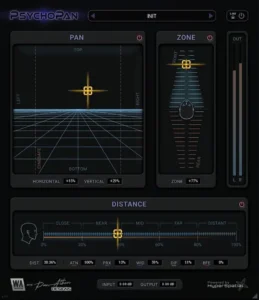 Much of the marketing surrounding PsychoPan revolves around concepts such as 3D positioning, immersive placement, and enhanced depth. Those descriptions are not necessarily inaccurate, but they reveal little about how the plugin fits into an actual mixing workflow.
A more useful way to evaluate PsychoPan is to view it as a tool for spatial organization rather than spatial enhancement.
Traditional panning determines left-right placement. Reverb helps establish perceived distance. Delay can add depth, movement, and a sense of space. PsychoPan operates in a different area of the stereo field, targeting the perceptual cues that influence where a listener believes a sound exists relative to other elements in the mix.
As a result, the plugin is not primarily solving a width problem. It is attempting to solve a positioning problem.
That distinction separates PsychoPan from many stereo imaging processors. Conventional widening tools often rely on Mid/Side manipulation, phase relationships, or side-channel enhancement to create a larger stereo image. While effective in some situations, those techniques can introduce compromises when a mix is collapsed to mono, encoded by streaming platforms, or played back on less-than-ideal consumer systems.
PsychoPan takes a different approach. Instead of pushing sounds farther outward, it attempts to alter their perceived location within the existing stereo image. The practical benefit is that separation can be created without necessarily increasing width.
In a busy arrangement, that can be more useful than another stereo enhancer. A background vocal that feels slightly behind the lead vocal may require less corrective EQ. A synth layer that appears farther away from the listener may compete less aggressively with foreground elements. In both cases, the objective is not a larger stereo field, but a more intelligible mix.
Whether PsychoPan consistently achieves that goal depends on the source material and the engineer’s implementation, but the underlying concept is more relevant to modern mix management than the endless pursuit of additional width.
Key Features and Practical Workflow Benefits
Unlike many stereo-imaging plugins, PsychoPan is built around perceived positioning rather than width enhancement alone. The plugin combines psychoacoustic processing, movement controls, and spatial manipulation tools intended to alter how listeners interpret source location inside a stereo mix.
In practice, the most useful features are not necessarily the most dramatic. Small positioning adjustments often provide greater mix benefits than extreme spatial effects. The ability to create subtle front-to-back differentiation can be more valuable than simply making sounds wider.
The workflow is relatively straightforward compared to larger immersive-audio environments. Most users can integrate PsychoPan into an existing mixing session without redesigning routing structures or abandoning established depth-building techniques such as delay, reverb, and automation.
That accessibility may ultimately be one of the plugin’s strongest advantages. The learning curve remains manageable while still offering enough control to produce meaningful spatial variation inside complex arrangements.
How PsychoPan Feels in Daily Use
One of PsychoPan’s biggest advantages is that it does not require engineers to rethink an existing mixing workflow. Unlike immersive-audio platforms, binaural environments, or object-based spatial systems, the plugin behaves much more like a conventional insert effect.
Most adjustments produce immediately audible results, which keeps experimentation fast. Engineers can evaluate positional changes while the mix remains in context rather than building dedicated routing structures or alternative monitoring environments.
This simplicity matters. Many spatial processors offer deeper control but introduce enough complexity that they are reserved for special projects. PsychoPan feels closer to a utility processor than a specialized production ecosystem, making it easier to reach for during everyday mixing decisions.
That practicality may ultimately be more valuable than headline features. A processor that gets used regularly often contributes more to finished productions than a more powerful alternative that remains inactive most of the time.
Where PsychoPan Makes Sense Inside a Mixing Workflow
PsychoPan is unlikely to deliver its best results on the most important elements in a mix. Lead vocals, kick drums, bass instruments, and other anchor sources typically benefit from positional stability. Excessive spatial manipulation on these elements can reduce focus and weaken the center image that many modern productions depend on.
The plugin becomes more useful when applied to supporting layers that need separation without demanding attention. Background vocals are a practical example. Creating distance between lead and supporting vocal stacks often requires a combination of level adjustments, EQ shaping, and ambience processing. Psychoacoustic positioning offers another way to establish that hierarchy without simply pushing backing parts lower in the mix.
Atmospheric material is another natural fit. Pads, textures, drones, effects returns, transitions, and cinematic elements often serve an environmental role rather than a focal one. Because these sounds do not require precise localization, they can tolerate more aggressive spatial manipulation while contributing to a larger sense of depth and dimension.
Electronic music producers may also find value in movement-based applications. Traditional pan automation creates predictable left-right motion. Psychoacoustic positioning can produce movement that feels less tied to speaker placement and more connected to perceived space, which can make evolving synth layers, effects, and transitions feel more immersive without drawing attention to the processing itself. This differs from creative sequencing processors such as Effectrix 2, which generate rhythmic variation and pattern-based movement rather than altering perceived spatial location.
That said, PsychoPan should be viewed as a refinement tool rather than a corrective one. If instruments are competing because of poor arrangement choices, overlapping frequency content, or weak balance decisions, spatial processing rarely provides a lasting solution. In many cases, better sound selection, automation, or frequency management will have a greater impact than any positioning algorithm.
The most successful use of PsychoPan is typically subtle. It works best when the listener notices improved separation and depth without immediately identifying the processing responsible for it.
The Marketing Narrative Versus Production Reality
Spatial processing is one of the easiest categories in audio software to market and one of the hardest to evaluate objectively. Terms such as 3D depth, immersive positioning, and enhanced space sound compelling, but they often reduce a complex mixing challenge to a single plugin insert.
In practice, depth is not a standalone parameter. It is the result of multiple decisions working together. Level relationships, frequency balance, transient behavior, dynamic control, ambience design, arrangement density, and monitoring accuracy all contribute to how listeners perceive distance and separation within a mix.
That reality places natural limits on what PsychoPan can accomplish. The plugin can influence spatial perception, but it cannot replace the underlying factors that create depth in the first place. A vocal competing with a dense instrumental arrangement will not suddenly find its place because a positioning effect has been added. Likewise, a crowded mix with unresolved masking issues will remain crowded regardless of how sophisticated the spatial processing may be.
This is where expectations become important. PsychoPan should not be viewed as a depth generator capable of creating dimensionality from nothing. It is better understood as a tool that can reinforce depth cues that already exist within a well-balanced mix.
Used in that role, the plugin makes considerably more sense. Small positional adjustments can help separate layers, improve front-to-back contrast, and create a more organized stereo image. Those benefits become meaningful when the mix is already functioning correctly. They become far less meaningful when fundamental balance and arrangement problems remain unresolved.
That limitation is not unique to PsychoPan. It applies to virtually every processor marketed as a solution for width, depth, or spatial enhancement. The strongest results still come from solid mix decisions, with psychoacoustic processing serving as a finishing layer rather than the foundation of the spatial design.
Potential Translation Issues Engineers Should Consider
 The real test of any psychoacoustic processor is not what happens in the studio. It is what happens after the mix leaves the studio.
Spatial perception is highly dependent on playback conditions, which makes translation one of the most important considerations when evaluating tools like PsychoPan. A positioning effect that feels precise on nearfield monitors may behave very differently when reproduced through earbuds, consumer headphones, Bluetooth speakers, automotive systems, or streaming platforms.
The challenge is that psychoacoustic processing often relies on subtle localization cues rather than obvious tonal changes. Those cues can be influenced by speaker placement, listening distance, room acoustics, headphone design, and even the encoding process used by streaming services.
In some situations, the effect may become more pronounced. Headphone playback frequently exaggerates spatial perception because the left and right channels remain isolated from one another. In other situations, the opposite occurs. Mono playback, limited speaker separation, or codec-related artifacts can reduce the perceived positioning that seemed significant during the mixing stage.
This does not make PsychoPan unreliable. It simply means that translation should be part of the evaluation process rather than an afterthought. Verifying spatial decisions across multiple playback systems remains one of the most overlooked items on a professional mastering checklist. Engineers should verify psychoacoustic processing across multiple monitoring systems, particularly if spatial placement plays a meaningful role in the arrangement.
A useful rule is to judge the plugin by what remains after translation rather than by what it achieves under ideal monitoring conditions. If the mix depends on PsychoPan to maintain separation, depth, or clarity, the effect may be carrying too much responsibility. If the mix still functions when the spatial enhancement becomes less obvious on consumer playback systems, the processing is probably serving the production rather than defining it.
Critical Evaluation: Where PsychoPan Delivers and Where It Falls Short
During testing, the most important question was not whether PsychoPan could create a noticeable effect. Most spatial processors can. The more relevant question was whether those effects continued to improve separation and depth once the entire arrangement was playing.
This is where many spatial plugins struggle. In isolation, additional depth, width, and movement almost always sound appealing. Inside a finished arrangement, however, those same enhancements can produce the opposite result. Sounds may appear larger yet become less defined. Layers may feel more distant without becoming easier to separate. What initially sounds immersive can eventually reduce focus.
The PsychoPan plugin is not immune to this tradeoff. Its strongest results tend to come from subtle positioning adjustments that reinforce existing mix relationships. Used conservatively, the plugin can help establish greater contrast between foreground and background elements, making a production feel more dimensional without drawing attention to the processing itself.
The limitations become more apparent when the effect is pushed aggressively. Excessive psychoacoustic positioning can weaken localization, reduce center-image stability, and introduce an artificial quality that becomes increasingly noticeable during extended listening. In some cases, the processor may create the impression of additional depth while simultaneously making it harder to identify where important elements actually sit within the mix.
Genre also plays a role. Productions built around synthetic sound design, evolving textures, and immersive environments generally provide more opportunities for psychoacoustic processing than recordings that depend on natural spatial realism. Electronic music, cinematic scoring, ambient production, and game audio are obvious candidates. Traditional rock, acoustic music, jazz, and singer-songwriter productions often benefit more from natural depth cues created through arrangement, microphone technique, and ambience design.
There is also a workflow consideration. Every spatial processor introduces another layer of decision-making into an already complex mix process. Engineers are already balancing frequency relationships, dynamics, saturation, automation, stereo width, and ambience. Adding psychoacoustic positioning can enhance dimensionality, but it can also make troubleshooting more difficult when translation issues appear later in the production cycle.
Ultimately, PsychoPan performs best as a precision tool rather than a broad-stroke solution. Engineers looking for subtle spatial refinement may find it genuinely useful. Those searching for a shortcut to depth, separation, or mix clarity are likely to discover the same reality that applies to most spatial processors: the effect is only as effective as the mix supporting it.
How PsychoPan Compares to Alternative Spatial Processing Tools
PsychoPan is entering a market that already offers multiple approaches to spatial manipulation. The important distinction is that not all of these tools are solving the same problem. Some focus on immersive audio production, some simulate three-dimensional environments, and others attempt to create a stronger sense of depth inside a conventional stereo mix.
| Tool | Primary Focus | Typical Use Case | Main Limitation |
|---|---|---|---|
| W.A. Production PsychoPan | Psychoacoustic positioning and depth perception | Creating separation and dimensionality within stereo mixes | Results depend heavily on playback translation |
| DearVR Micro / DearVR Pro | Virtual spatial positioning | Immersive audio, binaural production, headphone monitoring | Often more complex than required for standard music mixing |
| Panagement | Binaural movement and localization | Advanced stereo placement and motion effects | Requires more setup and workflow investment |
| Sound Particles Spatial Tools | Object-based spatial design | Film, gaming, surround, and immersive productions | Can be excessive for stereo-focused music projects |
| Traditional Reverb and Delay | Acoustic depth and environmental realism | Natural front-to-back positioning | May introduce masking and reduce mix clarity if overused |
The comparison highlights where PsychoPan fits within the broader spatial-processing landscape. Unlike immersive audio platforms, it does not require engineers to rethink their entire workflow around virtual environments or object-based positioning. At the same time, it is not attempting to replace traditional ambience processing.
Reverb and delay remain the primary tools for creating believable acoustic depth. PsychoPan approaches the problem from a perceptual angle, using localization cues to influence how elements relate to one another inside the stereo field. In practical terms, this makes it less of a spatial-design platform and more of a mix-enhancement tool.
That middle-ground position is arguably its strongest advantage. Engineers can experiment with additional depth and separation without committing to an immersive-audio workflow or redesigning the spatial architecture of an entire production. For producers working primarily in stereo, that may prove more useful than the advanced capabilities offered by larger spatial ecosystems.
Who Should Consider PsychoPan?
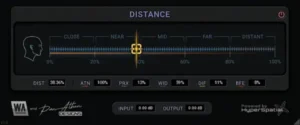 PsychoPan is most likely to appeal to producers and engineers who regularly work with dense, layered arrangements where conventional panning and ambience processing are no longer enough to create clear spatial separation.
Electronic music producers are an obvious fit. Modern EDM, melodic techno, future bass, and hybrid electronic genres often contain multiple synth layers competing within the same frequency range. In these situations, perceived positioning can sometimes create more separation than additional EQ cuts or wider stereo processing.
The plugin also makes sense for cinematic composers, sound designers, and game-audio professionals. These workflows frequently prioritize movement, atmosphere, and environmental depth over strict acoustic realism, creating opportunities for psychoacoustic positioning to contribute something meaningful to the listening experience.
Pop producers working with large vocal productions may find value as well. Creating distinction between lead vocals, doubles, harmonies, ad-libs, and supporting textures becomes increasingly difficult as arrangements grow more complex. The W.A. Production plugin offers another method of establishing spatial hierarchy without relying exclusively on level reduction or additional reverb.
That said, the plugin is unlikely to feel essential for every engineer. Mixers who already achieve consistent depth through level management, frequency perspective, transient control, and carefully designed ambience structures may view PsychoPan as an occasional creative tool rather than a core part of their workflow.
In many professional environments, depth is still built through arrangement, balance, and acoustic cues long before specialized spatial processors enter the picture. For those engineers, PsychoPan is less about solving a problem and more about expanding the available palette of spatial options.
Who Probably Doesn’t Need PsychoPan?
PsychoPan is not the kind of plugin that benefits every production workflow equally. Its strengths are most apparent in projects where spatial manipulation is part of the creative process rather than an attempt to preserve realism.
Engineers working with acoustic, orchestral, jazz, folk, or singer-songwriter material may find fewer opportunities to use it effectively. In these genres, depth is often established through microphone placement, room acoustics, performance dynamics, and natural ambience. Artificial positioning can sometimes work against the spatial cues that make a recording feel authentic in the first place.
The same applies to productions where playback consistency is prioritized over creative spatial experimentation. Broadcast content, podcast production, certain post-production workflows, and projects with strict mono-compatibility requirements often benefit from predictable localization and stable imaging. In those environments, conventional balance, panning, and ambience techniques typically provide more reliable results.
This does not mean PsychoPan is unsuitable for these applications. It means the potential benefit is smaller. The plugin delivers the greatest value when an engineer is actively shaping perceived position as part of the artistic direction rather than relying on spatial processing to maintain technical compatibility across playback systems.
A Real-World Production Perspective
Spatial processors are often evaluated under conditions that favor the effect. Plugin demonstrations typically use isolated sounds, controlled monitoring environments, and playback systems capable of revealing subtle spatial cues. Real-world listening is considerably less predictable.
Once a mix reaches distribution, it is exposed to streaming codecs, consumer headphones, Bluetooth speakers, smart devices, automotive systems, and countless listening environments that were never part of the original production process. Every one of those variables has the potential to alter how spatial information is perceived.
This is particularly relevant for psychoacoustic processing because the effect depends less on tonal change and more on localization cues. A positioning enhancement that feels obvious on nearfield monitors may become significantly less noticeable on a portable speaker. Conversely, an effect that seems restrained in the studio can become exaggerated through headphones where channel separation is far greater than on speakers.
For that reason, PsychoPan should be evaluated based on translation rather than impact. The goal is not to create the most dramatic spatial effect possible. The goal is to improve the listener’s perception of depth and separation across a wide range of playback systems.
A practical test is to bypass the plugin after completing the mix. If disabling PsychoPan causes the production to lose a small but meaningful amount of dimensionality, the processor is probably serving its intended purpose. If bypassing it fundamentally changes the balance, clarity, or organization of the mix, the spatial architecture may be relying too heavily on the effect.
The same principle applies to stereo imaging, saturation, ambience processing, and transient enhancement. The most effective production decisions rarely announce themselves. They simply make the mix feel more coherent, more organized, and easier to navigate regardless of where the listener presses play.
What Happens During Mastering?
One aspect frequently overlooked in discussions about spatial plugins is how those decisions survive the mastering stage. Psychoacoustic positioning may sound convincing during mixing, but the final master often changes the relationships that helped create that perception in the first place.
Mastering processors do not target spatial positioning directly, yet they can influence it indirectly. Understanding how professional mastering works helps explain why spatial relationships that feel stable during mixing may shift slightly once final EQ, dynamics, and loudness processing are introduced. Broadband compression alters dynamic relationships between foreground and background elements. Limiting changes transient behavior. EQ adjustments shift tonal balance. These interactions are easier to understand when viewed through a complete mastering chain rather than as isolated processors. Even subtle modifications can affect the cues listeners use to interpret depth, separation, and localization.
The impact becomes more noticeable as loudness increases. Aggressive limiting can reduce some of the microdynamic contrast that helps establish spatial distinction between layers. Likewise, stereo enhancement applied during mastering may either complement a psychoacoustic effect or compete with it, depending on how both processes interact.
This does not mean PsychoPan becomes ineffective after mastering. It means that spatial decisions should be judged in the context of the finished release rather than the unfinished mix. An effect that feels perfectly balanced before mastering may become understated, exaggerated, or simply different once the production reaches its final delivery level.
For that reason, engineers should avoid making critical positioning decisions too early in the process. The closer a mix is to its intended release condition, the easier it becomes to evaluate whether psychoacoustic processing is genuinely improving separation and depth or merely creating an effect that disappears once final mastering adjustments are applied. This is one reason why preparing a mix for mastering involves more than exporting a clean file—it requires understanding which creative decisions are likely to survive the final stage and which may change once mastering begins.
Ultimately, PsychoPan is most effective when it enhances an already stable spatial structure. If the sense of depth collapses after mastering, the mix was likely depending too heavily on the plugin instead of the underlying balance, arrangement, and acoustic relationships that create durable spatial perception.
Does PsychoPan Represent a Bigger Industry Trend?
PsychoPan is interesting not only because of what it does, but because of the direction it reflects within modern audio production. Over the past decade, many of the industry’s most influential tools have shifted away from direct signal manipulation and toward perceptual optimization.
Rather than simply making audio louder, wider, brighter, or cleaner, newer processors increasingly focus on how those changes are experienced by the listener. Psychoacoustic bass enhancement, masking reduction, perceptual loudness optimization, intelligent spatial processing, and immersive audio technologies all share a common objective: influencing perception more efficiently than traditional processing methods.
PsychoPan belongs to that broader category. Its purpose is not to create depth through conventional acoustic techniques, but to influence how the brain interprets spatial information within a stereo environment. In that sense, the plugin reflects a larger movement toward perception-driven production tools.
Whether PsychoPan itself becomes a long-term workflow standard is difficult to predict. The market is crowded, and spatial-processing trends evolve quickly. What appears far more durable is the industry’s growing interest in localization, immersion, and perceived depth as production priorities.
As playback increasingly shifts toward headphones, spatial perception becomes more valuable rather than less. Producers are no longer competing solely for loudness, clarity, or tonal balance. They are also competing for attention within increasingly immersive listening environments.
For engineers, the broader lesson extends beyond any individual plugin. Understanding how listeners perceive depth, distance, width, and spatial hierarchy is becoming a more valuable skill than simply accumulating additional processing tools. The same principle applies to workflow-focused technologies such as Vienna Ensemble Pro 8.1, where efficiency gains come not from changing the audio itself, but from improving how complex production systems are organized and managed. Products like PsychoPan may come and go, but the underlying psychoacoustic principles are likely to remain relevant long after current plugin trends have changed.
Pros and Cons
| Pros | Cons |
|---|---|
| Useful depth enhancement without additional reverb | Translation varies across playback systems |
| Fast workflow integration | Can sound artificial when pushed too hard |
| Creative movement possibilities | Less useful for acoustic productions |
| Good separation in dense electronic mixes | Cannot solve masking or arrangement issues |
Is PsychoPan Worth Adding to Your Plugin Collection?
For engineers already satisfied with traditional depth-building techniques, PsychoPan is unlikely to feel essential. Reverb, delay, automation, and frequency perspective remain the foundation of spatial mixing.
However, producers who regularly work with dense electronic arrangements, layered atmospheres, cinematic sound design, or headphone-focused productions may find that PsychoPan offers a type of spatial control not easily replicated through conventional processing.
The plugin is best viewed as a specialist tool rather than a replacement for established workflow fundamentals. In the right production environment, that specialization can justify its place in a modern plugin collection.
Verdict
W.A. Production PsychoPan is at its best when treated as a spatial refinement tool rather than a dramatic effect processor. Its primary value comes from influencing perceived position within a mix, allowing engineers to create additional separation and depth without relying entirely on wider stereo images or heavier ambience processing.
That makes the plugin more relevant than many conventional stereo enhancers. In crowded productions, perceived positioning can often contribute more to clarity than another round of EQ adjustments or additional widening. When used with restraint, PsychoPan can help establish stronger front-to-back relationships and improve the sense of dimensionality within a stereo mix.
Its limitations are equally important to understand. The plugin does not replace arrangement quality, frequency management, balance decisions, or effective ambience design. If a mix suffers from masking, poor source selection, or weak spatial organization, psychoacoustic processing will not solve those underlying problems.
For producers working in electronic music, cinematic scoring, sound design, and other genres that benefit from creative spatial manipulation, PsychoPan offers a workflow that differs meaningfully from traditional imaging tools. The results can be subtle, but in the right context, subtle improvements are often the ones that survive translation most effectively.
Viewed through that lens, PsychoPan succeeds less as a special effect and more as a utility for shaping spatial perception. It is not a shortcut to depth, nor is it a replacement for established mixing techniques. It is a specialized tool that can enhance an already well-constructed mix when applied with clear intent and realistic expectations.
Overall Rating
| Category | Rating |
|---|---|
| Spatial Positioning | 8.5/10 |
| Mix Separation | 8/10 |
| Playback Translation | 7/10 |
| Workflow Integration | 8.5/10 |
| Creative Potential | 9/10 |
| Value for Money | 8.5/10 |
| Overall | 8.3/10 |
W.A. Production PsychoPan offers a different approach to depth creation than traditional stereo widening, reverb, or delay-based workflows. Its strongest contribution is the ability to influence perceived positioning inside a stereo mix without dramatically altering balance or frequency content.
The plugin delivers the greatest value in electronic music, cinematic production, sound design, and other genres where spatial manipulation is part of the creative process. Its primary limitation is translation. Like most psychoacoustic processors, the effect can vary significantly across headphones, speakers, consumer playback systems, and streaming environments.
For engineers looking for a subtle spatial refinement tool rather than another stereo widener, PsychoPan provides a useful addition to the modern mixing workflow. It is not a replacement for arrangement, balance, or acoustic depth creation, but it can help reinforce spatial relationships that already exist within a well-constructed mix.

Yurii Ariefiev is a mastering engineer and audio production editor whose work focuses on mix translation, spatial perception, playback consistency, and release-ready audio preparation. His engineering approach emphasizes how production decisions behave outside the studio, across streaming platforms, headphones, consumer speakers, and real-world listening environments.
This article examines W.A. Production PsychoPan from a practical mixing and mastering perspective, focusing on depth perception, stereo positioning, playback translation, and the factors that determine whether psychoacoustic processing remains effective after mastering and distribution.
Mono Compatibility and Phase Considerations
PsychoPan is not designed as a traditional stereo widener, but any processor that manipulates spatial perception should be evaluated under mono conditions. The reason is simple: many psychoacoustic effects rely on localization cues that become less effective when channel separation disappears.
In practice, the risk is not complete collapse but altered positioning. Elements that feel clearly separated in stereo may move closer together when summed to mono. This does not automatically indicate a problem, but it does mean engineers should verify that important musical information remains intelligible.
The safest approach is to treat PsychoPan as an enhancement layer rather than a structural requirement. If bypassing the plugin or monitoring in mono fundamentally changes the arrangement’s clarity, the mix may be relying too heavily on psychoacoustic positioning instead of balance, frequency management, and arrangement decisions.
FAQ
Can PsychoPan replace reverb when creating depth in a mix?
No. Reverb creates depth by simulating acoustic space, while PsychoPan works by influencing spatial perception. The two approaches address different aspects of depth and are often more effective when used together.
Will PsychoPan cause mono compatibility problems?
Not necessarily, but any processor that alters spatial perception should be checked in mono. The severity depends on how aggressively the effect is applied and how the source material interacts with the processing.
Can PsychoPan improve separation without making a mix wider?
That is arguably its primary purpose. Unlike traditional stereo wideners, PsychoPan focuses on perceived positioning, which can sometimes improve separation without significantly expanding the stereo image.
Is PsychoPan suitable for mastering applications?
Most spatial decisions are better made during mixing. While PsychoPan can technically be inserted during mastering, many mastering engineers prefer to work with spatial relationships that are already established before the final stage.
How does PsychoPan compare to DearVR or Panagement?
DearVR and Panagement are generally designed around more advanced spatial positioning workflows. PsychoPan takes a simpler approach aimed at improving depth perception and positioning within conventional stereo productions.
Does psychoacoustic positioning survive streaming compression?
Usually, but not always at the same intensity. Streaming codecs can alter some of the subtle cues that contribute to perceived depth and localization, which is why translation testing remains important.
Is PsychoPan more effective on headphones than speakers?
Many listeners will notice psychoacoustic effects more clearly on headphones because channel separation is greater. However, mix decisions should never be based exclusively on headphone monitoring.
Can PsychoPan fix a crowded or muddy mix?
No. It may help improve perceived separation between elements, but it cannot solve masking, poor arrangement choices, excessive layering, or balance issues.
What types of productions are most likely to benefit from PsychoPan?
Electronic music, cinematic scoring, ambient production, game audio, and modern pop tend to offer the most opportunities for psychoacoustic positioning because spatial design often plays a larger creative role in those genres.
What is the biggest limitation of PsychoPan?
Translation. An effect that sounds convincing in a controlled studio environment may behave differently across headphones, consumer speakers, automotive systems, and streaming platforms. Evaluating the plugin across multiple playback conditions is essential.