Arturia Rev OCEAN Review: A Production-Focused Look at the New Reverb Plugin for Modern Mixing
Arturia’s software lineup has expanded well beyond virtual instruments. With FX Collection now covering everything from dynamics and modulation to delays and creative processing, the company has shifted toward building a complete production toolkit rather than a catalog of individual plugins. Rev OCEAN reflects that direction. Instead of recreating a classic hardware reverb, it introduces a modern algorithmic design aimed at spacious, evolving ambience.
That alone isn’t enough to justify another reverb plugin. Most producers already own several capable options, and the market is crowded with everything from transparent mixing reverbs to highly experimental spatial processors. The real question is whether Rev OCEAN offers a workflow advantage or simply adds another variation on a familiar concept.
This review approaches the plugin from a production perspective rather than a feature-by-feature overview. Rather than evaluating Rev OCEAN in isolation, this review examines how it behaves once a production becomes dense, automation-heavy, and ready for mastering—where creative reverbs either justify their place or become unnecessary complexity.
Why Rev OCEAN Stands Out in Today’s Reverb Market
 Reverb is no longer a category driven by scarcity. Most professional producers already own multiple high-quality options, whether they’re algorithmic reverbs for everyday mixing, convolution libraries for realistic spaces, or creative processors built for sound design. For a new release to justify its place in a session, it has to improve workflow or offer a distinct sonic perspective—not simply sound good in isolation.
That shift has changed how engineers evaluate new plugins. Few are looking for another generic hall or plate. Instead, they’re searching for reverbs that create depth without masking a mix, remain controllable under heavy automation, and add movement without requiring multiple modulation plugins or complex routing.
Modern release formats reinforce those expectations. Streaming masters are typically denser than they were a decade ago, leaving less room for uncontrolled ambience. Reverb now has to preserve vocal clarity, transient definition, and stereo stability while still contributing width and atmosphere. The challenge isn’t generating larger spaces—it’s making those spaces translate consistently across headphones, smartphones, cars, and consumer speakers.
Production styles have evolved in the same direction. Ambient pop, melodic techno, cinematic scoring, modern R&B, and atmospheric hip-hop rarely rely on static reverbs. Spatial processing has become part of the arrangement itself, with engineers continuously automating decay, diffusion, modulation, and mix balance throughout a song instead of committing to a single preset.
That’s the environment Rev OCEAN enters. Rather than competing with traditional room or plate reverbs, it targets producers who treat ambience as a creative element rather than a corrective one. The real measure of its value isn’t whether it can emulate a physical space—it’s whether those evolving textures remain useful once the production reaches its final mix instead of becoming another effect that sounds impressive only in solo mode.
Design Philosophy: Built for Creative Space, Not Hardware Nostalgia
Rev OCEAN makes its intentions clear from the outset. It isn’t trying to reproduce a classic Lexicon, EMT, or vintage digital processor, nor does it rely on hardware nostalgia as its primary selling point. Instead, Arturia builds the plugin around a modern Feedback Delay Network (FDN) architecture designed to generate evolving spatial textures rather than emulate familiar acoustic environments. Unlike many conventional algorithmic reverbs, Rev OCEAN’s FDN architecture maintains dense reflections while allowing continuous modulation without obvious repetition, making it particularly well suited to atmospheric and motion-oriented productions.
That distinction matters because professional engineers rarely choose reverbs based solely on sound quality. They choose them based on function. A short room establishes depth without drawing attention to itself. A plate helps a vocal sit in the mix. A convolution reverb recreates a believable acoustic space. Creative reverbs serve a different purpose—they become part of the production itself.
That’s where Rev OCEAN appears most comfortable. Instead of simulating a physical room, it generates movement inside the ambience. Pads become less static, sustained guitars develop additional dimension, background vocals gain width without relying entirely on modulation effects, and transitions feel more organic than a simple long-tail reverb can provide.
This reflects a broader shift in modern production. Reverb is no longer treated as one of the final processing stages applied during mixing. In many genres, spatial effects influence arrangement decisions from the earliest writing sessions. Producers automate decay, modulation, diffusion, and stereo width alongside filters, delays, and saturation because ambience has become part of the composition—not just part of the mix.
Viewed from that perspective, Rev OCEAN isn’t competing with every reverb plugin on the market. It’s targeting engineers who already own dependable utility reverbs and want an additional processor capable of producing movement, depth, and atmosphere without building complex chains from multiple plugins. That production philosophy closely mirrors newer effect processors built around automation and evolving textures, as explored in our Rast Sound Evolver 2 review.
Workflow Analysis: Where Rev OCEAN Fits in a Professional Mixing Session
A new reverb doesn’t earn its place because it sounds impressive on a solo track. It earns its place by solving a specific problem inside a finished mix. That’s a much higher standard. Once a session grows to 60 or 100 tracks, every processor competes not only for CPU resources but also for spectral space, stereo width, and mix clarity.
Most professional sessions already rely on multiple reverb buses. A short room creates cohesion, a plate supports lead vocals, larger spaces add depth to instruments, while dedicated effects handle transitions and sound design. Rev OCEAN fits most naturally into that last category. Rather than replacing an everyday utility reverb, it expands the palette available for creative spatial processing.
Its strongest applications involve sustained material where movement is as important as decay. Synth pads, evolving textures, cinematic percussion, reverse effects, layered guitars, background vocals, and atmospheric transitions all benefit from a reverb that continues to develop after the initial transient instead of simply extending it.
Lead vocals require a more disciplined approach. Long, animated reverbs can quickly soften consonants, reduce lyric intelligibility, and push a vocal farther back in the mix than intended. For that reason, Rev OCEAN is better treated as a parallel effect or an automated send than as the primary vocal reverb throughout an entire production. Used selectively, it adds scale without sacrificing definition.
The same principle applies to dense arrangements. Electronic productions packed with layered synths, delays, saturation, and wide stereo effects leave surprisingly little room for uncontrolled ambience. Rev OCEAN delivers the best results when it occupies a deliberate role in the arrangement instead of being inserted across multiple buses simply because it sounds impressive in isolation.
One practical advantage is workflow efficiency. Creating animated spaces often requires stacking modulation, delay, and conventional reverb plugins before automation even begins. As modern production environments increasingly prioritize fast creative iteration over complex routing, the same workflow principles discussed in our Novation FLkey 2 review also apply to processors like Rev OCEAN that encourage immediate experimentation. Rev OCEAN reduces much of that complexity, allowing producers to shape evolving ambience from a single processor. Fewer plugins also make revisions easier later in the mix, particularly when clients request changes after arrangement decisions have already been finalized.
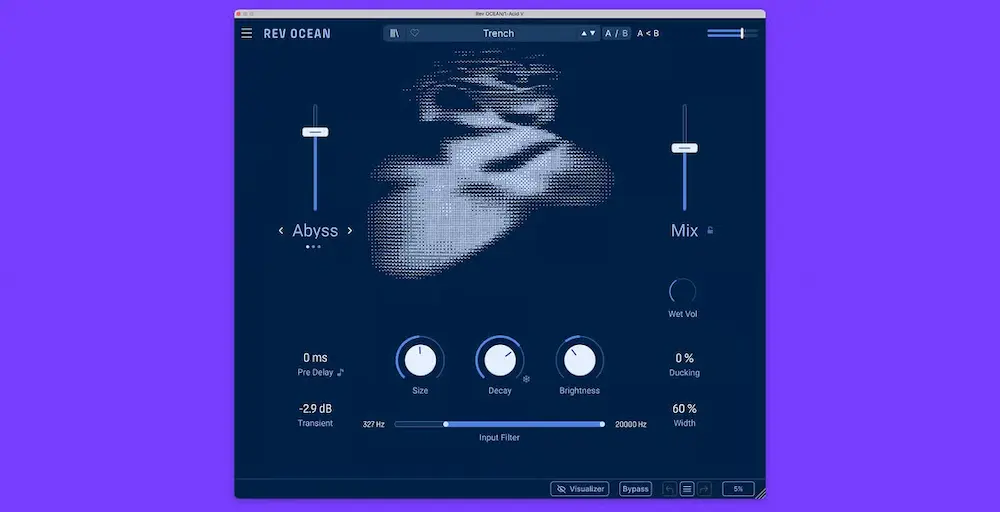
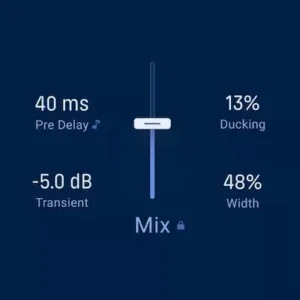
The plugin interface reflects the same philosophy. Rather than exposing dozens of secondary parameters, Rev OCEAN’s user interface keeps the primary controls within immediate reach, making automation faster during busy sessions. Experienced engineers may still want deeper editing options in some situations, but the streamlined GUI encourages listening instead of menu navigation—a practical advantage when creative decisions matter more than technical complexity.
That makes Rev OCEAN particularly relevant for electronic music, cinematic scoring, ambient production, synthwave, melodic techno, and modern pop, where spatial movement contributes directly to the emotional impact of the arrangement. Engineers working primarily with acoustic ensembles or natural room recordings are less likely to reach for it as frequently.
Ultimately, Rev OCEAN shouldn’t be evaluated against every reverb on the market. The more useful comparison is whether it can replace a chain of creative effects while remaining predictable enough to survive revision, mastering, and release. In that role, it makes a far stronger case than trying to become an all-purpose reverb for every source in a mix.
How Useful Are the Factory Presets?
Factory presets often reveal more about a plugin’s intended workflow than its marketing copy. Rev OCEAN’s preset library leans heavily toward animated textures, cinematic spaces, and evolving ambience rather than conventional rooms or plates. That makes it easy to understand what the plugin is designed to do, while also reducing the temptation to treat it as a universal reverb.
Most presets work best as starting points instead of finished solutions. Small adjustments to decay, modulation depth, diffusion, and wet level quickly adapt them to a production without rebuilding the sound from scratch. For experienced engineers, that balance between inspiration and editability is more valuable than having hundreds of narrowly differentiated presets.
How Rev OCEAN Influences Mixing Decisions
 Reverb affects far more than perceived depth. It changes transient definition, stereo localization, spectral balance, and the way individual instruments compete for attention. Those decisions become increasingly important as a mix approaches mastering, where additional compression and limiting tend to make ambience more apparent than it seemed during the mix stage.
Rev OCEAN encourages a slightly different way of thinking about spatial processing. Traditional reverbs are often used to position an instrument within an acoustic space. Rev OCEAN is more effective when treated as a source of movement. Instead of asking how far back a sound should sit, the better question is how its spatial character should evolve as the arrangement develops.
That shift opens creative possibilities, particularly with sustained material. Synth pads can remain active without additional modulation, layered guitars gain depth without becoming overly dense, and background vocals can occupy a wider stereo image without depending entirely on chorus or widening processors. The result is a mix that feels more dynamic without necessarily becoming more complex.
At the same time, animated reverbs leave less room for careless decisions. Continuous modulation can blur localization, soften rhythmic definition, and create low-mid buildup that isn’t immediately obvious on nearfield monitors. Those issues often become more noticeable after mastering or when a mix is played through consumer earbuds, Bluetooth speakers, or streaming codecs.
For that reason, Rev OCEAN benefits from the same discipline as any high-character processing tool. Regular mono checks, automation instead of static send levels, and careful EQ on the return channel usually produce better results than relying on a single preset throughout an entire arrangement.
Used selectively, Rev OCEAN expands a mix without overwhelming it. Used everywhere, it quickly loses the very contrast that makes spacious productions feel engaging. Many issues later blamed on mastering problems actually begin with uncontrolled ambience during mixing, making disciplined reverb decisions far more important than they first appear.
Critical Evaluation: Where Rev OCEAN Excels—and Where It Doesn’t
Creative reverbs are easy to overestimate. Almost any processor capable of producing massive stereo spaces will sound impressive during a solo demonstration. The real evaluation starts later, once that same reverb has to coexist with layered instruments, automation, bus processing, and mastering dynamics. At that point, visual appeal gives way to practical questions: Does it remain controllable? Does it preserve clarity? Does it still serve the arrangement after the excitement of the first preset wears off?
Rev OCEAN performs well because it avoids one of the most common problems in atmospheric reverbs—it doesn’t constantly demand attention. The spatial image remains animated without becoming distracting, making it easier to introduce depth while keeping the source recognizable inside a busy mix.
That doesn’t make it a universal solution. Engineers looking for realistic rooms, classic plates, or transparent early reflections will still reach for processors designed specifically for those tasks. Rev OCEAN belongs in a different category. Its purpose is creative spatial design rather than accurate acoustic reproduction.
The plugin also rewards disciplined use. Long, evolving tails naturally encourage longer decay times, but commercial productions rarely benefit from excessive ambience. As mix density increases, spacious reverbs begin competing with vocals, transient-heavy percussion, and midrange instruments for the same perceptual space. Without careful automation and frequency control, the mix loses focus long before the reverb itself becomes obviously excessive.
Dense arrangements expose those limitations even further. Productions built around stacked synthesizers, layered vocals, parallel compression, and multiple delay buses leave surprisingly little room for wide atmospheric effects. Rev OCEAN still works in those environments, but it functions best as a featured element rather than a default insert across multiple sources.
Perhaps the biggest difference between marketing and practical use is restraint. Product demonstrations naturally emphasize huge cinematic spaces because they’re immediately recognizable. Commercial mixes usually demand the opposite. Experienced engineers spend more time reducing ambience than adding it, shaping reverb around the arrangement instead of asking the arrangement to accommodate the reverb.
Viewed through that lens, Rev OCEAN succeeds not because it replaces conventional reverbs, but because it fills a role they rarely cover. It expands the creative options available during production while leaving traditional rooms, plates, and natural spaces to processors better suited for those responsibilities.
Competitive Positioning: Where Rev OCEAN Fits in Today’s Reverb Landscape
Judging modern reverb plugins has become less about raw sound quality and more about specialization. Premium reverbs have reached a point where technical fidelity is rarely the deciding factor. What separates them today is workflow, sonic character, and the specific production problems they solve.
That’s why asking whether Rev OCEAN is “better” than another reverb misses the point. It isn’t competing directly with transparent mixing reverbs or processors designed to recreate real acoustic environments. It occupies a narrower space focused on animated ambience, evolving textures, and creative spatial movement.
Compared with traditional algorithmic reverbs, Rev OCEAN introduces more motion and personality into sustained material. Compared with highly experimental processors, it remains grounded enough to integrate into commercial productions without constantly pulling attention away from the source. That balance is arguably its strongest competitive advantage.
The plugin is particularly well suited to producers working with electronic music, cinematic scores, ambient productions, modern pop, and other genres where space functions as part of the arrangement rather than simply creating depth behind individual instruments. Engineers who automate effects extensively will also appreciate a processor designed to evolve alongside the performance instead of remaining static throughout the song.
By contrast, productions centered on natural recordings, acoustic ensembles, jazz, classical music, or dialogue generally benefit more from reverbs built around realism and predictable early reflections. Those applications place greater value on transparency than on movement, making conventional room or plate algorithms the more practical choice.
For mix engineers working across multiple genres, Rev OCEAN is unlikely to become the default reverb loaded at the start of every session. It is more valuable as a specialist—one that expands creative options without replacing the dependable utility reverbs most professionals already rely on.
Rev OCEAN Compared with Popular Alternatives
| Plugin | Primary Role | Excels At | Trade-Offs |
|---|---|---|---|
| Arturia Rev OCEAN | Creative algorithmic reverb | Animated ambience, evolving synths, cinematic textures, automated effects | Natural room simulation and everyday utility reverb duties |
| Valhalla VintageVerb | General-purpose algorithmic reverb | Vocals, drums, synths, buses, complete mix sessions | Highly animated or evolving spatial effects without additional processing |
| Valhalla Supermassive | Experimental ambience and delay processor | Sound design, ambient production, massive stereo effects | Subtle mix enhancement and conventional reverb tasks |
| FabFilter Pro-R 2 | Precision mixing reverb | Transparent depth, vocals, acoustic instruments, detailed mix control | Large cinematic textures and heavily modulated ambience |
| Eventide Blackhole | Cinematic creative reverb | Film scoring, trailers, ambient music, dramatic spatial effects | Dense commercial mixes that require restrained ambience |
| LiquidSonics Seventh Heaven | Realistic acoustic space recreation | Orchestral recordings, acoustic productions, natural vocal ambience | Creative modulation and evolving atmospheric effects |
Who Should Consider Rev OCEAN?
Rev OCEAN isn’t designed to be the first reverb in a producer’s toolkit. It’s a specialist processor that makes the most sense once the fundamentals are already covered. If your primary room, plate, and utility reverbs are already established, Rev OCEAN adds a different type of spatial character rather than duplicating existing capabilities.
Its strengths become most apparent in productions where ambience is treated as part of the arrangement instead of simple acoustic placement. That includes electronic music built around sustained synth textures, cinematic scoring, hybrid orchestral work, ambient production, modern pop with extensive automation, and mixes where evolving spatial movement contributes directly to the emotional impact of the record.
It’s equally relevant for engineers who regularly automate effects throughout a song. Rather than stacking multiple modulation, delay, and reverb processors to create movement, Rev OCEAN can often achieve a comparable result with a simpler signal chain that remains easier to revise later in the project.
Producers searching for a single reverb to cover every mixing task should probably look elsewhere first. Everyday sessions still depend on dependable room, plate, and hall algorithms capable of handling vocals, drums, acoustic instruments, and general mix duties. Rev OCEAN complements those processors instead of replacing them.
That’s ultimately where its value lies. Not as an all-purpose reverb, but as a dedicated creative tool that expands what a mix can do once the essential spatial processing is already in place.
Real-World Production Perspective: What Happens Outside the Studio Monitors?
 A reverb isn’t judged by how it sounds in solo mode or on high-end studio monitors. Its real test comes after the mix is exported, mastered, encoded for streaming, and played through everyday listening systems. That’s where the difference between an inspiring effect and a practical production tool becomes obvious.
Rev OCEAN delivers its best results when treated as a layer rather than the foundation of a mix’s spatial image. Its evolving tails naturally create width and movement, but that same width can become less defined on earbuds, Bluetooth speakers, or other playback systems with limited stereo separation. The effect isn’t a flaw in the plugin—it’s simply the reality of highly animated ambience.
That makes monitoring discipline especially important. Mono compatibility remains worth checking, not because Rev OCEAN collapses poorly, but because dense spatial modulation can soften transient detail, reduce vocal focus, and obscure instrument placement once stereo information becomes restricted.
Mastering introduces another variable. Compression and limiting often bring low-level ambience forward, making reverbs feel more prominent than they did during mixing. A space that feels subtle before mastering can become noticeably more present in the finished release, particularly on louder commercial masters. Understanding how professional mastering works makes it easier to anticipate these changes before the final stage of production.
Arrangement density matters just as much. Rev OCEAN thrives when individual instruments have enough room to breathe. In productions already filled with layered synthesizers, delays, saturation, and wide stereo effects, selective placement produces better results than assigning the plugin to multiple buses. Contrast creates depth far more effectively than quantity.
Workflow is another practical consideration. While modern systems are unlikely to struggle with a few instances, large sessions remain easier to manage when creative reverbs are organized on dedicated buses instead of scattered across individual tracks. Besides simplifying revisions, that approach helps maintain a consistent spatial perspective throughout the mix.
Ultimately, Rev OCEAN rewards engineers who treat ambience as part of the arrangement rather than a finishing effect. It asks for deliberate automation, careful balance, and disciplined use—but those same qualities are what allow it to contribute something conventional reverbs rarely deliver.
Final Verdict
Rev OCEAN isn’t trying to become the only reverb you’ll ever need, and judging it by that standard misses its purpose entirely. It isn’t a replacement for dependable room, plate, or hall reverbs that handle the day-to-day responsibilities of professional mixing. Its role is much narrower—and considerably more interesting.
Where Rev OCEAN stands out is its ability to introduce movement without forcing producers into elaborate chains of modulation, delay, and spatial effects. It encourages a workflow where ambience becomes part of the arrangement rather than a finishing touch applied at the end of a mix. That approach fits naturally into contemporary electronic production, cinematic scoring, hybrid compositions, and modern pop where evolving space contributes as much to the emotional impact as harmony or instrumentation.
At the same time, the plugin benefits from disciplined use. Long, animated reverbs demand careful automation, thoughtful frequency management, and restraint in dense arrangements. Engineers looking for transparent acoustic spaces or a single processor capable of covering every reverb task will find more practical options elsewhere.
Viewed in the right context, however, Rev OCEAN is a strong addition to an existing production toolkit. It doesn’t reinvent algorithmic reverb, nor does it need to. Its value comes from offering a distinct creative workflow that complements conventional reverbs instead of competing with them. For producers who already have the essentials covered, that’s a far more compelling reason to consider it than any claim of being the next revolutionary spatial processor.
Overall Rating
| Category | Rating |
|---|---|
| Sound Quality | 9.4/10 |
| Workflow Efficiency | 9.5/10 |
| Mix Translation | 9.2/10 |
| Creative Flexibility | 9.7/10 |
| CPU Efficiency | 9.1/10 |
| Value for Money | 9.3/10 |
| Overall | 9.4/10 |
Rating reflects practical use in commercial production rather than laboratory measurements or manufacturer specifications.
Why these scores? Rev OCEAN isn’t intended to replace conventional room, hall, or plate reverbs, and judging it as an all-purpose processor would undervalue its strengths. Its highest scores come from creative flexibility and workflow efficiency, where animated spatial processing can replace more elaborate effect chains while remaining easy to automate. Translation remains strong when the plugin is used selectively and with proper mix discipline, although dense productions still require careful control of ambience before mastering. For producers looking to expand an existing toolkit rather than replace it, Rev OCEAN stands out as one of the more compelling creative reverbs currently available.
Why Reverb Decisions Still Matter Before Mastering
Mastering can refine tonal balance, dynamics, and overall consistency, but it cannot rebuild the spatial relationships established during mixing. Once excessive ambience, masking, or an unstable stereo image become part of the mix, there are very few mastering moves capable of correcting those problems without introducing new compromises elsewhere.
That’s particularly relevant with creative reverbs such as Rev OCEAN. Their strength comes from adding movement and dimension, but those same qualities demand careful control before a project reaches the mastering stage. In practice, reducing a reverb send, tightening automation, or cleaning low-mid energy during mixing almost always produces a better result than attempting to manage an overly spacious mix after final bus processing.
For productions built around atmospheric textures, a dedicated pre-master review is often worthwhile. Small adjustments to ambience, return EQ, stereo balance, or automation frequently improve translation more than additional processing during mastering. In practice, these are the same decisions covered when you prepare the mix for mastering, where spatial balance is finalized before the mastering stage begins.

Yurii Ariefiev is a mastering engineer specializing in mix translation, streaming-ready mastering, and critical evaluation of production workflows. His editorial work focuses on how processing decisions made during mixing affect clarity, depth, stereo imaging, and the final master across real-world playback systems.
This review evaluates Rev OCEAN from the perspective of a working mastering engineer, emphasizing practical mix decisions, spatial balance, monitoring accuracy, and how creative reverb choices influence the finished release—not just how the plugin sounds in isolation.

FAQ
Is Rev OCEAN designed as a primary mixing reverb or a creative effect?
It’s better viewed as a creative spatial processor than an everyday utility reverb. Most engineers will pair it with dedicated room or plate reverbs rather than rely on it for every source in a mix.
How does Rev OCEAN compare with Valhalla VintageVerb?
VintageVerb is a broader all-purpose reverb covering everything from subtle rooms to large halls. Rev OCEAN focuses more on animated ambience and evolving textures that become part of the arrangement.
Can Rev OCEAN be used on lead vocals?
Yes, but it’s generally most effective as a parallel effect or an automated send. For constant vocal ambience, shorter and more transparent reverbs usually preserve intelligibility more effectively.
Does Rev OCEAN work better as an insert or on an aux bus?
For most productions, an aux bus offers greater flexibility. It simplifies automation, keeps spatial processing consistent across multiple tracks, and reduces unnecessary plugin instances.
Is Rev OCEAN suitable for mastering?
No. Like most creative reverbs, it’s intended for the mixing stage. Spatial balance should be finalized before mastering begins.
Can Rev OCEAN replace convolution reverbs?
No. Convolution reverbs remain the better choice when realistic acoustic spaces or accurate room reproduction are required. Rev OCEAN serves a different creative purpose.
Does Rev OCEAN consume a lot of CPU?
On modern production systems, CPU usage is unlikely to be a limiting factor. Session organization and efficient bus routing generally have a greater impact than the plugin itself.
Which music genres benefit most from Rev OCEAN?
Electronic music, cinematic scoring, ambient production, synthwave, melodic techno, and modern pop are among the strongest matches because they frequently rely on evolving spatial textures.
Is Rev OCEAN worth buying if I already own several premium reverbs?
If your current collection already covers everyday mixing tasks, Rev OCEAN offers a different workflow rather than duplicate functionality. Its value comes from adding movement and atmosphere that conventional reverbs aren’t designed to provide.
Should Rev OCEAN Be Automated Throughout a Mix?
Not necessarily, but automation helps it perform at its best. Adjusting send levels, decay, or mix amount throughout a song usually produces more natural results than relying on a single static setting. Before exporting a final mix, it’s worth reviewing these details as part of a complete mastering checklist.